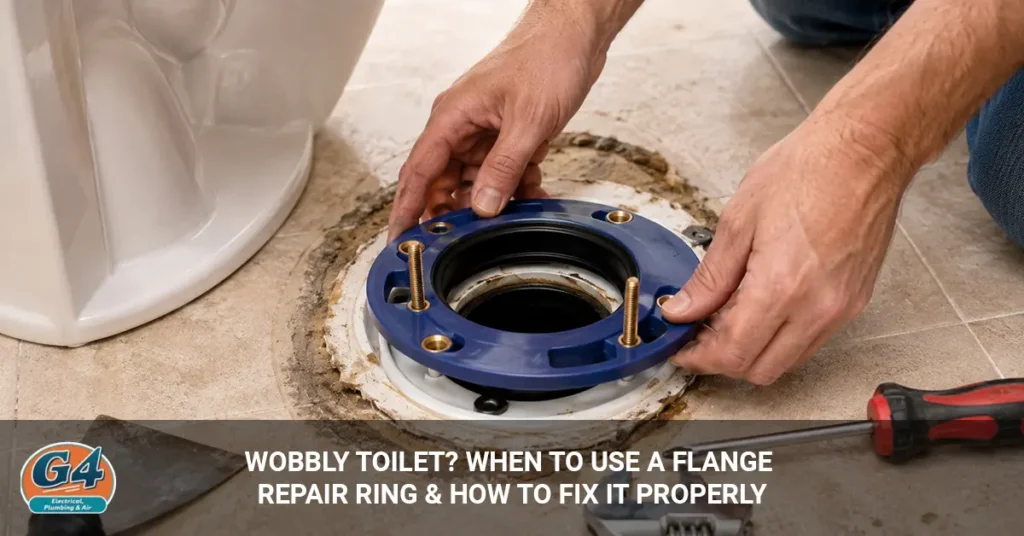
A wobbly toilet can result from a loose connection, damaged toilet flange, uneven floor, or cracked toilet base. If flange damage prevents the toilet bolts from holding securely, a toilet flange repair ring can often solve the problem without replacing the entire flange.
The important part is finding the cause before you start the repair. Simply tightening the toilet bolts may not fix the problem. In fact, excessive force can crack the porcelain base.
Here’s how to determine whether you need a flange repair ring and how to fix a wobbly toilet correctly.
Can a Flange Repair Ring Fix a Wobbly Toilet?
Yes, a flange repair ring can fix a wobbly toilet when flange damage prevents the toilet bolts from staying secure. The ring reinforces the damaged mounting area and gives the closet bolts a solid connection.
However, a repair ring will not fix every type of toilet wobble. First, find out what makes the toilet move.
When the Flange Causes the Wobble
Flange damage can cause a toilet to wobble when broken or corroded sections prevent the closet bolts from holding the toilet firmly.
Look for these signs:
- A broken section around a closet bolt opening
- Cracks in the flange
- Heavy corrosion around the mounting area
- A closet bolt that will not stay in place
- A bolt that spins without tightening
- Visible flange damage after removing the toilet
In these cases, a repair ring can restore the mounting area and give the toilet a secure connection.
When Something Else Causes the Wobble
An uneven floor, damaged subfloor, cracked toilet base, or loose flange can also make a toilet wobble.
A flange repair ring will not solve these problems.
Check for:
- An uneven bathroom floor
- Soft or water-damaged subfloor
- A cracked toilet base
- A loose flange
- An incorrectly positioned flange
- A toilet that does not sit flat
If the flange looks intact and the bolts hold firmly, look for another cause before buying a repair ring.
How Do You Know if a Wobbly Toilet Has a Damaged Flange?
Check the toilet bolts first, then remove the toilet and inspect the flange for cracks, broken mounting slots, corrosion, or movement.
Start with the easiest checks.
Check the Toilet Bolts
Loose or spinning toilet bolts can indicate a damaged flange.
Remove the plastic caps at the base of the toilet and check the nuts.
If you find a loose nut, tighten it slightly on each side. Do not force it.
If the toilet still moves, or a bolt spins without tightening, inspect the flange.
Inspect the Flange for Damage
Look for broken bolt slots, cracks, missing sections, or heavy corrosion around the flange.
You usually need to remove the toilet to inspect the entire flange.
After removing the toilet, check for:
- Broken closet bolt slots
- Cracked sections
- Missing pieces
- Heavy corrosion
- Loose mounting screws
- A flange that moves independently of the floor
A broken section around one closet bolt often points to the type of localized damage that a repair ring can address.
Check Whether the Flange Moves
A flange should stay firmly in place when you apply gentle pressure.
If the flange moves, find out why.
Loose fasteners, damaged flooring, or problems with the drain connection may cause the movement. A repair ring may not solve the underlying problem.
When Should You Use a Toilet Flange Repair Ring?
Use a toilet flange repair ring when localized flange damage prevents the closet bolts from securing the toilet properly.
A repair ring can make sense when:
- One or more bolt slots have broken.
- Part of the flange has cracked.
- Corrosion has weakened the mounting area.
- The drain connection remains intact.
- The flange sits at the correct height.
- The floor can support the repair ring securely.
The goal is simple: restore a strong mounting point between the toilet and floor.
A Repair Ring Makes Sense for Localized Damage
A repair ring works well when the flange has limited damage but still provides a stable foundation around the drain.
For example, one side of the flange may have broken around a closet bolt slot. The drain connection remains intact, and the rest of the flange stays stable.
In that situation, you may not need to replace the entire flange. A suitable repair ring can create a new mounting surface for the closet bolt.
Always follow the installation instructions for the specific repair ring you choose.
Replace the Flange for Severe Damage
Replace the flange when extensive damage affects its stability or compromises the drain connection.
A repair ring cannot solve every flange problem.
Consider full flange replacement when:
- Large sections of the flange have broken away.
- Severe corrosion has weakened the entire flange.
- The flange moves significantly.
- The drain connection has damage.
- The flange sits at an improper height.
- The surrounding floor cannot support the repair.
If you cannot determine whether the existing flange can support a repair ring, have a plumber inspect it before you continue. For severe flange damage or related toilet problems, professional toilet repair may be the better option.
How to Fix a Wobbly Toilet With a Flange Repair Ring
To fix a wobbly toilet with a flange repair ring, remove the toilet, inspect the flange, install the repair ring, add new closet bolts and a new toilet seal, then reset the toilet.
The exact installation method varies by repair-ring design, so follow the manufacturer’s instructions.
1. Shut Off the Water and Remove the Toilet
Turn off the water supply and empty the tank and bowl before removing the toilet.
Flush the toilet to remove most of the water.
Disconnect the supply line. Remove the nuts from the closet bolts.
Gently rock the toilet from side to side to break the old seal. Then lift the toilet straight up and place it on a protected surface.
Toilets can be heavy and awkward to handle, so ask someone to help if necessary.
2. Remove the Old Wax Ring
Scrape all of the old wax from the flange and toilet base before installing a new seal.
Use a putty knife or similar tool to remove the old wax.
Clean the flange thoroughly so you can inspect the damage.
Never reuse the old wax ring after removing the toilet. Install a new seal during reassembly.
3. Inspect and Position the Repair Ring
Place the repair ring over the damaged flange area and align its mounting slots with the toilet’s closet bolts.
Check the fit before installing the fasteners.
Make sure the ring sits flat against the flange and floor. It should not rock or shift.
If the repair ring does not sit correctly, stop and check the flange and floor before continuing.
4. Secure the Repair Ring
Fasten the repair ring firmly to the floor so it stays in place when you tighten or use the toilet.
Use the fasteners recommended by the repair-ring manufacturer.
Choose fasteners that work with your flooring or subfloor. Wood and concrete may require different fastening methods.
Do not rely on the toilet bolts to hold a loose repair ring in place.
5. Install New Closet Bolts
Install new closet bolts through the repair ring and align them with the toilet’s mounting holes.
Keep both bolts upright while you prepare to reset the toilet.
Make sure the repair ring supports each bolt securely.
6. Install a New Wax Ring
Install a new wax ring or approved toilet seal before resetting the toilet.
Center the seal according to the manufacturer’s instructions.
The repair ring and wax ring serve different purposes. The repair ring supports the toilet and provides a mounting point. The wax ring seals the connection between the toilet and drain.
7. Reset the Toilet
Lower the toilet straight onto the closet bolts and check that the base sits evenly on the floor.
Align the mounting holes with the bolts as you lower the toilet.
Press down gently and evenly to seat the toilet.
Avoid twisting the toilet excessively after it contacts the new seal.
8. Tighten the Bolts Without Overtightening
Tighten the closet bolts gradually from side to side until the toilet sits firmly.
Do not use excessive force.
Too much pressure can crack the porcelain toilet base.
Once the toilet feels secure, stop tightening. Trim excess bolt length if necessary and replace the decorative caps.
9. Test the Toilet
Flush the toilet several times and check the base for leaks or movement. If you notice water rising or overflowing during testing, see what to do about a toilet overflow.
Reconnect the water supply and open the shutoff valve slowly.
Let the tank fill, then flush the toilet several times.
Check around the base after each flush.
Finally, gently test the toilet for movement. A properly repaired toilet should stay stable without rocking.
What If the Toilet Still Wobbles After Installing a Flange Repair Ring?
If the toilet still wobbles after the flange repair, check the floor, subfloor, flange, and toilet base for another problem.
Do not keep tightening the closet bolts. Excessive pressure can damage the toilet.
Check these areas:
- Repair ring: Make sure the ring remains firmly attached to the floor.
- Flange: Check that the flange does not move.
- Floor: Look for an uneven surface under the toilet.
- Subfloor: Check for soft areas or water damage.
- Toilet base: Look for cracks or an uneven bottom.
- Flange height: Make sure the flange sits at an appropriate height.
If the flange remains secure but the toilet rocks slightly on an uneven floor, properly placed toilet shims may help stabilize it.
Do not use excessive force to make the toilet sit flat.
Flange Repair Ring vs. Replacing the Toilet Flange
Choose a flange repair ring for localized damage and replace the entire flange when severe damage affects the flange or drain connection.
| Problem | Better Option |
| Broken closet bolt slot | Flange repair ring may work |
| Localized flange damage | Flange repair ring may work |
| Minor corrosion around mounting area | Repair ring may work |
| Large sections of flange missing | Replace the flange |
| Flange moves significantly | Inspect and repair the underlying problem |
| Damaged drain connection | Flange or plumbing repair |
| Damaged subfloor | Repair the floor first |
| Cracked toilet base | Replace the toilet |
A repair ring should strengthen a suitable existing flange. It should not serve as a shortcut around a major plumbing or structural problem.
Common Mistakes When Repairing a Wobbly Toilet
The most common mistakes include overtightening the toilet bolts, failing to secure the repair ring, reusing the old wax ring, and ignoring floor damage.
Tightening the Toilet Bolts Too Much
Overtightening the bolts can crack the porcelain toilet base.
Tighten each side gradually and stop once the toilet sits firmly.
Installing a Repair Ring on an Unstable Flange
A repair ring cannot fix an unstable flange installation by itself.
If the flange moves significantly, find the cause before completing the repair.
Reusing the Old Wax Ring
Install a new toilet seal whenever you remove the toilet.
The old wax has already compressed around the previous installation and may not seal correctly again.
Failing to Secure the Repair Ring
Attach the repair ring firmly to a suitable surface so it cannot shift when someone uses the toilet.
A loose repair ring can leave the toilet unstable.
Ignoring an Uneven or Damaged Floor
An uneven or damaged floor can keep the toilet wobbly even after you repair the flange.
If the flange feels secure but the toilet still rocks, inspect the floor and toilet base.
Frequently Asked Questions
Can a Toilet Flange Repair Ring Stop a Toilet From Wobbling?
Yes, a flange repair ring can stop wobbling when flange damage around the closet bolts prevents you from securing the toilet properly.
It will not correct an uneven floor, damaged subfloor, or cracked toilet base. If the toilet is also running continuously after the repair, see these common running toilet causes.
How Do I Know if My Toilet Flange Is Broken?
Look for cracks, broken sections, or missing pieces around the closet bolt openings.
These problems can prevent the bolts from holding the toilet securely.
Remove the toilet when you need to inspect the entire flange.
Can You Repair a Broken Toilet Flange Instead of Replacing It?
You can repair some broken toilet flanges with a flange repair ring when the remaining flange and drain connection remain structurally sound.
Severe damage may require a complete flange replacement.
Does a Flange Repair Ring Go Over the Existing Flange?
Many flange repair rings reinforce or cover a damaged section of an existing flange, but each product has its own installation method.
Check the manufacturer’s instructions before installing the ring.
Do I Need a New Wax Ring After Installing a Flange Repair Ring?
Yes, you generally need a new wax ring or approved toilet seal after removing the toilet.
The repair ring provides structural support and a mounting point. The wax ring creates the seal between the toilet and drain.
Why Is My Toilet Still Wobbly After Repairing the Flange?
If your toilet still wobbles after a flange repair, check the floor, subfloor, flange, and toilet base for other problems.
Do not keep tightening the toilet bolts. Find and fix the underlying cause instead.
Final Thought
A wobbly toilet needs a flange repair ring when localized flange damage prevents the closet bolts from securing the toilet properly.
If the flange remains mostly intact and the drain connection works properly, a repair ring can provide a secure mounting point without replacing the entire flange.
Severe flange damage may require full replacement. If the flange looks good, inspect the floor, subfloor, and toilet base instead.
The safest approach is simple: find the cause of the wobble, fix the actual problem, and avoid excessive bolt pressure when securing the toilet.