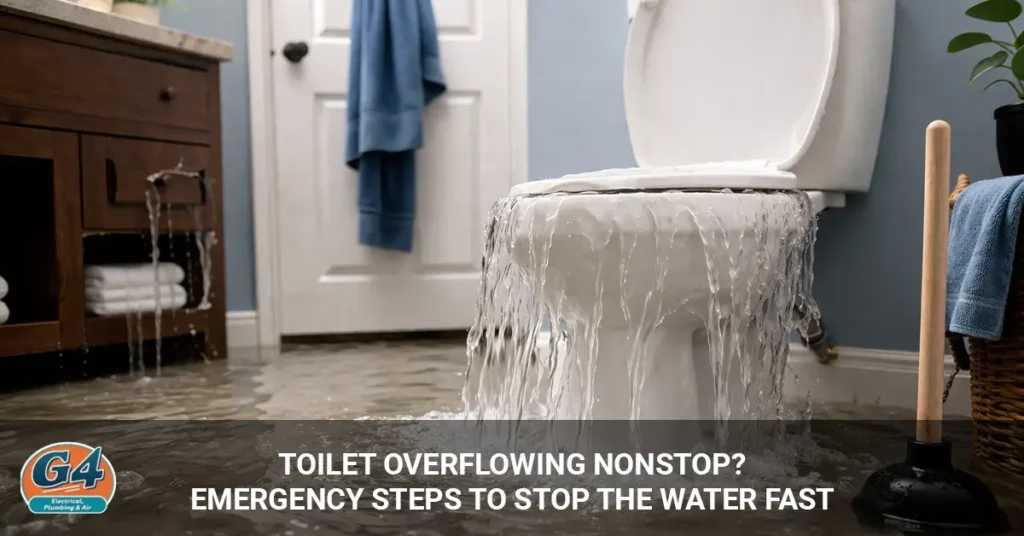
A toilet that keeps overflowing is an emergency that needs quick action to stop the water and prevent damage. The sooner you act, the easier it is to control the situation.
Water from an overflowing toilet spreads fast. It can cover your bathroom floor and reach nearby areas in minutes. This can damage flooring, leave strong odors, and create hygiene concerns.
That’s why timing matters. Acting right away helps you stop the water, reduce the mess, and avoid expensive repairs later.
Why Is Your Toilet Overflowing Nonstop?
A toilet overflows nonstop when water can’t drain properly or the tank keeps filling without stopping. This usually points to a clog, a sewer problem, or a faulty part inside the toilet.
In most cases, something is blocking the drain. When water can’t flow out, it rises back up into the bowl. That’s why the level keeps increasing instead of going down.
Sometimes, the issue is inside the tank. If the float or fill valve isn’t working right, water keeps running even when the tank is full. This adds more water to the bowl and makes the overflow worse.
Understanding the cause helps you take the right step and fix the problem faster.
What to Do Immediately When Your Toilet Is Overflowing
You should act immediately to stop the water and prevent damage as soon as your toilet starts overflowing. Quick action helps you control the situation before it gets worse.
Turn Off the Water Supply Valve First
Turn off the water supply valve behind the toilet right away to stop more water from entering the bowl. This is the fastest way to stop the overflow.
Remove the Tank Lid and Stop the Float
Lift the tank lid and adjust or hold down the float to stop the water from filling the tank. This can quickly stop the flow if the valve is still running.
Avoid Flushing Again
Avoid flushing again because it will push more water into the bowl and make the overflow worse. Give the water time to settle first.
Use a Plunger to Clear the Clog
Use a plunger to remove the blockage so water can drain normally. A few steady and controlled pushes are usually enough to clear a simple clog.
Clean Up Water Quickly
Clean up the water as soon as possible to avoid damage and keep the area safe. Use towels, a mop, or any absorbent material to dry the floor.
Call an Emergency Plumber if It Continues
Call an emergency plumber if the overflow doesn’t stop or keeps happening. A professional can identify the cause and fix it properly. If you’re unsure how serious the situation is, learn more about what is a plumbing emergency and when to act fast.
Signs the Overflow Is a Bigger Problem
An overflowing toilet is a bigger problem when it keeps happening or affects other drains in your home. This usually means the issue is deeper than a simple clog.
If more than one drain is backing up at the same time, it often points to a problem in the main sewer line. In this case, water has nowhere to go, so it starts coming back up through your toilet and other fixtures.
A strong sewage smell inside your home is another serious warning sign. It can mean waste is not flowing out properly and may be backing up into your plumbing system.
If the toilet overflows repeatedly, even after you clear it, the problem is likely not fixed. In these situations, it’s best to call a professional before the issue gets worse.
Common Causes of Toilet Overflow
Toilet overflows usually happen when something blocks the flow of water or when a part inside the toilet stops working properly. These issues can quickly cause water to rise instead of draining.
The most common cause is a clogged drain. This often happens when too much toilet paper or non-flushable items are flushed. When the drain is blocked, water has nowhere to go and starts coming back up.
Sewer line problems can also cause overflow. If the main line is blocked, water from your home can’t flow out and may return through the toilet.
In some cases, the problem is inside the tank. A faulty float or fill valve can keep adding water even when the tank is full, which can lead to continuous overflow.
How to Prevent Toilet Overflow in the Future
You can prevent toilet overflow by following simple habits and keeping your plumbing in good condition. Small steps can help you avoid bigger problems later.
Be careful about what you flush. Only flush toilet paper and waste. Items like wipes, paper towels, and hygiene products can block the drain and cause overflow.
Keep your drains clean so water can flow properly. Regular cleaning helps prevent buildup that leads to clogs.
It’s also important to check the parts inside your toilet. Make sure the float and fill valve are working correctly. Fixing small issues early can stop them from turning into emergencies.
Can an Overflowing Toilet Cause Damage?
Yes, an overflowing toilet can cause damage if it is not handled quickly. The water can spread fast and affect more than just your bathroom floor.
It can soak into flooring, walls, and nearby areas, which may weaken the structure over time. Even a small overflow can lead to bigger issues if the water is not cleaned up right away.
There is also a health risk to consider. The water may contain bacteria, especially if it comes from a blockage or sewer issue. If left untreated, it can lead to mold growth and long-term damage.
Acting quickly helps you limit damage and keep your home safe.
When to Call an Emergency Plumber
You should call an emergency plumber as soon as the overflow doesn’t stop or keeps happening. Quick action can prevent serious damage and bigger repairs.
If the water level keeps rising or starts spreading across the floor, it’s a clear sign the problem isn’t under control. The same applies if more than one drain in your home is affected, which often points to a larger issue.
If you notice signs of a sewer problem, don’t wait. These situations can get worse quickly and may create health risks. A professional plumber can find the cause and fix it safely.
Final Thoughts
An overflowing toilet needs quick action because it can cause damage and create safety concerns in a short time. The sooner you respond, the easier it is to control the problem.
Even a small delay can make the situation worse, especially if water spreads or the issue keeps coming back. Acting fast helps you reduce damage and avoid bigger repairs.
Focus on stopping the water first, then clear the blockage if possible. If the problem continues, call a professional. Quick action keeps your home safe and under control.