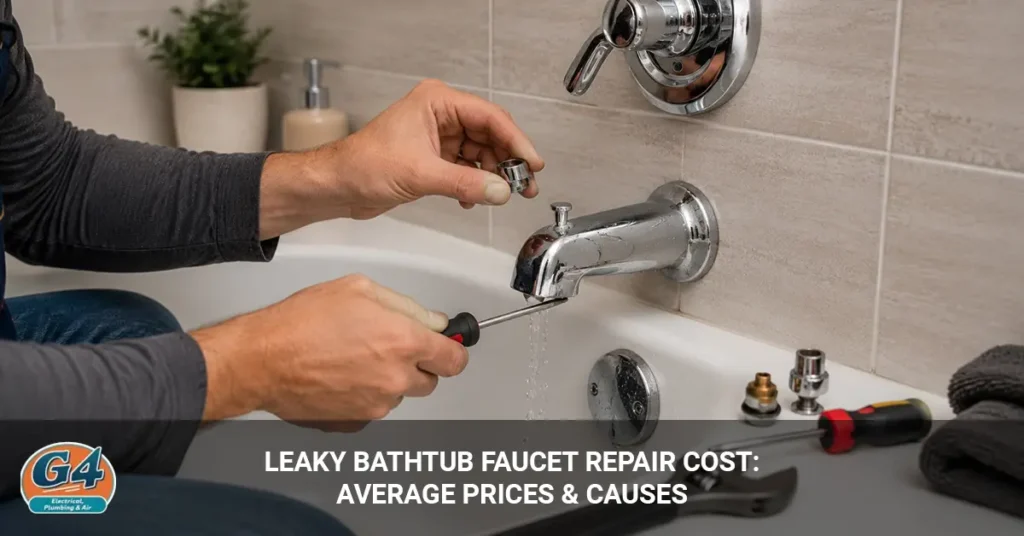
A leaky bathtub faucet repair typically costs $100 to $400, including professional labor and replacement parts. A simple washer or O-ring repair may cost less, while cartridge replacement, faucet replacement, or difficult plumbing work can push the price higher.
The exact cost depends on what’s causing the leak, the type of faucet, the replacement part, and how easy the faucet is to access.
A dripping faucet may seem like a minor plumbing problem, but it shouldn’t be ignored. A small leak can waste water continuously and may eventually damage the faucet or surrounding area.
The good news is that many bathtub faucet leaks come from a worn washer, cartridge, O-ring, or valve that can be repaired without replacing the entire fixture.
How Much Does It Cost to Repair a Leaky Bathtub Faucet?
Professional bathtub faucet repair usually costs $100 to $400, depending on the failed component and the amount of labor required.
Here’s a general breakdown:
| Repair | Typical Cost |
| Washer or seal replacement | 100–200 |
| O-ring replacement | 100–200 |
| Cartridge replacement | 150–300 |
| Faucet valve repair | 150–350 |
| Faucet replacement | 200–600+ |
| Hidden plumbing repair | Varies |
These are general U.S. price ranges. Local plumbing rates, faucet type, parts availability, and the location of the plumbing can change the final price.
A simple internal repair may take less than an hour. A faucet that’s badly corroded or connected to plumbing inside the wall can require much more work.
What Does a Plumber Charge to Fix a Bathtub Faucet?
A plumber may charge a service or diagnostic fee plus labor and parts to repair a leaky bathtub faucet.
Some plumbing companies have a flat-rate repair price, while others charge by the hour.
You may also pay more for:
- Emergency service
- Weekend or holiday service
- Difficult faucet access
- Corroded or seized parts
- Additional plumbing repairs
Ask what the service fee includes before approving the work. Some companies apply the diagnostic fee toward the repair if you move forward.
What Makes Bathtub Faucet Repair More Expensive?
The biggest cost factors are the faucet type, failed component, labor, corrosion, plumbing access, and whether additional repairs are needed.
The repair can cost more when:
- The faucet uses a specialty cartridge.
- The original part is difficult to find.
- The faucet is badly corroded.
- The faucet is difficult to remove.
- Plumbing connections are behind the wall.
- A pipe or valve is also damaged.
- You need emergency service.
A simple drip from a replaceable washer is a very different repair from a leaking faucet that requires opening the wall.
Why Is My Bathtub Faucet Leaking?
A bathtub faucet usually leaks because a washer, cartridge, O-ring, valve, or other sealing component has worn out or become damaged. For more common causes, see these faucet leaking causes.
The likely cause depends on where the water is coming from and what type of faucet you have.
Common causes include:
- Worn washer or seal
- Bad faucet cartridge
- Damaged O-ring
- Worn valve
- Mineral buildup
- Loose faucet parts
- Corrosion
- Damaged plumbing connections
If the faucet also has weak water flow, check for other low water pressure causes that may point to a broader plumbing problem.
Worn Washer or Seal
A worn washer or seal can cause a bathtub faucet to drip because it no longer creates a tight seal when the faucet is turned off.
This is common with older compression-style faucets.
Over time, the washer can become hard, cracked, or worn down. Water then gets past the valve even when the handle is fully closed.
Replacing the washer can often solve the problem without replacing the faucet.
Bad Faucet Cartridge
A worn faucet cartridge can cause a single-handle bathtub faucet to drip, leak around the handle, or have trouble controlling water flow.
The cartridge controls water flow and temperature inside the faucet.
Mineral buildup and normal wear can damage the seals inside it.
When the cartridge is worn, replacing it is usually more practical than trying to repair its individual components.
Damaged O-Ring
A damaged O-ring can cause water to leak around the faucet handle, spout, or another sealed connection.
O-rings are small rubber seals that prevent water from escaping around moving or connected parts.
They can become brittle, cracked, flattened, or stretched over time.
An O-ring is usually inexpensive to replace, but you need the correct size for a proper seal.
Worn or Damaged Valve
A worn or damaged valve can cause a bathtub faucet to drip because the valve no longer shuts off the water completely.
Mineral deposits, corrosion, and normal wear can affect the valve over time.
If replacing a washer or cartridge doesn’t solve the leak, the valve may need further inspection.
Loose or Corroded Faucet Parts
Loose or corroded faucet components can cause leaks around the faucet or its connections.
A loose connection may only need tightening. Corrosion is more complicated.
If parts are badly corroded, forcing them apart can damage the faucet or the plumbing behind the wall.
How Much Does It Cost to Replace a Bathtub Faucet Cartridge?
Bathtub faucet cartridge replacement typically costs $150 to $300, including parts and professional labor.
The cartridge itself may be relatively inexpensive, but labor can increase the total cost.
The technician needs to identify the correct cartridge for your faucet. Different brands and models use different cartridge designs.
Cartridge replacement usually makes sense when:
- The faucet drips when turned off.
- Water leaks around the handle.
- The handle is difficult to operate.
- Water temperature is difficult to control.
- Cleaning doesn’t solve the problem.
If the faucet is badly corroded or several components are failing, replacing the entire faucet may make more sense.
How Much Does It Cost to Replace a Bathtub Faucet?
Replacing a bathtub faucet typically costs $200 to $600 or more, depending on the faucet, labor, plumbing connections, and installation difficulty.
The total may include:
- New faucet
- Removal of the old faucet
- Labor
- New seals or connections
- Plumbing modifications
- Repair of damaged connections
A straightforward faucet replacement can be relatively simple when the existing connections are accessible and in good condition.
The cost can rise quickly if the old faucet is seized, corroded, or connected to damaged plumbing behind the wall.
How to Tell What Is Causing the Bathtub Faucet Leak
Where the water appears can help identify whether the problem is inside the faucet or around its connections.
Faucet Drips From the Spout When Turned Off
A faucet that continues dripping from the spout after being turned off usually has a worn washer, cartridge, valve, or internal seal.
On an older two-handle faucet, the washer or valve may be responsible.
On many single-handle faucets, a worn cartridge is a more likely cause.
Water Leaks Around the Handle
Water leaking around the handle often points to a worn O-ring, cartridge seal, or other internal seal.
Pay attention to when the leak occurs.
If water only appears around the handle while the faucet is running, the problem may be different from a faucet that leaks continuously.
Water Leaks Around the Faucet Base
A leak around the faucet base can come from a worn seal, loose connection, or corrosion.
If the faucet itself is loose, carefully tightening the connection may help.
If water continues to escape, the seal or connection may need to be replaced.
Water Comes From Behind the Wall
Water coming from behind the bathtub faucet can indicate a leaking pipe or plumbing connection and should be inspected promptly. This can also be a sign of hidden plumbing leaks that need professional attention.
This is more serious than a simple faucet drip.
A hidden leak can damage drywall, framing, insulation, and other materials.
If you see water coming from the wall, stop using the faucet if possible and call a plumber.
Can You Repair a Leaky Bathtub Faucet Yourself?
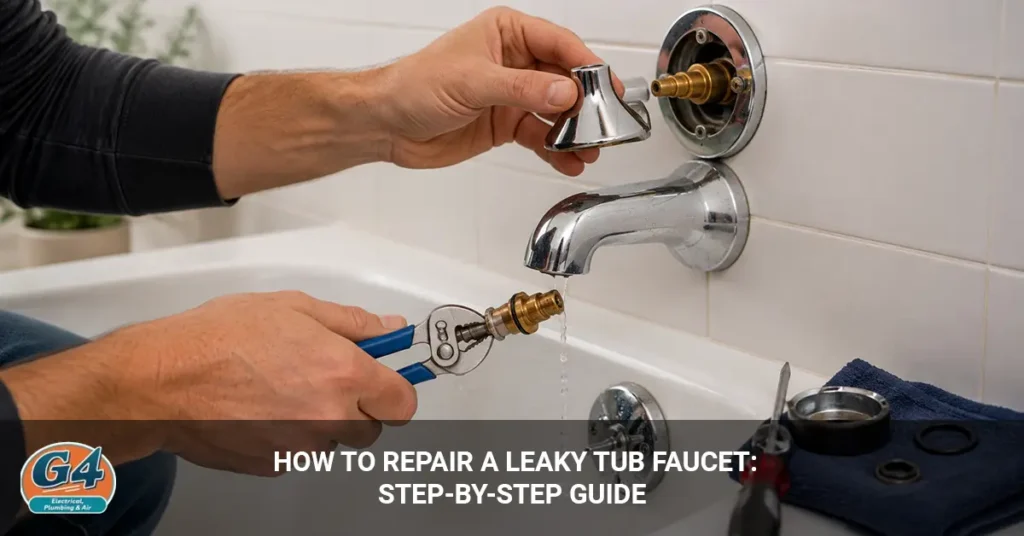
You can often repair a simple bathtub faucet leak yourself if the problem is a washer, O-ring, or accessible cartridge.
Before starting, shut off the water supply.
Then:
- Identify the faucet type.
- Take a photo before removing parts.
- Remove the affected component carefully.
- Match the replacement part.
- Reassemble the faucet.
- Turn the water back on slowly.
- Check for leaks.
Don’t force a corroded or seized part.
Bathtub faucets can connect to plumbing inside the wall. Excessive force can damage that connection and turn a small faucet repair into a larger plumbing job.
If you’re not sure how the faucet comes apart, calling a plumber may save you from additional damage.
What to Expect During a Bathtub Faucet Repair
A typical bathtub faucet repair involves finding the source of the leak, shutting off the water, removing the failed component, installing the replacement, and testing the faucet.
Step 1: Diagnose the Leak
The plumber first identifies where the water is escaping and determines which component is likely responsible.
They may check the faucet, handles, cartridge, valves, seals, and visible connections.
Step 2: Shut Off the Water
The water supply must be shut off before the faucet is disassembled.
This prevents water from flowing through the fixture while the repair is being performed.
Step 3: Replace the Failed Component
The plumber replaces the worn washer, cartridge, O-ring, valve, or other failed component.
The replacement part should match the faucet.
If the faucet is badly damaged, the plumber may recommend replacing the entire fixture instead.
Step 4: Test the Faucet
After the repair, the faucet is turned back on and checked for continued dripping or leaks.
The plumber should also check the connections around the faucet.
A successful repair should stop the leak without creating a new one.
How Long Does Bathtub Faucet Repair Take?
A simple bathtub faucet repair can often take 30 minutes to 2 hours, while difficult repairs may take longer.
The repair may take longer when:
- The faucet is badly corroded.
- The cartridge is stuck.
- Plumbing access is difficult.
- The faucet needs full replacement.
- A pipe or connection is damaged.
- The leak is behind the wall.
The actual repair can be quick once the cause is identified. Finding and accessing the problem is often what takes the most time.
Should You Repair or Replace a Leaky Bathtub Faucet?
Repairing the faucet usually makes sense when it’s in good condition and only one inexpensive component has failed, while replacement may be better for an old or badly corroded faucet.
Repair is often the better choice when:
- The faucet is relatively new.
- The body is in good condition.
- Replacement parts are available.
- The leak comes from a washer, cartridge, or seal.
- The repair cost is low.
Replacement may make more sense when:
- The faucet is badly corroded.
- Several components are failing.
- Replacement parts are no longer available.
- The faucet has developed repeated leaks.
- Repair costs approach the cost of a new faucet.
Don’t replace a perfectly good faucet just because one washer or cartridge has failed.
Can a Leaky Bathtub Faucet Increase Your Water Bill?
Yes, a continuously dripping bathtub faucet can increase your water bill because it wastes water around the clock.
The EPA says a faucet dripping once per second can waste more than 3,000 gallons of water per year.
A faster leak can waste much more.
You may not notice a large increase from a very slow drip right away, but the waste continues every day.
Fixing the leak early can help prevent unnecessary water use and may also prevent a small plumbing problem from becoming a larger one.
When Should You Call a Plumber?
Call a professional for leaky faucet repair when the leak continues after a basic repair, water is coming from behind the wall, or the faucet is too corroded or difficult to remove safely.
Professional help is especially important if:
- Water is leaking inside the wall.
- The faucet or valve is badly corroded.
- A component is seized.
- A pipe or connection is damaged.
- The leak continues after replacing the suspected part.
- You can’t access the water shutoff.
- You see water damage around the tub or wall.
- You’re unsure where the leak is coming from.
A plumber can determine whether the problem is limited to the faucet or involves the plumbing behind it.
Leaky Bathtub Faucet Repair Cost FAQs
How much does it cost to repair a leaky bathtub faucet?
Professional bathtub faucet repair typically costs $100 to $400, including labor and parts. Simple washer or seal repairs usually cost less than cartridge replacement, faucet replacement, or hidden plumbing repairs.
What is the average cost to fix a bathtub faucet?
The average professional repair generally falls around $100 to $400, depending on the faucet and failed component. Your local labor rate and plumbing access can affect the final price.
How much does bathtub faucet cartridge replacement cost?
Bathtub faucet cartridge replacement typically costs $150 to $300, including parts and labor. The exact price depends on the cartridge and how difficult it is to access.
How much does it cost to replace a bathtub faucet?
Replacing a bathtub faucet typically costs $200 to $600 or more. The faucet itself, labor, removal of the old fixture, and plumbing modifications all affect the total.
Why is my bathtub faucet leaking when it’s turned off?
A bathtub faucet that leaks when it’s turned off usually has a worn washer, cartridge, valve, or internal seal. The right repair depends on the type of faucet.
Can I fix a leaky bathtub faucet myself?
Yes, many simple leaks can be repaired with a replacement washer, O-ring, or cartridge. More difficult repairs involving corrosion, hidden plumbing, or damaged pipes are better handled by a plumber.
How long does bathtub faucet repair take?
A simple bathtub faucet repair can take about 30 minutes to 2 hours. Difficult access, corrosion, faucet replacement, or hidden plumbing problems can make the job take longer.
Is it cheaper to repair or replace a bathtub faucet?
Repair is usually cheaper when only one component has failed and the faucet is otherwise in good condition. Replacement can make more sense when the faucet is old, badly corroded, or repeatedly develops leaks.
Can a leaking bathtub faucet increase my water bill?
Yes, a leaking faucet can increase your water bill by wasting water continuously. A faucet dripping once per second can waste more than 3,000 gallons of water per year.
When should I call a plumber for a bathtub faucet leak?
Call a plumber if the leak continues after replacing the suspected part, water is leaking behind the wall, or the faucet is difficult to remove. Hidden plumbing leaks can cause significant water damage if left untreated.
Final Takeaway
Leaky bathtub faucet repair usually costs $100 to $400, but the price can be higher when the faucet needs replacement or the plumbing behind the wall is damaged.
The most common causes are worn washers, cartridges, O-rings, valves, and seals.
If the faucet is in good condition, repairing the failed component is usually the most cost-effective option. If it’s badly corroded or has recurring problems, replacing the faucet may make more sense.
Either way, don’t ignore a constant drip. Fixing it early can reduce water waste and help prevent a small faucet problem from becoming a more expensive plumbing repair.