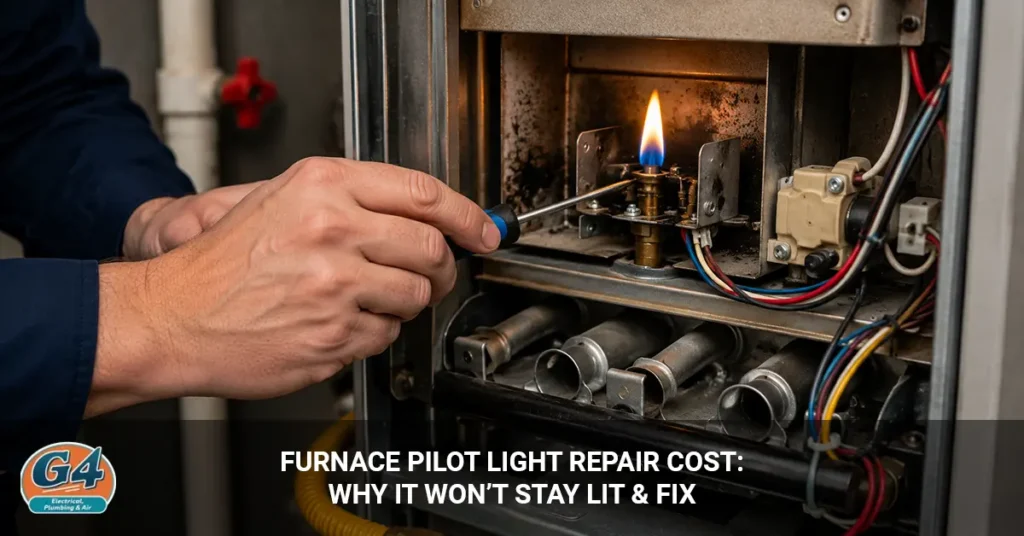
A furnace ignitor replacement typically costs about $150 to $500, including the part and professional labor. In many routine repairs, homeowners pay closer to the lower or middle end of that range, while emergency service, difficult access, or specialty parts can push the price higher. Carrier lists a broader professional replacement range of 150–450, while Angi’s 2026 furnace repair data puts ignitor replacement around 150–250 for standard service and up to 350–500 for emergency repairs.
The ignitor is responsible for lighting the fuel inside your furnace. When it fails, the furnace may run through its startup sequence but never produce heat.
The good news is that a failed ignitor is usually a relatively straightforward repair. The important part is confirming that the ignitor is actually the problem before replacing it.
How Much Does It Cost to Replace a Furnace Ignitor?
Expect to pay around $150 to $500 for professional furnace ignitor replacement. The exact price depends on the ignitor, furnace model, labor rates, service fees, and whether you need regular or emergency service.
Here’s a general breakdown:
| Cost | Typical range |
| Ignitor part | 20–150 |
| Labor | 100–300 |
| Diagnostic/service fee | Varies |
| Standard replacement | 150–500 |
| Emergency replacement | Up to 350–500+ |
Carrier reports that the ignitor itself commonly costs $20 to $150, with professional installation adding roughly $100 to $300.
These are general U.S. price ranges, not a guaranteed quote. Local labor rates and the specific furnace can make a significant difference.
What Makes Furnace Ignitor Replacement More Expensive?
Several factors can affect the final bill:
- Furnace brand and model: Some systems require specific replacement parts.
- Ignitor type: Different ignition systems use different components.
- OEM vs. aftermarket part: An original manufacturer part may cost more.
- Accessibility: A difficult-to-reach furnace can require more labor.
- Diagnostic fees: Some companies charge separately to identify the problem.
- Emergency service: Nights, weekends, and holidays can increase labor costs.
- Additional problems: A failed ignitor may occur alongside another ignition-system issue.
If a technician finds that the ignitor is good but the furnace still won’t light, you may need a different repair.
Signs Your Furnace Ignitor Is Failing
The most common signs of a bad furnace ignitor include a furnace that won’t ignite, repeated clicking, cold air from the vents, repeated startup attempts, or a visibly cracked ignitor. These symptoms can also occur with other furnace problems, so they don’t prove the ignitor is bad by themselves. Learn about other furnace repair signs to watch for.
Furnace Runs but Produces No Heat
Your thermostat may call for heat, and the furnace may begin its startup sequence, but the burners never ignite. If you’re also dealing with a furnace that won’t turn on, the problem may involve more than the ignitor.
If the ignitor cannot reach the temperature needed to ignite the gas, the burners won’t light. The furnace’s safety controls can then shut down the ignition sequence.
Furnace Clicks but Won’t Ignite
Repeated clicking can indicate that the ignition system is trying to start the furnace without successfully lighting the fuel.
However, clicking doesn’t automatically mean the ignitor has failed. Problems with the control board, gas supply, ignition system, or other components can create similar symptoms.
Burners Don’t Light
If the furnace goes through its normal startup process but the burners never turn on, the ignitor is one component a technician will inspect.
Modern furnaces use electronic ignition systems, including hot-surface and spark ignition systems.
The Furnace Keeps Trying to Start
Repeated startup attempts can indicate an ignition failure. Modern furnaces have safety controls designed to stop the system when ignition doesn’t occur correctly.
If your furnace repeatedly attempts to ignite and then shuts down, don’t keep resetting it over and over. Have the ignition system diagnosed.
The Ignitor Is Cracked
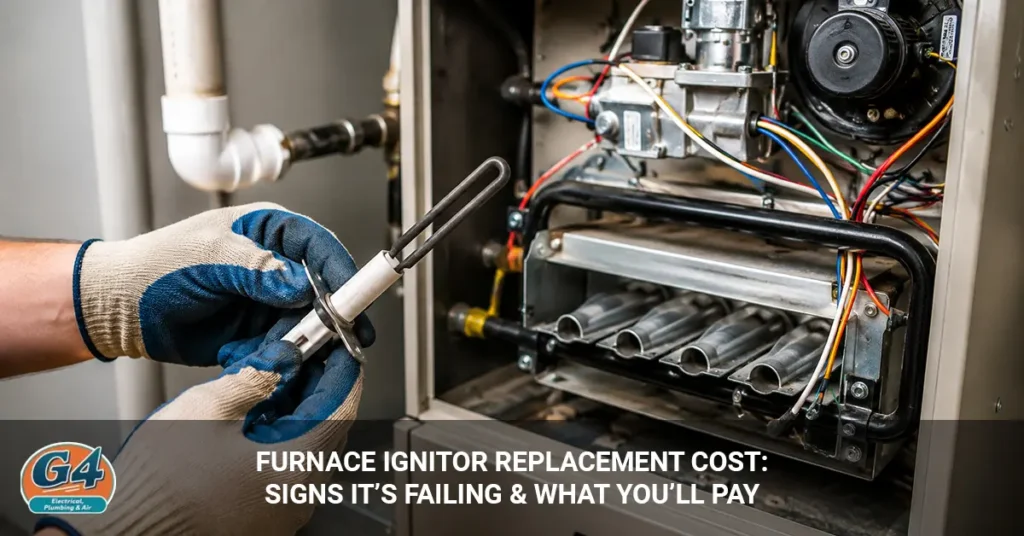
A cracked hot-surface ignitor is a strong indication that the component needs replacement.
These ignitors are fragile and operate at very high temperatures. Dirt, contamination, electrical problems, normal wear, and improper handling can contribute to premature failure.
What Causes a Furnace Ignitor to Fail?
A furnace ignitor can fail from normal wear, repeated heating cycles, contamination, electrical problems, or physical damage.
Common causes include:
Normal Wear
Ignitors repeatedly heat up and cool down during furnace operation. Over time, that thermal stress can cause the component to deteriorate.
Cracks or Physical Damage
Hot-surface ignitors are delicate. A crack can prevent the component from reaching the temperature required for ignition.
Dirt and Contamination
Dust, dirt, and oils can damage or create hot spots on some ignitors. Carrier specifically warns that touching the heating element with bare hands can leave oils that shorten its lifespan.
Electrical Problems
Power surges, voltage problems, or other electrical faults can damage an ignitor.
Incorrect Installation
Installing the wrong ignitor or handling a fragile replacement incorrectly can lead to premature failure.
If an ignitor keeps failing shortly after replacement, the technician should look for an underlying electrical or furnace problem rather than simply installing another ignitor.
How Long Does a Furnace Ignitor Last?
A furnace ignitor commonly lasts several years, but its actual service life varies based on the furnace, ignitor type, operating frequency, installation, and other conditions. Angi cites about seven years as a typical lifespan, while manufacturers emphasize that wear and operating conditions affect longevity.
An ignitor that fails after only a short period deserves further investigation.
Replacing it repeatedly could mean there is another issue affecting the ignition system.
Can You Replace a Furnace Ignitor Yourself?
Technically, some homeowners may be able to replace an ignitor, but professional replacement is generally the safer choice.
A furnace combines electrical components with fuel combustion. The ignitor itself is also fragile and can be damaged during installation.
Carrier recommends professional service because incorrect installation can create safety risks and potentially affect the furnace warranty.
A professional can also test whether the ignitor is actually receiving the correct electrical supply and determine whether another component caused the ignition failure.
Should You Test the Ignitor Yourself?
A multimeter can be used to test an ignitor’s electrical resistance, but testing requires shutting off power and accessing the component correctly.
More importantly, a resistance reading alone doesn’t diagnose every possible ignition problem.
A technician can inspect the ignitor, check the electrical supply, examine the startup sequence, and look for related faults.
How Long Does Furnace Ignitor Replacement Take?
A straightforward furnace ignitor replacement is usually a relatively quick repair once the technician has diagnosed the problem and has the correct replacement part.
The appointment can take longer if:
- The ignitor is difficult to access.
- The correct replacement part isn’t available.
- Wiring is damaged.
- The control board has a problem.
- Another ignition component has failed.
- The technician needs additional diagnostic testing.
The actual replacement may be simple, but accurate diagnosis is often more important than the physical replacement itself.
Furnace Ignitor vs. Flame Sensor: What’s the Difference?
The ignitor lights the fuel, while the flame sensor confirms that a flame has been established.
| Component | Main job | Common symptom |
| Ignitor | Ignites the fuel | Furnace doesn’t ignite |
| Flame sensor | Detects the flame | Furnace lights, then shuts off |
This distinction matters because a furnace that lights briefly and then shuts down may have a flame-sensor problem rather than an ignitor problem.
Trane notes that a faulty flame sensor can prevent continued operation because the safety system shuts off the gas when it doesn’t detect a flame.
Is Furnace Ignitor Replacement Worth the Cost?
Yes, in most cases. A failed ignitor is generally a much smaller repair than replacing an entire furnace.
Current repair-cost data puts furnace ignitor replacement well below the cost of major components such as heat exchangers, blower motors, or control boards.
If your furnace is otherwise operating properly, replacing a failed ignitor usually makes more financial sense than replacing the entire system.
The decision becomes different when:
- The furnace is already near the end of its service life.
- It has required multiple repairs recently.
- Several expensive components are failing.
- The furnace has a significant safety problem.
- Repair costs are becoming frequent or substantial.
If you’re considering replacing an older system, review current furnace replacement costs before making a decision.
For context, Trane says many furnaces have an expected lifespan of roughly 15–20 years, although actual life varies with the equipment and maintenance.
A single failed ignitor doesn’t mean an older furnace automatically needs replacement.
Furnace Ignitor Replacement Cost FAQs
How much does it cost to replace a furnace ignitor?
Professional furnace ignitor replacement generally costs $150 to $500, with many standard repairs falling toward the lower end. Emergency service and certain furnace models can increase the price.
How do I know if my furnace ignitor is bad?
Common signs include a furnace that won’t ignite, repeated clicking without ignition, cold air when the thermostat is calling for heat, repeated startup attempts, or a visibly damaged ignitor. Other furnace components can cause similar symptoms, so professional diagnosis may be necessary.
How long does a furnace ignitor last?
A furnace ignitor can last several years. Angi cites approximately seven years as a typical lifespan, but usage, furnace design, electrical conditions, and installation can affect how long it lasts.
Can I replace a furnace ignitor myself?
It is possible on some systems, but professional replacement is safer because furnaces involve electrical and fuel-burning components and ignitors can be fragile.
Why is my furnace clicking but not igniting?
Clicking can mean the ignition system is attempting to start the furnace but isn’t successfully establishing a flame. A failed ignitor is one possibility, but the gas supply, control board, flame sensor, or another ignition component could also be responsible.
How long does it take to replace a furnace ignitor?
A straightforward replacement is usually a relatively quick repair. The total service time depends on how accessible the ignitor is, whether the correct part is available, and whether additional diagnosis or repairs are required.
Is a furnace ignitor the same as a flame sensor?
No. The ignitor starts the combustion process by igniting the fuel. The flame sensor verifies that the flame is present after ignition.
Should I replace my furnace if the ignitor fails?
Not necessarily. An ignitor is a relatively inexpensive furnace component compared with major repairs or full furnace replacement. If the rest of the furnace is in good condition, replacing the ignitor is usually the logical repair.
When Should You Call an HVAC Professional?
Call a professional for furnace repair if your furnace repeatedly fails to ignite, repeatedly shuts down, or won’t produce heat after a normal thermostat call.
You should also stop troubleshooting and get professional help if:
- You smell gas.
- The furnace repeatedly attempts ignition.
- A circuit breaker keeps tripping.
- You see damaged electrical components.
- The furnace displays an ignition-related error code.
- The ignitor has failed repeatedly.
- You’re unsure which furnace component is causing the problem.
Don’t assume every furnace that won’t ignite needs a new ignitor. A professional can test the ignition system and determine whether the ignitor, flame sensor, control board, gas supply, or another component is responsible.
Final Takeaway
Furnace ignitor replacement typically costs about $150 to $500, although the exact price depends on the furnace, replacement part, labor, location, and service timing.
A furnace that won’t ignite, clicks without producing heat, repeatedly attempts to start, or has a visibly damaged ignitor may have an ignition problem. But those symptoms aren’t enough to confirm that the ignitor itself has failed.
If the ignitor is the problem, replacement is usually a relatively affordable furnace repair. Getting the system properly diagnosed first can help you avoid paying for a part you don’t actually need.