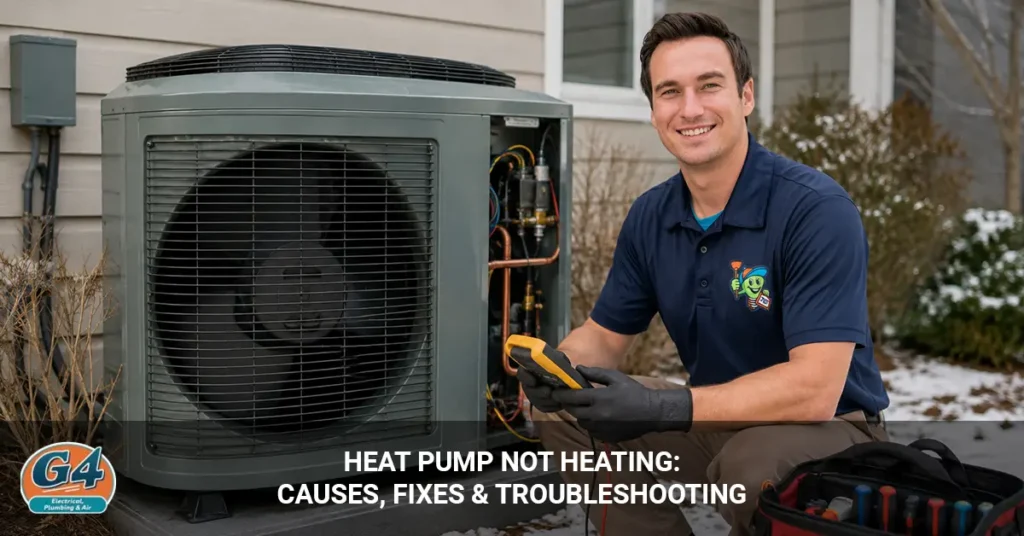
If your heat pump is not heating, check the thermostat, air filter, airflow, and outdoor unit first. These simple issues can cause poor heating without a major equipment failure.
Other common causes include a frozen outdoor coil, low refrigerant, a defrost problem, a faulty reversing valve, or an electrical or mechanical failure. Start with the checks you can safely do yourself. If the system still does not heat properly, it is time for professional diagnosis.
Why Is My Heat Pump Not Heating?
A heat pump may not heat because of an incorrect thermostat setting, restricted airflow, a dirty filter, outdoor-unit problems, low refrigerant, defrost issues, or a failed component.
Before calling for repair, check the easiest possibilities first.
Common causes include:
- Thermostat set incorrectly
- Dirty air filter
- Blocked supply vents
- Debris around the outdoor unit
- Normal defrost operation
- Excessive ice on the outdoor coil
- Low refrigerant
- Faulty reversing valve
- Electrical problems
- Compressor or fan motor failure
Some of these problems take only a few minutes to check. Others require an HVAC technician and specialized tools.
Thermostat Is Set Incorrectly
An incorrect thermostat setting can prevent the heat pump from heating even when the equipment is working properly.
Set the thermostat to HEAT and raise the temperature a few degrees above the current room temperature.
Also check the fan setting. If it is set to ON, the blower may continue running between heating cycles. That can make the air from the vents feel cool even though the heat pump is working normally.
If your thermostat uses batteries, check them too. A weak battery can cause display or communication problems on some thermostats.
Dirty Air Filter Is Restricting Airflow
A clogged air filter can reduce airflow and make your heat pump struggle to heat the home.
As dust builds up on the filter, less air can pass through the system. You may notice weaker airflow from the vents or longer heating cycles.
Remove the filter and check its condition. If it is visibly dirty, replace it with the correct size and type.
Regular maintenance can help prevent airflow and heating problems. See our HVAC maintenance checklist.
Avoid installing a filter that is more restrictive than your system can handle. Follow the filter recommendations from the equipment manufacturer.
The Outdoor Unit Is Blocked or Dirty
A blocked outdoor unit cannot move air properly, which can reduce the heat pump’s heating performance.
Check the area around the outdoor unit for leaves, grass, snow, branches, or other debris.
Clear loose debris from around the unit and keep plants and other objects away from it.
Do not bend the coil fins or open the electrical panel. If the outdoor coil itself is heavily dirty, have it professionally cleaned.
The Heat Pump Is in Defrost Mode
A heat pump can temporarily produce cooler air during a normal defrost cycle.
When the outdoor temperature is low, frost can form on the outdoor coil. The system periodically enters defrost mode to remove that frost.
During defrost, the heat pump temporarily changes how it operates. You may notice steam around the outdoor unit or cooler air from the indoor vents.
This should only last for a limited period. The system should return to normal heating after the defrost cycle ends.
If the heat pump stays in defrost for too long or repeatedly develops heavy ice, it may have a problem that needs professional attention.
The Outdoor Unit Is Frozen
Light frost can be normal, but a thick layer of ice that remains on the outdoor unit usually indicates a problem.
Heavy ice buildup can also occur with other HVAC problems. See our guide to why an AC freezes up and how to fix it.
Excessive ice can result from:
- Poor airflow
- Low refrigerant
- A defrost system problem
- A dirty outdoor coil
- A faulty fan
- Another mechanical issue
Do not chip the ice away with a tool. You could damage the coil or refrigerant lines.
If the unit is heavily iced over, turn the system off and contact an HVAC professional for diagnosis.
Refrigerant Is Low
Low refrigerant can reduce a heat pump’s ability to transfer heat into your home.
A system with low refrigerant may run for a long time without adequately heating the house. You may also notice ice on the outdoor coil or refrigerant lines.
Refrigerant does not normally disappear during regular operation. If the level is low, the system may have a leak.
Adding refrigerant without finding the leak only provides a temporary solution. A technician should locate and repair the leak before recharging the system.
Electrical or Mechanical Components Have Failed
A failed electrical or mechanical component can prevent a heat pump from producing heat even when the thermostat is calling for it.
Possible problems include:
- Failed capacitor
- Faulty fan motor
- Bad contactor
- Electrical connection problem
- Compressor failure
- Control board problem
- Reversing valve failure
These repairs require specialized equipment and electrical or refrigeration knowledge. Do not open the outdoor unit or attempt component replacement yourself.
How to Troubleshoot a Heat Pump That Is Not Heating
The safest troubleshooting process starts with the thermostat and airflow, then moves to the filter, vents, and outdoor unit.
Follow these steps before scheduling a repair.
1. Check the Thermostat
Make sure the thermostat is set to HEAT and the temperature is higher than the current room temperature.
If the display is blank, check the batteries if applicable.
Give the heat pump several minutes to respond after changing the setting.
Also check whether the fan is set to AUTO or ON. AUTO allows the blower to run mainly during heating cycles.
2. Check the Air Filter
Replace the filter if it is visibly dirty or clogged.
A restricted filter can reduce airflow and make the heat pump work harder.
Make sure the replacement filter is the correct size and installed in the proper direction.
3. Check the Vents
Make sure your supply vents are open and not blocked by furniture, curtains, rugs, or other objects.
If one room has poor airflow while the rest of the home is comfortable, check that room’s vent first.
If airflow is weak throughout the house, the issue may be deeper in the HVAC system.
4. Inspect the Outdoor Unit
Check the outdoor unit for leaves, snow, grass, or other debris that could restrict airflow.
Clear loose debris around the equipment if you can do so safely.
Keep the area around the unit reasonably clear so air can move freely.
Do not remove electrical covers or attempt to repair the equipment.
5. Check for Excessive Ice
Look for thick ice on the outdoor coil or refrigerant lines.
A small amount of frost can be normal in cold weather. Heavy ice that does not clear during a defrost cycle is not.
If the outdoor unit is heavily frozen, do not try to break the ice off. Turn the system off and arrange for professional service.
6. Check Whether the System Is Running
Listen for both the indoor blower and outdoor unit when the thermostat calls for heat.
If the indoor fan runs but the outdoor unit does not, there may be an electrical or equipment problem.
If the outdoor unit runs but the house still does not warm up, possible causes include low refrigerant, airflow problems, defrost issues, or a faulty component.
7. Give the Heat Pump Time to Heat
A heat pump normally produces warm air rather than the very hot air you may expect from a gas furnace.
This difference is one reason homeowners often compare heat pumps vs. furnaces when choosing a heating system.
The air coming from the vents may feel only moderately warm, especially during very cold weather.
Give the system enough time to raise the indoor temperature.
However, if it runs continuously and the house remains cold, something may be wrong.
Why Is My Heat Pump Blowing Cold Air?
A heat pump can blow cooler air briefly during defrost, but continuous cold air usually points to a heating problem.
Start by checking the thermostat and filter. If both are fine, the cause may be refrigerant, defrost, airflow, or equipment-related.
Cold Air During a Defrost Cycle
Cooler air during a short defrost cycle can be completely normal.
The heat pump temporarily changes its operation to melt frost from the outdoor coil.
Once defrost finishes, the system should return to heating mode.
If you notice cold air for an unusually long time, or the system repeatedly enters defrost, have it checked.
Thermostat or Fan Setting Problem
The wrong thermostat or fan setting can make normal heat pump operation feel like cold air.
Make sure the thermostat is set to HEAT and the fan is not running continuously unless you want it to.
If changing the settings does not help, continue troubleshooting the filter and outdoor unit.
Low Refrigerant
Low refrigerant can cause a heat pump to lose heating capacity and blow air that feels too cool.
Other signs may include long run times, poor heating, or ice buildup.
Because refrigerant problems usually involve a leak or another system issue, a technician should diagnose and repair the cause.
Reversing Valve Problem
A faulty reversing valve can prevent the heat pump from switching into heating mode correctly.
The reversing valve controls the direction of refrigerant flow so the system can switch between heating and cooling.
If the valve is stuck or fails, the heat pump may remain in the wrong operating mode.
This is a professional repair and should not be attempted as a DIY project.
Compressor or Other Component Problem
A compressor, motor, control board, or electrical problem can also prevent the heat pump from heating properly.
These problems are more likely when the system makes unusual noises, repeatedly shuts down, trips a breaker, or fails to operate normally.
Professional testing is needed to identify the failed component.
When Is a Heat Pump Not Heating a Serious Problem?
A heat pump needs professional attention when it cannot maintain indoor temperature, stays heavily frozen, repeatedly trips a breaker, or shows signs of an electrical or mechanical failure.
If the system is older and needs major repairs, replacement may also be worth considering. See our guide to heat pump replacement cost.
Call an HVAC technician if:
- The heat pump runs constantly but the home stays cold.
- The outdoor unit remains heavily iced over.
- The outdoor unit does not run.
- The system repeatedly trips the breaker.
- You smell burning or overheated wiring.
- You hear loud or unusual mechanical noises.
- The system repeatedly loses heating performance.
- You suspect a refrigerant leak.
- Basic thermostat and airflow checks do not fix the problem.
Do not keep resetting a breaker that repeatedly trips. The breaker may be protecting the system from an electrical fault.
Can You Fix a Heat Pump That Is Not Heating Yourself?
You can handle a few basic troubleshooting steps yourself, but refrigerant, electrical, and major mechanical repairs require a qualified HVAC technician.
Safe homeowner checks include:
- Adjusting the thermostat
- Replacing a dirty air filter
- Opening blocked vents
- Clearing loose debris around the outdoor unit
- Checking for excessive ice
Avoid trying to:
- Add refrigerant
- Open electrical panels
- Replace capacitors
- Repair refrigerant lines
- Replace a reversing valve
- Work on the compressor
- Chip ice off the outdoor coil
There is an important difference between troubleshooting and repairing. Checking a thermostat or filter is reasonable. Working on electrical or sealed refrigeration components is not a safe DIY task.
Regular professional maintenance can also help catch these problems earlier. Learn more about an HVAC service agreement.
How Much Does Heat Pump Repair Cost?
Heat pump repair typically costs about $200 to $1,500, but the final price depends on the failed component, labor, accessibility, and repair complexity.
A simple thermostat or electrical repair may cost much less than a compressor, reversing valve, or refrigerant-related repair.
The total price can include:
- Diagnostic service
- Labor
- Replacement parts
- Refrigerant
- Leak repair
- System testing
Have the problem diagnosed before approving a major repair. A heat pump that is not heating could have a simple airflow problem or a much more expensive component failure.
If repair costs are becoming difficult to justify on an aging system, you can also compare them with typical HVAC replacement costs.
Frequently Asked Questions
Why is my heat pump running but not heating?
A heat pump that runs but does not heat may have a dirty filter, restricted airflow, frozen outdoor coil, low refrigerant, defrost problem, reversing valve issue, or another equipment fault. Check the thermostat and filter first. If the problem continues, have the system professionally diagnosed.
Why is my heat pump blowing cold air?
A heat pump can blow cooler air briefly during a normal defrost cycle. If it continuously blows cold air, check the thermostat and filter. Persistent cold air can indicate low refrigerant, a reversing valve problem, airflow restriction, or another equipment failure.
How do I reset my heat pump?
You can usually reset a heat pump by turning the thermostat off, waiting several minutes, and then setting it back to HEAT. Some systems have a separate reset procedure. Do not repeatedly reset the circuit breaker if it trips again, because that can indicate an electrical problem.
Should a heat pump have ice on it?
Light frost can be normal during cold weather because a heat pump extracts heat from outdoor air. The system should periodically enter defrost mode and clear the frost. Thick ice that remains on the outdoor unit is a sign that the system may need service.
Why does my heat pump run constantly but not heat the house?
A heat pump may run for long periods during very cold weather, but it should still provide heat. If it runs constantly without maintaining the thermostat setting, possible causes include restricted airflow, low refrigerant, excessive ice, an equipment problem, or an improperly sized system.
When should I call an HVAC technician for a heat pump?
Call an HVAC technician when basic thermostat and airflow checks do not solve the problem, or when you see heavy ice, hear unusual noises, smell burning, experience repeated breaker trips, or suspect a refrigerant or mechanical problem.
Final Thought
If your heat pump is not heating, start with the thermostat, air filter, vents, and outdoor unit. These checks can identify simple problems without requiring a service call.
Briefly cooler air during a defrost cycle can be normal. But persistent cold air, heavy ice, poor heating, long run times, or unusual system behavior can indicate a refrigerant, electrical, defrost, reversing valve, or mechanical problem.
If the basic checks do not restore normal heating, do not open the system or add refrigerant yourself. A qualified HVAC technician can diagnose the actual cause and recommend the right repair.
If your heat pump still is not heating properly, G4 Electrical & Plumbing provides heat pump services for professional diagnosis and repair.