
HVAC replacement costs in 2026 typically range from $5,000 to $15,000, with most homeowners spending around $7,500 to $12,500 for a complete heating and cooling system replacement. High-efficiency systems, larger homes, ductwork upgrades, and premium brands can increase costs to $20,000 or more.
If your HVAC system is struggling to keep your home comfortable, breaking down frequently, or causing your energy bills to rise, you may be wondering whether it’s time for a replacement. While replacing an HVAC system is a significant investment, a new system can improve comfort, reduce repair costs, and lower monthly energy expenses.
The total cost of HVAC replacement depends on several factors, including the type of system, equipment size, energy efficiency rating, labor costs, and whether additional work such as ductwork modifications or electrical upgrades is required.
Fortunately, understanding current HVAC replacement costs can help you budget more accurately and avoid surprises when collecting estimates from contractors.
In this guide, you’ll learn how much HVAC replacement costs in 2026, what factors affect pricing, and how to determine whether replacing your system is the right choice for your home.
How Much Does an HVAC Replacement Cost in 2026?
HVAC replacement costs in 2026 generally range from $5,000 to $25,000 or more, depending on the system type, efficiency level, home size, and installation complexity. Most homeowners pay between $7,500 and $15,000 for a professionally installed HVAC system.
| HVAC System Type | Average Replacement Cost |
| Basic HVAC System | $5,000–$9,000 |
| Mid-Range System | $9,000–$15,000 |
| High-Efficiency System | $15,000–$25,000+ |
A basic system typically includes standard-efficiency equipment and a straightforward installation. These systems are often suitable for smaller homes or homeowners looking for the lowest upfront cost.
Mid-range systems provide a balance between affordability and energy efficiency. They are the most common choice for homeowners because they offer better performance and lower operating costs without the premium price of high-end equipment.
High-efficiency systems cost more initially but can significantly reduce heating and cooling expenses over time. These systems often include advanced features such as variable-speed compressors, smart controls, and higher SEER2 ratings.
The final cost of HVAC replacement depends on factors such as equipment size, labor rates, ductwork condition, home layout, and local permit requirements.
HVAC Replacement Cost at a Glance
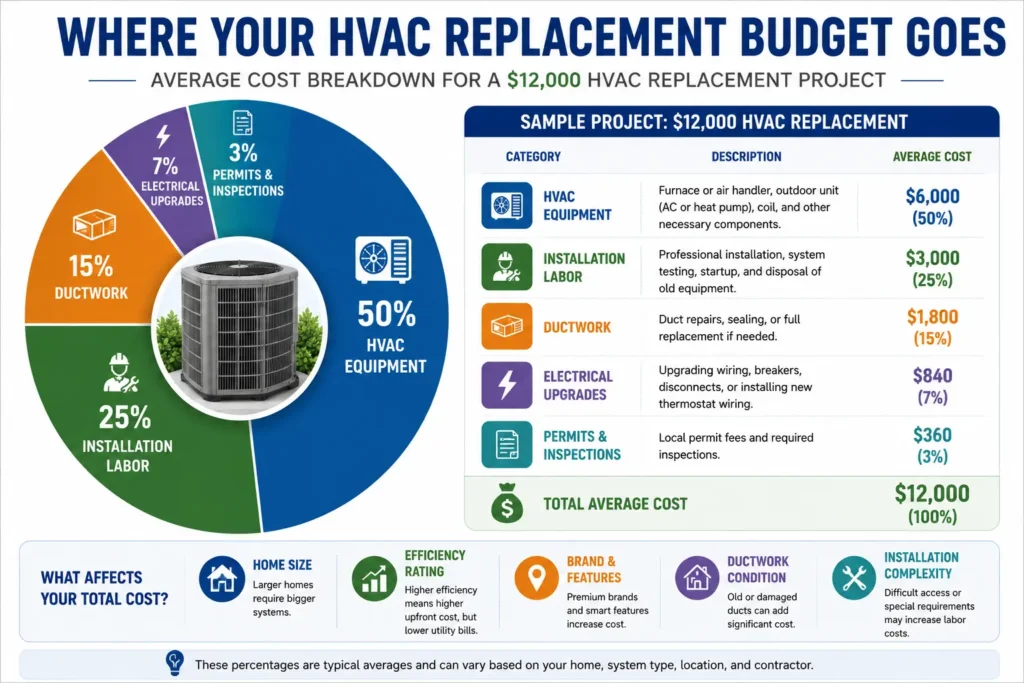
The total cost of replacing an HVAC system includes more than just the equipment. Labor, permits, ductwork modifications, and other upgrades can significantly affect the final price.
| Cost Category | Average Cost |
| HVAC Equipment | $4,000–$12,000 |
| Installation Labor | $2,000–$6,000 |
| Ductwork Replacement | $2,000–$8,000 |
| Smart Thermostat | $150–$700 |
| Electrical Upgrades | $500–$3,000 |
| Permit Fees | $100–$500 |
| Total Installed Cost | $5,000–$25,000+ |
HVAC equipment typically represents the largest portion of the project cost. The type of system, brand, efficiency rating, and unit size all influence equipment pricing.
Labor is another major expense. Proper installation is critical because even the best HVAC system can perform poorly if installed incorrectly.
Some homes may also require ductwork repairs or replacement. Damaged, leaking, or improperly sized ducts can reduce system efficiency and impact indoor comfort.
Additional costs such as smart thermostats, electrical upgrades, permits, and inspections can also contribute to the overall investment.
Understanding these expenses can help homeowners compare estimates more effectively and make informed decisions when replacing an HVAC system.
HVAC Replacement Cost by System Type
HVAC replacement costs vary by system type because different systems require different equipment, installation methods, and labor requirements. The type of HVAC system you choose is one of the biggest factors affecting the total replacement cost.
Central Air Conditioner and Furnace Replacement Cost
Replacing a central air conditioner and furnace typically costs $7,000 to $16,000. This is the most common HVAC setup in the United States and provides both heating and cooling through a shared duct system.
The total cost depends on:
- System size
- Efficiency rating
- Furnace type
- Brand selection
- Ductwork condition
Most homeowners choose this option because it offers reliable year-round comfort and works well in a wide range of climates.
Heat Pump Replacement Cost
Heat pump replacement typically costs $6,000 to $18,000. Heat pumps provide both heating and cooling using a single system, making them an energy-efficient option for many homeowners.
Several factors affect heat pump pricing, including:
- System capacity
- Efficiency rating
- Climate requirements
- Installation complexity
Although heat pumps often have a higher upfront cost than traditional air conditioners, they can reduce energy consumption and lower utility bills in suitable climates.
Ductless Mini Split Replacement Cost
Ductless mini-split replacement usually costs $3,000 to $15,000. Homeowners considering a ductless system can also review our guide on ductless mini split installation cost. The final cost depends largely on the number of indoor units required.
Typical pricing includes:
| Mini Split Type | Average Cost |
| Single-Zone System | $3,000–$7,000 |
| Multi-Zone System | $7,000–$15,000+ |
Mini split systems are ideal for homes without existing ductwork, room additions, garages, and areas with specific heating and cooling needs.
Dual Fuel HVAC System Replacement Cost
Dual fuel HVAC system replacement generally costs $8,000 to $18,000. These systems combine a heat pump with a gas furnace to maximize energy efficiency throughout the year.
During mild weather, the heat pump provides heating and cooling. When outdoor temperatures drop significantly, the furnace takes over to provide efficient heating.
Benefits of dual fuel systems include:
- Improved energy efficiency
- Lower heating costs
- Enhanced comfort
- Better cold-weather performance
Because they use two separate heating technologies, installation costs are often higher than standard systems.
Packaged HVAC Unit Replacement Cost
Packaged HVAC unit replacement typically costs $6,000 to $14,000. These systems contain all major heating and cooling components in a single outdoor cabinet.
Packaged units are commonly installed in:
- Smaller homes
- Mobile homes
- Commercial buildings
- Properties with limited indoor space
While installation can be simpler in some situations, equipment replacement costs vary depending on system size, efficiency level, and accessibility.
HVAC Replacement Cost by System Type Comparison
| HVAC System Type | Average Replacement Cost |
| Central AC and Furnace | $7,000–$16,000 |
| Heat Pump | $6,000–$18,000 |
| Ductless Mini Split | $3,000–$15,000 |
| Dual Fuel System | $8,000–$18,000 |
| Packaged HVAC Unit | $6,000–$14,000 |
The best HVAC system for your home depends on your climate, budget, energy-efficiency goals, and existing equipment. Learn how to choose the right HVAC system for your home. A professional load calculation and system evaluation can help determine which option provides the best long-term value.
HVAC Replacement Cost by Unit Size
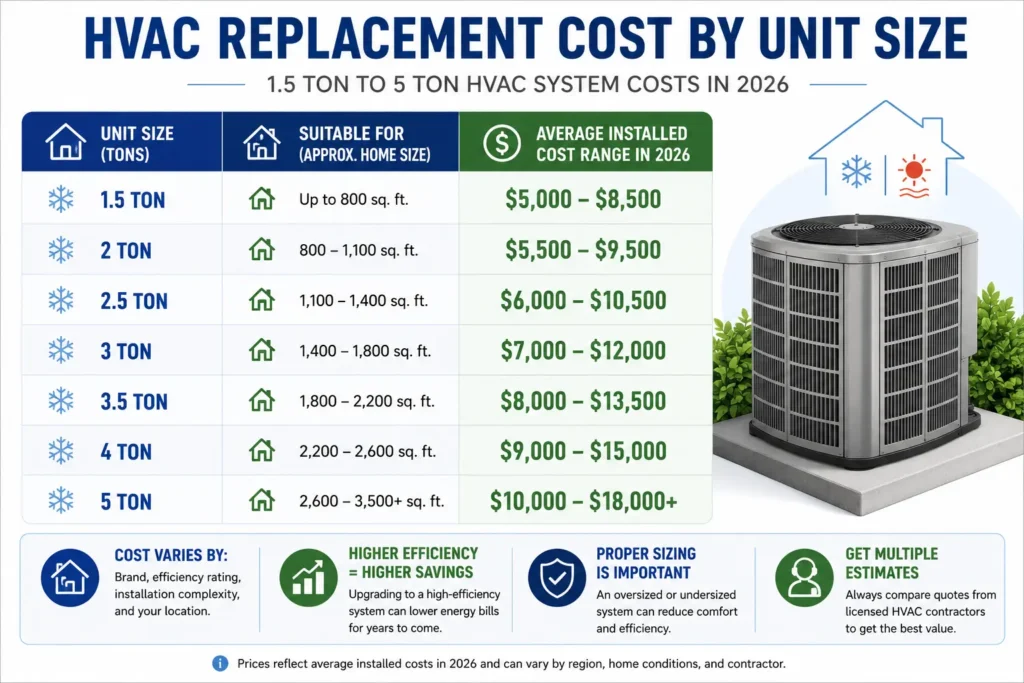
HVAC replacement costs typically range from $5,000 to $18,000 or more, depending on the size of the system. Larger HVAC units cost more because they require bigger equipment, additional materials, and more installation labor.
Choosing the correct system size is just as important as choosing the right brand. An undersized unit may struggle to keep your home comfortable, while an oversized system can waste energy and increase wear and tear.
1.5 Ton HVAC Replacement Cost
A 1.5-ton HVAC replacement typically costs $5,000 to $8,500 installed. This size is commonly used in apartments, condos, small homes, and well-insulated spaces up to about 900 square feet.
Homeowners often choose a 1.5-ton system because it offers an affordable replacement option for smaller living spaces.
2 Ton HVAC Replacement Cost
A 2-ton HVAC replacement typically costs $5,500 to $9,500 installed. This system size is often suitable for homes between 900 and 1,200 square feet, depending on climate, insulation, and ceiling height.
A 2-ton system provides a balance between efficiency and cooling capacity for many smaller homes.
2.5 Ton HVAC Replacement Cost
A 2.5-ton HVAC replacement typically costs $6,000 to $10,500 installed. Many homes between 1,200 and 1,500 square feet require a system in this size range.
This size is a popular choice because it can provide sufficient heating and cooling without significantly increasing installation costs.
3 Ton HVAC Replacement Cost
A 3-ton HVAC replacement typically costs $7,000 to $12,000 installed. This is one of the most common HVAC system sizes for residential properties.
Many homes between 1,500 and 2,000 square feet use a 3-ton system, although the exact requirement depends on the home’s design and energy efficiency.
3.5 Ton HVAC Replacement Cost
A 3.5-ton HVAC replacement typically costs $8,000 to $13,500 installed. Homes with larger floor plans, open layouts, or higher cooling demands often require this size.
In warmer climates, a 3.5-ton system may provide better comfort and more consistent temperatures throughout the home.
4 Ton HVAC Replacement Cost
A 4-ton HVAC replacement typically costs $9,000 to $15,000 installed. These systems are commonly found in homes between 2,000 and 2,500 square feet.
Because larger systems require more equipment and refrigerant, replacement costs increase as capacity increases.
5 Ton HVAC Replacement Cost
A 5-ton HVAC replacement typically costs $10,000 to $18,000 or more installed. This size is generally used in large homes, multi-story properties, and homes located in very warm climates.
A 5-ton system delivers significant heating and cooling capacity, but proper sizing is critical to maintain efficiency and comfort.
HVAC Replacement Cost by Tonnage
| Unit Size | Average Installed Cost |
| 1.5 Ton | $5,000–$8,500 |
| 2 Ton | $5,500–$9,500 |
| 2.5 Ton | $6,000–$10,500 |
| 3 Ton | $7,000–$12,000 |
| 3.5 Ton | $8,000–$13,500 |
| 4 Ton | $9,000–$15,000 |
| 5 Ton | $10,000–$18,000+ |
While square footage can provide a general guideline, it should never be the only factor used to size an HVAC system. Insulation levels, ceiling height, window efficiency, sun exposure, local climate, and the number of occupants can all affect the size your home actually needs.
For the best results, ask your HVAC contractor to perform a professional load calculation before recommending a replacement system. This helps ensure your new HVAC system is properly sized for comfort, efficiency, and long-term performance.
HVAC Replacement Cost by Home Size
HVAC replacement costs typically increase as home size increases because larger homes need larger systems to provide adequate heating and cooling. In most cases, homeowners can expect to pay between $5,000 and $22,000+, depending on the size of the home and the HVAC system installed.
While square footage is an important factor, it’s not the only one. Insulation, ceiling height, window efficiency, climate, and home layout can all affect the size and cost of the system your home requires.
HVAC Replacement Cost for a 1,000 Sq Ft Home
Replacing an HVAC system in a 1,000-square-foot home typically costs $5,000 to $8,500 installed. Smaller homes generally require smaller HVAC units, which helps keep equipment and installation costs lower.
These homes often use 1.5-ton to 2-ton systems, depending on climate conditions and insulation quality.
HVAC Replacement Cost for a 1,500 Sq Ft Home
A new HVAC system for a 1,500-square-foot home typically costs $6,000 to $10,500 installed. Most homes in this size range require a 2-ton to 3-ton system.
The final cost depends on the efficiency rating, brand, and whether any ductwork upgrades are needed.
HVAC Replacement Cost for a 2,000 Sq Ft Home
HVAC replacement for a 2,000-square-foot home usually costs $7,000 to $12,500 installed. Many homes of this size require a 3-ton system, although actual sizing should be based on a professional load calculation.
Higher-efficiency equipment and premium brands can increase the overall project cost.
HVAC Replacement Cost for a 2,500 Sq Ft Home
Replacing an HVAC system in a 2,500-square-foot home typically costs $8,000 to $14,000 installed. Homes in this size range often require a 3.5-ton to 4-ton system to maintain consistent indoor comfort.
Installation complexity and ductwork condition can also affect pricing.
HVAC Replacement Cost for a 3,000 Sq Ft Home
A new HVAC system for a 3,000-square-foot home generally costs $9,000 to $16,000 installed. Larger homes usually require more heating and cooling capacity, which increases equipment and labor costs.
Many homeowners choose higher-efficiency systems at this size to help offset long-term energy expenses.
HVAC Replacement Cost for a 3,500 Sq Ft Home
HVAC replacement for a 3,500-square-foot home typically costs $10,000 to $18,000 installed. These homes often require larger systems or zoning solutions to maintain even temperatures throughout the property.
Additional ductwork modifications may also increase project costs.
HVAC Replacement Cost for a 4,000 Sq Ft Home
Replacing HVAC equipment in a 4,000-square-foot home generally costs $12,000 to $22,000 or more installed. Large homes often require 5-ton systems, multiple HVAC units, or advanced zoning systems.
The final cost depends on the home’s design, efficiency goals, and equipment requirements.
HVAC Replacement Cost by Home Size
| Home Size | Average HVAC Cost |
| 1,000 Sq Ft | $5,000–$8,500 |
| 1,500 Sq Ft | $6,000–$10,500 |
| 2,000 Sq Ft | $7,000–$12,500 |
| 2,500 Sq Ft | $8,000–$14,000 |
| 3,000 Sq Ft | $9,000–$16,000 |
| 3,500 Sq Ft | $10,000–$18,000 |
| 4,000 Sq Ft | $12,000–$22,000+ |
Home size provides a useful starting point when estimating HVAC replacement costs, but it should not be used as the only sizing method. A professional load calculation evaluates factors such as insulation, windows, climate, sun exposure, and occupancy to determine the correct system size.
Choosing the right-sized HVAC system can improve comfort, lower energy costs, and help your new equipment last longer.
HVAC Replacement Cost by Efficiency Rating
HVAC replacement costs increase as efficiency ratings increase. Higher-efficiency systems cost more upfront, but they can lower energy bills, improve indoor comfort, and reduce operating costs over the life of the system.
For many homeowners, the right choice depends on budget, local energy costs, and how long they plan to stay in the home.
Standard Efficiency HVAC Systems
Standard-efficiency HVAC systems typically cost $5,000 to $10,000 installed. These systems meet current minimum efficiency requirements and usually have the lowest purchase price.
They are often a good option for homeowners who:
- Have a limited budget
- Need to replace a system quickly
- Plan to move within a few years
- Want the lowest upfront investment
While standard-efficiency systems cost less initially, they generally consume more energy than higher-efficiency models, which can result in higher monthly utility bills.
Mid-Efficiency HVAC Systems
Mid-efficiency HVAC systems typically cost $8,000 to $15,000 installed. These systems offer a balance between upfront cost and long-term energy savings.
Many homeowners choose mid-efficiency equipment because it provides:
- Better energy efficiency
- Lower utility bills
- Improved comfort
- Strong overall value
For most homes, a mid-efficiency system delivers a good return on investment without the higher price tag of premium equipment.
High-Efficiency HVAC Systems
High-efficiency HVAC systems typically cost $12,000 to $25,000 or more installed. These systems are designed to maximize energy savings and provide superior comfort.
Many high-efficiency models include:
- Variable-speed compressors
- Variable-speed blower motors
- Advanced humidity control
- Smart thermostat compatibility
- Higher SEER2 and AFUE ratings
Because these systems adjust output based on your home’s heating and cooling needs, they often operate more efficiently and maintain more consistent indoor temperatures.
Although the initial investment is higher, many homeowners recover part of the additional cost through lower energy bills over time.
HVAC Cost by Efficiency Level
| Efficiency Level | Average Installed Cost |
| Standard Efficiency | $5,000–$10,000 |
| Mid-Efficiency | $8,000–$15,000 |
| High-Efficiency | $12,000–$25,000+ |
When comparing efficiency levels, focus on both the upfront cost and the long-term operating cost. A higher-efficiency system may cost more to install, but the energy savings can make it a worthwhile investment, especially in homes with high heating and cooling demands.
HVAC Replacement Labor Costs
HVAC replacement labor typically costs $2,000 to $6,000, depending on the type of system being installed, the complexity of the project, and local labor rates. In most cases, labor accounts for 30% to 50% of the total HVAC replacement cost.
While homeowners often focus on equipment prices, professional installation plays a major role in the performance, efficiency, and lifespan of a new HVAC system.
| Labor Service | Average Cost |
| Standard Installation | $2,000–$4,000 |
| Complex Installation | $4,000–$6,000+ |
| Ductwork Modifications | $1,000–$5,000 |
| Electrical Work | $500–$3,000 |
| Permit Fees | $100–$500 |
Standard HVAC Installation Labor Cost
Standard HVAC installation labor typically costs $2,000 to $4,000. This applies to straightforward replacements where the existing ductwork, electrical connections, and system layout can be reused without significant modifications.
Most homeowners fall into this category when replacing a similar-sized HVAC system.
Complex HVAC Installation Labor Cost
Complex HVAC installations generally cost $4,000 to $6,000 or more. Projects become more expensive when contractors must modify ductwork, relocate equipment, improve ventilation, or install larger systems.
Factors that can increase labor costs include:
- Difficult equipment access
- Attic or crawl space installations
- Multi-story homes
- System redesigns
- Zoning system installation
Ductwork Modification Costs
Ductwork modifications typically cost $1,000 to $5,000. If existing ducts are damaged, leaking, undersized, or poorly designed, they may need repairs or replacement before the new HVAC system is installed.
Proper ductwork helps ensure efficient airflow, better comfort, and lower energy bills.
Electrical Work Costs
Electrical upgrades generally cost $500 to $3,000. Some HVAC replacements require new wiring, disconnect switches, breakers, or electrical panel upgrades to meet current code requirements.
Older homes are more likely to need electrical improvements during HVAC replacement.
Permit and Inspection Fees
Permit and inspection fees usually range from $100 to $500, depending on local building requirements. Many cities and counties require permits to ensure the installation meets safety and building codes.
Some HVAC contractors include permit costs in their estimates, while others list them separately.
Why Professional Installation Matters
Professional installation is just as important as the equipment itself. Even a high-quality HVAC system can perform poorly if it is installed incorrectly.
Proper installation helps:
- Improve energy efficiency
- Reduce utility costs
- Extend equipment lifespan
- Maintain manufacturer warranty coverage
- Improve indoor comfort
- Prevent future repair issues
When comparing HVAC replacement estimates, look beyond the equipment price and pay close attention to the scope of labor included. A properly installed system can save thousands of dollars in future operating and repair costs.
What Factors Affect HVAC Replacement Costs?
Several factors affect HVAC replacement costs, including the size of your home, the type of system you choose, installation requirements, and local labor rates. Understanding these factors can help you better evaluate estimates and determine what is driving the total project cost.
Home Size
Home size is one of the biggest factors affecting HVAC replacement costs. Larger homes typically require larger heating and cooling systems, which increases equipment, materials, and installation costs.
Homes with multiple floors, open floor plans, or high ceilings may also require additional capacity to maintain comfortable temperatures throughout the property.
System Type
The type of HVAC system you choose can significantly impact the total replacement cost. Traditional furnace and air conditioner systems, heat pumps, ductless mini splits, dual-fuel systems, and packaged units all have different equipment and installation requirements.
More advanced systems often cost more upfront but may provide better energy efficiency and long-term savings.
Equipment Efficiency
Higher-efficiency HVAC systems generally cost more to purchase and install. However, they often use less energy and can help reduce monthly utility bills.
Many homeowners choose higher-efficiency systems because they offer improved comfort, quieter operation, and lower operating costs over the life of the equipment.
Ductwork Condition
The condition of your ductwork can greatly affect replacement costs. If ducts are damaged, leaking, poorly designed, or undersized, repairs or replacement may be necessary before the new system is installed.
Addressing ductwork issues can improve airflow, increase efficiency, and help your HVAC system perform as intended.
Local Labor Rates
Labor costs vary by location and can significantly affect the total project price. Homeowners in large metropolitan areas or regions with a higher cost of living often pay more for HVAC installation than those in smaller cities or rural areas.
Labor shortages and local demand can also influence pricing.
Brand Selection
HVAC brands differ in price, features, efficiency ratings, and warranty coverage. Premium brands generally cost more than budget-friendly options, but they may offer advanced technology and additional features.
Choosing the right brand often comes down to balancing budget, performance, and long-term value.
Electrical Upgrades
Some HVAC replacements require electrical improvements before installation can begin. Older homes may need new wiring, upgraded breakers, disconnect switches, or electrical panel modifications to safely support modern HVAC equipment.
These upgrades can add several hundred or even several thousand dollars to the project cost.
Permit Requirements
Many cities and counties require permits and inspections when replacing HVAC equipment. Permit costs vary by location and are typically based on local building regulations.
Permits help ensure the installation meets current safety and building code requirements.
Accessibility
The location of your HVAC equipment can affect installation costs. Systems located in attics, crawl spaces, rooftops, or other hard-to-access areas often require additional labor and installation time.
More challenging installations usually result in higher labor charges.
Seasonal Demand
HVAC replacement costs may increase during peak heating and cooling seasons. During the hottest and coldest months of the year, contractor demand is often higher, which can affect pricing and scheduling availability.
Homeowners who replace their systems during the spring or fall may have access to better pricing, rebates, and installation schedules.
Understanding these cost factors can help you compare HVAC replacement estimates more effectively and make a well-informed decision when investing in a new heating and cooling system.
HVAC Replacement Cost by Brand
HVAC replacement costs vary by brand, with most homeowners paying between $5,500 and $20,000 or more depending on the manufacturer, system size, efficiency rating, and installation requirements. While premium brands generally cost more upfront, they may offer advanced features, higher efficiency, and longer warranty coverage.
It’s important to remember that installation quality often has a greater impact on system performance than the brand name alone.
Carrier HVAC Replacement Cost
Carrier HVAC replacement typically costs $8,000 to $18,000 installed. Carrier is one of the most recognized names in the HVAC industry and is known for producing high-quality systems with advanced technology.
Many Carrier systems offer:
- High energy efficiency
- Variable-speed technology
- Smart thermostat compatibility
- Strong warranty options
Carrier is often chosen by homeowners looking for premium performance and long-term reliability.
Trane HVAC Replacement Cost
Trane HVAC replacement generally costs $8,500 to $19,000 installed. Trane has built a reputation for manufacturing durable systems designed to perform in demanding conditions.
Homeowners often choose Trane because of its:
- Proven reliability
- Durable components
- Strong performance history
- High-efficiency options
Although Trane systems can be more expensive, many homeowners view them as a long-term investment.
Lennox HVAC Replacement Cost
Lennox HVAC replacement typically costs $8,000 to $20,000 installed. Lennox is known for offering some of the most energy-efficient residential HVAC systems on the market.
Popular benefits include:
- High SEER2 ratings
- Energy-saving technology
- Quiet operation
- Advanced comfort controls
Lennox systems often appeal to homeowners focused on maximizing energy efficiency.
Goodman HVAC Replacement Cost
Goodman HVAC replacement generally costs $5,500 to $12,000 installed. Goodman is often considered one of the most budget-friendly HVAC brands while still providing reliable performance.
Many homeowners choose Goodman because it offers:
- Competitive pricing
- Solid warranty coverage
- Widely available replacement parts
- Good overall value
For homeowners seeking affordability without sacrificing reliability, Goodman is often a popular option.
Rheem HVAC Replacement Cost
Rheem HVAC replacement typically costs $6,000 to $14,000 installed. Rheem systems are known for dependable performance, efficient operation, and competitive pricing.
Key advantages include:
- Reliable performance
- Good efficiency options
- Broad product selection
- Strong value for the price
Rheem often appeals to homeowners looking for a balance between cost and performance.
American Standard HVAC Replacement Cost
American Standard HVAC replacement usually costs $7,000 to $16,000 installed. American Standard systems are recognized for their reliability, energy efficiency, and overall build quality.
Many homeowners choose this brand because it offers:
- Consistent performance
- Durable construction
- Quiet operation
- High customer satisfaction
American Standard is frequently viewed as a premium brand without the highest premium price tag.
York HVAC Replacement Cost
York HVAC replacement typically costs $6,000 to $14,000 installed. York offers a wide range of residential HVAC equipment at various price points, making it a popular option for many homeowners.
Benefits often include:
- Flexible pricing options
- Good efficiency ratings
- Broad equipment selection
- Competitive warranties
York can be a strong choice for homeowners looking for dependable performance at a moderate cost.
HVAC Brand Cost Comparison
| Brand | Average Installed Cost |
| Carrier | $8,000–$18,000 |
| Trane | $8,500–$19,000 |
| Lennox | $8,000–$20,000 |
| Goodman | $5,500–$12,000 |
| Rheem | $6,000–$14,000 |
| American Standard | $7,000–$16,000 |
| York | $6,000–$14,000 |
When comparing HVAC brands, focus on more than just the equipment price. Warranty coverage, energy efficiency, contractor expertise, and installation quality can all have a major impact on the long-term value of your investment. A properly installed system from a reputable contractor often delivers better performance than a premium brand installed incorrectly.
Additional Costs to Consider
The total cost of HVAC replacement often includes more than just the heating and cooling equipment. Additional upgrades, repairs, and code-related requirements can add hundreds or even thousands of dollars to the final project cost.
Understanding these potential expenses can help you budget more accurately and avoid surprises during installation.
Ductwork Replacement Cost
Ductwork replacement typically costs $2,000 to $8,000. If your existing ducts are leaking, damaged, poorly designed, or too small for the new system, repairs or replacement may be necessary.
Replacing old ductwork can help:
- Improve airflow
- Increase energy efficiency
- Enhance indoor comfort
- Reduce hot and cold spots
- Lower energy bills
Even the most efficient HVAC system may struggle to perform properly if the ductwork is in poor condition.
Smart Thermostat Installation Cost
Smart thermostat installation typically costs $150 to $700. These thermostats allow homeowners to control temperature settings remotely and create automated schedules that improve efficiency.
Many smart thermostats offer features such as:
- Mobile app control
- Energy usage tracking
- Learning capabilities
- Smart home integration
- Customized scheduling
While a smart thermostat adds to the upfront cost, it may help reduce energy consumption over time.
Electrical Upgrade Costs
Electrical upgrades generally cost $500 to $3,000. Some homes require electrical improvements before a new HVAC system can be installed safely and up to code.
Common electrical upgrades include:
- New circuits
- Disconnect switches
- Breaker replacements
- Electrical panel upgrades
- Wiring modifications
Older homes are more likely to need electrical work during HVAC replacement.
Indoor Air Quality System Costs
Indoor air quality upgrades typically add $500 to $5,000 or more to the total project cost. These systems are designed to improve air quality, reduce allergens, and create a healthier indoor environment.
You may also want to understand common HVAC indoor air quality problems that affect comfort and health.
Popular options include:
- Whole-home air purifiers
- UV air purification systems
- Humidifiers
- Dehumidifiers
- Advanced filtration systems
Homeowners with allergies, asthma, or indoor air quality concerns often choose to add these upgrades during HVAC replacement.
Permit and Inspection Fees
Permit and inspection fees usually range from $100 to $500, depending on local building requirements. Most municipalities require permits when replacing HVAC equipment to ensure the installation complies with current safety and building codes.
Some contractors include permit costs in their estimates, while others list them separately. Always confirm whether permit fees are included before signing a contract.
Additional HVAC Replacement Costs at a Glance
| Additional Expense | Average Cost |
| Ductwork Replacement | $2,000–$8,000 |
| Smart Thermostat Installation | $150–$700 |
| Electrical Upgrades | $500–$3,000 |
| Indoor Air Quality Systems | $500–$5,000+ |
| Permits and Inspections | $100–$500 |
These additional costs don’t apply to every HVAC replacement project, but they can significantly affect the final price. Asking your contractor about potential upgrades and required repairs during the estimate process can help you avoid unexpected expenses later.
Signs You Need HVAC Replacement
You may need HVAC replacement if your system is more than 15 years old, requires frequent repairs, struggles to maintain comfortable temperatures, or causes energy bills to increase. While many HVAC problems can be repaired, there comes a point when replacement becomes the more cost-effective long-term solution.
If your system is showing several of the signs below, it may be time to consider upgrading to a new HVAC system. Many of these issues overlap with common AC replacement warning signs.
Your HVAC System Is More Than 15 Years Old
Most HVAC systems last between 15 and 20 years with proper maintenance. As equipment ages, it becomes less efficient and more likely to experience breakdowns.
Even if an older system is still running, replacing it with a modern, energy-efficient model can often improve comfort and reduce operating costs.
Frequent Breakdowns and Repairs
If you’re calling for repairs every year or replacing major components regularly, replacement may be the smarter investment.
Frequent repairs can quickly add up, especially when expensive parts such as compressors, blower motors, or heat exchangers begin to fail.
Rising Energy Bills
Higher energy bills are often a sign that your HVAC system is losing efficiency. Older equipment typically works harder to deliver the same level of heating and cooling.
If your utility costs continue to increase despite normal usage habits, your HVAC system may no longer be operating efficiently.
Uneven Temperatures Throughout the Home
Hot and cold spots throughout your home can indicate that your HVAC system is no longer properly meeting your heating and cooling needs.
While ductwork issues can sometimes cause uneven temperatures, an aging or improperly sized HVAC system may also be the problem.
Excessive Noise During Operation
HVAC systems should operate relatively quietly. Loud banging, rattling, grinding, squealing, or buzzing sounds can indicate worn components or significant mechanical problems.
While some noise issues can be repaired, persistent or recurring problems may signal that the system is nearing the end of its lifespan.
Poor Indoor Air Quality
An aging HVAC system can contribute to poor indoor air quality by failing to properly filter, circulate, and condition the air.
You may notice:
- Increased dust accumulation
- More allergy symptoms
- Higher humidity levels
- Stale indoor air
- Excessive dryness
A new HVAC system can often improve airflow, filtration, and overall indoor comfort.
Outdated Refrigerant
Many older HVAC systems use refrigerants that are becoming more expensive and difficult to obtain. If your system develops a refrigerant leak, repair costs can increase significantly.
In some cases, replacing the system may be more economical than continuing to repair equipment that relies on outdated refrigerants.
Reduced Heating or Cooling Performance
If your home never feels comfortable, even when the HVAC system runs continuously, the equipment may be losing its ability to heat or cool effectively.
Reduced performance can result from age-related wear, declining efficiency, or components that are nearing failure.
When Replacement Makes Sense
One warning sign alone does not always mean you need a new HVAC system. However, if your system is older, requires frequent repairs, and no longer delivers reliable comfort, replacement often provides better long-term value than continuing to invest in repairs.
A new HVAC system can improve energy efficiency, lower utility bills, reduce repair expenses, and provide more consistent comfort throughout your home.
HVAC Replacement vs HVAC Repair
HVAC repair is usually the better choice for newer systems with minor problems, while replacement often makes more sense for older systems with frequent breakdowns or expensive repairs. The right decision depends on the age of the equipment, the repair cost, and the overall condition of the system.
Compare the financial impact of repairing versus replacing an HVAC system. While repairing a system costs less upfront, replacing an aging HVAC unit can reduce future repair expenses and improve energy efficiency.
When HVAC Repair Makes Sense
Repair is often the most cost-effective option when the system still has many years of useful life remaining.
In most cases, repair makes sense when:
- The system is less than 10 years old
- Repair costs are relatively low
- Warranty coverage is available
- The equipment has been well maintained
- This is the first major repair
- The system still heats and cools efficiently
For newer HVAC systems, repairing a failed component is often far less expensive than replacing the entire system.
When HVAC Replacement Makes Sense
Replacement is often the better long-term investment when repair costs continue to increase or the system is nearing the end of its lifespan. If you’re replacing only the cooling portion of your system, review our complete guide to AC replacement cost.
Replacement may be the better option when:
- The system is more than 15 years old
- Major components have failed
- Repair costs exceed 50% of replacement costs
- Energy bills continue rising
- Breakdowns are becoming more frequent
- Comfort problems persist despite repairs
- The system uses outdated refrigerant
A new HVAC system can provide better efficiency, improved comfort, lower utility costs, and fewer repair issues.
The $5,000 Rule
The $5,000 Rule is a simple way to help determine whether repairing or replacing an HVAC system makes more financial sense.
Multiply the repair cost by the age of the system:
Repair Cost × System Age
If the result is greater than 5,000, replacement is often the better long-term investment.
For example:
- Repair Cost: $600
- System Age: 10 Years
600 \times 10 = 6000
Because the result is greater than 5,000, replacing the system may provide better value than continuing to repair it.
Another example:
- Repair Cost: $300
- System Age: 8 Years
300 \times 8 = 2400
Because the result is below 5,000, repairing the system may be the more practical choice.
Which Option Is Best?
There is no single answer that works for every homeowner. If your HVAC system is relatively new and the repair is minor, repairing it is usually the smartest choice.
However, if the system is aging, inefficient, and experiencing frequent breakdowns, replacement often provides greater long-term savings and reliability. A qualified HVAC contractor can help evaluate your system and determine which option makes the most financial sense for your situation.
How to Save Money on HVAC Replacement
You can save money on HVAC replacement by comparing quotes, choosing the right installation timing, taking advantage of rebates, and selecting a properly sized system. A little planning can reduce upfront costs and help you get the best value from your investment.
Get Multiple Quotes
Getting quotes from multiple HVAC contractors is one of the easiest ways to save money. Prices, equipment recommendations, warranty coverage, and installation services can vary significantly between companies.
Aim to get at least three written estimates before making a decision. Comparing quotes helps you identify fair pricing and avoid overpaying for equipment or labor.
Replace During the Off-Season
Replacing your HVAC system during the spring or fall can often reduce costs. These seasons are typically slower for HVAC contractors, which may lead to better pricing, special promotions, and faster scheduling.
Waiting until your system fails during peak summer or winter demand can limit your options and increase costs.
Check Rebates and Incentives
Many utility companies, manufacturers, and government programs offer rebates for qualifying high-efficiency HVAC systems.
These incentives can help offset the cost of replacement and reduce your overall investment. Before purchasing a new system, ask your contractor about available rebates in your area.
Consider Financing Options
Many HVAC companies offer financing programs that allow homeowners to spread replacement costs over time.
Financing can make it easier to invest in a higher-efficiency system without paying the full amount upfront. Be sure to review interest rates, payment terms, and financing conditions before committing.
Choose the Right System Size
Installing the correct size HVAC system is essential for both comfort and cost savings. An oversized system usually costs more to purchase and may cycle on and off too frequently, reducing efficiency.
A properly sized system can:
- Improve comfort
- Lower energy bills
- Reduce equipment wear
- Extend system lifespan
A professional load calculation is the best way to determine the correct system size for your home.
Questions to Ask Before Hiring an HVAC Contractor
Asking the right questions before hiring an HVAC contractor can help you avoid costly mistakes and ensure you receive a quality installation.
Are You Licensed and Insured?
A licensed and insured contractor helps protect you from liability and ensures the work meets local requirements.
Always verify credentials before signing a contract.
What Warranty Is Included?
Ask about both manufacturer warranties and labor warranties. Understanding warranty coverage can help protect your investment and reduce future repair costs.
Will You Perform a Manual J Load Calculation?
A Manual J load calculation helps determine the correct HVAC system size for your home. Contractors should not recommend equipment based solely on square footage.
Proper sizing is critical for comfort, efficiency, and system longevity.
Are Permits Included in the Quote?
Some contractors include permit fees in their estimates, while others charge them separately.
Clarifying this upfront helps prevent unexpected costs later.
What Efficiency Rating Do You Recommend?
Ask why a specific efficiency level is being recommended and how it may affect energy savings, comfort, and long-term operating costs.
This can help you determine whether a higher-efficiency system is worth the additional investment.
Will You Inspect Existing Ductwork?
Ductwork problems can reduce the performance of a new HVAC system. A thorough inspection helps identify leaks, damage, or sizing issues that should be addressed during installation.
What Maintenance Is Required After Installation?
Understanding maintenance requirements can help you protect your warranty, maintain efficiency, and extend the lifespan of your new HVAC system. Following a regular HVAC maintenance checklist can help maximize the life of your new equipment.
A reputable contractor should explain the recommended maintenance schedule and provide guidance on keeping the system operating properly.
Taking the time to ask these questions can help you compare contractors more effectively, avoid hidden costs, and choose the right company for your HVAC replacement project.
Frequently Asked Questions
How much does HVAC replacement cost in 2026?
HVAC replacement costs in 2026 typically range from $7,500 to $15,000 for most homeowners. Larger homes, premium brands, high-efficiency systems, and extensive ductwork modifications can increase costs to $25,000 or more.
How long does HVAC replacement take?
Most HVAC replacements take one to three days to complete. Simple replacements may be finished in a single day, while projects involving ductwork modifications, electrical upgrades, or zoning systems can take longer. For a detailed breakdown, see our guide on HVAC installation time.
Is it cheaper to repair or replace HVAC?
Repairing an HVAC system is usually less expensive in the short term. However, replacement often provides better long-term value when the system is older, repair costs are high, or breakdowns are becoming more frequent.
How often should HVAC systems be replaced?
Most HVAC systems last 15 to 20 years with proper maintenance. Replacement is often recommended when efficiency declines, repair costs increase, or the system can no longer maintain consistent indoor comfort.
Does homeowners insurance cover HVAC replacement?
Homeowners insurance may cover HVAC replacement if the damage is caused by a covered event, such as fire, lightning, hail, or severe weather. Normal wear and tear, aging equipment, and mechanical failures are typically not covered by standard policies.
What is the most expensive part of HVAC replacement?
The HVAC equipment itself is usually the most expensive part of the project. High-efficiency systems, heat pumps, and premium-brand equipment can account for a significant portion of the total replacement cost.
Can I replace just the air conditioner or furnace?
Yes, in some cases you can replace only the air conditioner or furnace. However, replacing both systems at the same time often improves efficiency, performance, and compatibility, especially if both units are older.
Does a new HVAC system lower energy bills?
Yes, a new HVAC system can reduce energy bills, especially if you’re replacing older equipment. Modern high-efficiency systems use less energy and often provide better temperature control and comfort throughout the home.
Final Thoughts
HVAC replacement costs in 2026 typically range from $5,000 to $25,000 or more, with most homeowners spending between $7,500 and $15,000 for a complete system replacement. The final cost depends on factors such as system size, equipment type, efficiency rating, labor costs, ductwork condition, and any additional upgrades required.
Although replacing an HVAC system is a major investment, it can provide significant long-term benefits. A properly sized and professionally installed system can improve indoor comfort, lower energy bills, reduce repair costs, and deliver more reliable heating and cooling throughout the year.
When comparing HVAC replacement estimates, don’t focus on price alone. Consider the contractor’s experience, warranty coverage, equipment efficiency, and the quality of the installation. In many cases, investing a little more upfront can result in lower operating costs and fewer problems down the road.
Before making a decision, get multiple quotes, ask detailed questions, review available rebates and incentives, and make sure a professional load calculation is performed. Taking the time to evaluate your options can help you choose the right HVAC system for your home and get the best value from your investment.