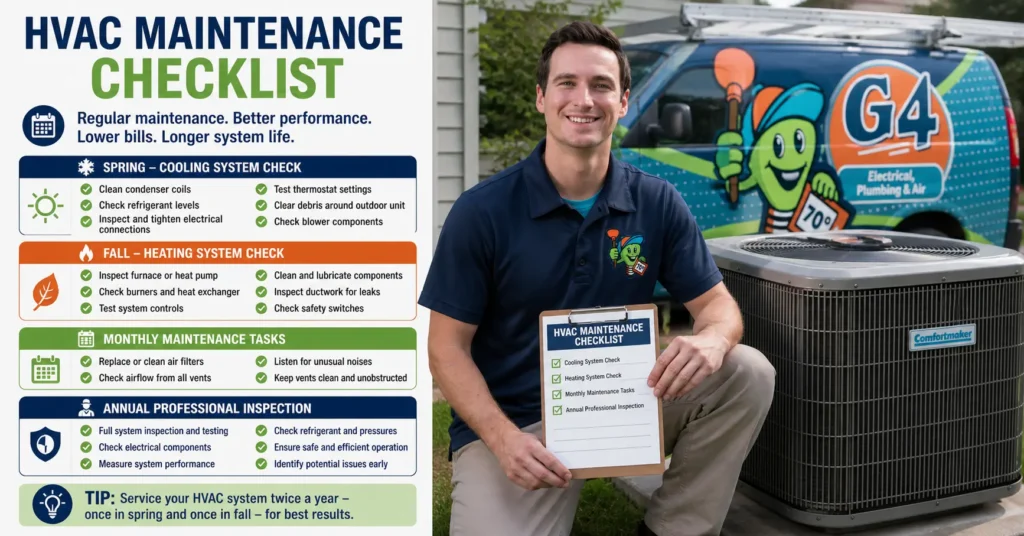
An HVAC maintenance checklist is a simple way to keep your system running efficiently and avoid costly repairs.
It helps you catch small problems early and keep everything working smoothly.
Regular maintenance improves performance, lowers energy bills, and extends the life of your system.
It also helps you avoid sudden breakdowns when you need heating or cooling the most.
In this guide, you’ll learn 15 essential steps to keep your HVAC system in top condition.
What Is an HVAC Maintenance Checklist?
An HVAC maintenance checklist is a list of simple tasks you follow to keep your heating and cooling system working properly. It guides you on what to check, clean, and fix on a regular basis.
It helps prevent breakdowns, improves efficiency, and keeps your system safe to use.
Following a checklist makes maintenance easier and helps you avoid costly repairs.
Why HVAC Maintenance Is Important
HVAC maintenance is important because it keeps your system running efficiently, safely, and without unexpected problems.
Skipping maintenance can lead to higher energy bills and costly repairs.
Key Benefits
- Lower energy costs by improving system efficiency
- Fewer breakdowns and emergency repairs
- Longer system lifespan with less wear and tear
- Better indoor air quality with clean airflow
- Consistent temperature control in every room
HVAC Maintenance Checklist: 15 Essential Steps
Follow these steps to keep your HVAC system running smoothly and avoid costly repairs.
1. Replace or Clean Air Filters
Replacing or cleaning air filters keeps airflow strong and improves system efficiency.
Dirty filters make your system work harder and increase energy costs.
2. Inspect Thermostat Settings
Inspecting thermostat settings ensures your HVAC system runs at the right temperature and on the correct schedule.
A properly set thermostat improves comfort and prevents energy waste.
3. Clean Air Vents and Registers
Cleaning air vents and registers helps improve airflow and keeps your system running efficiently.
Dust and debris can block airflow and make your system work harder.
4. Check and Clean Evaporator Coils
Checking and cleaning evaporator coils helps your system cool properly and stay efficient.
Dirty coils reduce cooling performance and make your system work harder.
5. Clean Condenser Coils (Outdoor Unit)
Cleaning condenser coils helps your system release heat properly and stay efficient.
Dirty outdoor coils reduce performance and increase energy use.
6. Inspect Refrigerant Levels
Inspecting refrigerant levels ensures your system cools effectively and runs smoothly.
Low refrigerant can reduce cooling and damage the system over time.
Problems such as AC freezing up causes and fixes are often linked to low refrigerant or dirty components.
7. Check Electrical Connections
Checking electrical connections helps prevent system failures and safety risks.
Loose or damaged wiring can cause breakdowns or even hazards.
8. Lubricate Moving Parts
Lubricating moving parts reduces friction and helps your system run smoothly.
It prevents wear and extends the life of components like motors and fans.
9. Inspect Blower Components
Inspecting blower components ensures proper airflow throughout your home.
A clean and well-functioning blower keeps heating and cooling consistent.
10. Check Drain Line and Condensate System
Checking the drain line and condensate system prevents clogs and water damage.
A blocked drain can lead to leaks, mold, and system issues.
11. Inspect Ductwork for Leaks
Inspecting ductwork for leaks helps improve airflow and system efficiency.
Sealing leaks prevents air loss and reduces energy waste.
12. Test System Controls
Testing system controls ensures your HVAC system starts, runs, and stops correctly.
Proper controls help maintain consistent temperature and prevent system issues.
13. Check Furnace Burners and Heat Exchanger
Checking furnace burners and the heat exchanger ensures safe and efficient heating.
This step helps prevent performance issues and potential safety risks.
14. Inspect Outdoor Unit Clearance
Inspecting outdoor unit clearance ensures proper airflow and system efficiency.
Keep the area around the unit clean and free from dirt, leaves, and debris.
15. Schedule Professional HVAC Inspection
Scheduling a professional HVAC inspection ensures your system is fully checked and tuned for performance.
A technician can find hidden issues and keep your system running safely and efficiently.
How Often Should You Perform HVAC Maintenance?
You should perform basic HVAC maintenance every month and schedule professional service twice a year.
This routine keeps your system efficient and ready for both heating and cooling seasons.
Monthly tasks like changing filters help maintain airflow and prevent strain on the system.
Seasonal professional service ensures everything is working safely and correctly.
DIY vs Professional HVAC Maintenance
DIY maintenance covers simple tasks you can do yourself, while professional service handles deeper inspections and system checks.
Both are important to keep your HVAC system running properly.
DIY Maintenance
You can handle basic tasks to keep your system in good condition.
These steps help improve airflow and reduce strain on your system.
- Changing air filters regularly
- Cleaning vents and removing dust
- Keeping the outdoor unit clean and free of debris
These simple actions help your system run efficiently and prevent small issues.
Professional Maintenance
Professional maintenance means a licensed technician inspects, tests, and tunes your HVAC system for safe and reliable performance.
This service covers the parts and checks that require proper tools and training.
- Full system inspections to find hidden issues
- Electrical checks to ensure safe connections
- Refrigerant adjustments for proper cooling
- Safety testing to prevent hazards
Regular professional service helps your system run efficiently and last longer.
Common HVAC Problems You Can Prevent
Regular HVAC maintenance helps prevent common problems that can reduce performance and lead to costly repairs.
Keeping up with maintenance keeps your system running smoothly.
Here are the most common issues you can avoid:
- Poor airflow caused by dirty filters or blocked vents
- System overheating due to a lack of cleaning or maintenance
- Refrigerant leaks that reduce cooling efficiency
- Electrical issues from loose or damaged connections
- Uneven heating or cooling across different rooms
Issues like AC not cooling properly are often caused by poor maintenance and can be prevented with regular servicing.
How Much Does HVAC Maintenance Cost?
HVAC maintenance usually costs between $75 and $200 per visit.
The price depends on your system and the level of service.
Basic tune-ups are on the lower end, while full inspections cost more.
Regular maintenance is much cheaper than dealing with major repairs or system failure.
Tips to Keep Your HVAC System Running Efficiently
You can keep your HVAC system running efficiently by following a few simple habits.
These small steps help reduce energy use and prevent problems.
- Change air filters regularly to maintain proper airflow
- Keep the outdoor unit clean and free of debris
- Seal duct leaks to prevent energy loss
- Schedule regular maintenance to keep everything working properly
Consistent care helps your system perform better and last longer.
Final Thought
Following an HVAC maintenance checklist keeps your system efficient and helps you avoid expensive repairs.
It’s one of the easiest ways to protect your system.
Regular maintenance improves comfort, lowers energy costs, and extends the life of your HVAC system.