An HVAC refrigerant leak repair typically costs about $200 to $1,500, with many homeowners paying around $800 for diagnosis, repair, and refrigerant recharge. More complicated repairs can cost $2,000 or more when the leak involves a coil, compressor, or difficult-to-access refrigerant line.
The price depends mainly on where the leak is, how difficult it is to find and repair, what refrigerant the system uses, and whether a component needs to be replaced.
If your AC is blowing warm air or struggling to cool your home, a refrigerant leak is one possible cause. But adding more refrigerant without fixing the leak is only a temporary solution.
How Much Does HVAC Leak Repair Cost?
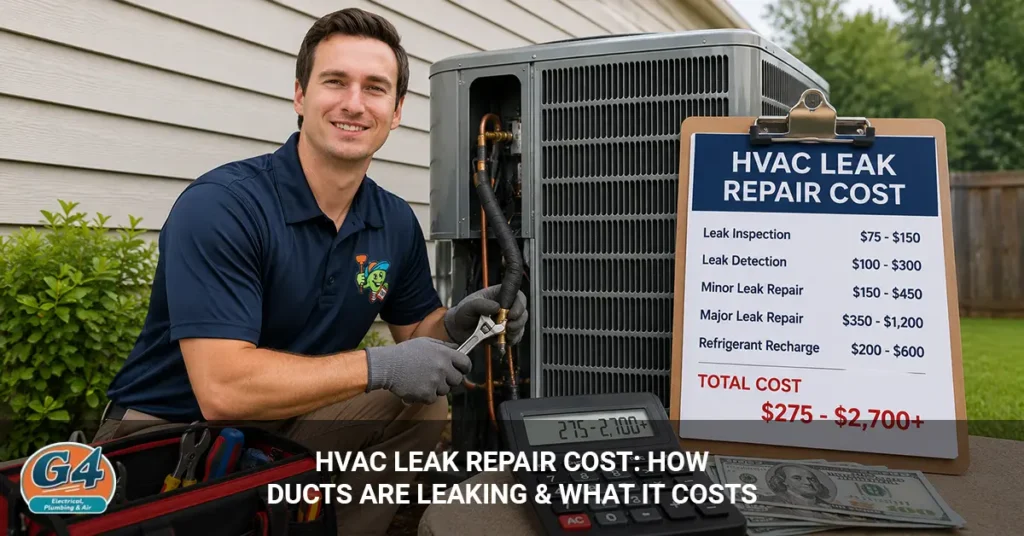
HVAC refrigerant leak repair usually costs $200 to $1,500, although minor repairs can cost less and major component repairs can cost considerably more.
Here is a general idea of what different services can cost:
| HVAC Leak Service | Typical Cost |
| Leak diagnosis | $100–$450 |
| Minor leak repair | $150–$600 |
| Refrigerant recharge | $150–$500 |
| Refrigerant line repair | $200–$1,500 |
| Evaporator coil repair/replacement | $600–$2,000+ |
| Condenser coil repair/replacement | $900–$2,400+ |
| Major component repair | $800–$3,000+ |
These are broad U.S. price ranges. Local labor rates, equipment type, refrigerant, and accessibility can change the final price significantly.
A simple leak at an accessible connection may be relatively inexpensive to fix. A leak inside an evaporator coil can require much more labor and a costly replacement part.
What Is Included in HVAC Leak Repair Cost?
The total cost can include leak diagnosis, labor, the actual repair, refrigerant, and system testing.
Leak Diagnosis
The technician first needs to determine whether the system is actually leaking and locate the source.
A basic service or leak-detection charge can range from roughly $100 to $450, depending on the testing method and how difficult the leak is to find.
A visible leak on an accessible refrigerant line may be easy to identify. A slow leak hidden inside a coil can take much longer to locate.
Leak Repair
The repair cost depends on what is leaking.
A technician may repair a fitting, valve, or accessible section of refrigerant tubing. If the leak is coming from a damaged coil or another major component, replacement may be necessary.
Refrigerant Recharge
The system may need to be recharged after the leak is repaired.
The cost depends on the refrigerant type and how much the system needs. Older R-22 systems can be particularly expensive because R-22 is no longer produced for new systems in the U.S. and supplies are limited.
Labor
Labor covers the technician’s time to diagnose the leak, access the affected component, complete the repair, evacuate and recharge the system when necessary, and test the equipment.
Difficult access can increase labor significantly.
System Testing
After the repair, the technician should check the system to make sure it is operating properly and that the repair has resolved the refrigerant loss.
A proper repair should address the source of the leak rather than simply adding more refrigerant.
What Makes HVAC Leak Repair So Expensive?
The biggest factors are leak location, refrigerant type, repair complexity, system size, and accessibility.
Where the Refrigerant Leak Is Located
The leak location can have a major effect on the price.
A small leak at an accessible fitting may be straightforward to repair. A leak inside an evaporator coil or a difficult-to-reach refrigerant line can require significantly more work.
Hidden leaks can also take longer to diagnose because the technician has to test different parts of the system before finding the source.
The Type of Refrigerant
The refrigerant in your system can affect the cost of both diagnosis and recharge.
Older systems that use R-22 can be particularly expensive to recharge because R-22 is a phased-out refrigerant. Newer systems may use different refrigerants, including R-410A or newer options such as R-32, depending on the equipment.
Do not assume that one refrigerant can simply be substituted for another. The replacement refrigerant must be compatible with the system.
How Much Refrigerant the System Needs
The amount of refrigerant needed also affects the final bill.
A system that has lost only a small amount may require less refrigerant than one that has lost most of its charge.
Larger HVAC systems can also require more refrigerant than smaller residential systems.
However, the amount of refrigerant needed is not a substitute for finding the leak. If the system is leaking, repeatedly adding refrigerant will not solve the underlying problem.
Damaged Coils or Refrigerant Lines
A leaking coil or damaged refrigerant line can make the repair much more expensive.
Small line or fitting repairs may be manageable. A severely damaged line or leaking coil may require replacement instead. If the leak involves a damaged coil, replacement can become a major part of the repair bill. See our guide to AC coil replacement cost.
Current cost data shows that coil repairs or replacements can reach well into four figures depending on the component and system.
Labor and Accessibility
The easier the technician can reach the leak, the simpler the repair usually is.
A refrigerant line in an accessible outdoor area is easier to work on than a leaking evaporator coil inside a cramped attic.
Difficult access can increase the time needed for both diagnosis and repair.
What Does an HVAC Technician Do When Fixing a Refrigerant Leak?
An HVAC technician typically diagnoses the leak, locates the source, repairs or replaces the damaged component, restores the refrigerant charge, and tests the system.
The exact process depends on the type of leak.
1. Inspect the System
The technician starts by checking the system and looking for signs of refrigerant loss.
They may inspect the coils, refrigerant lines, fittings, valves, and other connections.
2. Locate the Leak
Finding the leak is important because refrigerant can escape from very small openings.
Depending on the situation, a technician may use electronic detection, dye, pressure testing, or other methods to identify the leak. The appropriate method depends on the system and the suspected leak location.
3. Repair or Replace the Damaged Component
Once the leak is identified, the technician determines whether the affected part can be repaired.
A leaking connection or accessible line may be repairable. A badly damaged coil may need replacement.
4. Restore the Refrigerant Charge
After the leak is repaired, the system may need to be evacuated and recharged to the manufacturer’s specifications.
The amount and type of refrigerant depend on the equipment.
5. Test the System
The technician should then check the system to confirm that it is operating properly.
This helps verify that the repair has corrected the refrigerant problem and that the system can cool properly.
How Do You Know Your HVAC System Has a Refrigerant Leak?
The most common signs of a refrigerant leak are poor cooling, longer run times, ice on the system, hissing sounds, and higher energy use.
However, these symptoms can also come from other HVAC problems.
Your AC Blows Warm Air
If your air conditioner is running but the air coming from the vents is not getting cold, low refrigerant could be one possible cause.
You can also review the common causes of an AC blowing warm air before assuming low refrigerant is the problem.
A dirty coil, airflow restriction, compressor problem, or other issue can cause similar symptoms, so testing is needed to confirm a leak.
The AC Takes Longer to Cool Your Home
A refrigerant problem can reduce cooling performance and cause the system to run for longer periods.
You may notice that your home takes much longer to reach the thermostat setting. If your system is struggling to cool properly, see these common AC not cooling properly causes and fixes.
Ice Forms on the Coil or Refrigerant Line
Ice buildup can occur when refrigerant levels are low, but it does not automatically mean you have a refrigerant leak.
Restricted airflow can also cause coils to freeze. Learn more about the causes of an AC freezing up and what to check when ice forms.
If you see ice, turn the system off and have the problem diagnosed instead of assuming that adding refrigerant will fix it.
You Hear Hissing or Bubbling
A hissing sound near a refrigerant line or coil can indicate escaping refrigerant.
Small leaks may produce very little noise, so the absence of a sound does not rule out a leak.
Your Energy Bills Increase
A refrigerant problem can reduce system performance and cause longer cooling cycles.
That can increase energy use, although rising energy bills can have many other causes as well.
Is It Worth Repairing an HVAC Refrigerant Leak?
Repairing an HVAC refrigerant leak is often worthwhile when the system is relatively young, the leak is repairable, and the rest of the equipment is in good condition.
The decision becomes less straightforward when the system is older or the repair involves an expensive component.
Consider:
- The age of the HVAC system
- The cost of the repair
- The location of the leak
- The refrigerant the system uses
- The condition of the compressor and coils
- The system’s repair history
- Whether the repair comes with a warranty
For example, repairing a small leak on a newer system may make sense. Replacing an expensive coil on an older system that has already needed several repairs may be harder to justify.
There is no universal dollar amount that determines when replacement is better. Compare the repair cost with the condition and expected remaining life of the system. It can also help to compare the specific leak repair with typical AC repair costs before making a decision.
Can You Prevent Future HVAC Refrigerant Leaks?
You cannot prevent every refrigerant leak, but regular inspections and addressing small problems early can reduce the chance of a minor issue becoming a major repair.
Have the system checked when you notice:
- Reduced cooling
- Ice buildup
- Unusual noises
- Longer cooling cycles
- Repeated refrigerant loss
Most importantly, do not treat repeated refrigerant recharges as a permanent repair.
A properly functioning sealed AC system should not routinely need refrigerant added. If refrigerant keeps disappearing, there is a reason that needs to be found and corrected.
Frequently Asked Questions
How much does it cost to fix an HVAC refrigerant leak?
Most HVAC refrigerant leak repairs cost around $200 to $1,500, with more complicated repairs reaching $2,000 or more. The final price depends on the leak location, refrigerant type, labor, accessibility, and whether a coil or other component needs replacement.
How much does it cost to find an HVAC refrigerant leak?
Leak detection commonly costs about $100 to $450, depending on the testing method and difficulty of locating the leak. Some HVAC companies apply the diagnostic charge toward the repair if you approve the work.
How much does it cost to recharge an HVAC system with refrigerant?
A refrigerant recharge commonly costs about $150 to $500, but the price can vary significantly based on refrigerant type, system size, and how much refrigerant is needed. Older R-22 systems can cost more.
Can an HVAC refrigerant leak be repaired?
Yes, many refrigerant leaks can be repaired. The appropriate repair depends on the location and severity of the leak. A small leak in an accessible line or connection may be repairable, while a badly leaking coil may need replacement.
Is it cheaper to repair a refrigerant leak or replace the AC?
Repair is usually less expensive when the leak is minor and the system is otherwise in good condition. Replacement may make more financial sense when an older system needs an expensive component or has a history of repeated repairs.
Can I run my AC with a refrigerant leak?
It is better not to keep running an AC with a confirmed refrigerant leak. Low refrigerant can reduce cooling performance and may contribute to additional system problems. Have the cause diagnosed and repaired instead of repeatedly adding refrigerant.
Final Thought
HVAC refrigerant leak repair typically costs $200 to $1,500, but difficult repairs can cost considerably more. The biggest factors are the leak location, refrigerant type, amount of refrigerant needed, system accessibility, and whether a component such as a coil or refrigerant line must be replaced.
A refrigerant recharge alone is not a real solution when the system has a leak. The leak needs to be located and repaired first.
If your AC is blowing warm air, freezing up, running longer than normal, or repeatedly losing refrigerant, have the system properly diagnosed. G4 Electrical & Plumbing provides AC repair services to help identify and address cooling problems.
A detailed repair quote can then show whether fixing the leak makes sense or whether replacement should be considered.