
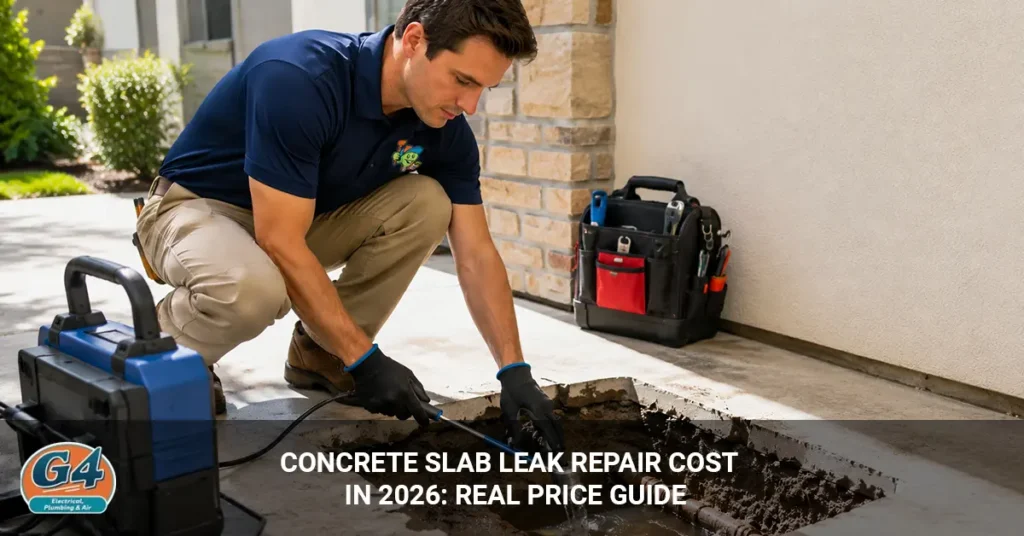
Concrete slab leak repair typically costs between $650 and $4,500, although complex repairs or whole-home repiping can cost significantly more. The final price depends on the location of the leak, the repair method, the condition of the plumbing system, the amount of concrete that must be removed, and whether the leak has caused damage to flooring or the home’s foundation.
A slab leak occurs when a water supply pipe beneath a concrete foundation develops a leak. Because the pipe is hidden below the slab, the problem often goes unnoticed until homeowners see higher water bills, lower water pressure, warm or damp floors, mold growth, or other signs of hidden water damage. Left untreated, a slab leak can weaken the soil beneath the foundation, damage finished flooring, and lead to much more expensive repairs.
The right repair depends on the location of the leak and the condition of the plumbing system. In some homes, a plumber can repair a small section of pipe. In others, pipe rerouting, pipe relining, or whole-home repiping provides a more reliable long-term solution. Choosing the appropriate repair method can reduce property damage, improve the reliability of your plumbing, and help avoid unnecessary expenses.
This guide explains concrete slab leak repair costs in 2026, the most common causes of slab leaks, warning signs that shouldn’t be ignored, and the repair options available. You’ll also learn what affects repair costs, how plumbers locate hidden leaks, when repairing the pipe makes sense, when repiping may be the better investment, and practical steps you can take to reduce the risk of future slab leaks.
How Much Does Concrete Slab Leak Repair Cost?
Concrete slab leak repair typically costs between $650 and $4,500, although extensive repairs or whole-home repiping can cost significantly more. The total cost depends on where the leak is located, how it’s repaired, the condition of the plumbing system, and whether the leak has damaged your home’s flooring or foundation.
A simple spot repair may cost less than $1,000, while projects involving pipe rerouting, pipe relining, or whole-home repiping can cost several thousand dollars. Although these repairs can be expensive, fixing a slab leak early is usually far more affordable than paying for foundation repairs, mold remediation, or extensive water damage later.
The table below shows the average cost of common slab leak repair services.
| Repair Type | Average Cost |
| Slab leak detection | $150–$600 |
| Spot pipe repair | $650–$2,500 |
| Pipe rerouting | $1,500–$6,000 |
| Pipe relining (when applicable) | $1,500–$5,000 |
| Concrete removal and replacement | $500–$2,500 |
| Flooring repair or replacement | Varies |
| Whole-home repiping | $4,000–$15,000+ |
These are national average price ranges. Your actual cost may be lower or higher depending on your home’s plumbing system, the complexity of the repair, and local labor rates.
What Affects Concrete Slab Leak Repair Cost?
Several factors determine the total cost of repairing a slab leak. Two homes with similar plumbing leaks can have very different repair costs because the location of the leak, the plumbing system, and the foundation design all affect the amount of labor and materials required.
The biggest cost factors include:
- Leak location: Leaks beneath kitchens, bathrooms, or load-bearing walls are usually more difficult to access than leaks near the edge of the foundation.
- Repair method: Spot repairs, pipe rerouting, pipe relining, and whole-home repiping each require different materials, labor, and installation techniques.
- Pipe material: Copper, PEX, CPVC, and galvanized pipes vary in both repair complexity and replacement cost.
- Extent of the damage: Repairing a single pinhole leak is far less expensive than addressing multiple leaks, widespread corrosion, or extensive water damage.
- Concrete removal: If plumbers need to break through the slab to reach the damaged pipe, demolition and concrete restoration increase the total project cost.
- Flooring type: Tile, hardwood, laminate, carpet, and luxury vinyl flooring each have different repair or replacement costs after plumbing work is completed.
- Water damage: Moisture beneath flooring or inside walls may require mold remediation, drywall repairs, insulation replacement, or new flooring.
- Foundation design: Thicker concrete slabs and post-tension foundations often require additional planning and specialized repair techniques.
- Permit requirements: Depending on local building codes, permits and inspections may be required before work begins.
- Local labor rates: Plumbing labor costs vary by region and can significantly affect the final price.
- Emergency service: Nights, weekends, holidays, and emergency repairs typically come with higher labor charges.
Before recommending a repair, most plumbers perform a professional leak detection inspection. They may use pressure testing, acoustic leak detection, thermal imaging, electronic leak detection, and moisture meters to locate the leak as accurately as possible. Identifying the exact source helps avoid unnecessary demolition and ensures the repair addresses the underlying problem rather than just the symptoms.
The only way to know your actual repair cost is to schedule an on-site inspection. After evaluating the plumbing system and locating the leak, a licensed plumber can recommend the most appropriate repair method and provide an estimate based on your home’s specific conditions.
What Is a Slab Leak?
A slab leak is a water leak that develops in a pipe beneath your home’s concrete foundation. Most slab leaks occur in the water supply lines running under or through the concrete slab, although drain pipes beneath the foundation can also leak in some cases.
Because the plumbing is hidden beneath the foundation, slab leaks are often difficult to detect. Many homeowners first notice slab leak warning signs such as higher water bills, lower water pressure, warm spots on the floor, damp flooring, or the sound of running water before they realize there’s a leak beneath the slab.
Unlike a visible leak under a sink or behind an appliance, a slab leak can continue unnoticed for weeks or even months. During that time, escaping water can saturate the soil beneath the foundation, damage flooring, promote mold and mildew growth, and, in severe cases, contribute to foundation settlement or structural damage.
Slab leaks can occur in both hot and cold water supply lines. Hot water line leaks are often easier to identify because they may create warm areas on tile, hardwood, vinyl, or concrete floors. Cold water line leaks are less obvious and are more likely to cause symptoms such as unexplained increases in water usage, damp flooring, or reduced water pressure.
Not every slab leak requires breaking through the concrete foundation. Depending on the location of the leak, the condition of the plumbing system, and the type of pipe involved, a plumber may recommend a spot repair, pipe rerouting, pipe relining, or whole-home repiping. The goal is to stop the leak while providing the most reliable long-term solution with the least possible disruption to your home.
What Causes a Slab Leak?
Most slab leaks are caused by pipe corrosion, pipe abrasion, foundation movement, high water pressure, poor installation, or aging plumbing. Identifying the underlying cause is important because it helps determine whether a simple repair is enough or if replacing partor all of the plumbing system is the better long-term solution.
Below are the most common reasons water pipes begin leaking beneath a concrete foundation.
Corroded Pipes
Pipe corrosion is one of the most common causes of slab leaks, particularly in older homes with copper or galvanized plumbing. Over time, minerals in the water, soil chemistry, and normal wear gradually weaken the pipe walls until small pinhole leaks develop beneath the foundation.
If your home has experienced multiple slab leaks caused by corrosion, repeatedly repairing individual leaks may not be the most cost-effective solution. In many cases, repiping provides greater long-term reliability.
Pipe Abrasion
Pipe abrasion occurs when water pipes rub against concrete, gravel, or other pipes over time. As hot and cold water move through the plumbing system, the pipes naturally expand and contract. This constant movement gradually wears away the outer surface of the pipe until a leak develops.
Abrasion is especially common in copper water lines installed beneath concrete slabs.
High Water Pressure
Excessively high water pressure places continuous stress on your plumbing system. Over time, the added pressure can weaken pipe walls, fittings, and joints, increasing the risk of leaks beneath the foundation.
If your home’s water pressure consistently exceeds recommended levels, installing a pressure-reducing valve (PRV) can help extend the life of your plumbing system and reduce the risk of future leaks.
Poor Installation
Improper installation can significantly shorten the lifespan of underground plumbing pipes. Pipes that weren’t adequately supported, protected, or installed according to modern plumbing standards are more likely to experience premature wear, movement, or joint failure beneath the slab.
Although installation defects may not become noticeable for many years, they can eventually lead to hidden leaks that require professional repair.
Foundation Movement
Foundation movement can place enough stress on underground pipes to cause cracks or leaks. As a concrete slab expands, contracts, or settles over time, buried water lines may bend or shift beyond their design limits.
This type of movement is more common in regions with expansive clay soils, prolonged drought, or repeated cycles of heavy rainfall and drying.
Shifting Soil
Changes in the soil beneath your home can also damage buried plumbing. Natural settling, erosion, drought, heavy rainfall, and poor drainage can all cause the ground to shift, placing additional stress on underground water lines.
As the soil moves, pipes may bend, separate at their joints, or eventually crack.
Tree Root Damage
Tree roots can damage underground water lines as they grow toward moisture. While roots are more commonly associated with sewer line damage, they can also place pressure on nearby water pipes, causing joints to separate or older pipes to crack.
Homes with large, mature trees growing close to the foundation generally face a greater risk of underground pipe damage over time.
Read more about how tree roots damage underground sewer lines and when repairs are needed.
Aging Plumbing
Older plumbing systems are naturally more prone to slab leaks. After decades of exposure to water pressure, corrosion, vibration, and normal wear, pipe materials gradually deteriorate and become more susceptible to leaks.
If your home has experienced several slab leaks over a short period, replacing aging plumbing may provide better long-term value than continuing to repair isolated sections of pipe.
Warning Signs of a Concrete Slab Leak
Higher water bills, warm spots on the floor, low water pressure, damp flooring, and the sound of running water are some of the earliest warning signs of a concrete slab leak. Because the leak is hidden beneath your home’s foundation, these symptoms often appear long before you notice visible plumbing damage.
Recognizing the warning signs early can help you limit water damage, reduce repair costs, and prevent more serious foundation problems.
Unexpected Increase in Your Water Bill
An unexplained increase in your water bill is often one of the first signs of a slab leak. If your water usage hasn’t changed but your monthly bill continues to rise, a hidden leak beneath the foundation may be allowing water to escape around the clock.
Compare your recent utility bills. If you’ve noticed a sudden spike in your water bill, a hidden plumbing leak could be the cause.A steady increase without a clear reason is a good indication that your plumbing system should be inspected.
Warm or Hot Spots on the Floor
Warm areas on your floor often indicate a leaking hot water line beneath the concrete slab. Tile, hardwood, vinyl, and even concrete floors may feel noticeably warmer than the surrounding surface because hot water is escaping below.
While this symptom doesn’t confirm a slab leak on its own, it’s one of the strongest indicators that a hot water supply line has failed.
Damp Flooring or Wet Carpet
Moisture on your floors without an obvious source may indicate a slab leak. Water escaping beneath the foundation can eventually seep through the concrete and damage carpet, hardwood, laminate, vinyl flooring, or grout lines.
Even minor dampness shouldn’t be ignored, as trapped moisture can lead to mold growth and costly flooring repairs.
Cracks in Floors or Walls
New or widening cracks in your floors or walls can be a sign of a slab leak. As leaking water softens or washes away the soil beneath the foundation, parts of the slab may settle unevenly, placing stress on the structure above.
Not every crack is caused by a plumbing leak, but any significant structural changes should be professionally evaluated.
Low Water Pressure
Reduced water pressure throughout your home may indicate a leak in the main water supply line beneath the slab. As water escapes before reaching your plumbing fixtures, faucets, showers, and appliances receive less water than normal.
If multiple fixtures lose pressure at the same time, a hidden slab leak is one possible cause. Learn about other common causes of low water pressure if your plumbing system isn’t performing normally.
Sound of Running Water
Hearing running or dripping water when every faucet is turned off may indicate a hidden leak beneath the foundation. In a quiet home, you may hear water flowing beneath the floor or inside nearby walls even though no plumbing fixtures are in use.
This symptom is especially concerning when it’s accompanied by higher water bills or lower water pressure.
Mold or Mildew Growth
Persistent mold or mildew can indicate hidden moisture from a slab leak. Water trapped beneath flooring or inside building materials creates ideal conditions for mold growth, which can affect indoor air quality and damage your home.
If mold keeps returning after cleaning, the underlying moisture problem should be investigated.
Standing Water Around the Foundation
Standing water near your home’s foundation during dry weather may indicate an underground plumbing leak. Escaping water can saturate the surrounding soil before eventually surfacing around the exterior of the home.
Ignoring this problem can increase the risk of foundation settlement and additional property damage.
Musty Odors Inside the Home
Musty odors that don’t go away may be caused by hidden moisture beneath the foundation. Water trapped under flooring or inside walls encourages mold and mildew growth, producing unpleasant smells even when no visible water is present.
If the odor persists despite cleaning and improved ventilation, a hidden plumbing leak may be the underlying cause.
When to Call a Plumber
Contact a licensed plumber as soon as you notice two or more signs of a slab leak. Waiting rarely saves money. Hidden leaks often become more expensive over time as they damage flooring, walls, and even the foundation.
Professional plumbers use pressure testing, acoustic leak detection, thermal imaging, and moisture meters to locate hidden leaks without unnecessary demolition. An accurate diagnosis helps ensure the right repair method is used while minimizing damage to your home.
How Plumbers Detect a Slab Leak
Plumbers detect slab leaks using specialized equipment that locates hidden leaks beneath the concrete with minimal disruption to your home. Instead of breaking through the foundation immediately, they perform a series of non-invasive tests to pinpoint the leak as accurately as possible.
A professional inspection does more than confirm there’s a slab leak. It identifies the leak’s exact location, determines the underlying cause, and helps the plumber recommend the most effective repair method while avoiding unnecessary demolition.
Visual Inspection
Every slab leak inspection starts with a visual assessment of your home and plumbing system. The plumber looks for common warning signs such as damp flooring, water stains, foundation cracks, mold growth, low water pressure, and unusually high water bills.
Although a visual inspection rarely reveals the exact location of the leak, it provides valuable clues that guide the rest of the diagnostic process.
Water Pressure Testing
Pressure testing confirms whether the plumbing system is losing water. The plumber isolates sections of the water supply system and measures the pressure to determine whether water is escaping beneath the foundation.
A noticeable pressure drop usually indicates that additional leak detection is needed.
Acoustic Leak Detection
Acoustic leak detection locates the sound of pressurized water escaping beneath the concrete slab. Highly sensitive electronic listening equipment amplifies the sound of leaking water, allowing plumbers to narrow down the leak location without unnecessary excavation.
This is one of the most accurate and commonly used methods for locating slab leaks.
Thermal Imaging
Thermal imaging cameras identify temperature differences caused by leaking hot water pipes. If a hot water line is leaking beneath the slab, escaping water creates warm areas that appear clearly on an infrared camera.
Because it doesn’t require opening floors or breaking concrete, thermal imaging is an effective way to narrow down the leak location before repairs begin.
Moisture Meter Testing
Moisture meters measure hidden moisture beneath flooring and inside building materials. Elevated readings help plumbers determine how far water has spread and identify areas affected by the leak.
These measurements are also useful when evaluating potential water damage and planning restoration work.
Electronic Leak Detection
Electronic leak detection equipment pinpoints hidden plumbing leaks with a high level of accuracy. Depending on the plumbing system and the location of the suspected leak, plumbers may use electronic sensors to confirm the exact repair area before excavation begins.
Accurate leak detection reduces unnecessary concrete removal, shortens repair time, and helps control overall repair costs.
Sewer Camera Inspection
If a drain or sewer line beneath the slab is suspected, the plumber may perform a sewer camera inspection. A waterproof camera is inserted into the pipe to identify cracks, root intrusion, pipe separation, blockages, offsets, or collapsed sections.
The inspection also helps determine whether trenchless repair, spot repair, or pipe replacement is the most appropriate long-term solution.
Why Accurate Leak Detection Matters
Accurate leak detection ensures the right repair is performed the first time. Pinpointing the exact location and cause of the leak allows plumbers to minimize unnecessary demolition, recommend the most cost-effective repair method, and reduce the risk of additional damage to your home.
Whether the solution involves a spot repair, pipe rerouting, pipe relining, or whole-home repiping, a thorough inspection provides the information needed to choose the safest, most reliable, and most cost-effective long-term solution.
Concrete Slab Leak Repair Options
The best way to repair a slab leak depends on the location of the leak, the condition of the pipe, and the overall health of your plumbing system. While some leaks can be repaired by replacing a small section of pipe, others require rerouting the plumbing or replacing aging water lines to prevent future failures.
A licensed plumber will recommend the repair method that provides the best balance of cost, durability, and long-term reliability after completing a professional leak detection inspection.
Spot Repair
Spot repair fixes a single damaged section of pipe beneath the concrete slab. After locating the leak, the plumber removes a small section of the concrete foundation, replaces the damaged pipe, pressure tests the repair, and restores the concrete once the work is complete.
This repair method is usually the most cost-effective option when the leak is isolated and the rest of the plumbing system is still in good condition. Because only the damaged section is replaced, the work can often be completed more quickly and with less disruption than larger projects such as pipe rerouting or whole-home repiping.
Spot repair is best suited for homes with a single slab leak, relatively new plumbing systems, or pipes that remain in good overall condition. It’s also a practical choice for homeowners looking to keep upfront repair costs as low as possible.
One limitation is that spot repair only fixes the damaged section of pipe. If the remaining plumbing is aging or heavily corroded, additional leaks may develop over time. The repair also requires cutting through the concrete slab, and flooring or finished surfaces may need to be repaired or replaced once the plumbing work is complete.
Most homeowners pay between $650 and $2,500 for a spot repair, depending on the location of the leak, the amount of concrete removal required, the pipe material, and local labor rates.
If your home has experienced multiple slab leaks or widespread pipe corrosion, your plumber may recommend pipe rerouting or whole-home repiping instead. Although these options typically cost more upfront, they often provide better long-term reliability and reduce the likelihood of future slab leaks.
Pipe Rerouting
Pipe rerouting repairs a slab leak by installing a new water line around the damaged pipe instead of beneath the concrete foundation. Rather than breaking through the slab, the plumber routes a new water line through walls, ceilings, crawl spaces, or the attic, depending on your home’s plumbing layout.
This repair method is commonly recommended when the leaking pipe is difficult to access, multiple leaks have developed beneath the slab, or the existing plumbing is beginning to fail. By bypassing the damaged underground pipe, pipe rerouting reduces the risk of future slab leaks and avoids repeated repairs beneath the foundation.
Pipe rerouting is often the best option for hard-to-access leaks, multiple leaks in the same water supply line, aging plumbing with localized deterioration, or homes where minimizing concrete demolition is a priority. It can also provide better long-term value for homeowners who plan to stay in their home for many years.
One drawback is the higher upfront cost compared with a spot repair. Installing the new plumbing may require opening sections of walls or ceilings, and some drywall repair and painting may be needed once the work is complete. In addition, not every home’s plumbing layout is suitable for rerouting, so a professional inspection is needed to determine whether it’s a practical option.
Most homeowners pay between $1,500 and $6,000 for pipe rerouting. The final cost depends on the length of the new water line, the accessibility of the plumbing, the amount of interior work required, and local labor rates.
Although pipe rerouting typically costs more than repairing a single leak, it can save money over time by reducing the likelihood of future slab leaks. If your plumber determines that the existing underground pipe is likely to develop additional leaks, rerouting the water line may provide the most reliable and cost-effective long-term solution.
Pipe Relining (When Applicable)
Pipe relining repairs a damaged pipe from the inside without replacing the entire plumbing line. Instead of removing the existing pipe, the plumber inserts a flexible liner coated with epoxy resin into the damaged section. Once the liner cures, it forms a new, seamless pipe inside the old one, sealing small cracks, pinhole leaks, and minor joint defects.
Because the original pipe remains in place, pipe relining requires little or no excavation, making it one of the least disruptive slab leak repair methods. However, it isn’t suitable for every situation. The existing pipe must be structurally sound enough to support the liner, so severely collapsed or heavily deteriorated pipes usually require a different repair approach.
Pipe relining is often the best choice for minor cracks, pinhole leaks, limited corrosion, and situations where minimizing excavation is a priority. It’s especially beneficial when breaking through the concrete slab would cause significant disruption or damage to finished flooring.
One limitation is that pipe relining can’t repair every type of pipe damage. If the pipe has extensive structural failure, severe corrosion, or large sections that have collapsed, the liner won’t provide a reliable long-term solution. In these cases, pipe rerouting or whole-home repiping may be more appropriate.
Most homeowners pay between $1,500 and $5,000 for pipe relining. The final cost depends on the length and diameter of the pipe, the extent of the damage, accessibility, and local labor rates.
When pipe relining is a suitable option, it can restore the plumbing system with minimal disruption while providing a durable, corrosion-resistant pipe designed to last for decades.
Whole-Home Repiping
Whole-home repiping replaces your home’s aging or failing water supply lines with an entirely new plumbing system. Although it’s the most expensive slab leak repair option, it often provides the best long-term value when multiple leaks have occurred or the existing plumbing has reached the end of its service life.
Instead of repairing one leaking pipe at a time, repiping replaces old water lines with modern materials such as PEX or copper. This eliminates many of the underlying problems caused by aging, corroded plumbing and significantly reduces the likelihood of future slab leaks and repeated repair costs.
Whole-home repiping is often the best solution for homes with multiple slab leaks, widespread corrosion, recurring pipe failures, or older plumbing systems that continue to develop new leaks. While the project is more extensive than a spot repair or pipe rerouting, it provides homeowners with a reliable plumbing system designed to last for decades.
The main drawback is the higher upfront cost and the larger scope of work. Repiping may require plumbers to access pipes through walls and ceilings, followed by drywall repairs and repainting once the installation is complete. Even so, many homeowners find that replacing the entire plumbing system is more cost-effective than paying for repeated slab leak repairs over several years.
Most homeowners pay between $4,000 and $15,000 or more for whole-home repiping. The final cost depends on the size of the home, the number of plumbing fixtures, the pipe material, the complexity of the installation, and local labor rates.
If your home has experienced repeated slab leaks or your plumber identifies widespread corrosion during the inspection, whole-home repiping may be the most dependable long-term investment, offering greater reliability, fewer future repairs, and improved peace of mind.
Slab Leak Repair vs. Repiping: Which Is Better?
Repairing a slab leak is usually the better choice for isolated pipe damage, while whole-home repiping offers better long-term value for aging plumbing systems with recurring leaks. The right option depends on the condition of your plumbing, the extent of the damage, repair history, and the likelihood of future pipe failures.
The table below compares the two options.
| Slab Leak Repair | Whole-Home Repiping |
| Lower upfront cost | Higher upfront cost |
| Best for isolated leaks | Best for aging plumbing systems |
| Faster completion | Larger, more involved project |
| Preserves most existing plumbing | Replaces the entire water supply system |
| Future leaks may still occur | Significantly reduces the risk of future leaks |
For many homeowners, repairing the leak is the most practical solution when the damage is limited to a single section of pipe and the rest of the plumbing system is in good condition. Spot repairs, pipe rerouting, and pipe relining can restore the plumbing without the expense of replacing every water line. This approach is generally recommended for newer homes, isolated leaks, and plumbing systems that have otherwise performed reliably.
Repiping becomes the better investment when the plumbing system has reached the end of its service life or continues to develop new leaks. If your home has experienced multiple slab leaks within a few years, widespread corrosion, or aging copper or galvanized steel pipes, replacing the entire water supply system is often more cost-effective than paying for repeated repairs. Although the upfront investment is higher, repiping greatly reduces the likelihood of future slab leaks and unexpected plumbing failures.
The age of your plumbing is another important consideration. Homes with plumbing systems less than 20 years old can often be repaired successfully if the leak is isolated. Between 20 and 40 years, the decision should be based on the condition of the pipes, repair history, and the estimated cost of future maintenance. If the plumbing is more than 40 years old and has experienced repeated leaks or significant corrosion, repiping often provides better long-term value.
When comparing your options, don’t focus only on the initial repair estimate. A lower-cost repair may seem attractive today, but repeated slab leaks can quickly make multiple repairs more expensive than replacing the plumbing system once. A licensed plumber can inspect your pipes, evaluate their remaining lifespan, and compare the long-term costs of repair versus repiping so you can choose the solution that best fits your home and budget.
Can a Slab Leak Be Fixed Without Breaking Concrete?
Yes, some slab leaks can be repaired without breaking through the concrete foundation, but it depends on the location of the leak and the condition of the plumbing system. Modern repair methods such as pipe rerouting and, in some cases, pipe relining allow plumbers to repair or bypass damaged pipes without cutting into the slab.
Pipe rerouting installs a new water line through walls, ceilings, crawl spaces, or the attic, bypassing the damaged pipe beneath the foundation. Pipe relining, when the existing pipe is structurally sound, creates a new pipe inside the old one using an epoxy liner. Both methods can significantly reduce property damage and avoid the need for extensive concrete demolition.
However, not every slab leak can be repaired this way. If the damaged pipe has collapsed, suffered severe corrosion, or can’t be safely bypassed, the plumber may need to remove a section of the concrete slab to access and replace the pipe directly. Spot repairs typically require this approach because the damaged section must be exposed before it can be repaired.
The most appropriate repair method depends on several factors, including the exact location of the leak, the condition and material of the pipe, your home’s plumbing layout, and the long-term reliability of each repair option. While avoiding concrete removal is often preferable, the goal is to choose the solution that provides the safest and most durable repair not simply the one that requires the least demolition.
A professional leak detection inspection is the only reliable way to determine whether your slab leak can be repaired without breaking concrete. After locating the leak and evaluating the plumbing system, a licensed plumber can recommend the repair method that offers the best balance of cost, durability, and long-term performance.
Can You Repair a Slab Leak Yourself?
In most cases, no. Slab leaks should be repaired by a licensed plumber because they occur beneath your home’s foundation and require specialized equipment to locate and repair safely. Attempting to fix underground plumbing without the proper tools or experience can lead to additional water damage, costly mistakes, and even structural problems.
While repairing the leak isn’t a DIY project, there are a few steps you can take to help limit damage before a plumber arrives. Turn off the home’s main water supply to stop additional water loss, and shut off the water heater if you suspect the leak is in a hot water line. If it’s safe to do so, move furniture and valuables away from affected areas, document any visible damage for insurance purposes, and monitor your water meter to confirm whether water is continuing to escape.
Avoid attempting to break through the concrete slab, repair underground water lines, perform pressure testing, use electronic leak detection equipment, install pipe lining, or reroute plumbing yourself. These repairs require specialized training and equipment, and mistakes can make the damage worse or create additional safety risks.
If you suspect a slab leak but aren’t certain, it’s best to turn off the water supply and schedule a professional inspection as soon as possible. Early leak detection often prevents more extensive water damage, protects your foundation, and helps keep repair costs under control.
Is Concrete Slab Leak Repair Worth It?
For most homeowners, concrete slab leak repair is worth the investment because it prevents more expensive water damage, foundation problems, and future plumbing repairs. Although the upfront cost can seem high, repairing a slab leak early is usually far less expensive than dealing with structural damage, mold growth, damaged flooring, or years of wasted water.
If the leak is isolated and the rest of the plumbing system is in good condition, repairing the damaged pipe is often the most cost-effective solution. Modern repair methods such as spot repair, pipe rerouting, and pipe relining can restore your plumbing while minimizing disruption to your home.
However, repairing the leak isn’t always the best long-term investment. If your home has experienced multiple slab leaks, widespread pipe corrosion, or repeated plumbing failures, whole-home repiping may provide better value than continuing to repair individual leaks. While repiping requires a larger upfront investment, it can significantly reduce the risk of future leaks and unexpected repair costs.
When weighing your options, consider the age and condition of your plumbing system, whether this is the first leak or one of several, the estimated repair cost compared with repiping, the extent of any water or foundation damage, and how long you plan to stay in the home. Looking beyond the initial repair estimate often leads to a better long-term decision.
A licensed plumber can inspect your plumbing system, identify the cause of the leak, and compare the long-term costs and benefits of repair versus repiping. That professional evaluation can help you choose the solution that offers the best combination of reliability, durability, and value for your home.
How Long Does Concrete Slab Leak Repair Take?
Most concrete slab leak repairs take one to three days, although larger or more complex projects can take longer. The total timeline depends on the location of the leak, the repair method, the amount of concrete removal required, and whether flooring or foundation repairs are needed after the plumbing work is complete.
Every project begins with professional leak detection. Using pressure testing, acoustic leak detection, thermal imaging, or electronic leak detection, the plumber pinpoints the exact location of the leak before preparing the work area. Once the leak has been located, the repair is completed using the most appropriate method, such as a spot repair, pipe rerouting, pipe relining, or whole-home repiping. After the repair, the plumbing system is pressure tested to confirm the leak has been eliminated before any concrete or flooring is restored.
While the plumbing repair itself may take only a few hours, restoring the concrete foundation, replacing flooring, and completing any necessary finishing work can add extra time to the project. If new flooring must be ordered or the concrete needs time to cure, the overall repair timeline may be extended.
Projects involving multiple leaks, post-tension foundations, difficult pipe access, or extensive water damage generally take longer than straightforward repairs. Even so, addressing a slab leak early usually shortens the overall project by limiting water damage and reducing the amount of restoration required afterward.
How to Prevent Future Slab Leaks
While not every slab leak can be prevented, regular plumbing maintenance and early repairs can significantly reduce the risk. Taking care of your plumbing system helps extend the life of your pipes, improves reliability, and lowers the chance of expensive repairs beneath your home’s foundation.
One of the simplest ways to protect your plumbing is to monitor your home’s water pressure. Excessively high pressure places constant stress on pipes, fittings, and joints, increasing the likelihood of leaks over time. If your water pressure consistently exceeds recommended levels, a pressure-reducing valve (PRV) can help protect the entire plumbing system.
Routine plumbing inspections are another effective way to prevent slab leaks. During an inspection, a licensed plumber can identify corrosion, small leaks, pressure problems, and aging pipes before they develop into larger, more expensive repairs. Fixing minor plumbing issues early is almost always less costly than repairing a major leak beneath the foundation.
If your home has older galvanized steel or aging copper pipes, replacing them before repeated failures occur can also reduce the risk of future slab leaks. Although repiping requires a larger upfront investment, it often provides better long-term value than repeatedly repairing deteriorating plumbing.
Water quality also affects the lifespan of your pipes. Hard water, acidic water, and high mineral content can gradually accelerate corrosion and wear inside the plumbing system. If water quality is a concern in your area, ask a licensed plumber whether a water treatment system would help protect your pipes.
Finally, don’t ignore early warning signs such as higher water bills, reduced water pressure, warm spots on the floor, damp flooring, musty odors, or the sound of running water when no fixtures are in use. Addressing these symptoms promptly can prevent more extensive water damage, reduce repair costs, and help protect your home’s foundation.
Frequently Asked Questions
How much does concrete slab leak repair cost?
Concrete slab leak repair typically costs between $650 and $4,500. More extensive repairs, including pipe rerouting or whole-home repiping, can increase the total cost. The final price depends on the repair method, the location of the leak, the pipe material, accessibility, and whether concrete, flooring, or water damage must also be repaired.
Does homeowners insurance cover slab leak repair?
Usually not. Most homeowners’ insurance policies don’t cover slab leaks caused by normal wear and tear, corrosion, or aging plumbing. However, some policies may cover water damage resulting from a sudden covered event or include optional service line coverage. Review your policy or contact your insurance provider to confirm what is covered.
Can a slab leak cause foundation damage?
Yes. A slab leak can gradually weaken or wash away the soil beneath your home’s foundation. Over time, this may contribute to foundation settlement, cracks in walls or floors, and other structural problems if the leak isn’t repaired promptly.
Is a slab leak an emergency?
In many cases, yes. While some slab leaks develop slowly, delaying repairs increases the risk of water damage, mold growth, higher water bills, and foundation problems. If you suspect a slab leak, schedule a professional inspection as soon as possible.
Can a slab leak stop leaking on its own?
No. A slab leak won’t permanently repair itself. Even if the symptoms become less noticeable for a short time, the damaged pipe remains vulnerable and will usually continue leaking or fail again until it’s properly repaired.
How do plumbers find a slab leak?
Plumbers use specialized leak detection equipment to locate slab leaks with minimal disruption to your home. Common methods include pressure testing, acoustic leak detection, thermal imaging, moisture meters, and electronic leak detection. These tools help pinpoint the leak before repairs begin, reducing unnecessary demolition.
Can you live in a house with a slab leak?
Yes, but it isn’t recommended. Living with an active slab leak increases the risk of water damage, mold growth, rising utility bills, and foundation movement. Repairing the leak as early as possible usually prevents more extensive damage and lowers the overall repair cost.
Should I repair or repipe after a slab leak?
It depends on the condition of your plumbing system. Repairing an isolated leak is often the most cost-effective option for newer plumbing, while whole-home repiping may provide better long-term value if your home has aging pipes, widespread corrosion, or recurring slab leaks. A professional plumbing inspection can help determine which option is the better investment.
Final Thoughts
Concrete slab leak repair is usually worth addressing as soon as the problem is detected because early repairs can prevent much more expensive damage later. While repair costs vary depending on the location of the leak and the repair method, acting quickly is often far less costly than dealing with foundation movement, extensive water damage, mold growth, or repeated plumbing failures.
The right solution depends on the condition of your plumbing system and the extent of the damage. A spot repair may be all that’s needed for an isolated leak, while pipe rerouting, pipe relining, or whole-home repiping can provide better long-term value if your plumbing system is aging or has experienced multiple slab leaks.
If you’ve noticed higher water bills, warm spots on the floor, damp flooring, reduced water pressure, or the sound of running water when no fixtures are in use, schedule a professional leak detection inspection as soon as possible. Identifying the leak early allows your plumber to recommend the most effective repair method, minimize disruption to your home, and help you avoid more costly repairs in the future.