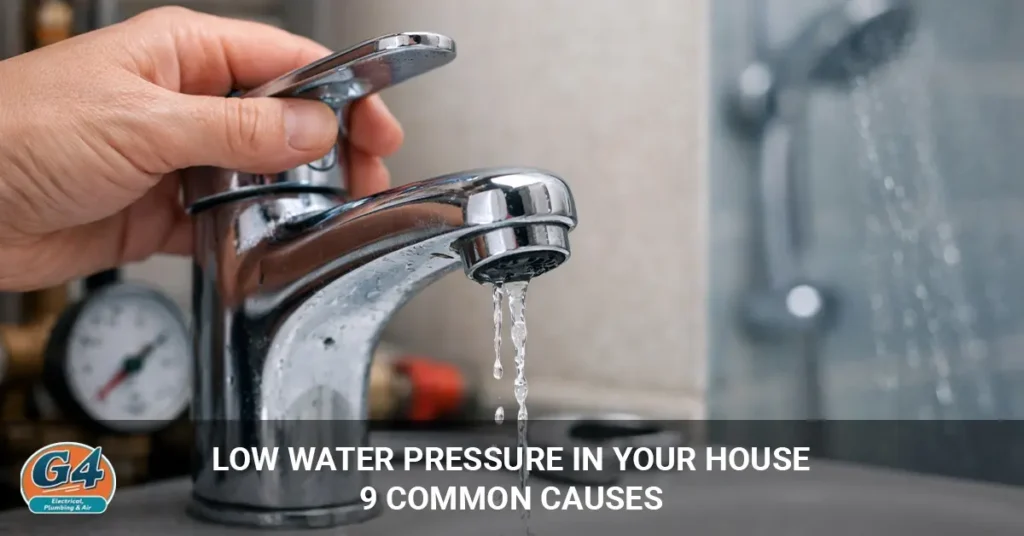
Low water pressure in your house usually means something is blocking, leaking, or restricting the flow of water.
At first, it may not seem like a big deal. But when your shower feels weak, or your sink takes too long to fill, it quickly becomes annoying.
In many cases, the fix is simple. A clogged aerator or a slightly closed valve can reduce pressure. You can often fix these in minutes. But sometimes, low pressure points to bigger problems like hidden leaks, pipe damage, or system issues.
That’s why you shouldn’t ignore it.
This guide will help you understand what’s really going on. You’ll learn the most common causes of low water pressure and how to fix them step by step. You’ll also see the warning signs that mean the problem is serious, so you know exactly when it’s time to call a professional before it gets worse.
What Is Considered Low Water Pressure?
Low water pressure means your home’s water flow is weaker than the normal range of 40–60 PSI.
In simple terms, if your water doesn’t come out with enough force, your pressure is likely too low. Most homes need steady pressure to run showers, sinks, and appliances properly.
You’ll usually notice it right away. Your faucet may run slowly. Your shower might feel weak. Appliances like washing machines can take longer to fill. Sometimes, the water flow may even go up and down without warning.
Here’s an easy way to understand it. If the issue happens throughout your entire home, it usually points to a main system problem, like a valve, pipe, or supply issue. But if only one faucet or fixture is affected, the problem is likely local, such as a clogged aerator or a faulty fixture.
Knowing this difference helps you quickly figure out where to look and whether it’s a simple fix or something more serious.
Quick Checklist Before You Panic
Before you try complex fixes, you should quickly check a few simple things that often cause low water pressure. Low water pressure is often connected to other common plumbing problems that affect your home’s system.
Start by turning on a few different faucets around your home. If all of them have low pressure, the problem is likely in your main system. If only one is affected, it’s usually a small, local issue.
Next, ask your neighbors if they’re having the same problem. If they are, the issue may be coming from the city water supply, not your home.
Then, check your main shut-off valve. Make sure it’s fully open. Even a slightly closed valve can reduce pressure throughout the house.
Finally, look around for any visible leaks. Check under sinks, around pipes, and near walls or floors. Small leaks can reduce pressure more than you think.
In many cases, one of these quick checks will point you to the problem right away and save you time, money, and stress.
9 Common Causes of Low Water Pressure
Low water pressure usually happens because something is blocking, restricting, or leaking in your plumbing system.
1. Clogged Pipes or Mineral Buildup
Clogged pipes reduce water pressure by narrowing the space where water can flow.
Over time, minerals, especially in hard water, build up inside your pipes. This slowly blocks the flow and weakens pressure throughout your home.
What you can do: If the buildup is light, cleaning may help. But in severe cases, pipe replacement is often the best long-term solution.
2. Partially Closed Shut-Off Valve
A partially closed valve lowers water pressure by limiting how much water enters your home.
This often happens after plumbing work or repairs when the valve isn’t fully reopened.
What you can do: Find your main shut-off valve and make sure it’s fully open. This is a quick fix that can instantly restore pressure.
3. Faulty Pressure Regulator
A faulty pressure regulator causes water pressure to drop or become unstable throughout your home.
This device controls how much pressure enters your plumbing system. When it fails, you may notice sudden changes like pressure that is too weak or sometimes too strong.
Common signs include: sudden pressure changes, inconsistent flow, or pressure that feels unusually high or low.
What you can do: Replacing a pressure regulator usually requires a professional plumber, as it involves working with your main water line.
4. Hidden Pipe Leaks
Hidden leaks lower water pressure by allowing water to escape before it reaches your fixtures.
Even a small leak inside a wall or under the floor can reduce pressure across your home without being immediately visible.
Watch for these signs: higher water bills, damp spots on walls or floors, or a musty smell caused by mold or mildew.
What you can do: Leak detection and repair should be handled by a professional to prevent further damage and restore proper pressure.
5. Corroded Plumbing Pipes
Corroded pipes reduce water pressure by narrowing the inside of your plumbing over time.
This is common in older homes with galvanized steel pipes. As corrosion builds up, it blocks water flow and makes pressure weaker throughout the house.
What you can do: Replacing old, corroded pipes is the most effective long-term solution to restore proper pressure.
6. Municipal Water Supply Problems
Municipal supply issues can lower your water pressure even if your home’s plumbing is working fine.
Sometimes the problem comes from outside your home. City maintenance work, water main breaks, or heavy demand during certain hours can all reduce pressure.
What you can do: Wait and see if the pressure returns to normal, or contact your local water authority to confirm the issue.
7. Shared Water Supply or Peak Demand
Shared water usage can cause low pressure when many people use water at the same time.
This often happens in apartments or busy neighborhoods, especially during mornings and evenings when demand is highest.
What you can do: Try using water during off-peak hours, or consider installing a booster pump to maintain steady pressure.
8. Faulty Fixtures or Aerators
A faulty fixture or clogged aerator causes low pressure when the problem affects only one faucet.
Over time, small debris and mineral deposits can block the aerator at the tip of the faucet. This restricts water flow and makes the pressure feel weak in that specific spot.
What you can do: Remove the aerator and clean it thoroughly. If the fixture is old or worn out, replacing it can quickly restore proper pressure.
9. Water Heater Issues (Hot Water Only)
Water heater problems cause low pressure when only the hot water is affected.
This usually happens when sediment builds up inside the tank, or there’s a blockage in the system. As a result, hot water can’t flow properly through your pipes.
What you can do: Flushing the water heater can remove buildup and improve flow. If the issue continues, it’s best to call a professional to inspect and fix the problem safely.
When Low Water Pressure Is Serious
Low water pressure is serious when it happens suddenly, spreads across your home, or shows signs of damage.
Some pressure problems are minor. But others can point to leaks, pipe damage, or system failure that needs immediate attention.
Pay close attention if your water pressure drops all of a sudden. This often signals a hidden leak or a major issue in your plumbing system. Look for water stains, damp spots, or unusual moisture on walls and floors, as these are common signs of leaking pipes.
If only your hot water is affected, the problem may be inside your water heater. And if multiple fixtures stop working properly at the same time, it usually means the issue is coming from your main water line.
These warning signs should not be ignored. Acting early can prevent bigger damage, higher repair costs, and potential water damage in your home.
How to Fix Low Water Pressure (Step-by-Step)
You can fix low water pressure by starting with simple checks and moving to more advanced solutions if needed.
Begin with the easiest fixes first. These often solve the problem without much time or cost. Clean your faucet aerators to remove any buildup that may be blocking water flow. Then, check your main shut-off valve and make sure it’s fully open. Even a small restriction can lower pressure across your home.
Next, take a look at any visible pipes. Check under sinks and around walls for leaks or moisture. If you want a more accurate check, use a pressure gauge to test your home’s water pressure and confirm if it’s below normal.
If the problem continues, you may need to move to more advanced fixes. Replacing a faulty pressure regulator can restore consistent pressure. Flushing your water heater can help if the issue affects hot water. In some cases, installing a pressure booster system can improve flow throughout your home.
If none of these steps solves the problem, it’s best to call a professional. This ensures the issue is diagnosed correctly and prevents further damage.
When to Call a Professional Plumber
You should call a professional plumber when low water pressure doesn’t improve after basic fixes or shows signs of a deeper problem.
If you’ve already tried simple solutions and the pressure is still low, the issue is likely inside your plumbing system. This is especially true if you suspect a hidden leak, notice unusual moisture, or see your water bill increasing without reason.
Homes with old or corroded pipes often need expert inspection, as these problems can’t be fixed with quick DIY methods. A sudden drop in water pressure without any clear cause is another strong warning sign that something serious may be happening behind the walls or underground.
Calling a professional early can save you from bigger repairs, water damage, and higher costs. It also ensures the problem is fixed correctly and your water pressure returns to normal as quickly as possible.
How Much Does It Cost to Fix Low Water Pressure?
Fixing low water pressure usually costs between $0 and $1,000+, depending on the cause of the problem.
If the issue is simple, like a clogged aerator or a partially closed valve, you may not need to spend anything or just a small amount, typically between $0 and $100.
For more involved repairs, like replacing a faulty pressure regulator, costs usually range from $150 to $400, depending on labor and parts.
If the problem is more serious, such as corroded or damaged pipes, the cost can go much higher. Full or partial pipe replacement can start at $1,000 or more, especially in older homes.
The key is to identify the issue early. Small fixes are inexpensive, but waiting too long can turn a minor problem into a costly repair.
Final Thoughts
Low water pressure in your house is often a warning sign that something isn’t working properly in your plumbing system.
It may start as a small inconvenience, but it can quickly turn into a bigger issue if you ignore it. The good news is that many causes are simple and easy to fix if you catch them early.
Start with basic checks and quick fixes. Pay attention to how your water flow changes over time. If the problem doesn’t go away or gets worse, it’s best to take action sooner rather than later.
Fixing the issue early can save you time, money, and stress and help keep your home’s water system running smoothly.