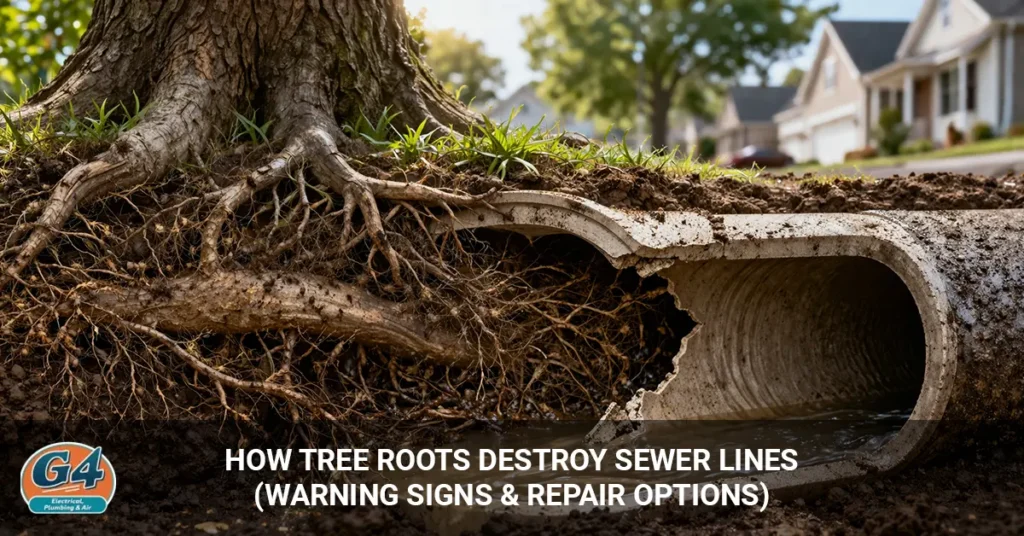
Tree roots destroy sewer lines by getting into small cracks in the pipes and growing inside them. As they grow bigger, they block the flow of wastewater and can even break the pipe.
This is a common problem, especially in homes with older plumbing. Sewer lines carry water and nutrients, which naturally attract tree roots. Once roots find a small opening, they push in and keep expanding.
At first, you may not notice anything wrong. But over time, the roots grow thicker, trap debris, and slow down your drains.
If left untreated, this can lead to backups, bad smells, and expensive repairs.
In this guide, you’ll learn why tree roots get into sewer lines, the signs to watch for, and the best ways to fix the problem before it gets worse.
Why Tree Roots Grow Into Sewer Lines
Tree roots grow into sewer lines because they are naturally attracted to the moisture and nutrients inside the pipes. Even a small crack or loose joint can leak enough water to draw roots in.
Roots are always searching for water to survive. When they detect moisture from a sewer line, they grow toward it and slip in through tiny openings.
This problem is more common in older pipes, especially those made of clay or materials that can crack or shift over time.
Once inside, the roots continue to grow and spread, which leads to bigger problems later.
How Tree Roots Damage Sewer Lines
Tree roots damage sewer lines by entering small openings, growing inside the pipe, and blocking the flow of wastewater. What starts as a tiny root can quickly turn into a serious blockage.
The damage usually happens step by step. Roots first slip in through small cracks or loose joints. Once inside, they grow thicker and spread through the pipe.
As they expand, they catch debris like grease and waste, which builds up and slows the flow. Over time, the pressure and root growth can crack or even collapse the pipe.
As the roots continue to grow, they restrict water flow and put stress on the entire sewer line.
Common Warning Signs of Tree Root Damage
Tree root damage usually shows clear warning signs, especially as the problem gets worse over time. These signs often mean there is a blockage or damage in your main sewer line.
You may notice that multiple drains in your home are slow at the same time. This is often one of the first signs and is closely related to why your drains keep clogging, especially when the problem is deeper in the sewer line. This is often one of the first signs.
Gurgling sounds from toilets or sinks can happen when air is trapped in the pipes. Sewage odors inside or outside your home are another strong warning sign.
Water backing up into drains is a more serious issue and should not be ignored. You might also see extra green or wet patches in your yard, which can mean there’s a leak underground.
If you notice any of these signs, it’s best to act quickly before the damage gets worse.
How to Confirm Tree Root Intrusion
Tree root intrusion is best confirmed with a professional camera inspection because it shows exactly what’s happening inside the pipe. This method gives a clear view of roots, cracks, and blockages.
A plumber inserts a small camera into the sewer line and moves it through the pipe. This helps locate the exact spot where roots have entered and how much damage they have caused.
DIY methods are not reliable for this problem because the damage is hidden underground and cannot be seen from the surface.
A proper inspection helps you understand the issue and choose the right repair solution.
Repair Options for Root-Damaged Sewer Lines
You can fix sewer lines damaged by tree roots using different repair methods, depending on how serious the damage is. Some solutions clear the roots, while others repair or replace the pipe.
Hydro Jetting
Hydro jetting removes tree roots by using high-pressure water to cut through them and flush them out of the pipe. It’s a powerful method that clears both roots and buildup.
This option works best for minor to moderate blockages where the pipe is still in good condition.
It restores proper flow quickly, but it may not stop roots from coming back if the pipe isn’t repaired.
Mechanical Root Cutting
Mechanical root cutting removes tree roots by using specialized tools inside the pipe. These tools cut through the roots and clear the blockage.
It can restore water flow quickly, but it doesn’t fix the cracks or entry points. Because of that, roots can grow back over time if the pipe is not repaired.
Pipe Lining (Trenchless Repair)
Pipe lining fixes root-damaged pipes by creating a new pipe inside the existing one without digging. A lining material is inserted and hardened to seal the pipe from the inside.
This method closes cracks and blocks roots from entering again. It’s a long-term solution that works well when the pipe structure is still mostly intact.
Pipe Replacement
Pipe replacement is needed when the sewer line is badly damaged or has collapsed. In this case, the old pipe is removed and replaced with a new one.
This can involve digging up the area or using trenchless methods, depending on the condition and location of the pipe.
It’s the most complete solution and prevents future root problems when done properly.
Can Tree Roots Come Back After Removal?
Yes, tree roots can come back after removal if the pipe is not properly repaired. Removing the roots only clears the blockage, but it doesn’t fix where they entered.
If cracks, gaps, or loose joints are still there, roots will grow back into the pipe over time. They are always searching for moisture, so the problem can return quickly.
That’s why it’s important to seal, line, or replace the damaged section of the pipe. A proper repair stops roots from coming back and provides a long-term solution.
How to Prevent Tree Root Damage
You can prevent tree root damage by protecting your sewer line and stopping roots from getting close to it. Simple steps can save you from expensive repairs later.
Start by avoiding planting trees or large shrubs near your sewer line. Roots naturally grow toward water, so distance matters.
Regular inspections can help catch small problems early before roots get inside. Fixing small leaks or cracks right away also removes the moisture that attracts roots.
You can also install root barriers to block roots from reaching your pipes. Keeping your plumbing system in good condition reduces the risk even more.
These simple habits can greatly lower the chance of roots entering and damaging your sewer line.
When to Call a Professional Plumber
You should call a professional plumber when you notice repeated backups or multiple slow drains, as these often point to a deeper sewer line problem. These issues usually won’t go away with simple fixes.
If water starts backing up into your home, it’s a serious issue that shouldn’t be ignored. These situations often match common plumbing emergency signs and require immediate professional help. Strong sewage odors inside or outside your home can also mean there’s a blockage or damage in the main line.
You may also need professional help if DIY methods don’t work or if the problem keeps coming back again and again.
A professional plumber can find the exact cause and recommend the right repair to fix the issue for good.
Final Thoughts
Tree roots can seriously damage your sewer line if you don’t deal with the problem early. What starts as a small crack can quickly turn into a major blockage or even a broken pipe.
The best way to avoid costly repairs is to catch the issue early and take action right away. Small problems are much easier and cheaper to fix than major damage.
If you think tree roots may be affecting your sewer line, a professional inspection is the safest way to find and fix the problem properly.