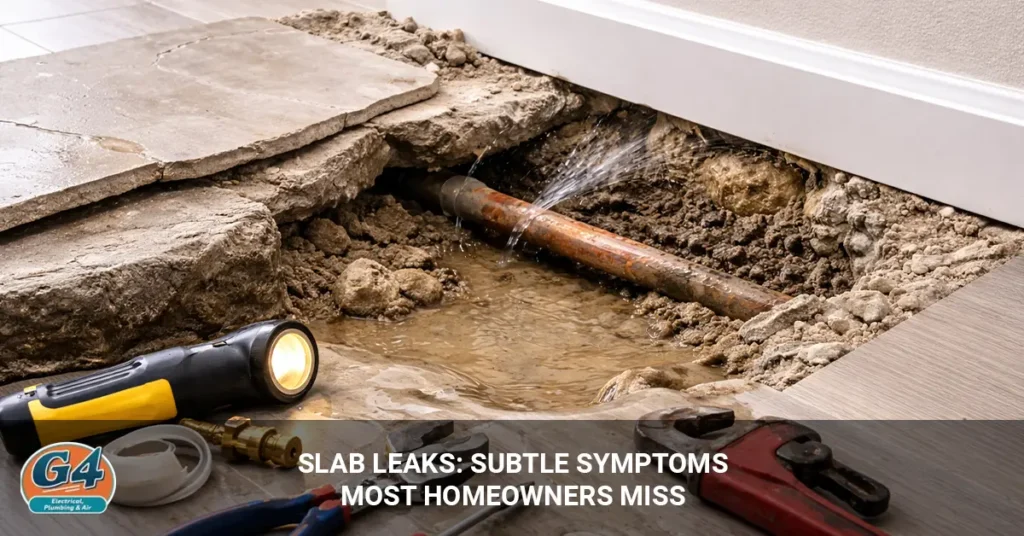
A slab leak is a hidden water leak under your home that can cause serious damage if ignored.
It happens beneath the concrete foundation, so you won’t see it right away. By the time the signs appear, the repair can be costly.
The key is to catch it early. In this guide, you’ll learn the subtle symptoms of a slab leak and what to do before the damage gets worse.
What Is a Slab Leak?
A slab leak is a water leak from pipes located under your home’s concrete foundation.
These pipes carry water throughout your home, and when one leaks, the water spreads underneath the slab instead of being visible.
This makes slab leaks hard to notice early. Over time, the leaking water can weaken the foundation and cause serious structural damage if not fixed.
1. Unexplained Increase in Water Bills
A sudden increase in your water bill is often the first sign of a slab leak.
If your water usage hasn’t changed but your bill keeps rising, water may be leaking under your home. Since the leak is hidden, the water keeps flowing without you noticing.
Even a small leak can waste a lot of water over time, which quickly adds up on your bill.
If you notice this pattern, it’s a strong sign you should check for a possible slab leak, especially since a sudden spike in your water bill often points to hidden plumbing issues.
2. Warm or Hot Spots on Floors
Warm or hot spots on your floor often mean a hot water pipe is leaking under the slab.
You may feel certain areas that are warmer than the rest of the floor, especially on tile or hardwood surfaces. This happens when hot water leaks and spreads beneath the floor.
These spots are usually easy to notice when walking barefoot.
If you feel unusual warmth in one area, it’s a strong early sign of a slab leak and should be checked quickly.
3. Damp or Wet Spots on Flooring
Damp or wet spots on your floor often mean water is leaking under the slab.
You may notice wet patches on carpet, tile, or wood with no clear source. These spots can appear randomly and may stay in the same area.
This happens when water rises from below and reaches the surface.
Catching these early can help you fix the leak before it causes serious damage.
4. Low Water Pressure
Low water pressure can be a sign of a slab leak under your home.
When water leaks from a pipe beneath the slab, less water reaches your taps and showers. This makes the flow weaker than usual.
If the pressure drops suddenly without any clear reason, it often means water is escaping somewhere in the system.
This is an early warning sign that should be checked before the problem gets worse, especially if you understand the common causes of low water pressure in your home.
5. Cracks in Floors or Walls
Cracks in your floors or walls can be a sign of a slab leak affecting your foundation.
When water leaks under the slab, it can shift the soil and weaken the structure. This pressure can cause cracks to appear over time.
You may notice small cracks at first, but they can grow if the problem continues.
This is a serious warning sign and should be checked as soon as possible.
6. Mold or Musty Odor
A musty smell often means there is moisture from a slab leak under your home.
When water builds up beneath the slab, it creates a damp environment where mold can grow. This is what causes the strong, stale odor.
You may notice the smell before you see any visible damage. It’s often stronger in closed areas or near the floor.
If the odor doesn’t go away, it’s a clear sign you should check for a possible slab leak.
7. Sounds of Running Water
Hearing water when everything is turned off is a strong sign of a slab leak.
You may hear faint dripping, hissing, or running water beneath the floor, especially when the house is quiet.
These sounds usually mean water is leaking continuously under your home, even when no fixtures are in use.
If you hear this and can’t find the source, it’s time to check for a possible slab leak.
Why Slab Leaks Are So Dangerous
Slab leaks are dangerous because they can damage your home’s foundation without you noticing.
Water keeps leaking under the slab, slowly weakening the structure. Over time, this can lead to cracks in floors and walls.
They also create moisture that can cause mold growth, which can affect your home and your health.
The longer a slab leak goes untreated, the more damage it causes and the more expensive it becomes to fix.
How to Detect a Slab Leak
You can detect a slab leak by checking for key signs and doing a simple water meter test.
Start by turning off all water in your home. Then check the water meter. If it’s still moving, water is leaking somewhere in the system.
Next, look for signs like warm spots on the floor, damp areas, or unusual sounds. These often point to a leak under the slab.
If you can’t find the source, a professional can use specialized tools to locate the leak accurately.
When to Call a Professional
You should call a professional when you can’t find or confirm the source of the leak.
Slab leaks are hidden under the foundation, so they are hard to locate without proper tools. If you notice signs but can’t pinpoint the problem, it’s best to get expert help.
A professional can find the exact location of the leak and fix it before it causes more damage.
Cost of Repairing a Slab Leak
The cost to repair a slab leak depends on how serious the problem is and how it’s fixed.
Small leaks are usually less expensive, but larger leaks that affect the foundation can cost much more. You may also pay for leak detection and repair work.
The longer you wait, the higher the cost can go.
Fixing the leak early is the best way to keep repair costs lower.
How to Prevent Slab Leaks
You can reduce the risk of slab leaks by taking care of your plumbing system regularly.
Keep your water pressure at a safe level so pipes don’t get stressed or damaged. Check exposed pipes for signs of wear, corrosion, or leaks.
Replace old or damaged pipes before they fail. Small fixes now can prevent bigger problems later.
Regular maintenance helps protect your home and avoid costly repairs.
Final Thoughts
Slab leaks can cause serious damage if you don’t catch them early.
The signs are often subtle, but they are there if you pay attention. Small changes like warm spots, higher bills, or low pressure can point to a problem.
Acting quickly can prevent major structural damage and high repair costs.
Taking early action helps protect your home and keeps your plumbing system working properly.