
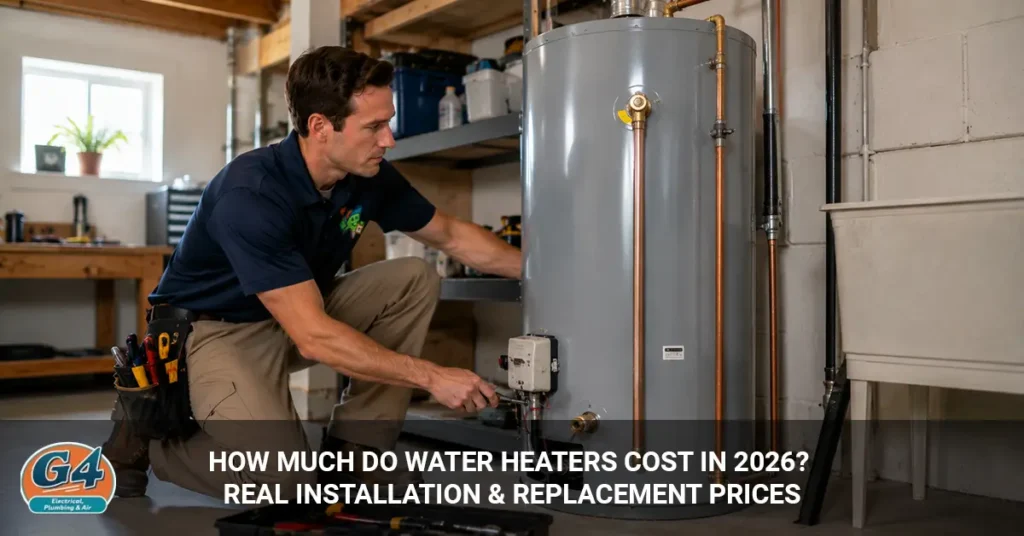
Replacing a water heater in 2026 typically costs between $1,200 and $4,500, depending on the type of unit, its size, labor costs, and any plumbing or electrical upgrades your home needs.
If your water heater has stopped working, started leaking, or isn’t producing enough hot water, you’re probably wondering how much a replacement will cost. The good news is that there’s a water heater for almost every budget. The challenge is knowing which option gives you the best value.
A standard electric tank water heater is usually the most affordable to install. Gas models cost a little more, while tankless and hybrid water heaters have higher upfront costs but can save money on energy bills over time. The total price also depends on factors like installation complexity, permit fees, and whether you’re replacing an existing unit or installing a completely new system.
In this guide, you’ll learn the real cost of installing or replacing a water heater in 2026. We’ll compare different water heater types, explain what affects the final price, break down labor costs, and help you choose the right system for your home and budget. By the end, you’ll have a clear idea of what to expect before requesting quotes from local plumbing professionals.
Average Water Heater Installation & Replacement Cost in 2026
The average cost to install or replace a water heater in 2026 ranges from $1,200 to $4,500, with some premium systems costing more. Your final price depends on the type of water heater you choose, the size of the unit, and how complex the installation is.
Here’s what most homeowners can expect to pay for a professionally installed water heater.
| Water Heater Type | Average Installed Cost |
| Electric Tank | $1,200–$2,200 |
| Gas Tank | $1,500–$2,800 |
| Electric Tankless | $1,800–$3,500 |
| Gas Tankless | $2,500–$5,500 |
| Hybrid Heat Pump | $2,500–$5,000 |
| Solar Water Heater | $5,000–$10,000+ |
These estimates include both the water heater and professional installation. However, your total cost may increase if your project requires additional work, such as upgrading electrical wiring, installing a larger gas line, adding new venting, modifying plumbing connections, or obtaining local permits.
Several factors affect the overall installation cost, including:
- The type of water heater
- Tank size or water heating capacity
- Fuel source (electric, natural gas, propane, or solar)
- Energy efficiency rating
- Labor rates in your area
- Plumbing, electrical, or venting upgrades
- Permit and inspection fees
- Removal and disposal of the old water heater
The easiest and most affordable replacement is usually swapping an existing water heater for a similar model. If you’re switching to a tankless system or changing the fuel source, expect higher installation costs due to the extra labor and materials involved.
To get the most accurate price, request quotes from at least three licensed plumbing contractors. Comparing estimates will help you understand local labor costs, identify what’s included in the installation, and choose the best value for your budget.
Water Heater Costs by Type
The type of water heater you choose affects both the upfront installation cost and your long-term energy expenses. While traditional tank water heaters are the most affordable to install, tankless and hybrid models can reduce energy bills over time. The right choice depends on your budget, household size, and daily hot water usage.
Traditional Tank Water Heater
A traditional tank water heater is the most common option for homeowners because it’s reliable, affordable, and easy to install. It stores hot water in an insulated tank and keeps it ready for use whenever you turn on a faucet. Most residential models come in 30-, 40-, 50-, 75-, and 80-gallon sizes.
A professionally installed electric tank water heater typically costs between $1,200 and $2,200, while a gas tank water heater usually costs between $1,500 and $2,800.
Pros
- Lowest upfront installation cost
- Easy to replace with a similar unit
- Reliable and widely available
- Simple maintenance and lower repair costs
- Available in multiple tank sizes for different household needs
Cons
- Uses more energy because it keeps water heated at all times
- Limited hot water supply during heavy usage
- Requires more installation space than a tankless system
- Typically lasts 10 to 15 years, which is shorter than many tankless models
A traditional storage tank water heater is a practical choice for homeowners who want dependable performance without a high upfront investment. It’s especially cost-effective when replacing an existing tank water heater since installation usually requires minimal modifications.
Tankless Water Heater
A tankless water heater costs more to install than a traditional tank model, but it provides hot water on demand and can lower your energy bills over time. Instead of storing hot water in a tank, it heats water only when you turn on a hot water tap. This means you won’t run out of hot water during back-to-back showers, making it a popular choice for larger households.
In 2026, a professionally installed electric tankless water heater typically costs between $1,800 and $3,500, while a gas tankless water heater usually costs between $2,500 and $5,500. The final price depends on the unit’s size, your home’s plumbing and electrical system, and whether new gas lines or venting are required.
Pros
- Provides hot water on demand, so you don’t have to wait for a storage tank to refill
- Uses less energy because it heats water only when needed
- Compact, wall-mounted design saves valuable floor space
- Typically lasts 20 years or more with proper maintenance
- Can help reduce monthly utility bills over its lifetime
Cons
- Higher upfront purchase and installation cost than a tank water heater
- Gas models may require upgraded gas lines and new venting
- Electric models often need higher-capacity electrical circuits
- Repairs can be more expensive if major components need replacement
A tankless water heater is a smart long-term investment if you want better energy efficiency, continuous hot water, and a longer-lasting system. Read our full tank vs tankless vs heat pump water heater comparison to find the best option for your home. Although the initial cost is higher, many homeowners recover part of that investment through lower energy bills and a longer service life.
Hybrid Heat Pump Water Heater
A hybrid heat pump water heater is one of the most energy-efficient water heating systems you can buy. Instead of generating heat like a standard electric water heater, it pulls warmth from the surrounding air and transfers it to the water inside the tank. Because it uses much less electricity, it can significantly reduce your monthly energy bills over time.
In 2026, the average cost to install a hybrid heat pump water heater ranges from $2,500 to $5,000. While the upfront cost is higher than a traditional tank water heater, the long-term energy savings can make it a worthwhile investment for many homeowners.
Pros
- One of the most energy-efficient water heater options available
- Lower monthly electricity bills than conventional electric models
- May qualify for utility rebates or tax incentives
- Environmentally friendly with reduced energy consumption
- Can deliver substantial savings over its lifespan
Cons
- Higher purchase and installation cost
- Requires enough space and good airflow to operate efficiently
- Performance may decrease in very cold environments
- Produces more noise than a standard electric tank water heater
A hybrid heat pump water heater is an excellent choice if you’re planning to stay in your home for years and want to reduce long-term energy costs. It’s best suited for homes with enough installation space, such as garages, basements, or utility rooms where airflow is not restricted.
Solar Water Heater
A solar water heater has the highest upfront cost but offers the lowest long-term energy costs. It uses solar collectors to capture energy from the sun and heat water, reducing your reliance on electricity or natural gas. Most systems also include a backup electric or gas heater to ensure you have hot water during cloudy days or periods of high demand.
In 2026, the average cost to install a solar water heater ranges from $5,000 to $10,000 or more, depending on the system size, your home’s layout, and the complexity of the installation.
Pros
- Lowest long-term operating costs
- Uses clean, renewable solar energy
- Reduces your home’s carbon footprint
- May qualify for federal, state, or local tax credits and rebates
- Can increase your home’s value and energy efficiency
Cons
- Highest upfront purchase and installation cost
- Performance depends on the amount of sunlight your location receives
- Installation is more complex than other water heater types
- Requires regular maintenance to keep the system operating efficiently
A solar water heater is a great option for homeowners in sunny regions who want to lower their energy bills and reduce their environmental impact. Although the initial investment is significant, the long-term savings and available incentives can make it a worthwhile choice if you plan to stay in your home for many years.
Which Type of Water Heater Offers the Best Value?
The best value water heater depends on your budget, household size, and how long you plan to stay in your home. There’s no single option that’s right for everyone, so it’s important to compare both the upfront cost and the long-term savings.
If you’re looking for the most affordable installation, a traditional tank water heater offers the best value. It has the lowest upfront cost, is easy to install, and provides reliable hot water for most households.
If your goal is to lower your monthly energy bills, a tankless water heater is often the better investment. Although it costs more to install, it heats water only when you need it, uses less energy, and typically lasts 20 years or more.
A hybrid heat pump water heater is one of the most energy-efficient options available. While the initial investment is higher, its lower operating costs can help offset the purchase price over time, especially in homes with high hot water usage.
For homeowners who want the greatest long-term energy savings and a more environmentally friendly solution, a solar water heater can provide the best return on investment. However, it also has the highest upfront cost and performs best in areas with plenty of sunshine.
When choosing a water heater, don’t focus only on the purchase price. Consider the installation cost, energy efficiency, expected lifespan, maintenance requirements, warranty, and annual operating costs. A water heater with a higher upfront price may cost less to own over its lifetime, making it the better investment for your home.
Water Heater Replacement Cost by Tank Size
The size of your water heater has a direct impact on the replacement cost. Larger tanks cost more to buy and install, but they can provide enough hot water for bigger households. Choosing the right size helps ensure you have a reliable hot water supply without paying for more capacity than you need.
Here’s what most homeowners can expect to pay based on tank size.
| Tank Size | Average Installed Cost | Recommended Household Size |
| 30 Gallon | $1,100–$2,000 | 1–2 people |
| 40 Gallon | $1,200–$2,300 | 2–3 people |
| 50 Gallon | $1,400–$2,700 | 3–5 people |
| 75 Gallon | $2,000–$3,800 | 5–6 people |
| 80 Gallon | $2,300–$4,500 | 6+ people |
30-Gallon Water Heater
A 30-gallon water heater is the most affordable option and works well for apartments, condos, and small homes with one or two people. It provides enough hot water for basic daily use, but households with higher demand may run out of hot water more quickly.
40-Gallon Water Heater
A 40-gallon water heater is one of the most popular choices for smaller families. It offers a good balance between price and performance, providing enough hot water for two to three people while keeping installation costs relatively low.
50-Gallon Water Heater
A 50-gallon water heater is considered the standard size for many homes. It’s a practical choice for families of three to five people and can comfortably handle daily activities such as showers, laundry, and dishwashing. Both gas and electric models are widely available.
75- and 80-Gallon Water Heaters
A 75- or 80-gallon water heater is designed for large households with multiple bathrooms or high hot water demand. Although these units have a higher purchase and installation cost, they provide a larger hot water supply and reduce the chances of running out of hot water during busy mornings or back-to-back showers.
When choosing a tank size, think about your household’s daily hot water usage rather than simply buying the largest unit available. A properly sized water heater improves energy efficiency, reduces operating costs, and ensures you always have enough hot water when you need it.
Water Heater Cost by Fuel Type
The fuel type you choose affects both the upfront installation cost and the long-term cost of operating your water heater. While some options are less expensive to install, others can help reduce your monthly energy bills. The best choice depends on the energy prices in your area, your home’s existing utility connections, and your household’s hot water needs.
Electric Water Heaters
Electric water heaters are typically the most affordable and easiest to install. Because they don’t require gas lines or venting, installation is usually quicker and less expensive than gas-powered models. In 2026, the average cost to install an electric water heater ranges from $1,200 to $2,500.
Pros
- Lower installation cost than most gas models
- No gas line or venting required
- Simple maintenance with fewer components
- Quiet operation
- No combustion gases or carbon monoxide concerns
Cons
- Electricity costs may be higher than natural gas in some areas
- Water may take longer to recover after heavy use compared to gas models
- Operating costs depend on local electricity rates
An electric water heater is a great choice for homes without a natural gas connection or for homeowners looking for a simple, budget-friendly installation. It’s especially well suited for small to medium-sized households with moderate hot water usage.
Natural Gas Water Heaters
Natural gas water heaters heat water faster than electric models and often cost less to operate in areas where natural gas is readily available. They’re a popular choice for medium to large households because they can recover quickly and provide a steady supply of hot water during periods of high demand.
In 2026, the average cost to install a natural gas water heater ranges from $1,500 to $3,000. The total cost depends on the size of the unit, labor rates, and whether your home already has a gas line and proper venting.
Pros
- Heats water faster than most electric models
- Lower operating costs in many regions
- Faster recovery rate for continuous hot water
- Ideal for larger households with high hot water demand
- Continues to perform efficiently during heavy daily use
Cons
- Requires an existing natural gas line or a new gas line installation
- Must be properly vented to meet local building codes
- Higher installation cost than most electric water heaters
- Annual maintenance is recommended to ensure safe operation
A natural gas water heater is an excellent option if your home already has natural gas service. Although it costs more to install than an electric model, the lower operating costs and faster hot water recovery can make it a better long-term value for many homeowners.
Propane Water Heaters
Propane water heaters are a reliable option for homes that don’t have access to natural gas. They’re commonly used in rural and off-grid areas because they heat water quickly and deliver performance similar to natural gas models.
In 2026, the average cost to install a propane water heater ranges from $1,700 to $3,500. The total cost depends on the size of the unit, installation requirements, and whether your home already has a propane tank and fuel supply.
Pros
- Ideal for rural homes and properties without natural gas
- Fast water heating and quick recovery time
- Reliable hot water for households with higher demand
- Can continue operating during heavy daily use
Cons
- Propane prices can fluctuate throughout the year
- Requires a propane storage tank
- Ongoing fuel delivery adds to operating costs
- Installation may cost more if a propane system isn’t already in place
A propane water heater is a practical choice for homeowners in areas where natural gas isn’t available. While fuel costs can vary, it provides fast, dependable hot water and is well suited for homes that already use propane for heating or other appliances.
Hybrid Heat Pump Water Heaters
Hybrid heat pump water heaters are one of the most energy-efficient options available. Instead of generating heat like a standard electric water heater, they pull warmth from the surrounding air and transfer it to the water in the tank. This process uses much less electricity, helping homeowners reduce their monthly energy bills.
In 2026, the average cost to install a hybrid heat pump water heater ranges from $2,500 to $5,000. While the upfront investment is higher than a conventional electric water heater, the long-term energy savings can help offset the initial cost.
Pros
- One of the most energy-efficient water heater options
- Significantly lower monthly electricity bills
- May qualify for utility rebates or tax incentives
- Environmentally friendly with reduced energy consumption
- Lower operating costs over the life of the unit
Cons
- Higher purchase and installation cost
- Requires enough space and proper airflow to operate efficiently
- May not perform as well in colder spaces
- Slightly noisier than a standard electric water heater
A hybrid heat pump water heater is an excellent choice for homeowners who want to lower long-term energy costs and improve energy efficiency. It’s best suited for homes with enough installation space, such as a garage, basement, or utility room, where the unit has adequate airflow to perform at its best.
Solar Water Heaters
Solar water heaters use energy from the sun to heat your home’s water, making them one of the most energy-efficient and environmentally friendly options available. They use rooftop solar collectors to capture sunlight, and most systems include a backup electric or gas heater to provide hot water during cloudy days or periods of high demand.
In 2026, the average cost to install a solar water heater ranges from $5,000 to $10,000 or more. Although the upfront cost is the highest among all water heater types, the long-term energy savings can be substantial, especially in sunny climates.
Pros
- Very low long-term operating costs
- Powered by clean, renewable solar energy
- Reduces your home’s carbon footprint
- May qualify for federal, state, or local tax credits and rebates
- Can increase your home’s overall energy efficiency
Cons
- Highest upfront purchase and installation cost
- Performance depends on the amount of sunlight your area receives
- Most systems require a backup electric or gas heater
- Installation is more complex than conventional water heaters
A solar water heater is a great investment for homeowners who live in sunny regions and plan to stay in their home for many years. While the initial cost is higher, lower energy bills and available incentives can make it a cost-effective choice over the long term.
Labor Cost to Install a Water Heater
Labor costs to install a water heater typically range from $400 to $3,000, depending on the type of installation and whether additional plumbing, electrical, or gas work is required. Replacing an existing water heater with a similar model is usually the most affordable option, while installing a new system or relocating the unit costs more because of the extra work involved.
Here’s what homeowners can generally expect to pay for labor in 2026.
| Installation Type | Typical Labor Cost |
| Standard tank replacement | $400–$900 |
| Gas water heater replacement | $500–$1,000 |
| Tankless water heater installation | $800–$2,000 |
| New water heater installation | $1,000–$2,500 |
| Relocating a water heater | $1,000–$3,000 |
If you’re replacing an old water heater with the same type and size, labor costs are usually lower because the existing plumbing, electrical connections, and venting can often be reused. However, switching from a tank to a tankless water heater or changing the fuel source may require additional work, increasing the total installation cost.
Several factors can also add to your labor costs, including:
- Permit and inspection fees required by local building codes
- Removal and disposal of the old water heater
- Installing an expansion tank if required
- Adding a drain pan to help prevent water damage
- Replacing old or faulty water shutoff valves
- Installing earthquake straps in areas where they’re required by code
- Upgrading gas lines, electrical wiring, or venting systems
To avoid unexpected expenses, ask your plumbing contractor for a detailed estimate that clearly separates labor, materials, permits, and any optional upgrades. This makes it easier to compare quotes and understand exactly what’s included in the installation price.
What Affects Water Heater Installation Cost?
Several factors affect the cost of installing a water heater, from the type of system you choose to the condition of your home’s plumbing and electrical systems. Understanding these factors can help you budget more accurately and avoid unexpected expenses.
Type of Water Heater
The type of water heater has the biggest impact on the total installation cost. Traditional tank water heaters are usually the least expensive to install because they require fewer modifications. Tankless, hybrid, and solar water heaters typically cost more due to their specialized equipment and more complex installation requirements.
Tank Size
Larger water heaters generally cost more than smaller models. They require larger tanks, more materials, and in some cases, additional space or plumbing upgrades. Choosing the right size for your household helps you avoid paying for capacity you don’t need.
Fuel Source
Your home’s fuel source can significantly affect installation costs. Replacing an electric water heater with another electric model is usually straightforward. However, switching between electric, natural gas, or propane may require new utility connections, increasing both labor and material costs.
Brand
The manufacturer you choose also influences the price. Premium brands often cost more upfront, but they may offer better warranties, improved energy efficiency, and longer service life, providing better value over time.
Energy Efficiency Rating
High-efficiency water heaters usually have a higher purchase price, but they consume less energy and can lower your monthly utility bills. Over the life of the unit, these savings may offset the higher initial investment.
Plumbing Modifications
Older homes may need plumbing updates before a new water heater can be installed safely. Replacing aging water lines, shutoff valves, or pressure regulators can increase the overall installation cost.
Electrical Upgrades
Installing an electric tankless water heater often requires additional electrical capacity. Your electrician may need to upgrade the electrical panel, install larger circuit breakers, or run new wiring, adding to the total project cost. See our electrical panel upgrade cost guide to understand what this work typically involves.
Gas Line Upgrades
If you’re installing a gas tankless water heater, the existing gas line may not be large enough to support the higher fuel demand. Upgrading the gas line can increase both labor and material costs.
Venting Requirements
Gas water heaters require proper venting to safely remove combustion gases. If your existing venting system doesn’t meet current building codes, installing new vent pipes or upgrading the existing system will increase the installation cost.
Expansion Tank Installation
Many local plumbing codes require an expansion tank to protect your plumbing system from excess water pressure. If one isn’t already installed, it may need to be added during the replacement.
Drain Pan Installation
A drain pan helps protect your home from water damage if the water heater develops a leak. It’s often required when the unit is installed in an attic, closet, or above finished living spaces.
Permit Requirements
Many cities and counties require permits and inspections for water heater installations. Permit fees vary by location but should be included in your installation estimate.
Local Labor Rates
Labor costs vary depending on where you live. Homeowners in large cities or areas with a higher cost of living typically pay more for professional installation than those in smaller towns or rural areas.
Emergency Replacement
Replacing a water heater after it suddenly fails often costs more than a scheduled installation. Emergency or after-hours service usually comes with higher labor charges, so replacing an aging unit before it fails can help you avoid these additional costs if you’re already without hot water. See our no hot water heater problems and fixes guide for immediate troubleshooting steps.
Water Heater Installation Cost by Home Size
The size of your home and the number of people in your household play a key role in determining the right water heater and its installation cost. Choosing the correct size ensures you have enough hot water for daily use without paying for a larger system than you actually need.
Here’s a general guide to the recommended water heater size and average installation cost based on home size.
| Home Type | Typical Water Heater | Average Installed Cost |
| Apartment or Studio | 30-Gallon Electric | $1,100–$2,000 |
| Condo | 40-Gallon Tank | $1,200–$2,300 |
| Small Home | 40–50 Gallon Tank | $1,300–$2,600 |
| Medium Family Home | 50–75 Gallon Tank | $1,600–$3,500 |
| Large Family Home | 75–80 Gallon Tank or Tankless | $2,500–$5,500+ |
A 30-gallon water heater is usually enough for an apartment or studio with one or two occupants. Condos and smaller homes often do well with a 40-gallon tank, while families of three to five people typically benefit from a 50-gallon model.
For larger homes with multiple bathrooms or six or more occupants, a 75- or 80-gallon water heater or a tankless water heater is often the best choice. These systems can meet higher hot water demand and reduce the chance of running out of hot water during busy mornings.
While home size is a good starting point, your daily hot water usage is just as important. A household with frequent showers, large soaking tubs, or multiple appliances running at the same time may need a larger water heater than a home of the same size with lower water usage.
If you’re unsure which size is right for your home, a licensed plumber can evaluate your household’s hot water demand and recommend the most efficient option. Choosing the right size improves comfort, lowers energy costs, and helps extend the lifespan of your water heater.
Water Heater Replacement vs. Repair
Whether you should repair or replace your water heater depends on its age, condition, and the cost of the repair. Minor problems on a newer unit are often worth fixing, while an older water heater with frequent issues is usually a better candidate for replacement.
Here’s a quick comparison to help you decide.
| Factor | Repair | Replacement |
| Average Cost | $150–$800 | $1,200–$4,500+ |
| Best For | Minor issues and newer units | Older or severely damaged units |
| Lifespan Impact | Can extend the unit’s life by a few years | Provides a completely new service life |
| Energy Efficiency | Little to no improvement | New models are often more energy efficient |
| Warranty | Limited warranty on parts or labor | New manufacturer warranty |
| Long-Term Value | Better for newer water heaters | Better for aging or inefficient units |
If your water heater is less than 8 years old and the repair is relatively inexpensive, repairing it is usually the more cost-effective option. Common issues like a faulty thermostat, heating element, pressure relief valve, or pilot light can often be repaired without replacing the entire unit.
However, if your water heater is 10 to 15 years old, has a leaking tank, or needs frequent repairs, replacement is often the smarter investment. Newer models are more energy efficient, come with a manufacturer’s warranty, and can help reduce your monthly utility bills.
As a general rule, if the repair cost is close to 50% of the price of a new water heater, replacing the unit usually provides better long-term value and greater peace of mind. Check our guide on signs your water heater is failing to help you decide.
Signs Your Water Heater Needs Replacement
Most water heaters show warning signs before they stop working completely. Recognizing these problems early can help you replace the unit before it causes water damage, higher energy bills, or an unexpected loss of hot water.
You’re Running Out of Hot Water
If your hot water doesn’t last as long as it used to, your water heater may be losing efficiency. Worn heating elements, sediment buildup, or an aging tank can reduce its ability to keep up with your household’s hot water demand.
Rust-Colored Water
Rusty or brown hot water is often a sign that the inside of the tank is corroding. If the rust is coming from the water heater rather than your home’s plumbing, replacing the unit is usually the best long-term solution.
Water Leaks Around the Tank
Water pooling around the base of the tank is a common sign of internal tank failure. While some leaks can come from loose fittings or valves, a leaking tank itself cannot usually be repaired and should be replaced as soon as possible to prevent water damage.
Strange Noises
Popping, rumbling, or banging sounds are often caused by sediment buildup at the bottom of the tank. Learn more about what a water heater making popping noise means and when to take action. As sediment hardens, your water heater has to work harder to heat the water, reducing efficiency and increasing wear on the unit.
Rising Energy Bills
If your energy bills keep increasing without a change in your household’s water usage, your water heater may be using more energy than it should. Older units become less efficient over time, making replacement a more cost-effective option.
Frequent Repairs
Occasional repairs are normal, but repeated problems can quickly become expensive. If you’re replacing heating elements, thermostats, valves, or other components every year, investing in a new water heater may save you money in the long run.
Your Water Heater Is More Than 10–15 Years Old
Most traditional tank water heaters last 10 to 15 years, while tankless models can often last 20 years or more with proper maintenance. If your water heater is nearing the end of its expected lifespan, replacing it before it fails can help you avoid emergency repairs and unexpected downtime.
Should You Repair or Replace Your Water Heater?
In most cases, the decision comes down to your water heater’s age, condition, and repair cost. If the unit is relatively new and the issue is minor, a repair is usually the better option. However, if it’s older and experiencing frequent problems, replacing it often provides better long-term value.
Under 8 Years Old
If your water heater is less than 8 years old and has been properly maintained, repairing it is usually the most cost-effective choice. Common issues like a faulty thermostat, heating element, or pressure relief valve can often be fixed without replacing the entire unit.
8–10 Years Old
If your water heater is between 8 and 10 years old, consider both the repair cost and the unit’s overall condition. If this is the first major repair, fixing it may still make sense. However, if multiple components are beginning to fail, replacing the water heater could save you money over time.
10–15 Years Old
Most traditional tank water heaters are nearing the end of their expected lifespan once they reach 10 to 15 years old. If your unit needs a costly repair or has become less efficient, replacing it is usually the smarter investment. A new water heater will provide better reliability and improved energy efficiency.
Over 15 Years Old
If your water heater is more than 15 years old, replacement is generally the best option. Older units are more likely to leak, break down unexpectedly, and use more energy than newer models. Installing a new water heater can improve performance, reduce utility bills, and give you the peace of mind that comes with a new manufacturer’s warranty.
Best Water Heater Brands in 2026
Choosing a trusted water heater brand can make a big difference in performance, reliability, and long-term ownership costs. The best manufacturers offer quality products, strong warranties, readily available replacement parts, and dependable customer support. Here are some of the top water heater brands to consider in 2026.
Rheem
Rheem is one of the most popular water heater brands in the U.S., offering gas, electric, hybrid, and tankless models for nearly every household. Its products are known for reliable performance, energy efficiency, and a wide range of options to fit different budgets. Rheem is an excellent choice for homeowners looking for dependable performance and a broad selection of residential water heaters.
A. O. Smith
A. O. Smith has built a strong reputation for manufacturing durable and energy-efficient water heaters for both residential and commercial applications. The brand offers advanced features, including smart technology and high-efficiency hybrid models, making it a great option for homeowners who want long-term reliability and lower energy costs.
Bradford White
Bradford White is known for producing high-quality water heaters that are sold and installed through licensed plumbing professionals. The brand is recognized for excellent build quality, dependable performance, and generous warranty coverage, making it a popular choice for homeowners seeking a premium water heating system.
Rinnai
Rinnai is one of the leading manufacturers of tankless water heaters. Its systems provide continuous hot water, excellent energy efficiency, and a long service life. Rinnai is an ideal choice for larger households or homeowners planning to upgrade from a traditional storage tank to a tankless system.
Navien
Navien specializes in high-efficiency condensing tankless water heaters that deliver strong performance while reducing energy consumption. The brand is well known for innovative technology, lower operating costs, and reliable hot water for homes with higher daily demand.
Bosch
Bosch offers a range of compact, energy-efficient water heaters, including electric and tankless models. Its products are a good fit for smaller homes, apartments, and homeowners looking for space-saving designs without sacrificing performance.
When comparing water heater brands, don’t focus only on the purchase price. Consider factors such as warranty coverage, energy efficiency, replacement part availability, customer reviews, and local service support. Choosing a reputable brand can help reduce maintenance costs and provide reliable hot water for many years.
Ways to Save Money on Water Heater Installation
Replacing a water heater can be expensive, but there are several ways to reduce your overall installation costs without sacrificing quality. A little planning can help you save money upfront and lower your long-term energy expenses.
Compare Multiple Quotes
Get estimates from at least three licensed plumbing contractors before making a decision. Comparing quotes helps you find competitive pricing, understand what’s included in the installation, and avoid paying for unnecessary upgrades.
Choose the Right Size
Installing a water heater that’s larger than your household needs can increase both the purchase price and your monthly utility bills. Choosing the right size ensures you have enough hot water while keeping energy costs under control.
Look for Rebates and Tax Credits
Many ENERGY STAR® and high-efficiency water heaters qualify for utility rebates, manufacturer promotions, or government tax credits. These incentives can significantly reduce your upfront installation cost, so check what’s available in your area before buying.
Replace Before It Fails
Don’t wait until your water heater stops working completely. Replacing an aging unit before it fails can help you avoid emergency service fees, water damage, and rushed purchasing decisions that often lead to higher costs. Check our guide on water heater lifespan to know when it’s time to start planning for a replacement.
Bundle Plumbing Projects
If you’re planning other plumbing work, such as replacing shutoff valves or upgrading water lines, consider having everything done at the same time. Bundling projects can reduce labor costs since the plumber only needs to make one service visit.
Ask About Financing
Many plumbing companies offer financing plans that let you spread the cost of a new water heater over monthly payments. This can make it easier to upgrade to a more energy-efficient model without paying the full amount upfront.
Planning ahead, choosing the right water heater, and taking advantage of available rebates can help you save hundreds of dollars on your installation while ensuring you get a system that meets your household’s needs.
Can You Install a Water Heater Yourself?
While it’s possible for experienced homeowners to install a water heater, professional installation is the safest and most reliable option. Replacing a water heater involves more than simply connecting a few pipes, and even small mistakes can lead to costly repairs or serious safety risks.
Installing a water heater may require working with:
- Electrical wiring and circuit connections
- Natural gas or propane lines
- Water supply and drain plumbing
- Venting systems for gas water heaters
- Pressure relief valves and expansion tanks
- Local building codes, permits, and inspections
An improperly installed water heater can cause gas leaks, electrical hazards, water damage, poor energy efficiency, or even void the manufacturer’s warranty. In many areas, building codes also require permits and inspections to ensure the installation meets current safety standards.
Hiring a licensed plumber ensures the water heater is installed correctly, safely, and in compliance with local codes. Professional installation also gives you peace of mind knowing your new water heater will operate efficiently and reliably for years to come.
Frequently Asked Questions
How much does it cost to replace a water heater in 2026?
Most homeowners spend between $1,200 and $4,500 to replace a water heater. The final cost depends on the type of water heater, tank size, labor rates, permit fees, and whether any plumbing, electrical, or gas line upgrades are required.
What is the average labor cost to install a water heater?
Labor typically costs $400 to $900 for a standard water heater replacement. More complex projects, such as installing a tankless water heater, relocating the unit, or upgrading gas or electrical connections, can increase labor costs to $1,000 or more.
Is a tankless water heater worth the extra cost?
Yes, a tankless water heater is worth the investment for many homeowners. Although it costs more to install, it provides hot water on demand, uses less energy, lasts longer than most tank water heaters, and can help lower your utility bills over time.
How long do water heaters last?
A traditional storage tank water heater typically lasts 10 to 15 years with proper maintenance. A tankless water heater can last 20 years or more, making it a good long-term investment for many households.
How much does it cost to replace a 40-gallon water heater?
Replacing a 40-gallon water heater typically costs between $1,200 and $2,300, including professional installation. The exact price depends on whether you choose a gas or electric model and whether additional installation work is needed.
Does homeowners insurance cover water heater replacement?
Homeowners insurance may cover water heater replacement if the damage is caused by a covered event, such as a sudden pipe burst or another unexpected accident. However, it usually doesn’t cover replacement due to normal wear and tear, corrosion, or the age of the unit.
How long does water heater installation take?
Most standard water heater replacements take 2 to 4 hours to complete. More complex installations, such as converting to a tankless water heater or relocating the unit, may take a full day or longer.
Do I need a permit to replace a water heater?
In many areas, yes. Local building codes often require a permit and inspection to ensure the water heater is installed safely and meets current plumbing, gas, and electrical regulations. Your plumbing contractor can usually obtain the permit on your behalf.
Should I replace my water heater before it fails?
If your water heater is more than 10 years old and showing signs of wear, replacing it before it fails is often the smarter choice. A proactive replacement can help you avoid emergency repairs, water damage, and the inconvenience of suddenly losing hot water.
Which type of water heater is the most energy efficient?
Hybrid heat pump water heaters are generally the most energy-efficient option for most homes because they use significantly less electricity than conventional electric models. If your home has natural gas, a condensing tankless water heater is also an excellent choice for improving energy efficiency while providing continuous hot water.
Final Thoughts
Replacing a water heater is a major investment, but choosing the right one can save you money and provide reliable hot water for many years. While most homeowners spend between $1,200 and $4,500 for a professionally installed water heater, the final cost depends on the type of system, tank size, fuel source, labor, permits, and any upgrades your home may need.
Don’t base your decision on the upfront price alone. Consider the water heater’s energy efficiency, expected lifespan, warranty, maintenance needs, and long-term operating costs. Spending more on a high-efficiency model today could lead to lower utility bills and fewer repair costs over its lifetime.
Before making your final decision, get quotes from several licensed plumbing contractors and compare what’s included in each estimate. Choosing the right size and a trusted brand ensures your new water heater meets your household’s hot water needs while operating efficiently.
A professionally installed water heater not only improves comfort and reliability but also helps protect your home, reduce energy consumption, and minimize unexpected repair costs for years to come.