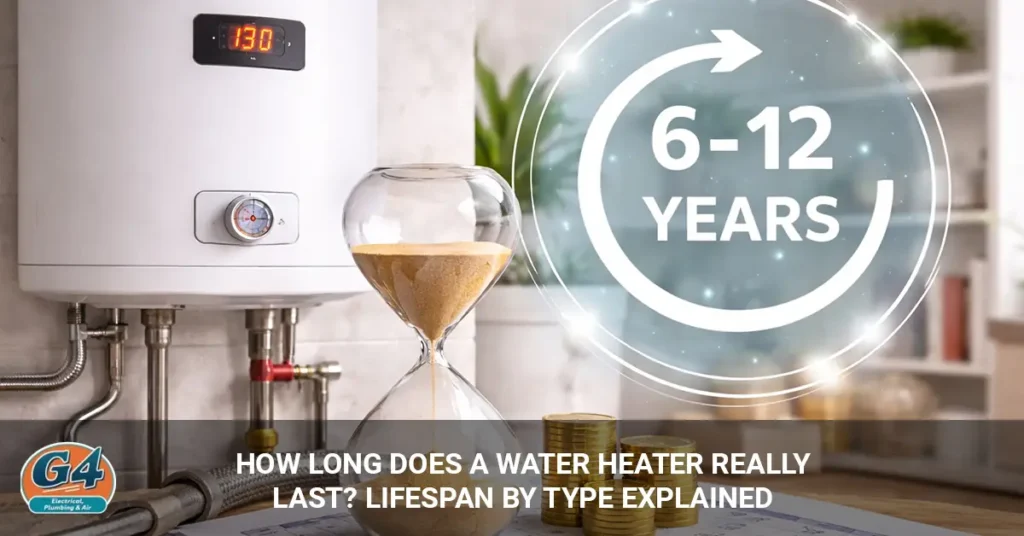
A water heater usually lasts between 8 and 12 years, but it depends on the type, maintenance, and water quality.
Most people don’t think about their water heater until it stops working. But knowing how long it should last helps you plan ahead and avoid sudden breakdowns.
Some water heaters last longer than others. It comes down to how the system is built, how often you use hot water, and how well you take care of it.
If you understand the lifespan of your unit, you can spot problems early and replace it before it fails.
How Long Does a Water Heater Last
Most water heaters last around 8 to 12 years on average.
This lifespan mainly applies to traditional tank water heaters. Other types, like tankless or solar systems, can last much longer with proper care.
Several factors affect how long your unit will last. Water quality plays a big role, especially if you have hard water. How often you use hot water and how well you maintain the system also matter.
If your water heater is getting close to this age range, it’s a good idea to watch for signs of wear and keep an eye on its performance.
Lifespan by Water Heater Type
Different types of water heaters last for different lengths of time.
Knowing what type of system you have helps you understand how long it should last and when you may need to replace it. Each type works differently, which affects how quickly it wears out.
1. Tank Water Heater (Gas & Electric)
Tank water heaters usually last 8 to 12 years.
These are the most common systems in homes. They store hot water in a tank, which means they are always heating and holding water. Over time, this causes more wear on the system.
Sediment buildup at the bottom of the tank and internal corrosion are the main reasons these units wear out faster.
With regular maintenance, like flushing the tank, some units can last a bit longer. But in most cases, you should expect to replace them within this time range.
2. Tankless Water Heater
Tankless water heaters usually last 15 to 20 years.
These systems heat water only when you need it, instead of storing it in a tank. This reduces wear and stress on the unit over time.
Because there’s no storage tank, there’s less risk of corrosion and sediment buildup inside the system.
Regular maintenance, especially descaling, is important to keep the unit running efficiently and help it reach its full lifespan.
3. Heat Pump Water Heater
Heat pump water heaters usually last around 10 to 15 years.
These systems work by moving heat instead of creating it, which makes them more energy efficient than standard units.
Because they have more parts and components, they need regular maintenance to keep everything running smoothly.
With proper care, they can last longer and continue to perform efficiently over time.
4. Solar Water Heater
Solar water heaters usually last 15 to 25 years.
These systems use energy from the sun to heat water, which reduces strain on the unit and helps extend its lifespan.
How long the system lasts depends on the quality of the installation and the environment it operates in.
Some parts, like the storage tank or backup system, may wear out sooner, while the solar panels themselves can last much longer with proper maintenance.
What Affects Water Heater Lifespan
Water heater lifespan depends on maintenance, water quality, usage, and installation.
Hard water is one of the biggest factors. Minerals build up inside the tank over time, which reduces efficiency and puts extra stress on the system.
How often you use hot water also matters. Homes with higher demand, like larger families, may see the unit wear out faster.
Regular maintenance makes a big difference. Simple steps like flushing the tank and checking key parts can help extend the life of the heater.
Installation is just as important. A properly installed system runs more efficiently and lasts longer, while poor installation can lead to early failure.
Signs Your Water Heater Is Near the End of Its Life
A water heater near the end of its life will show clear warning signs before it fails.
You may notice you’re getting less hot water, or the temperature keeps changing while you’re using it. Strange noises from the tank are also a common sign of wear.
Rusty or discolored water, small leaks, and higher energy bills can also point to a failing system.
If you notice more than one of these issues, your water heater is likely close to the end of its lifespan and may need to be replaced soon.
Can You Extend the Life of a Water Heater
You can extend the life of your water heater with simple, regular maintenance.
Flushing the tank once a year removes sediment that builds up and damages the system over time. Checking the anode rod helps prevent rust and corrosion inside the tank.
Keeping the thermostat at a safe setting also reduces stress on the unit and helps it run more efficiently.
These small steps can add years to your water heater’s life and help you avoid early replacement.
When Should You Replace Your Water Heater
You should replace your water heater when it reaches its lifespan or starts having frequent problems.
If your unit is over 10 years old and needs repairs often, it’s usually more cost-effective to replace it rather than keep fixing it.
Waiting too long can lead to leaks, water damage, or a sudden breakdown. (Learn about water stains on walls and ceiling causes and fixes.)
Planning ahead and replacing the unit at the right time helps you avoid emergencies, reduce repair costs, and keep your home running smoothly.
Repair vs Replace: What’s the Better Option
Replacing your water heater is usually the better option if it’s old and keeps breaking down.
Repairs can fix small, temporary issues, but they don’t solve the bigger problem of aging parts inside the system. Over time, those problems will keep coming back.
A new water heater runs more efficiently, gives you consistent hot water, and can help lower your energy bills.
If you’re spending money on frequent repairs, replacing the unit is often the smarter long-term decision.
How to Choose a Long-Lasting Water Heater
Choosing the right water heater helps you get a longer lifespan and better performance.
Tankless systems usually last longer, while traditional tank units cost less upfront and are more common in homes.
You should choose a unit based on your household size and how much hot water you use each day. Picking the right size helps reduce strain on the system.
Energy efficiency also matters. A more efficient unit can last longer and cost less to run over time.
A properly sized and well-maintained water heater will perform better and last as long as possible.
Final Thoughts
Water heater lifespan depends on the type of system, how well it’s maintained, and how often it’s used.
Most units last around 8 to 12 years, but with proper care, some can last much longer.
Paying attention to early signs of wear helps you avoid sudden breakdowns and unexpected costs.
Simple maintenance and timely replacement can save you time, money, and stress in the long run.