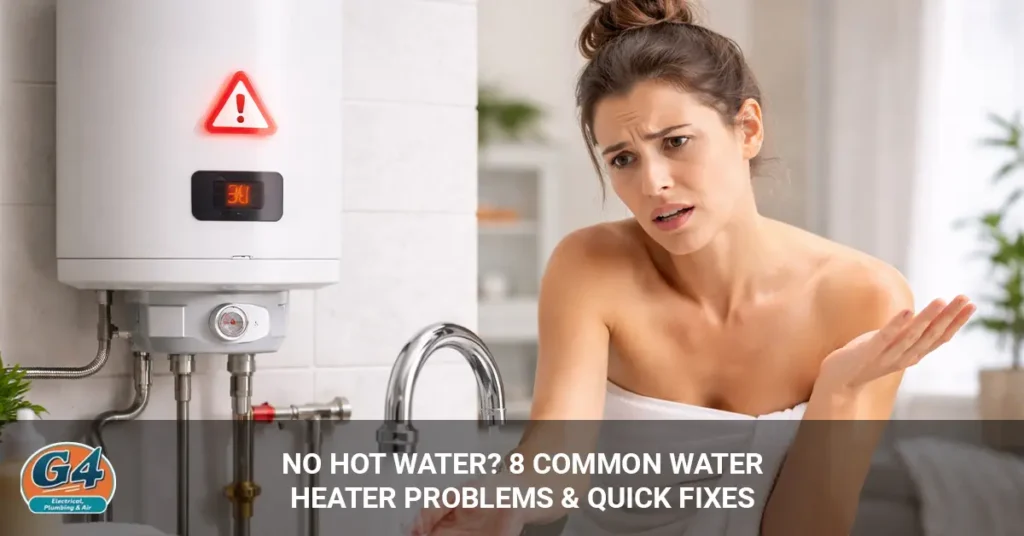
No hot water usually means your water heater isn’t working properly. The issue could be small and easy to fix, or it might need professional repair.
Waking up to cold water is frustrating. It interrupts your shower, dishes, and daily routine. Everything feels harder without hot water.
In most cases, the problem comes from your water heater. The good thing is that many issues are easy to understand once you know where to look.
If you catch the problem early, you can fix simple issues quickly or avoid bigger and more expensive repairs.
Below are the 8 most common water heater problems and quick fixes that can help you get your hot water back fast.
Why You Suddenly Have No Hot Water
No hot water usually happens because of a power issue, a gas problem, or a faulty part inside your water heater.
In most homes, the cause is something simple. (See other top 5 common plumbing issues homeowners face.) It could be that the unit isn’t getting power. Or the pilot light has gone out. Sometimes, a thermostat or heating element stops working.
Other times, buildup inside the tank makes it harder to heat water. If your system is older, worn-out parts can also be the reason.
The most common causes include:
- Power supply problems
- Pilot light failure
- Faulty thermostat or heating components
- Sediment buildup inside the tank
- Aging or damaged equipment
Finding the problem early helps you fix it faster and avoid bigger, more expensive repairs later.
1. Power Supply Problems (Electric Water Heater)
No hot water in an electric heater is usually caused by a power supply issue.
Electric water heaters rely completely on electricity. If the unit isn’t getting power, it won’t heat water at all. This is often the first thing to check because it’s one of the most common and easiest problems.
You’ll usually notice there’s no hot water anywhere in the house, and the unit may look completely off or inactive.
Start by checking your electrical panel. A tripped breaker is a common reason this happens. Reset the breaker and see if the hot water comes back. Also, make sure the power switch near the heater is turned on.
If the breaker trips again or doesn’t stay on, that’s a sign of a deeper electrical issue. In that case, it’s best to have a professional inspect the system before it leads to bigger problems.
2. Pilot Light Is Out (Gas Water Heater)
No hot water in a gas heater is often caused by a pilot light that has gone out.
Gas water heaters depend on a small flame called the pilot light to ignite the burner. If that flame goes out, the heater cannot warm the water.
You’ll usually notice there’s no hot water at all, and when you check the unit, there’s no visible flame.
To fix it, relight the pilot light using the instructions on your unit. Make sure the gas supply is turned on before you try. Once it’s lit, the system should start heating again.
If the flame won’t stay on, the problem is likely a faulty thermocouple or gas control valve. In that case, the part may need to be repaired or replaced by a professional.
3. Faulty Thermostat
No hot water or inconsistent temperature is often caused by a faulty thermostat.
The thermostat controls how hot your water gets inside the tank. When it stops working properly, the heater can’t maintain the right temperature.
You may notice the water feels lukewarm, completely cold, or keeps changing temperature while you’re using it.
Start by checking the thermostat setting. It should be around 120°F (49°C). If your unit has a reset button, try resetting it to see if that restores normal function.
If the problem continues, the thermostat is likely worn out and will need to be replaced to get consistent hot water again.
4. Broken Heating Element (Electric Units)
No hot water or slow heating in an electric unit is often caused by a broken heating element.
Electric water heaters use one or two heating elements inside the tank to warm the water. If one of them fails, the system can’t heat properly.
You may notice you’re getting very little hot water, or it takes much longer than usual to heat up.
To fix this, the heating element needs to be tested to confirm if it’s working. If it’s faulty, replacing it usually restores normal heating.
Since this involves electrical parts, it may require basic tools and knowledge. If you’re not comfortable working with electrical components, it’s safer to have a professional handle the repair.
5. Sediment Buildup in the Tank
Low hot water and slow heating are often caused by sediment buildup inside the tank.
Over time, minerals from hard water settle at the bottom of the tank. This layer blocks heat transfer, so the water takes longer to heat and the system becomes less efficient.
You might hear rumbling or popping sounds from the tank. You may also notice you’re getting less hot water than before.
The best way to fix this is by flushing the tank to remove the buildup. This helps the heater run more efficiently and restores proper heating.
Regular maintenance, like flushing the tank once a year, can prevent sediment from building up again and extend the life of your water heater.
6. Leaking Water Heater Tank
A leaking water heater can stop your system from working properly and cause damage around your home.
Leaks often start small but can quickly turn into a bigger problem. Water can damage floors, walls, and nearby items if it’s not handled early.
You may notice water pooling around the unit, rust on the tank, or damp areas nearby. These are clear signs that something is wrong.
Start by checking all the connections and valves. Sometimes, a loose fitting is the cause, and tightening it can stop the leak.
If the tank itself is leaking, it usually means there’s internal damage or corrosion. In that case, repair isn’t enough, and replacing the water heater is the best solution.
7. Faulty Dip Tube
Hot water running out too fast is often caused by a faulty dip tube.
The dip tube pushes cold water to the bottom of the tank so it can heat properly. When it breaks or wears out, cold water mixes with hot water at the top.
You may notice your hot water doesn’t last long, or the temperature keeps changing while you’re using it.
Fixing this usually means replacing the dip tube. It’s a simple and low-cost repair that can quickly bring your hot water back to normal.
8. Aging Water Heater
Frequent problems and poor performance are often signs that your water heater is too old.
Water heaters don’t last forever. Most units work well for about 8 to 12 years. After that, parts start to wear out, and the system becomes less reliable.
You may notice you’re calling for repairs more often, the water looks rusty, or your energy bills are going up without using more hot water.
At this stage, replacing the unit is usually the better choice. A new, energy-efficient water heater can give you consistent hot water, lower energy costs, and fewer problems over time.
When the Problem Needs a Professional
You should call a professional when the issue is unsafe, complex, or keeps coming back.
Some water heater problems go beyond basic checks and quick fixes. Trying to handle them yourself can make things worse or even create safety risks.
If you smell gas, notice electrical issues, see a leaking tank, or the same problem keeps happening, it’s time to bring in an expert.
Ignoring these signs can lead to bigger damage, higher repair costs, and possible safety hazards. Getting professional help early can save you time, money, and stress.
How to Prevent Future Water Heater Problems
You can prevent most water heater problems with simple regular maintenance.
Taking care of your water heater helps it run better and last longer. It also reduces the chances of suddenly losing hot water when you need it most.
A few basic steps can make a big difference. Flushing the tank once a year removes sediment that slows heating. Checking the anode rod every few years helps prevent rust inside the tank. Keeping the thermostat at a safe setting protects the system from overheating.
It’s also important to look for small signs of trouble, like leaks or corrosion, before they turn into bigger problems.
Regular maintenance keeps your water heater efficient, extends its lifespan, and helps you avoid unexpected breakdowns and costly repairs.
Final Thoughts
No hot water doesn’t always mean a major repair. In many cases, the problem is simple and easy to fix once you know what to check.
Understanding these common water heater issues helps you act quickly and avoid bigger problems. You can fix small issues yourself or know when it’s time to call a professional.
If the problem is more serious, getting help early can save you time, money, and stress.