
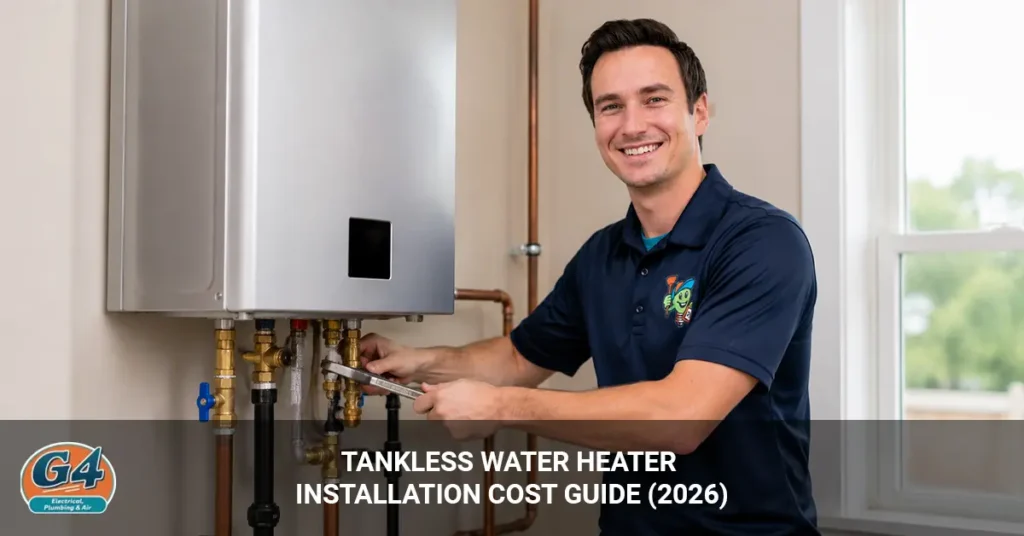
Installing a tankless water heater typically costs between $2,000 and $5,500 in 2026, depending on the unit you choose and whether your home needs plumbing, gas, electrical, or venting upgrades. While the upfront cost is higher than a traditional storage tank water heater, many homeowners find that the long-term energy savings, endless hot water, and longer lifespan make the investment worthwhile.
If you’ve ever had to wait for the hot water to come back after a shower or watched your energy bills steadily increase, switching to a tankless water heater may be a smart upgrade. Unlike a traditional water heater that stores and continuously heats water, a tankless system heats water only when you turn on a hot water faucet. That means you get hot water on demand without wasting energy keeping a storage tank warm all day.
That said, installing a tankless water heater isn’t always a simple replacement. Some homes need a larger gas line, an electrical panel upgrade, new venting, or plumbing modifications before the new unit can be installed safely and perform as expected. These requirements can affect both the installation timeline and the overall cost.
In this guide, you’ll learn the average tankless water heater installation cost in 2026, the factors that influence pricing, the installation requirements for gas and electric models, what to expect during the installation process, and how to decide whether a tankless water heater is the right investment for your home.
How Much Does Tankless Water Heater Installation Cost in 2026?
The average tankless water heater installation cost in 2026 ranges from $2,000 to $5,500, with most homeowners spending between $2,500 and $3,800 for a professionally installed whole-home system. The final price depends on the type of water heater, labor costs, and whether your home needs plumbing, gas, electrical, or venting upgrades.
Electric tankless water heaters are generally less expensive to install because they don’t require gas lines or venting. Gas tankless systems usually cost more since they often need a larger gas line, a venting system, and, in some cases, a condensate drain. These additional requirements increase both labor and material costs.
Below is a general breakdown of average installation costs by system type.
| Installation Type | Average Installed Cost |
| Point-of-use electric tankless | $500–$1,500 |
| Whole-home electric tankless | $1,500–$3,500 |
| Whole-home gas tankless | $2,000–$4,500 |
| Condensing gas tankless | $3,000–$5,500 |
These price ranges typically include the new water heater, standard installation labor, and basic plumbing connections. However, your total cost may be higher if your home requires a larger gas line, an electrical panel upgrade, new venting, or other modifications to meet local building codes.
Getting an in-home assessment from a licensed plumber is the best way to receive an accurate installation estimate based on your home’s layout, hot water demand, and existing utility connections.
If you’re comparing different water heating systems, it’s also worth understanding the water heater installation cost for a traditional storage tank model before making your final decision.
What Is Included in the Tankless Water Heater Installation Cost?
A professional tankless water heater installation includes much more than installing the new unit. In most cases, the total cost covers the labor, materials, testing, and safety checks needed to ensure the system operates correctly and complies with local building codes.
While every project is different, a standard installation typically includes:
- Removal and disposal of the old water heater
- Installation and mounting of the new tankless water heater
- Connecting the hot and cold water lines
- Gas line or electrical connections, depending on the unit
- Venting installation for gas tankless water heaters
- Pressure and leak testing
- System startup and performance testing
- Safety inspections and code compliance checks
- Permit and inspection fees, where required
Some installations also include isolation valves, which make future maintenance and annual flushing much easier. If your home requires upgrades such as a larger gas line, a new electrical panel, additional venting, or plumbing modifications, these services are usually quoted separately and can increase the overall installation cost.
Before hiring a contractor, ask for a detailed written estimate that clearly outlines what’s included. This helps you compare quotes accurately, avoid unexpected charges, and understand whether any additional work may be needed before installation begins.
What Affects Tankless Water Heater Installation Cost?
The cost of installing a tankless water heater depends on the size of the unit, the fuel type, labor costs, your home’s existing plumbing and utility systems, and the brand you choose. While some homes are ready for a straightforward installation, others require upgrades that can increase both labor and material costs.
Here are the main factors that affect the total installation price.
Unit Size
Choosing the correct size tankless water heater is essential for both performance and cost. A unit that’s too small may not provide enough hot water during busy times, while an oversized system can increase your upfront investment without providing additional benefits.
Tankless water heaters are sized by flow rate, measured in gallons per minute (GPM). The higher the GPM rating, the more hot water the unit can deliver at the same time.
When selecting the right size, installers consider factors such as:
- Number of bathrooms
- Household size
- Peak hot water demand
- Number of appliances that may run simultaneously
Homes with multiple bathrooms or larger families typically need a higher-capacity unit than smaller households.
Fuel Type
The type of fuel your tankless water heater uses plays a major role in installation costs. The three most common options are natural gas, propane, and electricity, and each has different installation requirements.
- Natural gas units provide high hot water output but often require larger gas lines and proper venting.
- Propane models have similar installation requirements but need access to a propane tank or supply.
- Electric tankless water heaters are generally easier to install because they don’t require venting, although they may need dedicated high-capacity circuits or an upgraded electrical panel.
The best option depends on your home’s existing utility connections, your family’s hot water usage, and local energy prices.
Labor Costs
Labor is one of the biggest factors in the total installation cost. The amount you’ll pay depends on the complexity of the project, local labor rates, and the number of professionals involved.
A typical installation may include:
- Plumbing work
- Gas line installation or upgrades
- Electrical work
- Venting installation
- Permit applications
- Final inspection and testing
If your installation requires both a plumber and an electrician or additional gas line work, labor costs will naturally be higher than a simple replacement.
Home Modifications
Many homes need upgrades before a tankless water heater can be installed safely and efficiently. The extent of these modifications depends on your home’s existing plumbing, electrical system, and gas supply.
Common upgrades include:
- Installing a larger gas line
- Upgrading the electrical panel
- Adding dedicated electrical circuits
- Installing new venting for gas models
- Modifying water supply lines
- Installing a condensate drain for condensing units
- Relocating the installation area
Older homes often require more upgrades than newer properties, which can increase the overall installation cost.
Brand and Model
The brand and model you choose also affect the total cost of installation. Premium tankless water heaters typically cost more because they offer advanced features, higher efficiency, and longer warranties.
Many leading brands include benefits such as:
- Better energy efficiency
- Quieter operation
- Wi-Fi or smart home connectivity
- Longer manufacturer warranties
- Easier access to replacement parts
Although premium models have a higher upfront price, they often provide better long-term performance, reliability, and lower maintenance costs, making them a worthwhile investment for many homeowners.
Tankless Water Heater Installation Requirements
Most homes can accommodate a tankless water heater, but the installation must meet gas, electrical, plumbing, and venting requirements. Before installing the unit, a licensed plumber will inspect your home’s existing systems to confirm they can safely support the new water heater and comply with local building codes.
Depending on the type of tankless water heater you choose, your home may need one or more upgrades before installation.
Gas Supply Requirements
Gas tankless water heaters need an adequate gas supply to deliver consistent hot water. Because these units heat water on demand, they often require more fuel than a traditional storage tank water heater while operating.
During the installation, the technician will inspect the:
- Existing gas line size
- Gas pressure
- Gas meter capacity
- Fuel type (natural gas or propane)
If the current gas line is too small, it may need to be upgraded to ensure the water heater receives enough fuel to operate efficiently and safely.
Electrical Requirements
Electric tankless water heaters require sufficient electrical capacity, and even gas models need electricity to operate. Gas units rely on electricity for electronic ignition, control boards, and digital displays.
Depending on the model, installation may require:
- Dedicated electrical circuits
- New circuit breakers
- An upgraded electrical panel
- Proper grounding
If your home’s electrical panel is already close to its maximum capacity, an upgrade may be necessary before the new water heater can be installed.
Understanding the warning signs that indicate you need an electrical panel upgrade can help you avoid delays and ensure your new tankless water heater operates safely.
Water Supply Requirements
A tankless water heater needs adequate water pressure and properly sized plumbing connections to perform efficiently. Before installation, the plumber will evaluate your home’s plumbing system to ensure it can deliver the required water flow.
They may inspect:
- Water pressure
- Condition of the water lines
- Shut-off valves
- Water quality
If your home has hard water, installing a water softener or scale prevention system is often recommended. Reducing mineral buildup helps protect the heat exchanger, improve efficiency, and extend the life of the water heater.
Venting Requirements
Gas tankless water heaters require an approved venting system to safely remove combustion gases. Electric tankless water heaters do not require venting, making their installation simpler in many homes.
Depending on the manufacturer and model, the installer may use:
- PVC vent pipe
- Stainless steel venting
- Sidewall venting
- Roof venting
- Dedicated combustion air intake
Using the correct venting materials is essential for safe operation, efficient performance, and maintaining the manufacturer’s warranty.
Condensate Drain Requirements
Condensing tankless water heaters require a condensate drain to remove acidic moisture produced during operation. Without proper drainage, condensation can damage nearby plumbing or building materials.
Depending on local plumbing codes and the installation, the system may also include a condensate neutralizer to reduce the acidity of the water before it enters the drainage system.
Building Permit Requirements
Many areas require a permit before a tankless water heater can be installed. Permit requirements vary by city and state, but they help ensure the installation meets current plumbing, gas, electrical, and safety codes.
A licensed installer will typically:
- Obtain the required permits
- Schedule inspections when required
- Complete the installation according to local building codes
Hiring a qualified professional helps ensure the installation passes inspection, protects your manufacturer’s warranty, and gives you confidence that the system has been installed safely and correctly.
Gas vs. Electric Tankless Water Heater Installation
Both gas and electric tankless water heaters provide hot water on demand, but the right option depends on your home’s utilities, hot water usage, and installation budget. A gas tankless water heater can supply more hot water simultaneously, making it ideal for larger households, while an electric model is generally simpler and less expensive to install.
Here’s a side-by-side comparison to help you decide which option is right for your home.
| Feature | Gas Tankless | Electric Tankless |
| Installation Cost | Higher | Lower |
| Installation Complexity | More complex | Simpler |
| Energy Efficiency | Very high | Very high |
| Hot Water Output | Higher | Moderate |
| Venting Required | Yes | No |
| Gas Line Required | Yes | No |
| Electrical Upgrade | Usually minimal | May be required |
| Best For | Large households | Small to medium households |
If you’re leaning toward an electric model, reviewing the electric water heater installation cost can help you understand how installation requirements and pricing compare.
When a Gas Tankless Water Heater Is the Better Choice
A gas tankless water heater is the best option for homes with high hot water demand. It can supply hot water to multiple showers, appliances, and faucets at the same time without a significant drop in performance.
A gas model is a good choice if:
- Your home already has a natural gas connection.
- Your household has multiple bathrooms.
- Several family members use hot water at the same time.
- You need a higher flow rate for daily use.
- You want a whole-home hot water solution.
Although gas tankless water heaters cost more to install because they require venting and a gas supply, they generally deliver better performance for larger households.
When an Electric Tankless Water Heater Is the Better Choice
An electric tankless water heater is often the better option for smaller homes or areas without natural gas service. These systems don’t require venting, making installation simpler and less expensive in many cases.
An electric model may be the right fit if:
- Your household has lower hot water demand.
- Your home doesn’t have natural gas.
- You want a simpler installation.
- You’re installing a point-of-use water heater for a bathroom, kitchen, or laundry room.
- You’re replacing a small electric water heater.
Keep in mind that whole-home electric tankless water heaters can draw a significant amount of power. If your home’s electrical panel doesn’t have enough capacity, you may need dedicated circuits or an electrical panel upgrade, which can increase the total installation cost.
Which Tankless Water Heater Is Right for You?
For most large households, a gas tankless water heater offers the best performance, while an electric model is often the most practical choice for smaller homes and point-of-use applications. If you’re unsure which system fits your home, a licensed plumber can evaluate your hot water needs, inspect your existing gas and electrical systems, and recommend the best option based on your budget and household size.
What Happens During Tankless Water Heater Installation?
A standard tankless water heater installation usually takes between 4 and 8 hours, while installations that require gas, plumbing, or electrical upgrades may take one to two days. Knowing what happens during the process can help you prepare and understand why professional installation is important.
Here’s what you can expect on installation day.
Removing the Old Water Heater
The first step is safely disconnecting and removing the existing water heater. The installer will shut off the water, gas, or electricity before disconnecting the unit to ensure the work can be completed safely.
Once removed, the old water heater is typically hauled away for recycling or proper disposal.
Preparing the Plumbing Connections
Next, the installer prepares the plumbing system for the new tankless water heater. This ensures the unit has secure, leak-free water connections and can be serviced easily in the future.
Depending on your home’s plumbing, the installer may:
- Replace old fittings
- Install new shut-off valves
- Add isolation valves for future maintenance
- Modify hot and cold water supply lines
These updates help improve reliability and make annual maintenance, such as flushing the system, much easier.
Completing Gas or Electrical Upgrades
Any required gas or electrical upgrades are completed before the new water heater is installed. This step ensures the unit receives the proper fuel or electrical supply to operate safely and efficiently.
Depending on the system, the installer may:
- Upgrade the gas line
- Install dedicated electrical circuits
- Upgrade the electrical panel
- Replace gas shut-off valves
- Verify gas or electrical capacity
These upgrades are common when replacing a traditional storage tank water heater with a tankless model.
Installing the Venting System
Gas tankless water heaters require a properly installed venting system to safely remove combustion gases. The installer will install or modify the venting according to the manufacturer’s specifications and local building codes.
Electric tankless water heaters do not require venting, which often makes their installation faster and less expensive.
Mounting the Tankless Water Heater
Once the connections are ready, the new tankless water heater is mounted securely to the wall. The installer then connects the plumbing, gas, or electrical lines and carefully seals each connection.
Proper mounting helps ensure safe operation and provides easy access for future maintenance.
Testing the System
Before the installation is complete, the entire system is thoroughly tested. This step confirms that the water heater is operating correctly and safely before it’s put into regular use.
The installer will typically:
- Check for water and gas leaks
- Verify water pressure
- Confirm proper gas pressure (for gas models)
- Test the hot water temperature
- Inspect safety controls and system operation
If any adjustments are needed, they’ll be made before the installation is finalized.
Final Inspection and Homeowner Walkthrough
The final step is reviewing the installation and showing you how to operate your new water heater. Your installer will explain the system’s controls, maintenance requirements, and answer any questions you may have.
If your local building department requires an inspection, the installer will arrange it to verify the installation meets current plumbing, gas, electrical, and safety codes.
Before leaving, the technician may also provide helpful tips on:
- Adjusting the temperature settings
- Flushing the unit annually
- Cleaning the inlet water filter
- Scheduling routine maintenance
- Understanding basic error codes
This walkthrough helps you get the most from your new tankless water heater while keeping it operating efficiently for years to come.
Can You Replace a Traditional Water Heater With a Tankless Unit?
Yes, you can replace a traditional storage tank water heater with a tankless model, but your home may need upgrades before the new system can be installed. If your existing unit is nearing the end of its lifespan, comparing the cost to replace a water heater can help you decide whether upgrading to a tankless system is the better long-term investment.
While many homeowners make this upgrade successfully, converting to a tankless water heater usually involves more work than simply replacing one tank with another.
Unlike a conventional water heater, a tankless unit heats water on demand and has different gas, electrical, plumbing, and venting requirements. Before installation, a licensed plumber will inspect your home’s existing systems to determine whether any modifications are needed.
Common upgrades may include:
- Upgrading the gas line to supply more fuel
- Installing dedicated electrical circuits or upgrading the electrical panel
- Adding or modifying the venting system for gas models
- Updating hot and cold water supply lines
- Relocating the installation to a suitable wall location
- Installing isolation valves for easier maintenance and annual flushing
Not every home requires all of these upgrades. Newer homes with modern plumbing and utility systems may only need minor modifications, while older homes often require more extensive work to meet current building codes.
Although these upgrades increase the initial installation cost, they help ensure your tankless water heater operates safely, delivers reliable hot water, and performs efficiently for many years. A professional assessment before installation is the best way to identify any required upgrades and receive an accurate estimate for the project.
Is Tankless Water Heater Installation Worth It?
Yes, tankless water heater installation is worth it for many homeowners because it provides endless hot water, lower energy use, and a longer lifespan than a traditional storage tank water heater. Although the upfront installation cost is higher, the long-term savings and improved performance often make it a worthwhile investment.
A tankless water heater heats water only when you need it, so it doesn’t waste energy keeping a large tank of water hot all day. This can help reduce utility bills, especially in homes with moderate to high hot water usage.
Here’s a comparison of the main benefits and drawbacks.
| Pros | Cons |
| Endless hot water | Higher upfront installation cost |
| Lower energy consumption | May require gas or electrical upgrades |
| Longer lifespan (15–20+ years) | Annual maintenance is recommended |
| Compact, wall-mounted design | Installation is more complex |
| Frees up floor space | Whole-home systems cost more |
| Reduces standby heat loss | Professional installation is usually required |
Before deciding, compare tank, tankless, and heat pump water heaters to determine which system offers the best balance of efficiency, installation cost, and long-term savings for your home.
For many homeowners, the long-term advantages outweigh the higher initial cost. A tankless water heater typically lasts 15 to 20 years or more, which is significantly longer than the 8 to 12 years you can generally expect from a traditional storage tank water heater. It also takes up less space, making it a great option for smaller utility rooms, closets, or garages.
However, a tankless system isn’t the best choice for every home. If your house requires major gas, electrical, or plumbing upgrades, the installation cost may be higher than expected. That’s why it’s important to have a licensed plumber evaluate your home’s existing systems before making the switch.
If you plan to stay in your home for many years and want a more energy-efficient water heating system, a professionally installed tankless water heater can provide excellent long-term value, dependable performance, and reliable hot water whenever you need it.
Common Tankless Water Heater Installation Mistakes to Avoid
Avoiding common installation mistakes helps your tankless water heater run efficiently, last longer, and reduce the risk of costly repairs. Many performance problems are caused by choosing the wrong unit, improper installation, or overlooking routine maintenance.
Here are some of the most common mistakes homeowners should avoid.
Choosing the Wrong Size
Installing the wrong-size tankless water heater is one of the most common mistakes. A unit that’s too small may not supply enough hot water when multiple fixtures are being used at the same time, while an oversized unit can increase your upfront costs without providing additional benefits.
A licensed plumber will calculate your household’s peak hot water demand and recommend a unit with the appropriate gallons per minute (GPM) rating.
Ignoring Flow Rate Requirements
Choosing a tankless water heater without considering its flow rate can lead to inconsistent hot water. Flow rate determines how much hot water the unit can deliver at one time.
Before selecting a unit, consider how many fixtures may be used simultaneously, such as:
- Showers
- Bathroom faucets
- Kitchen sink
- Dishwasher
- Washing machine
Matching the water heater’s capacity to your household’s peak demand helps ensure a consistent supply of hot water.
Improper Venting
Improper venting is a common problem with gas tankless water heaters. Gas models must use the venting materials and installation methods specified by the manufacturer.
Incorrect venting can:
- Reduce energy efficiency
- Cause system malfunctions
- Shorten the unit’s lifespan
- Create potential safety hazards
Professional installation helps ensure the venting system meets both manufacturer requirements and local building codes.
Skipping Permits
Skipping required permits can create expensive problems later. Many cities and municipalities require permits and inspections for tankless water heater installations to verify that the work complies with plumbing, gas, electrical, and safety regulations.
Installing a system without the proper permits may result in:
- Building code violations
- Failed inspections
- Delays when selling your home
- Additional repair or correction costs
A licensed installer will usually obtain the necessary permits and schedule inspections as part of the installation process.
Attempting DIY Installation
Installing a tankless water heater yourself is not recommended. These systems involve plumbing, gas, electrical, and venting components that must be installed correctly for safe operation.
Professional installation helps:
- Ensure the system operates safely
- Meet local building codes
- Protect the manufacturer’s warranty
- Reduce the risk of leaks or gas hazards
- Maximize the unit’s efficiency and lifespan
Hiring an experienced plumber can also help prevent costly mistakes that may require future repairs.
Overlooking Water Quality
Hard water can shorten the lifespan of a tankless water heater if it’s not properly managed. Minerals such as calcium and magnesium can build up inside the heat exchanger, reducing efficiency and restricting water flow over time.
If your home has hard water, consider installing:
- A water softener
- A scale prevention system
- A whole-house water filtration system (if recommended)
These additions can help reduce mineral buildup, improve efficiency, and extend the life of your tankless water heater while lowering future maintenance costs.
How to Prepare for Tankless Water Heater Installation
Preparing your home before installation can help the project stay on schedule and make the installation process smoother. A little preparation gives your installer safe, easy access to the work area and helps avoid unnecessary delays.
Before installation day, take the following steps:
- Clear the area around your existing water heater by removing boxes, shelves, or other stored items.
- Make sure the installer has easy access to the installation location.
- Keep pets and children away from the work area for their safety.
- Know where your home’s main water shut-off valve is located.
- Ensure the electrical panel and gas shut-off valve are easy to access, if applicable.
- Ask your installer whether permits or inspections are required and how long the installation is expected to take.
If you’re replacing a traditional storage tank water heater, it’s also helpful to discuss whether your home will need any gas, plumbing, or electrical upgrades before installation begins. Knowing this in advance can help you plan for the project and avoid unexpected costs.
Taking these simple steps allows the installer to begin work immediately and helps ensure your new tankless water heater is installed as efficiently and safely as possible.
How to Maintain a Tankless Water Heater After Installation
Regular maintenance helps your tankless water heater run efficiently, lowers the risk of repairs, and can extend its lifespan to 20 years or more. Although tankless systems require less maintenance than traditional storage tank water heaters, they still need routine care to perform at their best.
Here are the most important maintenance tasks.
Flush the System Annually
Flushing your tankless water heater once a year helps remove mineral buildup inside the heat exchanger. Over time, hard water minerals can reduce heating efficiency, restrict water flow, and shorten the life of the unit.
Annual flushing is especially important if you live in an area with hard water. Some manufacturers recommend flushing the system more frequently in regions with high mineral content.
Clean the Water Filter
Clean the inlet water filter regularly to maintain proper water flow. Most tankless water heaters have a small filter that catches sediment and debris before it enters the heat exchanger.
A clogged filter can reduce water pressure and make the system work harder than necessary. Cleaning it periodically helps keep your water heater operating efficiently.
Check for Error Codes
Pay attention to error codes displayed on your tankless water heater. Most modern units include a digital display that alerts you when the system detects a problem.
Common issues may include:
- Low water flow
- Ignition problems
- Venting issues
- Overheating
- Sensor malfunctions
Addressing these warnings early can prevent small problems from turning into costly repairs.
Schedule Professional Maintenance
Have your tankless water heater professionally serviced at least once a year. A licensed plumber can inspect the system, perform preventive maintenance, and identify potential issues before they cause a breakdown.
During an annual service visit, the technician may:
- Flush the heat exchanger
- Inspect gas or electrical connections
- Check the venting system (for gas models)
- Test safety controls
- Verify proper water pressure and temperature
- Confirm the unit is operating efficiently
Routine maintenance helps improve energy efficiency, reduce repair costs, and maximize the lifespan of your tankless water heater. It can also help keep your manufacturer’s warranty valid, as many manufacturers recommend or require regular maintenance.
Frequently Asked Questions
How much does it cost to install a tankless water heater?
The average cost to install a tankless water heater in 2026 ranges from $2,000 to $5,500. The total price depends on the type of unit you choose, labor costs, and whether your home requires gas, plumbing, electrical, or venting upgrades.
Can I install a tankless water heater myself?
Professional installation is highly recommended. Installing a tankless water heater involves plumbing, gas, electrical, and venting work that must meet local building codes and the manufacturer’s installation requirements.
Hiring a licensed plumber helps ensure the system is installed safely, operates efficiently, and maintains the manufacturer’s warranty.
Do tankless water heaters require maintenance?
Yes, tankless water heaters require routine maintenance to operate efficiently and last as long as possible. Most manufacturers recommend annual service, which typically includes flushing the heat exchanger, cleaning the inlet water filter, and inspecting the system for proper operation.
Regular maintenance also helps reduce mineral buildup, improve energy efficiency, and prevent unexpected repairs.
How long does tankless water heater installation take?
Most tankless water heater installations take between 4 and 8 hours. If your home needs a larger gas line, electrical panel upgrades, new venting, or plumbing modifications, the installation may take one to two days.
Does every home support a tankless water heater?
Most homes can accommodate a tankless water heater, but some require upgrades before installation. A licensed installer will inspect your home’s gas supply, electrical system, plumbing, and venting to determine whether any modifications are needed.
An in-home assessment is the best way to confirm your home’s compatibility and receive an accurate installation estimate.
Do I need a larger gas line for a tankless water heater?
Possibly. Many gas tankless water heaters require a larger gas line than traditional storage tank models because they use more fuel while operating at full capacity.
Your installer will inspect the existing gas line and determine whether an upgrade is necessary to ensure safe and efficient performance.
Will a tankless water heater lower my energy bills?
Yes, many homeowners reduce their energy costs after installing a tankless water heater. Because the system heats water only when it’s needed, it eliminates the standby heat loss associated with traditional storage tank water heaters.
The amount you save depends on your household’s hot water usage, local utility rates, and the efficiency of the unit you choose.
How long does a tankless water heater last?
Most tankless water heaters last between 15 and 20 years, and many can last even longer with proper maintenance. That’s significantly longer than the typical lifespan of a traditional storage tank water heater.
Annual flushing, routine inspections, and cleaning the water filter can help maximize the system’s lifespan and maintain peak performance.
Final Thoughts
A tankless water heater is a smart long-term investment for many homeowners who want reliable hot water, better energy efficiency, and a longer-lasting water heating system. Although the upfront installation cost is higher than that of a traditional storage tank water heater, the long-term savings and improved performance often make the upgrade worthwhile.
In 2026, tankless water heater installation typically costs between $2,000 and $5,500, depending on the type of unit you choose and whether your home needs gas, electrical, plumbing, or venting upgrades. Understanding these requirements before installation can help you set a realistic budget and avoid unexpected expenses.
If you’re thinking about replacing your current water heater, start by scheduling an in-home assessment with a licensed plumber. They can evaluate your home’s existing systems, determine whether any upgrades are needed, recommend the right size and type of tankless water heater, and provide an accurate installation estimate.
With professional installation and regular maintenance, a tankless water heater can provide dependable hot water, lower energy costs, and reliable performance for 15 to 20 years or more, making it a valuable upgrade for many homes.