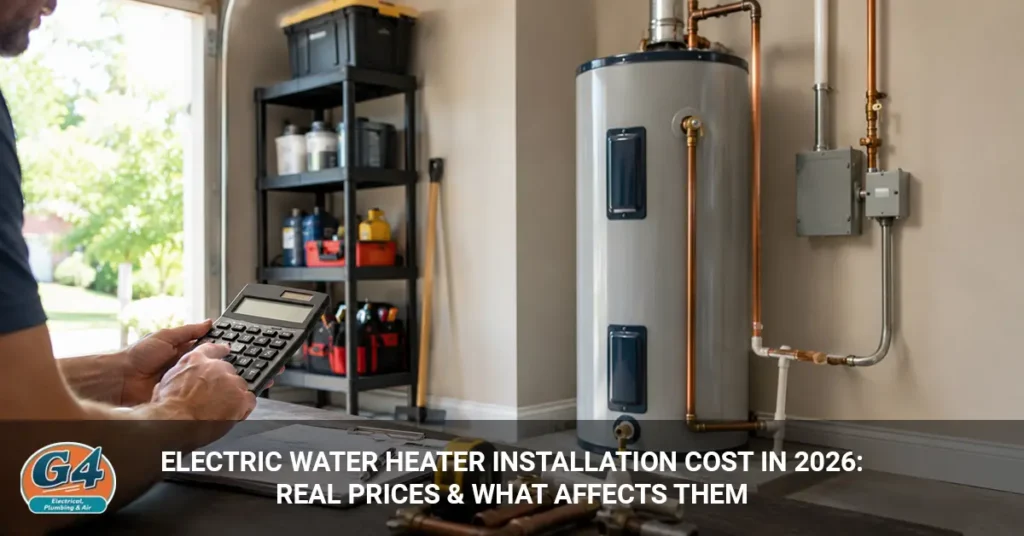
Installing an electric water heater in 2026 usually costs between $900 and $3,500, depending on the type of system, labor costs, and whether electrical or plumbing upgrades are needed. Simple replacements are often cheaper, while larger systems or tankless installations can cost much more.
Many homeowners replace their water heater when it stops producing reliable hot water, starts leaking, or becomes less energy efficient. Others upgrade to newer models to reduce energy use and improve performance.
The total installation cost depends on several factors, including the size of the water heater, installation location, electrical requirements, permit fees, and any plumbing changes needed during the project.
Understanding these costs before installation can help homeowners choose the right system, plan their budget, and avoid unexpected expenses later.
Average Electric Water Heater Installation Cost in 2026
Most homeowners spend between $1,200 and $2,500 to install an electric water heater in 2026. Simple tank replacements with minimal plumbing or electrical work are usually on the lower end of the price range.
Installation costs can exceed $3,000 when the project involves electrical upgrades, plumbing modifications, tankless water heater installation, or the difficult removal of an old unit.
Traditional tank water heaters are usually less expensive to install because they require less electrical work and simpler installation compared to tankless electric systems.
The final cost often depends on the condition of the home’s plumbing and electrical system, the size of the water heater, and how complex the installation becomes.
Electric Tank Water Heater Installation Costs
Electric tank water heaters are usually the most affordable option for homeowners because they have lower equipment and installation costs than tankless systems. The total price mainly depends on the tank size, labor costs, and whether plumbing or electrical upgrades are needed.
Standard Tank Water Heater Pricing
Smaller electric water heaters usually cost less because they store less water and use smaller heating components. Larger tanks designed for bigger households are more expensive due to their increased capacity and higher energy demand.
A 30-gallon system is often suitable for small households or apartments with lower hot water usage. Many average families choose 40-gallon systems because they provide enough hot water for everyday use without excessive energy costs.
Homes with larger families or higher hot water demand often install 50-gallon or 80-gallon systems to support multiple bathrooms, appliances, and daily household use.
Larger tanks cost more because they require bigger heating elements, more materials, and greater water storage capacity.
Labor Costs for Tank Installation
Labor costs for electric tank water heater installation usually include removing the old unit, connecting plumbing lines, installing electrical connections, and testing the system after installation.
Simple replacements often take only a few hours when the new water heater is installed in the same location and no major upgrades are needed. These projects are usually less expensive because the plumbing and electrical setup already exists.
Labor costs increase when installers need to update wiring, move the installation location, replace old plumbing connections, or bring the system up to current building codes.
Homes with difficult access areas, tight utility spaces, or older plumbing systems may also require additional labor time, which can raise the total installation cost.
Best Tank Size for Different Households
Choosing the right water heater tank size helps ensure your home has enough hot water without wasting energy. A properly sized system improves efficiency and reduces the risk of running out of hot water during daily use.
Smaller households with one or two people often do well with 30- or 40-gallon electric water heaters. Average families usually choose 40- or 50-gallon systems because they can handle normal daily activities like showers, laundry, and dishwashing more comfortably.
Larger households with higher hot water demand often benefit from 50-gallon or larger water heaters, especially if multiple bathrooms or appliances are used at the same time.
Installing a tank that is too small can lead to inconsistent hot water and frequent shortages. On the other hand, an oversized system may increase energy costs by heating more water than the household actually needs.
Tankless Electric Water Heater Installation Costs
Tankless electric water heaters usually cost more to install than traditional tank systems because they require more electrical power and more complex installation work. While the upfront cost is higher, many homeowners choose tankless systems for better energy efficiency and continuous hot water.
Tankless systems heat water only when it is needed instead of storing hot water in a tank. This on-demand heating process helps reduce energy waste, but it also requires stronger electrical capacity to operate properly.
Why Tankless Systems Cost More
Tankless electric water heaters need powerful electrical components and multiple dedicated circuits to handle the high energy demand. Because of this, installation often involves additional electrical work compared to standard tank water heaters.
Electricians may need to upgrade the electrical panel, install extra breakers, run larger wiring, or add multiple circuits before the system can operate safely.
These electrical upgrades can increase labor and material costs significantly, especially in older homes that do not already have enough electrical capacity.
Long-Term Energy Savings
Tankless electric water heaters can reduce energy costs over time because they only heat water when it is needed. Unlike traditional tank systems, they do not continuously keep stored water hot throughout the day.
Traditional water heaters use energy even when no hot water is being used because they constantly maintain the water temperature inside the tank. Tankless systems avoid this standby heat loss by heating water only during use.
For some homeowners, lower energy consumption may help offset the higher installation cost over time, especially in households that use hot water efficiently and regularly.
What Factors Affect Electric Water Heater Installation Costs?
Several factors can affect the total cost of installing an electric water heater. The biggest price differences usually come from the size of the unit, electrical requirements, plumbing work, and installation complexity.
Water Heater Size and Capacity
Larger water heaters cost more because they require bigger heating elements, more materials, and additional installation labor. Homes with higher hot water demand often need larger systems, which increases both equipment and installation costs.
Smaller water heaters are usually less expensive and work well for apartments or smaller households with lower daily hot water usage. Larger families often need higher-capacity systems to support multiple showers, appliances, and bathrooms at the same time.
Choosing the right tank size is important because oversized systems may increase energy costs, while undersized systems may struggle to provide enough hot water consistently.
Electrical System Upgrades
Older homes may need electrical upgrades before a new electric water heater can be installed safely. Some systems require additional circuits, updated wiring, or electrical panel upgrades to handle the power demand of modern water heaters.
These upgrades can increase installation costs, especially in homes with outdated electrical systems or limited panel capacity.
Plumbing Modifications
Some water heater installations require plumbing changes to fit the new system properly. Installers may need to add new plumbing lines, replace shut-off valves, or modify existing pipes during the installation process.
Additional plumbing work increases both labor and material costs, especially in older homes with aging plumbing systems.
Permit and Inspection Fees
Many cities require permits and inspections for electric water heater installation. Permit costs vary depending on local building codes and inspection requirements.
These permits help ensure the installation meets current safety and plumbing regulations.
Removal of the Old Water Heater
Removing and disposing of an old water heater can add to the total installation cost. Larger tanks or units installed in difficult-to-reach areas may require extra labor during removal.
In some cases, disposal fees may also be included in the final price.
Installation Location
The location of the water heater can also affect labor costs. Water heaters installed in tight utility closets, basements, attics, or difficult access areas often require more installation time and labor.
Hard-to-reach locations may increase the complexity of both installation and future maintenance work.
Cost Breakdown for Electric Water Heater Installation
Electric water heater installation costs include both the equipment and the labor required to install the system safely. The final price depends on the type of water heater, installation difficulty, and whether additional electrical or plumbing work is needed.
Water Heater Equipment Cost
Most electric water heaters cost between $500 and $2,000 depending on the size, energy efficiency, and system type. Traditional tank water heaters are usually more affordable, while tankless electric systems often cost more because they use advanced heating technology and larger electrical components.
Labor Costs
Professional installation labor can range from several hundred dollars to over a thousand dollars depending on the complexity of the project. Simple replacements are usually less expensive, while installations involving plumbing changes, electrical upgrades, or difficult access areas increase labor costs.
Electrical Work Costs
Some installations require additional electrical work before the water heater can operate safely. This may include breaker installation, new wiring, panel upgrades, or dedicated circuits.
Older homes are more likely to need electrical improvements, which can significantly increase the total installation cost.
Plumbing Material Costs
Additional plumbing materials may also affect the final price. Installers may need new shut-off valves, water supply lines, drain pans, or expansion tanks, depending on the condition of the existing plumbing system and local code requirements.
Permit Costs
Permit fees vary by city and local building regulations. In many areas, permits and inspections are required to ensure the water heater installation meets current plumbing and electrical safety codes.
Hidden Costs Homeowners Often Miss
Some electric water heater installation costs are not always included in the initial estimate. These extra expenses can increase the final price, especially in older homes or homes with outdated plumbing and electrical systems.
Additional costs may include expansion tank installation, drain pans, code compliance upgrades, water damage repairs, or electrical improvements required for safe installation.
Older homes are more likely to need additional work because local plumbing and electrical codes may have changed since the original system was installed. In some cases, installers may also uncover hidden plumbing leaks, damaged wiring, or outdated shut-off valves during the replacement process.
Understanding these possible extra costs ahead of time can help homeowners avoid unexpected surprises during installation.
Signs You May Need a New Electric Water Heater
Several warning signs can indicate that it may be time to replace your electric water heater. Problems often start gradually and become more noticeable as the system gets older.
One common sign is inconsistent hot water. If the water temperature keeps changing or hot water runs out quickly, the heating elements or tank may be failing. Several common no hot water heater problems can cause inconsistent hot water or complete loss of hot water.
Rust-colored water can also point to corrosion inside the tank, especially in older systems. Water leaks around the heater are another serious warning sign because they may indicate tank damage or internal failure.
Some homeowners also notice rising energy bills when older water heaters lose efficiency and work harder to heat water. Strange noises like popping or rumbling sounds may happen when sediment builds up inside the tank over time.
Frequent repairs are often another sign that replacement may be more cost-effective than continuing to fix an aging unit.
Most traditional electric tank water heaters last around 8 to 12 years before replacement becomes necessary. Understanding the average water heater lifespan can help homeowners know when replacement is more practical than continued repairs.
How to Reduce Water Heater Installation Costs
Homeowners can reduce water heater installation costs by planning ahead and comparing quotes from multiple licensed installers. Getting estimates early often helps avoid higher emergency replacement costs.
Replacing a water heater before it completely fails can help prevent emergency service fees, water damage, and rushed installation expenses. Emergency replacements are usually more expensive because immediate labor and repairs may be required.
Choosing the right tank size is also important. Installing a system that is too large can increase equipment and energy costs unnecessarily, while the correct size helps improve efficiency and lower long-term expenses.
Some homeowners may qualify for rebates or energy-efficiency incentives depending on the water heater model they install. Checking local utility programs or manufacturer promotions may help reduce upfront costs.
Regular maintenance can also extend the life of the water heater and reduce the chances of expensive repairs or early replacement.
Is an Electric Water Heater Worth It in 2026?
Electric water heaters are still a good option for many homeowners in 2026 because they are usually easier to install, more affordable upfront, and simpler to maintain than gas systems.
Many homeowners choose electric water heaters because they do not require a gas line, have simpler installation requirements, operate quietly, and provide reliable hot water for everyday use.
Electric systems are also a practical choice for homes that already rely heavily on electricity or do not have access to natural gas service.
Modern electric water heaters have become more energy efficient over time, especially newer tankless models that heat water only when needed. For many households, the combination of lower installation complexity and dependable performance makes electric water heaters a worthwhile long-term investment.
How Long Does Installation Take?
Most standard electric water heater replacements can be completed within a few hours when the new unit is installed in the same location, and no major upgrades are required.
Tankless water heater installations or projects that involve electrical upgrades, plumbing modifications, or permit inspections usually take longer. In some cases, more complex installations may require an entire day or multiple visits, depending on the amount of work involved.
Installation time can also increase if older plumbing or electrical systems need repairs before the new water heater can be installed safely.
When to Hire a Professional Installer
Electric water heater installation should be handled by a licensed professional because the work involves both plumbing and electrical systems. Proper installation is important for safety, performance, and code compliance.
Improper installation can lead to electrical hazards, water leaks, equipment damage, or building code violations. In some cases, incorrect installation may also void manufacturer warranties.
Professional installers help ensure the water heater operates safely, meets local building codes, and is connected properly to both the electrical and plumbing systems.
Final Thoughts
Electric water heater installation costs in 2026 can vary depending on the type of system, labor involved, and whether electrical or plumbing upgrades are needed. Simple tank replacements are usually more affordable, while tankless systems and major electrical upgrades can increase the total price significantly.
Choosing the right water heater size is important for both comfort and energy efficiency. A properly sized system can provide reliable hot water while helping reduce unnecessary energy costs over time.
Understanding the installation requirements and working with a licensed professional can help homeowners avoid unexpected expenses, improve system performance, and ensure the water heater operates safely for years to come.