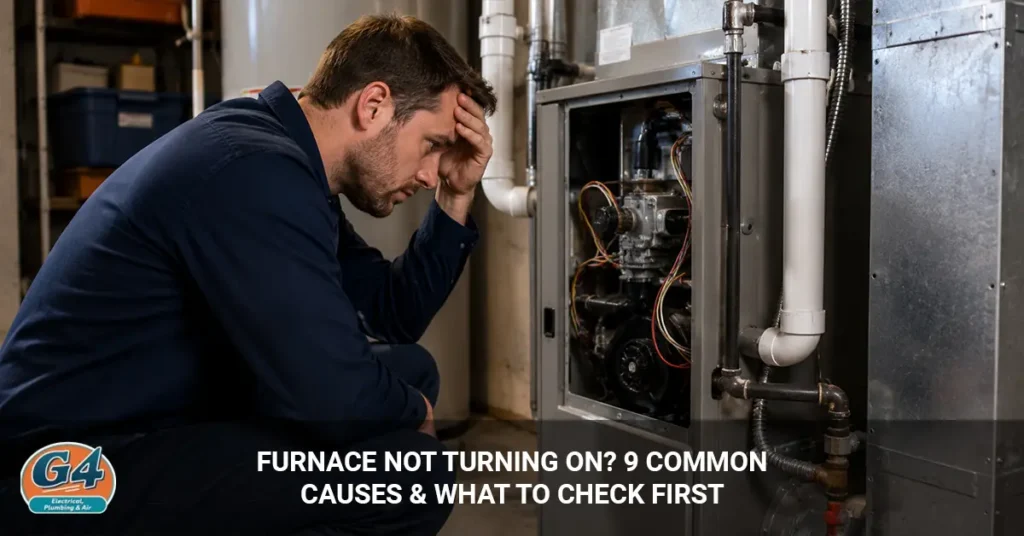
If your furnace is not turning on, the most common causes are thermostat issues, power problems, a tripped breaker, or a dirty air filter. Most of these are simple fixes you can check in just a few minutes.
A cold home feels uncomfortable fast, especially in winter. But don’t worry yet. Many furnace problems are minor and easy to solve. Before calling a technician, go through a few basic checks. You might be able to get your heat working again on your own.
What to Check First When Your Furnace Won’t Turn On
Start with these quick checks. Most furnace problems come from simple issues you can fix in minutes.
1. Thermostat settings: Your furnace may not turn on if the thermostat is not set correctly. Set it to “heat” and raise the temperature above the current room temperature. Wait a minute to see if the system starts.
2. Thermostat batteries: Dead batteries can stop your furnace from turning on. Replace the batteries and try again. This is a common and easy fix.
3. Furnace power switch: The furnace won’t run if the power switch is off. Check the switch near the unit. It looks like a light switch and may have been turned off by accident.
4. Circuit breaker panel: A tripped breaker can cut power to your furnace.
Go to your electrical panel and reset the breaker once. If it trips again, stop and call a professional.
5. Furnace door: The furnace won’t start if the door is not fully closed. Make sure the panel is secure. Most systems have a safety switch that prevents operation if it’s open.
6. Air filter: A dirty air filter can block airflow and shut the system down. Check the filter and replace it if it looks clogged. This helps your furnace run properly again.
9 Common Reasons Your Furnace Is Not Turning On
1. Thermostat Not Working Properly
Your furnace may not turn on if the thermostat is not working properly. This is one of the most common causes.
Sometimes the issue is simple, like incorrect settings or dead batteries. If the thermostat is not set to “heat” or the temperature is set too low, the furnace won’t start. In other cases, loose or damaged wiring can stop the signal from reaching the system.
Resetting the thermostat, replacing the batteries, and making sure it’s set to “heat” with the temperature higher than the room temperature usually solves the problem.
2. Tripped Circuit Breaker or Blown Fuse
Your furnace won’t turn on if it isn’t getting power. This often happens when a circuit breaker trips or a fuse blows.
Power surges or overloaded circuits are common reasons for this issue. When that happens, the furnace shuts off to prevent damage. Resetting the breaker once can restore power, but if it keeps tripping, there may be a deeper electrical problem that needs professional repair.
3. Furnace Power Switch Is Off
Your furnace won’t turn on if the power switch is off. This is a simple issue that’s easy to miss.
The switch is usually located near the furnace and looks like a regular light switch. It may have been turned off during cleaning or bumped by accident.
Turning the switch back on and waiting a few minutes often gets the furnace running again.
4. Dirty or Clogged Air Filter
Your furnace may not turn on if the air filter is dirty or clogged. This happens because restricted airflow can trigger a safety shutdown.
When the filter is blocked, air can’t move properly through the system. This can lead to weak airflow and cause the furnace to overheat, which forces it to shut off for safety.
Replacing the air filter every one to three months and following a regular HVAC maintenance checklist usually fixes the issue and keeps the system running smoothly.
5. Pilot Light Is Out (Gas Furnace)
Your furnace won’t turn on if the pilot light is out. Older gas furnaces rely on this small flame to ignite the burners.
The pilot light can go out due to drafts, dirt buildup, or a faulty thermocouple. When that happens, the furnace can’t produce heat. You can relight it if you know how, but if it won’t stay lit, it’s best to call a technician to check the system safely.
6. Gas Supply Issue
Your furnace won’t turn on if there is no gas supply. Without gas, the system cannot produce heat.
This can happen if the gas valve is closed or there is a service interruption. Checking that the gas valve is open may solve the problem.
If you smell gas at any point, leave your home immediately and contact your gas provider for safety.
7. Faulty Ignition System
Your furnace may not turn on if the ignition system is faulty. Modern furnaces use electronic ignitors instead of pilot lights.
Over time, the ignitor can crack or wear out, which prevents the furnace from starting. When this happens, the system won’t ignite the burners at all.
This issue usually requires replacing the ignitor, which is best handled by a professional.
8. Limit Switch or Safety Sensor Triggered
Your furnace may not turn on if a limit switch or safety sensor has been triggered. These safety features shut the system down when it overheats.
Overheating often happens because of restricted airflow, such as a dirty air filter or blocked vents. When airflow is limited, the system gets too hot and turns off to protect itself.
Replacing the filter and clearing any blocked vents usually solves the problem, but if it keeps happening, it’s best to call a technician.
9. Dirty or Faulty Flame Sensor
Your furnace may turn on and then shut off quickly if the flame sensor is dirty or faulty. The flame sensor is a safety part that makes sure the gas is burned properly.
When the sensor is dirty, it may not detect the flame, so the system shuts down to stay safe. This can cause short cycling or no heat at all.
Cleaning the sensor may fix the issue, but if the problem continues, professional service is usually needed.
When to Call a Professional HVAC Technician
You should call a professional if your furnace still won’t turn on after basic checks. If simple fixes don’t work, the problem is likely more serious.
Call for help right away if you notice a gas smell, strange noises, frequent shutdowns, or other electrical emergency warning signs.
These signs can point to safety risks or internal system problems. A trained HVAC technician can diagnose the issue safely and prevent further damage.
How to Prevent Furnace Problems in the Future
Regular maintenance helps prevent furnace problems and keeps your system running smoothly. Taking a few simple steps can reduce the risk of sudden breakdowns.
Change your air filter regularly so airflow stays strong, and the system doesn’t overheat. Schedule a yearly furnace tune-up to catch small issues early. Keep vents and registers clear to allow proper airflow throughout your home.
It’s also a good idea to check your thermostat to make sure it’s working correctly and inspect your system before winter starts. These simple habits can save money and help your furnace last longer.
Final Thoughts
If your furnace is not turning on, start with simple checks like the thermostat, power supply, and air filter. Many problems are easy to fix and don’t require professional help.
If the furnace still won’t start or the issue seems serious, don’t wait. Calling a qualified HVAC technician can prevent further damage and keep your home safe and warm.