
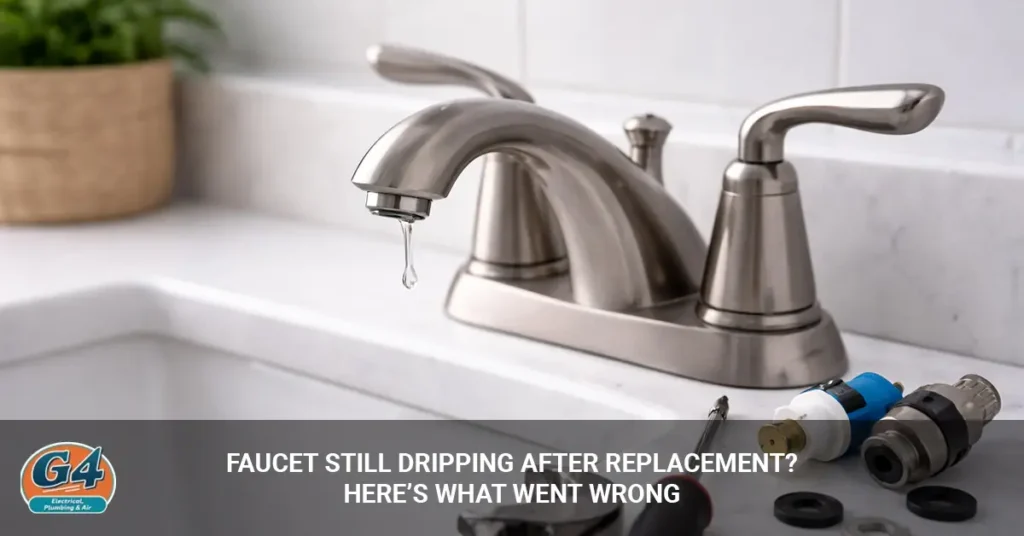
A faucet can still drip after replacement because something isn’t sealing or installed correctly.
You replaced the faucet expecting the leak to stop, but it didn’t. This happens more often than you think. In most cases, the issue comes from a small mistake during installation or a problem outside the faucet itself.
The good news is that these problems are usually easy to spot and fix. In this guide, you’ll learn what went wrong and how to stop the dripping quickly.
Why Is My Faucet Still Dripping After Replacement?
Your faucet is still dripping because water isn’t sealing off completely inside the system.
Even with a new faucet, a small issue like a loose connection, a faulty cartridge, or high water pressure can keep water flowing. The faucet itself may be fine, but another part of the system could be causing the leak.
In most cases, the problem is simple and easy to fix once you check each part step by step.
1. Incorrect Installation
Incorrect installation is one of the most common reasons your new faucet still drips.
If parts are not tightened properly or aligned correctly, water can leak even from a brand-new faucet. Even a small gap or loose fitting is enough to cause a steady drip.
Check all connections carefully. Make sure everything is straight, secure, and sealed properly. Fixing a small mistake here often stops the leak right away.
2. Worn or Damaged Valve Seat
A worn or damaged valve seat can cause your faucet to keep dripping even after replacement.
The valve seat helps create a tight seal between the faucet and the spout. If it’s dirty, corroded, or worn out, water can slip through and cause a steady drip.
This problem is more common in older plumbing systems. Cleaning the valve seat or replacing it usually stops the leak.
3. High Water Pressure
High water pressure can cause your faucet to drip even when it’s turned off.
When the pressure is too strong, it pushes water past the seals and internal parts of the faucet. This leads to a steady drip, even with a new installation.
You might notice very strong water flow or hear noise in the pipes. These are common signs of high pressure.
Lowering the pressure or installing a pressure regulator can stop the dripping and protect your plumbing system, especially if you understand how water pressure issues affect your home plumbing.
4. Faulty Cartridge or Internal Parts
A faulty cartridge or internal part can cause your new faucet to drip right away.
The cartridge controls the flow of water inside the faucet. If it’s defective or not seated properly, it won’t seal completely, and water will keep leaking.
This can happen even with a brand-new faucet. If the dripping started right after installation, the cartridge is likely the problem.
Replacing or reseating the cartridge usually fixes the issue quickly.
5. Loose or Improperly Sealed Connections
Loose or poorly sealed connections can make it look like your faucet is dripping.
If the supply lines or fittings aren’t sealed tightly, water can leak out and run down, creating a steady drip. This often happens when connections are not tightened enough or plumber’s tape isn’t used correctly.
Check all connections under the sink. Tighten them carefully and make sure proper sealing materials are in place. Once everything is sealed properly, the dripping should stop.
6. Issues With Water Supply Lines
Problems with the water supply lines can cause dripping even with a new faucet.
If the lines are old, cracked, or loose, they can leak slowly and make it look like the faucet is dripping. These leaks often go unnoticed because the water travels along the pipes before it drips.
Check the supply lines under the sink for any signs of wear, moisture, or loose connections. Replacing damaged or old lines is often a simple fix that stops the leak completely.
Is a Dripping Faucet After Replacement Normal?
No, a dripping faucet after replacement is not normal.
A properly installed faucet should shut off completely with no leaks. You might see a brief drip right after installation, but it should stop within a short time.
If the dripping continues, it means something isn’t installed correctly or another part is causing the problem and needs to be fixed.
How to Fix a Dripping Faucet After Replacement
You can fix a dripping faucet by checking each part step by step and correcting any small issues.
Start by turning off the water supply. Check all connections and make sure they are tight and properly sealed.
Next, inspect the cartridge and valve seat. If anything looks worn, damaged, or out of place, replace or adjust it. Then check the water pressure and lower it if it’s too high.
Turn the water back on and test the faucet. In most cases, the dripping will stop once the problem is fixed.
When to Call a Plumber
You should call a plumber when the dripping doesn’t stop after basic fixes.
If you’ve checked the connections, cartridge, and pressure but the leak continues, there may be a deeper issue. Problems like hidden leaks, damaged internal parts, or pressure imbalances can be hard to fix on your own.
A plumber can quickly find the exact cause and fix it the right way, saving you time and preventing further damage.
Cost to Fix a Dripping Faucet
Fixing a dripping faucet is usually low-cost, especially if you handle it yourself.
Most parts, like cartridges or seals, are inexpensive and easy to replace. In many cases, a quick DIY fix solves the problem without spending much.
If you hire a plumber, the cost will be higher because of labor. The final price depends on the issue, but fixing it early helps you avoid bigger and more expensive repairs later.
How to Prevent Faucet Leaks in the Future
You can prevent faucet leaks by installing and maintaining your plumbing the right way.
Make sure all parts are fitted correctly and tightened securely during installation. Use good-quality components and avoid rushing the job.
Check your faucet and connections every few months for early signs of wear or moisture. Catching small issues early helps prevent bigger problems later.
Keep your water pressure at a safe level. This reduces stress on the faucet and helps extend its lifespan.
Final Thoughts
A faucet that still drips after replacement usually means a small issue was missed.
Most of the time, the fix is simple once you find the exact cause. It could be a loose connection, high pressure, or a faulty part.
Taking action early helps you stop the leak quickly and avoid bigger problems. It also saves water and keeps your plumbing working the way it should.