
Most homeowners pay between $5,000 and $15,000 to install a new air conditioning system in 2026. The exact cost depends on the size of the unit, your home’s cooling needs, labor rates in your area, and whether additional work like ductwork or electrical upgrades is required.
If you’re planning to install a new AC system, you’re probably wondering how much you should budget and what factors affect the final price. The truth is that AC installation costs can vary significantly from one home to another. A straightforward replacement may cost much less than a brand-new installation that requires ductwork modifications or upgraded electrical components.
For many homeowners, a new air conditioner is one of the largest home comfort investments they’ll make. The good news is that a properly installed system can improve indoor comfort, lower energy bills, enhance air quality, and provide reliable cooling for years.
In this guide, you’ll learn what homeowners are actually paying for AC installation in 2026, how costs vary by system size and type, what factors increase or decrease pricing, and how to get the best value for your investment. Whether you’re replacing an old unit or installing central air for the first time, this article will help you make a more informed decision.
How Much Does AC Installation Cost in 2026?
AC installation costs in 2026 typically range from $5,000 to $15,000 for most homeowners. However, the final price can be lower or higher depending on the type of system, the size of your home, labor costs, and whether additional work such as ductwork or electrical upgrades is needed.
If you’re replacing an existing air conditioner with a similar-sized unit, your costs will usually fall on the lower end of the range. On the other hand, installing a new system in a larger home or choosing a high-efficiency model can significantly increase the total investment.
Average AC Installation Costs by System Type
The type of cooling system you choose has a major impact on installation costs.
| Installation Type | Average Cost Range |
| Window AC Unit | $150 – $1,000 |
| Portable AC Unit | $300 – $900 |
| Ductless Mini Split | $2,500 – $10,000 |
| Central Air Conditioner | $5,000 – $15,000+ |
| Heat Pump System | $6,000 – $18,000+ |
Window and portable air conditioners are the most affordable options, but they are designed to cool individual rooms rather than an entire home. Central air conditioners remain the most common choice for whole-home cooling, while heat pumps offer both heating and cooling in one system.
Why AC Installation Costs Vary So Much
AC installation costs vary because every home has different cooling requirements. Factors such as square footage, insulation levels, system efficiency, ductwork condition, and local labor rates all affect the final price.
For example, a homeowner replacing an existing 2-ton central AC unit may only need a straightforward installation. In contrast, a larger home may require a 4- or 5-ton system, new ductwork, electrical upgrades, or zoning controls, which can add thousands of dollars to the project.
Other factors that can increase costs include:
- High-efficiency AC systems
- Smart thermostats
- Zoning systems
- New ductwork installation
- Electrical panel upgrades
- Difficult-to-access installation areas
- Premium HVAC brands
What Most Homeowners Actually Pay
Most homeowners spend between $5,000 and $12,000 for a standard AC installation, depending on home size and system requirements.
While national averages provide a helpful starting point, actual costs often vary based on the size of the home.
Small Homes (1,000–1,500 Square Feet)
Most small homes require a 1.5- to 2.5-ton air conditioning system.
Average installed cost: $5,000–$8,500
Medium Homes (1,500–2,500 Square Feet)
Medium-sized homes typically need a 2.5- to 4-ton system.
Average installed cost: $7,000–$12,000
Large Homes (2,500–4,000+ Square Feet)
Larger homes often require higher-capacity equipment, zoning systems, or additional ductwork.
Average installed cost: $10,000–$18,000+
| Home Size | Typical Cost Range |
| 1,000–1,500 sq. ft. | $5,000–$8,500 |
| 1,500–2,500 sq. ft. | $7,000–$12,000 |
| 2,500–4,000+ sq. ft. | $10,000–$18,000+ |
Quick Takeaway
For most homeowners, a new central air conditioning system costs between $5,000 and $15,000 installed. The best way to determine your actual cost is to get quotes from licensed HVAC contractors who can evaluate your home’s size, cooling needs, existing ductwork, and energy-efficiency goals.
AC Installation Cost Breakdown
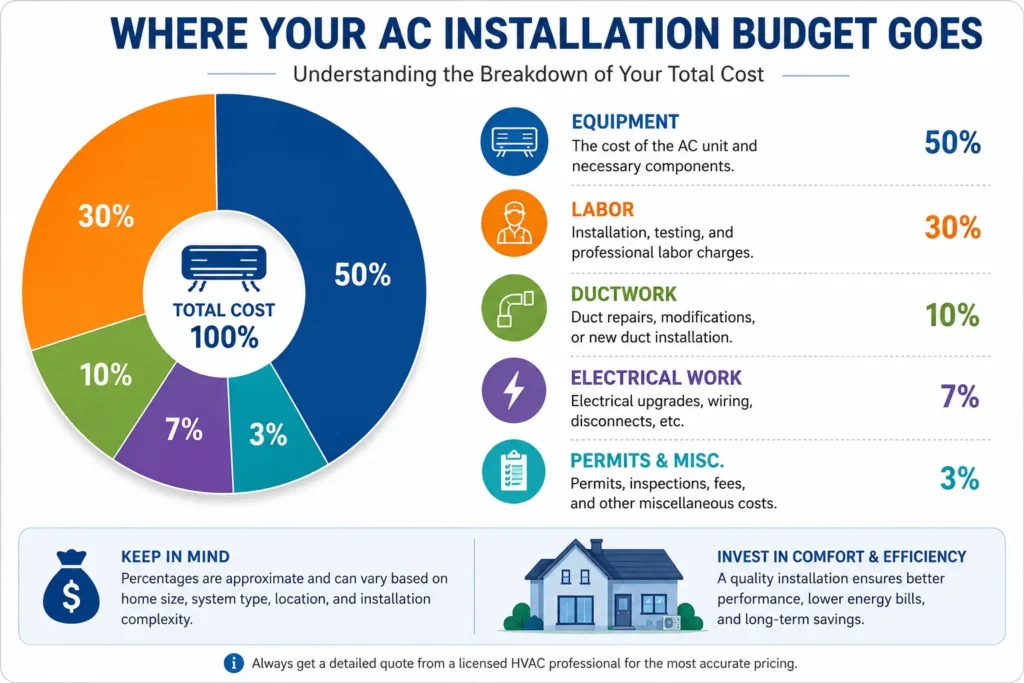
The total cost of AC installation includes much more than just the air conditioner itself. In addition to the equipment, homeowners may pay for labor, permits, electrical work, ductwork modifications, and other installation-related expenses.
Understanding where your money goes can help you compare quotes more effectively and avoid unexpected costs during the project.
Equipment Costs
The air conditioning equipment is usually the largest part of the installation cost. In most cases, the AC unit accounts for about 40% to 60% of the total project price.
Equipment costs vary based on several factors, including:
- Brand and manufacturer
- System size (tonnage)
- SEER2 energy efficiency rating
- Warranty coverage
- Variable-speed technology
- Smart home compatibility
- Advanced comfort features
Higher-efficiency systems typically cost more upfront but can reduce monthly energy bills over the long term.
Labor Costs
Professional HVAC labor typically costs between $1,500 and $5,000 for most AC installations. Labor costs depend on the complexity of the job, the type of system being installed, and local labor rates.
A standard replacement usually requires less labor than a brand-new installation that involves ductwork or electrical upgrades.
Labor charges often include:
- Removing and disposing of old equipment
- Installing indoor and outdoor units
- Connecting refrigerant lines
- Electrical connections
- Refrigerant charging
- System testing and calibration
- Startup and final inspection
Experienced installers may charge more, but proper installation is critical for system performance, efficiency, and warranty protection.
Permit Fees
Many cities and counties require permits for air conditioner installation or replacement. Permit costs generally range from $100 to $500, although fees vary by location.
Permits help ensure the installation meets local building and safety codes. In many cases, the contractor will obtain the permit on your behalf.
Before signing a contract, ask whether permit fees are included in the quoted price or billed separately.
Electrical Upgrades
Older homes may need electrical upgrades before a new AC system can be installed safely. If the existing electrical system cannot support the new equipment, additional work may be required.
Common electrical upgrades include:
- New disconnect boxes
- Circuit breaker replacements
- Electrical panel upgrades
- Additional wiring
- Dedicated HVAC circuits
Electrical improvements typically add $500 to $3,000 or more to the total project cost, depending on the scope of work.
Ductwork Modifications
Damaged or inefficient ductwork can increase AC installation costs and reduce system performance. If your existing ducts are leaking, poorly designed, or undersized, repairs or replacement may be necessary.
Common ductwork services include:
- Duct sealing
- Duct repairs
- Duct insulation
- Duct replacement
- Airflow balancing
Minor duct repairs may cost a few hundred dollars, while a complete ductwork replacement can add several thousand dollars to the project.
Investing in properly sized and sealed ductwork helps improve airflow, energy efficiency, and overall comfort throughout the home.
Quick Cost Breakdown Example
For a typical central AC installation costing $9,000, expenses might look something like this:
| Cost Component | Estimated Cost |
| AC Equipment | $4,000–$5,000 |
| Labor | $2,000–$3,000 |
| Permits | $100–$500 |
| Electrical Work | $500–$1,500 |
| Ductwork Adjustments | $500–$2,000 |
Key Takeaway
The air conditioner itself is only one part of the total installation cost. Labor, permits, electrical upgrades, and ductwork improvements can significantly affect the final price. That’s why it’s important to review detailed estimates and understand exactly what is included before choosing an HVAC contractor.
AC Installation Cost by Unit Size
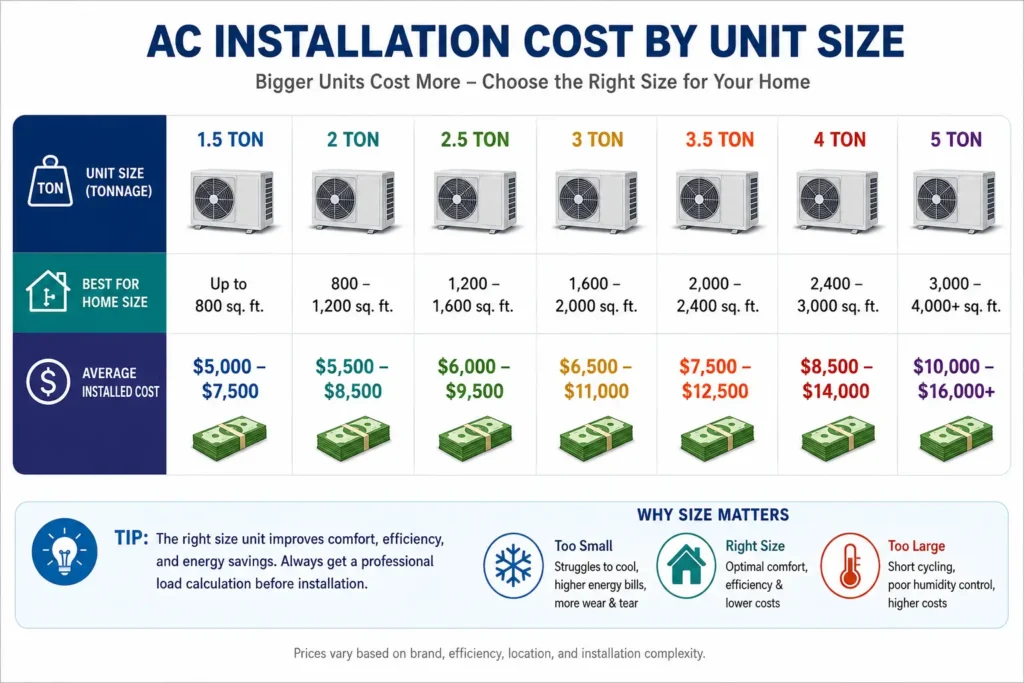
AC installation costs increase as the size of the system increases. Larger air conditioners require bigger compressors, coils, and other components, which raises both equipment and labor costs.
Choosing the right AC size is important. An undersized unit may struggle to cool your home, while an oversized system can waste energy and create comfort issues. That’s why HVAC professionals use a load calculation to determine the correct system size for your home.
1.5 Ton AC Installation Cost
A 1.5-ton AC system typically costs between $5,000 and $7,500 installed. This size is commonly used in smaller homes, apartments, condos, and well-insulated spaces.
Ideal for:
- 600–1,000 square feet
- Small homes
- Condos and apartments
- Guest houses
2 Ton AC Installation Cost
A 2-ton AC system typically costs between $5,500 and $8,500 installed. It provides enough cooling capacity for many small to medium-sized homes.
Ideal for:
- 1,000–1,300 square feet
- Smaller single-family homes
- Townhomes
2.5 Ton AC Installation Cost
A 2.5-ton AC system typically costs between $6,000 and $9,500 installed. This size is often recommended for medium-sized homes in moderate climates.
Ideal for:
- 1,300–1,600 square feet
- Average-sized homes
- Homes with moderate cooling demands
3 Ton AC Installation Cost
A 3-ton AC system typically costs between $6,500 and $11,000 installed. This is one of the most common residential air conditioner sizes in the United States.
Ideal for:
- 1,600–2,000 square feet
- Average family homes
- Homes in warmer climates
Because of its versatility, many homeowners find that a 3-ton system offers a good balance between cooling performance and installation cost.
3.5 Ton AC Installation Cost
A 3.5-ton AC system typically costs between $7,500 and $12,500 installed. It is commonly used in larger single-family homes with greater cooling requirements.
Ideal for:
- 2,000–2,400 square feet
- Larger homes
- Multi-story properties
4 Ton AC Installation Cost
A 4-ton AC system typically costs between $8,500 and $14,000 installed. These systems are designed to handle larger living spaces and higher cooling loads.
Ideal for:
- 2,400–2,800 square feet
- Large homes
- Homes with open floor plans
Additional ductwork modifications and higher-capacity equipment can contribute to the increased cost.
5 Ton AC Installation Cost
A 5-ton AC system typically costs between $10,000 and $16,000 or more installed. This is one of the largest residential AC sizes and is often used in large homes or properties with significant cooling demands.
Ideal for:
- 2,800–3,500+ square feet
- Luxury homes
- Homes in very hot climates
Because of the larger equipment size and installation complexity, 5-ton systems generally have the highest installation costs.
AC Size Comparison Table
The table below provides a quick overview of average AC installation costs by unit size.
| AC Size | Recommended Home Size | Average Installed Cost |
| 1.5 Ton | 600–1,000 sq. ft. | $5,000–$7,500 |
| 2 Ton | 1,000–1,300 sq. ft. | $5,500–$8,500 |
| 2.5 Ton | 1,300–1,600 sq. ft. | $6,000–$9,500 |
| 3 Ton | 1,600–2,000 sq. ft. | $6,500–$11,000 |
| 3.5 Ton | 2,000–2,400 sq. ft. | $7,500–$12,500 |
| 4 Ton | 2,400–2,800 sq. ft. | $8,500–$14,000 |
| 5 Ton | 2,800–3,500+ sq. ft. | $10,000–$16,000+ |
How Do You Know What AC Size You Need?
The best way to determine the right AC size is to have an HVAC contractor perform a Manual J load calculation. While square footage provides a helpful starting point, other factors also affect cooling requirements.
These factors include:
- Ceiling height
- Insulation levels
- Number of windows
- Sun exposure
- Local climate
- Number of occupants
- Home layout
A professional load calculation ensures your system is properly sized for maximum comfort, efficiency, and long-term performance. You can also learn how to choose the right HVAC system for your home’s specific needs.
Key Takeaway
Most homeowners spend between $5,000 and $16,000+, depending on the size of the AC unit they need. While larger systems cost more to install, choosing the correct size is more important than simply selecting the biggest unit. A properly sized air conditioner will cool your home more efficiently, improve comfort, and help keep energy costs under control.
AC Installation Cost by System Type
The cost to install an AC system depends largely on the type of cooling system you choose. Central air conditioners, ductless mini-splits, heat pumps, window units, and portable air conditioners all have different installation requirements, efficiency levels, and price ranges.
The best option for your home depends on your budget, home size, existing ductwork, and long-term energy goals.
Central Air Conditioner
Central air conditioning typically costs between $5,000 and $15,000+ installed. It remains the most popular cooling solution because it provides consistent, whole-home comfort through a network of ducts.
A central AC system distributes cool air evenly throughout the house, making it a great choice for homes that already have ductwork. Homeowners often choose central air because it operates quietly, maintains consistent temperatures, and can increase a home’s resale value. While the upfront cost is higher than some alternatives, it offers convenient whole-home cooling and works well with smart thermostats and zoning systems.
Ductless Mini Split Systems
Ductless mini split installation typically costs between $2,500 and $10,000+, depending on the number of indoor units required. These systems are ideal for homes without existing ductwork and allow homeowners to control temperatures in individual rooms.
Single-zone mini split systems generally cost between $2,500 and $6,000, while multi-zone systems typically range from $5,000 to $10,000+. Because they do not require ducts, installation is often faster and less invasive than central air installation.
Homeowners comparing cooling options should also review our guide on ductless mini-split installation cost. Mini-splits are highly energy efficient and are commonly used in older homes, room additions, garages, and spaces where installing ductwork would be impractical.
Heat Pump Systems
Heat pump installation typically costs between $6,000 and $18,000+ installed. Unlike traditional air conditioners, heat pumps provide both cooling and heating from a single system.
Many homeowners choose heat pumps because they can reduce energy consumption while providing year-round comfort. They work especially well in moderate climates and may qualify for utility rebates or tax incentives. Although the initial investment is often higher than a standard air conditioner, lower operating costs can help offset the upfront expense over time.
Window Air Conditioners
Window air conditioners typically cost between $150 and $1,000 installed. They are one of the most affordable cooling options available and are designed to cool a single room or small area.
Window units are easy to install, require minimal maintenance, and work well in apartments, bedrooms, offices, and smaller homes. While they cannot provide whole-home cooling, they offer an inexpensive solution for homeowners who only need to cool specific rooms.
Portable Air Conditioners
Portable air conditioners typically cost between $300 and $900. These units offer flexible cooling without permanent installation and can be moved from room to room as needed.
Portable AC units are popular among renters and homeowners looking for a temporary cooling solution. Although they are generally less efficient than window units or central air systems, they provide convenience and flexibility for small spaces or supplemental cooling.
System Type Cost Comparison
| System Type | Average Installed Cost |
| Window Air Conditioner | $150–$1,000 |
| Portable Air Conditioner | $300–$900 |
| Ductless Mini Split | $2,500–$10,000+ |
| Central Air Conditioner | $5,000–$15,000+ |
| Heat Pump System | $6,000–$18,000+ |
Which AC System Is Best for Your Home?
The best AC system depends on your home’s layout, cooling needs, and budget. Central air is often the preferred choice for whole-home cooling when ductwork already exists. Ductless mini-splits work best for homes without ducts or for room-by-room temperature control. Heat pumps are ideal for homeowners who want both heating and cooling in one energy-efficient system. Window and portable units remain the most affordable options for cooling individual rooms.
Key Takeaway
Central air and heat pumps typically have the highest installation costs, while window and portable air conditioners are the most affordable. The right choice depends on balancing upfront costs, energy efficiency, comfort, and long-term operating expenses.
Factors That Affect AC Installation Costs
Several factors can affect the total cost of AC installation, including your home’s size, system efficiency, ductwork condition, labor rates, and the brand you choose. While two homeowners may install similar air conditioners, their final costs can differ significantly due to these variables.
Understanding what influences pricing can help you budget more accurately and compare contractor estimates with confidence.
Home Size
Home size is one of the biggest factors affecting AC installation costs. Larger homes require more cooling capacity, which means installing a larger and more expensive air conditioning system.
For example, a small home may only need a 1.5- or 2-ton unit, while a larger home may require a 4- or 5-ton system. Larger systems cost more to purchase and often require additional labor to install.
Energy Efficiency Rating
Higher-efficiency air conditioners generally cost more upfront but can reduce energy bills over time. Modern systems with higher SEER2 ratings are designed to use less electricity while maintaining better indoor comfort.
Many high-efficiency systems include advanced features such as:
- Higher SEER2 ratings
- Variable-speed compressors
- Multi-stage cooling
- Advanced humidity control
- Smart thermostat compatibility
Although these systems require a larger initial investment, many homeowners recover some of the cost through lower utility bills and improved efficiency.
Existing Ductwork Condition
The condition of your ductwork can have a major impact on installation costs. If your existing ducts are damaged, leaking, undersized, or improperly designed, repairs or replacement may be necessary before the new system can perform efficiently.
Common ductwork issues that can increase costs include:
- Air leaks
- Poor airflow
- Damaged insulation
- Undersized ducts
- Aging duct systems
Addressing ductwork problems during installation can improve comfort, efficiency, and system lifespan.
Labor Rates
Labor costs vary depending on where you live and the complexity of the installation. HVAC contractors in large cities and high-cost-of-living areas typically charge more than contractors in smaller towns or rural communities.
Labor costs can also increase when installations require:
- Additional technicians
- Longer installation times
- Specialized equipment
- Complex system configurations
Accessibility
The location of the equipment can affect how much labor is required for installation. Systems installed in hard-to-reach areas often cost more because they require additional time and effort.
Examples include:
- Tight attic spaces
- Crawl spaces
- Rooftop installations
- Multi-story homes
- Limited equipment access
When technicians must work in challenging conditions, labor costs usually increase.
Brand Selection
The brand you choose can significantly impact the total installation cost. Premium HVAC manufacturers typically charge more for their equipment but may offer advanced technology, better efficiency ratings, and longer warranty coverage.
Higher-priced brands often include features such as:
- Variable-speed operation
- Enhanced energy efficiency
- Advanced comfort controls
- Extended warranties
- Quieter performance
Budget-friendly brands can still provide reliable cooling, but they may not offer the same level of features or warranty protection.
Quick Takeaway
Home size, efficiency ratings, ductwork condition, labor costs, accessibility, and brand selection are the biggest factors that influence AC installation costs. Understanding these variables can help explain why one homeowner may pay $6,000 for a new AC system while another pays $15,000 or more for a similar project.
AC Installation Cost by Home Size
AC installation costs typically increase as home size increases. Larger homes require bigger air conditioning systems, more cooling capacity, additional ductwork, and longer installation times, all of which can raise the total project cost.
While square footage is an important factor, it’s not the only one. Insulation levels, ceiling height, window placement, local climate, and home layout can also affect the size of the AC system you need. That’s why HVAC professionals perform a Manual J load calculation before recommending a unit.
AC Installation Cost for a 1,000 Square Foot Home
Installing an AC system in a 1,000-square-foot home typically costs between $5,000 and $7,500. Most homes of this size require a 1.5- to 2-ton air conditioner.
Because smaller homes have lower cooling demands, installation is often more straightforward and may not require major ductwork modifications. If existing ductwork is in good condition, homeowners can often keep costs on the lower end of the range.
AC Installation Cost for a 1,500 Square Foot Home
Installing an AC system in a 1,500-square-foot home typically costs between $6,000 and $9,000. Most homes in this size range require a 2- to 2.5-ton air conditioning system.
The final cost depends on factors such as equipment efficiency, ductwork condition, and installation complexity. Higher-efficiency models and premium brands can increase the total investment.
AC Installation Cost for a 2,000 Square Foot Home
Installing an AC system in a 2,000-square-foot home typically costs between $7,000 and $11,000. Many homeowners in this category need a 3-ton air conditioner, although the exact size should be determined through a professional load calculation.
This is one of the most common home sizes, making 3-ton systems among the most frequently installed residential air conditioners.
AC Installation Cost for a 2,500 Square Foot Home
Installing an AC system in a 2,500-square-foot home typically costs between $8,500 and $13,000. Larger homes often require a 3.5- to 4-ton system to maintain comfortable indoor temperatures.
As system size increases, equipment costs and labor expenses generally rise as well. Some homes may also require ductwork modifications to ensure proper airflow throughout the property.
AC Installation Cost for a 3,000 Square Foot Home
Installing an AC system in a 3,000-square-foot home typically costs between $10,000 and $15,000. Homes of this size often require a 4- to 5-ton system, depending on the home’s design and insulation levels.
Higher cooling demands may also require upgraded ductwork, zoning controls, or higher-capacity equipment, which can increase overall costs.
AC Installation Cost for a 4,000 Square Foot Home
Installing an AC system in a 4,000-square-foot home typically costs between $12,000 and $20,000 or more. Large homes often require advanced cooling solutions to maintain comfort across multiple floors and living areas.
Depending on the layout, homeowners may need:
- A 5-ton or larger system
- Zoned cooling systems
- Multiple air handlers
- Additional ductwork modifications
These upgrades can significantly increase the total installation cost but help ensure consistent comfort throughout the home.
Home Size Cost Comparison
The table below provides a quick overview of average AC installation costs based on home size.
| Home Size | Typical AC Size | Average Installed Cost |
| 1,000 sq. ft. | 1.5–2 Ton | $5,000–$7,500 |
| 1,500 sq. ft. | 2–2.5 Ton | $6,000–$9,000 |
| 2,000 sq. ft. | 3 Ton | $7,000–$11,000 |
| 2,500 sq. ft. | 3.5–4 Ton | $8,500–$13,000 |
| 3,000 sq. ft. | 4–5 Ton | $10,000–$15,000 |
| 4,000 sq. ft. | 5 Ton+ | $12,000–$20,000+ |
Key Takeaway
The larger your home, the more you can expect to pay for AC installation. Most homeowners spend between $5,000 and $20,000+, depending on square footage, system size, energy-efficiency requirements, and installation complexity. Choosing the right-sized system is essential for maximizing comfort, energy efficiency, and long-term performance.
AC Installation Labor Costs in 2026
Labor costs for AC installation typically range from $1,500 to $5,000, depending on the complexity of the project. In many cases, labor accounts for a significant portion of the total installation cost because installing an air conditioning system requires skilled technicians, specialized tools, and compliance with local building codes.
The amount you pay for labor depends on several factors, including the type of system being installed, the difficulty of the installation, local labor rates, and the number of technicians required to complete the job.
Typical HVAC Labor Costs
The table below shows the average labor costs for common AC installation projects.
| Installation Type | Average Labor Cost |
| Basic AC Replacement | $1,500–$3,000 |
| Standard Central AC Installation | $2,000–$5,000 |
| Ductless Mini Split Installation | $1,000–$4,000 |
| New Construction Installation | $3,000–$8,000+ |
A simple AC replacement usually costs less because existing ductwork, electrical connections, and refrigerant lines may already be in place. New installations often require additional work, which increases labor costs.
What Labor Charges Usually Include
Most HVAC labor charges cover much more than simply installing the equipment. Professional installation involves multiple steps to ensure the system operates safely and efficiently.
Labor costs typically include:
- Removal and disposal of old equipment
- Refrigerant line installation or connection
- Indoor and outdoor unit setup
- Electrical wiring and connections
- Refrigerant charging
- Thermostat installation and configuration
- System startup and performance testing
- Safety inspections
- Final system calibration
A qualified installation helps maximize efficiency, improve system performance, and protect manufacturer warranties.
Why Labor Costs Can Vary
Labor costs vary because every AC installation project is different. Some systems can be installed in a single day, while others require multiple technicians and several days of work.
Factors that can increase labor costs include:
- Difficult attic or crawl space access
- Multi-story homes
- Large or high-efficiency systems
- New ductwork installation
- Electrical upgrades
- Complex zoning systems
- Local permit requirements
Homes with limited accessibility often require additional labor time, which can increase the overall project cost.
Hidden Labor Costs to Watch For
Unexpected issues discovered during installation can increase labor costs. While reputable contractors try to identify potential problems during the estimate process, some issues may not become visible until work begins.
Additional labor charges may occur if technicians find:
- Damaged ductwork
- Electrical code violations
- Outdated wiring
- Structural modifications that are needed
- Refrigerant line replacement requirements
- Mold or moisture damage around HVAC components
These issues can add hundreds or even thousands of dollars to the final bill, depending on the repairs required.
How to Avoid Surprise Labor Charges
The best way to avoid unexpected labor costs is to request a detailed, itemized estimate before work begins. A comprehensive quote should clearly outline labor charges, equipment costs, permits, and any potential additional work that may be required.
Before hiring a contractor, ask:
- What labor is included in the quote?
- Are permits included?
- What could increase the final price?
- Will additional charges require approval before work begins?
- Does the estimate include cleanup and disposal of old equipment?
Getting multiple quotes from licensed HVAC contractors can also help you compare pricing and identify unusually high or low estimates.
Key Takeaway
Most homeowners spend between $1,500 and $5,000 on AC installation labor alone. While labor is a significant part of the project cost, professional installation is essential for safety, efficiency, performance, and long-term reliability. Choosing an experienced HVAC contractor can help ensure your new air conditioning system operates properly for years to come.
Cost of Installing New Ductwork
Installing new ductwork typically costs between $3,000 and $10,000 or more, depending on the size of the home and the complexity of the installation. While many homeowners focus on the air conditioner itself, the duct system plays a critical role in distributing cooled air throughout the house.
Even the most efficient AC unit can struggle to keep your home comfortable if the ductwork is leaking, damaged, or improperly designed. Problems such as dirty air ducts and duct leaks that increase energy bills can significantly reduce HVAC efficiency. In some cases, replacing old ductwork can significantly improve airflow, comfort, and energy efficiency.
When Ductwork Replacement Is Necessary
New ductwork may be necessary when the existing system can no longer deliver air efficiently. Older ducts often develop leaks, lose insulation, or become improperly sized for modern HVAC systems.
You may need ductwork replacement if:
- Existing ducts are more than 20 years old
- Rooms cool unevenly
- Ducts are poorly designed or undersized
- Major air leaks are present
- Mold contamination exists inside the duct system
- The home is undergoing a major HVAC upgrade
- Existing ducts are damaged beyond repair
Replacing outdated ductwork during an AC installation can help your new system operate more efficiently and reduce energy waste.
Duct Repair Costs
Minor ductwork repairs typically cost between $300 and $2,000. Repairing existing ducts is often more affordable than a complete replacement when the damage is limited.
Common duct repairs include:
- Sealing air leaks
- Replacing damaged duct sections
- Reconnecting loose joints
- Repairing crushed ducts
- Adding or replacing insulation
Small repairs can improve airflow and efficiency without the expense of installing an entirely new duct system.
Complete Duct Replacement Costs
Replacing all of the ductwork in a home typically costs between $3,000 and $10,000+. Larger homes and complex duct layouts generally fall at the higher end of the range.
Several factors affect the total cost, including:
- Home size
- Number of supply and return vents
- Accessibility of attic or crawl spaces
- Type of duct material used
- Insulation requirements
- Local labor rates
- System design complexity
Homes with multiple stories or limited access areas often require more labor, which can increase installation costs.
Signs Your Ductwork Needs Replacement
High energy bills, poor airflow, and uneven temperatures are common signs that ductwork may need to be replaced. If your HVAC system seems to be working harder than usual, the duct system could be part of the problem.
Common warning signs include:
- Rising energy bills
- Hot and cold spots throughout the home
- Excessive dust accumulation
- Weak airflow from vents
- Noisy ducts
- Musty odors
- Poor indoor comfort
- Frequent HVAC cycling
Ignoring these issues can reduce your AC system’s efficiency and shorten its lifespan.
Is New Ductwork Worth the Cost?
New ductwork is often worth the investment when the existing system is old, damaged, or inefficient. Properly designed and sealed ducts help your air conditioner deliver conditioned air more effectively, reducing energy waste and improving comfort.
Benefits of replacing old ductwork include:
- Better airflow throughout the home
- More consistent temperatures
- Lower energy bills
- Improved indoor air quality
- Reduced strain on HVAC equipment
- Increased system efficiency
In many cases, homeowners notice a significant improvement in comfort after replacing deteriorated ductwork.
Key Takeaway
New ductwork typically costs between $3,000 and $10,000+, while minor repairs usually range from $300 to $2,000. If your ducts are leaking, poorly designed, or more than 20 years old, replacing them during an AC installation may improve efficiency, lower operating costs, and help your new system perform at its best.
AC Replacement vs New Installation Cost
Replacing an existing AC unit is usually less expensive than installing a new air conditioning system from scratch. That’s because many of the essential components, such as ductwork, electrical connections, and refrigerant lines, may already be in place.
If your home already has central air, replacing the old system is often a straightforward project. However, adding air conditioning to a home that has never had central cooling typically requires additional work, which increases both labor and material costs.
Replacing an Existing AC Unit
Replacing an existing AC system typically costs between $5,000 and $12,000. If you’re replacing an older unit, see our complete breakdown of AC replacement cost. This is generally the most affordable option because much of the existing HVAC infrastructure can often be reused.
In many cases, contractors can use:
- Existing ductwork
- Electrical connections
- Refrigerant line sets
- Thermostat wiring
- Condensate drain systems
The final cost depends on the size of the new system, efficiency rating, brand, and whether any upgrades are needed. If the existing ductwork is in good condition, homeowners can often keep installation costs relatively low.
Installing AC in a Home Without Existing Cooling
Installing central air in a home without existing cooling typically costs between $8,000 and $20,000 or more. These projects require significantly more work because the necessary infrastructure must be added before the system can operate.
Additional costs may include:
- New ductwork installation
- Electrical upgrades
- Air vents and return vents
- Thermostat installation
- Refrigerant line installation
- Structural modifications
- Additional labor
Older homes often require the most extensive upgrades, especially if they were not originally designed for central air conditioning.
Is a New Installation Always More Expensive?
In most cases, yes, a new AC installation costs more than a replacement. Creating an entire cooling system from the ground up requires more materials, labor, and planning than simply replacing existing equipment.
However, homeowners without ductwork may find that a ductless mini split system offers a more affordable alternative to traditional central air. Mini-splits can provide efficient cooling without the expense of installing a complete duct system.
Cost Comparison
The table below shows the average cost difference between common AC installation projects.
| Project Type | Average Cost |
| AC Replacement | $5,000–$12,000 |
| New Central AC Installation | $8,000–$20,000+ |
| Ductless Mini Split Installation | $2,500–$10,000+ |
Which Option Is Right for You?
The right option depends on your home’s existing HVAC setup and cooling needs. If your home already has central air and functional ductwork, replacing the old unit is usually the most cost-effective solution.
If your home has never had central air, you’ll need to decide whether installing ductwork makes sense or if a ductless mini split system would better fit your budget and comfort goals.
Key Takeaway
AC replacement typically costs $5,000 to $12,000, while a brand-new central air installation can cost $8,000 to $20,000 or more. Homes with existing ductwork and HVAC infrastructure generally benefit from lower installation costs, while new installations require additional labor, materials, and system components that increase the overall price.
AC Installation Cost by Brand
AC installation costs vary by brand, with most homeowners paying between $5,000 and $18,000+ depending on the manufacturer, system size, efficiency rating, and installation requirements. While all major HVAC brands provide cooling solutions, some focus on premium performance and advanced technology, while others prioritize affordability and value.
It’s important to remember that installation quality often matters just as much as the brand itself. Even the best air conditioner can underperform if it isn’t installed correctly.
Carrier
Carrier AC installation typically costs between $7,000 and $16,000 or more. Carrier is one of the most recognized names in the HVAC industry and is known for its innovative technology, energy-efficient systems, and reliable performance.
Many homeowners choose Carrier for its premium features, quiet operation, and wide range of high-efficiency models. While Carrier systems often come with a higher price tag, they are generally considered a long-term investment in comfort and efficiency.
Trane
Trane AC installation typically costs between $7,500 and $17,000 or more. Trane has built a strong reputation for durability and reliability, making it a popular choice among homeowners who want a system designed to last.
Trane units are often subjected to extensive testing and are known for handling demanding operating conditions. Although they tend to cost more than many competitors, many homeowners value their long-term performance and strong warranty support.
Lennox
Lennox AC installation typically costs between $7,000 and $18,000 or more. Lennox is known for producing some of the most energy-efficient residential air conditioning systems available.
Homeowners focused on lowering energy bills often consider Lennox because many of its premium models feature exceptionally high efficiency ratings. The higher upfront cost may be offset by long-term energy savings in the right home.
Rheem
Rheem AC installation typically costs between $5,500 and $13,000 or more. Rheem offers a balance of affordability, reliability, and efficiency, making it a popular option for budget-conscious homeowners.
The brand provides a broad range of models that fit different budgets while still delivering dependable cooling performance.
Goodman
Goodman AC installation typically costs between $5,000 and $11,000 or more. Goodman is often considered one of the most affordable major HVAC brands on the market.
Many homeowners choose Goodman because it provides reliable cooling at a lower upfront cost. While it may not offer as many premium features as higher-end brands, it remains a strong value option for many households.
American Standard
American Standard AC installation typically costs between $6,500 and $15,000 or more. The brand is known for quality construction and dependable performance.
American Standard shares similarities with Trane in terms of engineering and reliability. Homeowners often select this brand when they want premium performance without necessarily choosing the highest-priced equipment.
York
York AC installation typically costs between $5,500 and $13,000 or more. York is a mid-range HVAC brand that offers competitive pricing and a variety of system options.
The brand appeals to homeowners looking for a balance between affordability and performance. York systems are commonly installed in both new construction and replacement projects.
Brand Comparison Table
The table below compares the average installed cost and general warranty reputation of popular AC brands.
| Brand | Installed Cost Range | Warranty Reputation |
| Carrier | $7,000–$16,000+ | Excellent |
| Trane | $7,500–$17,000+ | Excellent |
| Lennox | $7,000–$18,000+ | Excellent |
| Rheem | $5,500–$13,000+ | Good |
| Goodman | $5,000–$11,000+ | Good |
| American Standard | $6,500–$15,000+ | Excellent |
| York | $5,500–$13,000+ | Good |
Which AC Brand Offers the Best Value?
The best AC brand depends on your budget, efficiency goals, and long-term expectations. Homeowners looking for premium performance often choose Carrier, Trane, or Lennox, while those seeking affordability may prefer Goodman, Rheem, or York.
Rather than focusing solely on the brand name, it’s important to compare:
- Installation quality
- Energy efficiency ratings
- Warranty coverage
- Local contractor support
- Long-term operating costs
A properly installed mid-range system can often outperform a poorly installed premium unit.
Key Takeaway
Premium brands such as Carrier, Trane, and Lennox generally have higher installation costs, while Goodman, Rheem, and York offer more budget-friendly options. The right choice comes down to balancing upfront costs, energy efficiency, warranty protection, and the quality of the HVAC contractor performing the installation.
How to Save Money on AC Installation
You can save money on AC installation by comparing quotes, installing during the off-season, taking advantage of rebates, and choosing the right-sized system for your home. While a new air conditioner is a significant investment, there are several ways to reduce upfront costs without sacrificing quality or long-term performance.
Making smart decisions before installation can help you save hundreds or even thousands of dollars. Following a regular HVAC maintenance checklist and understanding how often to service your HVAC system can help extend equipment life and lower long-term costs.
Get Multiple HVAC Quotes
Getting at least three quotes from licensed HVAC contractors is one of the easiest ways to save money. Installation prices can vary significantly between companies, even when they are offering similar equipment.
Comparing estimates allows you to:
- Identify overpriced proposals
- Compare equipment options
- Review warranty coverage
- Understand what’s included in the installation
- Negotiate a better price
Don’t automatically choose the lowest bid. Instead, look for the best combination of value, experience, and service.
Schedule Installation During the Off-Season
Installing an AC system during the spring or fall can often reduce installation costs. HVAC companies are typically busiest during the summer when temperatures rise, and emergency replacements become more common.
During slower seasons, contractors may offer:
- Promotional discounts
- Lower labor rates
- Faster scheduling
- Manufacturer incentives
Planning ahead can help you avoid peak-season pricing and scheduling delays.
Take Advantage of Rebates and Tax Credits
Rebates and tax incentives can significantly reduce the cost of a new AC system. Many utility companies, manufacturers, and government programs offer incentives for installing energy-efficient equipment.
Potential savings may come from:
- Federal tax credits
- State energy-efficiency programs
- Local utility rebates
- Manufacturer promotions
Depending on the program and equipment selected, savings can range from a few hundred dollars to several thousand dollars.
Choose the Correct System Size
Choosing the right-sized air conditioner helps prevent unnecessary installation costs and future energy waste. Many homeowners assume a larger system will cool better, but oversized units often create efficiency and comfort problems.
A properly sized system can:
- Lower installation costs
- Reduce energy consumption
- Improve humidity control
- Increase equipment lifespan
- Enhance overall comfort
A professional Manual J load calculation is the most accurate way to determine the right AC size for your home.
Improve Home Insulation
Improving insulation can lower cooling demands and reduce the size of the AC system your home needs. Homes that are well insulated retain cool air more effectively, allowing the air conditioner to work less.
Upgrades that may improve efficiency include:
- Attic insulation
- Wall insulation
- Air sealing
- Energy-efficient windows
- Weatherstripping
These improvements can lower both installation costs and long-term energy bills.
Consider Long-Term Operating Costs
The cheapest AC system isn’t always the most affordable option over time. Higher-efficiency systems typically cost more upfront but can generate substantial energy savings throughout their lifespan.
When comparing systems, consider:
- SEER2 rating
- Annual energy consumption
- Warranty coverage
- Maintenance requirements
- Expected lifespan
Paying slightly more for an efficient system may result in lower utility bills for years to come.
Key Takeaway
The best ways to save money on AC installation are to compare multiple quotes, install during the off-season, use available rebates, and select the right-sized system. While upfront savings are important, focusing on long-term efficiency and installation quality can provide the greatest value over the life of your air conditioning system.
Common AC Installation Mistakes Homeowners Make
The most common AC installation mistakes include choosing the lowest bid, installing the wrong-sized system, ignoring ductwork problems, and focusing only on equipment price. These mistakes can lead to higher energy bills, reduced comfort, frequent repairs, and a shorter system lifespan.
Avoiding these issues can help you get the best performance and value from your new air conditioning system.
Choosing the Lowest Bid
The cheapest AC installation quote is not always the best deal. While saving money is important, unusually low bids can sometimes indicate that important parts of the installation are being overlooked.
Some contractors may exclude:
- Permit fees
- Ductwork repairs
- System testing
- Equipment upgrades
- Warranty-related services
A lower upfront price can end up costing more if the installation is not completed correctly. Instead of choosing the cheapest quote, compare the overall value, contractor experience, warranty coverage, and what’s included in the estimate.
Oversizing the System
Installing an oversized AC unit is one of the most common and costly mistakes homeowners make. Bigger is not always better when it comes to air conditioning.
An oversized system may:
- Short cycle by turning on and off too frequently
- Remove less humidity from the air
- Create uneven temperatures
- Wear out components faster
- Increase energy consumption
- Lead to higher utility bills
A properly sized system will run longer, cool more effectively, and operate more efficiently.
Ignoring Ductwork Problems
Old or damaged ductwork can reduce the performance of a brand-new AC system. If ducts are leaking, poorly designed, or improperly sized, your air conditioner may struggle to distribute cool air throughout the home.
Common problems caused by failing ductwork include:
- Weak airflow
- Uneven cooling
- Higher energy bills
- Increased system wear
- Reduced comfort
Having your ductwork inspected during the installation process can help identify issues before they affect the performance of your new system.
Skipping Load Calculations
Every home should have a professional Manual J load calculation before a new AC system is selected. This calculation helps determine the correct system size based on factors such as square footage, insulation, windows, ceiling height, and local climate.
Without a proper load calculation, homeowners risk installing a system that is either too large or too small for the home.
A properly sized system typically provides:
- Better energy efficiency
- Improved comfort
- Consistent temperatures
- Longer equipment life
- Lower operating costs
Focusing Only on Equipment Price
Installation quality often has a greater impact on performance than the brand of air conditioner you buy. Many homeowners spend hours comparing brands but overlook the importance of professional installation.
Even a premium HVAC system can underperform if it is installed incorrectly. Poor installation can cause:
- Reduced efficiency
- Comfort issues
- Frequent breakdowns
- Higher energy costs
- Warranty complications
Choosing an experienced, licensed HVAC contractor is often more important than selecting the most expensive equipment.
Key Takeaway
The best way to avoid costly AC installation mistakes is to focus on proper system sizing, quality installation, and the condition of your home’s ductwork. Taking the time to choose a qualified contractor and review detailed estimates can help ensure your new air conditioning system delivers reliable comfort, lower energy costs, and long-term performance.
Is a New AC Installation Worth the Cost?
For most homeowners, a new AC installation is worth the cost because it can lower energy bills, improve comfort, reduce repair expenses, and increase home value. While installing a new air conditioning system requires a significant upfront investment, many homeowners recover part of that cost through energy savings and fewer maintenance issues over time.
If your current system is older, inefficient, or frequently breaking down, replacing it may provide both immediate and long-term benefits. If you’re unsure whether replacement is the best option, compare the costs to repair or replace your HVAC system and review the most common AC replacement warning signs.
Lower Energy Bills
A new air conditioner can significantly reduce cooling costs compared to an older system. Modern AC units are far more energy efficient than systems installed 10 to 15 years ago.
Many newer models feature:
- Higher SEER2 ratings
- Variable-speed compressors
- Improved airflow management
- Better humidity control
These upgrades allow the system to cool your home using less electricity, which can lead to noticeable savings on monthly utility bills.
Improved Comfort
New AC systems provide more consistent and comfortable indoor temperatures. Older systems often struggle to maintain even cooling, especially during periods of extreme heat.
Homeowners frequently notice improvements such as:
- Better temperature control
- Reduced indoor humidity
- More consistent airflow
- Fewer hot and cold spots
- Quieter operation
A properly sized and professionally installed system can create a more comfortable living environment throughout the home.
Enhanced Indoor Air Quality
Many modern AC systems help improve indoor air quality. New equipment often supports advanced air-cleaning technologies that remove airborne particles and manage humidity more effectively.
Features may include:
- High-efficiency air filtration
- Air purification systems
- Humidity management
- Improved ventilation options
Better indoor air quality can help create a healthier and more comfortable indoor environment.
Increased Home Value
An updated HVAC system can make a home more attractive to potential buyers. Many homebuyers view a newer air conditioning system as a valuable upgrade because it reduces the likelihood of immediate replacement costs.
A recently installed AC system may:
- Improve buyer confidence
- Enhance property appeal
- Increase marketability
- Support a higher resale value
While a new AC system may not fully pay for itself at resale, it can be a strong selling point in competitive housing markets.
Reduced Repair Costs
Replacing an aging AC system can eliminate frequent repair bills. As air conditioners get older, components wear out and breakdowns become more common.
A new system can help homeowners avoid:
- Expensive emergency repairs
- Repeated service calls
- Costly parts replacements
- Unexpected system failures during hot weather
The money saved on repairs can help offset a portion of the installation cost over time.
When Is a New AC Installation Most Worth It?
Replacing your AC is often most beneficial when the current system is more than 10–15 years old or requires frequent repairs. Homeowners should also consider replacement if energy bills continue to rise or if the system struggles to keep the home comfortable.
A new installation may make sense if:
- Repair costs are becoming frequent
- Cooling performance is declining
- Utility bills are increasing
- The system uses outdated refrigerant
- Major components have failed
Key Takeaway
A new AC installation is often worth the cost because it delivers better comfort, lower energy bills, improved air quality, fewer repairs, and potential home value benefits. Although the upfront investment can be substantial, a modern, energy-efficient system can provide reliable performance and long-term savings for many years.
Frequently Asked Questions
How much does an AC installation cost in 2026?
Most homeowners pay between $5,000 and $15,000 for AC installation in 2026. The final cost depends on factors such as the size of the system, energy efficiency rating, labor costs, ductwork condition, and any additional upgrades required. Larger homes and high-efficiency systems typically cost more to install.
How much does it cost to install central air in a 2,000-square-foot house?
Installing central air in a 2,000-square-foot home typically costs between $7,000 and $11,000. Most homes of this size require a 3-ton air conditioning system, although the exact size should be determined through a professional load calculation.
Is ductless AC cheaper than central air?
A single-zone ductless mini split is usually cheaper than central air, but whole-home mini split systems can cost just as much or more. Single-zone systems often cost between $2,500 and $6,000 installed, while multi-zone systems can exceed $10,000 depending on the number of indoor units required.
How long does AC installation take?
Most AC replacements take one day to complete. For a detailed timeline, read our guide on HVAC installation time. More complex projects involving ductwork installation, electrical upgrades, or whole-home HVAC modifications may take anywhere from two to five days.
What is included in AC installation costs?
Most AC installation quotes include both equipment and labor. Services commonly included are:
- Air conditioner installation
- Removal of old equipment
- Refrigerant charging
- Electrical connections
- Thermostat setup
- System testing and startup
- Basic cleanup
Some contractors also include permits and inspections, while others charge separately. Always review the estimate carefully before signing a contract.
Do I need new ductwork when replacing my AC?
Not always. If your existing ductwork is properly sized, sealed, and in good condition, it can often be reused. However, damaged, leaking, or poorly designed ducts may need repairs or replacement to ensure the new system performs efficiently.
Can I install an AC unit myself?
Window and portable AC units can often be installed by homeowners, but central air systems and heat pumps should be installed by licensed HVAC professionals. Professional installation helps ensure safety, proper sizing, code compliance, and warranty protection.
What size AC unit do I need for my home?
The right AC size depends on your home’s cooling requirements, not just square footage. Factors such as insulation, ceiling height, climate, window placement, and occupancy levels all affect sizing.
Most HVAC professionals perform a Manual J load calculation to determine the correct system size and cooling capacity.
Does a higher SEER2 rating increase installation costs?
Yes, higher SEER2 systems typically cost more upfront. However, they usually consume less energy and can lower monthly utility bills. Many high-efficiency systems may also qualify for rebates, tax credits, or utility incentives.
Can a new AC system lower my electric bill?
Yes, a new AC system can often reduce cooling costs. Modern air conditioners are significantly more efficient than units installed 10 to 15 years ago. Homeowners frequently notice lower energy bills after upgrading to a properly sized, high-efficiency system.
Should I repair or replace my AC unit?
Replacement is often the better option if the system is more than 10 to 15 years old or requires frequent repairs. You should also consider replacement if energy bills continue to rise or the unit uses outdated refrigerant.
Repair may be the more cost-effective choice when:
- The system is relatively new
- Repairs are minor
- Overall performance remains good
- The equipment is still under warranty
What is the most expensive part of AC installation?
The air conditioning equipment itself is usually the largest expense. However, costs can increase significantly if the project requires:
- New ductwork
- Electrical panel upgrades
- Zoning systems
- Structural modifications
- High-efficiency equipment
For many homeowners, the combination of equipment and labor accounts for the majority of the total installation cost.
Final Thoughts
Most homeowners can expect to spend between $5,000 and $15,000 for AC installation in 2026, although costs can be higher depending on the system and installation requirements. Factors such as home size, AC unit size, energy efficiency, labor rates, ductwork condition, and equipment brand all play a role in determining the final price.
When comparing installation quotes, focus on overall value rather than simply choosing the lowest price. A properly sized system, quality workmanship, and professional installation can have a greater impact on comfort and efficiency than saving a few hundred dollars upfront.
Before moving forward with a project, it’s a good idea to:
- Get multiple estimates from licensed HVAC contractors
- Compare equipment efficiency ratings
- Review warranty coverage
- Ask what’s included in the installation price
- Evaluate the condition of your ductwork
- Verify that a Manual J load calculation will be performed
Taking these steps can help you avoid unexpected costs and ensure you’re investing in the right system for your home.
A new air conditioning system is a significant investment, but it can also deliver long-term benefits. Lower energy bills, improved indoor comfort, better air quality, fewer repairs, and reliable cooling can make the investment worthwhile for many homeowners.
Whether you’re replacing an aging AC unit or installing central air for the first time, understanding the factors that affect installation costs will help you make a confident, informed decision and get the best value from your HVAC investment.