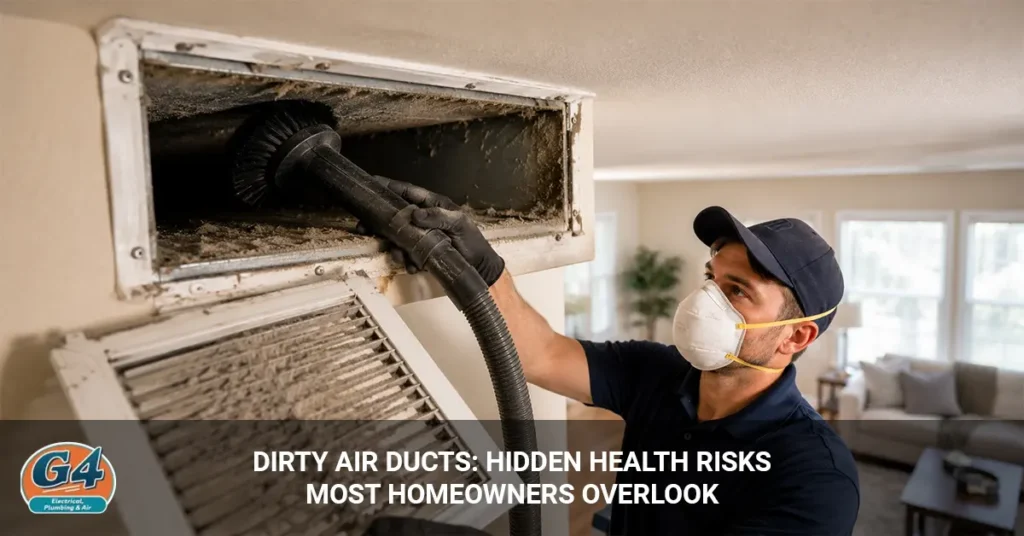
Dirty air ducts can lower indoor air quality and affect your health more than many homeowners realize. Dust, allergens, mold spores, and other pollutants can build up inside your ductwork over time. When your HVAC system runs, those particles continue moving through your home and into the air you breathe.
Most homeowners do not think about their air ducts because they stay hidden behind walls, ceilings, and floors. But dirty ducts can quietly cause problems inside the home. They may trigger allergy symptoms, worsen breathing issues, create musty odors, and reduce airflow throughout the house.
Dirty ductwork can also force your HVAC system to work harder than normal. This may increase energy bills and add extra wear to the system over time. Understanding these hidden risks can help you maintain a cleaner, healthier, and more comfortable home.
What Are Air Ducts and Why Do They Matter?
Air ducts move heated and cooled air throughout your home and help your HVAC system maintain proper airflow and indoor comfort. When the duct system stays clean, air flows more efficiently, which helps improve indoor air quality and keeps temperatures more consistent from room to room.
Over time, dust, pet hair, pollen, and other contaminants can build up inside the ductwork. Homes with pets, smokers, or high humidity levels often experience faster buildup. As debris increases, your HVAC system may begin circulating contaminated air throughout the house every time it runs.
Clean air ducts help create a healthier and more comfortable indoor environment. They can improve HVAC performance, reduce airborne dust, support consistent airflow, and help your heating and cooling system run more efficiently.
Because air ducts affect both airflow and indoor air quality, keeping them clean is an important part of maintaining a healthy and efficient HVAC system.
What Builds Up Inside Air Ducts?
Dust, allergens, pet dander, and moisture commonly build up inside air ducts over time. As air moves through your HVAC system every day, tiny particles begin collecting inside the ductwork and can continue building up for years.
Dust is one of the biggest problems in residential duct systems. It often includes dirt, clothing fibers, dead skin cells, pollen, and outdoor debris. Some of these particles settle inside the ducts instead of getting trapped by the air filter.
Homes with pets usually experience faster buildup because pet hair and dander constantly circulate through the air. If HVAC filters are not changed regularly, the amount of debris inside the system can increase even more.
Moisture inside ductwork can create another serious issue. Condensation may form inside the system when humidity levels are high or airflow becomes restricted. Damp conditions can lead to mold growth, and mold spores may then spread throughout the home through the vents. This often causes musty odors and poor indoor air quality.
In some homes, air ducts may also contain:
- Bacteria and airborne contaminants
- Insect debris
- Rodent droppings or nesting materials
- Drywall dust from renovations
- Sawdust and construction debris
Because most duct systems stay hidden behind walls and ceilings, many homeowners do not realize how much contamination may be sitting inside them.
Hidden Health Risks of Dirty Air Ducts
Dirty air ducts can lower indoor air quality and contribute to several health problems inside the home. When dust, allergens, and other contaminants build up inside the ductwork, your HVAC system may continue spreading those particles through the air you breathe every day.
People with allergies, asthma, or other respiratory conditions are often more sensitive to poor indoor air quality. Even healthy individuals may notice discomfort when contaminants continue circulating through the home for long periods.
Increased Allergy Symptoms
Dirty air ducts can make allergy symptoms worse by continuously circulating allergens throughout the home. Dust, pollen, pet dander, and other particles trapped inside the ductwork may move through the vents every time the HVAC system turns on.
Many homeowners notice more sneezing, itchy eyes, congestion, or sinus irritation while spending time indoors. In some cases, symptoms improve after leaving the house, which may indicate poor indoor air quality inside the home.
People with seasonal allergies are often affected the most because airborne allergens can continue building up inside the ventilation system over time.
Respiratory Irritation
Dirty air ducts can irritate the respiratory system by spreading dust, allergens, and other airborne particles throughout the home. When contaminated air continues circulating through the HVAC system, it may trigger breathing discomfort and worsen existing respiratory conditions.
Children, older adults, and people with asthma are often more sensitive to poor indoor air quality. Even small amounts of airborne contaminants can cause irritation when exposure happens daily.
Common symptoms linked to dirty air ducts and poor indoor air quality include:
- Persistent coughing
- Wheezing
- Chest tightness
- Shortness of breath
While dirty air ducts may not be the only cause of respiratory problems, they can contribute to ongoing irritation and make symptoms worse over time.
Headaches and Fatigue
Poor indoor air quality can sometimes lead to headaches, fatigue, and difficulty concentrating. When dust, allergens, and other contaminants continue circulating through dirty air ducts, the air inside the home may start to feel stale and uncomfortable.
Restricted airflow can also make rooms feel stuffy, especially when the HVAC system is not moving clean air properly. Over time, this may affect overall comfort and make it harder for some people to feel rested and comfortable indoors.
While headaches and fatigue can have many causes, poor air circulation and excessive indoor dust may contribute to these symptoms in some homes.
Sleep Disruption and Unpleasant Odors
Dirty air ducts can cause musty odors that make your home feel less fresh and comfortable. These smells often become more noticeable when the HVAC system turns on, especially at night when the house is quieter.
Mold growth, moisture, or debris inside the ductwork may create persistent odors that spread through bedrooms and living areas. In some cases, the stale smell can affect sleep quality and make indoor spaces feel uncomfortable over time.
Even mild odors coming from vents should not be ignored because they may be a sign that dust, mold, or other contaminants are building up inside the HVAC system.
Signs Your Air Ducts May Be Dirty
Dirty air ducts often show warning signs that homeowners should not ignore. As dust and debris build up inside the ductwork, your HVAC system may start showing airflow problems, unusual odors, or indoor air quality issues.
One of the most common signs is excessive dust around vents and registers. If your home becomes dusty again quickly after cleaning, contaminants inside the duct system may be circulating through the air.
Musty odors when the HVAC system turns on can also indicate dirty ductwork. In many cases, these smells may point to moisture buildup or mold growth inside the system.
Some homeowners notice uneven airflow throughout the house, along with weak airflow from AC vents caused by restricted ductwork. Certain rooms may feel warmer or cooler because dust and debris are restricting airflow inside the ducts.
Other common signs of dirty air ducts include:
- Visible mold near vents
- Increased allergy symptoms indoors
- Weak airflow from vents
- Rising energy bills
- HVAC filters are clogging quickly
If several of these problems happen at the same time, it may be a good idea to schedule a professional air duct inspection.
How Dirty Air Ducts Affect HVAC Performance
Dirty air ducts can make your HVAC system work harder than it should. When dust and debris build up inside the ductwork, airflow becomes restricted, making it harder for heated or cooled air to move through the home efficiently.
As airflow decreases, the HVAC system uses more energy to maintain indoor temperatures. This can lead to higher utility bills, reduced efficiency, and increased HVAC maintenance costs over time. Many homeowners notice rising energy costs without realizing dirty ductwork may be contributing to the problem.
Restricted airflow can also place extra strain on HVAC components such as blower motors, fans, and air filters. When the system constantly works harder than necessary, it may experience more wear and tear and require repairs more often.
Over time, dirty ductwork may lead to:
- Reduced HVAC efficiency
- Higher energy bills
- Uneven indoor temperatures
- Increased system wear
- Shorter HVAC lifespan
Keeping air ducts clean can help improve airflow, reduce strain on the system, and support better indoor comfort throughout the home.
Homes That May Need Air Duct Cleaning More Often
Some homes need air duct cleaning more often because they collect dust, allergens, and debris faster than others. Certain living conditions can increase buildup inside the ductwork and affect indoor air quality over time.
Homes with pets are especially prone to faster contamination because pet hair and dander constantly move through the HVAC system. Older homes may also have years of dust and debris trapped inside the ducts, especially if the system has never been professionally cleaned.
High humidity can create moisture problems inside ductwork, increasing the risk of mold growth and musty odors. Renovation projects can also leave behind drywall dust, sawdust, and other construction debris inside the ventilation system.
Homes that may need more frequent duct inspections include:
- Homes with pets
- Households with allergy sufferers
- Recently renovated homes
- Older homes
- Homes with smokers
- Homes in dusty areas
In these situations, regular duct inspections and maintenance can help improve indoor air quality and keep the HVAC system running more efficiently.
How Professional Air Duct Cleaning Helps
Professional air duct cleaning helps remove dust, debris, and contaminants that build up inside the HVAC system over time. Using specialized equipment, technicians clean the ductwork to improve airflow and reduce pollutants circulating through the home.
Many homeowners notice cleaner indoor air and less dust around the house after professional cleaning is completed. Better airflow also helps the HVAC system operate more efficiently, which may reduce strain on the equipment and improve overall comfort throughout the home.
Professional technicians can also identify hidden problems inside the duct system, including mold growth, moisture issues, leaks, or heavy debris buildup. Finding these issues early may help prevent more serious HVAC damage and costly repairs later.
Regular air duct cleaning can improve indoor air quality, reduce allergens, support better airflow, and help create a cleaner and healthier living environment.
How Often Should Air Ducts Be Cleaned?
There is no universal schedule for air duct cleaning because every home is different. However, many professionals recommend inspecting the duct system every few years to check for excessive buildup or airflow problems.
Homes with pets, smokers, recent remodeling projects, or allergy concerns may require more frequent inspections and cleanings. Mold growth, pest infestations, and water damage are also strong reasons to schedule cleaning sooner rather than later.
Routine HVAC maintenance can help determine whether the duct system needs professional attention.
DIY Maintenance Tips Between Professional Cleanings
While professional cleaning is important in some situations, homeowners can also take simple steps to reduce contamination buildup between services.
Changing HVAC filters regularly and following a regular HVAC maintenance checklist are two of the most effective ways to improve indoor air quality and protect the duct system. Dirty filters allow more particles to enter the airflow and settle inside the ducts.
Homeowners should also keep vents clean and avoid blocking airflow with furniture or rugs. Vacuuming around registers can help reduce dust accumulation near the openings.
Maintaining proper indoor humidity levels is equally important because excessive moisture may increase the risk of mold growth inside the ductwork.
Common Myths About Air Duct Cleaning
Many homeowners assume that air duct cleaning is unnecessary, but heavily contaminated duct systems can affect both indoor air quality and HVAC performance. While not every home requires frequent cleaning, ignoring major buildup may lead to ongoing airflow and dust problems.
Another common misconception is that replacing air filters alone solves everything. Filters help reduce airborne particles, but they cannot remove years of accumulated debris already trapped inside the duct system.
Some people also believe new homes always have clean ductwork. In reality, construction debris such as drywall dust and sawdust often enters ducts during building or renovation projects.
Choosing a Professional Air Duct Cleaning Company
Hiring an experienced company is important because improper cleaning methods may damage the duct system or fail to remove contaminants effectively.
Homeowners should look for providers with proper experience, strong customer reviews, and professional-grade equipment. A reputable company should clearly explain its cleaning process and answer questions about inspections, airflow issues, and potential mold concerns.
It is also wise to avoid extremely low-cost promotions that promise unrealistic results. In many cases, these offers involve incomplete cleaning services or hidden fees.
Final Thoughts
Dirty air ducts are easy to overlook because they remain hidden behind walls and ceilings, but they can quietly affect both your health and your HVAC system over time. Dust, allergens, mold spores, and other contaminants may continue circulating throughout the home every day without homeowners realizing it.
Poor indoor air quality can contribute to allergy symptoms, respiratory irritation, unpleasant odors, and reduced comfort. At the same time, dirty ductwork may force HVAC systems to work harder, increasing energy costs and long-term wear.
Regular HVAC maintenance, proper filter replacement, and professional duct inspections can help create a cleaner, healthier, and more comfortable indoor environment for your family.
Frequently Asked Questions
Can dirty air ducts make you sick?
Dirty air ducts may contribute to poor indoor air quality, which can worsen allergy symptoms, respiratory irritation, coughing, and asthma-related issues.
How do I know if my air ducts need cleaning?
Common signs include excessive dust, musty odors, weak airflow, visible mold near vents, and worsening allergy symptoms indoors.
Is mold in air ducts dangerous?
Mold inside air ducts can spread spores throughout the home, potentially affecting indoor air quality and aggravating respiratory conditions.
How long does professional air duct cleaning take?
Most residential duct cleaning services take several hours, depending on the size of the home and the condition of the ductwork.
Will air duct cleaning reduce dust in my home?
Professional cleaning may help reduce airborne dust and improve overall indoor cleanliness when combined with proper HVAC maintenance.
How often should HVAC air ducts be inspected?
Many homes benefit from inspections every few years, especially after renovations, water damage, or ongoing indoor air quality concerns.