Leaking air ducts can cause weak airflow, uneven temperatures, higher energy bills, and longer HVAC run times. HVAC duct repair costs vary based on the size and number of leaks, duct type, location, and how easy the damaged area is to access. Small leaks may only need sealing, while badly damaged duct sections may need replacement.
If your HVAC system seems to be working harder but your home is not staying comfortable, leaking ductwork could be part of the problem.
What Are the Signs of Leaking Air Ducts?
The most common signs of leaking air ducts are uneven room temperatures, weak airflow, rising energy bills, longer HVAC run times, unusual hissing sounds, and visible duct damage.
Uneven Temperatures Between Rooms
Uneven temperatures can be a sign that conditioned air is escaping before it reaches certain rooms.
For example, your living room may feel comfortable while a bedroom at the end of the duct system stays too warm in summer or too cold in winter.
Persistent temperature differences between rooms can also point to ductwork problems that cause uneven cooling.
A small difference between rooms is normal. But if one or more rooms consistently have a much different temperature, leaking or poorly connected ductwork is worth checking.
Weak Airflow From Vents
Weak airflow from one or more vents can indicate a duct leak, especially when the HVAC system itself appears to be running normally.
A damaged or disconnected duct can allow conditioned air to escape before it reaches the register. The farther the leak is from the room, the less airflow you may notice at the vent.
However, weak airflow can also have other causes, such as a dirty filter, blocked vent, blower problem, or duct restriction. A proper inspection can help identify the actual cause.
Dirty air ducts can also contribute to airflow problems and reduced HVAC performance.
Higher Energy Bills
Unexpectedly higher energy bills can occur when leaking ducts cause your HVAC system to run longer.
When conditioned air escapes into an attic, crawl space, basement, or wall cavity, less cooled or heated air reaches your living space. The system may then need to run longer to reach the thermostat setting.
A higher bill alone does not prove you have leaking ducts, but it becomes more suspicious when combined with comfort or airflow problems.
Leaking ductwork can also make your HVAC system work harder and use more energy. Learn more about how duct leaks can increase energy bills.
Your HVAC Runs Longer Than Usual
An HVAC system that runs for long periods without keeping the home comfortable may be losing conditioned air through the ductwork.
For example, you may notice that the AC runs much of the afternoon but certain rooms still feel warm.
Duct leaks are one possible cause. Before assuming the ductwork is the problem, a technician should also check the HVAC equipment, thermostat, airflow, filter, and other common issues.
Hissing or Whistling Sounds
Hissing or whistling sounds near duct connections can indicate air escaping through a gap.
You may notice the sound when the blower starts or while the HVAC system is running. The noise may be easier to hear near a loose connection, damaged flexible duct, or opening in the ductwork.
Not every HVAC noise means there is a duct leak, but unusual sounds are worth investigating when they occur alongside weak airflow or temperature problems.
Visible Gaps, Tears, or Disconnected Ducts
Visible damage is one of the clearest signs that duct repair may be necessary.
If you can safely access exposed ductwork, look for:
- Gaps around connections
- Torn flexible ducts
- Loose joints
- Disconnected sections
- Crushed flexible duct
- Damaged insulation
- Obvious holes or cracks
Do not enter unsafe attic or crawl-space areas just to inspect ductwork. A professional can inspect difficult-to-reach sections safely.
How Much Does HVAC Duct Repair Cost?
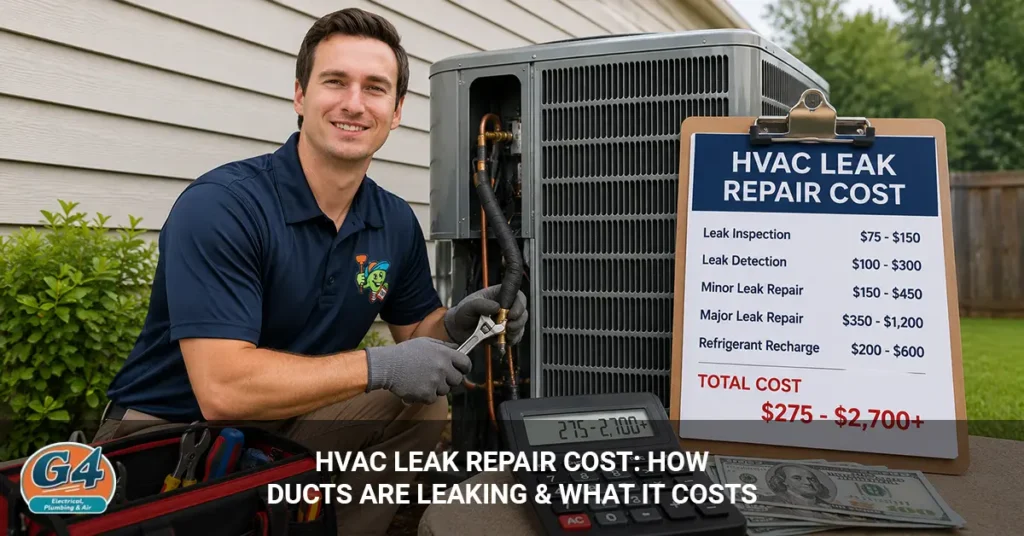
HVAC duct repair commonly costs from around $200 to $800 for many repair jobs, but the price can be lower for minor sealing and much higher when large sections need replacement. Local labor rates, duct type, accessibility, and the extent of the damage can significantly change the final price.
There is no single price for duct repair because a small leak at an accessible connection is very different from a large tear in ductwork inside a difficult-to-reach attic.
If the damage is too extensive to repair, you may need duct replacement instead. See our guide to air duct replacement cost.
The best way to get an accurate price is to have the leak identified and then receive a quote for the specific repair.
What Affects Air Duct Repair Cost?
The biggest factors affecting duct repair cost are the number of leaks, size of the damage, duct material, location, accessibility, insulation condition, and whether any duct sections need replacement.
Number of leaks: Multiple leaks require more inspection, materials, and labor.
Size of the damage: A small gap may be quick to seal. A large tear or collapsed section may require more extensive work.
Duct material: Flexible, sheet metal, and other duct types require different repair methods and materials.
Location: A leak in an easily accessible basement may cost less to repair than one buried behind a wall or located deep inside an attic.
Accessibility: Tight crawl spaces and difficult attic access can increase labor time.
Insulation damage: If the insulation around the duct is damaged or missing, additional work may be necessary.
Duct replacement: If a section cannot be repaired properly, replacing that section will cost more than simply sealing a small leak.
What Does an HVAC Technician Do to Repair a Leaking Duct?
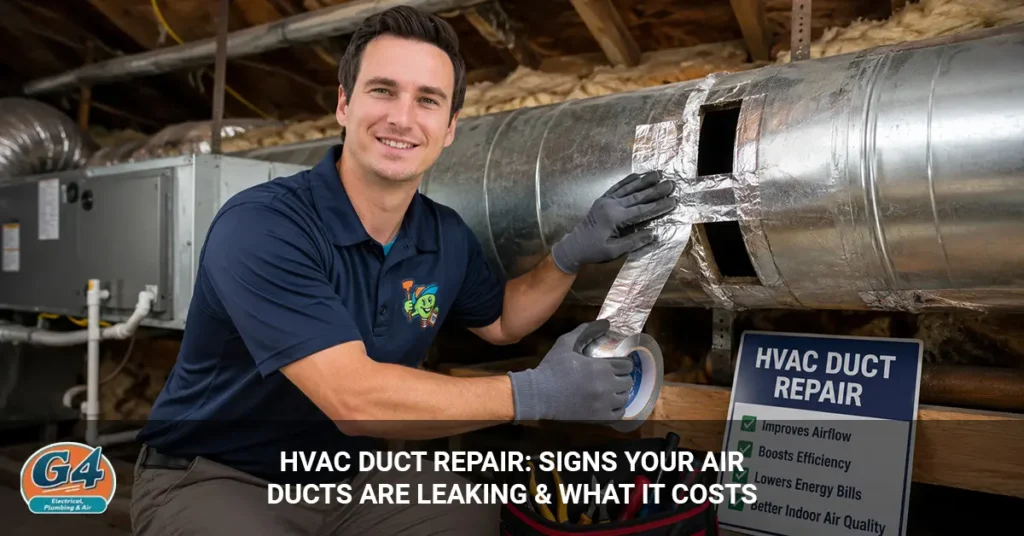
An HVAC technician usually locates the leak first, determines the type of damage, repairs or replaces the affected section, and checks the ductwork afterward.
The exact repair depends on what caused the leak.
A technician may:
- Inspect accessible ductwork.
- Locate gaps, tears, or disconnected sections.
- Check duct connections and insulation.
- Seal appropriate leaks.
- Reconnect loose duct sections.
- Repair minor damage where practical.
- Replace severely damaged sections.
- Check airflow after the repair.
For larger systems or hard-to-find leaks, additional testing may be appropriate to identify where conditioned air is escaping.
The goal is not simply to cover the visible hole. The repair needs to create a durable connection that can handle normal HVAC operation.
Can Leaking Air Ducts Be Repaired or Do They Need Replacement?
Small leaks, loose connections, and minor damage can often be repaired, while severely damaged, collapsed, or deteriorated duct sections may need replacement.
A repair may be appropriate when the duct is generally in good condition and the problem is limited to a connection, small tear, or localized leak.
Replacement becomes more practical when the duct section is badly damaged, repeatedly fails, has significant insulation problems, or cannot be repaired reliably.
For example, sealing a small gap in an otherwise healthy duct makes sense. Trying to repeatedly repair an old, torn section of flexible duct may not.
The condition of the surrounding ductwork also matters. A technician should look beyond the first visible leak before recommending a major repair.
Ductwork condition can also affect the air circulating throughout your home. Learn more about HVAC indoor air quality problems.
Can You Repair a Leaking Air Duct Yourself?
You may be able to seal a small, accessible duct leak yourself, but major leaks, disconnected sections, and inaccessible ductwork are better handled by an HVAC professional.
A homeowner may be able to address a minor leak in an exposed duct connection using materials designed specifically for HVAC duct sealing.
However, DIY repair becomes more difficult when the duct is inside an attic, crawl space, wall, or other restricted area.
It is also easy to mistake the location of a visible leak for the actual source of the problem. Air can escape from gaps that are not immediately obvious.
Avoid relying on ordinary cloth-backed “duct tape” as a permanent duct repair. Despite its name, it is not designed to provide a durable seal for HVAC ductwork.
If you are unsure about the type or extent of the damage, having the ductwork inspected can prevent an ineffective repair.
When Should You Call an HVAC Professional for Duct Repair?
You should call an HVAC professional when duct leaks are causing persistent comfort problems, major airflow loss, rising energy costs, or visible damage that you cannot safely access or repair.
Professional duct repair is especially appropriate when:
- Multiple rooms have weak airflow.
- One or more rooms stay consistently too hot or cold.
- Your HVAC system runs much longer than normal.
- Energy costs have increased without an obvious explanation.
- You hear persistent hissing or whistling near the ductwork.
- You see large tears or disconnected duct sections.
- Ducts are located in difficult or unsafe areas.
- A previous repair did not solve the problem.
A professional can also determine whether the problem is actually a duct leak. Symptoms such as weak airflow and high energy bills can have several HVAC-related causes.
If you need professional help identifying or repairing ductwork problems, G4 Electrical & Plumbing provides HVAC services.
Frequently Asked Questions
How do I know if my HVAC ducts are leaking?
The most common signs are uneven room temperatures, weak airflow, higher energy bills, longer HVAC run times, unusual hissing or whistling sounds, and visible gaps or tears in exposed ductwork. One symptom alone does not confirm a leak, so the ductwork may need inspection.
How much does it cost to repair leaking air ducts?
Many HVAC duct repairs cost around $200 to $800, but minor repairs can cost less and extensive repairs can cost significantly more. The final price depends on the damage, duct type, location, accessibility, labor, and whether sections need replacement.
Can leaking ducts increase energy bills?
Yes, leaking ducts can increase energy use because conditioned air escapes before reaching the rooms that need it. The HVAC system may then run longer to reach the thermostat setting.
Can I repair a leaking duct myself?
You can sometimes seal a small, accessible leak with proper HVAC duct-sealing materials. Major tears, disconnected sections, hidden leaks, and repairs in difficult locations are better handled by a professional.
Is it cheaper to repair or replace ductwork?
Repair is usually cheaper when the damage is small and the surrounding duct is in good condition. Replacement can make more sense when a section is severely damaged, deteriorated, or repeatedly develops leaks.
How long does HVAC duct repair take?
A small, accessible duct repair may take only a short amount of time, while repairs involving multiple leaks, difficult access, or replacement sections can take considerably longer. The technician needs to inspect the damage before giving an accurate timeframe.
Final Thought
HVAC duct repair is often necessary when leaking ductwork causes weak airflow, uneven temperatures, higher energy bills, or unusually long HVAC run times. The cost depends mainly on how much ductwork is damaged, where the leaks are located, how accessible they are, and whether the affected sections can be repaired or need replacement.
A small leak does not necessarily require a major project. But ignoring significant duct leaks can allow conditioned air to continue escaping and make your HVAC system work harder.
If you suspect leaking ducts, start by checking accessible ductwork for obvious gaps, tears, or disconnected sections. If the problem is difficult to locate or the ductwork is inaccessible, an HVAC professional can identify the leak and recommend the appropriate repair.