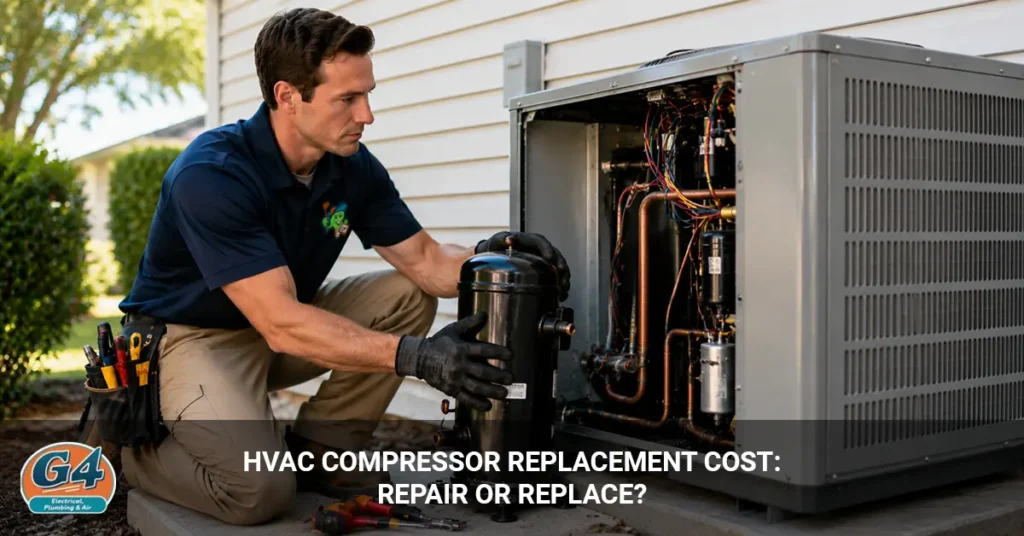
Replacing an HVAC compressor in 2026 typically costs between $1,200 and $3,800, depending on your air conditioner’s size, compressor type, refrigerant, labor costs, and whether the compressor is covered under the manufacturer’s warranty.
The compressor is the heart of your air conditioning system. It pumps refrigerant between the indoor and outdoor units, allowing your AC to remove heat from your home and deliver cool air. When the compressor fails, your air conditioner may blow warm air, struggle to cool your home, or stop working altogether.
Although replacing a compressor is one of the most expensive HVAC repairs, it’s often much less expensive than installing a brand-new air conditioning system. If your AC is relatively new and the rest of the system is in good condition, replacing the compressor can restore reliable cooling and extend the life of your equipment.
However, compressor replacement isn’t always the best choice. If your air conditioner is more than 10 to 15 years old, has a history of costly repairs, or uses outdated refrigerant, replacing the entire system may provide better long-term value through improved energy efficiency, greater reliability, and lower operating costs.
In this guide, you’ll learn how much HVAC compressor replacement costs in 2026, what factors affect the final price, when a repair makes sense, and when replacing your entire air conditioner is the smarter investment. By the end, you’ll have a clear understanding of your options before scheduling an HVAC repair.
Average HVAC Compressor Replacement Cost
The average cost to replace an HVAC compressor in 2026 ranges from $1,200 to $3,800, including the new compressor and professional installation. The final price depends on your air conditioner’s size, the type of compressor, the refrigerant it uses, labor rates in your area, warranty coverage, and whether additional repairs are needed.
Here’s what most homeowners can expect to pay.
| Service | Average Cost |
| Compressor Replacement | $1,200–$3,800 |
| Compressor Repair | $200–$1,000 |
| Compressor Replacement (Parts Under Warranty) | $600–$1,500 |
| Full AC System Replacement | $5,000–$12,500+ |
These estimates typically include:
- Replacement HVAC compressor
- Professional installation
- Refrigerant recovery
- Refrigerant recharge
- System testing and performance checks
- Basic inspection to ensure the system is operating correctly
Your total cost may be higher if your air conditioner requires electrical repairs, uses an older or more expensive refrigerant, or has other damaged components that need to be replaced at the same time. If your compressor is still covered under the manufacturer’s warranty, you’ll often only pay for labor, refrigerant, and other installation-related costs.
The best way to determine your actual replacement cost is to have a licensed HVAC technician inspect your system and provide a detailed estimate based on your air conditioner’s condition and repair needs.
HVAC Compressor Replacement Cost by AC Size
The size of your air conditioner is one of the biggest factors affecting compressor replacement cost. Larger AC systems require larger compressors, more refrigerant, and longer installation times, which increases both material and labor costs.
Here’s what most homeowners can expect to pay based on their air conditioner’s size.
| AC Size | Average Compressor Replacement Cost |
| 1.5 Ton | $1,200–$1,900 |
| 2 Ton | $1,300–$2,100 |
| 2.5 Ton | $1,400–$2,400 |
| 3 Ton | $1,600–$2,800 |
| 4 Ton | $2,000–$3,300 |
| 5 Ton | $2,400–$3,800 |
1.5-Ton AC
Replacing the compressor in a 1.5-ton air conditioner typically costs between $1,200 and $1,900. These smaller systems are commonly installed in apartments, condos, and smaller homes, making them the least expensive residential AC units to repair. Their smaller compressors require less refrigerant and generally take less time to replace, helping keep overall repair costs lower.
2-Ton AC
Replacing the compressor in a 2-ton air conditioner typically costs between $1,300 and $2,100. These systems are commonly installed in smaller single-family homes and offer a good balance between cooling performance and repair costs. The final price depends on the compressor type, refrigerant, and labor required for the installation.
2.5-Ton AC
A 2.5-ton HVAC compressor replacement generally costs between $1,400 and $2,400. This size is often used in medium-sized homes and requires a slightly larger compressor than a 2-ton system. Your total cost will vary based on the compressor type, refrigerant, system brand, and installation complexity.
3-Ton AC
Replacing the compressor in a 3-ton air conditioner usually costs between $1,600 and $2,800. Since this is one of the most common residential AC sizes, replacement compressors are readily available for most major brands. Labor costs and refrigerant charges will have the biggest impact on the final price.
4-Ton AC
A 4-ton HVAC compressor replacement typically costs between $2,000 and $3,300. Larger compressors require more refrigerant, additional labor, and heavier-duty components, making them more expensive to replace. These systems are commonly found in larger homes with higher cooling demands.
5-Ton AC
Replacing the compressor in a 5-ton air conditioner generally costs between $2,400 and $3,800. These high-capacity systems are designed for large homes and require heavy-duty compressors, making them the most expensive residential units to repair. The final cost depends on the compressor type, refrigerant, and the overall condition of the system.
Installing the correct replacement compressor is essential for your air conditioner to perform efficiently and reliably. A licensed HVAC technician should always install a compressor that matches your system’s size, refrigerant, and manufacturer specifications. Using the wrong compressor can reduce cooling performance, increase energy consumption, and shorten the lifespan of your HVAC system.
HVAC Compressor Replacement Cost by Compressor Type
The type of compressor in your air conditioner has a major impact on replacement cost, energy efficiency, and overall system performance. While basic compressors are less expensive to replace, advanced models offer better comfort and lower energy consumption but typically come with higher repair costs.
Single-Stage Compressor
A single-stage compressor runs at full capacity whenever it’s operating. It’s the most common compressor found in older and entry-level air conditioning systems because of its simple design and lower upfront cost.
In 2026, replacing a single-stage compressor typically costs between $1,200 and $2,500, including parts and professional installation. The final cost depends on your AC system’s size, refrigerant type, and labor rates in your area.
Pros
- Lowest compressor replacement cost
- Simple, reliable design with fewer complex components
- Easier and less expensive to repair than many advanced compressor types
- Replacement parts are widely available
- Compatible with many standard residential air conditioners
Cons
- Less energy efficient than two-stage and variable-speed compressors
- It can create noticeable temperature swings as it cycles on and off
- Louder operation compared to newer compressor technologies
- Higher energy consumption during peak cooling periods
If your air conditioner already uses a single-stage compressor and the rest of the system is in good condition, replacing it is often the most affordable way to restore reliable cooling without investing in a completely new HVAC system.
Two-Stage Compressor
A two-stage compressor can operate at both low and high speeds, allowing it to adjust its cooling output based on your home’s temperature needs. Because it doesn’t always run at full capacity, it provides more consistent comfort, better humidity control, and improved energy efficiency than a single-stage compressor.
In 2026, replacing a two-stage compressor typically costs between $1,600 and $3,000, including parts and professional installation. The total cost depends on your air conditioner’s size, refrigerant type, system brand, and local labor rates.
Pros
- Better energy efficiency than a single-stage compressor
- Maintains more consistent indoor temperatures
- Quieter operation during normal cooling cycles
- Removes humidity more effectively for improved comfort
- Reduces wear by operating at lower speeds when full capacity isn’t needed
Cons
- Higher replacement cost than a single-stage compressor
- More complex design with additional components
- Repairs are typically more expensive
- Replacement parts may cost more for premium HVAC brands
If your air conditioner is equipped with a two-stage compressor and the rest of the system is in good condition, replacing the compressor is often a worthwhile investment. It can restore efficient cooling, improve indoor comfort, and help keep energy costs lower than a comparable single-stage system.
Variable-Speed Compressor
A variable-speed compressor continuously adjusts its operating speed to match your home’s cooling needs instead of simply turning on and off. This allows your air conditioner to maintain a more consistent indoor temperature while using less energy. Variable-speed compressors are commonly found in premium, high-efficiency HVAC systems.
In 2026, replacing a variable-speed compressor typically costs between $2,200 and $4,500, including parts and professional installation. The final cost depends on your AC system’s size, brand, refrigerant type, and local labor rates.
Pros
- Highest energy efficiency of all residential compressor types
- Maintains consistent indoor temperatures
- Very quiet operation
- Helps lower monthly energy bills
- Provides excellent humidity control
- Reduces wear by operating at lower speeds when full capacity isn’t needed
Cons
- Highest replacement cost
- More expensive replacement parts
- Requires specialized diagnostic equipment and trained technicians
- Repairs can be more costly than standard compressor systems
If your HVAC system is relatively new and equipped with a variable-speed compressor, replacing it is often the best way to restore its high efficiency and comfort. Although the upfront repair cost is higher, the improved energy savings and consistent performance can make it a worthwhile long-term investment.
Scroll Compressor
A scroll compressor uses two spiral-shaped scrolls to compress refrigerant and circulate it through your air conditioning system. It’s one of the most common compressor designs in modern residential HVAC systems because it’s reliable, energy efficient, and has fewer moving parts than many older compressor types.
In 2026, replacing a scroll compressor typically costs between $1,400 and $3,200, including parts and professional installation. The final price depends on your AC system’s size, refrigerant type, brand, and local labor rates.
Pros
- Reliable and durable design
- Quiet operation
- High energy efficiency
- Fewer moving parts reduce wear and maintenance
- Commonly used in many modern residential HVAC systems
Cons
- Higher replacement cost than some reciprocating compressors
- Internal damage is often difficult or impractical to repair
- Premium models may have more expensive replacement parts
Because of their reliability and efficiency, scroll compressors are a popular choice for today’s air conditioners and heat pumps. If the rest of your HVAC system is in good condition, replacing a failed scroll compressor can restore dependable cooling and help extend the life of your equipment.
Reciprocating Compressor
A reciprocating compressor uses pistons to compress and circulate refrigerant through your air conditioning system. While this design is commonly found in older and budget-friendly HVAC systems, it’s less common in today’s high-efficiency air conditioners, which often use scroll or variable-speed compressors.
In 2026, replacing a reciprocating compressor typically costs between $1,200 and $2,700, including parts and professional installation. The final cost depends on your AC system’s size, refrigerant type, brand, and labor rates in your area.
Pros
- Lower replacement cost than many advanced compressor types
- Proven and reliable technology
- Widely available replacement parts
- Compatible with many older residential HVAC systems
- Generally less expensive to replace than variable-speed compressors
Cons
- Louder operation than scroll compressors
- Lower energy efficiency than newer compressor designs
- More moving parts increase the risk of wear over time
- May require more maintenance as the system ages
Choosing the right replacement compressor depends on your air conditioner’s age, compatibility, budget, and long-term goals. A licensed HVAC technician can determine which compressor is designed for your system and help you decide whether replacing the compressor or upgrading to a new, more energy-efficient air conditioner offers the best overall value.
HVAC Compressor Repair Cost
Repairing an HVAC compressor typically costs between $200 and $1,000, depending on the underlying problem. In many cases, the compressor itself hasn’t failed. Issues such as a bad capacitor, faulty contactor, or electrical problem can prevent it from running, and these repairs are usually much less expensive than replacing the entire compressor.
Here’s what homeowners typically pay for common compressor-related repairs.
| Repair | Average Cost |
| Capacitor Replacement | $150–$400 |
| Contactor Replacement | $150–$350 |
| Hard Start Kit Installation | $200–$500 |
| Electrical Repair | $200–$800 |
| Refrigerant Recharge | $250–$900 |
| Compressor Repair | $400–$1,000 |
If the compressor is overheating, has electrical issues, or has a failed start component, repairing the problem may restore your air conditioner without the expense of a full compressor replacement. Replacing a capacitor, contactor, or installing a hard start kit is often enough to get the system running again.
However, if the compressor has seized, suffered internal mechanical damage, or experienced an electrical burnout, replacement is usually the only reliable solution. In these cases, repairing the compressor is often impractical or more expensive than installing a new one.
A licensed HVAC technician can perform diagnostic testing to identify the exact cause of the problem and determine whether a repair is worthwhile. Getting an accurate diagnosis before approving major repairs can help you avoid unnecessary expenses and choose the most cost-effective solution for your HVAC system.
Labor Cost to Replace an HVAC Compressor
Labor to replace an HVAC compressor typically costs between $600 and $1,500, depending on your air conditioner’s size, compressor type, refrigerant, and how difficult the system is to access. Additional services, such as refrigerant recovery, system testing, or emergency repairs, can increase the total labor cost.
Here’s what homeowners typically pay for compressor replacement labor.
| Service | Typical Labor Cost |
| Standard Compressor Replacement | $600–$1,500 |
| Refrigerant Recovery | $100–$300 |
| Refrigerant Recharge | $250–$900 |
| System Testing | $100–$300 |
| Emergency or After-Hours Service | $200–$600 Extra |
Replacing an HVAC compressor is a complex repair that usually takes 4 to 8 hours to complete. During the installation, the technician must recover the refrigerant, remove the failed compressor, install the new unit, braze the refrigerant lines, pressure-test the system for leaks, pull a vacuum to remove moisture and air, recharge the refrigerant, and verify that the system is operating correctly.
Labor costs can increase if your outdoor unit is difficult to access, the system requires additional electrical repairs, or your air conditioner uses an older refrigerant that needs special handling. Emergency service during evenings, weekends, holidays, or peak summer months can also result in higher labor charges.
Before approving the repair, ask your HVAC contractor for a detailed written estimate that clearly separates labor, parts, refrigerant, warranty coverage, and any additional fees. This makes it easier to compare quotes and ensures you know exactly what is included before the work begins.
What Affects HVAC Compressor Replacement Cost?
Several factors influence the cost of replacing an HVAC compressor. While the compressor itself is the largest expense, your air conditioner’s size, refrigerant, labor rates, and the overall condition of the system can all affect the final price. Understanding these factors can help you plan your budget and avoid unexpected repair costs.
AC Size
The size of your air conditioner has a direct impact on replacement costs. Larger systems require larger compressors, more refrigerant, and additional labor, making them more expensive to repair. For example, replacing the compressor in a 5-ton AC typically costs much more than replacing one in a 2-ton system.
Compressor Type
The type of compressor also affects the overall cost. Single-stage compressors are generally the most affordable to replace, while two-stage and variable-speed compressors cost more because of their advanced technology, improved efficiency, and more complex components.
Brand
Compressor prices vary by manufacturer. Premium HVAC brands often have higher-priced OEM replacement parts, while compressors for older or discontinued systems may be harder to find and more expensive to purchase.
Refrigerant Type
The refrigerant your air conditioner uses can significantly affect the repair cost. Systems that use older or less common refrigerants often cost more to service because the refrigerant is more expensive and may be less readily available.
Warranty Coverage
If your air conditioner is still covered by the manufacturer’s parts warranty, you may only need to pay for labor, refrigerant, and installation-related costs. Without warranty coverage, you’ll be responsible for both the replacement compressor and the labor required to install it.
Labor Rates
HVAC labor rates vary depending on where you live. Homeowners in larger cities and areas with a higher cost of living generally pay more for compressor replacement than those in smaller towns or rural communities.
System Accessibility
An outdoor unit that’s easy to access usually costs less to repair. If the compressor is located in a tight space or requires additional disassembly to reach, labor costs can increase.
Electrical Repairs
A failed compressor can sometimes damage related electrical components, including the capacitor, contactor, wiring, or other control parts. Replacing these components at the same time will increase the overall repair cost.
Refrigerant Recharge
Most compressor replacements require the refrigerant to be recovered before the old compressor is removed and the system to be recharged after the new one is installed. The type and amount of refrigerant your system needs can add significantly to the total cost.
Emergency Service
If your compressor fails during a heat wave, on a weekend, or outside normal business hours, emergency service rates can increase your repair bill. Scheduling repairs as soon as you notice a problem can help you avoid premium labor charges and prevent additional damage to your HVAC system.
HVAC Compressor Repair vs. Replacement
Whether you should repair or replace an HVAC compressor depends on the type of failure, the age of your air conditioner, and the total repair cost. Minor electrical problems can often be repaired, but a compressor with severe internal damage usually needs to be replaced to restore reliable cooling.
| Factor | Repair | Replacement |
| Average Cost | $200–$1,000 | $1,200–$3,800 |
| Best For | Minor electrical or mechanical issues | Internal failure or severe damage |
| Lifespan Impact | May extend the compressor’s life | Restores long-term reliability |
| Energy Efficiency | Limited improvement | Restores system performance and efficiency |
| Warranty | Usually limited | May include a manufacturer’s warranty |
| Long-Term Value | Better for newer systems | Better for failed or heavily damaged compressors |
If your air conditioner is relatively new and the repair costs less than 50% of the price of a compressor replacement, repairing the compressor or related components is often the more cost-effective option. Problems such as a failed capacitor, faulty contactor, or other electrical issues can usually be repaired without replacing the compressor itself.
However, if the compressor has burned out, seized internally, or suffered major mechanical damage, replacement is typically the only reliable solution. Internal compressor failures cannot usually be repaired in a way that provides long-term dependability.
If your air conditioner is more than 10 to 15 years old, it’s also worth comparing the cost of compressor replacement with the cost of installing a new HVAC system. In many cases, upgrading to a modern, energy-efficient air conditioner provides better long-term value, lower utility bills, improved reliability, and the added protection of a new manufacturer’s warranty.
Signs Your HVAC Compressor Needs Replacement
A failing HVAC compressor usually gives several warning signs before it stops working completely. Recognizing these symptoms early can help you avoid a total system breakdown, reduce repair costs, and prevent damage to other air conditioning components.
AC Is Blowing Warm Air
If your air conditioner is running but blowing warm or room-temperature air, the compressor may no longer be circulating refrigerant properly. This is one of the most common signs of compressor failure and should be inspected as soon as possible.
If your system is blowing warm air, it may indicate compressor failure or another cooling issue. Read our guide on why your AC is blowing warm air to learn about other possible causes before replacing the compressor.
Loud Grinding, Banging, or Rattling Noises
Unusual noises coming from the outdoor unit often point to internal compressor damage. Grinding, banging, or rattling sounds may indicate worn or broken internal components that usually require compressor replacement.
Compressor Won’t Start
If the outdoor unit won’t start or the compressor repeatedly fails to turn on, the problem could be a failed compressor, a faulty capacitor, or another electrical issue. A professional diagnosis is needed to identify the exact cause.
Circuit Breaker Keeps Tripping
A compressor that repeatedly trips the circuit breaker may be overheating or drawing more electrical current than it should. Ignoring this problem can lead to complete compressor failure and additional electrical damage.
Refrigerant Leaks
Refrigerant leaks reduce your air conditioner’s cooling performance and force the compressor to work harder than normal. If the leak isn’t repaired promptly, the compressor can overheat and fail prematurely.
Hard Starting
If your air conditioner struggles to start or the compressor takes longer than normal to turn on, it may be wearing out. Hard starting is often caused by aging components, electrical issues, or excessive strain on the compressor.
Higher Energy Bills
A failing compressor becomes less efficient over time, causing your air conditioner to run longer to cool your home. This extra runtime often leads to noticeably higher monthly energy bills.
Excessive Vibration
A properly functioning outdoor unit should operate with only slight vibration. Excessive shaking or vibration can indicate a damaged compressor or worn internal components that require immediate attention.
If you notice one or more of these warning signs, schedule an inspection with a licensed HVAC technician as soon as possible. Diagnosing compressor problems early may prevent further damage and help you determine whether a repair or replacement is the most cost-effective solution.
Should You Replace the Compressor or the Entire AC Unit?
Whether you should replace the compressor or the entire air conditioner depends on your system’s age, overall condition, and the cost of the repair. If your AC is relatively new, replacing the compressor is often the most cost-effective option. However, if the system is older or has a history of expensive repairs, investing in a professional AC replacement may provide better long-term value through improved energy efficiency, greater reliability, and lower operating costs.
Under 5 Years Old
If your air conditioner is less than 5 years old, replacing the compressor is usually the best choice. Most newer systems still have many years of service life remaining, and the replacement compressor may be covered under the manufacturer’s parts warranty, reducing your out-of-pocket costs.
5–10 Years Old
If your AC is between 5 and 10 years old, compare the compressor replacement cost with the overall condition of the system. If the unit has been reliable, is still energy efficient, and doesn’t require other major repairs, replacing the compressor is often a worthwhile investment.
10–15 Years Old
If your air conditioner is 10 to 15 years old, replacing the compressor may not always be the smartest financial decision. Older systems typically consume more energy, and other expensive components such as the evaporator coil, condenser fan motor, or control board may also be nearing the end of their lifespan.
In many cases, upgrading to a newer, high-efficiency system provides better long-term savings. Before deciding, compare the average HVAC replacement cost with the cost of replacing the compressor.
Over 15 Years Old
If your air conditioner is more than 15 years old, replacing the entire system is usually the better option. A new air conditioner will be more energy efficient, more reliable, and less likely to require costly repairs. You’ll also benefit from lower utility bills, improved indoor comfort, and the peace of mind that comes with a new manufacturer’s warranty.
If you’re considering a complete upgrade, our guide to AC replacement cost can help you understand what homeowners typically pay for a new air conditioning system.
How Long Does an HVAC Compressor Last?
Most HVAC compressors last 10 to 15 years, which is about the same lifespan as a central air conditioning system. With regular maintenance and proper care, some compressors can continue operating efficiently for even longer.
Several factors can affect how long an HVAC compressor lasts, including:
- Annual HVAC maintenance
- Replacing air filters regularly
- Maintaining proper refrigerant levels
- Keeping the condenser coils clean
- The condition of the electrical system
- How often is the air conditioner used
Routine maintenance plays a major role in extending compressor life. Dirty air filters, clogged condenser coils, low refrigerant levels, or electrical problems can force the compressor to work harder than necessary, leading to premature wear and higher energy bills.
Scheduling annual professional HVAC maintenance and repairing small problems before they become major issues can help improve your system’s efficiency, reduce the risk of compressor failure, and maximize the lifespan of your air conditioner.
Ways to Save Money on HVAC Compressor Replacement
Replacing an HVAC compressor can be expensive, but there are several ways to reduce your total cost without sacrificing quality. Planning ahead and exploring your options can help you save money while keeping your air conditioner running efficiently.
Check Your Warranty
Before approving the repair, check whether your air conditioner is still covered by the manufacturer’s warranty. Many warranties cover the cost of the compressor, which means you may only need to pay for labor, refrigerant, and installation-related expenses.
Compare Multiple HVAC Quotes
Get estimates from at least three licensed HVAC contractors before making a decision. Comparing quotes helps you find competitive pricing, understand what’s included, and avoid paying for unnecessary repairs or services.
Don’t Delay Repairs
Ignoring early warning signs can lead to more serious damage and a higher repair bill. Addressing compressor problems as soon as they’re discovered may prevent additional damage to the refrigerant system or other HVAC components.
Schedule Annual Maintenance
Routine HVAC maintenance helps keep refrigerant levels correct, electrical components in good condition, and the compressor operating efficiently. Regular tune-ups can also identify small problems before they turn into expensive repairs.
Following a regular HVAC maintenance checklist helps keep refrigerant levels correct, reduces compressor wear, and can prevent expensive breakdowns in the future.
Repair Minor Problems Early
Replacing worn capacitors, faulty contactors, or repairing refrigerant leaks early can reduce strain on the compressor and help prevent a complete compressor failure.
Ask About Financing
Many HVAC companies offer financing options that allow you to spread the cost of compressor replacement over manageable monthly payments, making a major repair easier to budget for.
Consider Replacing the Entire System
If your air conditioner is more than 10 to 15 years old and needs an expensive compressor replacement, compare the repair cost with the price of a new, energy-efficient HVAC system. While the upfront investment is higher, a new system can lower your energy bills, reduce future repair costs, and provide greater reliability for years to come.
Can You Replace an HVAC Compressor Yourself?
Replacing an HVAC compressor is not a DIY job for most homeowners. It requires specialized tools, technical expertise, and proper refrigerant handling to complete the repair safely and ensure the air conditioning system operates correctly afterward.
A typical HVAC compressor replacement involves:
- Recovering refrigerant from the system
- Disconnecting and brazing refrigerant lines
- Installing the new compressor
- Replacing the filter drier
- Pressure testing the system for leaks
- Pulling a vacuum to remove air and moisture
- Recharging the system with the correct type and amount of refrigerant
- Testing the system to verify proper operation and cooling performance
Because refrigerants are regulated and must be handled according to environmental regulations, compressor replacement should be performed by a licensed HVAC technician. Improper installation can lead to refrigerant leaks, compressor damage, reduced energy efficiency, poor cooling performance,
Frequently Asked Questions
How much does HVAC compressor replacement cost?
Most homeowners spend between $1,200 and $3,800 to replace an HVAC compressor. The final cost depends on the size of your air conditioner, the type of compressor, the refrigerant it uses, labor rates, warranty coverage, and whether additional repairs are needed.
Is it worth replacing an AC compressor?
Yes, replacing an AC compressor is often worth it if your air conditioner is relatively new and the rest of the system is in good condition. A compressor replacement typically costs much less than installing a completely new HVAC system and can restore reliable cooling for many years.
Can a compressor be repaired instead of replaced?
Sometimes. Problems such as a faulty capacitor, contactor, or other electrical components can often be repaired without replacing the compressor. However, if the compressor has seized, burned out, or suffered internal mechanical damage, replacement is usually the only reliable solution.
How long does compressor replacement take?
Most HVAC compressor replacements take 4 to 8 hours to complete. The exact time depends on your air conditioner’s size, the complexity of the installation, the accessibility of the outdoor unit, and whether refrigerant recovery and recharging are required.
Does homeowners insurance cover compressor replacement?
Homeowners insurance may cover compressor replacement if the damage is caused by a covered event, such as a fire, storm, or another sudden accident. In most cases, damage caused by normal wear and tear, age, or poor maintenance is not covered.
What causes an AC compressor to fail?
The most common causes of compressor failure include refrigerant leaks, dirty condenser coils, overheating, electrical problems, voltage fluctuations, poor maintenance, and normal wear over time. Regular HVAC maintenance can help prevent many of these issues.
How long do HVAC compressors last?
With proper maintenance, most HVAC compressors last 10 to 15 years. Replacing air filters regularly, keeping the condenser coils clean, and maintaining the correct refrigerant level can help extend the compressor’s lifespan.
Can I replace only the compressor?
Yes. If the rest of your air conditioning system is in good condition, replacing only the compressor is often a practical and cost-effective repair. A licensed HVAC technician can inspect your system and determine whether a compressor replacement is the best option.
Is replacing the compressor cheaper than replacing the AC?
Yes, replacing the compressor is usually much less expensive than installing a new air conditioner. However, if your HVAC system is more than 10 to 15 years old or has multiple major problems, replacing the entire system may provide better long-term value.
How do I know if my compressor is bad?
Common signs of a failing compressor include warm air coming from the vents, loud grinding or rattling noises, hard starting, frequent circuit breaker trips, higher energy bills, refrigerant leaks, and the outdoor unit failing to operate properly. A licensed HVAC technician can confirm the diagnosis and recommend the most cost-effective solution.
Final Thoughts
Replacing an HVAC compressor is a major repair, but it’s often much more affordable than replacing your entire air conditioning system. In 2026, most homeowners can expect to pay between $1,200 and $3,800, although the final cost depends on the compressor type, your AC system’s size, the refrigerant it uses, labor rates, and warranty coverage.
Before deciding, consider your air conditioner’s age, overall condition, and repair history. If your system is relatively new and the rest of the components are in good shape, replacing the compressor is usually a worthwhile investment that can restore reliable cooling and extend the life of your HVAC system.
However, if your air conditioner is more than 10 to 15 years old, has required frequent repairs, or uses an outdated refrigerant, replacing the entire system may be the better long-term choice. A new high-efficiency HVAC system can lower energy bills, improve indoor comfort, reduce future repair costs, and provide the peace of mind of a new manufacturer’s warranty.
Before moving forward, get written estimates from several licensed HVAC contractors and compare what’s included in each quote. If you’re experiencing compressor problems, our AC repair services can diagnose the issue and help you determine whether repairing the compressor or replacing the entire system offers the best value for your home and budget.