
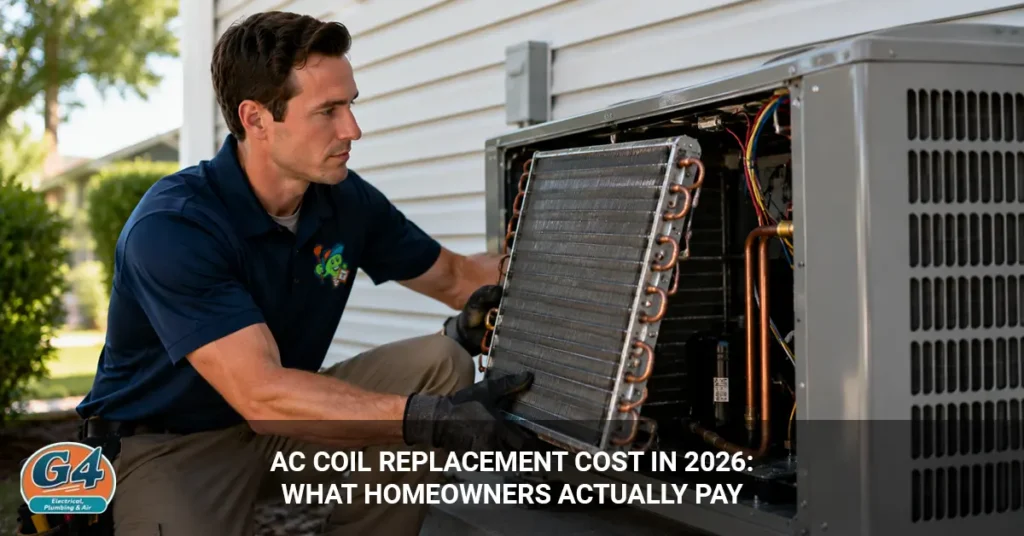
Replacing an AC coil in 2026 typically costs between $900 and $3,500, depending on the type of coil, your air conditioner’s size, labor costs, the refrigerant it uses, and whether the replacement is covered by a manufacturer’s warranty.
If your air conditioner is blowing warm air, freezing up, or losing refrigerant, a damaged AC coil could be the cause. Replacing the coil isn’t a small repair, but it’s often much less expensive than replacing the entire air conditioning system, especially if your AC is still in good condition.
The total cost depends on several factors. Evaporator coils are usually more expensive to replace because they’re located inside the indoor unit and require more labor. Condenser coils, which are located in the outdoor unit, are often less expensive but can still add up depending on your system’s size, brand, and refrigerant type.
In this guide, you’ll learn the average AC coil replacement cost in 2026, what affects the final price, how much it costs to replace different types of coils, and whether it’s better to repair the coil or replace your air conditioner. By the end, you’ll know what to expect before hiring an HVAC contractor and how to make the best decision for your home and budget.
Average AC Coil Replacement Cost in 2026
The average cost to replace an AC coil in 2026 ranges from $900 to $3,500, including the replacement coil and professional installation. Your final cost depends on the type of coil, the size of your air conditioner, labor rates in your area, the refrigerant your system uses, and whether any additional repairs are needed.
Here’s what most homeowners can expect to pay.
| Coil Type | Average Installed Cost |
| Evaporator Coil | $1,200–$3,500 |
| Condenser Coil | $900–$2,800 |
| Mini-Split Coil | $700–$2,000 |
| Heat Pump Coil | $1,200–$3,200 |
In most cases, these estimates include:
- Replacement AC coil
- Professional HVAC installation
- Refrigerant recovery (when required)
- Refrigerant recharge
- Leak testing
- Basic system inspection to ensure the new coil is working properly
Keep in mind that your total cost may be higher if your air conditioner uses an older refrigerant, requires additional labor, or has other damaged components that need to be repaired at the same time. Warranty coverage can also make a significant difference, as some manufacturers cover the cost of the replacement coil while the homeowner only pays for labor and refrigerant.
The best way to get an accurate estimate is to have a licensed HVAC technician inspect your system and provide a detailed quote based on your specific air conditioner and repair needs.
AC Coil Replacement Cost by Coil Type
The type of AC coil you need to replace is one of the biggest factors affecting the total repair cost. While both evaporator and condenser coils are essential for cooling your home, they serve different purposes and have different replacement costs. Some coils are also more difficult to access, which can increase labor charges.
Evaporator Coil Replacement
An evaporator coil absorbs heat from the air inside your home, allowing your air conditioner to produce cool air. It’s located inside the indoor air handler or furnace, making it more time-consuming to access and replace than many other AC components.
In 2026, the average cost to replace an evaporator coil ranges from $1,200 to $3,500, including parts and professional installation. The total cost depends on the size of your AC system, the type of refrigerant it uses, the brand of the unit, and whether the replacement coil is covered under the manufacturer’s warranty.
Pros
- Restores your air conditioner’s cooling performance
- Improves energy efficiency if the old coil was leaking or damaged
- Stops refrigerant leaks caused by a failed evaporator coil
- Costs less than replacing the entire air conditioning system
- Can extend the life of a newer AC unit
Cons
- One of the most expensive air conditioner repairs
- Often requires refrigerant recovery and a system recharge
- Older AC systems may not be compatible with a new replacement coil
- May not be worth replacing if the air conditioner is more than 12 to 15 years old
If your air conditioner is relatively new and the compressor is still in good condition, replacing a damaged evaporator coil is usually a cost-effective repair. However, if your system is nearing the end of its expected lifespan or has multiple major problems, replacing the entire AC unit may provide better long-term value.
Condenser Coil Replacement
A condenser coil releases the heat your air conditioner removes from inside your home. It’s located in the outdoor unit, where it’s exposed to rain, dirt, leaves, and other debris. Over time, the coil can become corroded, damaged, or develop refrigerant leaks that reduce your system’s cooling performance.
In 2026, the average cost to replace a condenser coil ranges from $900 to $2,800, including parts and professional installation. The total price depends on your AC system’s size, the coil brand, labor rates, and whether additional work, such as refrigerant recovery or a system recharge, is required.
Pros
- Restores your air conditioner’s cooling performance
- Improves energy efficiency and system performance
- Fixes refrigerant leaks caused by a damaged condenser coil
- Usually costs less than replacing an evaporator coil
- Can extend the lifespan of a newer AC system
Cons
- May not be a cost-effective repair for older air conditioners
- Severe corrosion can be a sign of additional damage to the outdoor unit
- Refrigerant recovery and recharge can increase the total repair cost
- Some replacement coils may be difficult to find for older systems
If your air conditioner is still in good condition and the compressor is working properly, replacing a damaged condenser coil is often a worthwhile investment. However, if your system is more than 12 to 15 years old or has multiple major issues, replacing the entire AC unit may be the more economical long-term solution.
Mini-Split AC Coil Replacement
A mini-split AC coil helps transfer heat between the indoor and outdoor units, allowing the system to cool and heat your home efficiently without ductwork. If the coil becomes damaged or develops a refrigerant leak, your mini-split may lose cooling performance, run longer than normal, or stop heating and cooling effectively.
In 2026, the average cost to replace a mini-split AC coil ranges from $700 to $2,000, including parts and professional installation. The final cost depends on the system’s brand, whether the damaged coil is in the indoor or outdoor unit, and the complexity of the repair.
Pros
- Restores efficient heating and cooling performance
- Usually costs less to replace than coils in many central AC systems
- Helps improve energy efficiency after the repair
- Ideal for homes without ductwork
- Can extend the lifespan of a newer mini-split system
Cons
- Replacement parts for premium brands can be more expensive
- Refrigerant leaks often require additional repairs and a system recharge
- Some older mini-split models have limited replacement part availability
- Labor costs may increase if the indoor unit is difficult to access
If your mini-split system is relatively new and in good condition, replacing a damaged coil is usually a cost-effective repair. However, if the unit is older, has multiple problems, or replacement parts are difficult to find, replacing the entire mini-split system may be the better long-term solution.
Heat Pump Coil Replacement
A heat pump coil plays a vital role in both heating and cooling your home. Because heat pumps operate throughout the year, the coils experience more wear than those in a standard air conditioner. If a coil becomes damaged or develops a refrigerant leak, your heat pump may struggle to maintain comfortable indoor temperatures, run longer than normal, and use more energy.
In 2026, the average cost to replace a heat pump coil ranges from $1,200 to $3,200, including parts and professional installation. The total cost depends on the size of the heat pump, the brand, the refrigerant it uses, labor rates, and whether additional repairs are needed.
Pros
- Restores both heating and cooling performance
- Improves overall energy efficiency
- Helps lower monthly energy bills
- Extends the lifespan of a newer heat pump
- Costs less than replacing the entire heat pump system
Cons
- More expensive than many standard AC repairs
- Refrigerant recovery and recharge can increase the total cost
- Older heat pumps may not be worth repairing
- Replacement parts for some models can be expensive or difficult to source
If your heat pump is relatively new and the compressor is still in good condition, replacing a damaged coil is often a worthwhile investment. However, if the system is more than 10 to 15 years old or has multiple major issues, replacing the entire heat pump may provide better long-term value through improved efficiency, reliability, and warranty coverage.
AC Coil Replacement Cost by AC Size
The size of your air conditioner directly affects the cost of replacing an AC coil. Larger systems use bigger coils, require more refrigerant, and often take longer to repair, increasing both parts and labor costs. Choosing the correct replacement coil is also essential to maintain your system’s efficiency and performance.
Here’s what most homeowners can expect to pay based on AC size.
| AC Size | Average Coil Replacement Cost |
| 1.5 Ton | $900–$1,800 |
| 2 Ton | $1,000–$2,000 |
| 2.5 Ton | $1,100–$2,300 |
| 3 Ton | $1,300–$2,700 |
| 4 Ton | $1,600–$3,100 |
| 5 Ton | $1,900–$3,500 |
1.5-Ton AC
Replacing the coil in a 1.5-ton air conditioner typically costs between $900 and $1,800. These systems are commonly installed in apartments, condos, and smaller homes, making them one of the least expensive AC sizes to repair. Since they use smaller coils and less refrigerant, both parts and labor costs are generally lower than those for larger systems.
2-Ton AC
Replacing the coil in a 2-ton air conditioner typically costs between $1,000 and $2,000. This AC size is commonly used in smaller single-family homes and provides a good balance between cooling performance and repair costs. The final price depends on the type of coil, refrigerant, and labor required for the installation.
2.5-Ton AC
A 2.5-ton AC coil replacement usually costs between $1,100 and $2,300. These systems are often found in medium-sized homes and require slightly larger coils than 2-ton units. Costs vary based on the coil type, system brand, refrigerant, and the complexity of the repair.
3-Ton AC
Replacing the coil in a 3-ton air conditioner generally costs between $1,300 and $2,700. This is one of the most common residential AC sizes, so replacement parts are widely available. However, labor and refrigerant costs can vary depending on your location and the condition of the system.
4-Ton AC
A 4-ton AC coil replacement typically costs between $1,600 and $3,100. Because these systems use larger coils and more refrigerant, both material and labor costs are generally higher. They’re commonly installed in larger homes with greater cooling demands.
5-Ton AC
Replacing the coil in a 5-ton air conditioner usually costs between $1,900 and $3,500. These large-capacity systems require bigger replacement coils, additional refrigerant, and more labor, making them the most expensive residential AC systems to repair.
Choosing the correct replacement coil is just as important as replacing the damaged one. A licensed HVAC technician should always install a coil that matches your air conditioner’s size and manufacturer specifications. A properly matched coil helps maintain energy efficiency, delivers better cooling performance, and protects the compressor from unnecessary wear and premature failure.
Evaporator Coil vs. Condenser Coil Replacement Cost
Evaporator coil replacement usually costs more than condenser coil replacement because it’s more labor-intensive and requires access to the indoor unit. Although both coils are essential for your air conditioner to work properly, they perform different functions and have different replacement costs.
| Feature | Evaporator Coil | Condenser Coil |
| Location | Indoor unit | Outdoor unit |
| Main Function | Absorbs heat from indoor air | Releases heat outdoors |
| Average Replacement Cost | $1,200–$3,500 | $900–$2,800 |
| Replacement Difficulty | Higher | Moderate |
| Common Problems | Refrigerant leaks, corrosion, frozen coils | Corrosion, physical damage, refrigerant leaks |
| Typical Lifespan | 10–15 years | 10–15 years |
The evaporator coil is installed inside your home’s air handler or furnace, making it more difficult to access. Replacing it often involves recovering refrigerant, opening the indoor unit, installing the new coil, pressure-testing the system, and recharging the refrigerant. Because the repair takes more time and labor, it usually costs more.
The condenser coil is located inside the outdoor unit, where it releases heat collected from your home. Since it’s generally easier to reach, replacement costs are often lower. However, severe corrosion, storm damage, or restricted access to the outdoor unit can increase labor costs.
If both the evaporator and condenser coils are damaged or your air conditioner is more than 10 to 15 years old, replacing the entire AC system may be a better long-term investment. A new system can improve energy efficiency, reduce future repair costs, and provide the added peace of mind of a new manufacturer’s warranty.
Labor Cost to Replace an AC Coil
Labor costs to replace an AC coil typically range from $400 to $900 for a standard installation, but the total can be higher if your system requires refrigerant recovery, a refrigerant recharge, leak testing, or other repairs. The final labor cost depends on the type of coil, your AC system, how easy it is to access the unit, and local HVAC labor rates.
Here’s what homeowners typically pay for common AC coil replacement services.
| Service | Typical Labor Cost |
| Standard AC Coil Replacement | $400–$900 |
| Refrigerant Recovery | $100–$300 |
| Refrigerant Recharge | $200–$700 |
| Leak Testing | $100–$300 |
| Emergency or After-Hours Service | $150–$500 Extra |
If the damaged coil is easy to access and doesn’t require additional repairs, labor costs will usually stay on the lower end of the range. However, the price can increase if the technician needs to recover and replace refrigerant, repair refrigerant leaks, remove difficult-to-access components, or work on an older system with more complex installation requirements.
Emergency repairs performed during evenings, weekends, holidays, or peak summer months also tend to cost more because many HVAC companies charge premium labor rates for urgent service calls.
Before hiring an HVAC contractor, ask for a detailed written estimate that separates parts, labor, refrigerant costs, diagnostic fees, warranty coverage, and any additional services. This makes it easier to compare quotes and helps you understand exactly what you’re paying for before the work begins.
What Affects AC Coil Replacement Cost?
Several factors can affect the cost of replacing an AC coil. While the type of coil is usually the biggest factor, your air conditioner’s size, refrigerant, labor rates, and the condition of the system can all influence the final price. Understanding these cost factors can help you budget more accurately and avoid unexpected expenses.
Type of Coil
The type of coil being replaced has the biggest impact on the overall cost. Evaporator coils are usually more expensive to replace because they’re located inside the air handler and require more labor to access. Condenser coils are generally easier to reach, making replacement less labor-intensive.
AC Size
Larger air conditioners require larger replacement coils and more refrigerant, which increases both material and labor costs. For example, replacing the coil in a 5-ton AC typically costs more than replacing one in a 2-ton system.
Refrigerant Type
The type of refrigerant your air conditioner uses can significantly affect the total repair cost. Systems that use older or less common refrigerants may cost more to service because the refrigerant is more expensive or harder to obtain.
Coil Brand
Replacement coil prices vary by manufacturer. Premium HVAC brands often have higher-priced replacement parts, while discontinued or older models may require special-order coils that increase both the cost and repair time.
Warranty Coverage
If your air conditioner is still covered by the manufacturer’s parts warranty, you may only need to pay for labor, refrigerant, and other installation-related costs. Without warranty coverage, you’ll be responsible for the full price of both the replacement coil and the labor.
Labor Rates
HVAC labor costs vary depending on where you live. Homeowners in larger cities or areas with a higher cost of living typically pay more for professional AC repairs than those in smaller towns or rural areas.
Refrigerant Recharge
Most AC coil replacements require the existing refrigerant to be recovered before the new coil is installed. After the repair, the system must be vacuum-tested and recharged with the correct amount of refrigerant, which can add several hundred dollars to the total cost.
Accessibility
An AC coil that’s easy to reach usually costs less to replace than one installed in a tight attic, crawl space, closet, or other difficult-to-access location. The more time it takes the technician to access the coil, the higher the labor cost.
System Age
The age of your air conditioner also affects whether coil replacement is a good investment. If your system is more than 10 to 15 years old, replacement parts may be harder to find, and installing a new coil may not be the most cost-effective solution compared to replacing the entire system.
Emergency Repair
If your air conditioner fails during a heat wave or outside normal business hours, emergency HVAC service can increase your repair costs. Scheduling repairs as soon as you notice a problem can help you avoid premium labor charges and prevent additional damage to your system.
AC Coil Repair vs. Replacement
Whether you should repair or replace an AC coil depends on the severity of the damage, the age of your air conditioner, and how much the repair will cost. Small issues can often be repaired, but if the coil has major damage or multiple refrigerant leaks, replacing it is usually the more reliable and cost-effective solution.
| Factor | Repair | Replacement |
| Average Cost | $200–$1,000 | $900–$3,500 |
| Best For | Minor leaks or small repairs | Major leaks, corrosion, or severe damage |
| Lifespan Impact | Can extend the coil’s life | Restores long-term reliability |
| Energy Efficiency | Limited improvement | Restores the system’s efficiency |
| Warranty | Usually limited | May include a manufacturer’s warranty |
| Long-Term Value | Better for newer systems | Better for older or heavily damaged coils |
If your air conditioner is relatively new and the repair costs less than 50% of the price of a replacement coil, repairing the coil is often the smarter financial decision. Small refrigerant leaks, loose connections, or minor damage can sometimes be repaired without replacing the entire coil.
However, if the coil has extensive corrosion, multiple leaks, or severe physical damage, replacement is usually the better option. Installing a new coil restores cooling performance, improves energy efficiency, and reduces the risk of future refrigerant leaks.
If your air conditioner is more than 10 to 15 years old, it’s also worth considering the condition of the entire system. In many cases, investing in a new, high-efficiency AC system provides better long-term value than replacing an expensive coil on an aging unit.
Signs Your AC Coil Needs Replacement
A damaged AC coil often shows warning signs before it fails completely. Recognizing these symptoms early can help you avoid expensive repairs, higher energy bills, and unexpected breakdowns during the hottest months of the year.
Warm Air From the Vents
If your air conditioner is running but blowing warm or only slightly cool air, the evaporator or condenser coil may not be transferring heat efficiently. If you’re experiencing these symptoms, read our guide on why your AC isn’t cooling properly. A damaged coil can reduce your system’s ability to cool your home.
Refrigerant Leaks
A refrigerant leak is one of the most common signs of a failing AC coil. As refrigerant escapes, your air conditioner has to work harder to maintain the desired temperature, reducing efficiency and increasing energy costs.
Frozen Evaporator Coil
Ice forming on the indoor evaporator coil often indicates a refrigerant leak, restricted airflow, or a damaged coil. If left untreated, a frozen coil can put extra strain on the compressor and lead to more expensive repairs.
Reduced Cooling Performance
If your home takes longer to cool or some rooms never reach the thermostat setting, a failing AC coil may be preventing your system from removing heat effectively.
Higher Energy Bills
When an AC coil is dirty, damaged, or leaking refrigerant, your air conditioner has to run longer to cool your home. This increased workload often leads to higher monthly energy bills.
Frequent Repairs
If you’re repeatedly paying for refrigerant recharges or other coil-related repairs, replacing the coil is often more economical than continuing to fix the same problem.
Strange Odors
A damaged or leaking coil can collect excess moisture, creating an environment where mold and mildew can grow. This often causes musty or unpleasant odors whenever your air conditioner is running.
Corrosion or Visible Damage
Rust, corrosion, bent fins, or other visible damage on the coil can reduce its efficiency and eventually lead to refrigerant leaks. If the damage is extensive, replacing the coil is usually the best solution.
Short Cycling
If your air conditioner frequently turns on and off without completing a full cooling cycle, a failing AC coil may be preventing the system from operating efficiently. Short cycling not only reduces comfort but also increases wear on other AC components.
Should You Replace the Coil or the Entire AC Unit?
Whether you should replace the AC coil or the entire air conditioner depends on your system’s age, overall condition, and the cost of the repair. If your AC is relatively new, replacing the coil is often the best value. However, if the system is older or has multiple major issues, replacing the entire unit may save you more money over time.
If your air conditioner is more than 10–15 years old, a complete AC replacement may provide better long-term value than replacing an expensive coil.
Under 5 Years Old
If your air conditioner is less than 5 years old and the compressor and other major components are in good condition, replacing the damaged coil is usually the most cost-effective option. Most newer systems still have many years of service life remaining, and the replacement coil may even be covered under the manufacturer’s warranty.
5–10 Years Old
For AC systems between 5 and 10 years old, compare the repair cost with the remaining lifespan of the unit. If the air conditioner has been reliable, is energy efficient, and the repair is covered by warranty, replacing the coil is often a smart investment.
10–15 Years Old
If your air conditioner is 10 to 15 years old, replacing the coil may not always be the best financial decision. Older systems are typically less energy efficient, and other expensive components such as the compressor or fan motor may also need repairs in the near future. In many cases, upgrading to a newer, high-efficiency system provides better long-term value.
Over 15 Years Old
If your air conditioner is more than 15 years old, replacing the entire system is usually the better choice. A new air conditioner will be more energy efficient, more reliable, and less likely to require costly repairs. You’ll also benefit from improved comfort, lower utility bills, and the protection of a new manufacturer’s warranty.
How Long Do AC Coils Last?
Most AC coils last 10 to 15 years, which is about the same lifespan as a central air conditioning system. With regular maintenance and proper care, some coils can continue performing efficiently for even longer.
Several factors can affect how long your AC coils last, including:
- Regular HVAC maintenance
- Replacing the air filter on schedule
- Indoor air quality and cleanliness
- Proper refrigerant levels
- Exposure to salt air or other corrosive environments
- How often is the air conditioner used
Keeping your AC coils clean and scheduling annual professional maintenance can help prevent refrigerant leaks, improve energy efficiency, and extend the life of your cooling system. Replacing dirty air filters regularly also improves airflow, reducing strain on the evaporator coil and helping your air conditioner operate more efficiently throughout the cooling season.
Ways to Save Money on AC Coil Replacement
Replacing an AC coil can be costly, but there are several ways to lower your expenses without compromising on quality. Planning ahead and understanding your options can help you save money both now and in the future.
Compare Multiple HVAC Quotes
Request estimates from at least three licensed HVAC contractors before making a decision. Comparing quotes helps you find competitive pricing, understand what’s included, and avoid paying for unnecessary repairs or services.
Check Your Manufacturer’s Warranty
Before approving the repair, check whether your air conditioner is still covered by the manufacturer’s warranty. Many warranties cover the cost of the replacement coil, leaving you responsible only for labor, refrigerant, and other installation-related charges.
Replace the Coil During the Off-Season
If the repair isn’t an emergency, consider scheduling it during the spring or fall. HVAC companies are often less busy during these seasons, and you may find better pricing or promotional offers.
Keep Up With Regular Maintenance
Annual AC maintenance helps keep your coils clean, maintain proper refrigerant levels, and identify small problems before they turn into expensive repairs. Routine service can also extend the lifespan of your air conditioner.
Following a regular HVAC maintenance checklist can help keep your coils clean, reduce refrigerant leaks, and extend the life of your air conditioning system.
Repair Refrigerant Leaks Early
Small refrigerant leaks can become larger over time and cause significant damage to the evaporator or condenser coil. Addressing leaks early can help prevent a much more expensive repair later.
Ask About Financing
Many HVAC contractors offer financing options that let you spread the cost of the repair over monthly payments. This can make it easier to afford a major repair without delaying the work.
Consider Replacing the Entire System
If your air conditioner is more than 10 to 15 years old and requires multiple expensive repairs, replacing the entire system may be the better long-term investment. A new, energy-efficient AC can reduce future repair costs, lower your energy bills, and provide greater reliability for years to come.
If both your air conditioner and furnace are aging, compare the overall HVAC replacement cost before deciding whether to replace only the coil or the complete system
Can You Replace an AC Coil Yourself?
Replacing an AC coil is not recommended as a DIY project. It requires specialized tools, HVAC expertise, and proper refrigerant handling to ensure the repair is completed safely and the system operates correctly afterward.
A typical AC coil replacement may involve:
- Recovering refrigerant from the system
- Disconnecting and brazing refrigerant lines
- Installing the new evaporator or condenser coil
- Pressure testing for leaks
- Pulling a vacuum to remove moisture and air
- Recharging the system with the correct type and amount of refrigerant
- Testing the air conditioner to verify proper cooling performance
Because refrigerants are regulated and must be handled according to environmental regulations, AC coil replacement should be performed by a licensed HVAC technician. Improper installation can lead to refrigerant leaks, poor cooling performance, compressor damage, higher energy bills, or even void the manufacturer’s warranty.
Hiring a qualified HVAC professional ensures the replacement coil is installed correctly, the system is properly charged, and your air conditioner operates safely, efficiently, and reliably for years to come.
Frequently Asked Questions
How much does AC coil replacement cost in 2026?
Most homeowners pay between $900 and $3,500 to replace an AC coil. The final cost depends on the type of coil, the size of your air conditioner, the refrigerant it uses, labor rates, and whether the replacement is covered by the manufacturer’s warranty.
Is it worth replacing an evaporator coil?
Yes, replacing an evaporator coil is often worth it if your air conditioner is relatively new and the rest of the system is in good condition. It’s usually much less expensive than replacing the entire AC system and can restore your unit’s cooling performance and efficiency.
Which is more expensive: an evaporator coil or a condenser coil?
An evaporator coil is typically more expensive to replace than a condenser coil. It’s located inside the air handler or furnace, making it more difficult to access and requiring more labor to install.
Can I replace just the AC coil?
Yes. If the compressor and other major components are working properly, replacing only the damaged AC coil is often the most practical and cost-effective solution. A licensed HVAC technician can inspect your system and recommend whether a coil replacement is the right repair.
How long does AC coil replacement take?
Most AC coil replacements take 4 to 8 hours to complete. The exact time depends on the type of coil, the complexity of the repair, the accessibility of the unit, and whether refrigerant recovery and a system recharge are required.
Does homeowners insurance cover AC coil replacement?
Homeowners insurance may cover AC coil replacement if the damage is caused by a covered event, such as a fire, storm, or another sudden accident. However, damage caused by normal wear and tear, corrosion, or poor maintenance is generally not covered.
Can a leaking evaporator coil be repaired?
Some small refrigerant leaks can be repaired, but replacing the coil is often the better long-term solution if it has multiple leaks, severe corrosion, or significant damage. An HVAC technician can determine whether a repair is practical after inspecting the coil.
How long do AC coils last?
With regular maintenance, most evaporator and condenser coils last 10 to 15 years. Keeping the coils clean, replacing air filters regularly, and scheduling annual HVAC maintenance can help extend their lifespan.
Is it cheaper to replace the coil or the whole AC unit?
Replacing the AC coil is almost always less expensive upfront. However, if your air conditioner is more than 10 to 15 years old, upgrading to a new system may be the better investment. Learn more about the average AC replacement cost before making your decision.
What causes AC coils to fail?
The most common causes of AC coil failure include corrosion, refrigerant leaks, dirt buildup, poor maintenance, vibration, and normal wear over time. Regular maintenance and keeping the system clean can help prevent many of these problems and extend the life of the coils.
Final Thoughts
Replacing an AC coil is a major repair, but it’s often a more affordable solution than replacing your entire air conditioning system. Most homeowners can expect to pay between $900 and $3,500 in 2026, although the final cost depends on the type of coil, your AC system’s size, labor rates, refrigerant, and warranty coverage.
Before moving forward, consider your air conditioner’s age, overall condition, and repair history. If your system is relatively new and the compressor is in good shape, replacing the damaged coil is usually a worthwhile investment. However, if your air conditioner is more than 10 to 15 years old or requires multiple expensive repairs, upgrading to a new, energy-efficient system may save you more money over the long term.
To make the best decision, get quotes from several licensed HVAC contractors and compare what’s included in each estimate. A detailed inspection can help determine whether replacing the coil or installing a new air conditioner offers the best value. Choosing the right solution now can improve your home’s comfort, reduce energy costs, and help you avoid unexpected repairs in the future.
If your air conditioner has a leaking or damaged coil, our AC repair technicians can inspect your system and recommend whether repairing the coil or replacing it is the most cost-effective solution.