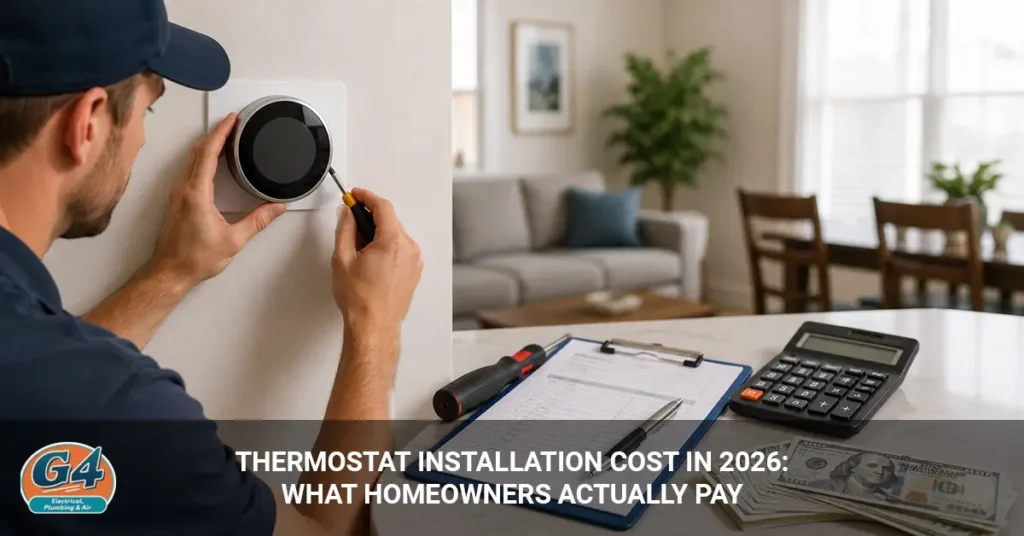
Thermostat installation typically costs between $150 and $650, with most homeowners spending $300 to $450 for a new thermostat and professional installation. The exact cost depends on the type of thermostat you choose, your HVAC system, wiring requirements, and local labor rates.
A thermostat may be small, but it has a big impact on your home’s comfort and energy bills. It controls when your heating and cooling system turns on and off, helping maintain a consistent indoor temperature throughout the year.
If you’re replacing an old thermostat or upgrading to a smart model, understanding the costs involved can help you choose the right option for your home and budget. While a basic thermostat replacement is usually inexpensive, smart thermostats and systems that require wiring upgrades can increase the total installation cost.
In this guide, you’ll learn what homeowners are paying for thermostat installation in 2026, what factors affect pricing, and whether upgrading to a smart thermostat is worth the investment. By the end, you’ll have a clear understanding of what to expect before scheduling your installation.
How Much Does Thermostat Installation Cost in 2026?
Thermostat installation costs between $150 and $650 for most homeowners, with the average project costing around $300 to $450. The final price depends on the type of thermostat, your HVAC system, wiring requirements, and local labor rates.
Basic thermostat replacements are usually the least expensive because they use existing wiring and require minimal labor. Smart thermostats and installations that need electrical upgrades, new wiring, or HVAC system modifications typically cost more.
The total price includes both the thermostat itself and professional installation.
| Installation Type | Average Cost |
| Manual Thermostat | $150–$250 |
| Programmable Thermostat | $200–$350 |
| Smart Thermostat | $250–$650 |
| Wi-Fi Thermostat | $250–$600 |
| Premium Smart Thermostat | $350–$800 |
While a manual thermostat may cost less upfront, many homeowners choose programmable or smart thermostats for better energy efficiency and improved temperature control.
How Much Does It Cost to Install a Thermostat?
The cost to install a thermostat ranges from $150 to $650, depending on the thermostat model and the complexity of the installation. Replacing an existing thermostat is typically less expensive because the necessary wiring is already in place.
If you’re upgrading to a smart thermostat, your HVAC technician may need to verify system compatibility, install a C-wire, or make wiring adjustments. These additional requirements can increase labor costs and the overall project price.
For most homes, thermostat installation is a relatively affordable upgrade that can improve comfort, enhance HVAC performance, and help reduce heating and cooling costs over time.
Thermostat Cost by Type
The type of thermostat you choose has the biggest impact on the total installation cost. Basic manual thermostats are the least expensive, while smart and zoning thermostats cost more because of their advanced features and installation requirements.
Before choosing a thermostat, it’s important to understand how each type affects both the equipment cost and the total installed price.
Manual Thermostat Cost
Manual thermostats are the most affordable option for homeowners. These basic thermostats allow you to adjust the temperature manually and do not include scheduling, Wi-Fi connectivity, or smart features.
The thermostat itself typically costs between $20 and $100, while the total installed cost usually ranges from $150 to $250. Manual thermostats are often a good choice for rental properties, older HVAC systems, or homeowners looking for a simple replacement.
Programmable Thermostat Cost
Programmable thermostats allow you to create heating and cooling schedules based on your daily routine. By automatically adjusting temperatures throughout the day, they can help reduce energy consumption and improve comfort.
Most programmable thermostats cost between $50 and $200, with total installation costs ranging from $200 to $350.
Smart Thermostat Cost
Smart thermostats connect to your home’s Wi-Fi network and allow you to control temperatures remotely using a smartphone, tablet, or voice assistant. Many models also provide energy reports, maintenance reminders, and smart home integration.
Most smart thermostat installations cost between $250 and $650, depending on the model and installation requirements.
Wi-Fi Thermostat Cost
Wi-Fi thermostats offer remote access and mobile app controls but may not include advanced learning technology found in premium smart thermostats. They provide a balance between convenience and affordability.
Homeowners typically pay between $250 and $600 for a Wi-Fi thermostat and professional installation.
Learning Thermostat Cost
Learning thermostats automatically adjust temperature settings based on your habits and preferences. Over time, they can optimize your heating and cooling schedule to improve efficiency without requiring manual programming.
These premium models generally cost more than standard smart thermostats, with total installation costs ranging from $300 to $800.
Zoned HVAC Thermostat Cost
Zoned HVAC systems use multiple thermostats to control temperatures in different areas of the home independently. Because these systems often require additional thermostats, sensors, and control panels, installation is more complex.
Most zoned thermostat installations cost between $500 and $2,000+, depending on the number of zones and system configuration.
| Thermostat Type | Device Cost | Installed Cost |
| Manual | $20–$100 | $150–$250 |
| Programmable | $50–$200 | $200–$350 |
| Smart | $100–$350 | $250–$650 |
| Learning | $200–$450 | $300–$800 |
| Zoned System | $300–$1,500+ | $500–$2,000+ |
For most homeowners, a programmable or smart thermostat provides the best balance of cost, convenience, and energy savings. While manual thermostats have the lowest upfront cost, smart thermostats often deliver greater long-term value through improved efficiency and better temperature control.
Smart Thermostat Installation Cost
Smart thermostat installation typically costs between $250 and $650, including the thermostat and professional installation. The final cost depends on the thermostat brand, features, HVAC system compatibility, and whether additional wiring or upgrades are needed.
Many homeowners choose smart thermostats because they offer more control over their heating and cooling system. Features such as remote access, automatic scheduling, energy usage reports, and smart home integration can improve comfort while helping reduce energy costs.
Although smart thermostats cost more upfront than basic models, they often provide long-term value through improved efficiency and convenience.
Nest Thermostat Installation Cost
Nest thermostats are among the most popular smart thermostats on the market. They offer features such as remote temperature control, energy-saving schedules, and compatibility with many smart home systems.
Most homeowners pay between $250 and $600 for a Nest thermostat and professional installation. The total cost varies based on the specific Nest model and whether any wiring upgrades are required.
Ecobee Thermostat Installation Cost
Ecobee thermostats are known for their smart sensors, occupancy detection, and advanced temperature management features. These thermostats can help improve comfort by monitoring conditions in multiple rooms throughout the home.
Most Ecobee thermostat installations cost between $300 and $650, including the thermostat and labor.
Honeywell Home Thermostat Installation Cost
Honeywell Home offers a wide range of thermostat options, from basic programmable models to advanced smart thermostats with Wi-Fi connectivity and voice control compatibility.
Depending on the model selected, installation costs typically range from $200 to $600.
Emerson Sensi Installation Cost
Emerson Sensi thermostats are popular because they are easy to use, energy-efficient, and compatible with many existing HVAC systems. Many homeowners choose Sensi models because they often require fewer installation modifications than some competing smart thermostats.
Most Emerson Sensi thermostat installations cost between $250 and $550.
Is a Smart Thermostat Worth the Cost?
For many homeowners, a smart thermostat is worth the investment because it can improve energy efficiency and reduce heating and cooling costs. Features like automatic scheduling, remote access, and occupancy-based temperature adjustments help prevent energy waste while maintaining comfort.
A smart thermostat may be especially beneficial if your household has a consistent daily schedule or if you frequently adjust temperatures while away from home. Over time, the potential energy savings can help offset the higher upfront cost, making a smart thermostat one of the most popular HVAC upgrades available today.
Thermostat Replacement Cost
Thermostat replacement typically costs between $150 and $500, making it one of the more affordable HVAC upgrades for homeowners. In most cases, replacing an existing thermostat costs less than installing a thermostat in a new location because the wiring is already in place and requires less labor.
The total cost depends on the type of thermostat being installed, the condition of the existing wiring, and whether your HVAC system requires additional modifications for compatibility.
Replacement vs New Installation
Replacing a thermostat is usually less expensive than a new thermostat installation. During a replacement, the technician removes the old thermostat and connects the new unit using the existing wiring and mounting location.
A new thermostat installation often requires additional work, such as running wires through walls, relocating the thermostat, installing a C-wire, or making electrical modifications. Because of these extra labor requirements, new installations generally cost more than simple replacements.
Cost to Replace a Faulty Thermostat
Replacing a faulty thermostat typically costs between $150 and $400, including the thermostat and professional installation. Basic thermostat replacements are usually on the lower end of the range, while smart thermostat upgrades cost more.
If the thermostat is causing HVAC performance issues, replacing it can often restore proper temperature control and improve overall system efficiency.
Signs You Need a New Thermostat
A failing thermostat can make your home less comfortable and force your HVAC system to work harder than necessary. If the thermostat is no longer communicating properly with your heating and cooling system, replacement may be the most effective solution.
Common signs that it’s time for a new thermostat include:
- Incorrect temperature readings
- HVAC system short cycling
- Blank, frozen, or unresponsive display
- Uneven temperatures throughout the home
- Unexpected increases in energy bills
- Heating or cooling system failing to turn on or off properly
- Frequent thermostat resets or programming issues
If you’re experiencing one or more of these problems, replacing the thermostat may improve comfort, reduce energy waste, and help your HVAC system operate more efficiently.
Labor Cost to Install a Thermostat
Professional thermostat installation labor typically costs between $75 and $250, depending on the complexity of the job and your location. Simple thermostat replacements usually require less time and labor, while smart thermostat installations, wiring upgrades, or HVAC compatibility issues can increase the overall cost.
Labor charges are often separate from the thermostat itself, so it’s important to understand what is included in your contractor’s estimate before scheduling the installation.
HVAC Contractor Rates
Most homeowners hire an HVAC technician to install a thermostat. HVAC contractors typically charge between $75 and $150 per hour or offer a flat-rate installation fee for straightforward thermostat replacements.
The final labor cost depends on factors such as thermostat type, HVAC system complexity, and whether any troubleshooting or configuration is required during installation.
Electrician Installation Costs
An electrician may be needed if your thermostat installation requires new wiring, electrical upgrades, or the addition of a C-wire. Electricians generally charge between $100 and $200 per hour, which can increase the overall project cost.
While not every thermostat installation requires an electrician, older homes and advanced smart thermostat installations sometimes need additional electrical work.
Emergency Installation Costs
Emergency thermostat installation usually costs more than a standard scheduled appointment. If your thermostat fails during extreme weather conditions or outside normal business hours, you may need urgent service to restore heating or cooling. See our full HVAC replacement cost guide to understand what a bigger repair or replacement might run you.
Most homeowners pay an additional $100 to $300 for emergency or after-hours installation services.
Same-Day Service Pricing
Many HVAC companies offer same-day thermostat installation for homeowners who need immediate service. While this option provides convenience and faster scheduling, expedited appointments may come with higher labor charges.
The added cost for same-day service varies by contractor, local demand, and technician availability. If the installation is not urgent, scheduling a standard appointment may help reduce labor expenses.
Factors That Affect Thermostat Installation Cost
Several factors can affect the total cost of thermostat installation, even when two homeowners choose the same thermostat model. The type of thermostat, condition of your wiring, HVAC system compatibility, and local labor rates all play a role in determining the final price.
Understanding these cost factors can help you estimate your budget more accurately before scheduling an installation.
Thermostat Type
The type of thermostat you choose has the biggest impact on installation costs. Basic manual thermostats are usually the least expensive to install because they require minimal setup and programming.
Smart thermostats, learning thermostats, and zoning controls often cost more because they may require additional wiring, configuration, and HVAC system integration.
Existing Wiring Condition
The condition of your existing thermostat wiring can significantly affect installation costs. If the wiring is damaged, outdated, or incompatible with the new thermostat, additional repairs or replacements may be necessary.
Homes with older HVAC systems often require more installation work than newer homes with modern wiring already in place.
C-Wire Requirements
Many smart thermostats require a common wire, commonly known as a C-wire, to provide continuous power. If your current system does not have a C-wire, an HVAC technician may need to install one or use a compatible power adapter.
Adding a C-wire can increase both labor and material costs, especially if new wiring must be run through walls.
HVAC System Compatibility
Not every thermostat works with every heating and cooling system. Heat pumps, dual-fuel systems, multi-stage furnaces, and other advanced HVAC systems often require thermostats designed specifically for those applications.
Compatibility issues may require a more expensive thermostat model or additional installation work. Read our guide on choosing the right HVAC system to make sure your equipment works together properly.
Multi-Zone Systems
Homes with multiple temperature zones typically require more than one thermostat and additional control equipment. Because these systems are more complex, installation costs are generally higher than those for standard single-zone systems.
The more zones your home has, the higher the installation cost is likely to be.
Home Age
Older homes often require additional electrical or wiring upgrades during thermostat installation. Existing wiring may not meet the requirements of modern smart thermostats, leading to extra labor and material costs.
In some cases, upgrading the wiring is necessary to ensure safe and reliable operation.
Local Labor Rates
Labor costs vary significantly by location. Homeowners in larger metropolitan areas or regions with higher living costs generally pay more for HVAC services than those in smaller towns or rural areas.
Getting multiple quotes from licensed HVAC contractors can help you compare pricing and find the best value for your thermostat installation project.
Thermostat Installation Cost by HVAC System
The type of HVAC system in your home can affect both thermostat compatibility and installation costs. While many thermostats work with standard heating and cooling systems, some HVAC setups require specialized thermostats, additional wiring, or more complex programming.
Before purchasing a thermostat, it’s important to confirm that it is compatible with your specific HVAC system.
Central Air Conditioning Systems
Central air conditioning systems are typically the easiest and least expensive systems for thermostat installation. Most modern manual, programmable, and smart thermostats are compatible with standard central AC systems.
In many cases, installation is straightforward because the necessary wiring is already in place, helping keep labor costs lower.
Furnace Systems
Gas and electric furnaces work with most thermostat types, including manual, programmable, and smart models. Replacing an existing thermostat on a furnace system is usually a simple process that requires minimal modifications.
For most homeowners, furnace thermostat installations fall within the standard installation cost range.
Heat Pumps
Heat pump systems often require thermostats specifically designed for heat pump operation. These thermostats must be able to manage heating, cooling, and auxiliary heat functions correctly.
Because of the additional setup and programming requirements, heat pump thermostat installations may cost slightly more than standard furnace or air conditioning systems.
Dual-Fuel HVAC Systems
Dual-fuel systems combine a heat pump with a gas furnace to maximize efficiency and comfort. These systems require advanced thermostat controls that can automatically switch between the heat pump and furnace based on outdoor temperatures and heating demand.
As a result, thermostat installation costs for dual-fuel systems are often higher than those for standard HVAC systems.
Multi-Zone HVAC Systems
Multi-zone HVAC systems are usually the most complex and expensive thermostat installations. These systems use multiple thermostats and control panels to manage temperatures independently in different areas of the home.
Because zoning systems require additional equipment, wiring, and configuration, installation costs can increase significantly compared to single-zone systems. However, the added control can improve comfort and help reduce energy waste in larger homes.
DIY vs Professional Thermostat Installation
Some homeowners can install a thermostat themselves, but professional installation is often the safer and more reliable option, especially for smart thermostats and complex HVAC systems. The right choice depends on your experience, the type of thermostat you’re installing, and your system’s wiring requirements.
While a simple thermostat replacement may be a manageable DIY project, more advanced installations can quickly become complicated and costly if mistakes are made.
When DIY Installation Makes Sense
DIY thermostat installation can be a good option if you’re replacing a basic thermostat with a similar model and the existing wiring is already in place. Many modern thermostats include step-by-step instructions that make installation relatively straightforward.
A DIY installation may make sense when:
- You’re replacing a standard thermostat
- Existing wiring is clearly labeled and in good condition
- Your HVAC system is compatible with the new thermostat
- No additional wiring or electrical upgrades are needed
- You’re comfortable working with low-voltage wiring
In these situations, installing a thermostat yourself may help reduce labor costs.
When to Hire a Professional
Professional installation is recommended when the thermostat or HVAC system requires additional setup, wiring, or programming. An experienced HVAC technician can ensure the thermostat is installed correctly and operating as intended.
Hiring a professional is often the best choice when:
- You’re installing a smart thermostat
- Your HVAC system has multiple heating or cooling stages
- A C-wire is required
- Wiring modifications are necessary
- You have a heat pump system
- Your home uses a zoning system
- You’re unsure about thermostat compatibility
Professional installation can help avoid costly mistakes and ensure your HVAC system operates efficiently.
Common DIY Installation Mistakes
Incorrect wiring is one of the most common thermostat installation mistakes. Even a small wiring error can prevent the thermostat from communicating properly with the HVAC system.
Other common problems include selecting the wrong thermostat settings, failing to verify system compatibility, and improperly connecting power wires. These issues can lead to performance problems and may require professional repairs.
Potential Risks of Incorrect Wiring
Improper thermostat installation can cause a variety of HVAC problems and potentially damage system components. What starts as a simple installation mistake can lead to costly repairs if the issue goes unnoticed.
Potential risks include:
- HVAC system malfunctions
- Short cycling
- Loss of heating or cooling
- Damaged control boards
- Blown fuses
- Reduced system efficiency
- Higher energy bills
For homeowners who are unsure about wiring or system compatibility, hiring a qualified HVAC professional is often the best investment. Professional installation helps ensure safe operation, proper performance, and long-term reliability.
Ways to Save Money on Thermostat Installation
You can save money on thermostat installation by choosing the right thermostat, taking advantage of rebates, and comparing quotes from local HVAC professionals. A little planning before installation can help reduce both upfront costs and long-term energy expenses.
The goal isn’t always to find the cheapest thermostat. Instead, focus on selecting a model that provides the features you need without paying for options you’ll rarely use.
Choose the Right Thermostat for Your Needs
Choosing the right thermostat is one of the easiest ways to avoid unnecessary costs. While premium smart thermostats offer advanced features, many homeowners can achieve excellent comfort and energy savings with a less expensive programmable or standard smart thermostat.
Before buying a thermostat, consider your HVAC system, daily schedule, and desired features. Paying for technology you won’t use can increase costs without providing additional value.
Look for Utility Rebates
Many utility companies offer rebates and incentives for energy-efficient thermostat upgrades. Smart thermostats often qualify for these programs because they can help reduce overall energy consumption.
Depending on your location and utility provider, rebates can lower your upfront costs and improve the overall return on your investment. Check with your local utility company before purchasing a new thermostat to see what programs are available.
Bundle HVAC Services
Scheduling thermostat installation alongside other HVAC services can often reduce labor costs. Many contractors charge a service call fee, and combining multiple services into one visit can help maximize value.
For example, installing a thermostat during a furnace repair, air conditioner service, or HVAC tune-up may cost less than scheduling a separate appointment.
Compare Multiple Quotes
Getting estimates from several HVAC contractors is one of the best ways to find competitive pricing. Labor rates, service fees, and installation costs can vary significantly between companies.
When comparing quotes, make sure each estimate includes the same scope of work so you can accurately evaluate pricing and services.
Install During Routine HVAC Maintenance
Installing a thermostat during your annual HVAC maintenance appointment can help reduce overall service costs. Use our HVAC maintenance checklist to make sure nothing gets missed during the visit. Since the technician is already on-site inspecting your heating and cooling system, adding a thermostat installation often requires less additional labor.
This approach can also help ensure the thermostat is properly configured and working efficiently with the rest of your HVAC equipment.
Is a New Thermostat Worth the Cost?
For most homeowners, a new thermostat is worth the cost because it can improve comfort, reduce energy waste, and help lower heating and cooling bills. Even though thermostat installation requires an upfront investment, the long-term benefits often outweigh the initial expense.
Whether you’re replacing an outdated thermostat or upgrading to a smart model, a modern thermostat can help your HVAC system operate more efficiently and maintain more consistent indoor temperatures.
Potential Energy Savings
A new thermostat can help reduce energy consumption by automatically adjusting temperatures based on your schedule and household needs. Programmable and smart thermostats eliminate much of the guesswork by making temperature changes throughout the day without requiring manual adjustments.
By reducing unnecessary heating and cooling, many homeowners see lower utility bills and improved HVAC efficiency over time. Find out what happens when you skip HVAC maintenance and how it affects your costs.
Improved Temperature Control
Modern thermostats provide more accurate temperature readings and better control over your home’s comfort. They can help eliminate common issues such as uneven temperatures, frequent system cycling, and rooms that feel too hot or too cold.
More precise temperature management allows your HVAC system to run more efficiently while keeping your home comfortable year-round.
Smart Home Integration Benefits
Many smart thermostats can connect with voice assistants, mobile apps, and home automation systems. This allows you to adjust temperatures remotely, create schedules, monitor energy usage, and control your HVAC system from virtually anywhere.
For homeowners already using smart home devices, a smart thermostat can add convenience while helping improve overall energy management.
Return on Investment
A new thermostat can often pay for itself through energy savings and improved HVAC performance. While the exact return on investment depends on your energy usage and thermostat type, homeowners upgrading from older manual thermostats typically see the greatest benefits.
In addition to lower utility bills, a modern thermostat can reduce strain on your heating and cooling equipment, potentially helping extend the lifespan of your HVAC system. For many households, this combination of comfort, efficiency, and savings makes a thermostat upgrade a worthwhile investment.
Frequently Asked Questions
How much does thermostat installation cost?
Thermostat installation typically costs between $150 and $650, with most homeowners spending $300 to $450 for a new thermostat and professional installation. The final cost depends on the thermostat type, wiring requirements, HVAC system compatibility, and local labor rates.
Can I install a thermostat myself?
Yes, some thermostats can be installed by homeowners, especially basic models that use existing wiring. However, professional installation is often recommended for smart thermostats, heat pump systems, zoning systems, and installations that require wiring modifications or a C-wire.
How long does thermostat installation take?
Most thermostat installations take between 30 minutes and 2 hours. Simple thermostat replacements are usually completed quickly, while smart thermostat installations or projects requiring wiring upgrades may take longer.
Do smart thermostats save money?
Yes, smart thermostats can help lower heating and cooling costs by automatically adjusting temperatures based on your schedule and preferences. By reducing unnecessary HVAC runtime, many homeowners experience lower energy bills and improved efficiency over time.
Does a thermostat need a C-wire?
Many smart thermostats require a C-wire (common wire) to provide continuous power. However, some thermostat models can operate without a C-wire by using power adapters, battery power, or alternative wiring configurations. An HVAC technician can determine whether your system requires a C-wire upgrade.
How often should a thermostat be replaced?
Most thermostats last between 10 and 15 years before replacement becomes necessary. You may need a new thermostat sooner if it becomes inaccurate, stops responding properly, causes HVAC performance issues, or isn’t compatible with newer heating and cooling equipment.
What is the best thermostat for a heat pump?
The best thermostat for a heat pump is one specifically designed to support heat pump operation and auxiliary heating functions. Many modern smart thermostats offer heat pump compatibility, but it’s important to verify compatibility with your specific HVAC system before purchasing a new thermostat.
Final Thoughts
Thermostat installation typically costs between $150 and $650, with the final price depending on the thermostat type, installation complexity, and your HVAC system. While a basic thermostat replacement is usually affordable, smart thermostats and zoning systems often require a larger upfront investment.
If your goal is to keep costs low, a programmable thermostat can provide reliable temperature control without many additional features. If you’re looking for greater convenience, improved energy efficiency, and remote access, a smart thermostat may offer better long-term value.
Before choosing a thermostat, make sure it’s compatible with your heating and cooling system. Taking the time to select the right model can help prevent installation issues and ensure your HVAC system operates efficiently.
For many homeowners, a thermostat upgrade is a simple way to improve comfort, reduce energy waste, and gain better control over indoor temperatures. Working with a qualified HVAC professional can help ensure the thermostat is installed correctly and delivers the best performance for your home.