

Furnace replacement costs in 2026 typically range from $3,500 to $15,000 or more, with most homeowners spending between $5,000 and $10,000 for a complete installation. The exact cost depends on the type of furnace, system size, efficiency rating, labor costs, and whether additional work is needed during installation.
If your furnace is no longer heating your home properly, breaking down frequently, or causing your energy bills to climb, replacing it may be a smarter investment than continuing to pay for repairs.
A new furnace is a significant expense, but it can also deliver long-term benefits. Modern furnaces are more energy efficient, operate more quietly, and provide more consistent heating than many older systems. In many homes, upgrading to a new furnace can lower heating costs, improve comfort, and reduce the likelihood of unexpected breakdowns during winter.
The good news is that furnace replacement costs can vary widely, giving homeowners options for different budgets. A basic replacement may cost only a few thousand dollars, while a high-efficiency system with advanced features can cost considerably more.
In this guide, you’ll learn what homeowners are actually paying for furnace replacement in 2026. We’ll break down furnace costs by type, size, efficiency level, home size, labor expenses, and other factors that influence pricing. You’ll also learn when replacement makes sense, how it compares to repair, and ways to reduce the overall cost of your project.
How Much Does a Furnace Replacement Cost in 2026?
Furnace replacement costs in 2026 typically range from $3,500 to $15,000 or more, with most homeowners spending between $5,000 and $10,000 for a complete replacement. The final cost depends on the furnace type, efficiency rating, system size, installation complexity, and any additional work required during the project.
| Furnace Type | Average Replacement Cost |
| Basic Furnace | $3,500–$6,500 |
| Mid-Range Furnace | $6,500–$10,000 |
| High-Efficiency Furnace | $10,000–$15,000+ |
A basic furnace typically includes standard-efficiency equipment and a straightforward installation. These systems have the lowest upfront cost, making them a popular choice for homeowners working with a limited budget. However, they may use more energy than higher-efficiency models.
Mid-range furnaces generally offer the best balance between cost and performance. Many homeowners choose these systems because they provide improved energy efficiency, better comfort, and lower heating bills without the higher price tag of premium models.
High-efficiency furnaces have the highest upfront cost but can deliver significant long-term energy savings. Many include advanced features such as variable-speed blower motors, multi-stage burners, improved humidity control, and smart thermostat compatibility. These systems are especially attractive in colder climates where heating costs are a major concern.
Several factors can affect the total replacement cost, including furnace size, fuel type, efficiency rating, labor rates, ductwork condition, venting requirements, and permit fees. Because every home has different heating needs, actual costs can vary considerably from one project to another.
Furnace Replacement Cost at a Glance
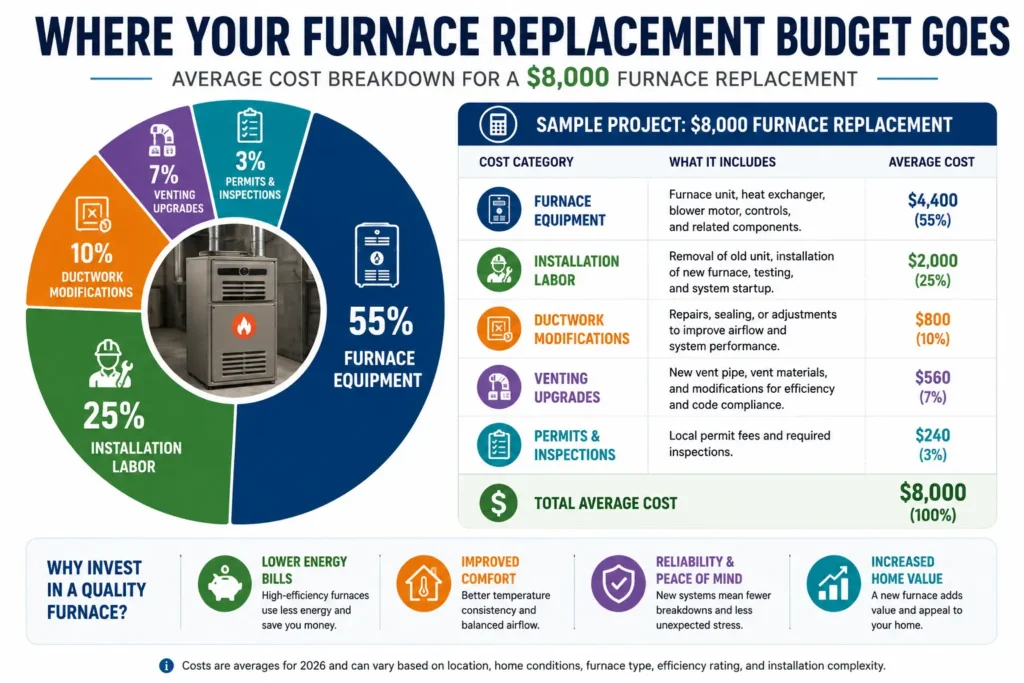
The total cost of replacing a furnace typically ranges from $3,500 to $15,000 or more, depending on the equipment, labor, and any additional upgrades required during installation. While the furnace itself is usually the largest expense, other costs can significantly affect the final price.
| Cost Category | Average Cost |
| Furnace Equipment | $2,500–$8,000 |
| Installation Labor | $1,500–$5,000 |
| Ductwork Modifications | $1,000–$5,000 |
| Smart Thermostat | $150–$700 |
| Venting Upgrades | $500–$3,000 |
| Permit Fees | $100–$500 |
| Total Installed Cost | $3,500–$15,000+ |
Furnace equipment usually represents the largest portion of the project cost. Larger furnaces and high-efficiency models generally cost more than standard systems because they include more advanced components and technology.
Installation labor is another major expense. Labor costs depend on the complexity of the installation, the condition of the existing system, and local labor rates. A properly installed furnace can improve efficiency, increase reliability, and help prevent future problems.
Ductwork modifications may be necessary if existing ducts are damaged, leaking, or improperly sized. Addressing these issues during replacement can improve airflow and overall heating performance.
Many homeowners also choose to install a smart thermostat when replacing a furnace. While this adds to the upfront cost, it can improve comfort and help reduce energy consumption.
Venting upgrades are sometimes required, especially when upgrading to a high-efficiency furnace. New venting systems help ensure safe operation and compliance with local building codes.
Permit fees are typically one of the smallest costs in the project, but they are often required by local municipalities to ensure the installation meets safety and code requirements.
Understanding these costs can make it easier to compare contractor estimates and build a realistic budget before replacing your furnace.
Furnace Replacement Cost by Furnace Type
Furnace replacement costs typically range from $3,500 to $12,500 or more, depending on the type of furnace you choose. The fuel source, equipment cost, energy efficiency, and installation requirements all affect the final price.
For many homeowners, choosing the right furnace type is one of the most important decisions because it affects both upfront costs and long-term heating expenses.
Gas Furnace Replacement Cost
Gas furnace replacement typically costs $4,500 to $12,000 installed. Gas furnaces are the most common heating systems in the United States because they provide reliable heat and relatively affordable operating costs.
Most gas furnace replacement projects include the furnace equipment, installation labor, venting connections, gas line connections, and thermostat setup.
Pros of Gas Furnaces
- Lower heating costs than electric furnaces in many areas
- Fast and consistent heating
- Widely available fuel source
- Long lifespan with proper maintenance
Cons of Gas Furnaces
- Requires natural gas service
- Higher installation costs than some electric systems
- Requires venting and combustion safety inspections
Many homeowners choose gas furnaces because they offer a strong combination of comfort, efficiency, and long-term value.
Electric Furnace Replacement Cost
Electric furnace replacement typically costs $3,500 to $8,500 installed. These systems generate heat using electric heating elements rather than burning fuel.
Electric furnaces are commonly installed in homes without natural gas service and in regions with milder winters.
Pros of Electric Furnaces
- Lower upfront installation cost
- No gas lines required
- Simple system design
- Lower maintenance requirements
Cons of Electric Furnaces
- Higher monthly heating costs in many areas
- Slower heating performance than gas furnaces
- Increased electricity usage during winter
Although electric furnaces are often less expensive to install, they may cost more to operate over time.
Oil Furnace Replacement Cost
Oil furnace replacement typically costs $6,000 to $12,500 installed. These systems are most commonly found in areas where natural gas service is unavailable.
Oil furnaces produce strong heat output, making them effective for homes located in colder climates.
Pros of Oil Furnaces
- Powerful heating performance
- Effective in very cold weather
- Suitable for homes without natural gas service
Cons of Oil Furnaces
- Higher fuel costs
- Requires a fuel storage tank
- More maintenance than gas furnaces
- Fuel delivery scheduling is required
Because fuel prices can fluctuate, some homeowners choose to replace older oil furnaces with gas or heat pump systems when possible.
Propane Furnace Replacement Cost
Propane furnace replacement typically costs $4,500 to $11,000 installed. These systems operate similarly to natural gas furnaces but use propane stored in an outdoor tank.
Propane furnaces are a popular option in rural areas where natural gas lines are not available.
Pros of Propane Furnaces
- Strong heating performance
- High-efficiency models available
- Works well in cold climates
- Suitable for remote locations
Cons of Propane Furnaces
- Requires propane storage tanks
- Fuel prices can fluctuate
- Ongoing fuel deliveries are needed
Many homeowners choose propane furnaces because they provide dependable heating without requiring access to a natural gas utility line.
Furnace Replacement Cost by Furnace Type
| Furnace Type | Average Replacement Cost |
| Electric Furnace | $3,500–$8,500 |
| Gas Furnace | $4,500–$12,000 |
| Propane Furnace | $4,500–$11,000 |
| Oil Furnace | $6,000–$12,500 |
The best furnace type depends on your home’s fuel availability, local energy costs, climate, and budget. While electric furnaces often have the lowest upfront installation costs, gas and propane furnaces typically offer lower operating costs in colder regions. Oil furnaces remain a practical option for some homes, but fuel and maintenance costs are often higher than those of other heating systems.
Furnace Replacement Cost by Furnace Size
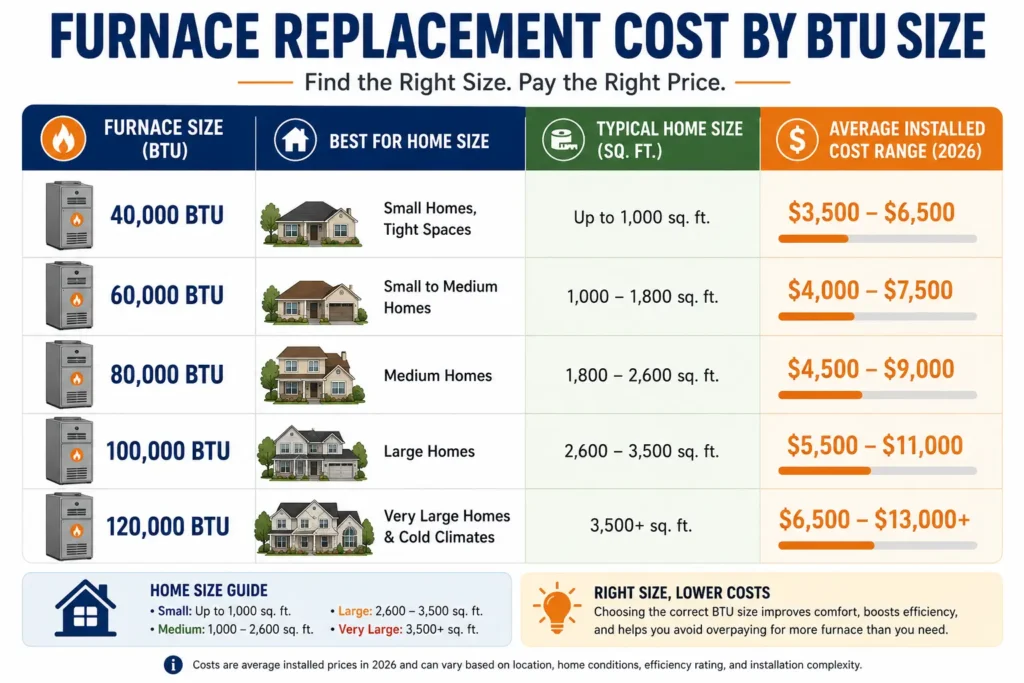
Furnace replacement costs typically range from $3,500 to $13,000 or more, depending on the size of the furnace. Larger furnaces cost more because they provide greater heating capacity, require larger components, and often involve higher installation costs.
Choosing the right furnace size is important. A furnace that is too small may struggle to heat your home, while an oversized furnace can cycle on and off too frequently, reducing efficiency and comfort.
40,000 BTU Furnace Cost
A 40,000 BTU furnace replacement typically costs $3,500 to $6,500 installed. This size is commonly used in smaller homes, apartments, condos, and well-insulated living spaces.
Many homes under 1,000 square feet can be heated effectively with a 40,000 BTU furnace, although climate and insulation levels should also be considered.
60,000 BTU Furnace Cost
A 60,000 BTU furnace replacement typically costs $4,000 to $7,500 installed. This is one of the most common furnace sizes for residential properties.
Many homes between 1,000 and 1,500 square feet use a 60,000 BTU furnace because it provides reliable heating without excessive energy consumption.
80,000 BTU Furnace Cost
An 80,000 BTU furnace replacement typically costs $4,500 to $9,000 installed. Homes between 1,500 and 2,500 square feet often require this level of heating capacity.
This size is popular because it offers a strong balance between performance, efficiency, and operating costs.
100,000 BTU Furnace Cost
A 100,000 BTU furnace replacement typically costs $5,500 to $11,000 installed. Larger homes and properties located in colder climates often require a furnace of this size.
The final cost may increase if ductwork modifications, venting upgrades, or electrical improvements are necessary.
120,000 BTU Furnace Cost
A 120,000 BTU furnace replacement typically costs $6,500 to $13,000 or more installed. These furnaces are generally used in large homes, multi-story properties, and homes located in areas with long, cold winters.
Because of their higher heating output, these systems typically have the highest equipment and installation costs.
Furnace Replacement Cost by Furnace Size
| Furnace Size | Average Installed Cost |
| 40,000 BTU | $3,500–$6,500 |
| 60,000 BTU | $4,000–$7,500 |
| 80,000 BTU | $4,500–$9,000 |
| 100,000 BTU | $5,500–$11,000 |
| 120,000 BTU | $6,500–$13,000+ |
While furnace size plays a major role in replacement costs, it should never be selected based on square footage alone. Climate, insulation quality, ceiling height, window efficiency, sun exposure, and home layout all affect heating requirements.
A professional load calculation is the best way to determine the proper furnace size for your home. Correct sizing helps maximize comfort, improve energy efficiency, and extend the lifespan of your new heating system.
Furnace Replacement Cost by Home Size
Furnace replacement costs typically range from $3,500 to $15,000 or more, depending on the size of your home and the heating capacity required. In general, larger homes need larger furnaces, which increases both equipment and installation costs.
Home size is a useful starting point when estimating replacement costs, but it is not the only factor that matters. Climate, insulation levels, ceiling height, window efficiency, and home layout can all affect the size of the furnace your home needs.
Furnace Replacement Cost for a 1,000 Sq Ft Home
Replacing a furnace in a 1,000-square-foot home typically costs $3,500 to $6,500 installed. Most homes of this size require a 40,000 to 60,000 BTU furnace.
Because smaller homes need less heating capacity, equipment and installation costs are usually lower.
Furnace Replacement Cost for a 1,500 Sq Ft Home
A furnace replacement for a 1,500-square-foot home typically costs $4,000 to $8,000 installed. Many homes in this size range use a 60,000 to 80,000 BTU furnace.
The final cost depends on the furnace type, efficiency rating, and any installation upgrades that may be required.
Furnace Replacement Cost for a 2,000 Sq Ft Home
Replacing a furnace in a 2,000-square-foot home generally costs $4,500 to $9,500 installed. An 80,000 BTU furnace is often suitable for homes of this size, although actual heating requirements vary.
Choosing a higher-efficiency furnace may increase upfront costs but can help lower heating bills over time.
Furnace Replacement Cost for a 2,500 Sq Ft Home
A furnace replacement for a 2,500-square-foot home typically costs $5,000 to $10,500 installed. Many homes in this range require an 80,000 to 100,000 BTU furnace.
Factors such as ductwork condition, installation complexity, and furnace efficiency can affect the final price.
Furnace Replacement Cost for a 3,000 Sq Ft Home
Replacing a furnace in a 3,000-square-foot home generally costs $6,000 to $12,000 installed. Larger homes often require higher-capacity furnaces to maintain comfortable temperatures throughout the property.
Additional zoning systems or ductwork modifications can further increase costs.
Furnace Replacement Cost for a 4,000 Sq Ft Home
A furnace replacement for a 4,000-square-foot home typically costs $7,000 to $15,000 or more installed. Large homes often require 100,000 to 120,000 BTU furnaces or multiple heating zones to provide consistent heating.
The final cost depends on the home’s layout, heating needs, and equipment selection.
Furnace Replacement Cost by Home Size
| Home Size | Average Furnace Cost |
| 1,000 Sq Ft | $3,500–$6,500 |
| 1,500 Sq Ft | $4,000–$8,000 |
| 2,000 Sq Ft | $4,500–$9,500 |
| 2,500 Sq Ft | $5,000–$10,500 |
| 3,000 Sq Ft | $6,000–$12,000 |
| 4,000 Sq Ft | $7,000–$15,000+ |
While home size can help estimate furnace replacement costs, it should never be the only factor used when selecting a new system. A professional load calculation evaluates your home’s insulation, windows, climate, and overall heating requirements to determine the correct furnace size. Proper sizing helps improve comfort, maximize efficiency, and reduce long-term operating costs.
Furnace Replacement Cost by Efficiency Rating
Furnace replacement costs typically range from $3,500 to $15,000 or more, depending on the furnace’s efficiency rating. Higher-efficiency furnaces cost more upfront, but they can lower heating bills and reduce energy consumption over the life of the system.
When comparing furnace options, it’s important to look beyond the purchase price and consider the potential long-term savings.
Standard-Efficiency Furnaces (80% AFUE)
A standard-efficiency furnace with an 80% AFUE rating typically costs $3,500 to $7,000 installed. This means approximately 80% of the fuel consumed is converted into heat, while the remaining 20% is lost through the exhaust system.
Many homeowners choose standard-efficiency furnaces because they:
- Have lower upfront costs
- Require simpler venting systems
- Are widely available
- Provide dependable heating performance
These systems are often installed in areas with shorter or milder heating seasons where energy savings may not justify the higher cost of a premium model.
Mid-Efficiency Furnaces (90%–95% AFUE)
Mid-efficiency furnaces typically cost $5,000 to $10,000 installed. These furnaces provide a strong balance between affordability and energy savings.
Many homeowners choose this efficiency range because it offers:
- Lower heating costs than standard-efficiency models
- Improved fuel efficiency
- Better long-term value
- Reduced energy consumption
For many households, a mid-efficiency furnace provides the best combination of performance and cost-effectiveness.
High-Efficiency Furnaces (96%–98% AFUE)
High-efficiency furnaces typically cost $7,500 to $15,000 or more installed. These systems are designed to maximize energy efficiency and minimize fuel waste.
Many high-efficiency furnaces include advanced features such as:
- Variable-speed blower motors
- Two-stage or modulating burners
- Advanced comfort controls
- Improved humidity management
- Smart thermostat compatibility
Because these furnaces convert nearly all fuel into usable heat, they can significantly reduce heating expenses, especially in colder climates where furnaces run for extended periods.
Furnace Cost by Efficiency Rating
| Efficiency Rating | Average Installed Cost |
| 80% AFUE | $3,500–$7,000 |
| 90%–95% AFUE | $5,000–$10,000 |
| 96%–98% AFUE | $7,500–$15,000+ |
The best efficiency level depends on your budget, local fuel costs, climate, and how long you plan to stay in your home. While high-efficiency furnaces require a larger upfront investment, the lower operating costs can make them a worthwhile choice for many homeowners over the long term.
Furnace Replacement Labor Costs
Furnace replacement labor typically costs $1,500 to $5,000 or more, depending on the complexity of the installation, local labor rates, and any additional work required. In many cases, labor accounts for a significant portion of the total furnace replacement cost.
A properly installed furnace can improve efficiency, reduce future repair costs, and help the system last longer.
| Labor Service | Average Cost |
| Standard Installation | $1,500–$3,000 |
| Complex Installation | $3,000–$5,000+ |
| Ductwork Modifications | $1,000–$5,000 |
| Venting Upgrades | $500–$3,000 |
| Permit Fees | $100–$500 |
Standard Furnace Installation Cost
Standard furnace installation typically costs $1,500 to $3,000. This applies to straightforward replacement projects where the existing ductwork, gas lines, electrical connections, and venting systems can be reused without major modifications.
Most homeowners fall into this category when replacing an older furnace with a similar system.
Complex Furnace Installation Cost
Complex furnace installations generally cost $3,000 to $5,000 or more. Additional labor is often required when contractors must modify existing systems or address installation challenges.
Common factors that increase labor costs include:
- Attic installations
- Crawl space installations
- Limited equipment access
- Multi-story homes
- Major system upgrades
- Furnace relocation
These projects typically require more time, materials, and labor than a standard replacement.
Ductwork Modification Costs
Ductwork modifications typically cost $1,000 to $5,000. Existing ducts may need repairs, sealing, resizing, or replacement to ensure the new furnace operates efficiently.
Improving ductwork can help:
- Increase system efficiency
- Improve airflow
- Reduce energy loss
- Enhance indoor comfort
- Eliminate hot and cold spots
Addressing ductwork issues during furnace replacement can often improve overall system performance.
Venting Upgrade Costs
Venting upgrades generally cost $500 to $3,000. New high-efficiency furnaces often require different venting systems than older models.
Venting work may include:
- New exhaust piping
- Condensate drainage systems
- Vent relocation
- Code-compliance upgrades
The amount of work required depends on the furnace type and the condition of the existing venting system.
Permit and Inspection Fees
Permit and inspection fees typically range from $100 to $500. Many local building departments require permits to ensure furnace installations meet current safety codes and manufacturer requirements.
Some HVAC contractors include permit fees in their estimates, while others list them separately.
Why Professional Installation Matters
Professional installation is critical for safety, efficiency, and long-term reliability. Even the best furnace can experience performance problems if it is not installed correctly.
Proper installation helps:
- Maximize energy efficiency
- Maintain manufacturer warranty coverage
- Improve heating performance
- Reduce breakdown risks
- Extend furnace lifespan
When comparing furnace replacement estimates, look beyond the equipment price and carefully review what is included in the labor portion of the quote. A quality installation often provides greater long-term value than simply choosing the lowest bid.
What Factors Affect Furnace Replacement Costs?
Furnace replacement costs can vary widely because every home has different heating needs, installation requirements, and equipment choices. Factors such as furnace type, system size, efficiency rating, labor costs, and the condition of your home’s existing heating system can all affect the final price.
Furnace Type
The type of furnace you choose is one of the biggest factors affecting replacement costs. Gas, electric, oil, and propane furnaces all have different equipment prices, installation requirements, and long-term operating costs.
For example, electric furnaces often have lower installation costs, while gas furnaces may offer lower heating costs over time.
Furnace Size
Larger furnaces typically cost more because they require greater heating capacity and larger components. The correct furnace size depends on factors such as home size, insulation quality, climate, and ceiling height.
Proper sizing is important because an undersized furnace may struggle to heat your home, while an oversized system can reduce efficiency and increase wear and tear.
Efficiency Rating
Higher-efficiency furnaces generally cost more upfront but can reduce monthly heating expenses. Furnaces with higher AFUE ratings convert more fuel into usable heat, which means less energy is wasted.
Many homeowners choose high-efficiency systems because the long-term energy savings can help offset the higher initial investment.
Brand Selection
Furnace costs vary by manufacturer. Premium brands often charge more for their equipment, but they may offer advanced features, stronger warranties, and higher efficiency ratings.
The right brand depends on your budget, performance expectations, and long-term goals.
Ductwork Condition
The condition of your existing ductwork can have a major impact on replacement costs. Damaged, leaking, or improperly sized ducts may require repairs or replacement before a new furnace is installed.
Improving ductwork can increase efficiency, improve airflow, and help your new furnace perform at its best.
Venting Requirements
Different furnaces have different venting requirements. High-efficiency models often require new vent pipes, condensate drainage systems, or other upgrades that can increase installation costs.
The amount of venting work needed depends on the furnace type and the condition of the existing system.
Electrical Upgrades
Some furnace replacements require electrical improvements to meet current building codes or support new equipment.
Common upgrades include:
- New wiring
- Circuit breaker upgrades
- Disconnect switches
- Electrical panel modifications
These upgrades can add several hundred or even several thousand dollars to the project cost.
Local Labor Rates
Labor costs vary significantly by location. Homeowners in larger cities and areas with a higher cost of living often pay more for furnace installation than those in smaller communities.
Contractor demand and labor availability can also influence pricing.
Permit Requirements
Most furnace replacement projects require permits and inspections. Permit fees vary by municipality and are designed to ensure the installation meets local building and safety codes.
Some contractors include permit costs in their estimates, while others charge them separately.
Seasonal Demand
The time of year can also affect furnace replacement costs. HVAC contractors are typically busiest during the winter months when heating systems are more likely to fail.
Replacing a furnace during the spring or fall may provide access to better pricing, faster scheduling, and seasonal promotions.
Understanding these factors can help you compare furnace replacement estimates more effectively and determine which costs are necessary for your specific project. While some factors are unavoidable, others can be managed through careful planning and equipment selection.
Furnace Replacement Cost by Brand
Furnace replacement costs typically range from $4,000 to $15,000 or more, depending on the brand, furnace size, efficiency rating, and installation requirements. While some brands charge more for advanced features and premium warranties, proper installation often has a greater impact on long-term performance than the brand name alone.
When comparing furnace brands, it’s important to consider warranty coverage, efficiency ratings, reliability, and total installation costs—not just the equipment price.
Carrier Furnace Cost
Carrier furnace replacement typically costs $6,000 to $14,000 installed. Carrier is known for producing high-quality heating systems with advanced technology, strong efficiency ratings, and reliable performance.
Many homeowners choose Carrier because of its reputation for durability and long-term value.
Trane Furnace Cost
Trane furnace replacement generally costs $6,500 to $15,000 installed. Trane furnaces are known for their durability, dependable operation, and strong warranty options.
Although Trane systems often cost more upfront, many homeowners view them as a long-term investment due to their reliability.
Lennox Furnace Cost
Lennox furnace replacement typically costs $6,000 to $15,000 installed. Lennox offers some of the most energy-efficient residential furnaces available, making the brand popular among homeowners looking to reduce heating costs.
Many Lennox models feature advanced comfort controls and high AFUE ratings.
Goodman Furnace Cost
Goodman furnace replacement generally costs $4,000 to $9,000 installed. Goodman is often considered one of the most budget-friendly furnace brands while still offering dependable performance and solid warranty coverage.
For homeowners focused on affordability, Goodman often provides excellent value.
Rheem Furnace Cost
Rheem furnace replacement typically costs $4,500 to $10,500 installed. Rheem furnaces are known for dependable performance, competitive pricing, and a wide selection of efficiency options.
Many homeowners choose Rheem because it balances cost, efficiency, and reliability.
American Standard Furnace Cost
American Standard furnace replacement usually costs $5,000 to $12,000 installed. These systems are recognized for durable construction, strong performance, and good efficiency ratings.
Many homeowners consider American Standard a premium-quality brand that offers excellent long-term reliability.
York Furnace Cost
York furnace replacement typically costs $4,500 to $10,500 installed. York offers a broad range of furnace models designed for different budgets and efficiency needs.
The brand provides both entry-level and high-efficiency options, making it a popular choice for many homeowners.
Furnace Brand Cost Comparison
| Brand | Average Installed Cost |
| Carrier | $6,000–$14,000 |
| Trane | $6,500–$15,000 |
| Lennox | $6,000–$15,000 |
| Goodman | $4,000–$9,000 |
| Rheem | $4,500–$10,500 |
| American Standard | $5,000–$12,000 |
| York | $4,500–$10,500 |
The best furnace brand depends on your budget, efficiency goals, warranty preferences, and local contractor support. A quality installation from an experienced HVAC contractor is often just as important as the brand you choose, and it can have a significant impact on the system’s performance, efficiency, and lifespan.
Additional Costs to Consider
The total cost of replacing a furnace often includes more than just the furnace itself. Additional upgrades, repairs, and installation requirements can add hundreds or even thousands of dollars to the project.
Understanding these potential costs can help you build a more accurate budget and avoid unexpected expenses during installation.
Ductwork Replacement Cost
Ductwork replacement typically costs $2,000 to $8,000. If your existing ducts are leaking, damaged, poorly designed, or too small for the new furnace, replacement may be necessary.
New ductwork can provide several benefits, including:
- Improved airflow
- Better energy efficiency
- More consistent temperatures
- Enhanced indoor comfort
In some homes, upgrading the ductwork can significantly improve the performance of a new furnace.
Smart Thermostat Installation Cost
Smart thermostat installation generally costs $150 to $700. These devices allow homeowners to control heating settings remotely using a smartphone, tablet, or voice assistant.
Many smart thermostats also offer:
- Energy-saving schedules
- Usage reports
- Learning capabilities
- Smart home integration
While not required, a smart thermostat can help improve comfort and reduce heating costs.
Air Filtration System Cost
Whole-home air filtration systems typically cost $500 to $3,000 or more installed. These systems help improve indoor air quality by capturing dust, pollen, pet dander, and other airborne particles.
Many homeowners choose to add an air filtration system when replacing a furnace because installation is often easier and more cost-effective during the replacement process.
Venting System Upgrades
Venting upgrades typically cost $500 to $3,000. High-efficiency furnaces often require different venting materials and configurations than older systems.
Venting improvements may include:
- New exhaust piping
- Condensate drainage systems
- Vent relocation
- Code-compliance upgrades
The amount of work required depends on the furnace type and the condition of the existing venting system.
Electrical Panel Upgrade Costs
Electrical panel upgrades generally cost $1,000 to $4,000. Older homes may need panel improvements to safely support new HVAC equipment and comply with current electrical codes.
Although not every project requires an electrical upgrade, it can significantly increase the overall replacement cost when needed.
Permit and Inspection Fees
Permit and inspection fees usually range from $100 to $500. Local governments often require permits to ensure the furnace installation meets current safety and building standards.
Before signing a contract, ask whether permit fees are included in the contractor’s estimate or billed separately.
Additional Furnace Replacement Costs at a Glance
| Additional Expense | Average Cost |
| Ductwork Replacement | $2,000–$8,000 |
| Smart Thermostat | $150–$700 |
| Air Filtration System | $500–$3,000+ |
| Venting Upgrades | $500–$3,000 |
| Electrical Panel Upgrades | $1,000–$4,000 |
| Permit and Inspection Fees | $100–$500 |
These additional expenses are not required for every furnace replacement project, but they can have a significant impact on the final cost. Reviewing your home’s ductwork, electrical system, and ventilation setup before installation can help you identify potential upgrades and avoid surprises once the project begins.
Signs You Need a New Furnace
You may need a new furnace if your current system is more than 15 years old, breaks down frequently, struggles to heat your home, or causes your energy bills to increase. While many furnace issues can be repaired, there comes a point when replacement becomes the more practical and cost-effective solution.
If your furnace is showing several of the warning signs below, it may be time to consider upgrading to a new system.
The Furnace Is More Than 15–20 Years Old
Most furnaces last between 15 and 20 years with proper maintenance. As a furnace ages, its efficiency typically declines and the risk of breakdowns increases.
Even if an older furnace is still running, replacing it with a newer high-efficiency model can improve comfort, reduce energy consumption, and lower heating costs.
Frequent Repairs
Occasional repairs are normal, but repeated service calls can become expensive over time. If you’re paying for repairs every heating season, replacing the furnace may save money in the long run.
This is especially true when major components begin to fail or repair costs continue to increase.
Rising Heating Bills
A steady increase in heating costs is often a sign that your furnace is losing efficiency. Older systems usually need more energy to produce the same amount of heat.
If your utility bills keep rising despite similar heating habits, your furnace may no longer be operating efficiently.
Uneven Heating
Hot and cold spots throughout your home can indicate that your furnace is struggling to distribute heat properly.
While ductwork problems can sometimes cause uneven temperatures, an aging furnace may also have difficulty keeping your entire home comfortable.
Strange Noises
Furnaces should operate relatively quietly. Loud banging, rattling, squealing, humming, or grinding noises often indicate worn parts or mechanical problems.
Persistent noises can be a sign that the system is approaching the end of its lifespan. Learn more about the causes of a furnace making a loud noise.
Excessive Dust
If you notice more dust collecting around your home than usual, your furnace may not be filtering air effectively.
A newer furnace with improved filtration can help improve indoor air quality and reduce airborne dust and allergens.
Yellow Burner Flame
A properly functioning gas furnace should produce a blue flame. A yellow burner flame can indicate combustion problems, ventilation issues, or burner malfunctions.
Because combustion issues can create safety risks, a yellow flame should be inspected by an HVAC professional as soon as possible. A yellow flame is also one of several unsafe furnace signs homeowners should never ignore.
Reduced Heating Performance
If your furnace runs for long periods but still struggles to maintain comfortable temperatures, it may be losing heating capacity.
Aging components, declining efficiency, and normal wear and tear can all contribute to reduced performance.
If your system won’t start at all, review the common causes of a furnace not turning on.
When Is Furnace Replacement the Better Choice?
Replacing a furnace often makes more sense when the system is older, inefficient, and experiencing multiple problems at the same time.
Replacement may be the better option if:
- The furnace is more than 15 years old
- Repair costs are increasing
- Breakdowns are becoming more frequent
- Heating bills continue to rise
- Comfort problems persist
- Major components have failed
A new furnace can provide more reliable heating, lower energy costs, improved comfort, and fewer repair expenses. While replacement requires a larger upfront investment, it often delivers better long-term value than continuing to repair an aging system.
Furnace Replacement vs Furnace Repair
Furnace repair is usually the better choice for newer systems with minor issues, while replacement often makes more sense for older furnaces with frequent breakdowns, declining efficiency, or expensive repair needs. The right decision depends on the furnace’s age, repair costs, overall condition, and expected remaining lifespan.
Compare the costs of repairing versus replacing an HVAC system before making a final decision. Although repairing a furnace typically costs less upfront, replacing an aging system can provide better long-term value through lower energy bills, fewer repairs, and improved reliability.
When Furnace Repair Makes Sense
Repairing a furnace is often the most cost-effective option when the system still has many years of useful life remaining and the repair is relatively minor.
Newer Systems
If your furnace is less than 10 years old, repairing it is usually the best choice. Newer systems generally have a longer remaining lifespan and can often be restored to normal operation without a major investment.
In many cases, a simple repair can keep a newer furnace running efficiently for years.
Minor Repairs
Small repairs are often far less expensive than replacing the entire system.
Common examples include:
- Thermostat replacement
- Ignitor replacement
- Flame sensor replacement
- Capacitor replacement
- Blower component repairs
When repair costs are reasonable, fixing the problem is usually the smarter financial decision.
Warranty Coverage
If your furnace is still covered by a manufacturer or labor warranty, repair costs may be significantly reduced.
Warranty coverage can make repairing a relatively new furnace much more affordable than replacing it.
When Furnace Replacement Makes Sense
Replacing a furnace often becomes the better investment when repair costs continue to rise or the system is approaching the end of its expected lifespan.
Aging Equipment
Most furnaces last between 15 and 20 years. As they age, they typically become less efficient and more prone to breakdowns.
Once a furnace reaches this age range, replacement often provides better long-term value than continued repairs.
Major Component Failures
Major furnace repairs can be expensive, especially when critical components fail.
Examples include:
- Heat exchanger replacement
- Blower motor replacement
- Control board replacement
- Draft inducer motor replacement
For older systems, investing thousands of dollars in major repairs may not be the most practical option.
Frequent Repairs
If your furnace requires repairs every year or experiences repeated breakdowns, replacement may save money over time.
A new furnace can eliminate recurring repair expenses and provide greater reliability during the heating season.
High Energy Bills
Older furnaces often consume significantly more energy than modern high-efficiency systems. If heating costs continue to increase, upgrading to a new furnace may reduce monthly utility bills and improve overall comfort.
The $5,000 Rule
The $5,000 Rule is a simple guideline that can help homeowners decide whether repairing or replacing a furnace makes more financial sense.
Multiply the repair cost by the age of the furnace:
Repair Cost × Furnace Age
If the result is greater than 5,000, replacement is often the better long-term investment.
For example:
- Repair Cost: $700
- Furnace Age: 10 Years
Result:
700 \times 10 = 7000
Because the result is greater than 5,000, replacing the furnace may provide better long-term value than investing in a major repair.
The $5,000 Rule is not a strict requirement, but it can be a useful starting point when evaluating repair decisions.
Which Option Is Best?
If your furnace is relatively new, covered by warranty, and only needs a minor repair, fixing the system is usually the most economical choice.
However, if the furnace is older, inefficient, requires frequent repairs, or has experienced a major component failure, replacement often provides better long-term savings and reliability.
A professional HVAC inspection can help determine whether repairing or replacing your furnace is the most cost-effective decision for your home.
How to Save Money on Furnace Replacement
You can reduce furnace replacement costs by comparing quotes, replacing your system at the right time, taking advantage of rebates, and choosing equipment that fits your home’s needs. A little planning before installation can save hundreds or even thousands of dollars.
Following a regular HVAC maintenance checklist can help extend system life and delay costly replacements.
Get Multiple Quotes
Getting estimates from several licensed HVAC contractors is one of the easiest ways to save money on furnace replacement.
Comparing quotes helps you:
- Identify fair pricing
- Compare warranty coverage
- Evaluate equipment options
- Review installation details
- Avoid overpaying for labor
Try to obtain at least three written estimates before making a final decision.
Replace During the Off-Season
Replacing a furnace during the spring or fall can often reduce installation costs. HVAC companies are generally less busy during these seasons, which may result in better pricing, special promotions, and more scheduling flexibility.
Waiting until your furnace fails during the middle of winter can limit your options and increase costs.
Look for Rebates and Tax Credits
Many utility providers, manufacturers, and government programs offer rebates or tax incentives for qualifying high-efficiency furnaces.
These programs can help lower your upfront investment and improve the overall value of your new heating system.
Before purchasing a furnace, ask your contractor about available rebates and energy-efficiency incentives in your area.
Choose the Right Efficiency Level
Higher-efficiency furnaces can lower heating bills, but they also cost more upfront. The most expensive furnace is not always the best choice for every homeowner.
Before choosing an efficiency level, consider:
- Local energy prices
- Climate conditions
- Length of home ownership
- Available rebates and incentives
- Expected energy savings
Selecting the right balance between upfront cost and long-term savings can help maximize your return on investment.
Consider Financing Options
Many HVAC contractors offer financing programs that allow homeowners to spread replacement costs over time.
Financing can make it easier to purchase a higher-quality or more efficient furnace without paying the full amount upfront.
Before choosing a financing option, review:
- Interest rates
- Monthly payments
- Repayment terms
- Total borrowing costs
Understanding the financing details can help you avoid unnecessary expenses.
Maintain Existing Ductwork
If your ductwork is in good condition, maintaining and sealing it can help avoid expensive replacement costs.
A professional duct inspection can identify small problems before they become major repairs. Addressing minor leaks or airflow issues early can save money and improve the performance of your new furnace.
Plan Ahead Whenever Possible
One of the best ways to save money is to replace your furnace before it fails completely. Planning ahead gives you more time to compare contractors, evaluate equipment options, and take advantage of seasonal discounts.
Emergency replacements often limit your choices and may result in higher installation costs.
By comparing estimates, choosing the right equipment, and exploring available incentives, homeowners can significantly reduce furnace replacement costs while still investing in a reliable, energy-efficient heating system.
Questions to Ask Before Hiring a Furnace Contractor
Choosing the right furnace contractor is just as important as choosing the right furnace. A quality installation can improve efficiency, extend equipment lifespan, and help prevent costly problems in the future.
Before signing a contract, ask the following questions to make sure you’re hiring a qualified professional and getting the best value for your investment.
Are You Licensed and Insured?
A furnace contractor should be properly licensed and insured before performing any work in your home.
Licensing helps confirm that the contractor meets local requirements and industry standards, while insurance protects you if an accident or property damage occurs during the installation.
Always ask for proof of both licensing and insurance before moving forward with a project.
What Warranty Is Included?
Warranty coverage can vary significantly between contractors and manufacturers.
Ask about:
- Manufacturer equipment warranty
- Labor warranty
- Parts warranty
- Extended warranty options
Understanding what is covered can help reduce future repair costs and provide peace of mind after installation.
Are Permits Included?
Many furnace replacement projects require permits and inspections to comply with local building codes.
Before approving a quote, ask:
- Are permit fees included?
- Are inspection fees included?
- Who is responsible for obtaining permits?
Clarifying these details upfront can help prevent unexpected charges later.
Will You Inspect Existing Ductwork?
Your furnace can only perform as well as the ductwork connected to it.
Damaged, leaking, or improperly sized ducts can reduce efficiency, increase energy bills, and create comfort issues throughout the home.
A reputable contractor should inspect the duct system and recommend any necessary repairs before installing new equipment.
Do You Perform Load Calculations?
A professional load calculation helps determine the correct furnace size for your home.
Contractors who recommend equipment based only on square footage may not be providing the most accurate sizing recommendation.
Proper sizing can help:
- Improve comfort
- Lower energy costs
- Increase efficiency
- Extend equipment lifespan
A Manual J load calculation is considered the industry standard for sizing residential heating systems.
What Efficiency Rating Do You Recommend?
Ask why a particular AFUE efficiency rating is being recommended for your home.
A knowledgeable contractor should explain:
- Expected energy savings
- Upfront cost differences
- Climate considerations
- Available rebates and incentives
- Long-term operating costs
This information can help you choose a furnace that fits both your budget and heating needs.
Why Asking These Questions Matters
Taking the time to ask these questions can help you compare contractors more effectively and avoid costly mistakes.
A qualified furnace contractor should be willing to explain their recommendations, provide clear pricing, and answer questions about installation, warranties, and system performance. Doing your research before hiring can help ensure a smooth installation and reliable heating for years to come.
Frequently Asked Questions
How much does a furnace replacement cost in 2026?
Furnace replacement costs in 2026 typically range from $3,500 to $15,000 or more, with most homeowners spending between $5,000 and $10,000 for a complete installation. The final cost depends on the furnace type, size, efficiency rating, labor costs, and any additional upgrades required.
How long does a furnace replacement take?
Most furnace replacements can be completed in one day. However, projects that involve ductwork modifications, venting upgrades, electrical work, or equipment relocation may take two to three days.
Is it worth replacing a 20-year-old furnace?
In many cases, yes. A 20-year-old furnace is usually near or beyond its expected lifespan and may be significantly less efficient than modern systems. Replacing an older furnace can reduce energy costs, improve comfort, and help avoid expensive repairs.
What size furnace do I need?
The right furnace size depends on your home’s square footage, insulation levels, ceiling height, window efficiency, climate, and layout. A professional load calculation is the most accurate way to determine the correct furnace size and avoid efficiency or comfort problems.
What is the most efficient furnace available?
Some of the most efficient residential furnaces available today achieve 98% AFUE ratings. These high-efficiency systems convert nearly all fuel into usable heat, helping reduce energy waste and lower heating bills.
Can I replace a furnace without replacing the AC?
Yes, you can replace a furnace without replacing the air conditioner in many situations. However, if both systems are older, replacing them together may improve efficiency, compatibility, and overall system performance.
If you’re considering a complete system upgrade, learn how to choose the right HVAC system for your home.
Does homeowners insurance cover furnace replacement?
Homeowners insurance may cover furnace replacement if the damage results from a covered event such as fire, lightning, storms, or other sudden accidents. Normal wear and tear, aging equipment, and mechanical failures are generally not covered.
How long does a furnace last?
Most furnaces last between 15 and 20 years when properly maintained. Regular filter changes, annual inspections, and routine maintenance can help extend the lifespan of the system and maintain its efficiency.
Should I repair or replace my furnace?
Repairing a furnace is usually the better option for newer systems with minor issues. Replacement often makes more sense when the furnace is more than 15 years old, requires frequent repairs, or has major component failures.
Does a new furnace lower energy bills?
Yes. A new high-efficiency furnace can significantly reduce heating costs compared to an older system. Many homeowners notice lower energy bills, improved comfort, and more consistent heating after replacing an outdated furnace.
Final Thoughts
Furnace replacement costs in 2026 typically range from $3,500 to $15,000 or more, with most homeowners spending between $5,000 and $10,000 for a professionally installed system. The final cost depends on several factors, including the furnace type, size, efficiency rating, installation complexity, labor rates, and any additional upgrades required.
While replacing a furnace is a major investment, it can deliver significant long-term benefits. A new furnace can improve home comfort, reduce energy consumption, lower monthly heating bills, and help eliminate the stress of frequent repairs and unexpected breakdowns.
When comparing furnace replacement options, focus on more than just the lowest price. The quality of the installation, the efficiency of the equipment, warranty coverage, and the contractor’s experience can all affect the long-term performance of your heating system.
Before moving forward, get multiple quotes, review available rebates and incentives, compare efficiency ratings, and make sure your contractor performs a professional load calculation. These steps can help you choose the right furnace for your home and avoid costly mistakes.
A properly sized and professionally installed furnace can provide reliable, energy-efficient heating for 15 to 20 years or more, helping keep your home comfortable while maximizing the value of your investment.