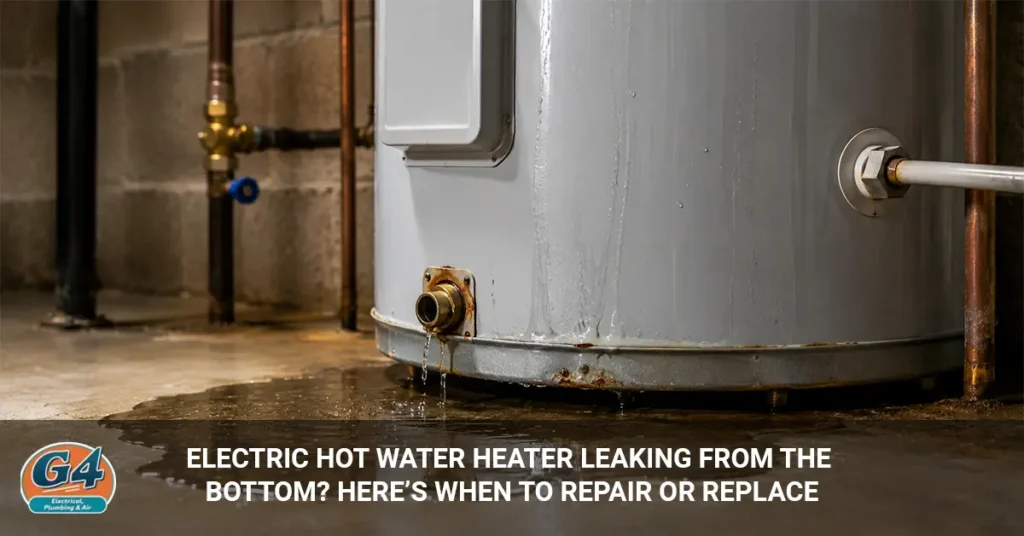
An electric water heater leaking from the bottom can mean anything from a small repair issue to serious tank failure. Some leaks are easy to fix, while others are a sign that the entire water heater needs replacement before major water damage happens.
Many homeowners first notice small puddles forming around the bottom of the tank. Sometimes the leak comes from a loose valve, condensation, or a worn connection. In more serious cases, the inside of the tank may be rusting and starting to fail.
Because electric water heaters combine water and electricity, even a small leak should never be ignored. Water around the unit can damage flooring, create mold problems, and increase electrical safety risks if the leak continues.
Understanding what causes a water heater to leak from the bottom can help homeowners know when a simple repair is enough and when replacing the system is the safer long-term choice.
Is a Water Heater Leaking From the Bottom Serious?
Yes, a water heater leaking from the bottom can become a serious problem if the leak is not repaired quickly. Some leaks are minor and repairable, but others may be a sign of internal tank damage or failing components inside the system.
Even a small leak can damage flooring, walls, and nearby materials if water continues collecting around the heater. In electric water heaters, leaking water can also create electrical safety risks near wiring and electrical connections.
Water heater leaks usually get worse over time, especially if corrosion or internal tank damage is involved. Finding the source of the leak early can help homeowners avoid expensive water damage, sudden tank failure, or complete water heater replacement.
Common Causes of an Electric Water Heater Leaking From the Bottom
Several different problems can cause water to collect around the bottom of an electric water heater. Some leaks are minor and easy to repair, while others may point to serious tank damage.
Drain Valve Leaks
A leaking drain valve is one of the most common reasons water appears near the bottom of a water heater. The drain valve sits near the base of the tank and is used to flush sediment during maintenance.
Over time, the valve may loosen, wear out, or start dripping slowly. Even a small drip can create noticeable puddles around the heater over time.
In many cases, a leaking drain valve can be repaired or replaced without needing to install a completely new water heater.
Condensation Buildup
Sometimes water around the bottom of the heater is caused by condensation instead of an actual leak. Heavy hot water use, high indoor humidity, or cold water entering the tank can create moisture on the outside of the unit.
This moisture may drip down the tank and collect near the bottom, making it look like the water heater is leaking. Condensation is usually harmless, but excessive moisture should still be inspected to make sure another problem is not being overlooked.
Pressure Relief Valve Problems
The temperature and pressure relief valve protects the water heater by releasing excess pressure from inside the tank. If the tank overheats or pressure rises too high, the valve may release small amounts of water.
A faulty relief valve can also leak continuously, causing water to collect around the bottom of the heater. In many cases, replacing the valve can solve the problem.
Loose Plumbing Connections
Loose plumbing fittings or water supply connections can allow water to drip down the side of the tank and pool near the bottom.
Because water often travels before dripping, the actual source of the leak may be higher than where the water is collecting. A professional inspection can help locate the exact connection causing the problem.
Heating Element Gasket Leaks
Electric water heaters use heating elements sealed with rubber gaskets to prevent leaks. Over time, these gaskets can wear out, loosen, or crack.
When this happens, water may leak around the heating element area and run down the side of the tank. These leaks are often repairable if they are caught early.
Internal Tank Corrosion
Internal tank corrosion is one of the most serious causes of water heater leaks. Over time, the inside of the tank can rust and weaken until small cracks or holes begin forming.
Once the tank itself starts leaking, repairs are usually only temporary. In most cases, full water heater replacement becomes the safest and most reliable long-term solution.
Signs Your Water Heater Needs Immediate Attention
Several warning signs can indicate serious water heater problems that should not be ignored. Catching these issues early may help prevent major water damage, sudden tank failure, or expensive emergency repairs.
Pooling water around the heater is one of the most obvious signs that something is leaking or failing inside the system. Rust-colored hot water may also point to corrosion developing inside the tank.
Inconsistent hot water, such as water turning cold too quickly, can signal failing heating elements or internal tank problems. Rumbling or popping noises often happen when sediment builds up inside the tank and affects heating performance.
Visible rust or corrosion on the outside of the tank is another warning sign that the system may be nearing the end of its lifespan. Water heaters that are more than 10 years old are also more likely to develop leaks and internal damage.
If several of these warning signs appear at the same time, the water heater may be approaching complete failure and should be inspected by a professional as soon as possible.
Rust-colored water, leaks, and inconsistent heating are often early signs your water heater is failing and may indicate the unit is nearing replacement.
When a Water Heater Leak Can Be Repaired
Some electric water heater leaks can be repaired if the problem is caused by external parts or small plumbing issues instead of internal tank damage. Early repairs can often stop the leak before it becomes more serious.
Leaks caused by loose drain valves, small plumbing connection problems, faulty pressure relief valves, or worn heating element gaskets are usually repairable without replacing the entire system.
In many cases, replacing a damaged valve or tightening a loose connection is enough to stop the leak and restore normal operation.
Repairs are usually more successful when the tank itself is still in good condition and corrosion has not started spreading inside the water heater.
When You Should Replace the Water Heater
Water heater replacement is usually necessary when the tank itself starts leaking or severe corrosion develops inside the system. Once the internal tank fails, repairs are often temporary and the leak will usually continue getting worse.
Replacement is often the better long-term option when the tank is leaking internally, corrosion has spread throughout the unit, repairs are becoming frequent, or the water heater is more than 10 years old.
Older water heaters also tend to lose energy efficiency over time, which can increase utility bills and reduce heating performance.
In many cases, replacing the system early can help homeowners avoid sudden tank failure, major water damage, and emergency plumbing costs later.
Most systems become more vulnerable to leaks and corrosion as they approach the end of the typical water heater lifespan.
Can a Leaking Electric Water Heater Be Dangerous?
Yes, a leaking electric water heater can become dangerous if water reaches electrical wiring, outlets, or internal electrical components. Water and electricity together can create serious safety risks inside the home.
Leaks can also damage flooring, walls, and nearby materials if water continues spreading around the heater. Over time, excess moisture may lead to mold growth and structural water damage.
If electrical parts become wet, there is also a risk of electrical shock, damaged wiring, or short circuits inside the system.
Because of these safety concerns, a leaking electric water heater should be inspected and repaired as quickly as possible.
In some cases, leaking systems may also lead to complete hot water failure. Here are some common water heater problems and fixes homeowners should know.
What to Do if Your Water Heater Is Leaking
If your electric water heater is leaking, taking quick action can help reduce water damage and improve safety inside the home. Acting early may also help prevent the leak from getting worse.
- Turn Off Power to the Heater: Turn off the power to the water heater at the circuit breaker before inspecting the unit. This helps reduce the risk of electrical shock if water reaches electrical components.
- Shut Off the Water Supply: Closing the cold water supply valve can help stop additional water from entering the tank and slow the leak.
- Avoid Touching Electrical Components: Do not touch wet wiring, electrical connections, or exposed electrical parts around the heater. Water near electricity can create serious safety hazards.
- Clean Standing Water Safely: Removing standing water around the heater may help reduce flooring damage, mold growth, and slipping hazards inside the home.
- Contact a Professional Plumber: A licensed plumber can inspect the water heater safely, locate the source of the leak, and determine whether repair or replacement is the best solution.
How Plumbers Diagnose Water Heater Leaks
Plumbers use several inspection methods to find the exact source of a water heater leak. A proper inspection helps determine whether the problem can be repaired or if the system needs replacement.
During the inspection, plumbers usually check the outside of the tank, plumbing connections, drain valves, heating element gaskets, and pressure relief valves for visible signs of leaking.
They also look for rust, corrosion, sediment buildup, loose fittings, and signs of internal tank damage that may be causing water to collect around the bottom of the heater.
By identifying the exact source of the leak, plumbers can recommend the safest and most cost-effective repair or replacement solution.
Repair vs Replacement Cost Comparison
Water heater repair is usually less expensive when the leak comes from valves, fittings, or other replaceable parts. Minor repairs can often stop the leak quickly without needing to replace the entire system.
However, replacement is often the better long-term investment when the tank is old, corrosion is severe, repairs are happening frequently, or the system has become less energy efficient.
Older water heaters may continue developing new problems even after repairs are completed. In those cases, ongoing repair costs can add up quickly over time.
Although replacing the water heater costs more upfront, newer systems are often more energy efficient, reliable, and less likely to develop major leaks in the near future.
How to Prevent Future Water Heater Leaks
Regular maintenance can help reduce the risk of water heater leaks and extend the lifespan of the system. Small maintenance steps often help prevent corrosion, sediment buildup, and worn components from turning into major problems.
Homeowners can help prevent future leaks by flushing the tank regularly to remove sediment that collects inside the heater over time. Inspecting valves, fittings, and plumbing connections can also help catch small leaks before they become worse.
Replacing worn anode rods is another important step because the anode rod helps protect the inside of the tank from rust and corrosion.
Scheduling annual professional maintenance can help identify hidden problems early and keep the system operating more efficiently.
Replacing an aging water heater before major failure happens can also help homeowners avoid sudden leaks, water damage, and emergency replacement costs.
How Long Do Electric Water Heaters Last?
Most electric water heaters last between 8 and 12 years, depending on maintenance, water quality, and daily usage. Systems that receive regular maintenance often last longer and perform more efficiently over time.
Hard water, heavy sediment buildup, and poor maintenance can shorten the lifespan of the water heater significantly. As sediment collects inside the tank, the system may work harder to heat water and become more vulnerable to damage.
As water heaters get older, corrosion, leaks, and heating problems become more common. If a unit is approaching or exceeding 10 years old, homeowners should watch closely for signs of wear or declining performance.
When to Call an Emergency Plumber
You should call an emergency plumber immediately if your water heater is leaking heavily or creating safety risks inside the home. Fast action can help prevent serious water damage and reduce the chance of electrical hazards.
Heavy leaking, visible electrical risks, complete loss of hot water, major tank corrosion, or rapidly spreading water damage are all signs that the problem may be urgent.
If water is reaching electrical wiring or outlets near the heater, avoid touching the area and shut off power to the unit if it is safe to do so.
Quick professional service can help limit property damage, improve safety, and prevent the water heater from failing completely.
Final Thoughts
An electric water heater leaking from the bottom should never be ignored because even a small leak can turn into major water damage or electrical safety problems over time.
Some leaks are simple to repair when the issue involves loose valves, plumbing fittings, or worn heating element gaskets. However, leaks caused by internal tank corrosion usually mean the water heater needs replacement to prevent larger problems later.
Having the system inspected early by a professional can help homeowners avoid expensive repairs, reduce water damage, and restore safe, reliable hot water before the situation becomes more serious.