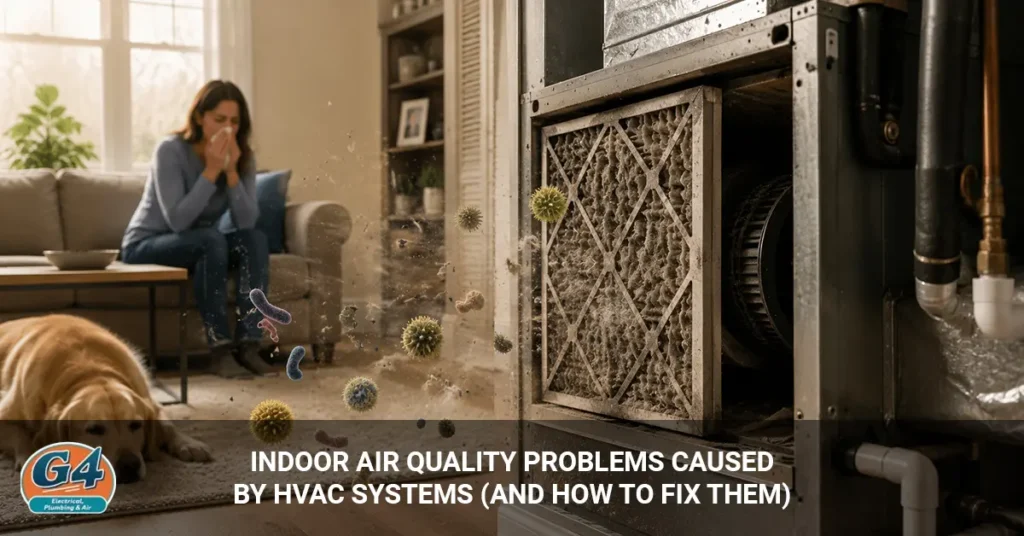
HVAC systems can lower indoor air quality when they spread dust, allergens, moisture, or poor airflow throughout the home. Problems like dirty filters, mold growth, leaky ducts, and poor ventilation can all affect the air you breathe every day.
Poor indoor air quality can make your home feel dusty, stuffy, humid, or uncomfortable. Many homeowners notice allergy symptoms, musty odors, excess dust, or uneven airflow without realizing the HVAC system may be part of the problem.
Your heating and cooling system circulates air through the entire house. If the system is dirty, poorly maintained, or has airflow issues, it can continue spreading airborne contaminants from room to room.
The good news is that many HVAC-related indoor air quality problems can be improved with proper maintenance, better airflow, and professional inspections.
How HVAC Systems Affect Indoor Air Quality
HVAC systems affect indoor air quality by controlling how air moves, circulates, and ventilates throughout your home. When the system works properly, it helps keep indoor air cleaner and more comfortable. When problems develop, the HVAC system can spread dust, allergens, moisture, and other airborne pollutants.
Air filters, ductwork, vents, and airflow balance all play an important role in indoor air quality. If filters become dirty or ducts develop buildup, airborne particles can circulate through the home more easily.
Poor ventilation can also make indoor air quality worse. Without enough fresh airflow, pollutants and stale air can become trapped inside the house and continue building up over time.
Dirty Air Filters Reduce Air Quality
Dirty air filters can lower indoor air quality by restricting airflow and allowing dust and allergens to circulate through your home. When HVAC filters become clogged, the system cannot move air as efficiently as it should.
Over time, dirty filters may spread dust, pet dander, pollen, and other airborne particles through the vents. This can make indoor air feel dusty and may worsen allergy symptoms for some homeowners.
Restricted airflow can also make rooms feel stuffy or uncomfortable because the HVAC system struggles to circulate air properly.
Replacing HVAC filters regularly is one of the simplest and most effective ways to improve indoor air quality and maintain better airflow throughout the home.
Mold Growth Inside HVAC Systems
Mold inside HVAC systems can spread mold spores through the air and create serious indoor air quality problems. Moisture buildup inside the system is usually the main reason mold starts growing.
Condensation around evaporator coils, clogged drain lines, and high indoor humidity can create damp areas where mold grows easily. Once mold develops inside the HVAC system or ductwork, the airflow can spread spores throughout the home every time the system runs.
Homeowners often notice musty odors from vents, damp indoor air, worsening allergy symptoms, or visible mold around air registers and vents.
If mold is growing inside the HVAC system, professional inspection and cleaning are usually necessary to remove the contamination and improve indoor air quality.
Dirty Air Ducts and Dust Buildup
Dirty air ducts can spread dust and debris throughout your home every time the HVAC system runs. Over time, buildup inside the ductwork may reduce airflow and make indoor air feel less clean.
Excess dust inside air ducts can contribute to dust collecting on furniture, dirty vent covers, increased allergens, and uneven airflow in certain rooms. Homes with pets, recent remodeling projects, or long periods without HVAC maintenance often experience more dust buildup inside the system.
Not every home needs professional duct cleaning, but heavy dust accumulation inside the ductwork can affect indoor comfort and airflow quality. If dust problems continue even after changing filters and cleaning vents, a professional HVAC inspection may help identify the cause.
Poor Ventilation and Stale Indoor Air
Poor ventilation can make indoor air feel stale, stuffy, and uncomfortable because pollutants become trapped inside the home. Without enough fresh airflow, indoor contaminants continue building up over time.
Modern homes are often tightly sealed to improve energy efficiency, but limited ventilation can reduce air circulation and make indoor air quality worse. When fresh outdoor air cannot move through the home properly, cooking odors, cleaning fumes, moisture, and airborne particles may stay trapped indoors.
Ventilation problems often become more noticeable during very hot or cold weather when windows remain closed for long periods. This can make rooms feel heavy, humid, or less comfortable even when the HVAC system is running.
High Indoor Humidity Levels
High indoor humidity can make your home feel damp, sticky, and uncomfortable even when the air conditioner is running. Excess moisture in the air can also increase the risk of mold growth and indoor air quality problems.
Your HVAC system helps remove humidity from the air during the cooling process. However, airflow problems, poor ventilation, or oversized AC systems can reduce the system’s ability to control indoor moisture properly.
When humidity levels stay too high, homeowners may notice condensation on windows, musty odors, damp indoor air, or mold growth in certain areas of the home.
Keeping indoor humidity at a healthy level helps improve comfort, supports better airflow, and reduces indoor air quality problems.
Low Humidity Problems During Winter
Low humidity during winter can make indoor air feel dry and uncomfortable. When indoor moisture levels drop too low, it can affect both comfort and indoor air quality.
Dry indoor air may irritate the skin, eyes, nose, and throat. Many homeowners also notice dry coughs, irritated sinuses, and increased static electricity during colder months.
Heating systems can sometimes make the problem worse by removing moisture from the air while warming the home. As a result, indoor air may feel dry for long periods during winter.
Humidifiers and proper HVAC humidity control can help maintain healthier moisture levels and improve indoor comfort during cold weather.
HVAC Systems Can Spread Allergens
HVAC systems can spread allergens throughout your home when filters, ducts, or vents become dirty. Every time the system runs, airborne particles can circulate from room to room through the airflow system.
Common indoor allergens include pet dander, dust mites, pollen, and mold spores. If these particles build up inside the HVAC system, they may continue spreading through the air you breathe every day.
People with allergies or asthma often notice stronger symptoms when indoor air quality becomes poor. Sneezing, coughing, congestion, and irritated eyes may become more noticeable indoors, especially when the HVAC system is running frequently.
Regular HVAC maintenance, clean air filters, and proper airflow can help reduce allergen buildup and improve indoor air quality.
Leaky Ductwork Can Pull in Contaminated Air
Leaky ductwork can reduce indoor air quality by pulling contaminated air into your HVAC system. Instead of circulating clean indoor air, damaged ducts may draw in dust, humidity, and airborne particles from unconditioned spaces.
This problem is especially common in attics, crawl spaces, and basements, where return ducts may develop leaks over time. When that happens, the HVAC system can pull in attic dust, humid air, insulation particles, and other outdoor contaminants.
Once the contaminated air enters the system, it can spread throughout the home during heating and cooling cycles. This may lead to dust buildup, musty odors, poor airflow, and worsening allergy symptoms indoors.
Sealing leaking ducts can help improve indoor air quality and prevent polluted air from entering the HVAC system.
Signs Your HVAC System May Be Affecting Indoor Air Quality
Your HVAC system may be affecting indoor air quality if you notice dust buildup, musty odors, poor airflow, or worsening allergy symptoms inside your home. These problems often develop slowly, so many homeowners do not realize the HVAC system is contributing to the issue.
One common warning sign is excess dust collecting around vents, furniture, or surfaces shortly after cleaning. Some homeowners also notice allergy symptoms becoming worse indoors, especially when the heating or cooling system is running.
Musty smells coming from vents can point to moisture or mold problems inside the HVAC system or ductwork. Uneven airflow, stuffy rooms, and high indoor humidity may also indicate ventilation or airflow issues. Weak airflow from AC vents is often a sign that your HVAC system is struggling to circulate air properly.
Frequent HVAC cycling can be another sign that the system is struggling to maintain proper airflow and indoor comfort. If several of these problems happen at the same time, a professional HVAC inspection may help identify the cause.
Health Symptoms Linked to Poor Indoor Air Quality
Poor indoor air quality can affect your comfort, sleep, and overall health, especially when you spend long periods indoors. Airborne pollutants, dust, mold, and poor ventilation can all contribute to physical symptoms inside the home.
Many people experience headaches, fatigue, sneezing, coughing, dry eyes, or respiratory irritation when indoor air quality becomes poor. Some symptoms may improve after leaving the house and returning indoors.
People with asthma, allergies, or other respiratory conditions are often more sensitive to airborne contaminants and poor airflow. Dust, pet dander, mold spores, and excess humidity can make symptoms feel worse over time.
Improving airflow, ventilation, humidity control, and HVAC maintenance can help reduce indoor air quality problems and create a healthier indoor environment.
How to Improve Indoor Air Quality With Your HVAC System
Improving indoor air quality starts with keeping your HVAC system clean, properly maintained, and moving air efficiently throughout the home. Good airflow and balanced humidity levels help create healthier and more comfortable indoor air.
One of the most important steps is replacing HVAC filters regularly. Clean filters help trap dust, allergens, and airborne particles before they circulate through the home.
Professional HVAC maintenance can also help identify airflow restrictions, moisture problems, and dirty system components that may affect air quality. Following a regular HVAC maintenance checklist can help improve airflow and maintain cleaner indoor air.
In some homes, duct cleaning or duct sealing may improve airflow and reduce airborne contaminants inside the duct system. Improving ventilation and controlling indoor humidity can also help indoor air feel fresher and less stuffy.
Some homeowners install advanced air filtration systems or UV air purification systems to help reduce airborne particles, bacteria, and mold-related contaminants inside the HVAC system.
Importance of HVAC Maintenance for Clean Indoor Air
Regular HVAC maintenance helps keep indoor air cleaner by improving airflow and reducing dust, moisture, and airborne contaminants inside the system. A well-maintained HVAC system is less likely to develop problems that affect indoor air quality.
Routine maintenance can help improve airflow efficiency, reduce dust circulation, prevent mold growth, and support healthier indoor air throughout the home. It can also reduce strain on the HVAC system and help extend the lifespan of heating and cooling equipment.
Small problems like dirty filters, clogged drain lines, or restricted airflow can quickly turn into larger indoor air quality issues if they are ignored for too long.
Professional HVAC inspections and regular maintenance help identify these problems early before they affect comfort, airflow, and indoor air quality. Knowing how often to service your HVAC system can help prevent many common indoor air quality problems.
When to Call an HVAC Professional
You should call an HVAC professional if indoor air quality problems continue even after changing filters and performing basic maintenance. Ongoing airflow issues, musty odors, humidity problems, or worsening allergy symptoms may indicate deeper problems inside the HVAC system.
Mold concerns, excess dust, weak airflow, high indoor humidity, persistent odors, and uneven temperatures are all common warning signs that the system may need professional inspection.
An HVAC technician can inspect the ductwork, airflow, ventilation, and system components to identify hidden problems affecting indoor air quality. They can also recommend repairs, cleaning, airflow adjustments, or filtration upgrades to help improve comfort and create healthier indoor air.
Final Thoughts
HVAC systems have a major impact on indoor air quality because they control airflow, ventilation, humidity, and air circulation throughout your home. When the system becomes dirty, damaged, or poorly maintained, indoor air quality can decline quickly.
Problems like dirty filters, mold growth, poor ventilation, leaky ducts, and restricted airflow can all affect the air you breathe every day. Over time, these issues may lead to dust buildup, uncomfortable humidity levels, odors, and worsening allergy symptoms indoors.
Regular HVAC maintenance, proper air filtration, balanced airflow, and professional inspections can help improve indoor comfort and maintain cleaner, healthier indoor air throughout your home.