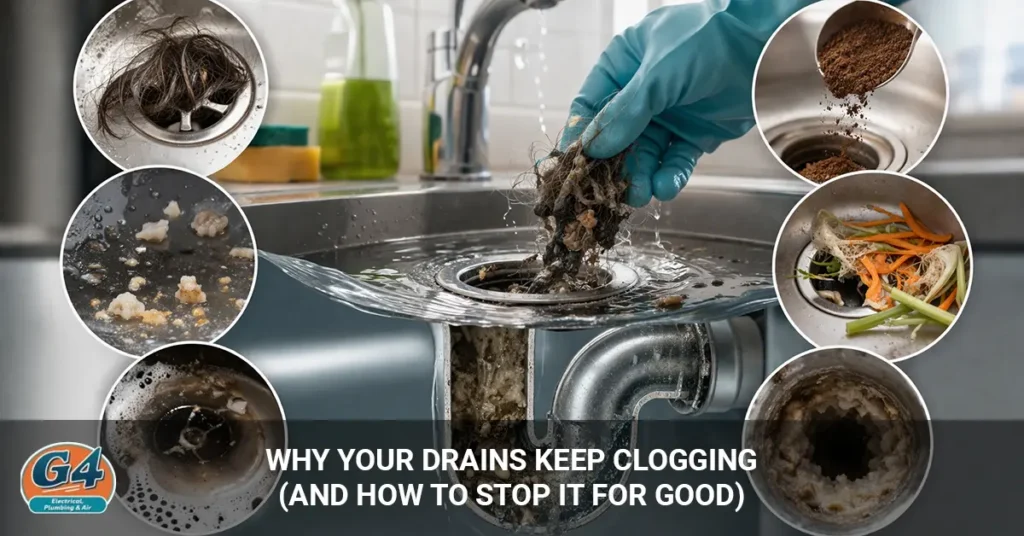
Drains keep clogging because the buildup and hidden blockages inside your pipes are not fully removed. The issue keeps coming back until the root cause is fixed.
At first, it may seem like a small problem. Water drains a little slower, but everything still works. Over time, the clog builds up again and becomes harder to ignore.
If your drains keep clogging, it usually means something deeper is going on. The good news is you can fix it and stop it from happening again with the right steps.
Why Do Your Drains Keep Clogging?
Drains keep clogging because grease, hair, and debris build up inside the pipes over time. This buildup slows water flow and causes repeated blockages.
At first, the clog may be small and easy to clear. But if the buildup is not fully removed, it stays inside the pipe and keeps growing. That’s why the problem comes back again and again.
In some cases, the blockage is deeper in the pipe or even in the main sewer line. Quick fixes only clear part of it, not the whole problem.
Common Causes of Recurring Drain Clogs
Recurring drain clogs happen because something keeps building up or blocking the pipe over time. The exact cause often depends on where the drain is in your home.
Grease and Food Buildup (Kitchen Drains)
Grease and food buildup are common causes of clogs in kitchen drains because they stick to the inside of pipes. Even though grease goes down as a liquid, it hardens as it cools and traps other debris.
Hair and Soap Scum (Bathroom Drains)
Hair and soap scum clog bathroom drains by forming a thick, sticky layer inside the pipe. Over time, this buildup grows and blocks water from flowing properly.
Flushing the Wrong Items
Flushing the wrong items causes clogs because they don’t break down like toilet paper. Things like wipes, paper towels, and hygiene products can block pipes quickly.
Tree Roots in Sewer Line
Tree roots cause serious clogs by growing into underground pipes and blocking water flow. In many cases, sewer line repair is needed to fully fix the issue and prevent future blockages. This type of problem often leads to repeated and harder-to-fix blockages.
Old or Damaged Pipes
Old or damaged pipes clog more easily because their surfaces become rough or narrow. This makes it easier for debris to stick and build up over time.
Signs Your Drain Problem Is Getting Worse
Your drain problem is getting worse when you start noticing repeated issues that don’t go away. These signs usually mean a blockage is building up inside your pipes.
Slow drainage is often the first warning. If water takes longer to go down, it means something is starting to block the flow. Bad smells from the drain are another sign, usually caused by trapped debris or buildup.
You may also hear gurgling sounds from your pipes. This happens when air is trapped due to a blockage. If clogs keep coming back or more than one drain is affected, the problem is likely deeper in your plumbing system.
How to Stop Your Drains From Clogging Again
You can stop your drains from clogging again by changing a few daily habits and keeping your pipes clean. Prevention is the key to long-term results.
Start by avoiding grease or oil in your drains. Even small amounts can stick to the inside of pipes and build up over time. Using drain covers is another simple step that helps catch hair and debris before they go down.
Be careful about what you flush. Only flush toilet paper and waste to avoid blockages. Regular drain cleaning also helps remove buildup before it turns into a clog.
For long-term protection, professional drain cleaning can clear deeper buildup and keep your plumbing system working smoothly.
Quick Fixes for Minor Drain Clogs
You can fix minor drain clogs using simple methods that clear small blockages quickly. These work best when the clog is not deep or severe.
A plunger is often the first step. It helps push the blockage through the pipe and restore flow. Hot water mixed with dish soap can also help, especially for grease buildup, as it breaks it down and moves it along.
A drain snake is useful for pulling out hair or debris stuck inside the pipe. It can reach deeper than a plunger and remove the clog directly.
These quick fixes can help for now, but if the clog keeps coming back, there may be a deeper issue that needs professional attention.
When to Call a Professional Plumber
You should call a professional plumber when clogs keep coming back or start affecting more than one drain. This usually means the problem is deeper in your plumbing system.
If you notice slow drainage in multiple fixtures, it’s a sign that the blockage is not just in one pipe. Strong odors from drains can also point to buildup or a deeper issue in the line.
Frequent backups are another clear warning. If the problem returns even after cleaning, it hasn’t been fully fixed. A professional plumber can find the exact cause and clear it properly.
Can Recurring Clogs Damage Your Plumbing?
Yes, recurring clogs can damage your plumbing if they are not fixed early. The longer they stay, the more pressure they create inside your pipes.
When water can’t flow properly, pressure builds up behind the blockage. Over time, this can weaken pipes and lead to cracks or leaks. What starts as a small clog can turn into a bigger repair.
Clogs can also cause water to back up into your home. This can damage floors and create hygiene issues. Fixing the problem early helps protect your plumbing and avoid costly damage.
How Often Should You Clean Your Drains?
You should clean your drains regularly to prevent buildup and keep water flowing smoothly. Routine maintenance helps stop clogs before they start.
For most homes, basic cleaning every few months works well. This helps remove early buildup like grease, soap, and debris.
For deeper cleaning, professional service once a year is a good idea. It clears hidden buildup and keeps your plumbing system in good condition.
Final Thoughts
Drains keep clogging when the root cause is not fully removed. Until you fix the real problem, the clogs will keep coming back.
Quick fixes may help for a short time, but they don’t solve deeper issues inside your pipes. Long-term results come from proper care and regular maintenance.
Once you understand the cause, you can take the right steps to prevent future clogs. If the problem continues, calling a professional is the best way to protect your plumbing system.