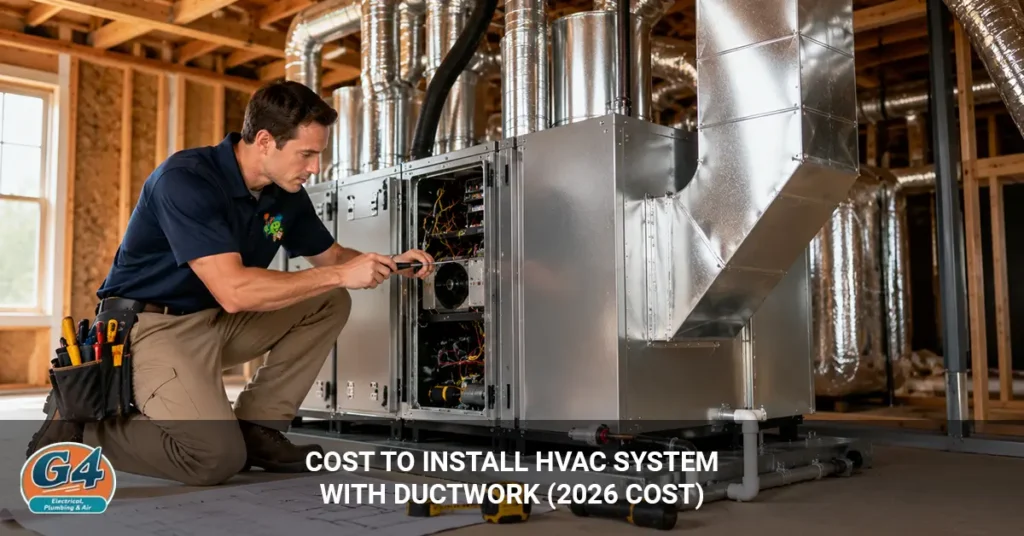
Installing a new HVAC system with ductwork typically costs between $9,000 and $18,000, although larger homes or high-end systems can exceed $20,000. The total price depends on the size of your home, the HVAC equipment you choose, how much ductwork needs to be installed, and labor costs in your area.
If your home doesn’t have existing ducts, installing them is a major part of the project. New ductwork adds several thousand dollars to the total cost, but it’s essential for proper airflow, energy efficiency, and long-term system performance. Even if your home already has ducts, replacing old, leaking, or undersized ductwork can improve comfort and lower your energy bills.
Knowing what makes up the total installation cost helps you compare quotes with confidence and avoid unexpected expenses. Some homes only need basic duct installation, while others require electrical upgrades, insulation, permits, or modifications to walls, ceilings, or crawl spaces.
In this guide, you’ll learn the average cost to install an HVAC system with ductwork, what factors affect pricing, how much ductwork adds to the project, and whether replacing old ducts is worth the investment.
Average Cost to Install an HVAC System with Ductwork
Installing a new HVAC system with ductwork costs between $9,000 and $18,000 for most homes. Larger homes, premium equipment, or complex duct installations can increase the total cost to $20,000 or more.
The price depends mainly on your home’s size, the type of HVAC system you choose, and how much ductwork needs to be installed. Bigger homes require larger systems and longer duct runs, which increase both material and labor costs.
| Home Size | Average HVAC + Ductwork Cost |
| 1,000 sq. ft. | $9,000–$11,500 |
| 1,500 sq. ft. | $10,500–$13,500 |
| 2,000 sq. ft. | $12,000–$15,500 |
| 2,500 sq. ft. | $13,500–$17,000 |
| 3,000+ sq. ft. | $16,000–$22,000+ |
A typical installation quote includes:
- New heating system (furnace or air handler)
- Central air conditioner or heat pump
- New ductwork throughout the home
- Supply and return vents
- Thermostat installation
- Refrigerant lines
- Basic electrical connections
- Standard installation labor
- Required permits and inspections
Keep in mind that these are average price ranges. Your final cost may be higher if your home has a tight attic, crawl space, multiple stories, or a layout that makes installing ductwork more difficult. Older homes may also need electrical upgrades, duct modifications, or extra insulation before the new system can be installed.
The HVAC system you choose also affects the price. High-efficiency models and premium brands cost more upfront, but they often use less energy and can reduce your monthly utility bills over time.
Average HVAC Installation Costs by System Type
The type of HVAC system you choose has a major impact on the total installation cost. Some systems cost less to install, while others have higher upfront costs but can save money on energy over time.
| HVAC System | Average Installed Cost (With Ductwork) |
| Gas Furnace + Central AC | $10,000–$16,000 |
| Electric Furnace + Central AC | $9,500–$15,000 |
| Heat Pump System | $11,000–$18,000 |
| Dual Fuel System | $14,000–$20,000+ |
| Packaged HVAC Unit | $9,500–$16,500 |
The right system depends on your local climate, energy prices, and how you heat and cool your home.
- Gas furnace with central AC: A popular choice in colder climates. Gas furnaces provide strong, reliable heat during the winter, while the air conditioner keeps your home cool in the summer.
- Electric furnace with central AC: Usually costs less to install than a gas system because it doesn’t require a gas line. However, electricity can be more expensive than natural gas in many areas, leading to higher heating costs.
- Heat pump system: A heat pump provides both heating and cooling with a single system. Read our full heat pump vs furnace comparison to see which option makes more sense for your home. It is highly energy-efficient and works well in mild to moderate climates. Modern cold-climate heat pumps also perform well in many colder regions.
- Dual fuel system: This setup combines a heat pump with a gas furnace. The heat pump handles most of the heating, while the furnace takes over during extremely cold weather. Although it has the highest upfront cost, it can deliver excellent comfort and energy savings.
- Packaged HVAC unit: A packaged system houses all major components in one outdoor cabinet. It’s commonly used in homes with limited indoor space and can simplify installation in certain situations.
When comparing HVAC systems, don’t focus only on the installation price. Consider long-term energy costs, maintenance requirements, expected lifespan, and the system’s efficiency. In many cases, spending more on an energy-efficient system can reduce utility bills and provide a better return on your investment over the years.
What Influences the Final Price?
The final cost of installing an HVAC system with ductwork depends on your home, the equipment you choose, and the complexity of the installation. Even two homes with the same square footage can have very different installation costs.
The biggest factors that affect the total price include:
- Home size: Larger homes need bigger HVAC systems and more ductwork, which increases material and labor costs.
- Number of floors: Multi-story homes usually require more complex duct design and additional installation time.
- HVAC system type: Heat pumps, dual fuel systems, and high-end equipment generally cost more than standard furnace and air conditioner combinations.
- Energy efficiency: High-efficiency systems have a higher upfront price but can lower your monthly energy bills.
- Ductwork design: Longer duct runs, custom layouts, and hard-to-reach areas require more materials and labor.
- Local labor rates: Installation costs vary by region based on labor prices and local demand.
- Accessibility: Tight attics, crawl spaces, and finished basements can make installation more time-consuming and expensive.
- Permits and inspections: Most HVAC installations require permits, and local permit fees vary by city or county.
- Electrical upgrades: Older homes may need a new electrical circuit, panel upgrades, or other electrical work before the new system can be installed safely.
- Indoor air quality upgrades: Adding accessories such as whole-home air purifiers, humidifiers, UV lights, or advanced air filtration systems will increase the overall project cost.
A straightforward installation in a newer home is usually less expensive than a project that involves replacing old ductwork, upgrading electrical components, or making structural changes. That’s why two contractor estimates can differ, even for homes that appear similar at first glance.
What’s Included in a Full HVAC Installation?
A full HVAC installation includes much more than just the heating and cooling equipment. Most projects also include the ductwork, ventilation components, electrical connections, and other parts needed to ensure the system operates safely and efficiently.
A standard HVAC installation typically includes:
- Heating equipment, such as a gas furnace, electric furnace, or heat pump.
- Cooling equipment, including a central air conditioner or the cooling side of a heat pump.
- New ductwork that delivers conditioned air to every room and returns air to the system.
- Supply and return vents for proper airflow throughout the home.
- Thermostat installation to control your heating and cooling system.
- Refrigerant lines that connect the indoor and outdoor units.
- Drain lines and condensate system to remove moisture produced during cooling.
- Electrical wiring and disconnects are needed to power the equipment safely.
- System testing and airflow balancing to make sure the HVAC system heats and cools evenly.
- Required permits and final inspections, where applicable, to meet local building codes.
Some installations may also include additional upgrades based on your home’s needs. These can include new insulation around ductwork, indoor air quality products, zoning systems, smart thermostats, or electrical panel upgrades.
Before signing a contract, ask your HVAC contractor for a detailed, itemized estimate. A complete proposal should clearly list the equipment being installed, the scope of the ductwork, labor, permits, warranties, and any optional upgrades. This makes it easier to compare quotes and helps prevent unexpected costs later.
Heating System
The heating system is the part of your HVAC system that keeps your home warm during cold weather. The best option depends on your climate, energy costs, and whether your home has access to natural gas.
Gas Furnace
A gas furnace is the most common heating system for homes in colder climates. It burns natural gas or propane to produce heat, then uses a blower to distribute warm air through your ductwork.
Gas furnaces heat homes quickly, perform well during freezing temperatures, and are often less expensive to operate than electric furnaces where natural gas is available. Many modern models also have high efficiency ratings, helping lower monthly heating costs.
Electric Furnace
An electric furnace uses electric heating elements instead of burning fuel to warm your home. It usually costs less to install because it doesn’t require a gas line or venting system.
While electric furnaces are reliable and require less maintenance, they can cost more to operate in areas with high electricity rates. They are often a practical choice for homes in milder climates or locations without natural gas service.
Heat Pump
A heat pump provides both heating and cooling with one energy-efficient system. Instead of creating heat, it moves heat between your home and the outdoor air, using much less energy than many traditional heating systems.
Heat pumps work especially well in mild and moderate climates, and newer cold-climate models can continue heating efficiently even in lower outdoor temperatures. Many homeowners also choose heat pumps because they may qualify for rebates or tax incentives, depending on local programs.
Air Handler
An air handler works with a heat pump or certain electric HVAC systems to circulate air throughout your home. It contains the blower fan and other components that move heated or cooled air through the ductwork.
A properly sized air handler helps maintain even temperatures, improves airflow, and supports the overall efficiency of your HVAC system.
Cooling System
The cooling system keeps your home comfortable by removing heat and humidity during warm weather. Whether you install a central air conditioner or a heat pump, the system works with your ductwork to deliver cool air evenly throughout your home.
Central Air Conditioner
A central air conditioner is the most common cooling system for homes with ductwork. It uses an outdoor condenser unit and an indoor evaporator coil to remove heat from your home and circulate cooled air through the ducts.
The evaporator coil absorbs heat from the indoor air, while the outdoor condenser releases that heat outside. This continuous process keeps your home cool and helps reduce indoor humidity.
Modern central air conditioners are quieter, more energy-efficient, and better at controlling humidity than older models. Choosing a high-efficiency unit can also help lower your monthly cooling costs.
Heat Pump Cooling
A heat pump cools your home the same way a central air conditioner does. During the summer, it reverses its heating cycle and transfers heat from inside your home to the outdoors.
Because one system provides both heating and cooling, a heat pump can be an energy-efficient and space-saving option. It’s a popular choice for homeowners looking to reduce energy use while enjoying year-round comfort.
New Ductwork
New ductwork distributes heated and cooled air throughout your home and is essential for an efficient HVAC system. If your home doesn’t have existing ducts or if the current ones are old, leaking, damaged, or improperly sized, your contractor will install a new duct system as part of the project.
A well-designed duct system ensures every room receives the right amount of airflow. It also reduces energy loss, improves indoor comfort, and helps your HVAC system operate more efficiently.
A complete ductwork installation typically includes:
- Main trunk lines
- Branch ducts
- Supply ducts
- Return ducts
- Insulated duct sections
- Air balancing dampers
- Connections to the indoor HVAC equipment
Proper duct design is just as important as choosing the right HVAC equipment. Ducts that are too small, too large, or poorly sealed can reduce efficiency, create uneven temperatures, and make your heating and cooling system work harder than necessary. Professionally designed and sealed ductwork helps improve comfort, lower energy bills, and extend the life of your HVAC system.
Supply and Return Vents
Supply and return vents keep air moving through your home and allow your HVAC system to work efficiently. Without both types of vents, your system can’t maintain consistent temperatures or proper airflow.
Supply vents push heated or cooled air into each room. Return vents pull air back to the HVAC system, where it is filtered, heated or cooled, and circulated again.
A properly balanced vent system helps:
- Maintain even temperatures throughout the home
- Improve indoor comfort
- Reduce strain on the HVAC equipment
- Increase energy efficiency
- Support better indoor air quality
Thermostat Installation
Every new HVAC system includes a thermostat to control your home’s heating and cooling. The thermostat communicates with the HVAC equipment and turns the system on or off to maintain your desired temperature.
Many homeowners choose a smart thermostat during installation. Smart thermostats can learn your schedule, automatically adjust temperatures, and let you control your HVAC system from a smartphone or tablet. By reducing unnecessary heating and cooling, they can also help lower monthly energy bills without sacrificing comfort.
Refrigerant Lines
Refrigerant lines connect the indoor and outdoor parts of your HVAC system. These insulated copper lines carry refrigerant between the evaporator coil and the outdoor condenser or heat pump, making the cooling process possible.
In some installations, existing refrigerant lines can be reused if they are the correct size and in good condition. However, many HVAC contractors recommend installing new refrigerant lines to ensure compatibility with the new equipment, prevent leaks, and improve long-term system reliability. Replacing aging or damaged lines during installation can also help avoid costly repairs later.
Drain Lines
Drain lines remove the moisture your air conditioner collects while cooling your home. As warm indoor air passes over the evaporator coil, condensation forms and needs to drain away safely.
The condensate drain line carries this water away from the system, helping prevent water damage, mold growth, and moisture-related problems. In homes where the indoor unit is installed in an attic, contractors often add a secondary drain pan or a condensate pump for extra protection against leaks.
Electrical Connections
A new HVAC system requires safe electrical connections to operate properly and meet local building codes. During installation, your contractor will inspect the existing electrical system and make any necessary upgrades.
This may include:
- New disconnect switches
- Circuit breakers
- Electrical wiring
- Surge protection
- Safety controls
If your home’s electrical panel doesn’t have enough capacity for the new equipment, it may need to be upgraded before installation. Completing these electrical improvements helps ensure your HVAC system operates safely, reliably, and according to the manufacturer’s requirements.
Permits and Inspections
Most HVAC installations require permits and a final inspection to ensure the work meets local building codes. These requirements help verify that the system has been installed safely and correctly.
After the installation is complete, a local building inspector may check the HVAC equipment, ductwork, electrical connections, and other components before approving the project.
Many HVAC contractors handle the permitting process for you and include permit fees in their installation estimate. Before signing a contract, ask whether permits, inspections, and related costs are included so you know exactly what to expect.
HVAC Installation Cost Breakdown
Most HVAC installation costs come from equipment, ductwork, labor, and any upgrades needed to meet current building codes. Understanding how these costs are divided makes it easier to compare contractor estimates and see exactly what you’re paying for.
The table below shows the average cost of the main components in a complete HVAC installation with new ductwork.
| Item | Average Cost |
| Furnace | $2,500–$6,500 |
| Central Air Conditioner | $3,000–$7,500 |
| Heat Pump | $4,500–$10,000 |
| Air Handler | $1,500–$3,500 |
| New Ductwork | $3,000–$7,500 |
| Smart Thermostat | $150–$600 |
| Labor | $2,500–$6,000 |
| Permit Fees | $200–$800 |
| Electrical Upgrades | $500–$2,500 |
| Old Equipment Removal | $300–$1,000 |
These costs can vary depending on your home’s size, the HVAC system you choose, and the complexity of the installation.
For example, installing a new duct system in a home that has never had central heating and cooling will cost more than replacing an existing furnace and air conditioner. Likewise, homes that need electrical panel upgrades, additional insulation, or structural modifications will have higher installation costs.
When reviewing estimates, don’t compare prices alone. Look at what’s included in each quote, such as equipment efficiency ratings, ductwork, thermostat, permits, labor, warranties, and cleanup. A detailed estimate makes it easier to compare contractors and helps prevent unexpected costs after the project begins.
Furnace Cost
The cost of a furnace depends on its size, efficiency rating, and features. In general, higher-efficiency models cost more upfront but can reduce heating costs over time.
Entry-level gas furnaces are the most affordable option and provide dependable heating for many homes. Premium models with variable-speed blowers, two-stage or modulating burners, and advanced controls offer quieter operation, more even temperatures, and improved energy efficiency.
Electric furnaces usually cost less to install because they don’t require a gas line or venting system. However, in areas with high electricity rates, they can be more expensive to operate than gas furnaces.
Central Air Conditioner Cost
The price of a central air conditioner depends on the size of the system, its efficiency, and the complexity of the installation. Choosing the right size is essential for comfort, energy efficiency, and long-term performance.
Several factors affect the total cost, including:
- Cooling capacity (measured in tons)
- SEER2 energy efficiency rating
- Brand and model
- Installation complexity
- Whether new refrigerant lines are needed
High-efficiency air conditioners typically have a higher purchase price, but they use less electricity and can lower cooling costs over the life of the system.
Heat Pump Cost
Heat pumps usually cost more to install than traditional heating and cooling systems because they provide both heating and cooling in one unit. While the upfront investment is higher, many homeowners save money over time through lower energy consumption.
Modern heat pumps are highly efficient and work well in many climates, especially when paired with properly designed ductwork. Depending on where you live, installing a qualifying heat pump may also make you eligible for utility rebates, manufacturer incentives, or federal tax credits, helping offset part of the initial installation cost.
Air Handler Cost
The cost of an air handler depends on its size, features, and the complexity of the installation. Air handlers are commonly installed with heat pumps and some electric HVAC systems to move heated or cooled air through the ductwork.
Most gas furnace systems already include a built-in blower, so a separate air handler usually isn’t needed. However, if you’re installing a heat pump, the air handler is an essential part of the system.
Several factors affect the price, including:
- Equipment size
- Variable-speed blower technology
- Energy efficiency
- Installation difficulty
Choosing the right-sized air handler helps improve airflow, maintain even temperatures, and maximize the efficiency of your HVAC system.
Ductwork Cost
Installing new ductwork typically costs between $3,000 and $7,500, making it one of the largest parts of the project. The total cost depends on your home’s size, layout, and the complexity of the duct system.
A complete ductwork installation usually includes:
- Main trunk lines
- Branch ducts
- Return air ducts
- Insulated duct sections
- Hangers and supports
- Air balancing dampers
- Supply and return connections
Properly designed ductwork is just as important as choosing the right HVAC equipment. Well-sized, sealed, and insulated ducts improve airflow, increase energy efficiency, reduce hot and cold spots, and help your heating and cooling system last longer.
Labor Costs
Labor is one of the highest costs in a complete HVAC installation. Installing a new system requires skilled technicians to ensure every component is installed safely and performs as designed.
Professional installation typically includes:
- Removing old HVAC equipment
- Installing the new indoor and outdoor units
- Building or modifying ductwork
- Connecting refrigerant lines
- Completing electrical wiring
- Installing and programming the thermostat
- Testing and balancing airflow
- Charging the refrigerant system
- Inspecting and verifying overall system performance
Labor costs increase when the installation is more complex. Homes with tight attics, crawl spaces, multiple stories, or custom duct layouts require more time and specialized work, which can raise the total project cost. Investing in experienced, licensed HVAC professionals helps ensure your system operates efficiently and reduces the risk of costly problems later.
Permit Costs
Most HVAC installations require permits before work can begin. These permits help ensure the new system is installed safely and complies with local building and mechanical codes.
Permit fees may include:
- Mechanical permit
- Electrical permit (if required)
- Final inspection
- Code compliance verification
In most cases, a licensed HVAC contractor will obtain the required permits, schedule inspections, and include these costs in the installation estimate. Before signing a contract, ask whether permit fees are included in the quoted price.
Electrical Upgrade Costs
Older homes may need electrical upgrades before a new HVAC system can be installed safely. Modern heating and cooling equipment often has different electrical requirements than older systems.
Common electrical upgrades include:
- Installing a new circuit breaker
- Adding larger electrical circuits
- Installing a service disconnect
- Upgrading the electrical panel
- Adding surge protection
Not every home needs these improvements, but they may be necessary if your existing electrical system doesn’t meet current building codes or the manufacturer’s specifications. Your HVAC contractor or electrician can determine what’s required during the initial inspection.
Old HVAC Removal
Replacing an existing HVAC system usually includes removing and disposing of the old equipment. This step ensures the new system can be installed safely and gives technicians access to the existing ductwork and utility connections.
Old equipment removal may include:
- Furnace removal
- Air conditioner removal
- Refrigerant recovery
- Metal recycling
- Equipment disposal fees
Some HVAC companies include removal and disposal in their installation package, while others list it as a separate charge. Before approving an estimate, ask whether equipment removal, refrigerant recovery, and disposal costs are included to avoid unexpected charges.
Ductwork Installation Cost
Installing new ductwork typically costs between $3,000 and $7,500, while larger or more complex homes can exceed $10,000. Because ductwork distributes heated and cooled air throughout your home, it plays a major role in your HVAC system’s performance and overall installation cost.
Unlike replacing a furnace or air conditioner, installing ductwork requires much more than connecting a few vents. Contractors must design a duct system that matches your home’s size and layout, ensuring every room receives the right amount of airflow.
The total cost depends on several factors, including the size of your home, the number of vents, the duct materials used, and how difficult the installation is. Homes with tight attics, crawl spaces, vaulted ceilings, or multiple stories typically require more labor and materials, increasing the overall price.
Although new ductwork adds to the upfront cost of an HVAC installation, properly designed and sealed ducts improve airflow, reduce energy loss, maintain more consistent indoor temperatures, and help your heating and cooling system operate at peak efficiency for years to come. Learn how duct leaks increase energy bills and why sealing them matters.
Ductwork Cost Per Linear Foot
New ductwork typically costs between $10 and $40 per linear foot, depending on the material used. The total cost depends on how many feet of ductwork your home needs and the complexity of the installation.
Average installed costs include:
| Duct Material | Average Cost Per Linear Foot |
| Flexible duct | $10–$18 |
| Fiberglass duct board | $12–$22 |
| Sheet metal duct | $20–$40 |
The amount of ductwork required varies from one home to another. Several factors affect the total number of linear feet needed, including:
- Home size
- Floor plan
- Number of rooms
- Ceiling height
- Number of supply and return vents
Larger homes typically require longer duct runs, more vents, and additional return ducts, which increase both material and labor costs. Homes with multiple stories or complex layouts may also need extra ductwork to maintain balanced airflow and consistent temperatures throughout the house.
While flexible duct is usually the most affordable option, sheet metal ductwork is more durable and often provides better long-term airflow. Your HVAC contractor can recommend the best material based on your home’s design, budget, and comfort goals.
Flexible Ducts
Flexible ducts are the most affordable and commonly used type of ductwork for residential HVAC systems. They are lightweight, easy to install, and work well in attics, crawl spaces, and other areas where rigid ducts are difficult to route.
Advantages
- Lower installation cost
- Faster to install than rigid metal ducts
- Easy to route around framing, pipes, and other obstacles
- Ideal for attics, crawl spaces, and tight spaces
- Lightweight and flexible
Disadvantages
- Can be damaged more easily than metal ducts
- Airflow can be reduced if the duct is bent, kinked, or stretched too tightly
- Shorter lifespan than sheet metal ductwork
- May be more prone to air leaks if not installed and sealed properly
When installed correctly, flexible ducts provide reliable performance and good energy efficiency for many homes. Proper support, sealing, and routing are essential to maintain strong airflow and help your HVAC system operate efficiently for years to come.
Sheet Metal Ducts
Sheet metal ducts are the most durable and long-lasting option for residential HVAC systems. While they cost more than flexible ducts, they provide excellent airflow, require less maintenance, and can last for decades when properly installed.
Many homeowners choose sheet metal ductwork because it offers several long-term benefits, including:
- Better airflow with less resistance
- Longer lifespan than flexible ducts
- Greater durability and resistance to damage
- Easier cleaning and maintenance
- Reduced risk of sagging or collapsing over time
Because of their strength and performance, sheet metal ducts are often recommended for larger homes, long duct runs, and homeowners planning to stay in their home for many years. Although the upfront installation cost is higher, the added durability and improved airflow can make sheet metal ductwork a worthwhile long-term investment.
Fiberglass Duct Board
Fiberglass duct board combines air ducts and insulation into a single product, helping improve energy efficiency and reduce noise. It’s commonly used in residential HVAC systems where thermal performance and quieter operation are priorities.
Some of the main benefits of fiberglass duct board include:
- Built-in thermal insulation
- Quieter airflow than metal ducts
- Reduced heat gain and heat loss
- Improved energy efficiency
- Lightweight and relatively easy to install
Like any duct material, fiberglass duct board has some maintenance considerations. The interior surface can be damaged if it’s cleaned with improper tools or methods, so routine inspections and professional maintenance are important. When installed and maintained correctly, fiberglass duct board can provide reliable performance, good insulation, and consistent airflow for many years.
Return Air Duct Costs
Installing properly sized return air ducts is essential for an efficient HVAC system and typically adds to the overall ductwork cost. Return ducts pull air from your home back to the HVAC system so it can be filtered, heated or cooled, and recirculated.
A complete return air system typically includes:
- Return trunk lines
- Return grilles
- Air filters
- Return plenums
Many homeowners focus on supply ducts, but return ducts are just as important. If your HVAC system doesn’t have enough return airflow, it has to work harder to move air throughout the home. This can reduce efficiency and shorten the system’s lifespan.
Poorly designed or undersized return ducts can lead to:
- Uneven temperatures between rooms
- Weak airflow from supply vents
- Higher energy bills
- Increased wear on HVAC equipment
- Reduced indoor comfort
A properly designed return duct system balances airflow throughout your home, helping your HVAC system run more efficiently while maintaining consistent temperatures in every room. During a new HVAC installation, experienced contractors size both the supply and return ducts together to ensure the entire system performs as intended.
Vent Installation Costs
The cost of vent installation depends on the number of vents needed and how difficult they are to install. Most rooms require at least one supply vent to deliver heated or cooled air, and larger rooms may need more than one for balanced airflow.
Several factors affect the total installation cost, including:
- Number of supply and return vents
- Ceiling, wall, or floor vent location
- Length of the duct run
- Accessibility inside walls, attics, or crawl spaces
Adding vents during a new HVAC installation can improve airflow and make your home more comfortable. It’s especially beneficial in rooms that have always felt too hot in the summer or too cold in the winter.
Proper vent placement is just as important as the number of vents. A professional HVAC contractor will position supply and return vents to promote balanced airflow, helping your system heat and cool every room more evenly while operating at peak efficiency.
Register Installation
Registers are the vent covers that direct heated and cooled air into each room. Although the registers themselves are relatively inexpensive, installation costs can increase if new openings or modifications are needed.
The total cost depends on the work required, which may include:
- Cutting new floor openings
- Modifying walls or ceilings
- Installing ceiling or floor boots
- Sealing duct connections
- Balancing airflow after installation
Many homeowners choose adjustable registers because they allow you to control the direction and volume of airflow in each room. While they won’t replace a properly designed HVAC system, they can help improve comfort and make it easier to fine-tune airflow throughout your home.
When installed correctly, registers help distribute air evenly, reduce hot and cold spots, and support the overall efficiency of your heating and cooling system.
HVAC Installation Cost by Home Size
The larger your home, the more it typically costs to install a new HVAC system with ductwork. Bigger homes need larger heating and cooling equipment, longer duct runs, more vents, and additional labor, all of which increase the total installation cost.
The estimates below provide a general idea of what homeowners can expect. Your actual cost may vary depending on your home’s layout, insulation, ceiling height, climate, and the type of HVAC system you choose.
1,000-Square-Foot Home
Installing an HVAC system with ductwork in a 1,000-square-foot home typically costs between $9,000 and $11,500. Most homes this size require a 1.5- to 2-ton HVAC system and a relatively simple duct layout.
A typical installation includes:
- Compact HVAC equipment
- Short duct runs
- Fewer supply and return vents
- Lower labor costs
Because smaller homes require less equipment and ductwork, installation is usually faster and less expensive than in larger homes.
1,500-Square-Foot Home
Installing an HVAC system with ductwork in a 1,500-square-foot home typically costs between $10,500 and $13,500. Most homes of this size need a 2- to 2.5-ton HVAC system to provide efficient heating and cooling.
A typical installation includes:
- A moderate amount of ductwork
- Multiple supply and return vents
- Larger indoor and outdoor HVAC equipment
- Airflow testing and system balancing
This is one of the most common home sizes for residential HVAC installations. When the equipment is properly sized and the ductwork is professionally designed, homeowners can expect consistent comfort, better energy efficiency, and reliable performance throughout the year.
2,000-Square-Foot Home
Installing an HVAC system with ductwork in a 2,000-square-foot home typically costs between $12,000 and $15,500. Most homes this size require a 3-ton HVAC system along with a larger duct network to deliver consistent airflow throughout the house.
Several factors can increase the total installation cost, including:
- Longer duct runs
- A larger return air system
- Additional airflow balancing
- More installation labor
- Zoning requirements for improved comfort
As homes get larger, proper HVAC sizing becomes even more important. A professional load calculation helps ensure the system isn’t too large or too small, improving comfort, energy efficiency, and the lifespan of the equipment.
2,500-Square-Foot Home
Installing an HVAC system with ductwork in a 2,500-square-foot home typically costs between $13,500 and $17,000. Homes of this size usually need higher-capacity equipment and a more advanced duct system to maintain even temperatures.
A typical installation may include:
- Larger main supply ducts
- Additional branch ducts
- More supply and return registers
- Extensive airflow balancing
- Higher-capacity blower equipment
Many 2,500-square-foot homes have two stories or more complex floor plans. In these cases, adding a zoning system can improve comfort by allowing different areas of the home to be heated or cooled independently. This helps reduce hot and cold spots while improving overall energy efficiency.
3,000-Square-Foot Home and Larger
Installing an HVAC system with ductwork in a 3,000-square-foot home or larger typically costs between $16,000 and $22,000 or more. These homes require larger HVAC systems, more extensive ductwork, and additional labor to provide consistent heating and cooling throughout the property.
A typical installation may include:
- High-capacity HVAC equipment
- Extensive ductwork throughout the home
- Multiple return air systems
- Longer installation times
- Professional airflow testing and balancing
- Optional zoning controls for different areas of the home
Many larger homes have multiple floors, high ceilings, or unique floor plans that make HVAC design more complex. Proper system sizing and duct design are essential to maintain even temperatures, prevent hot and cold spots, and keep energy costs under control.
Luxury and custom-built homes often exceed these average price ranges. Features such as vaulted ceilings, large open spaces, multiple HVAC zones, premium equipment, smart home integration, and high-efficiency systems can significantly increase the overall installation cost. However, these upgrades can also improve comfort, energy efficiency, and long-term system performance.
HVAC System Cost by Equipment Type
The type of HVAC system you choose affects your installation cost, energy efficiency, operating costs, and long-term comfort. While all HVAC systems are designed to heat and cool your home, the right choice depends on your local climate, utility costs, and how much you want to invest upfront.
Below are the most common HVAC systems installed in residential homes.
Gas Furnace and Central Air Conditioner
A gas furnace paired with a central air conditioner is one of the most common HVAC systems in the United States. It provides reliable heating during the winter and efficient cooling during the summer, making it an excellent choice for areas with cold winters.
Average installed cost (with new ductwork): $10,000–$16,000
Advantages
- Reliable heating in cold climates
- Lower heating costs where natural gas is available
- Fast and consistent heat output
- A wide range of equipment sizes and efficiency options
- Proven, dependable technology
Considerations
- Requires access to natural gas or propane
- Annual furnace maintenance is recommended for safety and efficiency
- Separate heating and cooling equipment means more components to maintain and service
For many homeowners, this combination offers the best balance of performance, operating costs, and long-term reliability. If you live in a region with long, cold winters, a gas furnace and central air conditioner are often one of the most practical and cost-effective HVAC systems available.
Electric Furnace and Central Air Conditioner
An electric furnace paired with a central air conditioner is a practical option for homes without natural gas service. It offers reliable heating and cooling with a simpler installation, making it a popular choice in many warmer regions.
Average installed cost (with new ductwork): $9,500–$15,000
Advantages
- Lower upfront equipment cost
- Simpler installation than gas furnace systems
- No natural gas or propane connection required
- Fewer combustion-related maintenance and safety concerns
- Reliable heating with fewer mechanical components
Considerations
- Higher heating costs in areas with expensive electricity
- Less cost-effective during long, cold winters
- Overall operating costs depend on local electricity rates
Electric furnaces are most common in mild climates where heating demand is lower or in areas where natural gas isn’t available. Although they typically cost less to install than gas furnaces, it’s important to consider long-term energy costs when choosing the right HVAC system for your home. In colder regions, a gas furnace or heat pump may provide better energy savings over time.
Heat Pump System
A heat pump provides both heating and cooling with a single, energy-efficient system. Instead of generating heat, it transfers heat between your home and the outdoor air, using significantly less energy than many traditional heating systems.
Average installed cost (with new ductwork): $11,000–$18,000
Advantages
- Provides both heating and cooling in one system
- Highly energy-efficient
- Can reduce monthly utility bills
- May qualify for utility rebates and tax incentives
- Produces fewer carbon emissions than many traditional heating systems
Considerations
- Higher upfront installation cost
- Supplemental heating may be needed during extended periods of extreme cold
- Proper sizing and professional installation are essential for maximum efficiency
Heat pumps are an excellent choice for homeowners who want year-round comfort while lowering energy consumption. They perform especially well in mild to moderate climates, and today’s cold-climate heat pumps can provide reliable heating even in many areas with freezing winter temperatures. Although the initial investment is higher than that of some traditional HVAC systems, the long-term energy savings can make a heat pump a cost-effective option over its lifespan.
Dual Fuel HVAC System
A dual-fuel HVAC system combines a heat pump with a gas furnace to maximize comfort and energy efficiency throughout the year. The heat pump provides heating during mild weather, and when outdoor temperatures drop, the system automatically switches to the gas furnace for more powerful and efficient heating.
Average installed cost (with new ductwork): $14,000–$20,000+
Advantages
- Excellent energy efficiency
- Lower annual heating costs in many climates
- Reliable performance during freezing temperatures
- Automatic switching between the heat pump and gas furnace
- Year-round heating and cooling from one integrated system
Considerations
- Higher upfront installation cost
- More complex system design than a standard HVAC system
- Requires both electricity and natural gas service
- Maintenance is needed for both the heat pump and the furnace
A dual fuel system is an excellent choice for homeowners in regions with hot summers and cold winters. By using the heat pump when it’s most efficient and switching to the gas furnace only when needed, the system helps reduce energy use while maintaining consistent indoor comfort throughout the year. Although it costs more to install, many homeowners find the long-term energy savings and improved performance worth the investment.
Packaged HVAC Unit
A packaged HVAC unit combines the heating and cooling components into a single outdoor cabinet. Unlike a traditional split system, everything is housed in one unit, making it a practical option for homes with limited indoor space.
Average installed cost (with new ductwork): $9,500–$16,500
Advantages
- Saves valuable indoor space
- Easier access for maintenance and repairs
- Faster installation in many homes
- Well suited for smaller homes, manufactured homes, and properties without a basement or utility room
Considerations
- Constant exposure to outdoor weather may shorten the equipment’s lifespan
- Not the best fit for every home layout
- May offer fewer high-efficiency models than traditional split systems
Packaged HVAC units are a smart solution when indoor space is limited or a simplified installation is preferred. While they may not provide as many efficiency options as split systems, they offer dependable heating and cooling in a compact design. A qualified HVAC contractor can help determine whether a packaged unit is the right choice for your home’s layout and comfort needs.
Factors That Affect HVAC Installation Costs
Several factors determine the final cost of installing a new HVAC system, and no two homes are exactly alike. Even homes with the same square footage can have different installation costs because of their layout, existing infrastructure, equipment needs, and installation complexity.
Below are the factors that have the biggest impact on your total HVAC installation cost.
Home Size
The size of your home is one of the biggest factors affecting HVAC installation costs. Larger homes need bigger heating and cooling systems, longer duct runs, and more labor to ensure every room receives adequate airflow.
As your home’s square footage increases, you can generally expect to need:
- Larger HVAC equipment
- More ductwork materials
- Additional supply and return vents
- More installation labor
- Greater airflow capacity
Choosing the correct system size is essential. An HVAC system that’s too small may struggle to keep your home comfortable, while an oversized system can cycle on and off too frequently, reducing efficiency and increasing wear on the equipment.
Ductwork Complexity
The more complex the ductwork installation, the higher the overall project cost. Installing ducts isn’t just about connecting vents—it requires careful planning to ensure balanced airflow and efficient system performance.
Installation costs often increase when contractors need to:
- Route ducts through finished ceilings or walls
- Work around beams, plumbing, or other structural obstacles
- Install multiple main trunk lines
- Design custom duct layouts
- Add extra return air ducts to improve airflow
Homes without existing ductwork usually require the most labor because the entire duct system must be designed and installed from scratch. A properly designed duct layout improves comfort, increases energy efficiency, and helps your HVAC system perform at its best for years to come.
Number of Stories
Multi-story homes usually cost more to install because they require a more advanced HVAC design. Heating and cooling multiple floors evenly takes additional planning, ductwork, and airflow adjustments.
Installation costs may increase due to:
- Longer duct runs
- Additional airflow balancing
- Larger or multiple return air systems
- Optional zoning systems
- More installation time
Without proper duct design, two-story homes often develop hot upstairs rooms in the summer and cooler downstairs areas in the winter. A professionally designed HVAC system helps maintain more consistent temperatures throughout the home.
Accessibility
The more difficult it is to access your home’s HVAC equipment and ductwork, the higher the labor cost is likely to be. Easy access allows technicians to complete the installation more quickly, while tight or hard-to-reach spaces require additional time and effort.
Installation becomes more challenging in homes with:
- Tight attics
- Low crawl spaces
- Finished basements
- Older homes with limited access
- Complex framing or structural obstacles
Although accessibility isn’t something homeowners can control, it can have a noticeable impact on the final installation price because of the extra labor involved.
Climate
Your local climate plays an important role in choosing the right HVAC system and determining installation costs. Homes in different regions have different heating and cooling needs, so the equipment must be sized and selected accordingly.
For example:
- Cold climates often require larger or higher-efficiency furnaces.
- Hot climates may need higher-capacity air conditioners to handle long cooling seasons.
- Moderate or mixed climates are often well suited for heat pumps or dual-fuel systems, which can improve energy efficiency throughout the year.
Installing an HVAC system that’s designed for your local climate helps reduce energy costs, improve comfort, and extend the life of your equipment. A professional load calculation ensures the system is properly sized for your home’s location and heating and cooling demands.
Energy Efficiency Ratings
Higher-efficiency HVAC systems cost more upfront but can significantly reduce your energy bills over time. If you plan to stay in your home for many years, investing in a more efficient system often provides better long-term value.
The most important efficiency ratings include:
- SEER2 for central air conditioners and heat pumps in cooling mode
- AFUE for gas furnaces
- HSPF2 for heat pumps in heating mode
A system with higher efficiency ratings uses less energy to heat and cool your home. While the purchase price is higher, many homeowners recover part of the additional cost through lower monthly utility bills.
HVAC Brand
The brand you choose affects the total installation cost, warranty coverage, and available features. Most major HVAC manufacturers offer reliable equipment, but prices vary depending on efficiency, technology, and product line.
Premium brands often include:
- Advanced energy-saving technology
- Quieter operation
- Longer warranty options
- More comfort features, such as variable-speed performance
Budget-friendly brands can still provide dependable heating and cooling at a lower upfront cost, making them a good option for homeowners focused on affordability.
Labor Rates
Labor costs vary based on where you live and the complexity of the installation. In many HVAC projects, labor represents a significant portion of the total price.
Labor rates are typically higher in:
- Large cities and metropolitan areas
- Regions with a higher cost of living
- Areas with strong demand for licensed HVAC technicians
The contractor’s experience, the difficulty of the installation, and the amount of time required to complete the project also influence labor costs.
Permit Requirements
Most HVAC installations require permits to ensure the work meets local building and safety codes. Permit fees vary by city or county and are usually included in the contractor’s estimate.
Depending on your location, the project may require:
- Mechanical permits
- Electrical permits
- Gas permits
- Final inspections
- Duct leakage testing
Working with a licensed HVAC contractor helps ensure the necessary permits are obtained and the installation complies with all local code requirements.
Existing Electrical System
Older homes may need electrical upgrades before a new HVAC system can be installed safely. Modern heating and cooling equipment often requires more electrical capacity than older systems.
Common electrical improvements include upgrading the electrical panel, installing additional circuits, adding disconnect switches, and replacing or upgrading electrical wiring. Review our electrical panel upgrade cost guide to understand what this work typically costs.
Although these upgrades increase the initial installation cost, they help ensure safe operation and compliance with current electrical codes.
Insulation Quality
The quality of your home’s insulation directly affects how efficiently your HVAC system operates. Poor insulation allows heated and cooled air to escape, forcing the system to work harder and increasing energy costs.
Improving insulation before installing a new HVAC system can:
- Reduce heating and cooling demands
- Improve indoor comfort
- Lower monthly utility bills
- Extend the life of your HVAC equipment
In some cases, better insulation allows you to install a smaller HVAC system without sacrificing comfort, reducing both the upfront installation cost and long-term operating expenses.
HVAC Installation Cost by Brand
The HVAC brand you choose affects the total installation cost, warranty coverage, efficiency, and available features. While premium brands typically cost more, many mid-range manufacturers offer excellent performance and long-term reliability at a lower price.
The table below shows the average installed cost for some of the most popular HVAC brands when new ductwork is included.
| Brand | Average Installed Cost (With Ductwork) | Best For |
| Carrier | $13,000–$20,000 | Premium performance |
| Trane | $13,000–$20,000 | Durability |
| Lennox | $13,500–$21,000 | High efficiency |
| Rheem | $11,000–$17,000 | Overall value |
| Goodman | $10,000–$15,500 | Budget-friendly installations |
| American Standard | $12,500–$19,000 | Reliability |
| Bryant | $11,500–$18,000 | Performance and value |
| York | $10,500–$16,500 | Affordable replacement |
| Ruud | $11,000–$17,000 | Dependability |
| Amana | $10,500–$16,500 | Strong warranty coverage |
While brand matters, the quality of the installation matters even more. A properly sized and professionally installed mid-range HVAC system will usually perform better and last longer than a premium system that’s installed incorrectly.
When comparing contractor estimates, don’t focus only on the equipment brand. Be sure to ask about:
- Manufacturer’s warranty
- Labor warranty
- Available maintenance plans
- Energy efficiency ratings
- Recommended system size for your home
- Estimated annual operating costs
The best value comes from choosing the right combination of quality equipment and an experienced HVAC contractor. Proper system sizing, professional installation, and correct duct design will have a greater impact on comfort, energy efficiency, and long-term reliability than the brand name alone.
Additional Costs Homeowners Often Forget
The cost of a new HVAC system doesn’t always stop with the equipment and ductwork. Depending on your home and the options you choose, there may be additional expenses that increase the total installation cost. Some upgrades improve comfort and energy efficiency, while others are necessary for safety or to meet local building codes.
Knowing about these costs in advance can help you plan your budget and avoid surprises when reviewing contractor estimates.
Thermostat Upgrade
Upgrading to a smart or advanced thermostat typically costs between $150 and $600. Visit our full thermostat installation cost guide to see what’s included and what affects pricing.
While many HVAC installations include a basic programmable thermostat, many homeowners choose a model with additional features and better energy management.
A thermostat upgrade can provide several benefits, including:
- More accurate temperature control
- Custom schedules for heating and cooling
- Improved energy efficiency
- Remote control through a smartphone app
- Energy usage reports and smart home integration
Although a smart thermostat adds to the upfront installation cost, it can help reduce monthly energy bills by automatically adjusting your HVAC system based on your schedule and preferences. Many models also make it easier to monitor and control your home’s temperature from anywhere.
Smart Thermostat
A smart thermostat lets you control your HVAC system from anywhere using your smartphone or tablet. Connected through your home’s Wi-Fi, it offers more convenience and can help reduce energy use throughout the year.
Compared to a standard thermostat, a smart thermostat can:
- Learn your heating and cooling habits
- Automatically adjust temperatures based on your schedule
- Allow remote control through a mobile app
- Provide energy usage reports
- Integrate with many smart home systems
Although smart thermostats cost more than basic models, many homeowners recover the investment through lower utility bills and more efficient heating and cooling.
Electrical Panel Upgrade
Some older homes need an electrical panel upgrade before a new HVAC system can be installed safely. If your existing panel doesn’t have enough capacity, upgrading it ensures the new equipment operates reliably and meets current electrical codes.
Typical cost: $1,500–$4,000
The total cost depends on several factors, including:
- Electrical panel size
- Amount of electrical work required
- Local labor rates
- Permit and inspection fees
While an electrical panel upgrade increases the initial project cost, it improves safety, supports your new HVAC system, and provides additional capacity for future electrical upgrades.
Gas Line Installation
Installing a gas furnace may require a new gas line if your home doesn’t already have one. This is common when switching from an electric heating system to natural gas or propane.
The total cost depends on:
- Distance from the gas meter
- Pipe material
- Local permit requirements
- Installation complexity
Adding a gas line increases the overall installation cost, but in many areas, natural gas is less expensive than electricity for heating. Over time, homeowners may offset part of the installation expense through lower monthly heating bills.
Condensate Pump
Some HVAC systems need a condensate pump to remove the water produced during the cooling process. This is most common when the indoor unit is installed in a basement or another location where water can’t drain by gravity.
Typical cost: $200–$600
A condensate pump helps move moisture to a nearby drain, preventing water buildup that could lead to leaks, water damage, or system problems. Your HVAC contractor will let you know if one is needed based on your home’s layout.
Attic or Crawl Space Improvements
Difficult attic or crawl space access can increase the overall cost of an HVAC installation. When technicians have limited room to work, the project takes longer and may require additional improvements before installation can begin.
Depending on your home, contractors may need to:
- Expand attic access
- Reinforce attic walkways
- Improve lighting
- Create additional working space
These improvements make the installation safer and also provide better access for future maintenance and repairs.
Duct Sealing
Professional duct sealing improves HVAC efficiency by preventing conditioned air from escaping through leaks. Even a newly installed duct system benefits from properly sealed joints and connections.
Professional duct sealing helps:
- Reduce air leaks
- Improve airflow throughout the home
- Lower heating and cooling costs
- Increase HVAC efficiency
- Improve indoor comfort and temperature consistency
Because the ductwork is already accessible during installation, sealing it at the same time is usually much more affordable than having the work done later. It’s a small investment that can improve system performance and reduce energy waste for years to come.
Whole-Home Air Purifier
A whole-home air purifier improves indoor air quality by removing airborne particles as air moves through your HVAC system. Installing one during a new HVAC installation is often more affordable because the system is already being set up.
A whole-home air purifier can help reduce:
- Dust
- Pollen
- Pet dander
- Mold spores
- Other airborne contaminants
Unlike portable air purifiers, a whole-home system treats the air throughout your entire house. See how HVAC indoor air quality problems can affect your family’s health and comfort. It’s a popular upgrade for families with allergies, asthma, pets, or anyone who wants cleaner indoor air.
Whole-Home Humidifier
A whole-home humidifier adds moisture to the air, making your home more comfortable during the winter. It connects directly to your HVAC system and distributes humidity evenly throughout the house.
Maintaining healthy indoor humidity levels may help:
- Relieve dry skin and irritated sinuses
- Protect hardwood floors and wood furniture
- Reduce static electricity
- Improve overall indoor comfort
This upgrade is especially beneficial in colder climates where indoor air becomes dry during the heating season.
UV Light System
A UV light system helps reduce mold and microbial growth inside your HVAC system. The UV light is typically installed near the evaporator coil, where moisture can create conditions for mold, bacteria, and other microorganisms to grow.
Potential benefits include:
- Cleaner evaporator coils
- Reduced mold and microbial growth
- Improved indoor air quality
- Better HVAC efficiency
- Less buildup on key system components
While a UV light system is an optional upgrade, many homeowners choose to install one during a new HVAC installation because it’s easier and more cost-effective than adding it later. It’s especially useful for households that prioritize indoor air quality or want to keep their HVAC system cleaner over time.
Zoning System
A zoning system lets you control the temperature in different areas of your home independently. Instead of heating or cooling the entire house to the same temperature, it directs conditioned air only where it’s needed.
The system uses motorized dampers inside the ductwork along with multiple thermostats to regulate airflow to each zone. For example, you can keep the upstairs cooler while maintaining a different temperature downstairs.
A zoning system offers several benefits:
- Greater comfort throughout the home
- Reduced energy waste
- Independent temperature control for different areas
- More consistent temperatures in multi-story homes
- Less strain on your HVAC system in some situations
Although adding a zoning system increases the upfront installation cost, it can be a worthwhile investment for larger homes, homes with multiple floors, or properties with rooms that are consistently too hot or too cold. When properly designed and installed, zoning improves comfort while helping your HVAC system operate more efficiently.
Should You Replace Ductwork When Installing a New HVAC System?
Yes, replacing old or damaged ductwork during an HVAC installation is often a worthwhile investment. While keeping existing ducts can reduce the upfront cost, worn, leaking, or improperly sized ductwork can lower your new system’s efficiency, reduce comfort, and increase energy bills.
You should consider replacing your ductwork if it:
- Is more than 20 to 25 years old
- Has visible leaks, gaps, or loose connections
- Shows signs of rust or corrosion
- Contains mold or excessive moisture damage
- Causes uneven airflow or inconsistent room temperatures
- Is it too small or too large for your current HVAC system
- Has damaged or missing insulation
- Has required frequent repairs over the years
Installing new ductwork allows your HVAC system to deliver the right amount of air to every room. This improves energy efficiency, creates more consistent indoor temperatures, reduces strain on the equipment, and can even improve indoor air quality by minimizing dust and air leaks.
That said, replacing ductwork isn’t always necessary. If your existing ducts are in good condition, properly sealed, well insulated, and correctly sized for your new HVAC system, your contractor may recommend reusing them.
Before making a decision, ask for a complete duct inspection that includes checking for leaks, airflow problems, insulation damage, and proper sizing.
Find out how dirty air ducts affect your system’s performance and indoor air quality. This helps ensure your new HVAC system performs as efficiently as possible without paying for work you don’t need.
Ways to Save Money on HVAC Installation
You can lower the cost of a new HVAC installation by planning ahead, comparing contractors, and choosing the right equipment for your home. The goal isn’t simply to find the lowest price; it’s to get the best long-term value from your investment.
Get Multiple Estimates
Always get at least three quotes from licensed HVAC contractors before making a decision. Comparing estimates helps you evaluate more than just price.
Pay attention to:
- Equipment being installed
- Warranty coverage
- Labor costs
- What’s included in the installation
- Contractor experience and customer reviews
The lowest bid isn’t always the best value. A detailed estimate from a reputable contractor can save you money by preventing costly problems later.
Install During the Off-Season
Scheduling your installation during spring or fall may help reduce costs. See our guide on the best time for an HVAC tune-up to understand when contractors are most available and prices are lowest. These are typically slower seasons for HVAC companies, so you may have more flexibility and access to special promotions.
Potential benefits include:
- Lower labor rates
- Seasonal discounts
- Faster scheduling
- More equipment availability
Look for Utility Rebates
Many utility companies offer rebates for installing energy-efficient HVAC systems. These incentives can lower your upfront installation cost and improve the return on your investment.
Before choosing a system, ask your contractor if it qualifies for any local utility rebate programs.
Claim Available Tax Credits
Installing a qualifying high-efficiency HVAC system may make you eligible for tax credits. Depending on where you live and the equipment you choose, federal, state, or local incentives may be available.
Ask your contractor which HVAC systems meet the current efficiency requirements before making your purchase.
Improve Insulation First
Upgrading your home’s insulation before installing a new HVAC system can reduce both installation and operating costs. Better insulation keeps conditioned air inside your home, reducing the workload on your heating and cooling equipment.
Improving insulation can:
- Reduce heating and cooling demands
- Improve indoor comfort
- Lower monthly utility bills
- Allow for a smaller, less expensive HVAC system in some homes
Avoid Oversized Equipment
Bigger isn’t always better when it comes to HVAC systems. An oversized system can cycle on and off too frequently, reducing efficiency and comfort.
Oversized equipment may:
- Short cycle
- Waste energy
- Wear out faster
- Remove less indoor humidity
- Create uneven temperatures
A professional load calculation ensures your HVAC system is properly sized for your home’s heating and cooling needs.
Choose the Right Efficiency Level
The most expensive HVAC system isn’t always the best investment. Higher-efficiency equipment costs more upfront, so it’s important to compare the additional cost with the expected energy savings.
Your contractor can help you determine which efficiency level offers the best balance between installation cost and long-term operating savings based on your climate and energy usage.
Consider Financing Options
Financing can make a new HVAC system more affordable by spreading the cost over time. Many HVAC companies offer payment plans with flexible terms, allowing homeowners to install a higher-quality system without paying the full amount upfront.
Before choosing a financing plan, compare:
- Interest rates
- Monthly payments
- Loan terms
- Promotional financing offers
- Early payoff options
The right financing option can help you invest in an efficient HVAC system while keeping the project within your budget.
How Long Does HVAC Installation Take?
Most HVAC installations take between one and five days, depending on the size and complexity of the project. Replacing existing equipment is usually completed in a single day, while installing new ductwork or upgrading electrical systems requires additional time.
The table below shows the typical installation timeline for different types of HVAC projects.
| Installation Type | Estimated Time |
| Replace HVAC equipment only | 1 day |
| Replace the HVAC system with new ductwork | 2–4 days |
| New HVAC installation in an existing home | 3–5 days |
| New construction HVAC installation | Several days to over a week |
The exact timeline depends on several factors, including:
- The size of your home
- Whether new ductwork is required
- Electrical or gas line upgrades
- Accessibility of the attic, basement, or crawl space
- Installation of zoning systems or indoor air quality upgrades
- Local permit inspections
After the equipment is installed, technicians test the system, check refrigerant levels, balance airflow, and verify that the heating and cooling system is operating correctly. Taking the time to complete these final checks helps ensure your new HVAC system delivers reliable comfort, maximum efficiency, and long-term performance.
Signs It’s Time for a New HVAC System
If your HVAC system is old, frequently breaks down, or no longer keeps your home comfortable, replacing it is often more cost-effective than continuing to repair it. A new system can improve energy efficiency, lower utility bills, and provide more reliable heating and cooling.
You may want to replace your HVAC system if you notice any of these signs:
- Your system is more than 15 to 20 years old.
- Your energy bills keep increasing without a clear reason.
- You’re paying for repairs more often than in the past.
- Some rooms are always too hot or too cold.
- Airflow from the vents feels weak.
- The system makes unusual noises, such as banging, grinding, or squealing.
- Your air conditioner no longer cools the home effectively.
- Your furnace struggles to maintain the temperature you set.
- Refrigerant leaks continue to occur.
- Replacement parts are becoming difficult or expensive to find.
One of these issues alone doesn’t always mean you need a new HVAC system. However, if your system is older and you’re experiencing several of these problems, replacing it is often the better long-term investment. Check our repair vs replace HVAC cost guide to help you decide.
A professionally installed HVAC system with properly designed ductwork can provide more consistent temperatures, better indoor air quality, lower energy consumption, and fewer unexpected repair costs. Although the upfront investment is significant, many homeowners recover part of the cost through lower utility bills, improved comfort, and increased home value.
Frequently Asked Questions
How much does it cost to install an HVAC system with new ductwork?
Most homeowners pay between $9,000 and $18,000 to install a new HVAC system with ductwork. Larger homes, high-efficiency equipment, or complex installations can increase the total cost to $20,000 or more.
Is replacing ductwork worth the cost?
Yes, replacing old or damaged ductwork is often worth the investment. New ductwork improves airflow, increases energy efficiency, reduces hot and cold spots, and helps your HVAC system perform at its best. It’s especially recommended if your ducts are more than 20 to 25 years old, leaking, or improperly sized.
Can I keep my existing ductwork?
Yes, if your existing ductwork is in good condition and properly sized, it may not need to be replaced. A qualified HVAC contractor should inspect the ducts for leaks, damage, insulation issues, and airflow problems before deciding whether they can be reused.
How much does ductwork cost?
Installing new residential ductwork typically costs between $3,000 and $7,500. While contractors often price ductwork by the linear foot, the total cost depends on your home’s size, layout, duct material, and installation complexity.
How long does HVAC installation take?
Most HVAC installations take between one and five days. Replacing existing equipment usually takes one day, while installing a new system with ductwork typically takes two to five days. Larger or more complex projects may take longer.
Does homeowners insurance cover HVAC replacement?
Homeowners insurance usually covers HVAC replacement only if the damage is caused by a covered event. For example, damage from a fire, lightning strike, or severe storm may be covered. Normal wear and tear, aging equipment, and mechanical failure are typically not covered.
Are HVAC permits required?
Yes, most HVAC installations require permits and inspections. Permit requirements vary by location, but they help ensure the installation complies with local building, electrical, and safety codes.
What is the most affordable HVAC system?
An electric furnace paired with a central air conditioner is often one of the least expensive HVAC systems to install. However, the lowest installation cost doesn’t always mean the lowest long-term operating cost. Depending on your climate and utility rates, a heat pump may save more money over time through lower energy consumption.
Can I finance HVAC installation?
Yes, many HVAC companies offer financing options for new system installations. Financing allows homeowners to spread the cost over monthly payments instead of paying the full amount upfront. Be sure to compare interest rates, loan terms, and promotional offers before choosing a financing plan.
How often should ductwork be replaced?
Well-maintained ductwork can last 20 to 25 years or longer. However, ducts that are leaking, damaged, poorly insulated, or improperly sized may need to be replaced sooner to maintain good airflow, energy efficiency, and indoor comfort.
Final Thoughts
Installing a new HVAC system with ductwork is a major investment, but it can deliver better comfort, improved energy efficiency, and lower operating costs for years to come. Most homeowners spend between $9,000 and $18,000, although the final price depends on your home’s size, the HVAC system you choose, the amount of ductwork required, local labor rates, and any additional upgrades.
When comparing estimates, don’t base your decision on price alone. A properly sized HVAC system, well-designed ductwork, and professional installation have a greater impact on comfort, efficiency, and long-term reliability than choosing the most expensive brand or the lowest bid.
Before hiring a contractor, get multiple written estimates, compare equipment efficiency ratings and warranty coverage, and ask whether your existing ductwork can be reused or should be replaced. A reputable HVAC contractor should also perform a professional load calculation to ensure the new system is correctly sized for your home.
A quality HVAC installation is an investment that pays off through more consistent indoor comfort, lower energy bills, fewer unexpected repairs, and a longer-lasting heating and cooling system. Choosing the right equipment and the right installer will help you get the best value from your investment for many years to come.