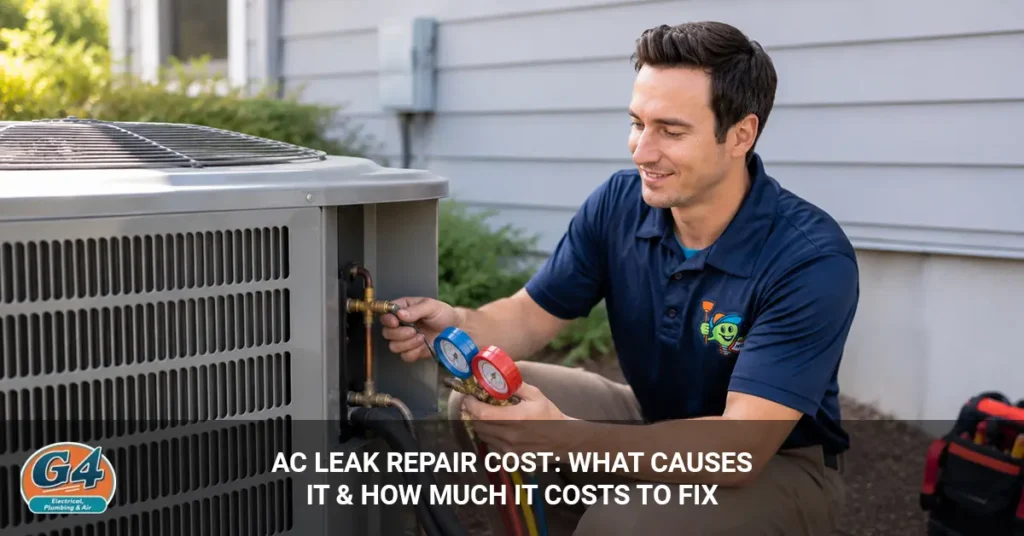
AC leak repair typically costs between $75 and $3,500 or more, depending on what’s causing the leak. A simple clogged condensate drain line is usually an inexpensive fix, while a refrigerant leak or a damaged evaporator coil can require much more extensive repairs.
If your air conditioner is leaking water or losing refrigerant, don’t ignore it. What starts as a minor problem can lead to water damage, higher energy bills, reduced cooling performance, and unnecessary wear on expensive components like the compressor.
The good news is that many AC leaks are repairable, especially when they’re diagnosed early. The first step is identifying whether you’re dealing with a drainage issue, a frozen evaporator coil, a faulty condensate pump, or a refrigerant leak. Each problem has a different repair process and cost.
This guide explains the average cost to repair an AC leak, the most common causes, warning signs to watch for, how HVAC technicians diagnose the problem, and when repairing your system makes more sense than replacing it. By the end, you’ll have a clear understanding of what to expect and how to make an informed decision if your air conditioner starts leaking.
How Much Does AC Leak Repair Cost?
AC leak repair usually costs between $75 and $3,500 or more, depending on the source of the leak and the repair required. Simple fixes, such as clearing a clogged condensate drain line, are relatively inexpensive. However, repairing a refrigerant leak or replacing a damaged evaporator coil can cost significantly more because of the labor involved and the specialized equipment required.
The table below shows the average cost of common AC leak repairs.
| Repair | Average Cost |
| Drain line cleaning | $75–$250 |
| Drain pan replacement | $150–$600 |
| Condensate pump replacement | $250–$650 |
| Frozen evaporator coil repair | $200–$900 |
| Refrigerant leak detection | $150–$500 |
| Refrigerant recharge* | $200–$900 |
| Evaporator coil replacement | $1,200–$3,500 |
| Condenser coil repair | $700–$2,500 |
| Compressor-related leak repair | $1,000–$2,800 |
If your AC needs refrigerant, the leak should be repaired before the system is recharged. Simply adding refrigerant without fixing the leak is only a temporary solution.
What Affects AC Leak Repair Costs?
The cost of repairing an AC leak depends on the type of problem, the parts involved, and the amount of labor needed. Two systems with similar symptoms can have very different repair costs once the technician identifies the underlying cause.
Several factors affect the final price:
- Type of leak: Water leaks caused by clogged drain lines or damaged drain pans are usually less expensive to repair than refrigerant leaks.
- Extent of the damage: A minor blockage may take less than an hour to fix, while replacing an evaporator coil or repairing compressor-related damage is far more involved.
- Age and condition of the system: Older air conditioners may require harder-to-find replacement parts or repairs that are no longer cost-effective.
- AC size and model: Larger systems and premium models often have more expensive replacement parts and longer repair times.
- Labor rates: HVAC labor costs vary by region, which can significantly affect the total repair bill.
- Emergency service: Nights, weekends, holidays, and peak summer demand often come with higher service rates.
- Refrigerant type: Older refrigerants can be more expensive and less readily available, increasing the overall repair cost.
Most HVAC companies also charge a diagnostic or service call fee, typically ranging from $75 to $150. In many cases, this fee is credited toward the repair if you approve the recommended work after the inspection.
While these price ranges provide a helpful estimate, the only way to know the exact repair cost is to have the system professionally diagnosed. If you’re comparing this repair with other common air conditioner problems, our guide to AC repair cost explains what homeowners typically pay for a wide range of HVAC repairs and the factors that influence pricing.
A thorough inspection identifies the true cause of the leak and helps ensure you pay for the correct repair instead of treating only the symptoms.
What Causes an AC Leak?
Most AC leaks are caused by drainage problems, frozen evaporator coils, refrigerant leaks, damaged components, or poor maintenance. Identifying the exact cause is important because the repair method and cost can vary significantly. While some issues are inexpensive to fix, others may require replacing major AC components.
Below are the most common reasons an air conditioner starts leaking.
Clogged Condensate Drain Line
A clogged condensate drain line is the most common cause of an indoor AC water leak. As your air conditioner cools your home, it removes humidity from the air. The resulting condensation flows through a drain line and safely exits your home. Over time, algae, mold, dirt, and other debris can build up inside the line, restricting the flow of water. When the blockage becomes severe, water backs up into the drain pan and eventually overflows around the indoor unit.
Homeowners often notice water pooling near the air handler, musty odors, or standing water in the drain pan. Some newer systems also include a float switch that automatically shuts the air conditioner off when the drain line becomes blocked, helping prevent water damage.
Professional drain line cleaning typically costs $75 to $250, making it one of the least expensive AC leak repairs. In many cases, regular maintenance is enough to prevent this issue. Scheduling annual HVAC service and keeping the condensate drain line clean can significantly reduce the risk of future clogs.
Dirty Air Filter Causing a Frozen Evaporator Coil
A dirty air filter can cause your evaporator coil to freeze, which may eventually lead to water leaking from your indoor AC unit. If your AC is freezing up, restricted airflow, low refrigerant, or blower problems may also be contributing to the issue, and addressing the root cause can help prevent future leaks.
When the filter becomes clogged with dust and debris, it restricts airflow across the evaporator coil. Without enough warm air passing over the coil, its temperature drops below freezing, allowing ice to form. As the ice melts, the excess water can overwhelm the drain pan and create a leak inside your home.
Common signs of a frozen evaporator coil include weak airflow, ice on the refrigerant lines or indoor coil, reduced cooling performance, higher energy bills, and water leaking after the ice begins to thaw. While a dirty air filter is one of the most common causes, low refrigerant levels, blocked air vents, or a malfunctioning blower fan can also cause the coil to freeze.
Repair costs typically range from $200 to $900, depending on what’s causing the problem. If the issue is simply a clogged air filter, replacing it is an inexpensive fix. However, if the frozen coil is caused by a refrigerant leak or another mechanical issue, additional repairs will increase the total cost.
The best way to prevent a frozen evaporator coil is to replace your air filter regularly and keep supply and return vents unobstructed. During peak cooling season, check the filter every month and replace it whenever it becomes dirty.
Cracked or Rusted Drain Pan
A cracked or rusted drain pan allows condensation to leak before it reaches the drain line. The drain pan sits beneath the evaporator coil and collects moisture removed from your home’s air. As air conditioners age, constant exposure to water can cause the pan to rust, corrode, or develop small cracks that let water escape.
A damaged drain pan often causes water to collect beneath the indoor unit even when the condensate drain line is clear. You may also notice rust, standing water in the pan, or recurring indoor leaks that don’t improve after the drain line has been cleaned.
Replacing a damaged drain pan typically costs $150 to $600, depending on your air conditioner model and the labor required. In some older systems, replacing the entire pan can be difficult because it’s integrated into the air handler, which may increase labor costs.
If the drain pan shows significant rust or corrosion, it’s a good idea to have the rest of the system inspected as well. Corrosion can be a sign of age-related wear, and identifying other worn components early may help prevent additional repairs.
Faulty Condensate Pump
A faulty condensate pump can cause your air conditioner to leak water if it can no longer remove condensation from the system. While many air conditioners rely on gravity to drain water, some systems use a condensate pump to move water to a nearby drain, especially when the indoor unit is installed in a basement, crawl space, or another location below the drain line.
When the pump stops working, condensation collects in the drain pan until it overflows, causing water to leak around the indoor unit. You may notice standing water near the air handler, frequent drain pan overflows, unusual noises coming from the pump, or a pump that doesn’t turn on when the AC is running.
Replacing a faulty condensate pump typically costs $250 to $650, including parts and labor. Because pump failures are often electrical or mechanical, replacement is usually more practical and reliable than attempting a repair. During the service visit, the technician should also inspect the drain line to ensure a blockage isn’t contributing to the problem.
Refrigerant Leak
A refrigerant leak is one of the most serious AC leaks because it reduces cooling performance, increases energy costs, and can eventually damage the compressor if left unrepaired. Unlike a water leak, refrigerant doesn’t evaporate through normal use. Your air conditioner operates as a sealed system, so the refrigerant level should remain constant throughout its life. If refrigerant is low, the system almost always has a leak that must be located and repaired before additional refrigerant is added.
Refrigerant leaks commonly develop because of corrosion that creates tiny pinhole leaks in the evaporator or condenser coil, loose refrigerant line connections caused by vibration, physical damage to refrigerant tubing, or, in rare cases, manufacturing defects.
Most homeowners first notice a refrigerant leak when their air conditioner no longer cools as effectively as it used to. If your AC is not cooling properly, a refrigerant leak is one possible cause, but dirty coils, airflow restrictions, thermostat problems, and other mechanical issues can produce similar symptoms.
Other common symptoms include warm or slightly cool air from the vents, longer cooling cycles, ice forming on the evaporator coil or refrigerant lines, higher electricity bills, increased indoor humidity, and a faint hissing or bubbling sound near the indoor or outdoor unit.
Repair costs vary depending on where the leak is located and how much of the system is affected.
| Service | Average Cost |
| Refrigerant leak detection | $150–$500 |
| Leak repair | $200–$1,500+ |
| Refrigerant recharge* | $200–$900 |
Note: If the leak is caused by a severely corroded evaporator coil, replacing the coil is often more cost-effective and reliable than attempting multiple repairs.
Because refrigerants require specialized handling, leak repairs should always be performed by a licensed HVAC technician. Simply adding refrigerant without fixing the leak is only a temporary solution, and attempting to repair or recharge the system yourself can create safety hazards, damage the equipment, and violate environmental regulations.
Damaged Evaporator Coil
A damaged evaporator coil is one of the most expensive AC leak repairs because it often requires replacing the entire coil. The evaporator coil absorbs heat from your home’s air as refrigerant circulates through it. Over time, corrosion, vibration, and normal wear can create tiny pinhole leaks that allow refrigerant to escape, reducing your air conditioner’s cooling performance.
Unlike a clogged drain line or a dirty air filter, evaporator coil leaks usually can’t be seen during a visual inspection. HVAC technicians often use electronic leak detectors, pressure testing, or UV dye to confirm the leak’s location before recommending a repair.
Signs of a Damaged Evaporator Coil
A leaking evaporator coil often develops gradually. Common warning signs include:
- Warm air coming from the vents
- Reduced cooling performance
- Ice forming on the indoor coil or refrigerant lines
- Higher electricity bills
- Longer cooling cycles
- Frequent refrigerant recharges
- Hissing sounds near the indoor unit
Repair vs. Replacement
Replacing the evaporator coil is usually a more reliable long-term solution than repairing it. While small leaks can sometimes be repaired, corrosion often creates multiple pinhole leaks throughout the coil. Fixing one leak doesn’t prevent another from developing a few months later.
For that reason, many HVAC professionals recommend replacing the coil instead of repeatedly repairing refrigerant leaks.
How Much Does It Cost to Replace an Evaporator Coil?
Most homeowners pay $1,200 to $3,500 to replace an evaporator coil, although the total cost depends on several factors, including:
- System size
- Coil type
- Refrigerant type
- Labor costs
- Warranty coverage
If your air conditioner is 12 to 15 years old or older, compare the repair cost with the price of a new system. Spending several thousand dollars on an aging AC may not provide the best long-term value, especially if the unit has required multiple repairs in recent years.
AC Water Leak vs. Refrigerant Leak: What’s the Difference?
The main difference is that a water leak is usually caused by a drainage problem, while a refrigerant leak is caused by damage to the sealed cooling system. Water leaks are often less expensive to repair, whereas refrigerant leaks require specialized equipment and should always be handled by a licensed HVAC technician.
The table below highlights the key differences between the two.
| Water Leak | Refrigerant Leak |
| Water collects around the indoor unit | Little or no visible liquid |
| Usually caused by drainage issues | Caused by damage to the sealed refrigerant system |
| Often inexpensive to repair | Usually more expensive to repair |
| Common causes include a clogged drain line, frozen evaporator coil, or damaged drain pan | Requires leak detection, repair, and refrigerant recharge |
| Routine maintenance can help prevent many water leaks | Requires professional diagnosis and repair |
A water leak is usually easier to recognize because you’ll often see water dripping from the indoor unit, wet flooring near the air handler, an overflowing drain pan, or even water stains on nearby walls or ceilings. Musty odors may also develop if moisture remains inside the system for an extended period.
A refrigerant leak is less obvious because refrigerant evaporates as it escapes, so you typically won’t see liquid around the unit. Instead, you may notice warm air from the vents, reduced cooling performance, longer cooling cycles, ice forming on the evaporator coil or refrigerant lines, rising energy bills, or a faint hissing or bubbling sound coming from the indoor or outdoor unit.
One point that often confuses homeowners is that a refrigerant leak can eventually cause a water leak. When refrigerant levels become too low, the evaporator coil may freeze. As the ice melts, excess water can overflow the drain pan and collect around the indoor unit. Although water is the visible symptom, the underlying problem is still the refrigerant leak.
If you’re unsure which type of leak your air conditioner has, avoid guessing or simply adding refrigerant. A professional HVAC inspection can identify the root cause and ensure the correct repair is made before additional damage occurs.
Signs Your AC Needs Leak Repair
A leaking air conditioner usually shows warning signs before it causes major damage. Recognizing these symptoms early can help prevent water damage, improve energy efficiency, and reduce the cost of repairs.
Water Around the Indoor Unit
Water pooling around the indoor unit is the most obvious sign of an AC leak. This is often caused by a clogged condensate drain line, a cracked drain pan, or a faulty condensate pump. If left untreated, the leaking water can damage flooring, drywall, and nearby building materials.
AC Blowing Warm Air
Warm air coming from your vents may indicate a refrigerant leak or another cooling problem. If your AC is blowing warm air, it’s important to have the system inspected promptly because continuing to run it can place additional strain on the compressor and increase repair costs.
As refrigerant levels drop, your air conditioner can’t absorb enough heat to cool your home effectively. A damaged evaporator coil or other sealed-system issue may also cause this symptom.
Ice on the Evaporator Coil or Refrigerant Lines
Ice buildup usually means your air conditioner isn’t operating correctly. Low refrigerant, restricted airflow, dirty air filters, or blocked vents can all cause the evaporator coil to freeze. As the ice melts, it often creates the water leak homeowners notice around the indoor unit.
Weak Airflow
Weak airflow is often an early warning sign of an airflow restriction or a frozen evaporator coil. If some rooms take longer to cool or little air comes from the vents, your system may be struggling because of a leak or another mechanical problem.
Higher Energy Bills
A sudden increase in your energy bill may indicate your AC is working harder than it should. Refrigerant leaks and airflow problems force the system to run longer cooling cycles, increasing electricity usage without improving comfort.
Musty Odors
Musty smells often develop when moisture remains inside the air conditioning system. Standing water in the drain pan or condensate line creates an ideal environment for mold and mildew growth, which can affect indoor air quality.
Hissing or Bubbling Sounds
A hissing or bubbling noise may indicate refrigerant escaping from the sealed system. These sounds often occur when refrigerant leaks through a small hole in the coil or a damaged line connection. Because refrigerant leaks require specialized equipment, they should be inspected by a licensed HVAC technician.
Frequent System Cycling
An air conditioner that turns on and off frequently may have trouble maintaining the desired temperature. Refrigerant loss, frozen coils, airflow restrictions, or other mechanical issues can all cause short cycling, increasing wear on the system.
High Indoor Humidity
Your air conditioner should remove excess humidity as it cools your home. If your home suddenly feels sticky or uncomfortable even though the AC is running, the system may not be removing moisture efficiently because of a refrigerant leak, frozen coil, or another performance issue.
How HVAC Technicians Diagnose an AC Leak
HVAC technicians diagnose an AC leak by inspecting the system, identifying the source of the leak, and confirming the cause before recommending a repair. A proper diagnosis is essential because water leaks and refrigerant leaks require different repair methods. Simply adding refrigerant or clearing a drain line without finding the underlying problem can lead to repeat failures and higher repair costs.
A typical AC leak inspection includes the following steps.
Visual Inspection
The first step is a thorough visual inspection of both the indoor and outdoor units. The technician looks for water around the air handler, rust or corrosion, ice buildup on the evaporator coil or refrigerant lines, damaged components, loose fittings, and other visible signs that may indicate the source of the leak.
Condensate Drain Line Inspection
If water is leaking indoors, the condensate drain system is inspected for blockages or damage. The technician checks the drain line for algae, dirt, mold, or debris that could prevent condensation from draining properly. The drain pan is also inspected for cracks, rust, or standing water that could indicate an overflow problem.
Evaporator Coil Inspection
The evaporator coil is examined for signs of corrosion, ice buildup, and refrigerant leaks. A frozen or corroded coil may indicate restricted airflow or a loss of refrigerant, both of which require further testing before repairs can begin.
Refrigerant Pressure Testing
Pressure testing helps determine whether the sealed refrigerant system has lost refrigerant. By comparing the system’s operating pressures with the manufacturer’s specifications, technicians can identify conditions that often indicate a refrigerant leak or another problem affecting cooling performance.
Electronic Leak Detection
Small refrigerant leaks that aren’t visible during a visual inspection are often located with an electronic leak detector. This specialized tool detects escaping refrigerant around coils, line connections, valves, and other sealed-system components, allowing technicians to pinpoint the leak more accurately.
UV Dye Testing
If the leak is difficult to locate, UV dye testing may be used. A fluorescent dye is added to the refrigerant, and after the system has operated for a period of time, the technician uses a UV light to identify the exact location of the leak. This method is particularly useful for finding slow or intermittent leaks that are otherwise difficult to detect.
A complete diagnosis helps ensure the actual cause of the leak is repaired rather than simply treating the symptoms. Identifying the problem correctly the first time can prevent repeat service calls, improve your air conditioner’s efficiency, and reduce the risk of more expensive repairs in the future.
Can You Fix an AC Leak Yourself?
Some AC leaks can be fixed by homeowners, but many require a licensed HVAC technician to diagnose and repair safely. The key is knowing whether you’re dealing with a simple maintenance issue, such as a clogged drain line or dirty air filter, or a more serious problem involving the refrigerant system or electrical components.
Attempting the wrong repair can lead to water damage, poor cooling performance, or even costly damage to your air conditioner. While basic maintenance tasks are safe for most homeowners, refrigerant leaks, frozen coils that keep returning, and component failures should always be handled by a qualified HVAC professional.
Here’s what you can safely do yourself and when it’s time to call a technician.
What You Can Safely Do Yourself
Homeowners can safely perform a few basic maintenance tasks if they suspect an AC water leak. These steps may resolve simple issues or help you identify the problem before calling an HVAC technician. However, if the leak continues after performing these checks, schedule a professional inspection.
Replace a Dirty Air Filter
Replacing a dirty air filter is one of the easiest ways to improve airflow and prevent a frozen evaporator coil. A clogged filter restricts airflow, allowing the coil to become too cold and freeze. When the ice melts, excess water can overflow the drain pan and leak around the indoor unit.
Check your air filter every month during the cooling season and replace it whenever it becomes dirty or according to the manufacturer’s recommendations.
Check the Condensate Drain Line
A clogged condensate drain line is a common cause of indoor water leaks. If you can safely access the drain line, inspect it for visible blockages. Minor clogs can sometimes be removed using a wet/dry vacuum or by flushing the line with a manufacturer-approved cleaning solution.
If the blockage can’t be cleared easily or the leak continues, stop troubleshooting and contact an HVAC technician to prevent additional water damage.
Clean Around the Outdoor Unit
Keeping the outdoor condenser free of debris helps your air conditioner operate efficiently. Remove leaves, grass clippings, and other debris from around the unit, and maintain at least two feet of clearance to allow proper airflow. While this won’t fix a water leak directly, it helps reduce strain on the system and supports overall cooling performance.
Inspect the Drain Pan
A quick inspection of the drain pan can reveal early signs of a drainage problem. Look for standing water, rust, cracks, or corrosion if the pan is easily accessible. Catching these issues early can help prevent water damage and larger repairs.
If you find a damaged drain pan, don’t attempt to repair or replace it yourself. Have it inspected by a qualified HVAC technician to ensure the entire condensate drainage system is working properly.
Repairs You Should Leave to an HVAC Technician
Problems involving refrigerant, electrical components, or major AC parts should always be handled by a licensed HVAC technician. These repairs require specialized tools, technical knowledge, and safety procedures that go beyond routine homeowner maintenance.
Schedule a professional inspection if you notice any of the following:
- Refrigerant leaks: A sealed refrigerant system should never run low under normal conditions. The leak must be located and repaired before the system can be recharged.
- Ice that keeps returning: If the evaporator coil freezes again after replacing the air filter, the problem may involve low refrigerant, restricted airflow, or a failing blower component.
- Water leaking despite a clear drain line: Persistent leaks often indicate a damaged drain pan, faulty condensate pump, or another issue that requires professional diagnosis.
- Electrical problems: Tripped breakers, wiring issues, or faulty electrical components should never be repaired without the proper training and equipment.
- Failed condensate pump: Replacing a condensate pump often involves electrical connections and testing to ensure the drainage system operates correctly.
- Damaged evaporator or condenser coil: Coil repairs and replacements require specialized tools and may involve opening the sealed refrigerant system.
- Hissing or bubbling sounds: These noises commonly indicate a refrigerant leak and should be inspected as soon as possible to prevent compressor damage.
- Poor cooling that doesn’t improve: If replacing the air filter and checking the drain line don’t solve the problem, a professional diagnosis is the safest and most effective next step.
Attempting to repair sealed refrigerant components yourself can damage the system, void the manufacturer’s warranty, and create safety and environmental risks. In most cases, professional repairs cost far less than correcting damage caused by an improper DIY repair.
Tip: If your AC is leaking and you can’t identify the cause, turn the system off until it can be inspected. Continuing to operate the unit with a refrigerant leak or a frozen evaporator coil can increase repair costs and place additional strain on the compressor.
Is It Better to Repair or Replace an AC With a Leak?
Whether you should repair or replace a leaking air conditioner depends on the cause of the leak, the repair cost, and the age and overall condition of the system. Minor problems, such as a clogged condensate drain line or a faulty condensate pump, are usually worth repairing. However, major repairs on an older air conditioner may not be the best long-term investment.
The table below provides a general guide.
| Situation | Recommended Option |
| Clogged condensate drain line | Repair |
| Dirty air filter causing a frozen evaporator coil | Repair |
| Damaged drain pan | Repair |
| Faulty condensate pump | Repair |
| Minor refrigerant leak on a newer system | Repair |
| Evaporator coil replacement on a 15-year-old AC | Usually Replace |
| Compressor damage combined with a refrigerant leak | Usually Replace |
| Multiple major repairs in recent years | Consider Replacement |
When Repairing Your AC Makes Sense
Repairing your air conditioner is usually the better choice if the problem is minor and the system is still in good condition. In most cases, repairing the unit is worthwhile when:
- The air conditioner is less than 10 years old.
- The repair involves a clogged drain line, dirty air filter, drain pan, or condensate pump.
- The system has been reliable and hasn’t required frequent repairs.
- The repair cost is reasonable compared to the value of the unit.
When Replacement Is the Better Investment
Replacing your air conditioner may save money over time if major components have failed or the system is nearing the end of its service life. Consider replacing the unit if:
- The system is 12 to 15 years old or older.
- The evaporator coil or compressor requires replacement.
- The air conditioner has needed several expensive repairs in recent years.
- Energy bills continue to increase because the system is becoming less efficient.
- Replacement parts or refrigerant are difficult or expensive to obtain.
Consider the Long-Term Cost
A lower repair bill isn’t always the most economical choice. Spending thousands of dollars to repair an aging air conditioner may only postpone the need for a replacement, especially if other components are also showing signs of wear.
A qualified HVAC technician can inspect your system, explain the condition of its major components, and help you compare the cost of repairing the existing unit with the benefits of installing a newer, more energy-efficient system.
Consider the Age and Overall Condition of Your AC
The age of your air conditioner is one of the biggest factors in deciding whether to repair or replace it. A newer system with a minor leak is usually worth repairing, while an older unit with a major component failure may be a better candidate for replacement.
As a general guideline:
- Less than 10 years old: Repairing the system is often the most cost-effective option, especially if it has been well maintained and the repair is relatively minor.
- 10 to 15 years old: Compare the repair cost with the system’s overall condition, energy efficiency, and repair history before making a decision.
- More than 15 years old: If the repair involves expensive components such as the evaporator coil or compressor, replacing the system may provide better long-term value and lower operating costs.
Other Factors to Consider
Age isn’t the only factor that matters. Before deciding whether to repair or replace your air conditioner, consider:
- Repair history: If the system has required several major repairs in recent years, replacement may be the more economical long-term option.
- Energy efficiency: Older air conditioners often consume more electricity than newer, high-efficiency models, increasing monthly utility bills.
- Cooling performance: If your home never feels comfortable despite repeated repairs, the system may be nearing the end of its useful life.
- Replacement parts: Some older systems use discontinued components or refrigerants that are expensive or difficult to obtain, making future repairs less practical.
Every situation is different. A qualified HVAC technician can evaluate your system, explain the condition of its major components, and help you determine whether repairing the existing unit or replacing it will provide the best long-term value.
How to Prevent Future AC Leaks
Most AC leaks can be prevented with routine maintenance and by addressing small problems before they become major repairs. Regular care helps your air conditioner operate more efficiently, reduces the risk of unexpected breakdowns, and can extend the life of the system.
Replace Your Air Filter Regularly
A clean air filter is one of the simplest ways to prevent airflow problems that can lead to AC leaks. When the filter becomes clogged, airflow across the evaporator coil is restricted, increasing the risk of the coil freezing. As the ice melts, excess water can overflow the drain pan and leak inside your home.
Check the air filter every month during the cooling season and replace it whenever it becomes dirty or according to the manufacturer’s recommendations.
Schedule Annual HVAC Maintenance
Annual professional maintenance helps identify small issues before they turn into expensive repairs. During a routine tune-up, an HVAC technician typically inspects refrigerant levels, the condensate drain line, drain pan, evaporator coil, condensate pump, electrical components, airflow, and the overall performance of the system.
Regular maintenance not only helps prevent leaks but also improves energy efficiency, reduces wear on major components, and lowers the risk of unexpected breakdowns during hot weather.
Following a complete HVAC maintenance checklist each year helps identify clogged drain lines, refrigerant issues, worn components, and other problems before they turn into expensive repairs.
Keep the Condensate Drain Line Clean
Keeping the condensate drain line clear helps prevent one of the most common causes of indoor AC leaks. Algae, mold, dirt, and other debris can gradually block the drain line, causing condensation to back up into the drain pan and overflow.
Having the drain line cleaned during annual maintenance or whenever a blockage is suspected can help prevent costly water damage.
Inspect the Drain Pan
A damaged drain pan can leak even if the drain line is working properly. During routine maintenance, look for standing water, rust, cracks, or corrosion if the pan is accessible. Replacing a worn drain pan before it fails can help avoid indoor water damage and unnecessary repair costs.
Keep Supply and Return Vents Unobstructed
Proper airflow is essential for efficient AC operation. Avoid blocking supply or return vents with furniture, rugs, curtains, or other household items. Restricted airflow can contribute to frozen evaporator coils, reduced cooling performance, and higher energy bills.
Don’t Ignore Early Warning Signs
Small AC problems are usually less expensive to fix than major system failures. If you notice water around the indoor unit, weak airflow, ice buildup, warm air from the vents, unusual noises, or a sudden increase in your energy bills, schedule an inspection before the problem gets worse.
Addressing these warning signs early can help prevent additional damage, reduce repair costs, and keep your air conditioner running reliably throughout the cooling season.
Frequently Asked Questions
How much does it cost to repair an AC leak?
AC leak repair typically costs between $75 and $3,500 or more, depending on the cause of the leak. Simple repairs, such as clearing a clogged condensate drain line, are relatively inexpensive, while replacing a leaking evaporator coil or repairing a major refrigerant leak can cost significantly more.
Is a leaking AC dangerous?
A leaking air conditioner isn’t always dangerous, but it shouldn’t be ignored. Water leaks can damage flooring, drywall, and ceilings while creating conditions for mold growth. Refrigerant leaks are more serious because they reduce cooling performance and require repair by a licensed HVAC technician.
Can I keep using my AC if it’s leaking?
It’s best to avoid using your AC until you know what’s causing the leak. A minor drainage issue may not require immediate shutdown, but operating the system with a refrigerant leak, frozen evaporator coil, or significant water leak can lead to more extensive and expensive repairs.
Does homeowners insurance cover AC leak repairs?
In most cases, homeowners’ insurance doesn’t cover AC repairs caused by normal wear and tear or lack of maintenance. However, your policy may cover damage resulting from a sudden covered event, such as a storm or accidental water damage. Check your policy or contact your insurance provider to confirm your coverage.
How long does AC leak repair take?
Most AC leak repairs can be completed within one to several hours, depending on the problem. Clearing a clogged drain line is often a quick repair, while refrigerant leak detection, evaporator coil replacement, or compressor repairs may take several hours or require a follow-up visit if replacement parts are needed.
Can a refrigerant leak be repaired permanently?
Yes, a refrigerant leak can usually be repaired permanently if the source of the leak is fixed. Once the damaged component is repaired or replaced, the system can be recharged with the correct amount of refrigerant. Simply adding refrigerant without repairing the leak is only a temporary solution.
How do I know if my AC has a water leak or a refrigerant leak?
Water leaks usually cause visible moisture, while refrigerant leaks affect your AC’s cooling performance. Water around the indoor unit, an overflowing drain pan, or ceiling stains often indicate a drainage issue. Warm air, ice on the evaporator coil, longer cooling cycles, and hissing sounds are more commonly associated with a refrigerant leak.
What happens if I ignore an AC leak?
Ignoring an AC leak can lead to more expensive repairs and reduce the lifespan of your system. Depending on the cause, a leak may result in water damage, mold growth, poor cooling performance, higher energy bills, or even compressor failure. Addressing the problem early is usually the most cost-effective solution.
Final Thoughts
AC leak repair costs vary widely because the underlying causes range from simple maintenance issues to major component failures. A clogged condensate drain line, cracked drain pan, or faulty condensate pump can often be repaired at a relatively low cost. In contrast, refrigerant leaks, damaged evaporator coils, and compressor-related problems typically require more extensive repairs and a larger investment.
The sooner you address an AC leak, the better. What starts as a minor issue can quickly lead to water damage, reduced energy efficiency, poor cooling performance, or additional wear on expensive components if left unresolved.
If you notice water around your indoor unit, warm air from the vents, ice on the evaporator coil, unusual noises, or rising energy bills, don’t ignore the warning signs. Having your system inspected by a qualified HVAC technician early can help identify the root cause, prevent further damage, and ensure your air conditioner continues to operate safely and efficiently.