
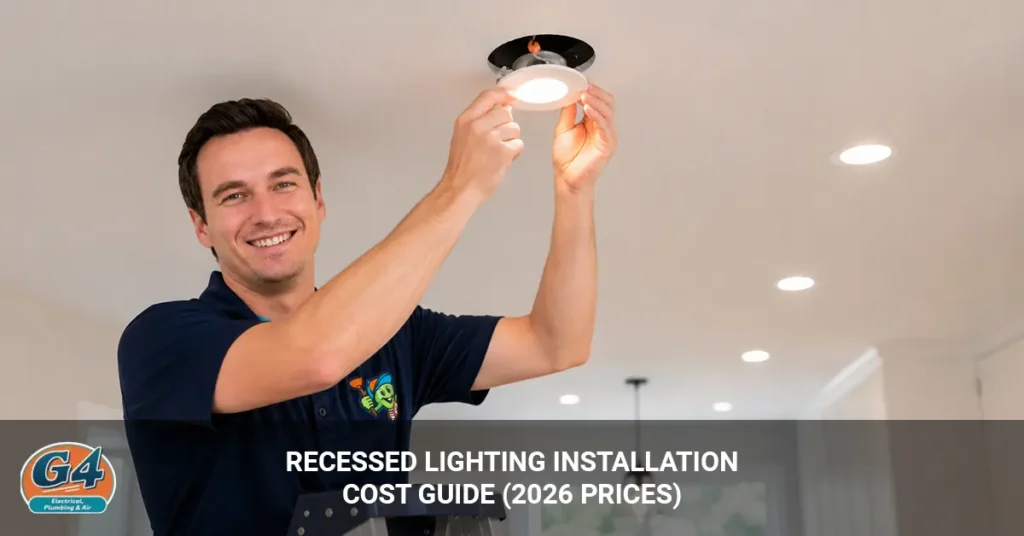
Recessed lighting installation typically costs between $200 and $500 per light, while most homeowners spend $1,500 to $6,000 for a professionally installed project. The total cost depends on the number of lights, the room you’re upgrading, your ceiling type, existing wiring, and local electrician labor rates.
Recessed lighting is one of the easiest ways to modernize a home’s interior. Also known as can lights, pot lights, or downlights, these fixtures sit flush with the ceiling to provide bright, even lighting without taking up visual space. They’re a popular choice for kitchens, living rooms, bedrooms, bathrooms, basements, and home offices because they create a clean, updated look while improving everyday visibility.
The cost of installation can vary significantly from one home to another. For example, installing recessed lights in a room with easy attic access is usually less expensive than adding lights to a finished ceiling that requires new wiring. The number of fixtures, the type of recessed lights you choose, and whether your electrical panel needs upgrades can also affect the final price.
This guide covers average recessed lighting installation costs in 2026, including room-by-room pricing, cost factors, labor expenses, and tips to help you plan your project. By the end, you’ll have a clear idea of what to expect and whether recessed lighting is the right investment for your home.
How Much Does Recessed Lighting Installation Cost?
Professional recessed lighting installation typically costs between $200 and $500 per light. If you’re installing several lights or upgrading multiple rooms, most projects cost between $1,500 and $6,000, while large whole-home installations can exceed $8,000.
The final cost depends on several factors, including the number of lights, the type of ceiling, whether new wiring is needed, and how easy it is for the electrician to access the installation area. Projects in homes with existing wiring and attic access are generally less expensive than installations that require cutting drywall, running new circuits, or upgrading the electrical panel.
Average Recessed Lighting Installation Costs
| Project | Average Cost |
| One recessed light | $200–$500 |
| Four recessed lights | $800–$2,000 |
| Six recessed lights | $1,200–$3,000 |
| Eight recessed lights | $1,600–$4,000 |
| One average-size room | $1,500–$4,000 |
| Whole-home installation | $3,000–$8,000+ |
Note: These are average installed prices and typically include labor and standard materials. Your total cost may be higher if the project requires new wiring, drywall repairs, permits, or an electrical panel upgrade.
What’s Included in the Installation Cost?
Most professional recessed lighting installations include both labor and the basic materials needed to complete the job. Before work begins, your electrician will evaluate your home’s electrical system and provide a detailed estimate based on the scope of the project.
A typical installation includes:
- Recessed light fixtures or housings
- LED trim or integrated LED lights (if selected)
- Electrical wiring and connectors
- Ceiling cutouts
- Fixture installation
- Electrical testing
- Cleanup after the installation
If your home needs additional electrical work such as installing a new circuit, repairing drywall, or upgrading the electrical panel, those costs are usually quoted separately. Getting a written estimate before the project begins helps you understand exactly what’s included and avoid unexpected expenses.
Recessed Lighting Installation Cost by Room
Recessed lighting installation costs vary by room because each space has different lighting needs, fixture layouts, and installation requirements. Larger rooms usually need more recessed lights, while kitchens and bathrooms often require carefully placed fixtures for both general and task lighting.
The room’s size, ceiling height, existing wiring, and the number of fixtures all affect the final price. Below are the average installation costs for some of the most common rooms in a home.
Kitchen Recessed Lighting Installation Cost
Installing recessed lighting in a kitchen typically costs between $800 and $2,500. Kitchens usually require more recessed lights than other rooms because they need bright, even lighting for cooking, food preparation, and everyday use.
Most kitchens need 4 to 8 recessed lights, although larger kitchens with islands or open floor plans may require additional fixtures.
A typical kitchen lighting layout includes:
- General ceiling lighting
- Kitchen island lighting
- Countertop task lighting
- Sink lighting
- Optional dimmer switches for adjustable brightness
Many homeowners choose LED recessed lights for kitchens because they produce bright, consistent light while using less electricity than traditional bulbs. They’re also long-lasting, making them a practical choice for one of the busiest rooms in the home.
Average Kitchen Recessed Lighting Costs
| Kitchen Size | Average Installed Cost |
| Small Kitchen | $800–$1,400 |
| Medium Kitchen | $1,200–$2,000 |
| Large Kitchen | $2,000–$2,500+ |
If you’re remodeling your kitchen, installing recessed lighting before the ceiling is finished can reduce labor costs and make the installation process easier. Many homeowners also add dimmer switches to adjust the lighting for cooking, dining, and entertaining.
Living Room Recessed Lighting Installation Cost
Installing recessed lighting in a living room typically costs between $1,000 and $3,000. The total cost depends on the room’s size, ceiling height, lighting layout, and the number of fixtures needed to provide even, comfortable lighting.
Most living rooms use 6 to 10 recessed lights to create balanced ambient lighting. Larger rooms or open-concept living areas may require additional fixtures to eliminate dark corners and ensure consistent brightness throughout the space.
Many homeowners pair recessed lighting with other fixtures to create a layered lighting design, such as:
- Ceiling fans with built-in lights
- Decorative chandeliers
- Wall sconces
- Smart dimmer switches
- Accent lighting for fireplaces or artwork
If your living room has a vaulted or cathedral ceiling, installation may take longer and require more fixtures to distribute light evenly. Higher ceilings also increase labor costs because they require additional equipment and installation time.
Average Living Room Recessed Lighting Costs
| Living Room Size | Average Installed Cost |
| Small Living Room | $1,000–$1,600 |
| Medium Living Room | $1,500–$2,300 |
| Large Living Room | $2,300–$3,000+ |
For the best results, many electricians recommend combining recessed lighting with dimmer switches. This allows you to adjust the brightness for different activities, whether you’re watching a movie, entertaining guests, or relaxing with family. Properly placed recessed lights can also make a living room feel brighter, larger, and more inviting.
Bedroom Recessed Lighting Installation Cost
Installing recessed lighting in a bedroom typically costs between $800 and $2,000. The total cost depends on the room’s size, the number of fixtures, and whether new wiring or dimmer switches are included in the project.
Bedrooms usually need fewer recessed lights than kitchens or living rooms because the goal is to create soft, comfortable lighting rather than bright task lighting. Most standard bedrooms use 4 to 6 recessed lights, while larger primary bedrooms or bedrooms with sitting areas may require additional fixtures for even light coverage.
A well-designed bedroom lighting layout often includes:
- Evenly spaced ceiling lights
- Reading lights near the bed
- Accent lighting for trays or vaulted ceilings
- Soft ambient lighting with dimmer controls
Many homeowners choose LED recessed lights with dimmer switches because they make it easy to adjust the brightness throughout the day. Bright lighting is useful when cleaning or getting dressed, while dimmer settings create a more relaxing atmosphere in the evening.
Average Bedroom Recessed Lighting Costs
| Bedroom Size | Average Installed Cost |
| Small Bedroom | $800–$1,200 |
| Medium Bedroom | $1,200–$1,600 |
| Large Bedroom | $1,600–$2,000+ |
If you’re remodeling a primary bedroom, consider installing recessed lighting alongside bedside lamps, ceiling fans, or decorative fixtures. Layering different light sources creates a more functional and inviting space while giving you greater control over the room’s lighting.
How Many Recessed Lights Do You Need?
The number of recessed lights you need depends on your room’s size, ceiling height, layout, and the amount of light you want. Installing too few fixtures can leave dark areas, while installing too many can make the room feel overly bright and increase your installation costs.
As a general rule, larger rooms require more recessed lights to provide even illumination. Ceiling height also matters. Rooms with higher ceilings often need additional fixtures or different spacing to distribute light evenly.
Recommended Number of Recessed Lights by Room
| Room | Typical Number of Recessed Lights |
| Kitchen | 4–8 |
| Living Room | 6–10 |
| Bedroom | 4–6 |
| Bathroom | 2–4 |
| Hallway | 2–4 |
| Home Office | 4–6 |
These recommendations work well for most homes, but every room is different. Open floor plans, vaulted ceilings, dark wall colors, and large furniture can all affect how many lights you’ll need.
Other Factors That Affect the Number of Lights
Besides room size, electricians also consider:
- Ceiling height
- Room shape and layout
- Natural light from windows
- Light output (lumens) of each fixture
- The purpose of the room
- Whether you’ll use dimmer switches
- Existing lighting fixtures
For example, a kitchen used for cooking usually needs brighter task lighting than a bedroom designed for relaxation.
Get a Professional Lighting Layout
A licensed electrician or lighting designer can recommend the ideal number and placement of recessed lights for your home. Proper spacing helps eliminate dark spots, reduces glare, and creates balanced lighting throughout the room.
A professional lighting plan also helps you avoid installing more fixtures than necessary, which can lower installation costs while achieving the best lighting results.
Bathroom Recessed Lighting Installation Cost
Installing recessed lighting in a bathroom typically costs between $400 and $1,500. The final price depends on the bathroom’s size, the number of recessed lights, the ceiling type, and whether moisture-rated fixtures are required.
Most bathrooms need 2 to 4 recessed lights to provide bright, even lighting around the vanity, shower, and bathtub. Larger primary bathrooms or luxury bathrooms may require additional fixtures to eliminate shadows and improve visibility.
Because bathrooms are exposed to humidity and moisture, electricians install damp-rated or wet-rated recessed lights in areas where water exposure is possible. Fixtures installed directly above a shower or bathtub must be rated for wet locations to meet electrical safety requirements.
A typical bathroom lighting layout may include:
- General ceiling lighting
- Vanity lighting
- Shower lighting
- Bathtub lighting
- Optional dimmer switches for adjustable brightness
LED recessed lights are the most popular choice for bathrooms because they provide bright, energy-efficient lighting and require very little maintenance.
Average Bathroom Recessed Lighting Costs
| Bathroom Size | Average Installed Cost |
| Small Bathroom | $400–$800 |
| Medium Bathroom | $700–$1,100 |
| Large Bathroom | $1,100–$1,500+ |
If you’re remodeling your bathroom, installing recessed lighting at the same time can help reduce labor costs. A licensed electrician can also recommend the best fixture placement to provide even lighting while meeting electrical code requirements for wet and damp locations.
Basement Recessed Lighting Installation Cost
Installing recessed lighting in a finished basement typically costs between $1,000 and $3,500. The total cost depends on the basement’s size, the number of fixtures, ceiling accessibility, and whether new wiring is required.
Since basements often receive little or no natural light, recessed lighting is an excellent way to brighten the space without reducing ceiling height. Unlike hanging fixtures, recessed lights sit flush with the ceiling, making them ideal for basements with lower ceilings.
The number of recessed lights you’ll need depends on how the basement is used. A finished family room or entertainment space generally requires more fixtures than a utility room or storage area.
A typical basement lighting plan may include:
- General ceiling lighting
- Home theater lighting
- Game room lighting
- Home office lighting
- Bar or kitchenette lighting
- Workout or recreation area lighting
Average Basement Recessed Lighting Costs
| Basement Size | Average Installed Cost |
| Small Basement | $1,000–$1,800 |
| Medium Basement | $1,800–$2,700 |
| Large Basement | $2,700–$3,500+ |
If the basement is unfinished, installation is often faster and less expensive because electricians have easy access to ceiling joists and wiring before drywall is installed. In contrast, adding recessed lighting to a finished basement usually requires more labor, as wiring must be routed through existing ceilings with minimal disruption.
For the best results, many homeowners combine recessed lighting with dimmer switches to create flexible lighting for watching movies, entertaining guests, working from home, or everyday use.
Hallway Recessed Lighting Installation Cost
Installing recessed lighting in a hallway typically costs between $400 and $1,200. Hallways usually require fewer fixtures than larger rooms, making them one of the most affordable areas of the home to upgrade.
Most hallways need 2 to 4 recessed lights, depending on their length, width, and ceiling height. Proper spacing is important because it helps eliminate dark spots and provides consistent lighting from one end of the hallway to the other.
Average Hallway Recessed Lighting Costs
| Hallway Size | Average Installed Cost |
| Short Hallway | $400–$700 |
| Medium Hallway | $700–$1,000 |
| Long Hallway | $1,000–$1,200+ |
If your hallway connects multiple rooms, installing LED recessed lights with dimmer switches can improve visibility while reducing energy use.
Dining Room Recessed Lighting Installation Cost
Installing recessed lighting in a dining room typically costs between $800 and $2,000. Recessed lights provide soft, even illumination and are often paired with a chandelier or pendant light to create a balanced lighting design.
Most dining rooms use 4 to 6 recessed lights, usually installed around the perimeter of the room instead of directly over the dining table. This layout reduces shadows and highlights the room without overpowering the centerpiece light fixture.
Many homeowners also install dimmer switches to easily adjust the brightness for everyday meals, family gatherings, or formal dinners.
Average Dining Room Recessed Lighting Costs
| Dining Room Size | Average Installed Cost |
| Small Dining Room | $800–$1,200 |
| Medium Dining Room | $1,200–$1,600 |
| Large Dining Room | $1,600–$2,000+ |
Home Office Recessed Lighting Installation Cost
Installing recessed lighting in a home office typically costs between $800 and $2,000. Good lighting improves visibility, reduces eye strain, and creates a more productive workspace.
Most home offices require 4 to 6 recessed lights, although larger offices or rooms with high ceilings may need additional fixtures for even light distribution.
Many homeowners choose LED recessed lights with adjustable color temperatures, allowing them to switch between cooler white light for focused work and warmer light for a more comfortable atmosphere later in the day.
Average Home Office Recessed Lighting Costs
| Office Size | Average Installed Cost |
| Small Office | $800–$1,200 |
| Medium Office | $1,200–$1,600 |
| Large Office | $1,600–$2,000+ |
Garage Recessed Lighting Installation Cost
Installing recessed lighting in a garage typically costs between $600 and $2,000. The total cost depends on the garage’s size, ceiling height, the number of fixtures, and whether additional wiring is required.
Recessed lighting is an excellent choice for finished garages because the fixtures sit flush with the ceiling. This provides bright, even lighting without interfering with garage door tracks, overhead storage, or shelving.
Most garages use 4 to 8 recessed lights, depending on their size and whether the space is used for parking, storage, or a workshop.
Average Garage Recessed Lighting Costs
| Garage Size | Average Installed Cost |
| One-Car Garage | $600–$1,000 |
| Two-Car Garage | $1,000–$1,500 |
| Three-Car Garage | $1,500–$2,000+ |
If you use your garage as a workshop or hobby space, adding brighter LED recessed lights and separate lighting zones can improve visibility and make the area more functional.
Recessed Lighting Installation Cost by Number of Lights
The total cost of recessed lighting installation increases as you add more fixtures, but the average cost per light often decreases. That’s because electricians can complete multiple installations during the same visit, reducing labor time and setup costs for each fixture.
If you’re planning to upgrade several rooms, installing all the recessed lights at once is usually more cost-effective than completing the work in separate projects.
Average Installation Cost by Number of Recessed Lights
| Number of Lights | Average Installed Cost |
| 2 Lights | $400–$1,000 |
| 4 Lights | $800–$2,000 |
| 6 Lights | $1,200–$3,000 |
| 8 Lights | $1,600–$4,000 |
| 10 Lights | $2,000–$5,000 |
| 12 Lights | $2,400–$6,000 |
Note: These estimates include professional installation and standard materials. Projects that require new wiring, drywall repairs, or electrical panel upgrades may cost more.
Why Installing More Lights Can Save Money
Installing multiple recessed lights during the same project is usually more economical than adding them one at a time. Once an electrician has access to the ceiling and wiring, installing additional fixtures typically requires less extra labor.
For example, if you’re remodeling your kitchen, living room, and hallway, combining all the work into one project can help you:
- Reduce labor costs per fixture
- Minimize service call fees
- Complete the project faster
- Limit ceiling repairs to a single visit
- Save money on permits and inspections, where applicable
If you’re planning future lighting upgrades, ask your electrician whether completing them together could lower your overall installation cost. In many cases, a larger project provides better value than scheduling several smaller installations over time.
What Affects Recessed Lighting Installation Cost?
Several factors determine the cost of recessed lighting installation, including your home’s wiring, ceiling type, fixture choice, labor rates, and whether additional electrical work is needed. Understanding these factors can help you estimate your budget and avoid unexpected costs.
Here are the biggest factors that affect the final price.
Existing Wiring vs. New Wiring
Using existing wiring is usually less expensive than installing new wiring. If electrical wiring is already available where the recessed lights will be installed, the electrician can complete the project more quickly and with less labor.
However, costs increase if new wiring must be run through finished ceilings or walls. The same wiring challenges homeowners face when adding recessed lighting also apply when you install a ceiling fan without existing wiring.
This is especially common in older homes or rooms that weren’t originally designed for recessed lighting.
Ceiling Type
The type of ceiling plays a major role in installation costs. Some ceilings are easier to work with than others, which directly affects labor time.
Here’s how different ceiling types compare:
- Drywall ceilings: The easiest and most affordable to install recessed lights.
- Plaster ceilings: Require extra care because they’re more likely to crack during installation.
- Concrete ceilings: Need specialized tools and significantly more labor, making them the most expensive option.
- Drop ceilings: May require special mounting hardware depending on the fixture style.
In general, the more difficult the ceiling is to cut or access, the higher the installation cost.
Attic Access and Ceiling Accessibility
Easy access above the ceiling can reduce both installation time and labor costs. When electricians can work from the attic, they often don’t need to make as many openings in the finished ceiling.
Installation becomes more challenging if:
- There’s no attic access.
- The room is below another finished floor.
- Ceiling joists restrict fixture placement.
- Existing insulation must be moved or replaced.
These conditions increase labor time and may raise the total project cost.
Type of Recessed Light
The style of recessed light you choose also affects the overall price. Some fixtures cost more than others and may require different installation methods.
Popular options include:
- Traditional can lights
- Slim wafer lights
- LED recessed lights
- Smart recessed lights
- Adjustable gimbal lights
Many homeowners choose LED wafer lights because they’re energy-efficient, require less ceiling space, and are often easier to install in existing homes.
Electrical Panel Capacity
Your electrical panel must have enough capacity to handle the new lighting. If your electrician recommends increasing your home’s electrical capacity, reviewing the electrical panel upgrade cost can help you budget for the additional work.
If your panel is full or outdated, the electrician may recommend installing a new circuit or upgrading the electrical panel before adding recessed lights.
Although this increases the upfront cost, it also improves electrical safety and provides extra capacity for future home upgrades.
Permit Requirements
Some recessed lighting projects require electrical permits and inspections. Permit requirements vary by city and local building code, especially when new wiring or circuits are being added.
Additional costs may include:
- Electrical permits
- Required inspections
- Electrical code upgrades
Your electrician should explain any permit requirements and include these fees in the project estimate.
Local Labor Rates
Labor is one of the largest parts of the total installation cost. Electrician rates vary by location, experience, and the complexity of the job.
Labor costs are often higher when:
- The home is in a major metropolitan area.
- The ceilings are unusually high.
- Wiring is difficult to access.
- Specialty fixtures are being installed.
Getting quotes from multiple licensed electricians can help you compare pricing in your area.
Dimmer Switch Installation
Installing dimmer switches increases the initial cost but adds convenience and energy savings. Understanding how light switch wiring works can also help homeowners better understand the electrical upgrades involved in installing dimmers and new lighting controls. Dimmers allow you to adjust the brightness to match different activities, creating a more comfortable and flexible lighting system.
Many homeowners install dimmers in:
- Kitchens
- Living rooms
- Dining rooms
- Bedrooms
- Home theaters
Adding dimmer switches during the original installation is usually less expensive than scheduling a separate service visit later. It’s also a convenient time to upgrade to smart dimmers if you plan to integrate your lighting with a home automation system.
LED Recessed Lighting vs. Traditional Can Lights
LED recessed lights are the best choice for most homeowners because they’re more energy-efficient, last much longer, and cost less to operate over time. Although traditional can lights typically have a lower upfront cost, LED fixtures provide better long-term value and have become the standard for new recessed lighting installations.
In addition to reducing energy consumption, LED recessed lights generate less heat and require very little maintenance. Many models also include advanced features such as dimming, adjustable color temperatures, and smart home integration.
LED Recessed Lights vs. Traditional Can Lights
| Feature | LED Recessed Lights | Traditional Can Lights |
| Upfront Cost | Slightly higher | Lower |
| Energy Efficiency | Excellent | Moderate |
| Lifespan | 25,000–50,000+ hours | 1,000–2,000 hours* |
| Maintenance | Minimal | Regular bulb replacements |
| Heat Output | Low | Higher |
| Long-Term Operating Cost | Lower | Higher |
*Lifespan varies depending on the type of bulb used.
Why Choose LED Recessed Lights?
LED recessed lights offer better performance and lower operating costs than traditional lighting. While you’ll usually pay a little more upfront, the long lifespan and reduced energy use can help offset the initial investment over time.
Some of the biggest advantages include:
- Lower electricity bills
- Longer lifespan
- Less maintenance
- Brighter, more consistent lighting
- Reduced heat output
- Better energy efficiency
- Environmentally friendly operation
Because LEDs rarely need replacing, they’re especially beneficial in hard-to-reach ceilings where changing bulbs can be inconvenient.
Additional Features of Modern LED Fixtures
Many LED recessed lights include features that aren’t available with traditional can lights.
Popular options include:
- Dimmable lighting
- Adjustable color temperatures
- Smart home compatibility
- Voice control with compatible smart home systems
- Color-changing lighting on select models
These features make it easy to customize your lighting for cooking, working, entertaining, or relaxing while improving both comfort and energy efficiency.
For most new installations and remodeling projects, LED recessed lighting provides the best combination of performance, energy savings, and long-term value, making it the preferred choice for homeowners and electricians alike.
New Construction vs. Retrofit Installation Costs
Installing recessed lighting during new construction is usually less expensive than adding it to an existing home. That’s because electricians have easy access to open walls and ceilings, making it faster to run wiring and install fixtures.
In an existing home, recessed lighting is installed as a retrofit, which often requires working through finished ceilings. This adds labor and can increase the overall project cost.
Average Installation Cost
| Installation Type | Average Cost Per Light |
| New Construction | $150–$300 |
| Retrofit (Existing Home) | $200–$500 |
New Construction Installation
New construction is the most cost-effective time to install recessed lighting. Since the framing is exposed, electricians can complete the work quickly without cutting into finished ceilings or repairing drywall afterward.
Benefits of installing recessed lighting during construction include:
- Easier access to electrical wiring
- Faster installation
- Lower labor costs
- Greater flexibility in fixture placement
- No drywall cutting or repairs
- Easier installation of new circuits and switches
If you’re building a new home or completing a major renovation, adding recessed lighting before the drywall goes up can save both time and money.
Retrofit Installation
A retrofit installation adds recessed lighting to an existing finished home. While this option costs more, it’s the best solution if you want to upgrade your lighting without starting a major remodeling project.
During a retrofit installation, an electrician may need to:
- Cut openings in the ceiling
- Fish electrical wiring through finished ceilings
- Work around insulation
- Navigate ceiling joists and other obstacles
- Patch or repair drywall if needed
Because the work is more complex, retrofit installations typically require more labor than new construction projects.
Which Option Is Better?
New construction is the more affordable option, but retrofit installation is the best choice for homeowners upgrading an existing home. Although retrofit projects usually cost more, modern installation techniques allow electricians to add recessed lighting with minimal disruption to your home.
If you’re planning a renovation, it’s often worth installing recessed lighting while other work is already underway. Combining projects can reduce labor costs and eliminate the need to reopen finished ceilings later.
Can You Install Recessed Lighting Yourself?
While it’s possible to install recessed lighting yourself, hiring a licensed electrician is the safest and most reliable option. Installing recessed lights involves electrical wiring, ceiling modifications, and compliance with local building codes. A small mistake can create safety hazards, damage your home’s electrical system, or lead to costly repairs.
Many homeowners assume recessed lighting is a simple weekend project, but the installation can become much more complicated, especially in finished homes where wiring must be routed through existing ceilings.
Challenges of DIY Recessed Lighting Installation
Installing recessed lighting requires more than cutting a hole in the ceiling and connecting a light fixture. The work often involves planning the lighting layout, running electrical wiring, and ensuring every connection is safe and code-compliant.
A DIY installation may require you to:
- Run new electrical wiring
- Cut precise ceiling openings
- Avoid ceiling joists, plumbing, and HVAC ducts
- Connect fixtures correctly
- Install new switches or dimmers
- Test electrical circuits
- Repair drywall if needed
Making a mistake during any of these steps can affect the performance of the lighting system and increase the risk of electrical problems.
Why Hire a Licensed Electrician?
A licensed electrician has the experience and tools to install recessed lighting safely and correctly. If your home has older wiring or you’re planning several electrical upgrades, scheduling an electrical inspection before the project begins can help identify potential safety issues.
Professional installation not only protects your home but also ensures the lighting performs as intended.
An electrician can:
- Design the best lighting layout for each room
- Ensure proper spacing between fixtures
- Install wiring safely
- Verify your electrical panel has enough capacity
- Meet local electrical codes
- Obtain permits if required
- Test the completed installation
Professional installation also helps prevent common problems such as uneven lighting, overloaded circuits, flickering lights, and wiring issues.
For most homeowners, hiring a licensed electrician provides peace of mind and ensures the project is completed safely, efficiently, and in compliance with local building regulations.
How Long Does Recessed Lighting Installation Take?
Most recessed lighting installations are completed in one day, while larger projects may take two to five days. The exact timeline depends on the number of lights being installed, the condition of your home’s electrical system, and how easy it is to access the ceiling.
A simple installation in one room with existing wiring can often be finished in just a few hours. More complex projects that require new wiring, electrical panel upgrades, or work in multiple rooms will naturally take longer.
Typical Recessed Lighting Installation Times
| Project | Average Installation Time |
| 2–4 recessed lights | 2–4 hours |
| One average-size room | 4–8 hours |
| Multiple rooms | 1–2 days |
| Whole-home installation | 2–5 days |
These estimates assume there are no major electrical issues or unexpected complications during the installation.
What Can Delay the Installation?
Several factors can increase the time needed to install recessed lighting. Older homes or projects with limited ceiling access often require additional labor.
Common reasons for longer installation times include:
- Limited or no attic access
- Plaster or concrete ceilings
- Electrical panel upgrades
- Running new electrical wiring
- Required permit inspections
- Unexpected wiring or code issues
- High or vaulted ceilings
If additional electrical repairs are needed, your electrician will explain how they affect the project timeline before work continues.
How to Get an Accurate Timeline
The best way to estimate your installation time is to schedule an on-site assessment with a licensed electrician. After inspecting your home’s wiring, ceiling structure, and electrical panel, they can provide a more accurate timeline and explain any factors that could affect the project.
Planning ahead also helps minimize disruptions and ensures your new recessed lighting is installed safely and efficiently.
Is Recessed Lighting Worth the Cost?
Yes, recessed lighting is worth the cost for most homeowners because it improves your home’s lighting, creates a modern appearance, and offers long-term energy savings. Whether you’re remodeling a single room or upgrading your entire home, recessed lighting adds both style and functionality while making your living spaces more comfortable.
Although the upfront installation cost can be higher than replacing a standard ceiling fixture, the long-term benefits often make it a worthwhile investment.
Better Lighting Throughout Your Home
Recessed lighting provides bright, even illumination that improves visibility in every room. Unlike a single ceiling light, multiple recessed fixtures distribute light more evenly and reduce shadows.
They’re an excellent choice for:
- Kitchens
- Living rooms
- Bedrooms
- Bathrooms
- Hallways
- Home offices
- Basements
A well-designed lighting layout makes everyday activities like cooking, reading, working, and entertaining more comfortable.
Clean, Modern Appearance
Recessed lights create a sleek, uncluttered look because they sit flush with the ceiling. Without hanging fixtures taking up visual space, rooms often feel larger, brighter, and more open.
Their simple design complements nearly any decorating style, from traditional homes to contemporary interiors.
Lower Energy Costs
LED recessed lights can help lower your energy bills. Compared to older incandescent or halogen bulbs, LED fixtures use significantly less electricity while producing the same—or even better—light output.
Additional benefits include:
- Lower monthly energy costs
- Longer lifespan
- Fewer bulb replacements
- Reduced maintenance
Over time, these savings can help offset the initial installation cost.
Increased Home Value
Modern lighting can make your home more attractive to potential buyers. While recessed lighting alone won’t dramatically increase your home’s value, it enhances the overall appearance of your living spaces and can improve buyer appeal.
Updated lighting is especially desirable in kitchens, living rooms, and finished basements, where good lighting has the biggest visual impact.
Flexible Lighting Design
Recessed lighting gives you more control over how each room looks and feels. It can be used on its own or combined with other fixtures to create a layered lighting design.
Many homeowners pair recessed lights with:
- Dimmer switches
- Smart lighting controls
- Pendant lights
- Chandeliers
- Accent lighting
- Under-cabinet lighting
This flexibility allows you to adjust the lighting for cooking, entertaining, working, relaxing, or watching movies.
Supports Future Home Upgrades
Professionally installed recessed lighting makes future upgrades easier. If you plan to add smart home technology or renovate additional rooms later, your lighting system will already be designed to support many modern features.
A recessed lighting system can easily accommodate:
- Smart switches
- Voice-controlled lighting
- Home automation systems
- Additional lighting zones
- Energy-efficient LED upgrades
Tips to Save Money on Recessed Lighting Installation
The easiest way to save money on recessed lighting installation is to plan the project in advance and complete as much work as possible during one visit. Combining multiple upgrades can reduce labor costs, minimize service fees, and help you get the best value for your investment.
Here are several practical ways to keep your installation costs under control.
Install Multiple Lights at the Same Time
Installing several recessed lights during one project usually costs less than adding them one at a time. Once an electrician has access to your ceiling and wiring, installing additional fixtures requires less extra labor.
If you’re planning to update more than one room, completing everything in a single project can lower the average installation cost per light.
Choose LED Recessed Lights
LED recessed lights cost more upfront but save money over the long term. They use less electricity, last much longer than traditional bulbs, and require very little maintenance.
Choosing LED fixtures can help you:
- Lower monthly energy bills
- Reduce replacement bulb costs
- Minimize maintenance
- Improve long-term energy efficiency
Install Dimmer Switches During the Project
Adding dimmer switches during the initial installation is usually more affordable than installing them later. Since the electrician is already working with your wiring, labor costs are typically lower than scheduling a separate service call.
Dimmer switches also allow you to adjust brightness, improve energy efficiency, and create different lighting levels for various activities.
Install Lighting Before the Ceiling Is Finished
If you’re building a new home or remodeling, install recessed lighting before drywall is completed. Open ceilings give electricians easy access to wiring, making the installation faster and less expensive.
Planning ahead can also eliminate the need for drywall repairs later.
Bundle Other Electrical Projects
Combining multiple electrical projects can reduce overall labor costs. If you’re already hiring an electrician, consider completing other upgrades during the same visit.
For example, you could combine recessed lighting installation with:
- Ceiling fan installation
- Electrical outlet replacement
- Dimmer switch installation
- Electrical panel upgrades
- Dedicated circuit installation
- Smart home electrical upgrades
Completing several projects together often costs less than scheduling separate appointments.
Get Multiple Estimates
Comparing estimates from several licensed electricians can help you find the best value. Don’t focus only on the lowest price. Instead, compare what’s included in each quote.
A detailed estimate should clearly outline:
- Labor costs
- Materials and fixtures
- Permit fees
- Inspection costs
- Warranty information
- Any additional charges
Choosing an experienced, licensed electrician who provides a detailed written estimate can help you avoid unexpected expenses and ensure the work is completed safely and professionally.
Frequently Asked Questions
How much does it cost to install one recessed light?
Installing one recessed light typically costs between $200 and $500. The exact price depends on several factors, including the ceiling type, existing wiring, the fixture you choose, and local labor rates. Projects that require new wiring, drywall repairs, or electrical panel upgrades usually cost more.
How many recessed lights do I need?
The number of recessed lights you need depends on your room’s size, ceiling height, and lighting goals. Larger rooms generally require more fixtures to provide even, balanced lighting.
As a general guideline:
- Kitchen: 4–8 lights
- Living Room: 6–10 lights
- Bedroom: 4–6 lights
- Bathroom: 2–4 lights
- Hallway: 2–4 lights
- Home Office: 4–6 lights
A licensed electrician can recommend the ideal number and placement of lights based on your room’s layout and how the space will be used.
Are recessed lights energy efficient?
Yes. LED recessed lights are one of the most energy-efficient lighting options available. They use significantly less electricity than incandescent or halogen bulbs and can last 25,000 to 50,000 hours or more. This helps lower energy bills while reducing the need for frequent bulb replacements.
Do recessed lights increase home value?
Recessed lighting can improve your home’s appearance and make it more appealing to potential buyers. While it won’t dramatically increase your home’s value on its own, updated lighting is a feature many buyers appreciate, especially in kitchens, living rooms, bathrooms, and finished basements.
Can recessed lights be installed without attic access?
Yes. Recessed lighting can be installed even if your home doesn’t have attic access. Electricians use retrofit fixtures and specialized wiring techniques to install lights through finished ceilings.
Although installation without attic access is common, it usually takes more time and may cost more because running new wiring is more challenging.
How much does an electrician charge to install recessed lighting?
Most homeowners pay between $200 and $500 per recessed light for professional installation. This price typically includes labor and standard installation materials, but the final cost depends on:
- The number of fixtures
- Ceiling accessibility
- Existing wiring
- Fixture type
- Local labor rates
- Any additional electrical work required
Requesting a written estimate from a licensed electrician is the best way to get accurate pricing for your project.
Do I need a permit to install recessed lighting?
Possibly. Permit requirements vary depending on your city or local building code. If your project involves adding new wiring, installing new circuits, or making other electrical modifications, a permit and inspection may be required.
A licensed electrician can determine whether permits are needed and handle the process if required.
Which rooms benefit the most from recessed lighting?
Recessed lighting works well in almost every room, but it’s especially effective in spaces where bright, even lighting is important.
The most popular rooms include:
- Kitchens
- Living rooms
- Bedrooms
- Bathrooms
- Basements
- Hallways
- Home offices
Because recessed lights sit flush with the ceiling, they create a clean, modern look while providing consistent lighting that improves both comfort and functionality throughout the home.
Final Thoughts
Recessed lighting is a worthwhile investment for homeowners who want brighter, more functional, and modern living spaces. Although installation costs vary depending on the number of fixtures, room size, ceiling type, and electrical work involved, the long-term benefits often make the investment worthwhile.
Modern LED recessed lights provide excellent illumination, lower energy costs, require very little maintenance, and can enhance the look of almost any room. Whether you’re updating a kitchen, finishing a basement, or adding lighting throughout your home, recessed fixtures offer a clean design that complements both traditional and contemporary interiors.
For the best results, work with a licensed electrician who can design the right lighting layout, install the fixtures safely, and ensure your electrical system meets current code requirements. A professional installation not only improves the appearance of your home but also provides reliable performance and peace of mind for years to come.
Before starting your project, request a detailed estimate and discuss your lighting goals with an experienced electrician. A customized lighting plan will help you choose the right number of fixtures, stay within your budget, and get the best value from your recessed lighting installation.