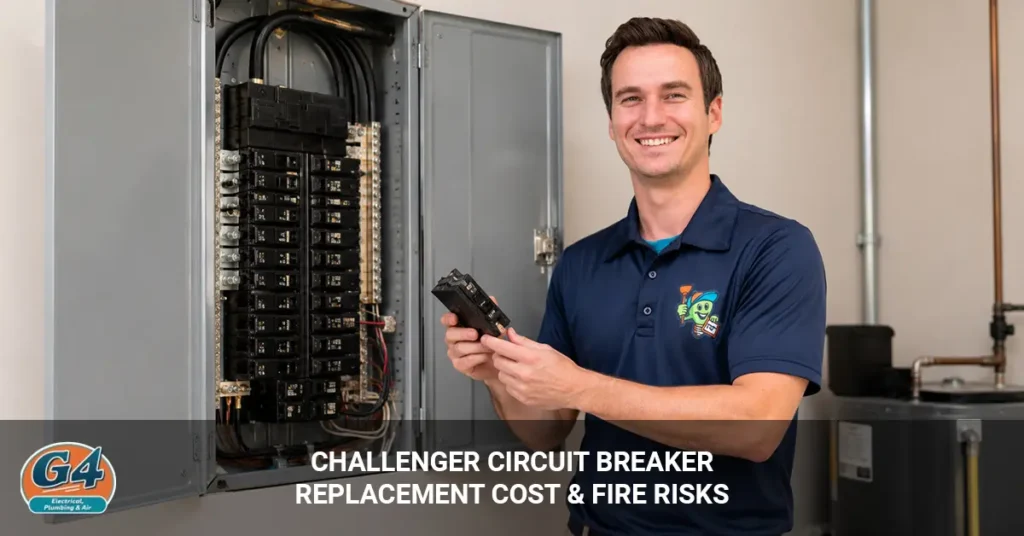
Older Challenger circuit breakers can pose a safety risk if they fail to trip during an overload or short circuit. While not every Challenger breaker is defective, many are now 30 to 40 years old, making it important to have them inspected if they’re still in service.
A circuit breaker is designed to shut off power when it detects too much electrical current. If it doesn’t trip when it should, wiring can overheat, appliances can be damaged, and the risk of an electrical fire increases.
If your home still has a Challenger electrical panel, don’t assume it needs to be replaced immediately. In many cases, replacing a faulty breaker is enough. However, if the panel shows signs of wear, overheating, or multiple failing breakers, upgrading the entire panel is often the safer and more reliable solution.
This guide explains what Challenger circuit breakers are, whether they’re considered a fire hazard, the warning signs to watch for, how much replacement typically costs, and when replacing the entire electrical panel makes the most sense. It will help you understand your options so you can make an informed decision about your home’s electrical safety.
What Is a Challenger Circuit Breaker?
A Challenger circuit breaker is a safety device that protects your home’s electrical system by shutting off power when a circuit becomes overloaded or short-circuited. These breakers were commonly installed in homes built during the 1980s and early 1990s, and many are still in use today.
Under normal conditions, a Challenger breaker monitors the amount of electricity flowing through a circuit. If the electrical current exceeds the breaker’s safe limit, it should trip automatically to prevent wires from overheating and reduce the risk of electrical damage or fire.
When working properly, Challenger circuit breakers help protect your:
- Electrical wiring
- Outlets and switches
- Household appliances
- HVAC equipment
- Electronics
- Home from electrical fires
The concern with some older Challenger breakers is that they may not trip when they’re supposed to. If a breaker fails to shut off power during an overload or short circuit, excessive heat can build up in the wiring, increasing the risk of damage and potential fire.
When Were Challenger Breakers Installed?
Challenger circuit breakers were most commonly installed in homes built between the early 1980s and the mid-1990s. During that time, Challenger electrical panels were a popular choice because they met industry standards and offered an affordable option for residential construction.
If your home was built between 1980 and 1995, there’s a good chance it may still have a Challenger electrical panel. Some homes may also have replacement breakers installed over the years, making it important to inspect the panel rather than relying solely on the home’s age.
If you’re unsure what type of panel you have, look for the manufacturer’s label inside the electrical panel door or have a licensed electrician identify it during an inspection.
Who Manufactured Challenger Electrical Panels?
Challenger electrical panels were manufactured by Challenger Electrical Equipment Corporation. The company produced residential electrical panels and circuit breakers for many years before its electrical product line was acquired by Eaton/Cutler-Hammer.
Today, compatible replacement breakers are available for many Challenger panels. However, replacing a breaker doesn’t always solve the problem.
Before recommending a repair or replacement, a licensed electrician will inspect the entire electrical panel, including:
- Bus bars
- Circuit breakers
- Electrical connections
- Signs of overheating
- Corrosion or rust
- Overall panel condition
If the panel is in good shape, replacing a faulty breaker may be all that’s needed. However, if the panel shows significant wear or damage, upgrading to a modern electrical panel is often the safer and more reliable long-term solution.
Are Challenger Circuit Breakers Dangerous?
Some older Challenger circuit breakers can be dangerous because they may fail to trip during an overload or short circuit. While not every Challenger breaker is defective, many are now more than 30 years old, and age can affect how reliably they protect your home’s electrical system.
A circuit breaker is designed to shut off power immediately when it detects an unsafe electrical condition. If it doesn’t trip as intended, electrical current continues flowing through the wiring. This can cause excessive heat, damage insulation, and increase the risk of an electrical fire.
That doesn’t mean every Challenger panel needs to be replaced. Challenger isn’t the only older panel brand with safety concerns. Homeowners should also be aware of the fire risks associated with Zinsco and Federal Pacific electrical panels.
However, if your home still has one, it’s a good idea to have it inspected by a licensed electrician, especially if you’ve noticed frequent breaker trips, overheating, flickering lights, or a burning smell near the panel.
Why Circuit Breakers Fail
Circuit breakers can fail because of age, wear, heat, corrosion, or internal mechanical problems. Since most Challenger breakers were installed decades ago, normal wear and tear is one of the biggest reasons they may no longer perform as intended.
Common causes of breaker failure include:
- Internal mechanical wear
- Corroded electrical contacts
- Heat damage from years of use
- Loose electrical connections
- Moisture or water intrusion
- Manufacturing defects in some older breaker models
In many cases, homeowners don’t realize a breaker is failing until it begins tripping repeatedly or, worse, it doesn’t trip at all when an overload occurs.
Why Is Failure to Trip a Serious Safety Concern?
A breaker that fails to trip can no longer protect your home from dangerous electrical overloads. Instead of shutting off power, it allows excessive current to continue flowing through the circuit, creating conditions that can lead to serious damage.
If a breaker doesn’t trip, it can cause:
- Overheated electrical wiring
- Melted wire insulation
- Damaged outlets and switches
- Electrical damage to appliances
- Arc faults
- An increased risk of an electrical fire
Because these problems often develop inside walls or within the electrical panel, homeowners may not notice them until visible damage or a power outage occurs. That’s why electrical safety experts recommend addressing breaker problems as soon as they’re discovered.
Does Every Challenger Panel Need to Be Replaced?
No. Not every Challenger electrical panel needs to be replaced simply because it’s a Challenger panel. The decision depends on the panel’s condition, age, and overall performance, not just its brand.
During an inspection, a licensed electrician will evaluate factors such as:
- The age of the electrical panel
- The condition of the circuit breakers
- Signs of overheating
- Corrosion or rust
- Damage to the bus bars
- Loose electrical connections
- Your home’s current electrical needs
If the panel is in good condition and only one breaker has failed, replacing that breaker may be the most practical solution.
However, if multiple breakers are failing, the panel shows signs of overheating, or the internal components have deteriorated, replacing the entire electrical panel is often the safest and most cost-effective long-term option. A new panel also provides greater reliability and enough electrical capacity to support modern appliances, EV chargers, heat pumps, and other high-demand equipment.
Was There a Challenger Circuit Breaker Recall?
Yes, but the recall only applied to certain Challenger GFCI circuit breakers, not all Challenger circuit breakers or electrical panels. This is one of the biggest misconceptions among homeowners. While some Challenger products were recalled, most standard Challenger breakers were not included in a nationwide recall.
Even so, many Challenger panels are now more than 30 years old. Because of their age, electricians often recommend inspecting them for wear, damage, or other safety concerns, regardless of whether they’re part of a recall.
The Challenger GFCI Breaker Recall
Certain Challenger GFCI (Ground Fault Circuit Interrupter) breakers were recalled in the late 1980s because they could fail to provide proper ground-fault protection. A GFCI breaker is designed to quickly shut off power when it detects a ground fault, helping protect people from electrical shock.
If a GFCI breaker doesn’t work correctly, it may not provide the level of protection it’s designed for, especially in areas where water and electricity are present, such as:
- Bathrooms
- Kitchens
- Garages
- Laundry rooms
- Outdoor outlets
If your home still has one of these recalled GFCI breakers, a licensed electrician should replace it as soon as possible.
Why Do Challenger Panels Still Raise Safety Concerns?
Most safety concerns today are related to the age and condition of Challenger panels rather than the recall itself. Even if your panel wasn’t part of the GFCI recall, decades of use can affect how safely and reliably it performs.
As electrical components age, they can develop problems such as:
- Worn breaker mechanisms
- Loose electrical connections
- Heat damage
- Corrosion or rust
- Reduced reliability under heavy electrical loads
In addition, today’s homes use much more electricity than they did when Challenger panels were first installed. Electric vehicles, heat pumps, home offices, and smart appliances place greater demands on older electrical systems, making regular inspections even more important.
Should You Schedule an Electrical Inspection?
Yes. If your home has a Challenger electrical panel and you don’t know its condition, a professional inspection is the safest place to start. An inspection can identify hidden problems before they become expensive repairs or safety hazards.
During the inspection, a licensed electrician can determine:
- Whether the circuit breakers are working properly
- If any breakers show signs of wear or failure
- Whether the panel has overheating or corrosion
- If the bus bars have been damaged
- Whether compatible replacement breakers are available
- If replacing the entire electrical panel is the better long-term solution
A professional inspection gives you a clear understanding of your panel’s condition and helps you decide whether a simple breaker replacement or a complete panel upgrade is the safest option for your home.
Signs Your Challenger Circuit Breakers Need Replacement
Frequent tripping, breakers that won’t reset, burning smells, overheating, and visible damage are the most common signs that a Challenger circuit breaker may need to be replaced. While these problems don’t always mean the entire electrical panel has failed, they should never be ignored.
Older Challenger breakers often show warning signs before they stop working properly. Catching these issues early can help prevent electrical damage, reduce the risk of fire, and avoid more expensive repairs.
If you notice any of the following problems, have your electrical system inspected by a licensed electrician.
Breakers Trip Frequently
A circuit breaker that trips often may be worn out or unable to handle the electrical load safely. Although an occasional trip is normal when a circuit is overloaded, repeated or unexplained tripping usually points to an underlying problem.
Common causes include:
- A worn or failing breaker
- An overloaded circuit
- Faulty wiring
- A malfunctioning appliance
- An aging electrical panel
If you’re resetting the same breaker repeatedly, don’t ignore it. A professional inspection can determine whether the breaker, wiring, or panel is causing the problem.
A Breaker Won’t Reset
A breaker that won’t stay in the ON position often indicates a more serious electrical issue. It may be a sign that the breaker has failed or that there’s a persistent problem somewhere on the circuit.
Possible causes include:
- Internal breaker failure
- A short circuit
- A ground fault
- Loose or damaged electrical connections
- A defective electrical panel
Never force a breaker to reset repeatedly. Doing so can increase the risk of overheating and further damage to your electrical system.
Burning Smell Near the Electrical Panel
A burning smell coming from your electrical panel is a warning sign that requires immediate attention. It often indicates overheating or damaged electrical components that could lead to an electrical fire.
Possible causes include:
- Overheated wiring
- Melted wire insulation
- Loose electrical connections
- Electrical arcing
- A failing circuit breaker
If you notice a burning odor, turn off power to the affected circuit if it’s safe to do so and contact a licensed electrician immediately.
Safety Tip: Never ignore smoke, sparks, or a burning smell around your electrical panel. These are signs of a potentially dangerous electrical problem.
Warm or Hot Circuit Breakers
A breaker that’s unusually hot to the touch may be overloaded or failing internally. While it’s normal for breakers to become slightly warm during regular use, excessive heat is not.
A hot breaker may be caused by:
- Excessive electrical current
- Loose wiring connections
- Internal mechanical failure
- Damage to the panel’s bus bars
An electrician can determine whether the issue is limited to one breaker or affects the entire electrical panel.
Flickering or Dimming Lights
Flickering or dimming lights can be a sign of an electrical problem, especially if it happens regularly. While several issues can cause lights to flicker, aging breakers and electrical panels are among the possibilities.
Potential causes include:
- Loose electrical connections
- Aging circuit breakers
- Panel deterioration
- Overloaded circuits
- Voltage fluctuations
If your lights flicker whenever large appliances turn on or the problem occurs throughout the house, it’s worth having your electrical system inspected.
Buzzing or Crackling Sounds
Your electrical panel should operate quietly. Buzzing, humming, or crackling noises often indicate that electricity isn’t flowing properly through the panel.
Learn more about what causes an electrical panel to buzz or overheat and why these warning signs should never be ignored.
These sounds may be caused by:
- Loose breaker connections
- Electrical arcing
- Internal breaker damage
- Failing panel components
Because electrical arcing generates intense heat, unusual noises should be inspected as soon as possible.
Rust, Corrosion, or Moisture Inside the Panel
Rust or corrosion inside an electrical panel can affect its performance and safety. Moisture damages electrical components and may lead to poor connections or breaker failure.
Signs of moisture damage include:
- Rust on breakers
- Corrosion inside the panel
- Water stains
- Mineral deposits
- Condensation
If water has entered the panel, have it inspected immediately. Moisture and electricity create a dangerous combination that should never be ignored.
Melted Plastic or Burn Marks
Melted plastic, scorch marks, or burned wiring are clear signs that a circuit breaker or electrical panel needs immediate attention. Visible heat damage usually indicates that electrical components have been overheating for some time.
Look for signs such as:
- Melted breaker handles
- Burn marks on the panel
- Discolored wiring
- Scorched insulation
- Black soot around breakers
If you notice any of these warning signs, avoid using the affected circuit and contact a licensed electrician as soon as possible. Continuing to use a damaged breaker can increase the risk of electrical failure or fire.
Should You Replace Individual Breakers or the Entire Challenger Panel?
The best option depends on the condition of your electrical panel. If only one Challenger breaker has failed and the rest of the panel is in good shape, replacing that breaker may be all you need. However, if the panel has multiple failing breakers, signs of overheating, or damaged internal components, replacing the entire panel is usually the safer and more reliable solution.
If you’re unsure whether your panel can be repaired or should be replaced, understanding the signs of electrical panel damage can help you make the right decision.
A licensed electrician will inspect the panel, breakers, and bus bars before recommending the most appropriate repair. The goal is to fix the problem without compromising your home’s electrical safety.
When Does Replacing a Single Breaker Make Sense?
Replacing one breaker is often the right choice when the problem is isolated to a single circuit. This is typically the most cost-effective option if the rest of the electrical panel is in good condition.
A single breaker replacement may be appropriate when:
- Only one breaker has failed.
- The electrical panel is in good overall condition.
- The bus bars show no signs of overheating or corrosion.
- A compatible replacement breaker is available.
- Your home’s electrical system has enough capacity for its current needs.
If the electrician confirms that the rest of the panel is operating properly, replacing one breaker can restore safe and reliable operation without the cost of a full panel upgrade.
When Is a Full Challenger Panel Replacement the Better Choice?
Replacing the entire electrical panel is usually the better option when there are signs of widespread wear or the panel can no longer safely support your home’s electrical needs. While the upfront cost is higher, a new panel often provides better long-term safety, reliability, and room for future expansion.
A complete panel replacement is commonly recommended when:
- Multiple breakers are failing.
- The panel shows signs of overheating.
- The bus bars are damaged or corroded.
- The panel is more than 30 years old and is showing signs of wear.
- Your home frequently experiences overloaded circuits.
- You’re adding high-demand equipment, such as an EV charger, heat pump, hot tub, or new HVAC system.
- Compatible replacement breakers are difficult to find.
Upgrading the panel also prepares your home for future electrical needs and helps ensure it meets current electrical safety standards.
Breaker Replacement vs. Panel Replacement
| Replace an Individual Breaker | Replace the Entire Panel |
| One breaker has failed | Multiple breakers are failing |
| The panel is in good condition | The panel shows significant wear or damage |
| Bus bars are undamaged | Bus bars are damaged or corroded |
| A compatible replacement breaker is available | Replacement parts are difficult to source |
| Lower upfront cost | Greater long-term safety and reliability |
| Best for isolated electrical issues | Best for aging, overloaded, or deteriorating panels |
In many cases, replacing a single breaker is a practical and affordable repair. However, if your Challenger panel is showing multiple signs of aging or no longer meets your home’s electrical demands, investing in a complete panel replacement can improve safety, increase electrical capacity, and reduce the likelihood of future problems.
How Much Does a Challenger Circuit Breaker Replacement Cost?
Replacing a Challenger circuit breaker typically costs between $150 and $350, while replacing an entire Challenger electrical panel usually costs between $1,500 and $4,500 or more. The total cost depends on the type of repair, the condition of the panel, labor rates in your area, and whether code upgrades or permits are required.
If only one breaker has failed, replacing it is usually the most affordable option. However, if the electrical panel has multiple failing breakers or signs of deterioration, investing in a new panel may save money over the long term by reducing future repair costs and improving electrical safety.
Average Challenger Breaker Replacement Costs
| Service | Typical Cost |
| Electrical inspection | $150–$300 |
| Single circuit breaker replacement | $150–$350 |
| Multiple breaker replacements | $300–$800 |
| Main breaker replacement | $250–$700 |
| Challenger electrical panel replacement | $1,500–$4,500+ |
If your electrician recommends replacing the entire panel, reviewing the electrical panel upgrade cost can help you budget for the project.
Note: These are average price ranges. Your actual cost may vary based on your location, panel size, labor rates, and the complexity of the job.
What Affects the Cost of Replacement?
Several factors determine how much you’ll pay to replace a Challenger breaker or upgrade the entire electrical panel.
Number of Breakers Being Replaced
Replacing one breaker is a relatively quick repair. If several breakers need to be replaced, both labor and material costs will increase.
Condition of the Electrical Panel
The overall condition of the panel has a major impact on the final price.
If an electrician finds problems such as:
- Damaged bus bars
- Corrosion
- Overheating
- Loose electrical connections
additional repairs or a complete panel replacement may be recommended.
Panel Amperage
Larger electrical services require larger panels and higher-capacity components, which typically increase installation costs.
Common residential panel sizes include:
- 100-amp service
- 150-amp service
- 200-amp service
- 400-amp service for larger homes
If you’re upgrading your electrical service at the same time, expect the project cost to be higher than a simple breaker replacement.
Electrical Code Upgrades
Older electrical panels often need to be updated to meet current electrical codes. These upgrades improve safety but can increase the overall cost of the project.
Common code-related upgrades include:
- Improved grounding
- Bonding upgrades
- AFCI protection where required
- GFCI protection where required
- Service disconnect upgrades
- Updated panel labeling
Your electrician will let you know which upgrades are required based on local code requirements.
Permit and Inspection Fees
Many cities and counties require permits for electrical panel replacements. In most cases, the work must also be inspected after installation.
Permit costs vary by location, but they should be included in your estimate before the work begins.
Emergency Electrical Service
If your breaker fails unexpectedly or your panel creates an immediate safety hazard, emergency or after-hours service may increase labor costs.
Although emergency repairs cost more, they may be necessary to restore power safely and prevent further electrical damage.
Is Replacing the Electrical Panel Worth the Cost?
For many homeowners, replacing an aging Challenger panel is a worthwhile investment. While replacing a single breaker costs less upfront, a new electrical panel can provide long-term benefits that improve both safety and reliability.
Benefits of a new electrical panel include:
- Improved electrical safety
- More reliable breaker performance
- Increased capacity for modern appliances
- Support for EV chargers, heat pumps, and other high-demand equipment
- Easier access to replacement parts
- Better preparation for future home renovations
- Increased appeal to potential homebuyers
If your Challenger panel is more than 30 years old and showing signs of wear, replacing it before a major failure occurs can help prevent unexpected power outages, reduce the risk of electrical hazards, and provide greater peace of mind for years to come.
Can You Replace a Challenger Circuit Breaker Yourself?
No, replacing a Challenger circuit breaker is not recommended as a DIY project. Even if you turn off the main breaker, parts of the electrical panel remain energized and can expose you to dangerous voltages. A simple mistake can result in electric shock, an arc flash, equipment damage, or even an electrical fire.
While replacing a breaker may seem straightforward in online videos, working inside an electrical panel requires the right tools, safety training, and knowledge of electrical codes. For most homeowners, hiring a licensed electrician is the safest and smartest choice.
Why Is DIY Breaker Replacement Risky?
Working inside an electrical panel can be dangerous because some components stay live even when the main breaker is switched off. Accidentally touching these energized parts can cause serious injury.
DIY breaker replacement also increases the risk of:
- Electric shock
- Arc flash burns
- Installing the wrong breaker
- Loose electrical connections
- Damage to the panel’s bus bars
- Improperly secured wiring
- Increased risk of electrical fire
Using a breaker that isn’t approved for your panel can also reduce the system’s safety and may void the manufacturer’s warranty.
Why Code Compliance Matters
Electrical work must meet local and national electrical codes to ensure your home’s safety. In many areas, replacing a circuit breaker or upgrading an electrical panel isn’t just a repair; it’s work that may require permits and inspections.
Depending on local regulations, the project may require:
- An electrical permit
- Installation by a licensed electrician
- Inspection by the local building authority
A licensed electrician understands these requirements and can ensure the work is completed safely and complies with current electrical codes.
When Should You Call an Electrician Immediately?
Call a licensed electrician right away if your electrical panel shows signs of overheating or damage. Waiting too long can increase the risk of electrical failure or fire.
Schedule immediate service if you notice:
- A burning smell near the electrical panel
- Smoke or visible sparks
- Melted circuit breakers
- Buzzing, humming, or crackling sounds
- Breakers that trip repeatedly
- A breaker that won’t reset
- Hot breakers or scorch marks on the panel
These warning signs often indicate a serious electrical problem that should only be diagnosed and repaired by a qualified professional. Prompt repairs can help protect your home, your electrical system, and your family’s safety.
What Happens During a Challenger Circuit Breaker Replacement?
A Challenger circuit breaker replacement starts with a complete inspection of the electrical panel to ensure that replacing the breaker is the safest solution. If the panel has widespread damage or signs of deterioration, the electrician may recommend replacing the entire panel instead of just the breaker.
Here’s what you can expect during a professional breaker replacement.
Step 1: Inspect the Electrical Panel
The first step is a thorough inspection of the electrical panel. Before replacing any components, the electrician checks the overall condition of the panel to identify problems that could affect safety or performance.
The inspection typically includes looking for:
- Overheating
- Corrosion or rust
- Loose electrical connections
- Damaged bus bars
- Moisture intrusion
- Improper or outdated wiring
If significant damage is found, replacing the breaker alone may not resolve the issue.
Step 2: Verify Breaker Compatibility
The electrician confirms that the replacement breaker is approved for your specific electrical panel. Not all circuit breakers are interchangeable, and using the wrong one can create safety hazards and violate electrical codes.
The replacement breaker must be:
- Correctly rated for the circuit
- Compatible with the electrical panel
- Approved or listed for use with the panel
- Properly sized for the electrical load
Installing the correct breaker helps ensure reliable performance and long-term safety.
Step 3: Disconnect Power Safely
Power is turned off before work begins whenever possible. The electrician follows established safety procedures to minimize the risk of electric shock while working inside the panel.
Because some components can remain energized even after the main breaker is switched off, proper safety practices are essential throughout the repair.
Step 4: Remove the Faulty Breaker
The damaged breaker is carefully removed without affecting the surrounding components. During this step, the electrician also checks for signs of overheating or damage that may have been caused by the failed breaker.
If additional issues are found, further repairs or a panel replacement may be recommended.
Step 5: Inspect the Bus Bars
The bus bars are inspected to make sure they’re still in good condition. Bus bars distribute electricity to each circuit breaker, so any damage can affect the performance and safety of the entire panel.
The electrician looks for:
- Pitting
- Burn marks
- Corrosion
- Warping
- Heat damage
If the bus bars are damaged, replacing only the breaker is unlikely to solve the problem, and a complete panel replacement may be necessary.
Step 6: Install the New Breaker
Once the panel passes inspection, the new breaker is installed and securely connected. Electrical connections are tightened to the manufacturer’s recommended torque specifications to help prevent loose connections and overheating.
Proper installation ensures the breaker can respond correctly if an overload or short circuit occurs.
Step 7: Test the Electrical System
The final step is testing the breaker and the affected circuit to confirm everything is working correctly. Before the job is complete, the electrician verifies that the repair has restored safe operation.
Testing typically includes checking:
- Proper breaker operation
- Correct voltage
- Secure electrical connections
- Normal circuit performance
If necessary, the electrician may also update missing or incorrect circuit labels inside the panel. Clearly labeled breakers make future maintenance safer and help homeowners quickly identify individual circuits during emergencies or repairs.
Is It Better to Upgrade to a New Electrical Panel?
Yes, upgrading to a new electrical panel is often the better long-term solution if your Challenger panel is more than 30 years old or showing signs of wear. While replacing a single breaker can fix an isolated problem, a new panel provides better safety, greater reliability, and enough capacity to support today’s electrical needs.
If your electrical panel has multiple failing breakers, overheating, corrosion, or struggles to keep up with your home’s power demands, upgrading the entire panel can help prevent future problems and reduce the need for repeated repairs.
Improved Electrical Safety
A new electrical panel provides more reliable protection against overloads and short circuits. Modern panels are built to meet current electrical safety standards and are designed to handle today’s electrical demands more effectively than older equipment.
Replacing an aging Challenger panel can help reduce problems such as:
- Loose electrical connections
- Failing circuit breakers
- Overheating
- Corrosion
- Electrical arcing
A modern panel gives you greater confidence that your home’s electrical system is operating safely.
Increased Electrical Capacity
A panel upgrade gives your home the power capacity needed for modern appliances and technology. Homes today use far more electricity than they did when Challenger panels were commonly installed in the 1980s and early 1990s.
A larger electrical panel can support:
- Electric vehicle (EV) chargers
- Heat pumps
- Tankless water heaters
- Hot tubs and spas
- Home offices
- Smart home systems
- Modern kitchen appliances
If your existing panel is constantly near its limit or you’re planning to add new electrical equipment, upgrading now can help prevent overloaded circuits and future electrical issues.
Easier Access to Replacement Parts
Modern electrical panels use breakers that are easier to find and replace. As Challenger panels continue to age, compatible replacement parts may become harder to source.
Installing a new panel makes future maintenance simpler because replacement breakers are widely available, helping reduce repair time and potentially lowering future maintenance costs.
Better Support for Home Renovations
If you’re remodeling your home, upgrading the electrical panel is often a smart investment. Renovations usually require additional circuits to power new lighting, appliances, and equipment.
A larger panel can accommodate:
- New lighting fixtures
- HVAC equipment
- Kitchen appliances
- Workshop tools
- Outdoor lighting and electrical systems
- Finished basements or home additions
Completing the panel upgrade during a renovation is often more cost-effective than replacing it after the project is finished.
Potential Insurance Benefits
Upgrading an older electrical panel may also benefit your homeowners’ insurance. Some insurance companies consider aging electrical systems a higher risk because older panels are more likely to experience electrical failures.
Although every insurer has different requirements, replacing an outdated Challenger panel may:
- Address concerns about aging electrical equipment
- Improve your home’s overall electrical safety
- Help avoid issues during policy renewal or a home inspection
- Reduce the risk of future electrical damage claims
If your home still has an older electrical panel, it’s a good idea to ask your insurance provider whether upgrading could affect your coverage or eligibility.
In addition to improving safety, a new electrical panel can increase your home’s value, support future upgrades, and provide reliable electrical service for years to come.
How Long Does a Challenger Panel Replacement Take?
Replacing a single Challenger circuit breaker usually takes less than two hours, while replacing the entire electrical panel typically takes one day. The exact timeline depends on the condition of your electrical system and whether additional work is required.
If the job only involves replacing one faulty breaker, the repair is often completed during a single service visit. However, a full panel replacement is more involved because the electrician must safely disconnect power, replace the panel, reconnect all circuits, and test the system before restoring electricity.
What Can Affect the Timeline?
Several factors can make the project take more or less time, including:
- The size of the electrical panel
- The condition of the existing wiring
- Whether damaged wiring or bus bars need repair
- Permit and inspection requirements
- Whether the utility company needs to disconnect and reconnect power
- Additional electrical upgrades or code corrections
If unexpected issues are discovered after the old panel is removed, the electrician may need extra time to complete the work safely.
How Long Will the Power Be Off?
During a full panel replacement, you can expect your home’s electricity to be off for several hours. The exact outage depends on the complexity of the installation, but most homeowners can expect power to be restored the same day.
Before the project begins, your electrician will explain:
- How long is the work expected to take
- When will the power be turned off
- Whether the utility company needs to be involved
- Any preparations you should make before the outage
Knowing the schedule in advance allows you to plan for temporary power loss and avoid disruptions to work, appliances, or other daily activities.
How to Prevent Future Circuit Breaker Problems
The best way to prevent circuit breaker problems is to keep your electrical system well-maintained and address small issues before they become major repairs. Regular inspections, avoiding overloaded circuits, and upgrading aging electrical equipment can help improve safety and extend the life of your electrical panel.
Here are some practical ways to reduce the risk of future breaker failures.
Schedule Regular Electrical Inspections
Routine electrical inspections can identify potential problems before they become safety hazards. If your home has an older electrical panel, especially one that’s more than 25 to 30 years old, it’s a good idea to have it inspected by a licensed electrician every few years.
During an inspection, the electrician can check for:
- Worn or damaged breakers
- Loose electrical connections
- Signs of overheating
- Corrosion or rust
- Panel components that may need replacement
Finding these issues early can help prevent unexpected outages and costly repairs.
Avoid Overloading Circuits
Overloaded circuits are one of the most common causes of breaker trips. Running several high-powered appliances on the same circuit forces the breaker to work harder and can shorten its lifespan.
To reduce the risk of overloads:
- Spread appliances across different circuits.
- Avoid using multiple high-wattage devices on one outlet.
- Use dedicated circuits for large appliances when required.
If a breaker trips repeatedly, don’t ignore it. Have the circuit inspected to determine the underlying cause.
Replace Damaged Outlets and Switches
Damaged outlets and switches can put extra strain on your electrical system. Cracked covers, loose outlets, discoloration, or signs of heat damage may indicate a larger electrical problem.
Replacing damaged electrical devices promptly helps protect both your wiring and your electrical panel from unnecessary stress.
Watch for Early Warning Signs
Paying attention to changes in your electrical system can help you catch problems before they become dangerous. Even small warning signs deserve attention if they occur repeatedly.
Watch for:
- Frequent breaker trips
- Flickering or dimming lights
- Buzzing or crackling sounds
- Burning odors
- Warm outlets or switches
- Hot circuit breakers
If you notice any of these symptoms, schedule an electrical inspection instead of waiting for the problem to get worse.
Upgrade an Aging Electrical Panel
If your Challenger electrical panel is nearing the end of its service life, replacing it can help prevent future electrical problems. Older panels may struggle to keep up with the demands of modern homes, especially if you’ve added new appliances or upgraded your HVAC system.
A new electrical panel offers several benefits, including:
- More reliable circuit protection
- Improved electrical safety
- Greater capacity for modern appliances
- Better support for future home upgrades
- Easier access to replacement parts
Upgrading before a major failure occurs can save you from unexpected power outages, costly emergency repairs, and potential safety hazards. It’s an investment that helps keep your home’s electrical system safe, reliable, and ready for future needs.
Frequently Asked Questions
Are all Challenger circuit breakers dangerous?
No. Not all Challenger circuit breakers are dangerous. While some older Challenger breakers have been associated with failures to trip properly during an overload, many continue to operate without issues. The biggest concern is that most Challenger panels are now 30 to 40 years old, so age and wear can affect their reliability. If your home still has a Challenger panel, a licensed electrician can inspect it and determine whether it’s still safe to use.
Can you still buy replacement Challenger circuit breakers?
Yes, compatible replacement breakers are still available for many Challenger electrical panels. Manufacturers such as Eaton produce listed replacement breakers for certain Challenger panel models. However, not every breaker is compatible with every panel, so it’s important to have a licensed electrician verify the correct replacement before installation.
How do I know if my Challenger electrical panel needs to be replaced?
A professional electrical inspection is the best way to determine whether your Challenger panel should be replaced. While some panels only need a breaker replacement, others may require a complete upgrade because of age or internal damage.
Common signs that a panel may need replacement include:
- Frequent breaker trips
- Breakers that won’t reset
- Burning smells near the panel
- Buzzing or crackling noises
- Rust or corrosion
- Melted breakers or scorch marks
- Damaged bus bars
- An electrical system that can’t handle your home’s power demands
If several of these problems are present, replacing the entire panel is usually the safest and most cost-effective solution.
Can a Challenger circuit breaker cause a house fire?
Yes, it can if the breaker fails to trip when an overload or short circuit occurs. A properly functioning breaker protects your home by shutting off power before wiring overheats. If a breaker doesn’t trip as intended, excessive heat can build up inside the wiring, increasing the risk of electrical arcing and fire.
Although not every Challenger breaker will fail, any older breaker showing signs of wear or malfunction should be inspected as soon as possible.
Is replacing one breaker enough?
Sometimes. If only one breaker has failed and the rest of the electrical panel is in good condition, replacing that breaker may solve the problem.
However, if the panel has multiple failing breakers, overheating, corrosion, or damaged bus bars, replacing the entire electrical panel is often the better long-term investment.
How often should an electrical panel be inspected?
Older electrical panels should be inspected every few years or whenever warning signs appear. You should also schedule an inspection if you’re buying an older home, planning a major renovation, or adding high-demand electrical equipment.
Have your panel inspected if you notice:
- Frequent breaker trips
- Flickering lights
- Burning odors
- Buzzing sounds
- Hot breakers
- Other signs of electrical problems
Routine inspections can identify potential issues before they become expensive repairs or safety hazards.
Does homeowners insurance cover electrical panel replacement?
Usually not. Most homeowners’ insurance policies don’t cover replacing an old electrical panel as part of routine maintenance or normal wear and tear.
However, if the panel is damaged by a covered event such as a fire, lightning strike, or certain storms, your insurance may help pay for repairs or replacement. Since coverage varies by policy, check with your insurance provider to understand what’s included.
What electrical panel brands commonly replace Challenger panels?
Several modern electrical panel brands are commonly used to replace Challenger panels. The best choice depends on your home’s electrical service, local code requirements, and future power needs.
Common replacement brands include:
- Eaton
- Siemens
- Square D
- Leviton
A licensed electrician can recommend the most suitable panel based on your home’s electrical load, planned upgrades, and compatibility with your existing wiring.
Final Thoughts
A Challenger electrical panel doesn’t automatically need to be replaced, but it shouldn’t be ignored either. Because many Challenger panels are now more than 30 years old, regular inspections are important to ensure they’re still operating safely. While some panels only need a replacement breaker, others may have age-related wear or internal damage that makes a full panel upgrade the better option.
Pay attention to warning signs such as frequent breaker trips, burning smells, buzzing noises, hot breakers, flickering lights, or visible damage. Addressing these problems early can help prevent costly repairs and reduce the risk of electrical hazards.
If you’re unsure whether your Challenger panel is still safe, schedule an inspection with a licensed electrician. If you’re comparing repair options, understanding the typical circuit breaker replacement cost can help you decide whether replacing a single breaker or upgrading the entire panel makes more financial sense.
A professional can assess the condition of the panel, explain your repair or replacement options, and recommend the safest solution for your home. Taking action before a breaker or panel fails can improve your home’s electrical safety, reliability, and peace of mind for years to come.