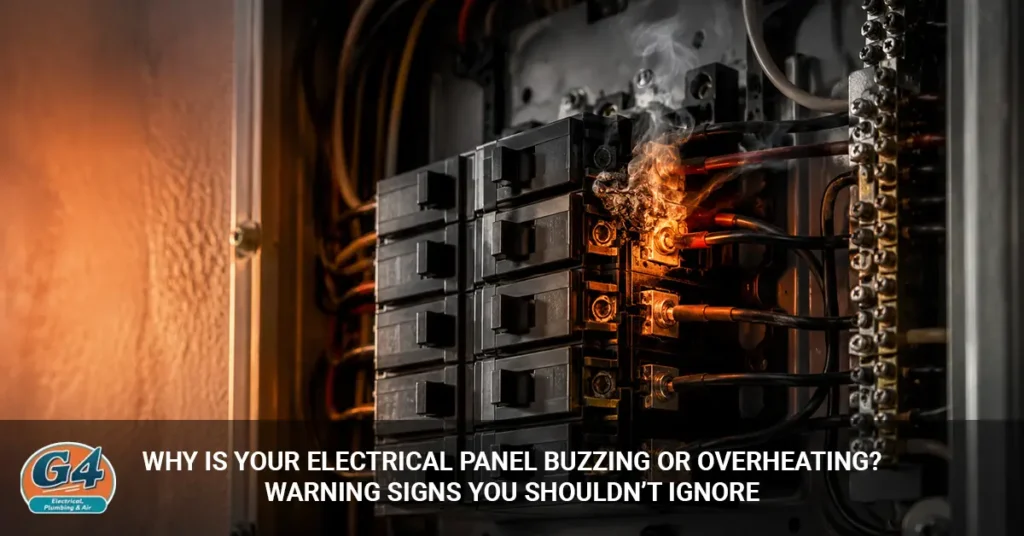
A buzzing or overheating electrical panel can be a serious sign that something is wrong with your home’s electrical system. Electrical panels should run quietly and stay relatively cool during normal use. If you hear buzzing sounds, notice heat coming from the panel, or smell something burning, the problem should not be ignored.
In many homes, these warning signs are caused by loose electrical connections, overloaded circuits, faulty breakers, or electrical arcing. What starts as a small electrical issue can quickly become dangerous if it is left unresolved.
Because the electrical panel controls power throughout the entire home, problems inside the panel can increase the risk of electrical fires, damaged appliances, power outages, or unsafe wiring conditions.
Recognizing these warning signs early can help homeowners protect their homes, avoid expensive electrical damage, and know when it is time to call a licensed electrician.
Is a Buzzing or Hot Electrical Panel Dangerous?
Yes, a buzzing or overheating electrical panel can be dangerous because it may signal overloaded circuits, electrical arcing, or failing electrical components. These problems can increase the risk of electrical fires, damaged wiring, and shock hazards inside the home.
A properly working electrical panel should operate quietly and should not become excessively hot during normal use. Slight warmth during heavy electrical use can be normal, but noticeable heat, buzzing sounds, burning odors, or crackling noises usually mean something is wrong.
Electrical issues inside the panel often get worse over time, especially when loose connections or damaged breakers continue overheating during daily use. Ignoring these warning signs can lead to more serious electrical damage and unsafe conditions throughout the home.
Common Causes of a Buzzing Electrical Panel
Several electrical issues can cause an electrical panel to buzz, hum, or overheat. In many cases, the problem is related to loose connections, overloaded circuits, damaged breakers, or unsafe electrical flow inside the panel.
Loose Electrical Connections
Loose electrical connections are one of the most common reasons an electrical panel starts making buzzing sounds. When wires or terminals are not tightly secured, electricity may not move smoothly through the connection.
This unstable electrical flow can create vibration, heat buildup, and buzzing noises inside the breaker panel. Over time, loose connections can also increase the risk of electrical arcing, overheating, and damaged electrical components.
Because these problems can become dangerous quickly, loose electrical connections should always be inspected and repaired by a licensed electrician.
Overloaded Circuits
Overloaded circuits happen when too many appliances or devices use power from the same circuit at the same time. This increases electrical demand and places extra stress on the breaker panel.
Homes with modern electronics, EV chargers, air conditioners, or large appliances can overload older electrical systems more easily because many older panels were not designed for today’s power usage.
Repeated breaker trips, flickering lights, or buzzing sounds may indicate an overloaded electrical panel that needs professional inspection.
Faulty Circuit Breakers
Faulty or aging circuit breakers can also cause buzzing noises and overheating inside the electrical panel. Damaged breakers may fail to shut off power properly during overloads, which allows excess heat to build up inside the panel.
Over time, circuit breakers can wear out due to heavy electrical use, aging internal parts, or repeated tripping. Older breakers are more likely to develop performance and safety problems.
Electrical Arcing
Electrical arcing happens when electricity jumps between loose or damaged electrical connections instead of flowing safely through the circuit. This creates dangerous heat and unstable electrical flow inside the panel.
Arcing often causes buzzing sounds, crackling noises, burning smells, or excessive heat around breakers and wiring.
Because electrical arcing can quickly start a fire, it should always be treated as a serious electrical safety issue.
Improper Panel Installation
Improper electrical panel installation can also create buzzing and overheating problems. Poor workmanship, loose wiring, incorrect breaker placement, or improperly connected circuits may all create unsafe electrical conditions.
Panels that were installed incorrectly may struggle to handle electrical demand safely and can become more dangerous over time if repairs are not made.
Why Electrical Panels Overheat
Electrical panels usually overheat because of excessive electrical demand, faulty electrical components, or poor connections inside the panel. When heat builds up continuously, the risk of electrical damage and fire increases.
Excessive Electrical Load
Electrical panels can overheat when the home uses more electricity than the system was designed to handle. Large appliances, HVAC systems, EV chargers, and modern electronics place heavy demand on the electrical system, especially in older homes.
When circuits carry too much electrical load for long periods, breakers and wiring can begin generating excess heat inside the panel.
Old or Outdated Panels
Older electrical panels may struggle to support modern electrical usage safely. Over time, internal components can wear down, loosen, or fail, making overheating more likely.
Some outdated electrical panel brands are also known for safety problems and breaker failures, which can increase the risk of electrical hazards.
Corroded Connections
Corrosion inside the electrical panel can create dangerous heat buildup. Moisture, humidity, or aging electrical components may cause connections to corrode over time.
Corroded connections increase electrical resistance, which forces the system to generate more heat during normal operation.
Faulty Main Breaker
A faulty main breaker can cause overheating throughout the entire panel because it may not regulate electrical flow properly. If the breaker fails to control electrical demand safely, excess heat can build up inside the system.
Heat Buildup From Poor Ventilation
Electrical panels installed in tight utility closets, enclosed spaces, or poorly ventilated areas may trap heat more easily during heavy electrical use.
Limited airflow around the panel can make overheating problems worse, especially when the electrical system is already under heavy demand.
Warning Signs You Should Never Ignore
Several warning signs can indicate dangerous electrical panel problems that should be inspected immediately. Ignoring these symptoms may increase the risk of electrical fires, damaged wiring, or power failures inside the home.
One of the most common warning signs is buzzing or humming sounds coming from the electrical panel. Burning smells near the panel can also point to overheating wires, damaged breakers, or electrical arcing.
Warm or hot breakers are another serious sign that the electrical system may be overloaded or malfunctioning. Some homeowners also notice flickering or dimming lights when the panel struggles to handle electrical demand properly.
Frequently tripped breakers are often connected to larger electrical problems. Learn more about why your breaker keeps tripping and when it becomes dangerous.
If several of these warning signs happen together, the electrical system should be inspected by a licensed electrician as soon as possible.
Can an Overheating Electrical Panel Cause a Fire?
Yes, an overheating electrical panel can cause a house fire if the problem is not repaired quickly. Excess heat inside the panel can damage wiring, melt insulation, and create dangerous electrical conditions.
Loose connections, overloaded circuits, faulty breakers, and electrical arcing are some of the most common causes of overheating inside breaker panels. As heat continues building up, nearby wires and electrical components may begin to fail.
Electrical fires often start inside walls or breaker panels, where homeowners cannot easily see the danger developing. Because of this, warning signs like buzzing sounds, burning smells, or hot breakers should never be ignored.
If an electrical panel feels unusually hot or shows signs of overheating, a licensed electrician should inspect the system as soon as possible to reduce the risk of fire and serious electrical damage.
Older Electrical Panels May Be Unsafe
Older electrical panels are more likely to develop overheating and safety problems because they were not built to handle modern electrical demand. As homes add more appliances and electronics over time, outdated panels can become overloaded more easily.
Many homeowners do not realize the serious dangers of an old electrical panel until overheating or power failures begin happening regularly.
Outdated Electrical Panel Brands
Some older electrical panel brands are known for safety concerns and breaker failure issues. In certain cases, these panels may fail to trip properly during overloads or short circuits, which increases the risk of overheating and electrical fires.
Homes with older or recalled panel brands should be inspected by a licensed electrician to determine whether repairs or replacement are necessary.
Insufficient Capacity for Modern Homes
Older homes often use much more electricity today than when the original panel was installed. Modern air conditioners, kitchen appliances, entertainment systems, EV chargers, and home office equipment place far greater demand on the electrical system.
If the panel does not have enough capacity, circuits may overload more frequently and create excessive heat inside the system.
Aging Wiring and Components
Electrical components naturally wear out over time. Aging breakers, wiring, terminals, and connections may become loose, damaged, or corroded after years of use.
As these components deteriorate, the risk of overheating, buzzing sounds, electrical arcing, and power problems increases.
What to Do if Your Electrical Panel Is Buzzing or Hot
If your electrical panel is buzzing or overheating, you should treat it as a serious electrical warning sign and avoid handling any dangerous components yourself. Taking quick action can help reduce the risk of electrical fires and further damage.
Turn Off High-Demand Appliances
Reducing electrical demand may help lower stress on the panel temporarily. If possible, turn off large appliances, space heaters, HVAC systems, EV chargers, or other high-power devices until the system can be inspected.
Do Not Touch Hot Components
Never touch breakers, wiring, or panel components that feel extremely hot. Overheated electrical parts can cause serious burns or electrical shock.
Check for Burning Odors
Burning smells near the panel may indicate overheating wires, damaged breakers, or electrical arcing inside the system. If you notice a burning odor, contact a licensed electrician immediately.
Call a Licensed Electrician
A licensed electrician can inspect the electrical panel safely, identify the source of the problem, and recommend the proper repair or upgrade.
Avoid DIY Electrical Repairs
Electrical panel repairs should never be handled by untrained homeowners. Working inside a breaker panel can be extremely dangerous because of the risk of electrical shock, fire, and severe injury.
How Electricians Diagnose Electrical Panel Problems
Electricians use specialized testing equipment to safely identify overheating, buzzing, and other electrical panel problems. These inspections help locate hidden issues that may not be visible during a basic visual check.
During the inspection, electricians may perform thermal imaging scans to detect heat buildup inside breakers, wiring, or electrical connections. They also use voltage testing and electrical load testing to measure how the panel is handling power demand throughout the home.
Breaker inspections and connection inspections help identify loose wiring, overloaded circuits, damaged breakers, or signs of electrical arcing inside the panel.
These diagnostic tests allow electricians to find the exact source of the problem and recommend the safest repair solution before the issue becomes more dangerous.
Solutions for Electrical Panel Problems
The right solution for a buzzing or overheating electrical panel depends on what is causing the problem. A licensed electrician can inspect the system and recommend the safest repair based on the condition of the panel and wiring.
Some problems can be fixed by tightening loose electrical connections or replacing faulty breakers that are no longer working properly. In other cases, electricians may need to redistribute electrical loads to reduce stress on overloaded circuits.
Damaged or overheated wiring may also need repair or replacement to prevent further electrical hazards.
In older homes, upgrading or fully replacing the electrical panel is sometimes the safest long-term solution, especially if the existing panel no longer supports modern electrical demand safely.
In some cases, homeowners may need a full electrical panel upgrade if the current system can no longer safely support modern electrical demand.
How to Prevent Electrical Panel Problems
Regular electrical inspections can help detect small problems before they turn into serious safety hazards. Preventive maintenance is one of the best ways to reduce the risk of overheating, electrical failures, and house fires.
Homeowners can lower electrical risks by avoiding overloaded circuits and spreading high-power appliances across different circuits whenever possible. Upgrading outdated electrical panels can also improve safety and help the system handle modern electrical demand more effectively.
It is also important to watch for early warning signs such as buzzing sounds, flickering lights, warm breakers, or burning odors. Catching these problems early can help prevent more expensive and dangerous electrical damage later.
All electrical repairs and panel work should be handled by licensed electricians to ensure the system remains safe and code compliant. Routine inspections and professional maintenance help improve long-term electrical safety throughout the home.
When to Call an Emergency Electrician
You should call an emergency electrician immediately if your electrical panel shows signs of serious overheating or electrical failure. Some warning signs can indicate an active fire risk or dangerous electrical damage inside the system.
Burning smells, smoke near the panel, sparks, extremely hot breakers, repeated breaker trips, or sudden power fluctuations should never be ignored. These symptoms may point to electrical arcing, overloaded circuits, failing breakers, or damaged wiring.
If any of these warning signs appear, avoid touching the panel and contact a licensed emergency electrician as soon as possible. Quick professional inspection can help prevent electrical fires, power loss, and serious safety hazards inside the home.
Final Thoughts
A buzzing or overheating electrical panel should never be ignored because it can be a warning sign of serious electrical problems inside the home. What may seem like a small issue can quickly become a major safety hazard if the problem continues getting worse.
Loose connections, overloaded circuits, faulty breakers, and electrical arcing can all increase the risk of electrical fires, damaged appliances, and unsafe wiring conditions when left unresolved.
Having the panel inspected early by a licensed electrician can help protect your home, improve electrical safety, and prevent more expensive electrical failures in the future.