
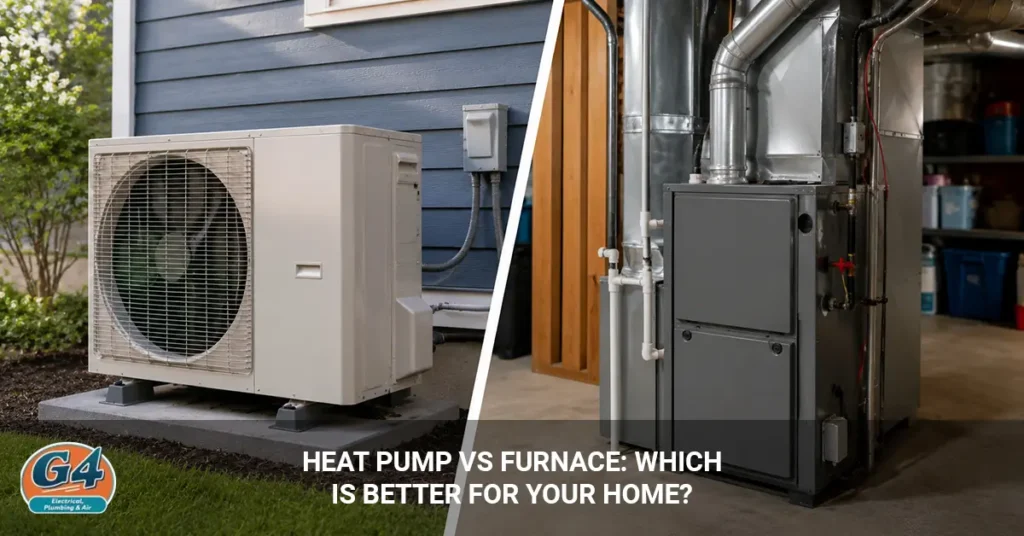
If you’re choosing between a heat pump and a furnace, the better option depends on your climate, energy costs, comfort preferences, and budget. In most moderate climates, a heat pump offers better energy efficiency and lower operating costs. In very cold climates, a gas furnace often provides stronger heating performance and faster temperature recovery.
Both systems can keep your home comfortable, but they work differently and have different upfront costs, energy usage, and long-term benefits.
In this guide, we’ll compare heat pumps and furnaces side by side so you can determine which system is the right fit for your home.
Heat Pump vs Furnace: Quick Comparison
The biggest difference between a heat pump and a furnace is that a heat pump both heats and cools your home, while a furnace only provides heat.
Heat Pump vs Furnace Comparison Table
| Feature | Heat Pump | Furnace |
| Heating | Yes | Yes |
| Cooling | Yes | No |
| Energy Source | Electricity | Gas, Electric, Propane, or Oil |
| Energy Efficiency | Very High | Moderate to High |
| Upfront Cost | Higher | Lower |
| Operating Cost | Lower in Mild Climates | Lower in Some Cold Climates |
| Lifespan | 10–15 Years | 15–20 Years |
| Environmental Impact | Lower | Higher |
| Best Climate | Mild to Moderate | Cold to Very Cold |
Key Differences at a Glance
A heat pump transfers heat rather than generating it, making it highly energy efficient. A furnace creates heat by burning fuel or using electric resistance heating, which generally consumes more energy.
Homeowners looking for both heating and cooling often prefer heat pumps, while homeowners in colder regions may still prefer furnaces for their powerful heating capabilities.
What Is a Heat Pump?
A heat pump is an HVAC system that transfers heat rather than generating it. During winter, it pulls heat from the outdoor air and moves it inside your home. During summer, it reverses the process and removes heat from your home, functioning like an air conditioner.
Because a heat pump moves heat instead of creating it, it can be significantly more energy efficient than traditional heating systems.
How a Heat Pump Works
A heat pump uses refrigerant, a compressor, and coils to transfer heat between the indoors and outdoors. During winter, the outdoor unit absorbs heat from the outside air and transfers it indoors, where it is distributed throughout the home. During summer, the process reverses, allowing the system to remove heat from the home and release it outside. This dual functionality allows a single system to provide both heating and cooling year-round.
Types of Heat Pumps
Several types of heat pumps are available, each designed for different homes, climates, and comfort needs.
Air-Source Heat Pumps
Air-source heat pumps are the most common residential heat pumps. They transfer heat between your home and the outdoor air to provide both heating and cooling. These systems are relatively affordable, highly efficient, and widely available. They work particularly well in mild and moderate climates and are often installed in homes with existing ductwork.
Ductless Mini-Split Heat Pumps
Ductless mini-split heat pumps operate similarly to air-source heat pumps but do not require ductwork. Instead, indoor air handlers are installed in individual rooms or zones, allowing for customized temperature control throughout the home. Their flexibility and efficiency make them a popular choice for older homes, room additions, garages, basements, and homes without existing duct systems.
Geothermal Heat Pumps
Geothermal heat pumps transfer heat through underground piping rather than outdoor air. Because ground temperatures remain relatively stable throughout the year, these systems deliver exceptional energy efficiency and lower operating costs. Although installation costs are significantly higher, geothermal heat pumps offer long equipment life and substantial long-term energy savings, making them attractive for new construction and long-term homeowners.
Pros of Heat Pumps
Heat pumps offer several advantages that have made them one of the fastest-growing HVAC technologies in residential homes.
Pros:
- Provides both heating and cooling
- Highly energy efficient
- Lower utility bills in many climates
- Environmentally friendly operation
- Quiet performance
- Eligible for rebates and tax incentives
- Reduced carbon emissions
For many homeowners, a heat pump eliminates the need for separate heating and cooling systems while lowering overall energy consumption.
Cons of Heat Pumps
Despite their benefits, heat pumps may not be the ideal solution for every home or climate.
Cons:
- Higher upfront installation cost
- Reduced efficiency in extremely cold temperatures
- May require supplemental heat in some regions
- Typically shorter lifespan than furnaces
- Certain repairs can be expensive
Although cold-climate heat pump technology has improved significantly, some homeowners in very cold regions still prefer furnaces for maximum heating performance.
Who Should Consider a Heat Pump?
A heat pump is often a great choice for homeowners who want an energy-efficient system that provides both heating and cooling. It is particularly well-suited for homes in mild and moderate climates, households looking to lower utility bills, homeowners interested in electrification, and those seeking to reduce their environmental impact. For many families, a modern heat pump offers an excellent balance of comfort, efficiency, and long-term savings.
What Is a Furnace?
A furnace is a heating system that generates heat and distributes warm air throughout the home using ductwork and a blower. Unlike a heat pump, a furnace only provides heating and must be paired with an air conditioner if cooling is required.
Furnaces remain one of the most common heating systems in North America, especially in areas that experience long, cold winters.
How a Furnace Works
A furnace generates heat by burning fuel or using electric heating elements. Once the heat is created, a blower pushes warm air through the home’s ductwork and into individual rooms through supply vents. This process allows furnaces to raise indoor temperatures quickly and maintain comfortable conditions even during extremely cold weather.
Types of Furnaces
Several furnace types are available, with the primary difference being the fuel source used to generate heat.
Natural Gas Furnace
Natural gas furnaces are the most common type of furnace in many parts of the United States. They offer strong heating performance, relatively low operating costs, and fast temperature recovery. Because natural gas is widely available in many communities, these furnaces remain a popular choice for homeowners in colder climates.
Electric Furnace
Electric furnaces use heating elements instead of combustion to generate heat. They are generally less expensive to install than gas furnaces and do not require gas lines or combustion venting. Electric furnaces are commonly used in mild climates and in homes where natural gas service is unavailable.
Propane Furnace
Propane furnaces operate similarly to natural gas furnaces but use propane as the fuel source. They provide powerful heating performance and are often installed in rural areas where natural gas infrastructure is limited or unavailable.
Oil Furnace
Oil furnaces are still used in some regions, particularly in the northeastern United States. They produce a high level of heat output and perform well in extremely cold climates. Although less common than gas furnaces today, they remain a viable option in areas without natural gas service.
Pros of Furnaces
Furnaces continue to be a preferred heating solution for many homeowners, particularly in colder climates.
Pros:
- Excellent heating performance
- Fast temperature recovery
- Reliable operation in extreme cold
- Longer average lifespan
- Lower upfront cost in some cases
- Works with existing duct systems
Many homeowners appreciate furnaces because they produce very warm supply air and maintain indoor comfort during severe winter conditions.
Cons of Furnaces
Furnaces also have several drawbacks when compared with heat pumps.
Cons:
- Provides heating only
- Requires a separate air conditioner
- Higher energy consumption in many cases
- Higher carbon emissions
- Fuel costs can fluctuate
- Requires combustion-related maintenance
These limitations have led many homeowners to consider heat pumps as an alternative heating solution.
Who Should Consider a Furnace?
A furnace is often the better choice for homeowners who live in very cold climates and need powerful, dependable heating throughout the winter. It may also be a good fit for households that already have natural gas service, want lower equipment costs, or prefer a traditional heating system. For homes in regions with harsh winters, a furnace continues to provide reliable performance and strong heating capacity.
Heat Pump vs Furnace Cost
A furnace usually costs less to install than a heat pump, but a heat pump can provide both heating and cooling, which may reduce overall HVAC costs. The better value depends on your climate, energy prices, and whether you need to replace both your heating and cooling systems.
Heat Pump Installation Cost
Installing a heat pump typically costs between $4,500 and $15,000, depending on the system type, size, efficiency rating, brand, and labor requirements.
| Heat Pump Type | Average Installed Cost |
| Air-Source Heat Pump | $4,500–$10,000 |
| Ductless Mini-Split Heat Pump | $3,500–$12,000 |
| Cold Climate Heat Pump | $6,000–$15,000 |
| Geothermal Heat Pump | $12,000–$35,000+ |
Because a heat pump provides both heating and cooling, homeowners often eliminate the need for separate HVAC equipment.
Homeowners comparing long-term ownership costs should also review current heat pump replacement costs before investing in a new system.
Furnace Installation Cost
Installing a furnace generally costs between $3,000 and $9,500, depending on the fuel type, efficiency rating, and installation complexity.
| Furnace Type | Average Installed Cost |
| Electric Furnace | $3,000–$7,000 |
| Natural Gas Furnace | $4,000–$9,500 |
| Propane Furnace | $4,000–$10,000 |
| Oil Furnace | $5,000–$10,500 |
While furnaces typically cost less than heat pumps upfront, they only provide heating and usually require a separate air conditioning system.
Heat Pump Replacement Cost
Replacing an existing heat pump typically costs $4,500 to $15,000, with most homeowners spending between $6,500 and $10,500 for a complete replacement.
The final cost depends on:
- System size
- Efficiency rating
- Equipment brand
- Labor costs
- Ductwork condition
- Electrical upgrades
Furnace Replacement Cost
Replacing a furnace generally costs $3,500 to $10,000, depending on the fuel source, efficiency level, and installation requirements. Understanding typical furnace replacement costs can help homeowners compare lifetime ownership expenses between heating systems.
Most homeowners spend between $5,000 and $8,500 for a professionally installed furnace replacement.
Heat Pump vs Furnace Cost Comparison
| Cost Category | Heat Pump | Furnace |
| Installation Cost | $4,500–$15,000 | $3,000–$9,500 |
| Replacement Cost | $4,500–$15,000 | $3,500–$10,000 |
| Provides Cooling | Yes | No |
| Separate AC Needed | No | Yes |
| Typical Lifespan | 10–15 Years | 15–20 Years |
Which System Has the Lower Upfront Cost?
In most cases, a furnace has a lower upfront installation cost. However, if you also need air conditioning, the total cost of installing both a furnace and an AC system can be similar to or even higher than installing a heat pump.
For homeowners replacing both heating and cooling equipment, a heat pump often provides better overall value because one system handles both functions. Comparing overall HVAC replacement costs can help determine which system offers the best long-term investment.
In colder climates where natural gas prices are low, a furnace may still offer a lower initial investment and competitive operating costs.
Heat Pump vs Furnace Operating Costs
A heat pump typically costs less to operate than an electric furnace and can often compete with a natural gas furnace in many climates. However, actual operating costs depend on local utility rates, climate conditions, system efficiency, and how often the equipment runs throughout the year.
Because a heat pump transfers heat instead of generating it, it can deliver more heating energy than the electricity it consumes, making it one of the most efficient heating options available.
Monthly Heating Costs
Monthly heating costs vary significantly based on home size, insulation levels, outdoor temperatures, and local energy prices.
| System Type | Average Monthly Heating Cost |
| Heat Pump | $50–$200 |
| Natural Gas Furnace | $50–$250 |
| Electric Furnace | $150–$400 |
| Propane Furnace | $100–$350 |
| Oil Furnace | $100–$400 |
These estimates represent typical residential heating costs and can vary considerably by region.
Electricity vs Natural Gas Costs
One of the biggest factors in the heat pump versus furnace debate is the cost of electricity compared to natural gas.
In areas where electricity rates are relatively low, heat pumps often have lower operating costs than gas furnaces. In regions with inexpensive natural gas and very cold winters, gas furnaces may remain more economical during peak heating season.
The cost advantage depends heavily on:
- Local utility rates
- Climate conditions
- Equipment efficiency
- Home insulation quality
For this reason, operating costs can vary substantially from one location to another.
Long-Term Energy Savings
Heat pumps are generally more efficient than furnaces because they move heat rather than create it.
Modern heat pumps can often provide:
- Lower annual energy consumption
- Reduced heating costs
- Lower cooling costs
- Improved overall HVAC efficiency
Homeowners replacing older HVAC systems frequently see noticeable reductions in utility bills after installing a high-efficiency heat pump.
Annual Operating Cost Comparison
| System Type | Average Annual Heating Cost |
| Heat Pump | $600–$2,000 |
| Natural Gas Furnace | $700–$2,500 |
| Electric Furnace | $1,500–$4,000 |
| Propane Furnace | $1,200–$3,500 |
| Oil Furnace | $1,200–$4,000 |
Actual annual costs depend on weather conditions, home size, insulation levels, thermostat settings, and local utility prices.
Which System Costs Less to Run?
In most mild and moderate climates, a heat pump is usually the least expensive system to operate because of its exceptional efficiency. Homeowners often save money on both heating and cooling costs since one system handles both functions.
In colder climates where winter temperatures remain below freezing for extended periods, high-efficiency natural gas furnaces may have lower heating costs depending on local fuel prices. However, modern cold-climate heat pumps have significantly narrowed the gap and can operate efficiently even in very low temperatures.
How Climate Affects Operating Costs
Climate plays a major role in determining which system is more economical.
Warm and Mild Climates
Heat pumps typically provide the lowest operating costs because they rarely encounter temperatures that reduce efficiency.
Moderate Climates
Heat pumps often outperform furnaces in annual energy savings while also providing cooling.
Cold Climates
Both systems can be cost-effective depending on energy prices. High-efficiency heat pumps and natural gas furnaces are often the top choices.
Very Cold Climates
Natural gas furnaces may still offer an advantage in regions with long periods of subzero temperatures, although cold-climate heat pumps continue to improve.
Which System Offers Better Long-Term Savings?
For many homeowners, a heat pump provides the greatest long-term savings because it combines heating and cooling in a single system while reducing overall energy consumption. Homes located in moderate climates often see the largest savings.
However, homeowners in regions with low natural gas prices and harsh winters may find that a high-efficiency gas furnace remains a cost-effective solution.
When comparing systems, it is important to consider both installation costs and long-term utility expenses rather than focusing solely on the upfront price.
Heat Pump vs Furnace Operating Costs
A heat pump typically costs less to operate than an electric furnace and can often compete with a natural gas furnace in many climates. However, actual operating costs depend on local utility rates, climate conditions, system efficiency, and how often the equipment runs throughout the year.
Because a heat pump transfers heat instead of generating it, it can deliver more heating energy than the electricity it consumes, making it one of the most efficient heating options available.
Monthly Heating Costs
Monthly heating costs vary significantly based on home size, insulation levels, outdoor temperatures, and local energy prices.
| System Type | Average Monthly Heating Cost |
| Heat Pump | $50–$200 |
| Natural Gas Furnace | $50–$250 |
| Electric Furnace | $150–$400 |
| Propane Furnace | $100–$350 |
| Oil Furnace | $100–$400 |
These estimates represent typical residential heating costs and can vary considerably by region.
Electricity vs Natural Gas Costs
One of the biggest factors in the heat pump versus furnace debate is the cost of electricity compared to natural gas.
In areas where electricity rates are relatively low, heat pumps often have lower operating costs than gas furnaces. In regions with inexpensive natural gas and very cold winters, gas furnaces may remain more economical during peak heating season.
The cost advantage depends heavily on:
- Local utility rates
- Climate conditions
- Equipment efficiency
- Home insulation quality
For this reason, operating costs can vary substantially from one location to another.
Long-Term Energy Savings
Heat pumps are generally more efficient than furnaces because they move heat rather than create it.
Modern heat pumps can often provide:
- Lower annual energy consumption
- Reduced heating costs
- Lower cooling costs
- Improved overall HVAC efficiency
Homeowners replacing older HVAC systems frequently see noticeable reductions in utility bills after installing a high-efficiency heat pump.
Annual Operating Cost Comparison
| System Type | Average Annual Heating Cost |
| Heat Pump | $600–$2,000 |
| Natural Gas Furnace | $700–$2,500 |
| Electric Furnace | $1,500–$4,000 |
| Propane Furnace | $1,200–$3,500 |
| Oil Furnace | $1,200–$4,000 |
Actual annual costs depend on weather conditions, home size, insulation levels, thermostat settings, and local utility prices.
Which System Costs Less to Run?
In most mild and moderate climates, a heat pump is usually the least expensive system to operate because of its exceptional efficiency. Homeowners often save money on both heating and cooling costs since one system handles both functions.
In colder climates where winter temperatures remain below freezing for extended periods, high-efficiency natural gas furnaces may have lower heating costs depending on local fuel prices. However, modern cold-climate heat pumps have significantly narrowed the gap and can operate efficiently even in very low temperatures.
How Climate Affects Operating Costs
Climate plays a major role in determining which system is more economical.
Warm and Mild Climates
Heat pumps typically provide the lowest operating costs because they rarely encounter temperatures that reduce efficiency.
Moderate Climates
Heat pumps often outperform furnaces in annual energy savings while also providing cooling.
Cold Climates
Both systems can be cost-effective depending on energy prices. High-efficiency heat pumps and natural gas furnaces are often the top choices.
Very Cold Climates
Natural gas furnaces may still offer an advantage in regions with long periods of subzero temperatures, although cold-climate heat pumps continue to improve.
Which System Offers Better Long-Term Savings?
For many homeowners, a heat pump provides the greatest long-term savings because it combines heating and cooling in a single system while reducing overall energy consumption. Homes located in moderate climates often see the largest savings.
However, homeowners in regions with low natural gas prices and harsh winters may find that a high-efficiency gas furnace remains a cost-effective solution.
When comparing systems, it is important to consider both installation costs and long-term utility expenses rather than focusing solely on the upfront price.
Heat Pump vs Furnace Efficiency
Heat pumps are generally more energy efficient than furnaces because they transfer heat instead of generating it. While even the most efficient furnace converts fuel into heat, a heat pump can move several units of heat for every unit of electricity it consumes.
As a result, heat pumps often use less energy to maintain indoor comfort, especially in mild and moderate climates.
Heat Pump Efficiency Ratings
Heat pumps use several efficiency ratings to measure performance.
SEER2 (Seasonal Energy Efficiency Ratio 2) measures cooling efficiency.
HSPF2 (Heating Seasonal Performance Factor 2) measures heating efficiency.
Higher ratings indicate better energy performance and lower operating costs.
| Heat Pump Efficiency Level | Typical Rating |
| Standard Efficiency | 14–15 SEER2 |
| Mid-Efficiency | 16–18 SEER2 |
| High Efficiency | 19–22+ SEER2 |
| Heating Efficiency | 7.5–10+ HSPF2 |
Modern heat pumps can deliver two to four units of heat for every unit of electricity consumed under many operating conditions.
Furnace Efficiency Ratings
Furnaces use AFUE (Annual Fuel Utilization Efficiency) ratings.
AFUE measures how much fuel is converted into usable heat.
For example:
- 80% AFUE furnace = 80% of fuel becomes heat
- 20% is lost through combustion and venting
| Furnace Efficiency Level | AFUE Rating |
| Standard Efficiency | 80%–83% |
| Mid-Efficiency | 90%–95% |
| High Efficiency | 96%–98% |
Higher AFUE ratings reduce fuel consumption but still cannot exceed 100% efficiency because furnaces must generate heat rather than transfer it.
Energy Consumption Comparison
The primary difference between these systems is how they produce heat.
A furnace creates heat through combustion or electric resistance heating.
A heat pump captures existing heat and moves it into the home.
Because of this process, heat pumps often consume significantly less energy than furnaces under favorable conditions.
| Factor | Heat Pump | Furnace |
| Creates Heat | No | Yes |
| Transfers Heat | Yes | No |
| Typical Efficiency | 200%–400%+ Equivalent | 80%–98% AFUE |
| Provides Cooling | Yes | No |
| Energy Use | Lower in Many Climates | Higher in Many Climates |
This efficiency advantage is one reason heat pumps have become increasingly popular.
Efficiency in Cold Weather
Historically, furnaces had a clear advantage during very cold weather because heat pumps lost efficiency as outdoor temperatures dropped.
Modern cold-climate heat pumps have significantly improved this limitation.
Many current models can continue operating efficiently at temperatures below freezing and some can provide reliable heating even when outdoor temperatures fall below zero degrees Fahrenheit.
However, in extremely cold climates with prolonged periods of severe winter weather, high-efficiency gas furnaces may still maintain an efficiency advantage depending on local fuel prices and weather conditions.
Which System Uses Less Energy?
In most climates, a heat pump uses less energy than a furnace.
This is especially true when comparing a heat pump to:
- Electric furnaces
- Older gas furnaces
- Oil furnaces
- Propane furnaces
Homeowners often experience the largest energy savings when replacing older heating systems with modern high-efficiency heat pumps.
Which System Is More Efficient?
For overall energy efficiency, a heat pump is usually the winner. Its ability to transfer heat rather than generate it allows it to achieve efficiency levels that traditional furnaces cannot match.
A furnace may still be the better choice in certain cold-weather applications, but from a pure efficiency standpoint, heat pumps generally consume less energy and deliver greater heating output per unit of energy used.
For homeowners focused on reducing utility bills and energy consumption, a modern heat pump is often the most efficient HVAC solution available.
Heat Pump vs Furnace Performance in Cold Weather
A furnace generally performs better in extremely cold weather, but modern cold-climate heat pumps have narrowed the gap significantly. While furnaces generate heat regardless of outdoor temperatures, heat pumps rely on extracting heat from the outside air, which becomes more challenging as temperatures drop.
For many homeowners, climate is the most important factor when deciding between a heat pump and a furnace.
Heat Pump Performance in Cold Climates
Modern heat pumps are far more capable in cold weather than earlier generations. Advanced compressor technology, variable-speed operation, and improved refrigerants allow many systems to operate efficiently even when temperatures fall below freezing.
Today’s cold-climate heat pumps can often provide reliable heating at temperatures as low as:
- 5°F to -5°F for many standard cold-climate models
- Below -10°F for some premium systems
Because of these advancements, many homeowners in northern regions can now rely on a heat pump as their primary heating source.
However, as outdoor temperatures decline, the heat pump must work harder to extract heat from the air, which can reduce efficiency and increase operating costs.
Furnace Performance in Freezing Temperatures
Furnaces maintain consistent heating performance regardless of outdoor temperatures because they generate heat directly.
Whether the outdoor temperature is:
- 30°F
- 10°F
- 0°F
- Below zero
A properly sized furnace can continue producing the same level of heat output.
This reliability is one reason furnaces remain popular in areas with long, severe winters.
Many homeowners also prefer furnaces because the air coming from supply vents feels warmer than air delivered by a heat pump.
Cold Climate Heat Pumps Explained
Cold-climate heat pumps are specifically designed to maintain performance during harsh winter conditions.
These systems often include:
- Variable-speed compressors
- Enhanced vapor injection technology
- Advanced refrigerants
- Intelligent defrost controls
As a result, they can continue heating efficiently at temperatures that would have challenged older heat pump systems.
Although they typically cost more than standard heat pumps, they often provide substantial energy savings compared to traditional electric resistance heating systems.
Comfort Differences During Winter
Both systems can keep a home comfortable, but they deliver heat differently.
A furnace typically produces hotter supply air, often ranging from 120°F to 140°F or higher. This creates a rapid warming effect that many homeowners associate with traditional heating systems.
A heat pump generally supplies air at lower temperatures, often between 85°F and 100°F. While the air feels less hot, the system runs longer and more consistently, helping maintain steady indoor temperatures.
Many homeowners find that heat pumps provide more even comfort with fewer temperature swings throughout the day.
Heat Pump vs Furnace in Different Climates
| Climate | Better Choice |
| Warm Climate | Heat Pump |
| Mild Climate | Heat Pump |
| Moderate Climate | Heat Pump |
| Cold Climate | Heat Pump or Furnace |
| Very Cold Climate | Furnace or Dual-Fuel System |
The best choice often depends on local energy costs, winter temperatures, and homeowner preferences.
What Is a Dual-Fuel System?
A dual-fuel system combines a heat pump with a gas furnace.
The heat pump handles heating during mild and moderate weather when it operates most efficiently. When outdoor temperatures become extremely cold, the furnace automatically takes over.
This approach provides:
- High efficiency during most of the year
- Strong cold-weather performance
- Lower operating costs
- Improved comfort
Many HVAC professionals consider dual-fuel systems one of the best solutions for homeowners in colder regions.
Which System Works Better in Winter?
For mild and moderate climates, a heat pump is often the better choice because it provides efficient heating and cooling in one system.
For regions that experience frequent subzero temperatures or extended periods of severe winter weather, a furnace often provides stronger and more consistent heating performance.
Homeowners who want the efficiency of a heat pump without sacrificing cold-weather performance may find that a dual-fuel system offers the best balance between comfort, operating costs, and year-round efficiency.
Heat Pump vs Furnace Lifespan
A furnace typically lasts longer than a heat pump, but both systems can provide many years of reliable performance when properly maintained. The difference is largely due to how often each system operates.
A furnace is used only for heating, while a heat pump provides both heating and cooling. Because a heat pump runs throughout the year, its components generally experience more wear and tear.
Average Heat Pump Lifespan
Most heat pumps last between 10 and 15 years, although some high-quality systems can remain operational for 15 to 20 years with proper maintenance.
Several factors affect heat pump lifespan, including:
- Climate conditions
- Installation quality
- Maintenance frequency
- System usage
- Equipment quality
Heat pumps installed in regions with extreme temperatures often experience greater strain and may require replacement sooner than systems operating in milder climates.
Average Furnace Lifespan
Most furnaces last between 15 and 20 years, and some well-maintained systems can continue operating for more than 20 years.
Because furnaces only operate during the heating season, they generally experience less annual wear than heat pumps.
Typical furnace lifespan by type:
| Furnace Type | Average Lifespan |
| Natural Gas Furnace | 15–20 Years |
| Electric Furnace | 20–30 Years |
| Propane Furnace | 15–20 Years |
| Oil Furnace | 15–25 Years |
Electric furnaces often last the longest because they contain fewer moving parts and no combustion components.
Maintenance Requirements
Both systems require routine maintenance to maximize efficiency, performance, and lifespan.
Heat pump maintenance typically includes:
- Air filter replacement
- Coil cleaning
- Refrigerant inspection
- Electrical testing
- Condensate drain cleaning
- Thermostat calibration
Furnace maintenance typically includes:
- Air filter replacement
- Burner inspection
- Heat exchanger inspection
- Safety testing
- Electrical component checks
- Venting inspection
Annual professional maintenance is recommended for both systems.
Reliability Comparison
Modern heat pumps and furnaces are both highly reliable when installed correctly.
Heat pumps contain more components because they provide both heating and cooling. As a result, they may require more service over their lifespan.
Furnaces have fewer year-round operating demands, which can contribute to their longer average lifespan.
| Factor | Heat Pump | Furnace |
| Average Lifespan | 10–15 Years | 15–20 Years |
| Year-Round Operation | Yes | No |
| Cooling Capability | Yes | No |
| Maintenance Needs | Moderate | Moderate |
| Long-Term Durability | Good | Very Good |
Long-Term Ownership Costs
While furnaces often last longer, ownership costs involve more than equipment lifespan.
Heat pumps may help offset their shorter lifespan through:
- Lower energy bills
- Reduced heating costs
- Elimination of separate heating and cooling systems
- Potential rebates and incentives
Furnaces may reduce replacement frequency but often require a separate air conditioner, which creates an additional equipment cost over time.
Which System Lasts Longer?
A furnace generally lasts longer than a heat pump. Most homeowners can expect a furnace to operate for 15 to 20 years or more, while a heat pump typically lasts 10 to 15 years.
However, lifespan should not be the only factor when choosing between the two systems. Energy efficiency, operating costs, climate, comfort preferences, and installation costs often have a greater impact on long-term value.
For many homeowners, a heat pump’s lower operating costs can help compensate for its shorter lifespan. Others may prefer the durability and longevity that a furnace can provide, especially in colder climates.
Heat Pump vs Furnace Environmental Impact
A heat pump generally has a lower environmental impact than a furnace because it uses electricity to transfer heat rather than burning fossil fuels to generate it. As electric grids continue to incorporate more renewable energy sources, heat pumps are becoming one of the most environmentally friendly heating options available.
For homeowners looking to reduce their carbon footprint, a heat pump is often the preferred choice.
Carbon Emissions Comparison
The largest environmental difference between heat pumps and furnaces comes from how they produce heat.
A heat pump transfers existing heat from the outdoor environment into the home, while most furnaces generate heat through combustion.
Common furnace fuel sources include:
- Natural gas
- Propane
- Heating oil
These fuels produce carbon emissions whenever the furnace operates.
Heat pumps, on the other hand, produce no on-site emissions because they run entirely on electricity.
Energy Consumption Comparison
Because heat pumps transfer heat rather than create it, they typically consume less energy than furnaces.
Modern heat pumps can often deliver:
- Two to four times more heating energy than the electricity they consume
- Lower annual energy use
- Reduced overall HVAC consumption
High-efficiency furnaces can still perform well, but they cannot match the energy-transfer efficiency of a heat pump.
Impact of Renewable Energy
One of the biggest environmental advantages of heat pumps is their compatibility with renewable energy.
Heat pumps can operate using electricity generated from:
- Solar panels
- Wind energy
- Hydropower
- Renewable utility programs
Homeowners who pair a heat pump with solar energy can significantly reduce their home’s environmental impact.
Furnaces remain dependent on fuel combustion regardless of improvements in energy generation.
Refrigerant Considerations
Although heat pumps have lower operating emissions, they do use refrigerants.
Modern HVAC manufacturers continue to develop refrigerants with lower environmental impact, and newer systems are becoming more environmentally responsible than older models.
Proper installation, maintenance, and refrigerant handling are important for minimizing environmental effects.
Which System Is More Eco-Friendly?
For most homeowners, a heat pump is the more environmentally friendly option.
Benefits include:
- Lower carbon emissions
- Reduced energy consumption
- Compatibility with renewable energy
- Elimination of fossil fuel combustion
- Improved overall efficiency
Homeowners focused on sustainability often choose heat pumps as part of broader electrification and energy-efficiency goals.
Heat Pump vs Furnace Comfort Comparison
Both heat pumps and furnaces can keep a home comfortable, but they deliver heat differently. The best choice often depends on personal preferences, climate conditions, and how homeowners define comfort.
Some people prefer the warmer air produced by a furnace, while others prefer the consistent temperatures and efficiency offered by a heat pump.
Heat Distribution
One of the biggest comfort differences is how heat is delivered.
A furnace produces very warm air and distributes it throughout the home in heating cycles. This can create a noticeable warming effect shortly after the system starts running.
A heat pump delivers moderately warm air over longer periods. Instead of rapidly heating the home, it maintains more consistent indoor temperatures throughout the day.
As a result:
- Furnaces provide quicker bursts of heat.
- Heat pumps provide steadier comfort.
Airflow Differences
Heat pumps typically run for longer periods at lower speeds.
This longer run time helps:
- Maintain even temperatures
- Improve air circulation
- Reduce temperature swings
Furnaces often cycle on and off more frequently because they generate hotter air and can raise indoor temperatures more quickly.
Humidity Control
Heat pumps often provide better humidity control throughout the year because they operate for longer periods and are designed to manage both heating and cooling.
Benefits may include:
- More stable indoor humidity levels
- Reduced dryness during mild winter conditions
- Improved comfort during cooling season
Furnaces can sometimes contribute to drier indoor air during winter, particularly in colder climates.
Temperature Consistency
Many homeowners notice fewer hot and cold spots with a properly sized heat pump.
Because the system operates more continuously, temperatures often remain more stable throughout the home.
Furnaces may create greater temperature fluctuations due to their shorter heating cycles and higher heat output.
Noise Levels
Modern heat pumps are generally very quiet, particularly variable-speed models.
Many homeowners appreciate:
- Quieter indoor operation
- Reduced equipment noise
- Smoother performance
High-efficiency furnaces are also relatively quiet, but the stronger airflow and rapid heating cycles may produce more noticeable operating sounds.
Indoor Air Quality
Both systems can support excellent indoor air quality when paired with proper filtration and maintenance.
Factors that affect indoor air quality include:
- Air filters
- Duct cleanliness
- Humidity levels
- Ventilation systems
Neither system automatically provides better air quality, but heat pumps often contribute to more consistent humidity control.
Which System Feels More Comfortable?
The answer depends largely on homeowner preferences.
Many homeowners prefer a furnace because the air feels hotter when it comes out of the vents, creating a faster warming sensation during cold weather.
Others prefer a heat pump because it provides:
- More consistent temperatures
- Better humidity control
- Fewer temperature swings
- Year-round comfort from a single system
For most mild and moderate climates, many homeowners find heat pumps extremely comfortable. In regions with severe winters, some people still prefer the powerful heating performance of a furnace.
Ultimately, both systems can deliver excellent comfort when properly sized, installed, and maintained.
Heat Pump vs Furnace: Pros and Cons
Both heat pumps and furnaces offer advantages and disadvantages. The right choice depends on your climate, energy costs, comfort preferences, and long-term goals.
A heat pump is typically the better option for efficiency and year-round comfort, while a furnace often provides stronger heating performance in extremely cold climates.
Heat Pump Pros and Cons
Heat pumps have become increasingly popular because they combine heating and cooling in one energy-efficient system.
| Pros | Cons |
| Provides heating and cooling | Higher upfront installation cost |
| Excellent energy efficiency | Efficiency decreases in extreme cold |
| Lower operating costs in many climates | May require backup heat in colder regions |
| Lower carbon emissions | Typically shorter lifespan than furnaces |
| Compatible with renewable energy | Repairs can be more expensive |
| Quiet operation | Performance depends on outdoor temperatures |
| Eligible for rebates and incentives | Higher equipment complexity |
For many homeowners, the biggest advantage of a heat pump is its ability to reduce energy consumption while eliminating the need for separate heating and cooling systems.
Furnace Pros and Cons
Furnaces remain a popular heating solution because of their reliability and strong performance during cold weather.
| Pros | Cons |
| Powerful heating output | Provides heating only |
| Reliable in extreme cold | Requires a separate air conditioner |
| Longer average lifespan | Higher carbon emissions |
| Lower upfront cost in some cases | Higher energy use in many climates |
| Fast temperature recovery | Fuel costs can fluctuate |
| Works well in harsh winters | Combustion-related maintenance |
| Widely available fuel options | Less environmentally friendly |
Many homeowners appreciate furnaces because they deliver very warm air and maintain consistent heating performance regardless of outdoor temperatures.
Side-by-Side Pros and Cons Comparison
| Feature | Heat Pump | Furnace |
| Heating | Excellent | Excellent |
| Cooling | Included | Not Included |
| Energy Efficiency | Higher | Lower |
| Environmental Impact | Lower | Higher |
| Cold Weather Performance | Good to Excellent | Excellent |
| Lifespan | 10–15 Years | 15–20 Years |
| Operating Costs | Lower in Many Climates | Lower in Some Cold Climates |
| Upfront Cost | Higher | Lower |
| Maintenance | Moderate | Moderate |
| Renewable Energy Compatible | Yes | No |
Which System Has More Advantages?
For most homeowners in mild and moderate climates, a heat pump offers more overall advantages because it provides heating and cooling while reducing energy consumption.
However, furnaces still hold important advantages in regions with severe winters where reliable high-output heating is a priority.
The best choice often comes down to balancing efficiency, comfort, climate, and long-term operating costs.
Heat Pump vs Furnace by Climate
Climate is one of the most important factors when choosing between a heat pump and a furnace. A system that performs well in one region may not be the ideal solution in another.
Understanding how each system performs in different climates can help homeowners make a more informed decision.
Best System for Warm Climates
In warm climates, a heat pump is usually the clear winner.
Because winters are relatively mild, heat pumps can operate very efficiently throughout the year while also providing air conditioning during hot weather.
Benefits of a heat pump in warm climates include:
- Lower energy bills
- Year-round comfort
- High efficiency
- Reduced environmental impact
Examples include southern and coastal regions where freezing temperatures are uncommon.
Best System for Mild Climates
Heat pumps are often the preferred option in mild climates because they can provide efficient heating and cooling without the need for a separate furnace.
Homeowners in these regions typically benefit from:
- Lower operating costs
- Consistent comfort
- Reduced energy consumption
Many HVAC experts consider mild climates ideal for heat pump installations.
Best System for Moderate Climates
In moderate climates, both systems can perform well, but heat pumps often provide greater long-term value.
Modern heat pumps can easily handle most winter conditions while delivering efficient cooling during warmer months.
For many homeowners, a heat pump offers the best balance of:
- Efficiency
- Comfort
- Operating costs
- Environmental performance
Best System for Cold Climates
In cold climates, the decision becomes more dependent on local temperatures and energy prices.
Both options can work well:
- High-efficiency gas furnaces provide strong heating performance.
- Cold-climate heat pumps deliver excellent efficiency and improved winter operation.
Many homeowners in colder regions choose dual-fuel systems that combine the benefits of both technologies.
Best System for Very Cold Climates
In areas with extended periods of subzero temperatures, furnaces often maintain an advantage.
Because furnaces generate heat directly, they continue delivering full heating output regardless of outdoor conditions.
A furnace may be the better choice when:
- Winter temperatures frequently fall below 0°F
- Natural gas prices are relatively low
- Maximum heating performance is the top priority
However, premium cold-climate heat pumps continue to improve and are becoming increasingly viable even in very cold regions.
Climate-Based Recommendation
| Climate Type | Recommended System |
| Warm Climate | Heat Pump |
| Mild Climate | Heat Pump |
| Moderate Climate | Heat Pump |
| Cold Climate | Heat Pump or Furnace |
| Very Cold Climate | Furnace or Dual-Fuel System |
Does Climate Matter More Than Cost?
In many cases, yes. Choosing a system that matches your climate often has a greater impact on comfort, efficiency, and long-term satisfaction than focusing solely on upfront cost.
A properly sized and professionally installed system that suits your local weather conditions will generally provide the best overall performance and value.
Heat Pump vs Furnace for Different Home Types
The best heating system often depends on the type of home you own. Factors such as home size, age, insulation levels, ductwork condition, and fuel availability can all influence whether a heat pump or furnace is the better choice.
While climate remains the most important factor, matching the HVAC system to your home’s characteristics can improve comfort, efficiency, and long-term value.
Small Homes
Heat pumps are often an excellent choice for small homes because they provide both heating and cooling in a single system.
Benefits for small homes include:
- Lower energy consumption
- Reduced operating costs
- Simplified HVAC equipment
- Improved efficiency
Ductless mini-split heat pumps are particularly popular in smaller homes because they can provide zoned comfort without requiring ductwork.
Large Homes
Both heat pumps and furnaces can work well in larger homes, but the ideal choice depends on climate and heating demands.
Heat pumps may be beneficial because:
- They provide efficient whole-home comfort
- Variable-speed systems improve temperature consistency
- Multiple zones can increase efficiency
Furnaces may be advantageous because:
- They deliver strong heating capacity
- They perform well during severe winter weather
- They can quickly heat large spaces
Proper system sizing is especially important in larger homes.
New Construction Homes
Heat pumps are becoming increasingly common in new construction because they align well with modern energy-efficiency standards.
Benefits include:
- High efficiency
- Lower environmental impact
- Simplified HVAC design
- Compatibility with smart home technology
Many new homes are designed specifically to maximize heat pump performance through improved insulation and tighter building envelopes.
Older Homes
The best option for older homes depends largely on existing infrastructure.
Homes with existing ductwork may be able to install either:
- Heat pumps
- Furnaces
- Dual-fuel systems
Homes without ductwork often benefit from ductless mini-split heat pumps because installation is less invasive and more cost-effective than adding a complete duct system.
Older homes with poor insulation may require building envelope improvements regardless of the heating system selected.
Homes Without Natural Gas
Heat pumps are often the preferred solution for homes that do not have access to natural gas.
Alternative heating options may include:
- Heat pumps
- Electric furnaces
- Propane furnaces
- Oil furnaces
Because heat pumps are generally more efficient than electric resistance heating, they often provide lower operating costs in these situations.
Energy-Efficient Homes
Heat pumps are particularly well-suited for energy-efficient homes.
Features that complement heat pump performance include:
- High insulation levels
- Air sealing
- Energy-efficient windows
- Modern construction standards
These homes typically require less heating and cooling, allowing heat pumps to operate at peak efficiency.
Which System Works Best for Most Homes?
For many modern homes, a heat pump offers the best combination of efficiency, comfort, and versatility. However, furnaces continue to perform exceptionally well in larger homes located in colder climates, especially where natural gas is readily available.
The ideal solution depends on your home’s design, location, energy costs, and long-term goals.
Should You Switch From a Furnace to a Heat Pump?
Switching from a furnace to a heat pump can make sense for many homeowners, especially those looking to lower energy costs, reduce carbon emissions, and combine heating and cooling into a single system.
However, the decision should be based on climate, utility rates, existing HVAC equipment, and the condition of your current furnace. Many homeowners face a repair vs. replace HVAC decision before upgrading to a newer, more efficient system.
When Switching Makes Sense
A heat pump may be a smart upgrade if:
- Your furnace is nearing the end of its lifespan
- You need both heating and cooling equipment
- Utility rebates are available
- Electricity costs are competitive
- You want to reduce fossil fuel use
- You live in a mild or moderate climate
Many homeowners make the switch when replacing both an aging furnace and air conditioner at the same time.
Potential Energy Savings
One of the primary reasons homeowners switch to heat pumps is the potential for lower energy bills.
Depending on climate and local utility rates, homeowners may experience:
- Reduced heating costs
- Lower cooling costs
- Improved overall efficiency
- Reduced energy consumption
Savings are often greatest when replacing:
- Electric furnaces
- Older HVAC systems
- Inefficient heating equipment
Installation Considerations
Before switching to a heat pump, several factors should be evaluated.
These include:
- Existing ductwork condition
- Electrical capacity
- Home insulation levels
- Climate conditions
- System sizing requirements
A professional HVAC contractor can determine whether your home is a good candidate for a heat pump conversion.
Incentives and Rebates
Many utility companies and government programs offer incentives for installing high-efficiency heat pumps.
Potential incentives may include:
- Utility rebates
- Manufacturer promotions
- State energy programs
- Federal tax credits
These incentives can significantly reduce the upfront cost of switching systems.
Situations Where a Furnace May Still Be Better
Although heat pumps offer many benefits, a furnace may still be the better option if:
- You live in an extremely cold climate
- Natural gas prices are very low
- Your existing furnace is relatively new
- Maximum heating output is your highest priority
In these situations, maintaining or replacing a furnace may provide better value.
Consider a Dual-Fuel System
Homeowners who want the efficiency of a heat pump and the cold-weather performance of a furnace may benefit from a dual-fuel system.
A dual-fuel setup:
- Uses the heat pump during mild weather
- Switches to the furnace during extreme cold
- Maximizes efficiency
- Maintains strong winter performance
Many HVAC professionals consider dual-fuel systems one of the most versatile solutions for colder regions.
Is Switching Worth It?
For many homeowners, yes. A heat pump can lower energy consumption, provide year-round comfort, reduce environmental impact, and eliminate the need for separate heating and cooling systems.
However, the financial benefits depend on your climate, utility rates, existing equipment, and available incentives. A professional HVAC evaluation can help determine whether switching from a furnace to a heat pump makes sense for your home and budget.
Heat Pump vs Furnace: Which Is Better for Your Home?
A heat pump is the better choice for most homeowners in mild and moderate climates, while a furnace is often the better option for homes in extremely cold regions. The right system depends on your climate, energy costs, comfort preferences, and long-term budget.
Both systems can provide reliable heating, but each excels in different situations.
Choose a Heat Pump If…
A heat pump is often the better option if you:
- Live in a mild or moderate climate
- Need both heating and cooling
- Want lower energy bills
- Prefer an all-electric HVAC system
- Want to reduce your carbon footprint
- Plan to take advantage of rebates or tax credits
Heat pumps offer exceptional efficiency and can significantly reduce energy consumption compared to many traditional heating systems.
Choose a Furnace If…
A furnace may be the better choice if you:
- Live in a very cold climate
- Have access to low-cost natural gas
- Prioritize maximum heating performance
- Prefer warmer supply air
- Want a longer equipment lifespan
- Already have an efficient air conditioning system
Furnaces continue to be one of the most effective heating solutions for harsh winter environments.
Consider a Dual-Fuel System If…
A dual-fuel system combines the strengths of both technologies.
This option may be ideal if you:
- Live in a cold climate
- Want lower operating costs
- Need reliable heating during extreme weather
- Want the efficiency of a heat pump without sacrificing winter performance
The system automatically switches between the heat pump and furnace based on outdoor temperatures, helping maximize comfort and efficiency.
Final Recommendation
For most homeowners, a heat pump provides the best balance of efficiency, comfort, environmental benefits, and long-term savings. Modern heat pumps can handle a wide range of climates while providing both heating and cooling from a single system.
However, homeowners in regions with severe winters may still benefit from a high-efficiency furnace or a dual-fuel system.
The best way to choose the right HVAC system is to evaluate your climate, utility rates, existing equipment, and long-term energy goals.
- Local climate
- Utility rates
- Existing HVAC equipment
- Home insulation levels
- Long-term energy goals
A professional HVAC assessment can help ensure you choose the system that delivers the best value and performance for your specific situation.
Frequently Asked Questions
Is a Heat Pump Better Than a Furnace?
A heat pump is generally better for energy efficiency and year-round comfort because it provides both heating and cooling. A furnace may be better in extremely cold climates where maximum heating performance is needed.
Do Heat Pumps Work in Cold Weather?
Yes. Modern cold-climate heat pumps can operate efficiently even when outdoor temperatures fall below freezing. Many newer systems continue providing reliable heating in temperatures well below 0°F.
Is It Cheaper to Run a Heat Pump or Furnace?
In most mild and moderate climates, a heat pump is usually cheaper to operate because it transfers heat instead of generating it. In colder regions with inexpensive natural gas, a furnace may have lower heating costs.
How Much Can a Heat Pump Save on Energy Bills?
The amount varies by climate and energy prices, but many homeowners experience lower heating and cooling costs after replacing older HVAC systems with a high-efficiency heat pump.
What Are the Disadvantages of a Heat Pump?
Heat pumps typically have higher upfront costs, can lose efficiency in extreme cold, and generally have a shorter lifespan than furnaces. Some homes may also require supplemental heat during very low temperatures.
Can a Heat Pump Replace a Furnace?
Yes. In many homes, a heat pump can fully replace a furnace while also providing air conditioning. The suitability depends on climate, insulation levels, and the specific heat pump model installed.
Which Lasts Longer, a Heat Pump or a Furnace?
A furnace generally lasts longer. Most furnaces last 15 to 20 years or more, while heat pumps typically last 10 to 15 years because they operate throughout the year.
Is a Dual-Fuel System Worth It?
For homeowners in colder climates, a dual-fuel system can be an excellent investment. It combines the efficiency of a heat pump with the powerful cold-weather performance of a furnace, helping reduce energy costs while maintaining comfort.
What Is the Most Energy-Efficient Heating System?
A heat pump is typically the most energy-efficient residential heating system because it transfers heat rather than generating it through combustion or electric resistance heating.
Should I Replace My Furnace With a Heat Pump?
Many homeowners benefit from switching to a heat pump, especially if they need both heating and cooling, want lower energy bills, or are replacing aging HVAC equipment. A professional evaluation can help determine whether the switch makes sense for your home.
Final Thoughts
When comparing a heat pump vs. a furnace, there is no one-size-fits-all answer. The best choice depends on your climate, energy costs, comfort preferences, and long-term goals.
For most homeowners in mild and moderate climates, a heat pump offers the greatest overall value. It provides both heating and cooling, delivers exceptional energy efficiency, lowers carbon emissions, and can reduce utility costs over time.
For homeowners in very cold climates, a high-efficiency furnace may still provide the strongest heating performance, particularly when natural gas is readily available and affordable. In some situations, a dual-fuel system offers the ideal balance by combining the efficiency of a heat pump with the reliability of a furnace.
Before making a decision, consider your home’s heating needs, local energy prices, existing HVAC equipment, and available rebates. Choosing the right system today can improve comfort, reduce operating costs, and provide reliable performance for years to come.