
The cost to replace an AC and furnace together typically ranges from $7,000 to $18,000, with most homeowners paying between $9,500 and $13,500 for a complete HVAC system replacement in 2026.
Replacing both systems at the same time is often the most cost-effective option when your equipment is older, less efficient, or frequently breaking down. A matched air conditioner and furnace work better together, improve energy efficiency, reduce repair costs, and provide more consistent comfort throughout your home.
The total replacement cost depends on several factors, including system size, efficiency rating, equipment brand, labor costs, ductwork condition, and any additional upgrades needed during installation.
While replacing an AC or furnace separately may seem cheaper initially, installing both systems together can lower labor costs, improve system performance, and help avoid future compatibility issues.
In this guide, you’ll learn how much it costs to replace an AC and furnace together, what affects pricing, how costs vary by home size and equipment type, and whether replacing both systems at the same time makes financial sense for your home.
How Much Does It Cost to Replace an AC and Furnace Together?
The cost to replace an AC and furnace together typically ranges from $7,000 to $18,000, with most homeowners spending between $9,500 and $13,500 for a complete HVAC system replacement.
Your final cost depends on the size of your home, the efficiency of the equipment, the brand you choose, local labor rates, and whether any ductwork or electrical upgrades are needed. High-efficiency and variable-speed systems cost more upfront but can lower energy bills over time.
| System Type | Average Installed Cost |
| Basic Efficiency System | $7,000 – $9,500 |
| Mid-Range System | $9,500 – $13,500 |
| High-Efficiency System | $13,500 – $18,000 |
| Premium Variable-Speed System | $18,000 – $25,000+ |
Most homeowners choose a mid-range HVAC system because it offers a good balance of upfront cost, energy efficiency, and long-term performance. These systems provide reliable heating and cooling without the higher price tag of premium equipment.
A complete AC and furnace replacement usually includes:
- Outdoor air conditioner condenser
- Indoor evaporator coil
- Gas or electric furnace
- Refrigerant line connections
- New thermostat
- Professional installation labor
- System testing and startup
- Permit and inspection fees (when required)
Replacing both systems at the same time is often more cost-effective than replacing them separately. It reduces labor costs, ensures the equipment works together properly, and can improve overall energy efficiency and indoor comfort.
Why Replace Your AC and Furnace Together?
Replacing your AC and furnace together is often the most cost-effective option when both systems are aging or nearing the end of their lifespan. A complete HVAC replacement can improve efficiency, reduce installation costs, and help prevent future repair expenses.
While it may be tempting to replace only the unit that has failed, keeping an older system paired with new equipment can sometimes lead to compatibility issues and reduced performance. In many cases, replacing both systems at the same time provides better long-term value.
Better System Compatibility
A new AC and furnace work best when they are designed to operate together as a matched system. Modern HVAC equipment is engineered to maximize efficiency and performance when all components are compatible.
Installing a new air conditioner with an older furnace can reduce efficiency, limit performance, and sometimes shorten the lifespan of the new equipment.
Lower Labor Costs
Replacing both systems during the same installation is usually less expensive than replacing them separately.
The HVAC contractor only needs to schedule one project, which can reduce labor costs, permit fees, and installation expenses. Homeowners often save money compared to replacing the AC and furnace years apart.
Improved Energy Efficiency
New HVAC systems are far more efficient than equipment installed 10 to 20 years ago.
A matched high-efficiency system can use less energy to heat and cool your home, which may help lower monthly utility bills. Improved efficiency also helps maintain more consistent indoor temperatures throughout the year.
Stronger Warranty Protection
Many manufacturers offer better warranty coverage when a complete matched system is installed.
Replacing both the AC and furnace at the same time may qualify you for longer parts warranties and additional protection compared to mixing new and older equipment.
Reduced Risk of Future Repairs
If your AC and furnace are both older, replacing only one system may leave you facing another major repair or replacement in the near future.
Installing both systems together reduces the likelihood of unexpected breakdowns and helps avoid spending money on an aging unit that may soon need replacement. It also gives you peace of mind knowing your entire heating and cooling system is new and covered by warranty.
AC and Furnace Replacement Cost Breakdown
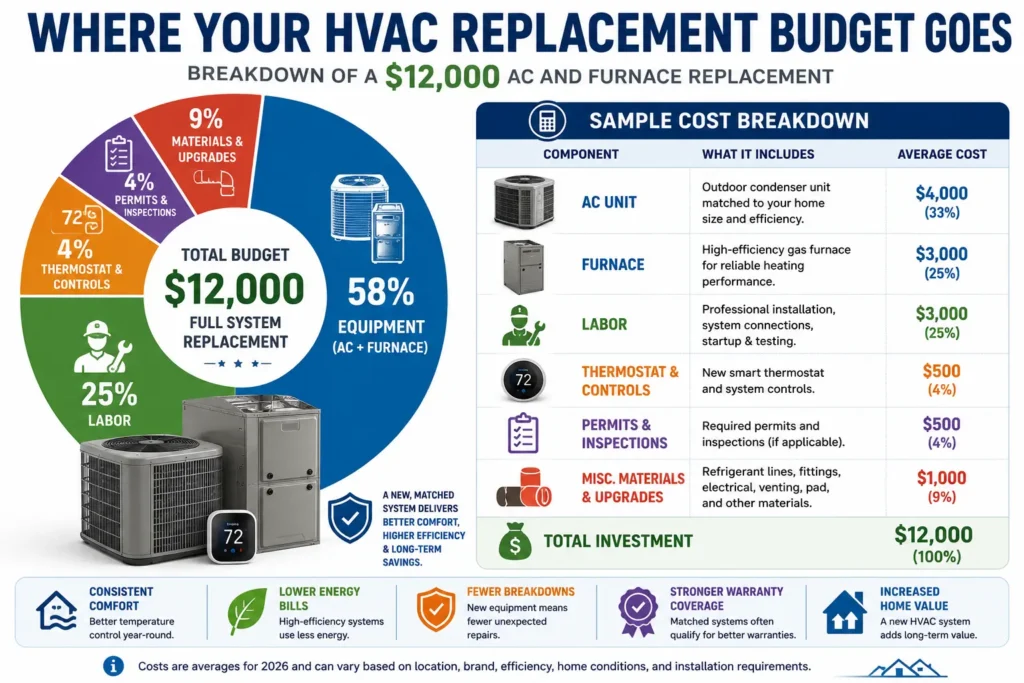
The cost to replace an AC and furnace together includes much more than just the equipment. Your total investment typically covers the air conditioner, furnace, evaporator coil, thermostat, labor, permits, and any additional materials needed for a safe and efficient installation.
Understanding these individual costs can help you compare contractor quotes and identify what is included in the price.
Air Conditioner Cost
The outdoor air conditioner is usually one of the most expensive parts of the system. The larger the unit and the higher its efficiency rating, the more you can expect to pay.
| AC Size | Equipment Cost |
| 1.5 Ton | $1,800 – $3,500 |
| 2 Ton | $2,000 – $4,000 |
| 2.5 Ton | $2,300 – $4,500 |
| 3 Ton | $2,500 – $5,500 |
| 4 Ton | $3,000 – $6,500 |
| 5 Ton | $3,500 – $8,000 |
High-efficiency systems, variable-speed compressors, and premium brands can increase equipment costs. However, these upgrades often provide better comfort, quieter operation, and lower energy bills over time.
Furnace Cost
The furnace is responsible for heating your home and works alongside the air conditioner throughout the year. Furnace costs vary based on fuel type, efficiency rating, and features.
| Furnace Type | Equipment Cost |
| Basic Gas Furnace | $1,500 – $3,000 |
| Mid-Efficiency Furnace | $2,500 – $4,500 |
| High-Efficiency Furnace | $3,500 – $7,000 |
| Variable-Speed Furnace | $5,000 – $10,000 |
Higher-efficiency furnaces cost more upfront but can significantly reduce heating costs, especially in colder climates. The right furnace size depends on your home’s square footage, insulation levels, and local weather conditions.
Evaporator Coil Cost
The evaporator coil is a key part of your cooling system and works directly with the air conditioner to remove heat from your home.
Typical installed cost:
- $800 to $2,500
Most HVAC professionals recommend replacing the evaporator coil when installing a new air conditioner. A new coil helps maintain efficiency, improves system performance, and reduces the risk of future compatibility issues.
Thermostat Cost
Most HVAC replacement projects include a new thermostat to ensure the system operates efficiently.
| Thermostat Type | Installed Cost |
| Basic Digital | $100 – $250 |
| Programmable | $150 – $400 |
| Smart Thermostat | $250 – $800 |
Smart thermostats allow you to control your HVAC system remotely, create schedules, and track energy usage. Many homeowners see lower heating and cooling costs after upgrading to a smart thermostat.
Labor and Installation Costs
Labor is often one of the largest expenses in a complete HVAC replacement project.
Professional installation typically costs:
- $3,000 to $8,000
Installation costs vary based on several factors, including:
- System size
- Equipment type
- Installation complexity
- Home accessibility
- Local labor rates
- Permit requirements
- Additional upgrades
A quality installation is just as important as the equipment itself. Proper sizing, installation, and testing help maximize efficiency, comfort, and system lifespan.
Permit and Inspection Fees
Most cities and counties require permits when replacing an HVAC system.
Typical permit-related costs include:
- Permit fees: $100–$500
- Inspection fees: $50–$300
These permits help ensure the installation meets local building codes and safety standards. A reputable HVAC contractor will usually handle the permit process on your behalf.
Additional Materials and Upgrades
Some HVAC replacements require extra materials or upgrades to support the new system.
Common additional costs include:
| Component | Typical Cost |
| Refrigerant Line Set | $400 – $2,000 |
| Condensate Pump | $150 – $600 |
| Electrical Upgrades | $500 – $3,000 |
| Gas Line Modifications | $300 – $1,500 |
| Drain Line Replacement | $150 – $800 |
These costs vary depending on the condition of your existing HVAC system. Older homes often require additional electrical, gas, or drainage work to meet current code requirements and support modern equipment.
Understanding these cost components can help you avoid surprises and make it easier to compare HVAC replacement estimates from different contractors.
Cost to Replace AC and Furnace by System Size
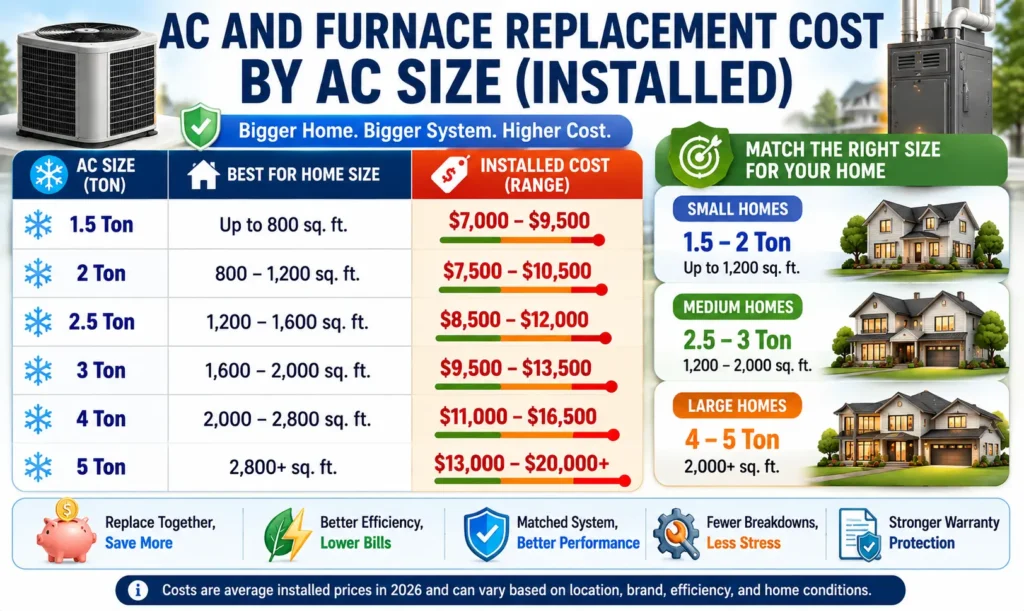
The cost to replace an AC and furnace together increases as system size increases. Larger homes need larger HVAC systems to maintain comfortable indoor temperatures, which raises both equipment and installation costs.
For most homeowners, system size is one of the biggest factors affecting the total replacement price. Choosing the correct size is important because an oversized or undersized system can lead to comfort problems, higher energy bills, and unnecessary wear on the equipment.
| AC Size | Average Installed Cost |
| 1.5 Ton | $7,000 – $9,500 |
| 2 Ton | $7,500 – $10,500 |
| 2.5 Ton | $8,500 – $12,000 |
| 3 Ton | $9,500 – $13,500 |
| 4 Ton | $11,000 – $16,500 |
| 5 Ton | $13,000 – $20,000 |
1.5 Ton System Cost
A 1.5-ton AC and furnace system typically costs between $7,000 and $9,500 installed.
This size is often suitable for:
- Small homes
- Condos
- Apartments
- Homes under 1,000 square feet
2 Ton System Cost
A 2-ton HVAC system usually costs $7,500 to $10,500 installed.
This size commonly works well for:
- Smaller single-family homes
- Well-insulated homes
- Homes between 1,000 and 1,300 square feet
2.5 Ton System Cost
A 2.5-ton system generally costs $8,500 to $12,000 installed.
Many homeowners choose this size for:
- Medium-sized homes
- Homes between 1,300 and 1,700 square feet
- Moderate climate zones
3 Ton System Cost
A 3-ton AC and furnace replacement typically costs $9,500 to $13,500 installed.
This is one of the most common HVAC sizes for residential properties and is often suitable for:
- Homes around 1,500 to 2,000 square feet
- Average insulation levels
- Typical family homes
4 Ton System Cost
A 4-ton HVAC system generally costs $11,000 to $16,500 installed.
This size is often used in:
- Larger homes
- Two-story properties
- Homes between 2,000 and 2,800 square feet
5 Ton System Cost
A 5-ton AC and furnace system typically costs $13,000 to $20,000 or more installed.
These systems are commonly installed in:
- Large homes
- Luxury properties
- Homes over 2,800 square feet
- Properties in very hot climates
Why Proper HVAC Sizing Matters
Proper HVAC sizing is just as important as choosing a quality system. A correctly sized AC and furnace provide better comfort, lower energy costs, and a longer equipment lifespan.
An oversized system may:
- Turn on and off too frequently
- Waste energy
- Create uneven temperatures
- Wear out faster
An undersized system may:
- Struggle to heat or cool the home
- Run continuously
- Increase utility bills
- Reduce indoor comfort
To determine the right system size, HVAC contractors typically perform a Manual J load calculation. This calculation evaluates factors such as square footage, insulation, windows, ceiling height, climate, and air leakage to recommend the correct HVAC capacity for your home.
For the best results, avoid choosing a system based solely on your home’s square footage. A professional load calculation provides the most accurate sizing and helps ensure your new HVAC system operates efficiently for years to come.
AC and Furnace Replacement Cost by Home Size
The cost to replace an AC and furnace together typically increases as your home’s square footage increases. Larger homes need larger HVAC systems, which raise equipment, labor, and installation costs.
While home size is an important factor, HVAC contractors also consider insulation levels, ceiling height, window efficiency, sun exposure, and local climate when determining the right system for your home.
| Home Size | Typical HVAC Size | Average Installed Cost |
| 1,000 sq. ft. | 1.5–2 Ton | $7,000 – $10,000 |
| 1,500 sq. ft. | 2–2.5 Ton | $8,000 – $11,500 |
| 2,000 sq. ft. | 2.5–3 Ton | $9,500 – $13,500 |
| 2,500 sq. ft. | 3–4 Ton | $11,000 – $16,000 |
| 3,000 sq. ft. | 4–5 Ton | $13,000 – $20,000 |
| 4,000+ sq. ft. | 5 Ton+ | $16,000 – $30,000+ |
1,000 Square Foot Home
The cost to replace an AC and furnace in a 1,000-square-foot home typically ranges from $7,000 to $10,000.
Most homes of this size require a 1.5- to 2-ton air conditioner paired with a smaller furnace. Because the equipment is smaller, installation costs are generally lower than those for larger homes.
1,500 Square Foot Home
The average cost to replace an AC and furnace in a 1,500-square-foot home ranges from $8,000 to $11,500.
These homes usually need a 2- to 2.5-ton air conditioner and a furnace rated between 60,000 and 80,000 BTUs. This is one of the most common HVAC system sizes for residential properties.
2,000 Square Foot Home
The cost to replace an AC and furnace in a 2,000-square-foot home typically falls between $9,500 and $13,500.
Many homes in the United States fall into this size category. Most require a 2.5- to 3-ton air conditioner and a properly sized furnace to maintain comfort throughout the year.
2,500 Square Foot Home
The average HVAC replacement cost for a 2,500-square-foot home ranges from $11,000 to $16,000.
Larger homes require higher-capacity equipment to heat and cool additional living space. This increases both equipment costs and installation expenses.
3,000 Square Foot Home
The cost to replace an AC and furnace in a 3,000-square-foot home typically ranges from $13,000 to $20,000.
Most homes of this size require a 4- to 5-ton air conditioner and a larger furnace. Homeowners often choose higher-efficiency systems to help offset operating costs.
4,000 Square Foot Home and Larger
The cost to replace an AC and furnace in a home larger than 4,000 square feet generally starts around $16,000 and can exceed $30,000.
These homes often require high-capacity HVAC systems, multiple zones, or premium equipment with features such as variable-speed compressors, multi-stage furnaces, and advanced thermostat controls.
What Affects HVAC Costs Beyond Square Footage?
Home size is only one part of the equation. Two homes with the same square footage can require different HVAC system sizes and have different replacement costs.
Other factors that influence pricing include:
- Insulation quality
- Window type and efficiency
- Ceiling height
- Home layout
- Sun exposure
- Local climate
- Air leakage
- Existing ductwork condition
For the most accurate system sizing and pricing, HVAC contractors perform a Manual J load calculation. This helps ensure your new AC and furnace are properly sized for maximum comfort, efficiency, and long-term performance.
Cost by Furnace Type
The type of furnace you choose can have a major impact on your total HVAC replacement cost. Gas, electric, oil, and propane furnaces all have different installation costs, operating expenses, and efficiency levels.
The best option for your home depends on local fuel availability, climate, energy costs, and your budget.
Gas Furnace Replacement Cost
A gas furnace typically costs between $3,500 and $9,000 installed, depending on its efficiency rating and capacity.
Gas furnaces are the most popular heating systems in the United States because they provide reliable heat and relatively low operating costs. They are especially cost-effective in colder regions where heating demand is higher.
| Efficiency Level | Installed Cost |
| Standard Efficiency | $3,500 – $6,000 |
| High Efficiency | $5,000 – $9,000 |
Benefits of a gas furnace include:
- Lower heating costs in many areas
- Fast and consistent heating
- Reliable performance during cold weather
- Widely available fuel source
- Long service life when properly maintained
High-efficiency gas furnaces cost more upfront but can help reduce monthly heating bills over time.
Electric Furnace Replacement Cost
An electric furnace typically costs between $2,500 and $6,500 installed.
Electric furnaces are usually less expensive to purchase and install than gas furnaces because they do not require gas lines, venting systems, or combustion components.
Benefits of an electric furnace include:
- Lower upfront installation cost
- Simpler installation process
- Fewer moving parts
- Quiet operation
- Lower maintenance requirements
However, electricity is often more expensive than natural gas for heating, which can result in higher utility bills in colder climates.
Oil Furnace Replacement Cost
An oil furnace generally costs between $5,000 and $10,000 installed.
Although oil furnaces are less common today, they are still used in some areas where natural gas service is unavailable. They provide strong heating performance and are capable of producing high heat output during very cold weather.
Benefits of an oil furnace include:
- Powerful heating performance
- Effective in cold climates
- Long equipment lifespan
One drawback is that homeowners must store heating oil on-site. Fuel prices can also fluctuate significantly, which may increase long-term operating costs.
Propane Furnace Replacement Cost
A propane furnace typically costs between $4,500 and $9,000 installed.
Propane is often used in rural areas where natural gas service is not available. These systems provide heating performance similar to gas furnaces and can be a dependable option for homes outside city utility networks.
Benefits of a propane furnace include:
- Strong heating capacity
- High efficiency options available
- Reliable performance in cold weather
- Suitable for rural properties
The main consideration is fuel cost. Propane prices can change throughout the year, which may affect annual heating expenses.
Which Furnace Type Costs the Least to Operate?
In most parts of the United States, high-efficiency gas furnaces have the lowest operating costs, making them the most economical choice for long-term savings.
Electric furnaces often have the lowest upfront installation cost but may cost more to operate, especially in colder regions. Oil and propane systems can provide excellent heating performance, but fuel costs tend to be less predictable.
When choosing a furnace, consider both the installation price and the long-term cost of heating your home. A slightly higher upfront investment in an efficient furnace can often lead to significant savings over the life of the system.
AC and Furnace Replacement Cost by SEER2 Efficiency
SEER2 efficiency ratings directly affect the cost of replacing an AC and furnace system. Higher SEER2 ratings increase upfront installation costs but can lower monthly energy bills and improve overall comfort.
When comparing HVAC systems, it’s important to look beyond the purchase price. A higher-efficiency system may cost more initially, but the long-term energy savings can help offset the additional investment.
| SEER2 Rating | Average Installed Cost |
| 13.4 SEER2 | $7,000 – $10,000 |
| 14.3 SEER2 | $8,500 – $12,000 |
| 16 SEER2 | $10,000 – $15,000 |
| 18 SEER2 | $12,000 – $18,000 |
| 20+ SEER2 | $18,000 – $30,000+ |
13.4 SEER2 Systems
A 13.4 SEER2 HVAC system typically costs between $7,000 and $10,000 installed.
These systems meet minimum efficiency requirements in many areas and are usually the most affordable option for homeowners looking to replace an aging HVAC system.
Best suited for:
- Budget-conscious homeowners
- Rental properties
- Vacation homes
- Mild climate regions
While the upfront cost is lower, these systems generally consume more energy than higher-efficiency models.
14.3 to 16 SEER2 Systems
A 14.3 to 16 SEER2 system typically costs between $9,000 and $14,000 installed.
This efficiency range is often considered the best value for most homeowners because it balances purchase price, energy savings, and overall performance.
Benefits include:
- Lower energy consumption
- Better indoor comfort
- Improved temperature consistency
- Lower utility bills
- Strong long-term value
Many homeowners choose systems in this range because they offer noticeable efficiency improvements without the higher cost of premium equipment.
17 to 20 SEER2 Systems
A 17 to 20 SEER2 HVAC system generally costs between $13,000 and $20,000 installed.
These high-efficiency systems use advanced technologies to reduce energy usage and improve comfort throughout the home.
Common features include:
- Variable-speed compressors
- Multi-stage operation
- Communicating controls
- Enhanced humidity management
These systems are often ideal for:
- Hot climates
- Homes with long cooling seasons
- Homeowners focused on energy savings
- Families seeking maximum comfort
20+ SEER2 Premium Systems
A premium 20+ SEER2 system typically costs between $18,000 and $30,000 or more installed.
These systems represent the highest level of residential HVAC efficiency and comfort currently available.
Features often include:
- Variable-speed compressors
- Advanced zoning systems
- Smart thermostat integration
- Superior humidity control
- Ultra-quiet operation
- Maximum energy efficiency
Premium systems are often chosen by homeowners who plan to stay in their homes for many years and want the lowest possible energy consumption.
Is a Higher SEER2 Rating Worth the Cost?
For many homeowners, a higher SEER2 rating can be worth the investment, especially in areas with long, hot summers and high electricity costs.
Higher-efficiency systems typically:
- Reduce cooling expenses
- Improve indoor comfort
- Maintain more consistent temperatures
- Control humidity more effectively
- Increase home value
However, the best choice depends on your budget, climate, and how long you plan to stay in your home. For most homeowners, a 14.3 to 16 SEER2 system offers the best balance of upfront cost and long-term savings.
Before choosing a system, ask your HVAC contractor to compare estimated energy costs between different SEER2 ratings. This can help you determine whether the additional investment will provide a worthwhile return over the life of the equipment.
AC and Furnace Replacement Cost by Brand
The HVAC brand you choose can significantly affect the cost of replacing your AC and furnace system. Premium brands generally cost more but often offer advanced features, higher efficiency ratings, stronger warranties, and a wider range of equipment options.
While brand matters, proper installation is just as important. Even the best HVAC equipment may not perform as expected if it is not installed correctly.
| HVAC Brand | Average Installed Cost |
| Goodman | $7,000 – $12,000 |
| Rheem | $8,000 – $14,000 |
| American Standard | $9,500 – $17,000 |
| Carrier | $10,000 – $18,000 |
| Trane | $10,500 – $19,000 |
| Lennox | $11,000 – $20,000 |
Carrier
A Carrier AC and furnace replacement typically costs between $10,000 and $18,000 installed.
Carrier is known for producing high-quality HVAC systems with advanced technology and strong energy efficiency ratings. The brand offers a wide range of equipment, from budget-friendly models to premium variable-speed systems.
Many homeowners choose Carrier for:
- Reliable performance
- High-efficiency options
- Advanced comfort features
- Strong warranty coverage
Trane
A Trane AC and furnace replacement generally costs between $10,500 and $19,000 installed.
Trane has built a reputation for durability and long-term reliability. Its systems are designed to withstand demanding operating conditions and often receive high marks for performance.
Homeowners often choose Trane for:
- Long equipment lifespan
- Dependable performance
- Energy-efficient models
- Strong brand reputation
Lennox
A Lennox HVAC replacement typically costs between $11,000 and $20,000 installed.
Lennox offers some of the highest-efficiency residential HVAC systems on the market. Many of its premium models are designed to maximize energy savings and indoor comfort.
Key benefits include:
- Industry-leading efficiency ratings
- Quiet operation
- Advanced technology
- Excellent comfort control
Because of these features, Lennox systems often carry a higher upfront cost than many competing brands.
Goodman
A Goodman AC and furnace replacement usually costs between $7,000 and $12,000 installed.
Goodman is one of the most affordable HVAC brands available and is a popular choice for homeowners looking for reliable equipment at a lower price point.
Reasons homeowners choose Goodman include:
- Lower installation costs
- Good overall value
- Widely available replacement parts
- Competitive warranty programs
Goodman systems are often selected for budget-conscious projects without sacrificing dependable performance.
Rheem
A Rheem HVAC replacement typically costs between $8,000 and $14,000 installed.
Rheem is known for offering a balance of affordability, efficiency, and reliability. The brand provides a broad selection of equipment suitable for a variety of budgets and home sizes.
Benefits include:
- Competitive pricing
- Energy-efficient models
- Solid reliability
- Good warranty options
Many homeowners view Rheem as one of the best values in the HVAC industry.
American Standard
An American Standard AC and furnace replacement generally costs between $9,500 and $17,000 installed.
American Standard shares many engineering and design features with Trane and is often considered a premium HVAC brand. Its systems are known for durability, efficiency, and consistent performance.
Popular features include:
- High-quality construction
- Quiet operation
- Energy-efficient options
- Long-term reliability
Which HVAC Brand Is Best?
There is no single best HVAC brand for every homeowner. The right choice depends on your budget, efficiency goals, comfort preferences, and local contractor support.
In general:
- Goodman offers some of the lowest upfront costs.
- Rheem provides strong value for the price.
- Carrier balances performance and advanced technology.
- Trane is known for durability and reliability.
- Lennox offers some of the highest efficiency ratings available.
- American Standard combines premium quality with dependable performance.
When comparing brands, focus on the total value of the installation rather than equipment cost alone. A properly sized and professionally installed system will often have a greater impact on comfort, efficiency, and long-term performance than the brand name on the equipment.
Factors That Affect AC and Furnace Replacement Costs
The cost to replace an AC and furnace can vary significantly from one home to another. Several factors influence the final price, including system size, efficiency, labor costs, ductwork condition, and installation complexity.
Understanding these factors can help you budget more accurately and better evaluate HVAC replacement estimates.
System Size Requirements
System size is one of the biggest factors affecting HVAC replacement costs. Larger homes require larger air conditioners and furnaces, which increase both equipment and installation expenses.
A properly sized system is essential for comfort and efficiency. Installing equipment that is too large or too small can lead to higher energy bills and performance issues.
Efficiency Ratings
Higher-efficiency HVAC systems cost more upfront but can reduce monthly heating and cooling expenses.
Systems with higher SEER2 and AFUE ratings typically include advanced technology that improves performance and energy savings. While the initial investment is higher, many homeowners recover part of the cost through lower utility bills over time.
Ductwork Condition
The condition of your existing ductwork can have a major impact on replacement costs.
If the ductwork is damaged, leaking, undersized, or poorly designed, repairs or replacement may be necessary before installing a new HVAC system.
Common ductwork expenses include:
- Duct sealing
- Duct repairs
- Duct replacement
- Airflow modifications
These additional upgrades can increase the total project cost but often improve system efficiency and comfort.
Local Labor Rates
Labor costs vary widely depending on your location and the contractor you hire.
Homeowners in large metropolitan areas generally pay more for HVAC installation than those in smaller cities or rural communities. Experienced contractors may also charge higher rates due to their expertise and reputation.
Home Accessibility
The easier it is to access the HVAC equipment, the lower the installation cost is likely to be.
Projects involving:
- Tight crawlspaces
- Difficult attic access
- Rooftop equipment
- Limited work areas
Often require additional labor and installation time, increasing overall costs.
Climate Zone
Your local climate plays an important role in determining the size and type of HVAC system needed.
Homes located in regions with:
- Long, hot summers
- Harsh winters
- High humidity levels
Often require larger or higher-efficiency systems, which can increase replacement costs.
Permit Requirements
Most HVAC replacement projects require permits and inspections to comply with local building codes.
Permit and inspection fees vary by location but commonly add several hundred dollars to the overall project cost. These requirements help ensure the system is installed safely and meets current code standards.
Equipment Brand
The HVAC brand you select can affect both equipment and installation costs.
Premium brands often cost more because they offer:
- Advanced technology
- Higher efficiency ratings
- Enhanced warranties
- Additional comfort features
Budget-friendly brands generally have lower upfront costs while still providing reliable performance when installed correctly.
Additional System Upgrades
Many homeowners choose to make additional improvements during an HVAC replacement project.
Common upgrades include:
- Smart thermostats
- Whole-home air purifiers
- UV air treatment systems
- Humidifiers
- Dehumidifiers
- Zoning systems
While these upgrades increase the initial investment, they can improve indoor comfort, air quality, and system performance.
Installation Quality
The quality of the installation can be just as important as the equipment itself.
A properly installed HVAC system is more likely to:
- Operate efficiently
- Last longer
- Require fewer repairs
- Deliver consistent comfort
Choosing an experienced and qualified HVAC contractor can help ensure you get the best value from your investment and avoid costly problems in the future.
Cost to Replace AC and Furnace Together vs Separately
Replacing your AC and furnace together is usually the most cost-effective option when both systems are older or nearing the end of their lifespan. While the upfront cost is higher, a complete HVAC replacement often provides better efficiency, lower labor costs, and fewer repair expenses in the future.
If one system is relatively new and still performing well, replacing only the failed component may make sense. However, it’s important to consider the age, condition, and compatibility of both systems before making a decision.
Replacing Both Systems Together
Replacing both the air conditioner and furnace at the same time typically costs between $7,000 and $18,000.
This option is often recommended when both systems are more than 12 to 15 years old or when major repairs are becoming frequent.
Benefits of replacing both systems together include:
- Lower overall installation costs
- Better equipment compatibility
- Improved energy efficiency
- Enhanced indoor comfort
- Stronger warranty coverage
- Fewer future repair expenses
A matched HVAC system is designed to work together, helping maximize performance and efficiency.
Replacing the Air Conditioner Only
Replacing only the air conditioner typically costs between $4,000 and $10,000. If you’re considering replacing only the cooling portion of your system, see our complete guide to AC replacement cost.
This option may be appropriate if the furnace is still relatively new, operating efficiently, and expected to last for several more years.
Potential drawbacks include:
- Lower efficiency when paired with an older furnace
- Reduced system performance
- Compatibility concerns
- Higher risk of future furnace replacement costs
If the furnace is nearing the end of its lifespan, replacing only the AC may result in higher overall costs later.
Replacing the Furnace Only
Replacing only the furnace generally costs between $3,500 and $8,500.
This can be a practical choice when the air conditioner is still in good condition and has several years of remaining service life.
Homeowners often choose this option when:
- The furnace has failed unexpectedly
- The AC system is relatively new
- The cooling system is still operating efficiently
A professional HVAC inspection can help determine whether replacing only the furnace is the best financial decision.
Cost Comparison
The table below compares the average costs of each replacement option.
| Project Type | Average Cost |
| AC Only | $4,000 – $10,000 |
| Furnace Only | $3,500 – $8,500 |
| AC and Furnace Together | $7,000 – $18,000 |
Which Option Saves More Money?
Replacing both systems together often provides the best long-term value for homeowners with aging equipment.
Although the initial investment is higher, homeowners can benefit from:
- Lower installation costs compared to separate replacements
- Better energy efficiency
- Reduced repair expenses
- Improved reliability
- Longer warranty coverage
- Consistent heating and cooling performance
If both systems are over 12 to 15 years old, replacing them together is often the smarter financial choice. Before making a final decision, compare the costs of repairing versus replacing an HVAC system.
However, if one system is still relatively new and operating properly, replacing only the failed component may be the most practical solution.
The best way to decide is to have a qualified HVAC contractor evaluate both systems and compare the long-term costs of repair versus replacement.
Signs It’s Time to Replace Your AC and Furnace
If your AC and furnace are showing signs of age, replacing them before a major breakdown can save money and prevent unexpected comfort issues. Most HVAC systems give clear warning signs when they are nearing the end of their lifespan.
Many homeowners first notice these issues through common AC replacement warning signs. Knowing what to look for can help you decide whether replacement is a better investment than continuing to pay for repairs.
Your System Is More Than 15 Years Old
One of the clearest signs it’s time for a replacement is the age of your equipment.
Most HVAC systems have the following average lifespans:
- Air conditioners: 10 to 15 years
- Furnaces: 15 to 20 years
As systems age, they become less efficient, require more repairs, and are more likely to experience unexpected breakdowns. If your equipment is approaching these age ranges, replacing it may be more cost-effective than investing in major repairs.
Frequent Repair Bills
If you’re calling for HVAC repairs several times a year, replacement may be the better long-term solution.
Frequent breakdowns often indicate that major components are wearing out and other parts may soon fail as well.
A common guideline is:
If a repair costs more than 50% of the cost of a new system, replacement is often the smarter financial decision.
Instead of continuing to invest in an aging system, many homeowners choose replacement to avoid ongoing repair expenses.
Rising Energy Bills
Higher utility bills can be a sign that your HVAC system is losing efficiency.
As air conditioners and furnaces age, they often have to work harder to maintain the same level of comfort. This increased workload can lead to:
- Higher heating and cooling costs
- Longer operating cycles
- Reduced system efficiency
- More wear and tear on equipment
If your energy bills continue to rise without a significant increase in utility rates, your HVAC system may be nearing the end of its useful life.
Uneven Heating and Cooling
Hot and cold spots throughout your home can indicate that your HVAC system is no longer performing properly.
Common causes include:
- Aging equipment
- Improper system sizing
- Declining performance
- Airflow restrictions
- Ductwork problems
If some rooms are consistently too warm or too cold, a replacement system may provide more consistent comfort throughout the home.
Excessive Noise
Unusual HVAC noises should never be ignored.
While all systems make some noise during operation, loud or unusual sounds often signal mechanical problems.
Warning noises include:
- Grinding
- Screeching
- Rattling
- Banging
- Clanking
These sounds may indicate worn motors, failing bearings, loose components, or other issues that can become expensive to repair.
Poor Indoor Humidity Control
Older HVAC systems often struggle to manage indoor humidity levels effectively.
You may notice:
- Sticky indoor air during summer
- Excess moisture around windows
- Musty odors
- Increased indoor discomfort
Modern HVAC systems provide better humidity control, which helps improve comfort and indoor air quality.
Uses Outdated R-22 Refrigerant
If your air conditioner still uses R-22 refrigerant, replacement may be the most practical option.
R-22 has been phased out, making it increasingly difficult and expensive to obtain. As a result, repairing older systems that use R-22 can become very costly.
Many homeowners choose to replace these systems rather than invest in expensive refrigerant-related repairs.
Your Home Never Feels Comfortable
If your HVAC system runs constantly but still struggles to keep your home comfortable, it may no longer be capable of meeting your heating and cooling needs.
Common signs include:
- Rooms that never reach the desired temperature
- Constant thermostat adjustments
- Weak airflow from vents
- Reduced overall comfort
A properly sized modern HVAC system can provide more consistent temperatures, better airflow, and improved energy efficiency.
When Replacement Makes More Sense Than Repair
In many cases, replacing an aging AC and furnace is more cost-effective than continuing to repair them.
Replacement is often the better choice when:
- The system is more than 15 years old
- Repairs are becoming frequent
- Energy bills continue to rise
- Comfort problems are increasing
- Major components have failed
- The system uses outdated refrigerant
A professional HVAC inspection can help determine whether repair or replacement offers the best long-term value for your home.
Ways to Save Money on AC and Furnace Replacement
You can save thousands of dollars on an AC and furnace replacement by planning ahead, comparing quotes, choosing the right system size, and taking advantage of available rebates. While a complete HVAC replacement is a significant investment, there are several ways to reduce costs without sacrificing quality or performance.
Get Multiple Estimates
One of the easiest ways to save money is to compare quotes from several HVAC contractors.
Request estimates from at least three licensed and reputable companies before making a decision. Pricing, warranties, equipment recommendations, and included services can vary significantly between contractors.
Comparing estimates helps you find:
- Competitive pricing
- Better warranty coverage
- Higher-quality installation services
- More equipment options
- Better overall value
The lowest quote is not always the best choice. Focus on the quality of the equipment, installation experience, and warranty protection.
Replace During the Off-Season
Scheduling your HVAC replacement during the spring or fall can often reduce installation costs.
These seasons are typically slower for HVAC contractors because heating and cooling demand is lower.
Benefits of off-season replacement include:
- Better appointment availability
- Potential promotional discounts
- Faster installation scheduling
- More time to compare options
Waiting until your system fails during extreme weather can limit your choices and increase costs.
Take Advantage of Rebates
Many utility companies, manufacturers, and government programs offer rebates for energy-efficient HVAC systems.
Depending on the equipment you choose, available rebates may range from:
- $100 to $2,000 or more
High-efficiency air conditioners, furnaces, heat pumps, and smart thermostats often qualify for incentives.
Before purchasing a system, ask your contractor about:
- Manufacturer rebates
- Utility company incentives
- Local energy-efficiency programs
- Federal tax credits
These savings can significantly reduce your upfront investment.
Consider Financing Options
Many HVAC contractors offer financing programs that allow homeowners to spread replacement costs over several months or years.
Financing can help you:
- Replace failing equipment immediately
- Avoid emergency repair expenses
- Manage larger HVAC investments more comfortably
Before choosing a financing plan, review the interest rate, repayment terms, and any promotional offers available.
Choose the Correct System Size
Buying a larger system than you need does not improve comfort and often increases costs.
Oversized HVAC systems can:
- Cost more to purchase
- Use more energy
- Cycle on and off too frequently
- Wear out faster
A professional Manual J load calculation helps determine the correct size for your home based on factors such as square footage, insulation, climate, windows, and air leakage.
Choosing the right size helps maximize efficiency and prevents unnecessary expenses.
Improve Home Efficiency Before Replacing Your HVAC System
Improving your home’s energy efficiency may reduce the size of HVAC system required, lowering both equipment and operating costs. A proactive HVAC maintenance checklist can help prevent premature system failure and costly replacements.
Consider upgrades such as:
- Air sealing
- Attic insulation improvements
- Energy-efficient windows
- Duct sealing
- Weatherstripping
These improvements help reduce heating and cooling losses, allowing your new HVAC system to operate more efficiently.
Focus on Installation Quality
A properly installed HVAC system often performs better than a premium system installed incorrectly.
Choosing an experienced contractor can help you avoid:
- Energy waste
- Comfort problems
- Frequent repairs
- Premature equipment failure
Quality installation protects your investment and helps ensure you get the expected performance from your new system.
Replace Before an Emergency Occurs
Replacing an aging HVAC system before it fails completely can save money and reduce stress.
Emergency replacements often result in:
- Limited equipment choices
- Higher labor costs
- Faster purchasing decisions
- Potential peak-season pricing
Planning your replacement ahead of time gives you more flexibility to compare systems, contractors, and financing options.
Focus on Long-Term Value
The cheapest HVAC system is not always the most affordable in the long run.
When comparing options, consider:
- Energy efficiency
- Warranty coverage
- Expected lifespan
- Repair history
- Operating costs
A slightly higher upfront investment can often lead to lower energy bills, fewer repairs, and better overall value over the next 15 to 20 years.
Frequently Asked Questions
How much does it cost to replace an AC unit and furnace at the same time?
The cost to replace an AC unit and furnace together typically ranges from $7,000 to $18,000, with most homeowners spending between $9,500 and $13,500.
The final price depends on factors such as:
- System size
- Equipment efficiency
- HVAC brand
- Labor costs
- Ductwork condition
- Installation complexity
High-efficiency and premium systems can cost more but may reduce long-term energy expenses.
Is it cheaper to replace an AC and furnace together?
Yes, replacing an AC and furnace together is usually cheaper than replacing them separately over time.
A combined replacement can help reduce:
- Labor costs
- Installation expenses
- Permit fees
- Future repair costs
It also ensures both systems are properly matched for maximum efficiency and performance.
How long does an HVAC replacement take?
Most AC and furnace replacements take one to two days to complete. For a detailed project timeline, read our guide on HVAC installation time.
However, the timeline can be longer if the project includes:
- Ductwork replacement
- Electrical upgrades
- Gas line modifications
- Indoor air quality upgrades
- Difficult attic or crawlspace access
Your HVAC contractor can provide a more accurate timeline after evaluating your home.
What size AC and furnace do I need?
The correct AC and furnace size depends on your home’s heating and cooling requirements.
Factors that affect sizing include:
- Home square footage
- Local climate
- Insulation levels
- Window efficiency
- Ceiling height
- Air leakage
- Sun exposure
The most accurate way to determine the right size is through a Manual J load calculation performed by a qualified HVAC professional. Learn how to choose the right HVAC system based on your home’s size, comfort needs, and budget.
Does a new HVAC system increase home value?
Yes, a new HVAC system can increase home value and improve buyer appeal.
Many homebuyers view a recently installed heating and cooling system as a major benefit because it reduces the likelihood of immediate repair or replacement expenses.
A modern HVAC system can also offer:
- Better energy efficiency
- Lower utility bills
- Improved comfort
- Updated technology
- Enhanced indoor air quality
Should I replace a 20-year-old furnace?
In most cases, replacing a 20-year-old furnace is a smart investment.
Most furnaces have a lifespan of approximately 15 to 20 years. Once a furnace reaches this age, it often becomes less efficient and more prone to breakdowns.
Replacement is usually recommended if:
- Repairs are becoming frequent
- Heating costs are increasing
- Major components have failed
- The furnace is no longer operating safely or efficiently
Can I replace the AC without replacing the furnace?
Yes, you can replace the air conditioner without replacing the furnace if the furnace is still in good condition.
However, it’s important to ensure the existing furnace is compatible with the new AC system. Mismatched equipment can reduce efficiency and affect overall performance.
A professional HVAC contractor can determine whether replacing both systems together would provide better value.
Are high-efficiency HVAC systems worth the extra cost?
For many homeowners, high-efficiency HVAC systems are worth the additional investment.
Benefits often include:
- Lower monthly utility bills
- Improved indoor comfort
- Better humidity control
- Quieter operation
- Reduced energy consumption
- Potential rebates and tax incentives
The greatest savings are typically seen in areas with long heating or cooling seasons where HVAC systems run frequently throughout the year.
How long do AC units and furnaces typically last?
Most air conditioners last 10 to 15 years, while most furnaces last 15 to 20 years with proper maintenance.
Regular servicing, filter changes, and timely repairs can help extend the lifespan of both systems. Following the correct service schedule can significantly extend equipment life. Learn how often to service an HVAC system.
Should I repair or replace my HVAC system?
Replacing an HVAC system is often the better option when repair costs are high, the equipment is aging, or efficiency has declined significantly.
A common guideline is the 50% rule: if the repair cost exceeds 50% of the replacement cost, investing in a new system is often the more economical choice.
A professional inspection can help determine whether repair or replacement provides the best long-term value for your home.
Final Thoughts
The cost to replace an AC and furnace together typically ranges from $7,000 to $18,000, with most homeowners spending between $9,500 and $13,500 for a complete HVAC system replacement.
The total cost depends on several factors, including system size, furnace type, efficiency rating, equipment brand, labor costs, ductwork condition, and any upgrades needed during installation. Because every home has different heating and cooling requirements, the best way to determine your actual cost is to get a professional evaluation.
Although replacing both systems at the same time requires a larger upfront investment, it often provides the best long-term value. A matched HVAC system can improve energy efficiency, lower repair costs, increase reliability, and deliver more consistent indoor comfort throughout the year.
Before choosing a new system, request estimates from multiple licensed HVAC contractors and compare both equipment and warranty options. Most importantly, make sure the contractor performs a proper load calculation to ensure the system is correctly sized for your home.
A properly installed AC and furnace can provide dependable heating and cooling for 15 to 20 years while helping keep energy costs under control and reducing the likelihood of unexpected breakdowns.