
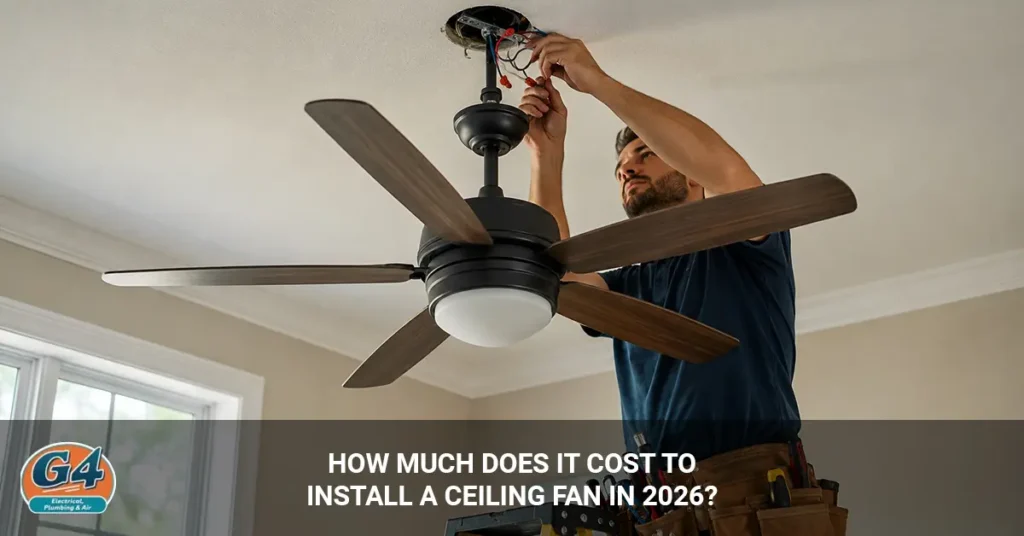
Ceiling fan installation usually costs between $150 and $600 in 2026, depending on the fan type, ceiling height, wiring needs, and local labor rates. Replacing an existing fan with available wiring is usually cheaper, while installing a new fan with fresh wiring or high ceilings can increase the total cost.
Many homeowners install ceiling fans to improve airflow, reduce cooling costs, and make rooms more comfortable throughout the year. Modern ceiling fans can also include LED lighting, remote controls, smart features, and energy-efficient motors.
This guide explains average ceiling fan installation costs in 2026, labor charges, wiring expenses, and the main factors that affect pricing.
Average Ceiling Fan Installation Cost in 2026
The average cost to install a ceiling fan in 2026 ranges from $150 to $600 for most homes. Simple replacements with existing wiring usually cost less, while new wiring, high ceilings, or premium fans can increase the total price.
The final cost often depends on the fan type, installation difficulty, and local electrician labor rates.
National Average Cost
Most homeowners spend between $300 and $450 for professional ceiling fan installation. Smaller jobs cost less, while larger or more complex installations can cost significantly more.
Typical ceiling fan installation costs include:
- Low-end cost: $150–$250
- Average cost: $300–$450
- High-end cost: $600–$1,200+
Luxury ceiling fans, smart controls, difficult wiring access, or vaulted ceilings can increase the final installation cost.
Basic Ceiling Fan Installation Cost
Installing a ceiling fan where wiring already exists is usually the most affordable option. Since the electrical connections are already in place, the electrician mainly focuses on replacing the old fixture or fan.
Basic installation typically includes:
- Removing the old light fixture or fan
- Mounting the new ceiling fan
- Connecting existing wiring
- Testing the fan and controls
Most standard ceiling fan replacements cost between $150 and $350.
Ceiling Fan Installation With New Wiring
Installing a ceiling fan without existing wiring costs more because electricians must run new electrical wiring and sometimes install a new wall switch.
This type of installation usually costs between $350 and $1,000 or more depending on:
- Attic accessibility
- Wall and ceiling construction
- Distance from the power source
- Electrical panel capacity
- Permit requirements
Homes with limited wiring access or older electrical systems may require additional labor and upgrades.
Cost to Replace an Old Ceiling Fan
Replacing an old ceiling fan is generally cheaper than installing a fan in a brand-new location. Existing wiring and mounting hardware can often reduce labor time.
Most ceiling fan replacement projects cost between $150 and $400 depending on:
- Fan size and weight
- Ceiling height
- Mounting difficulty
- Existing wiring condition
- Remote or smart features
Older wiring or damaged electrical boxes may increase the replacement cost and may require inspection for electrical code violations.
Ceiling Fan Installation Cost by Fan Type
Different ceiling fan styles can affect installation costs because some models require additional wiring, balancing, or assembly.
Standard Ceiling Fan Installation Cost
Standard ceiling fans are usually the easiest and least expensive to install because they typically use basic mounting hardware and existing wiring. Most standard ceiling fan installations cost between $150 and $350, depending on the ceiling height and labor rates.
Remote-Control Ceiling Fan Cost
Remote-control ceiling fans often cost more to install because electricians may need to install a receiver and configure the remote system. Most remote-control fan installations range from $200 to $450, depending on the fan model and wiring setup.
Smart Ceiling Fan Installation Cost
Smart ceiling fans usually cost between $300 and $700 to install because they connect to Wi-Fi or smart home systems and may require app setup, smart switches, or additional electrical work.
Outdoor Ceiling Fan Installation Cost
Outdoor ceiling fan installation typically costs between $250 and $700 because electricians must use weather-rated components and moisture-resistant electrical connections to help avoid electrical safety hazards.
Low-Profile Ceiling Fan Installation Cost
Low-profile or flush-mount ceiling fans are commonly installed in rooms with lower ceilings and are usually easier to mount. Most installations cost between $150 and $350 when existing wiring is available.
Ceiling Fan With Light Installation Cost
Ceiling fans with built-in lights generally cost between $200 and $500 to install because additional wiring connections may be needed for lighting controls and switches, especially during ceiling fan light fixture installation.
Large or Heavy Ceiling Fan Installation Cost
Large or heavy ceiling fans often require reinforced ceiling braces, specialty mounting hardware, and more installation time. Most large ceiling fan installations range from $400 to $1,200 or more, depending on the fan size and ceiling height.
Labor Cost to Install a Ceiling Fan
Labor is one of the biggest factors that affects the total cost of ceiling fan installation. The final labor price depends on the installation difficulty, ceiling height, wiring condition, and how long the job takes to complete.
Simple fan replacements usually cost less because electricians can use the existing wiring and mounting location.
Electrician Hourly Rates in 2026
Most electricians charge between $75 and $150 per hour for ceiling fan installation in 2026. Labor rates can vary based on the location, project complexity, and the electrician’s experience.
Some electricians may also charge additional fees such as:
- Minimum service call fees
- Travel charges
- Emergency or weekend service rates
Larger cities and emergency installations often come with higher labor costs.
How Long Ceiling Fan Installation Takes
Most basic ceiling fan replacements take about 1 to 2 hours when wiring already exists. These projects are usually faster because the electrician only needs to replace the old fixture and connect the new fan.
Installations that require new wiring, ceiling modifications, or additional electrical work may take 3 to 6 hours or even a full day for more complex projects.
Factors That Increase Labor Costs
Several installation challenges can increase labor costs because they require more time, equipment, or electrical work.
Common factors that raise installation costs include:
- High ceilings
- Vaulted or cathedral ceilings
- Limited attic access
- Old or damaged wiring
- Electrical panel upgrades
- Heavy or oversized ceiling fans
- Specialty mounting systems
Homes with difficult wiring access or older electrical systems may require additional repairs before installation can begin.
Cost to Install a Ceiling Fan Without Existing Wiring
Installing a ceiling fan without existing wiring usually costs more because electricians must run new electrical wiring and create a safe power connection. This type of installation takes more labor and may require cutting into walls or ceilings.
Most homeowners pay between $350 and $1,000 or more for ceiling fan installation with new wiring, depending on the home’s electrical setup.
New Electrical Wiring Costs
Running new electrical wiring for a ceiling fan typically costs between $200 and $700 or more. The final price depends on how difficult it is to access the walls or ceiling and how far the wiring must run from the power source.
Homes with limited attic access or older wiring systems may require additional labor.
Installing a New Wall Switch
Adding a dedicated wall switch for the ceiling fan usually costs between $100 and $300. This may include installing a new switch box, wiring connections, and switch controls for the fan or light.
Separate fan and light switches may increase the installation cost and sometimes require additional electrical troubleshooting.
Electrical Box Installation Cost
Ceiling fans require a fan-rated electrical box that can safely support the fan’s weight and movement. Installing or replacing the electrical box usually costs between $50 and $200.
Heavy ceiling fans may require stronger mounting hardware and proper support to avoid ceiling fan performance problems later.
Drywall Repair and Ceiling Modifications
Installing new wiring may require electricians to cut into drywall or ceilings to access electrical pathways. After the wiring work is completed, drywall repairs and ceiling patching may be necessary.
Typical drywall repair costs range from $100 to $500, depending on the amount of repair work needed.
Permit and Inspection Costs
Some cities and local building departments require permits for new electrical wiring or ceiling fan installation projects. Permit and inspection costs usually range from $50 to $300, depending on local electrical inspection requirements.
Professional electricians often handle the permit process as part of the installation service.
Ceiling Fan Installation Cost by Ceiling Height
Ceiling height can greatly affect the total cost of ceiling fan installation. Higher or angled ceilings usually require more labor, special mounting hardware, and additional safety equipment.
Standard Ceiling Installation
Standard 8-foot ceilings are usually the easiest and least expensive for ceiling fan installation. Most standard ceiling fan installations cost between $150 and $350 because electricians can typically complete the work quickly using basic mounting hardware and existing wiring.
Vaulted or Cathedral Ceiling Installation
Vaulted or cathedral ceiling fan installation usually costs between $300 and $800 because angled ceilings often require special mounting brackets, longer installation time, and more difficult wiring access.
High Ceiling Fan Installation Cost
Installing a ceiling fan on ceilings over 10 feet high generally costs between $350 and $1,000 or more. Higher ceilings often require tall ladders, scaffolding, or specialty equipment, which increases labor time and installation difficulty.
Downrod Installation Costs
Downrods usually cost between $20 and $150 for materials depending on the length and finish. Additional labor costs may apply if the electrician needs to extend wiring or make extra mounting adjustments for high ceilings.
Ceiling Fan Installation Cost by Room
Ceiling fan installation costs can vary depending on the room location, ceiling type, and how easy it is to access the wiring. Rooms with existing wiring and standard ceilings are usually less expensive to work with.
Bedroom Ceiling Fan Installation
Bedroom ceiling fan installation usually costs between $150 and $400 when existing wiring is already available. Most bedroom installations are straightforward and require less labor than larger rooms or specialty spaces.
Living Room Ceiling Fan Installation
Living room ceiling fan installation typically costs between $200 and $600 because living rooms often need larger fans for better airflow and coverage, especially in homes struggling with poor indoor airflow. High ceilings or oversized fans can increase the final installation price.
Kitchen Ceiling Fan Installation
Kitchen ceiling fan installation generally ranges from $200 to $500. Electricians may need to work around cabinets, lighting fixtures, or limited ceiling space, which can increase labor time.
Bathroom Ceiling Fan Cost
Bathroom ceiling fan installation usually costs between $250 and $700 because the fan and electrical components must meet moisture and ventilation safety requirements.
Patio or Outdoor Ceiling Fan Installation
Outdoor ceiling fan installation typically costs between $250 and $700. Outdoor fans require weather-rated electrical components, moisture-resistant wiring, and protected mounting locations for safe operation.
Garage Ceiling Fan Installation
Garage ceiling fan installation generally costs between $200 and $600 depending on the wiring condition and ceiling height. Some garage installations may require exposed conduit, upgraded wiring, or additional electrical work.
Additional Ceiling Fan Installation Costs
Some ceiling fan installations require additional electrical or structural upgrades that can increase the total project cost. Older homes, heavy fans, or smart controls often require extra work beyond a standard installation.
Ceiling Fan Brace Installation
Ceiling fan brace installation usually costs between $50 and $300 depending on the ceiling structure and fan weight. Heavy ceiling fans often need reinforced support braces to safely handle the fan’s movement and vibration.
Smart Switch or Remote Setup
Installing smart switches or remote-control systems typically costs between $100 and $350. Smart controls may require additional wiring, app setup, receiver installation, or smart home integration.
Balancing and Noise Fixes
Balancing or noise repair for a wobbly ceiling fan generally costs between $75 and $250. Electricians may need to adjust the blades, tighten mounting hardware, or rebalance the fan to reduce shaking and noise.
Old Wiring Repairs
Repairing or replacing damaged wiring usually costs between $200 and $1,000 or more, depending on the condition of the electrical system. Older homes may need wiring upgrades before a new ceiling fan can be installed safely.
Electrical Panel Upgrades
Electrical panel upgrades typically cost between $1,500 and $5,000 or more if the home’s electrical system cannot safely support additional circuits or modern electrical demand.
Older electrical panels may require replacement before new ceiling fan wiring can be added.
Signs You May Need a New Ceiling Fan Installation
Several warning signs can indicate it may be time to replace your ceiling fan or install a new one. Problems such as wobbling, unusual noises, weak airflow, or electrical issues often point to worn components or unsafe wiring.
Fan Wobbling or Shaking
Excessive wobbling or shaking can indicate loose mounting hardware or issues similar to a ceiling fan not working properly. Small vibrations are common, but strong movement may become a safety concern over time.
Buzzing or Humming Sounds
Buzzing, humming, or clicking noises may signal motor problems, loose electrical connections, or worn fan parts. If the noise continues after tightening the fan, the motor or wiring may need inspection or replacement.
Fan Stops Working Properly
Ceiling fans that stop randomly, run slowly, or fail to operate at certain speeds may have electrical or motor problems. In some cases, damaged wiring or failing switches may also cause inconsistent performance.
Poor Air Circulation
Older ceiling fans may no longer provide proper airflow, especially in larger rooms. Upgrading to a newer fan with better blade design and motor efficiency can improve comfort and airflow throughout the space.
Outdated or Unsafe Wiring
Old wiring, damaged electrical boxes, or loose connections may create electrical safety risks. If the wiring no longer meets modern electrical standards, replacing the fan and updating the electrical components may be necessary.
Is Installing a Ceiling Fan Worth the Cost?
For many homeowners, installing a ceiling fan is worth the cost because it improves airflow, increases comfort, and can help reduce cooling expenses. Ceiling fans are also one of the more affordable home upgrades compared to larger HVAC improvements.
Energy Savings Benefits
Ceiling fans help improve airflow and reduce strain on air conditioning systems. When air circulates more efficiently, homeowners may be able to raise the thermostat slightly while still keeping rooms comfortable.
This can help lower energy use during warmer months.
Improved Indoor Comfort
Ceiling fans help distribute air more evenly throughout the room, making spaces feel cooler and more comfortable. They can also reduce hot spots and improve airflow in larger rooms.
Many modern fans also include quiet motors and adjustable speed settings for better comfort control.
Added Home Value and Appeal
Modern ceiling fans can improve the appearance and functionality of a room. Stylish fans with lighting, smart controls, or energy-efficient features may also make the home more appealing to buyers.
Updated ceiling fans are especially popular in bedrooms, living rooms, patios, and outdoor spaces.
Lower Cooling Costs in Summer
Using ceiling fans alongside air conditioning can help homeowners use less energy during hot weather. Fans create a wind-chill effect that makes rooms feel cooler without lowering the thermostat as much.
Over time, this may help reduce monthly cooling costs.
DIY vs Professional Ceiling Fan Installation
Some homeowners choose DIY ceiling fan installation to save money, but electrical work can become risky without the proper tools and experience. Simple fan replacements may be manageable for experienced homeowners, while new wiring or complex installations are usually safer for licensed electricians.
When DIY Installation May Be Possible
DIY ceiling fan installation may be possible when the wiring already exists and the new fan is simply replacing an old light fixture or ceiling fan.
DIY installation is usually easier when:
- Existing wiring is already in place
- The fan replaces an old fixture
- No new circuits are required
- The ceiling height is standard
- The mounting box is fan-rated
Homeowners should always turn off power at the breaker before working on electrical fixtures.
Risks of DIY Electrical Work
DIY electrical mistakes can create serious safety problems similar to the risks discussed in DIY electrical repairs.
Common DIY risks include:
- Electrical shock
- Improper fan mounting
- Damaged wiring
- Loose electrical connections
- Ceiling damage
- Fire hazards
Heavy ceiling fans that are not properly secured may also become unstable or unsafe over time.
Why Many Homeowners Hire Electricians
Many homeowners hire electricians because professional installation helps ensure the fan is wired safely and securely mounted. Electricians can also identify hidden problems such as outdated wiring, overloaded circuits, or unsafe electrical boxes.
Professional installation is especially important for high ceilings, new wiring projects, or smart ceiling fan systems.
Benefits of Professional Installation
Professional ceiling fan installation provides safer electrical connections and helps ensure the system meets local building codes.
Benefits of hiring an electrician include:
- Proper electrical wiring
- Safer fan mounting
- Code-compliant installation
- Reduced safety risks
- Faster installation
- Professional troubleshooting if problems appear later
For many homeowners, professional installation provides peace of mind and long-term reliability.
How to Save Money on Ceiling Fan Installation
There are several ways homeowners can reduce ceiling fan installation costs without sacrificing safety or quality. The biggest savings usually come from reducing labor time and avoiding unnecessary electrical work.
Reuse Existing Wiring
Using existing wiring is usually much cheaper when the home does not already have electrical overload problems. Replacing an old ceiling fan or light fixture in the same location can significantly lower labor and material costs.
Install Multiple Fans at Once
Installing multiple ceiling fans during one service visit can help reduce overall labor costs. Many electricians charge less per fan when several installations are completed at the same time.
Choose Standard Mounting Locations
Standard ceiling locations are generally easier and faster to install. Rooms with accessible wiring and normal ceiling heights usually require less labor and fewer materials.
Compare Local Electrician Quotes
Getting quotes from multiple electricians can help homeowners compare pricing, labor rates, and installation services. Prices can vary depending on the company, experience level, and the type of electrician you hire.
Buy the Fan Separately
Buying the ceiling fan separately may provide more style options and lower retail pricing. Homeowners can often find sales, discounts, or energy-efficient models online or at home improvement stores before scheduling installation.
Final Thoughts
Ceiling fan installation costs in 2026 can range from affordable basic replacements to more expensive projects that require new wiring, high-ceiling installation, or electrical upgrades. Factors such as fan type, labor costs, ceiling height, and room location all play a role in the final price.
For many homeowners, installing a ceiling fan is a smart investment because it improves airflow, increases indoor comfort, and may help reduce cooling costs during warmer months. Modern ceiling fans can also add lighting, energy efficiency, and better room functionality.
While some simple fan replacements may be manageable for experienced homeowners, professional installation is often the safest option for projects involving electrical wiring, smart controls, or complex mounting situations. A licensed electrician can help ensure the fan is installed safely and according to modern electrical safety standards.