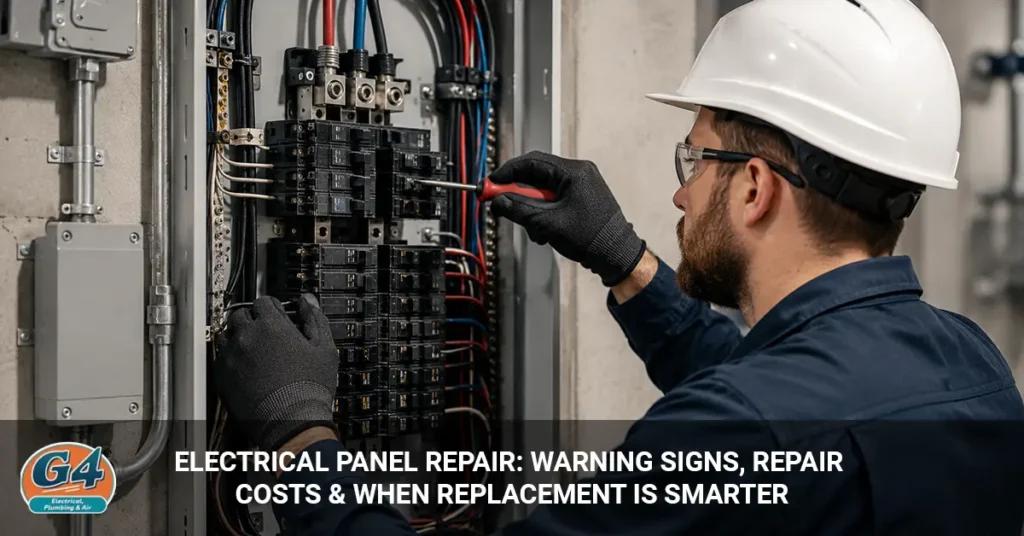
Your electrical panel controls and distributes electricity throughout your home while protecting the system from overloads and electrical hazards. When the panel starts failing, it can create serious safety risks, including electrical fires, damaged appliances, and unexpected power problems.
Many homeowners ignore the early warning signs because the symptoms often seem minor at first. Flickering lights, tripped breakers, buzzing sounds, or a burning smell near the panel may not seem urgent, but they usually point to deeper electrical issues that can become dangerous over time.
Some electrical panel problems can be repaired safely and affordably. However, older panels, overloaded systems, or panels with serious internal damage are often better candidates for full replacement.
In this guide, you’ll learn the most common warning signs of electrical panel problems, what repair costs typically look like, and when replacing the panel becomes the smarter long-term solution for safety, reliability, and performance.
What Does an Electrical Panel Do?
An electrical panel controls and distributes electricity throughout your home while protecting the system from overloads and electrical hazards. It acts as the main power hub that sends electricity to outlets, lights, appliances, and other electrical systems in the property.
Power from the utility company enters the electrical panel and is divided into separate circuits that supply electricity to different areas of the home. Inside the panel, circuit breakers automatically shut off power when a circuit becomes overloaded or unsafe. This helps reduce the risk of electrical fires, overheating, and damage to appliances or wiring.
Modern homes use more electricity than ever before. HVAC systems, kitchen appliances, smart home devices, EV chargers, and entertainment equipment all place higher demands on the electrical system. Because of this, the electrical panel plays an important role in keeping power safe, stable, and reliable throughout the home.
Main Components Inside an Electrical Panel
An electrical panel contains several important components that work together to distribute electricity safely throughout the home. Each part helps control electrical flow, protect circuits, and reduce the risk of overloads or electrical hazards.
- Main Breaker: The main breaker controls power to the entire home. It can shut off electricity completely during emergencies or when the system becomes overloaded.
- Circuit Breakers: Circuit breakers protect individual electrical circuits. When a circuit draws too much power or experiences a fault, the breaker trips automatically to help prevent overheating and electrical fires.
- Bus Bars: Bus bars are metal strips that carry electricity from the main breaker to the individual circuit breakers. They help distribute power evenly throughout the panel.
- Neutral Bar: The neutral bar collects unused electricity and safely returns it through the electrical system. It helps balance the electrical current during operation.
- Grounding System: The grounding system provides a safe path for excess electricity during faults or power surges. Proper grounding helps reduce shock risks and improves overall electrical safety.
- Service Entrance Wires: Service entrance wires bring electricity from the utility company into the electrical panel. These wires supply the main electrical power for the entire property.
Each component inside the electrical panel must work properly to keep the electrical system safe, stable, and efficient.
Common Warning Signs Your Electrical Panel Needs Repair
Electrical panels usually show warning signs before serious problems happen. Issues like tripped breakers, burning smells, flickering lights, or buzzing sounds often indicate the panel is overloaded, damaged, or starting to fail.
Ignoring these warning signs can increase the risk of electrical fires, damaged appliances, and unsafe power conditions inside the home.
Circuit Breakers Keep Tripping
Frequent breaker trips are one of the most common signs of electrical panel problems. While an occasional trip is normal, repeated tripping usually means something is wrong with the electrical system.
If your circuit breaker keeps tripping, the issue may involve overloaded circuits, faulty breakers, or panel problems.
Common causes include:
- Overloaded circuits
- Faulty breakers
- Loose wiring
- Short circuits
- Aging electrical components
If resetting the breaker only fixes the issue temporarily, the panel may need professional repair or inspection.
Burning Smell Near the Panel
A burning smell coming from the electrical panel is a serious warning sign that should never be ignored. It often means wires, breakers, or internal components are overheating.
A burning smell from an outlet or panel should always be treated as a serious electrical warning sign.
Possible causes include:
- Damaged breakers
- Melted wire insulation
- Loose electrical connections
- Electrical arcing
Turn off power to the affected area if possible and contact a licensed electrician immediately. Burning odors can signal an active fire hazard inside the panel.
Flickering or Dimming Lights
Flickering lights may indicate unstable electrical flow inside the panel.
This often happens when the panel struggles to distribute power properly.
Common causes include:
- Loose wiring connections
- Overloaded circuits
- Faulty breakers
- Aging electrical panels
The issue becomes more serious when multiple rooms are affected or lights dim frequently when appliances turn on.
Buzzing or Crackling Sounds
Electrical panels should operate quietly. Buzzing, humming, or crackling noises often point to dangerous electrical problems inside the panel. Buzzing electrical panel noises, humming, or crackling sounds often point to dangerous electrical problems inside the panel.
These sounds may be caused by:
- Loose electrical connections
- Failing breakers
- Electrical arcing
- Damaged internal parts
Electrical arcing creates heat and can increase the risk of electrical fires if left unresolved.
Warm or Hot Breakers
Breakers should not feel excessively warm during normal operation. Hot breakers usually indicate the circuit is overloaded or the breaker is failing. Issues involving an electrical panel buzzing and overheating should be inspected immediately.
Excess heat inside the panel can:
- Damage wiring
- Melt insulation
- Increase fire risks
- Reduce electrical efficiency
A licensed electrician should inspect overheating breakers as soon as possible.
Rust or Moisture Around the Panel
Moisture inside an electrical panel can damage components and weaken electrical connections. Water exposure may also increase the risk of corrosion and electrical shorts.
Common signs of moisture damage include:
- Rust spots
- Corrosion
- Water stains
- Condensation
- Mold near the panel
Water and electricity create dangerous conditions, so moisture problems should be addressed immediately.
Outdated Fuse Boxes or Unsafe Panel Brands
Older fuse boxes and certain outdated electrical panel brands are known for safety and reliability issues. Some panels may fail to trip properly during overloads, increasing fire risks.
Common problem panel brands include:
- Federal Pacific Electric (FPE)
- Zinsco
- Challenger
Many electricians recommend replacing these older systems instead of continuing to repair them repeatedly. Understanding the differences between a fuse box vs circuit breaker panel can help homeowners decide when replacement is necessary.
What Causes Electrical Panel Problems?
Electrical panel problems are usually caused by aging components, overloaded electrical demand, loose connections, moisture damage, or poor-quality electrical work. Over time, these issues can reduce electrical safety, damage internal components, and increase the risk of overheating or electrical failure.
Aging Components
Electrical panels naturally wear out as they age. Most residential panels last around 25 to 40 years before breakers, wiring, and internal parts begin to deteriorate. Older components often become less reliable and may struggle to handle modern electrical usage safely.
Overloaded Electrical Demand
Modern homes use far more electricity than older homes were originally designed for. Large appliances, HVAC systems, EV chargers, home office equipment, and smart devices can place heavy strain on outdated electrical panels.
When the electrical demand becomes too high, breakers may trip repeatedly or overheat. These are common signs of an overloaded electrical panel that should not be ignored.
Loose Electrical Connections
Loose connections inside the panel can interrupt electrical flow and create dangerous hot spots. Wiring connections may loosen over time because of vibration, temperature changes, aging components, or improper installation. Loose connections can lead to overheating, breaker failure, and electrical arcing.
Moisture Intrusion
Water exposure can seriously damage an electrical panel. Moisture inside the system may corrode metal components, weaken electrical connections, and increase the risk of short circuits. Roof leaks, plumbing problems, humidity, and condensation are common causes of moisture damage near electrical panels.
Improper Previous Repairs
Poor-quality electrical work can create long-term safety problems inside the panel. DIY repairs or improper installations may leave wiring loose, overloaded, or incorrectly connected. Unsafe repair work can increase the risk of electrical fires, breaker failures, and code violations.
Power Surges
Power surges can damage breakers and sensitive electrical components inside the panel. Lightning strikes, utility company issues, generator problems, or large appliance startups may suddenly overload the system.
Repeated power surges can shorten the lifespan of the electrical panel and increase wear on internal components. Installing whole-home surge protection can help reduce electrical damage.
Common Electrical Panel Repairs
Not every electrical panel problem requires a full replacement. In many cases, electricians can repair damaged components and restore safe, reliable operation. The right repair depends on the condition of the panel, the severity of the damage, and the age of the electrical system.
Circuit Breaker Replacement
Circuit breaker replacement is one of the most common electrical panel repairs. Faulty breakers may trip repeatedly, overheat, or fail to protect the circuit properly.
Replacing a damaged breaker can often solve power interruptions, overheating issues, and overloaded circuit problems. Some homeowners first notice these issues when trying to repair a circuit breaker that repeatedly fails.
Loose Wire Repairs
Loose wiring connections inside the panel can create unstable electrical flow and dangerous hot spots. Electricians may tighten, reconnect, or replace damaged wires to improve electrical safety and system performance.
Bus Bar Repairs
Bus bars distribute electricity from the main breaker to individual circuits throughout the home. Over time, bus bars can become corroded, burned, or damaged from overheating. In some cases, electricians can repair the affected area instead of replacing the entire panel.
Main Breaker Repair
The main breaker controls electricity for the entire home. If the breaker becomes damaged, overheats, or stops functioning properly, it may need repair or replacement to restore safe electrical operation.
Grounding and Bonding Corrections
Proper grounding helps protect the home from electrical shock and fire hazards. If the grounding or bonding system is outdated or improperly installed, electricians may correct the connections to improve electrical safety and meet current code requirements.
Panel Rewiring
Damaged or deteriorated wiring inside the panel may require partial rewiring. Replacing worn or unsafe wiring can help restore stable electrical flow, reduce overheating risks, and improve overall system reliability.
Average Electrical Panel Repair Costs
Electrical panel repair costs vary based on the type of repair, the condition of the panel, labor rates, and how serious the electrical problem is. Minor repairs are usually affordable, while major component damage or emergency service calls can increase the total cost significantly.
Circuit breaker replacement typically costs between $150 and $350, depending on the breaker type and labor involved.
Main breaker replacement usually ranges from $300 to $700 because the repair involves shutting down power and working with the main electrical supply.
Loose wiring repairs often cost between $150 and $500. The final price depends on how much wiring needs to be repaired or replaced inside the panel.
Bus bar repairs generally range from $500 to $1,000 because damaged bus bars can require more extensive electrical work and safety inspections.
An electrical panel inspection typically costs between $150 and $400 depending on the size of the system and the level of testing required.
Minor electrical panel repairs usually fall between $200 and $800 when the issue involves small component replacements or basic electrical corrections.
Emergency electrical repairs, after-hours service calls, permit fees, and severe internal damage can increase the overall repair cost. Older electrical panels may also require additional work to meet current electrical code requirements.
Factors That Affect Repair Pricing
Several factors can affect the total cost of electrical panel repairs. The final price usually depends on the condition of the panel, the complexity of the repair, and local labor requirements.
- Panel Age: Older electrical panels are often more expensive to repair because replacement parts may be difficult to find. Aging systems may also require additional safety upgrades to meet current electrical codes.
- Accessibility: Electrical panels that are difficult to access can increase labor time and repair costs. Panels located in tight spaces, finished walls, or hard-to-reach areas may require extra work during the repair process.
- Severity of Damage: Minor issues like replacing a single breaker usually cost much less than repairing burned wiring, damaged bus bars, or extensive internal corrosion. Severe damage often requires more labor, testing, and replacement parts.
- Number of Circuits: Larger electrical panels with more circuits may take longer to inspect and repair. Complex systems often require additional troubleshooting and electrical testing.
- Local Labor Costs: Electrical labor rates vary by location. Areas with higher living costs or higher demand for licensed electricians typically have more expensive repair pricing.
- Permit Requirements: Some electrical repairs require permits and inspections to meet local building codes. Permit fees can add to the total project cost, especially for larger repairs or panel upgrades.
- Emergency Service Calls: Emergency repairs usually cost more than scheduled service appointments. After-hours repairs, weekend calls, and urgent electrical issues often come with higher labor charges.
When Electrical Panel Replacement Is Smarter Than Repair
Replacing an electrical panel is often the smarter option when the system becomes outdated, unsafe, or unable to handle modern electrical demand. While some problems can be repaired, repeated issues or major internal damage may make replacement more cost-effective in the long run.
The Panel Is More Than 25–40 Years Old
Older electrical panels often struggle to support today’s power usage safely. As panels age, breakers, wiring, and internal components wear out and become less reliable. Many older systems also lack modern safety features designed to reduce fire and overload risks.
Your Home Needs More Electrical Capacity
Many older homes were built with 60-amp or 100-amp electrical service, which may no longer be enough for modern households. Today’s homes often require 200 amps or more to support increasing electrical demand.
High-power systems that commonly overload older panels include HVAC equipment, EV chargers, home office setups, smart home technology, and large kitchen appliances.
If the panel cannot safely handle the electrical load, upgrading the system may be necessary.
Unsafe or Recalled Panels
Certain older panel brands are known for safety and reliability problems. Some outdated panels may fail to trip properly during overloads, increasing the risk of overheating and electrical fires. These old electrical panel dangers are one reason many electricians recommend upgrades.
Panels commonly associated with safety concerns include Federal Pacific Electric (FPE), Zinsco, and Challenger systems.
In many cases, electricians recommend replacement instead of continued repairs for these panels.
Repeated Repairs Are Becoming Expensive
Frequent electrical problems often indicate deeper system deterioration inside the panel. If breakers continue failing or repair costs keep increasing, replacing the panel may save more money over time.
A newer panel can also improve reliability and reduce the risk of future electrical problems.
Severe Internal Damage Exists
Heavy corrosion, burned components, melted wires, or extensive overheating usually indicate serious internal damage. When multiple components inside the panel are affected, replacement is often safer and more practical than attempting multiple repairs.
The Panel No Longer Meets Electrical Code
Electrical codes are updated regularly to improve home safety and electrical performance. Older panels may not meet current electrical code requirements in older homes, especially during renovations or upgrades.
Upgrading the panel can improve safety, support higher electrical demand, and help bring the system up to modern standards.
Repair vs Replacement: Which Option Saves More Money?
The better option depends on the age of the electrical panel, the severity of the damage, future power needs, and long-term repair costs. In some cases, a simple repair is enough to restore safe operation. In other situations, replacing the panel provides better value, safety, and reliability over time.
When Repair Makes Sense
Electrical panel repair is usually the more cost-effective option when the system is still in good overall condition and the problem is limited to a small component.
Repair often makes sense when the panel is relatively new and still supports the home’s electrical demand properly. Minor issues like a faulty breaker, loose wiring, or small connection problems can often be fixed quickly without replacing the entire panel.
Repair may also be the better choice when there is no major corrosion, overheating, or internal damage inside the system.
When Replacement Is Smarter
Electrical panel replacement is often the better long-term investment when the system becomes outdated, overloaded, or unsafe.
If the panel cannot handle modern electrical demand, frequent breaker trips and recurring electrical problems may continue even after repairs. Older panels with obsolete components or known safety concerns are also more likely to experience future failures.
Replacement is usually recommended when multiple repairs are needed, major internal damage exists, or the panel no longer meets current electrical code requirements.
Installing a new electrical panel can also improve home safety, increase electrical reliability, support future upgrades, and even help with homeowners’ insurance approval or property value.
How Electricians Inspect Electrical Panels
Professional electrical inspections help identify hidden safety hazards, overloaded circuits, and failing components before they become serious problems. Electricians use several inspection methods to evaluate the condition, safety, and performance of the electrical panel.
Visual Inspection
Electricians begin with a visual inspection to look for obvious signs of damage or wear inside the panel. They check for burned components, corrosion, loose breakers, improper wiring, and moisture damage that could affect electrical safety.
Visible warning signs often help electricians identify overheating issues, aging components, or previous repair problems quickly.
Thermal Testing
Thermal testing uses infrared imaging to detect overheating components inside the panel. This process helps electricians find hidden hot spots that may not be visible during a standard inspection.
Overheating breakers, loose connections, and overloaded circuits often appear clearly during thermal scanning.
Load Testing
Load testing helps determine whether the electrical panel can safely handle the home’s power demand. Electricians evaluate how much electricity the system is using and whether the panel is operating near or beyond its safe capacity.
This test is especially important in older homes with increasing electrical usage.
Breaker Testing
Each breaker is tested to confirm it trips properly during overload conditions. Faulty breakers may fail to shut off power correctly, increasing the risk of overheating and electrical fires.
Breaker testing helps ensure the panel is providing proper circuit protection throughout the home.
Code Compliance Review
Electricians also check whether the electrical panel meets current electrical code requirements. Older panels may contain outdated components, unsafe wiring methods, or code violations that require correction.
A code compliance review helps improve safety and ensures the electrical system meets modern standards.
Can You Repair an Electrical Panel Yourself?
Electrical panel repairs should almost always be handled by a licensed electrician. Working inside a breaker panel can expose you to dangerous voltage levels that may cause severe injury, electrocution, or electrical fires.
Even when the main breaker is turned off, some parts inside the panel may still carry live electricity. One mistake during a repair can create serious safety risks for both the home and the person performing the work. These DIY electrical repair risks can lead to fires, shock hazards, or code violations.
DIY electrical panel repairs can also lead to long-term problems. Improper wiring, loose connections, or incorrect breaker installation may create hidden fire hazards that are difficult to detect until major damage occurs.
In some cases, unlicensed electrical work may violate local building codes or affect homeowners insurance coverage. If the repair does not meet code requirements, additional corrections and inspections may be required later.
Hiring a licensed electrician helps ensure the repair is completed safely, properly tested, and compliant with current electrical standards.
How to Prevent Future Electrical Panel Problems
Regular maintenance and safe electrical habits can help prevent many common electrical panel problems. Taking care of the system early can reduce the risk of overheating, breaker failures, and costly electrical repairs later.
Schedule Routine Electrical Inspections
Regular electrical inspections help identify problems before they become serious safety hazards. Electricians can detect loose connections, aging breakers, overloaded circuits, and early signs of wear during routine inspections.
Periodic inspections are especially important for older homes or homes with increasing electrical demand. Knowing the recommended electrical inspection frequency can help homeowners prevent serious panel issues.
Avoid Overloading Circuits
Overloaded circuits place excessive strain on the electrical panel and increase the risk of overheating. High-power appliances should be distributed across separate circuits whenever possible to reduce stress on the system.
Running too many large appliances on the same circuit can lead to repeated breaker trips and long-term electrical damage.
Upgrade Older Wiring
Old or damaged wiring can reduce electrical efficiency and place additional strain on the panel. Replacing deteriorated wiring helps improve electrical safety and supports modern power usage more effectively.
Homes with outdated wiring systems may benefit from a full electrical evaluation.
Install Whole-Home Surge Protection
Whole-home surge protection helps protect the electrical system from sudden power spikes caused by lightning strikes, utility issues, or large appliances starting up.
Surge protection can help reduce damage to breakers, appliances, and sensitive electronics connected to the system.
Address Moisture Issues Quickly
Moisture near the electrical panel can cause corrosion, weaken electrical connections, and increase the risk of short circuits. Roof leaks, plumbing problems, condensation, and humidity issues should be repaired as soon as possible to help protect the electrical system.
How to Choose the Right Electrician
Choosing the right electrician is important for safe, reliable, and code-compliant electrical panel repairs. An experienced professional can properly diagnose electrical problems, complete repairs safely, and help prevent future issues.
Verify Licensing and Insurance
Always make sure the electrician is properly licensed and insured. A licensed electrician has the required training and knowledge to handle electrical panel repairs safely and according to local code requirements.
Insurance also helps protect homeowners if an accident or property damage occurs during the repair process.
Ask About Panel Experience
Electrical panel repairs require specialized experience, especially when working with older or outdated systems. Some panels have unique safety concerns or obsolete components that require advanced knowledge.
Ask whether the electrician has experience repairing or replacing the specific type of panel installed in the home.
Request Detailed Estimates
A written estimate helps you understand the scope of work, repair costs, materials, and labor charges before the project begins. Detailed estimates also make it easier to compare pricing between electricians.
Clear pricing can help prevent unexpected costs later.
Read Reviews and References
Customer reviews often provide insight into the electrician’s reliability, professionalism, communication, and quality of work. Positive reviews and strong references can help you choose a contractor with a good reputation.
Look for electricians with consistent experience handling electrical panel repairs and upgrades.
Confirm Permit Handling
Some electrical panel repairs and upgrades require permits and inspections to meet local building codes. Qualified electricians should understand permit requirements and handle the inspection process properly.
Proper permits help ensure the work is completed safely and meets current electrical standards.
Final Thoughts
Electrical panel problems should never be ignored because even small warning signs can lead to serious safety risks over time. Frequent breaker trips, burning smells, buzzing sounds, overheating breakers, or flickering lights often indicate hidden electrical emergency warning signs developing inside the panel.
Some electrical issues can be fixed with simple repairs, especially when the panel is still in good overall condition. However, older panels or systems with major internal damage are often safer and more cost-effective to replace instead of repeatedly repairing them.
Upgrading an outdated electrical panel can improve home safety, increase electrical reliability, support modern power demands, and help reduce future repair problems. A newer panel can also provide better protection for appliances, HVAC systems, smart devices, and other high-demand electrical equipment.
If you notice any signs of electrical panel trouble, scheduling a professional inspection is the safest way to identify the issue and determine whether repair or replacement is the best long-term solution.