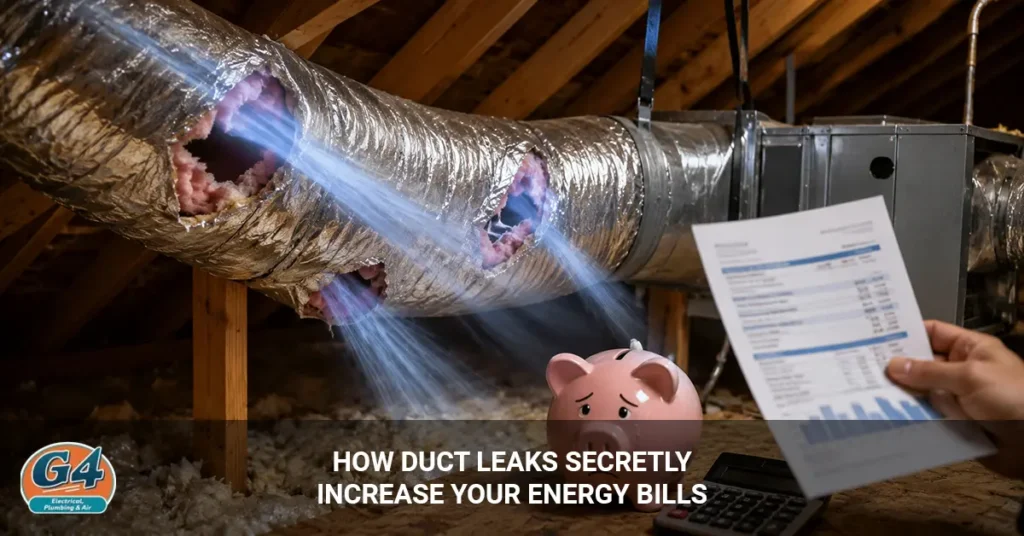
Duct leaks increase energy bills because cooled or heated air escapes before it reaches the rooms in your home. When that air leaks out, your HVAC system has to work harder and run longer to keep the house comfortable.
Many homeowners think rising utility bills are caused by an old HVAC system or higher energy rates. In many cases, hidden duct leaks are the real problem. Leaking ducts can waste a large amount of conditioned air inside attics, ceilings, crawl spaces, or walls.
Because ductwork is mostly hidden, these leaks often go unnoticed for years. During that time, your HVAC system loses efficiency, struggles to maintain consistent temperatures, and uses more energy every month.
What Are Duct Leaks?
Duct leaks happen when gaps, cracks, or loose connections allow air to escape from your ductwork system. These leaks reduce airflow efficiency and make your HVAC system work harder to heat or cool your home.
Your duct system has two main parts. Supply ducts carry heated or cooled air into different rooms, while return ducts pull indoor air back into the HVAC system to be conditioned again. If either side develops leaks, air escapes before the system can circulate it properly.
Duct leaks often happen because duct materials wear out over time or were not installed correctly in the first place. Loose joints, damaged flexible ducts, and corrosion can also create openings where air leaks out.
Even small duct leaks can increase energy waste, reduce indoor comfort, and make it harder to maintain consistent temperatures throughout the home.
How Duct Leaks Increase Energy Bills
Duct leaks increase energy bills because heated or cooled air escapes before it reaches the rooms in your home. When air leaks out of the duct system, your HVAC unit has to run longer to maintain the temperature you set on the thermostat.
In many homes, ductwork passes through attics, crawl spaces, basements, or inside walls. If the ducts leak in those areas, conditioned air gets wasted in spaces that do not need heating or cooling.
This energy loss forces the HVAC system to work harder and cycle more often. Over time, that increases electricity use and puts extra strain on heating and cooling equipment.
Leaky ducts can also create uneven temperatures throughout the home. Some rooms may receive less airflow, which often causes homeowners to lower the thermostat even more. That leads to higher energy consumption without fixing the actual problem.
Return duct leaks can make things worse by pulling hot attic air, dust, or humidity into the system. This makes it harder for the HVAC unit to cool or heat the home efficiently.
Conditioned Air Escapes Before Reaching Rooms
Duct leaks allow heated or cooled air to escape before it reaches the rooms in your home. When air leaks through gaps or cracks in the ductwork, less conditioned air flows through the vents where it is needed.
This can cause weak airflow, uneven temperatures, and rooms that never feel comfortable. If you notice weak airflow from AC vents, leaking ductwork, or airflow restrictions may be reducing your HVAC system’s efficiency.
In many homes, certain areas may stay too warm in summer or too cold in winter because the HVAC system is losing air before it completes the airflow cycle.
Leaking ducts also reduce overall HVAC efficiency because the system has to work harder to replace the lost air.
Homes with attic ductwork are especially vulnerable. During summer, cooled air that leaks into a hot attic gets wasted almost immediately instead of cooling the living spaces inside the home.
HVAC Systems Run Longer
Leaking ducts make HVAC systems run longer because conditioned air keeps escaping from the ductwork. As air leaks out, the home takes longer to reach the temperature set on the thermostat.
The thermostat detects that the house is still too warm or too cold, so it keeps the HVAC system running longer than normal. This extra runtime increases energy use and forces the system to work harder throughout the day.
Over time, longer HVAC cycles can lead to higher electricity bills, more wear on system components, and a greater risk of breakdowns. The added strain can also shorten the lifespan of your heating and cooling equipment.
Duct Leaks Create Uneven Temperatures
Duct leaks can create uneven temperatures by reducing the amount of heated or cooled air that reaches certain rooms. When air escapes from the duct system, some areas of the home receive less airflow than others.
Rooms located farther from the HVAC unit often experience the biggest problems because less conditioned air makes it through the ducts. These airflow problems are one of the most common causes of uneven cooling in homes.
This can cause upstairs rooms to stay hot, bedrooms to have weak airflow, and temperatures to vary from one room to another.
Many homeowners lower the thermostat to try to cool the house more evenly, but this usually increases energy bills without fixing the real airflow issue. Repairing duct leaks is often the better long-term solution for improving comfort and temperature balance throughout the home.
Leaky Return Ducts Pull In Hot or Dirty Air
Leaky return ducts can pull hot, dusty, or humid air into your HVAC system instead of circulating clean indoor air properly. This reduces comfort and makes your heating and cooling system work harder.
Return ducts are designed to pull indoor air back into the HVAC system so it can be heated or cooled again. When those ducts develop leaks, they may start pulling air from attics, crawl spaces, basements, or other unconditioned areas.
That unwanted air can contain heat, dust, humidity, and even insulation particles. As a result, the HVAC system has to use more energy to cool or heat the air before sending it back through the home.
Over time, this extra workload can reduce HVAC efficiency, increase energy bills, and make indoor temperatures feel less comfortable.
Signs Your Home May Have Duct Leaks
Duct leaks can cause higher energy bills, weak airflow, and uneven temperatures throughout your home. These problems often develop slowly, so many homeowners do not notice them right away.
One of the most common signs is a sudden increase in heating or cooling costs without a clear reason. You may also notice that some rooms feel warmer or colder than others, even when the HVAC system is running normally.
Weak airflow from vents is another warning sign. In some homes, rooms may feel humid, stuffy, or uncomfortable because conditioned air is not reaching them properly.
Excess dust inside the home can also point to leaking ducts, especially if return ducts are pulling dust and debris from attics or crawl spaces into the system.
If your HVAC system runs constantly or several of these problems appear together, a professional duct inspection may help identify hidden air leaks.
Where Duct Leaks Commonly Occur
Duct leaks can happen in many parts of the HVAC system, but some areas are more likely to develop air leaks over time. Connections, joints, and older duct sections are usually the most vulnerable.
Leaks commonly occur in attic ductwork because extreme heat can weaken duct materials and connections. Flexible duct connections are another common problem area, especially if the ducts were poorly installed or damaged over time.
Duct joints and seams can also loosen as the system ages, allowing conditioned air to escape before it reaches the rooms in your home. Crawl space and basement duct systems may develop leaks due to moisture, wear, or shifting duct connections.
Older homes often experience more duct leakage because aging materials and long-term HVAC use can weaken the duct system over time.
How HVAC Professionals Detect Duct Leaks
HVAC professionals detect duct leaks by using specialized tests that measure airflow, pressure, and hidden air loss inside the duct system. These tools help identify problems that are difficult to see during a basic visual inspection.
Technicians often begin with airflow testing to check how much conditioned air reaches each room. Weak airflow in certain areas can point to leaking or restricted ducts.
They may also perform static pressure testing to identify airflow restrictions and hidden leaks inside the HVAC system. High pressure levels can signal that air is escaping or struggling to move through the ductwork properly.
Some HVAC professionals use thermal imaging cameras to spot temperature changes around leaking ducts behind walls, ceilings, or attic spaces. Duct leakage testing is another effective method used to locate escaping air inside the system.
These inspections help technicians find the exact source of energy loss so the right repairs can be made.
How Duct Sealing Improves Energy Efficiency
Duct sealing improves energy efficiency by stopping heated or cooled air from escaping through leaks and gaps in the ductwork. When more conditioned air reaches the intended rooms, the HVAC system can cool and heat the home more effectively.
Leaking ducts force the HVAC system to work harder and run longer to maintain indoor temperatures. Sealing those leaks helps restore proper airflow and reduces wasted energy throughout the home.
Professional duct sealing can help lower energy bills, improve airflow, reduce hot and cold spots, and make indoor temperatures feel more consistent. It can also reduce strain on the HVAC system, which may help extend the life of the equipment.
Many homeowners notice improved comfort and better cooling performance after leaking ducts are professionally sealed.
DIY vs Professional Duct Sealing
DIY duct sealing may provide a temporary fix, but professional duct sealing usually delivers better long-term results. Small leaks can sometimes be patched temporarily, but many household tapes and sealants do not hold up well inside HVAC systems.
Heat, airflow pressure, and humidity can cause DIY repairs to fail over time. In many cases, hidden leaks remain undetected because they are located behind walls, inside ceilings, or in attic spaces.
Professional HVAC technicians use durable sealing materials designed specifically for duct systems. They also use specialized testing equipment to locate hidden leaks and identify additional airflow problems that may be increasing energy waste.
For older duct systems or larger leaks, professional duct sealing is often the most effective way to improve airflow, reduce energy loss, and restore HVAC efficiency.
Additional Ways to Improve HVAC Efficiency
Improving HVAC efficiency involves more than just fixing duct leaks. Regular maintenance and better airflow management can also help lower energy costs and improve indoor comfort.
Replacing air filters regularly helps maintain proper airflow and reduces strain on the HVAC system. Dirty filters can restrict airflow and make the system work harder than necessary.
Improving attic insulation can also help keep indoor temperatures more stable, especially during extreme summer or winter weather. Sealing air leaks around windows and doors prevents conditioned air from escaping and reduces unnecessary energy loss.
Routine HVAC maintenance is another important step because it helps identify small problems before they affect system performance. Following a regular HVAC maintenance checklist can also help improve airflow and energy efficiency.
Keeping vents open and free from furniture or other blockages also helps air circulate evenly throughout the home.
When combined with proper duct sealing, these improvements can significantly reduce energy waste and help your HVAC system operate more efficiently.
When to Call an HVAC Professional
You should call an HVAC professional if your energy bills keep rising or your home continues having airflow problems. Persistent issues often mean there are hidden duct leaks or HVAC system problems that need professional attention.
Weak airflow from vents, uneven temperatures between rooms, excess dust, and an HVAC system that runs constantly are all common warning signs. These problems usually indicate that conditioned air is escaping or not moving properly through the duct system.
Professional inspections are especially important for older homes or homes with attic ductwork because leaks and damaged duct connections become more common over time.
An HVAC technician can test the system, locate hidden leaks, and recommend the best solution to improve airflow, comfort, and energy efficiency.
Final Thoughts
Duct leaks can waste a large amount of energy without homeowners noticing the problem right away. When heated or cooled air escapes through damaged ductwork, the HVAC system has to work harder to keep the home comfortable, which increases energy bills and reduces efficiency.
Over time, leaking ducts can also create uneven temperatures, weak airflow, and unnecessary strain on your heating and cooling system.
Fixing duct leaks can improve airflow, lower utility costs, and help your HVAC system run more efficiently. In many homes, professional duct sealing is one of the most effective ways to reduce hidden energy loss and improve overall indoor comfort.