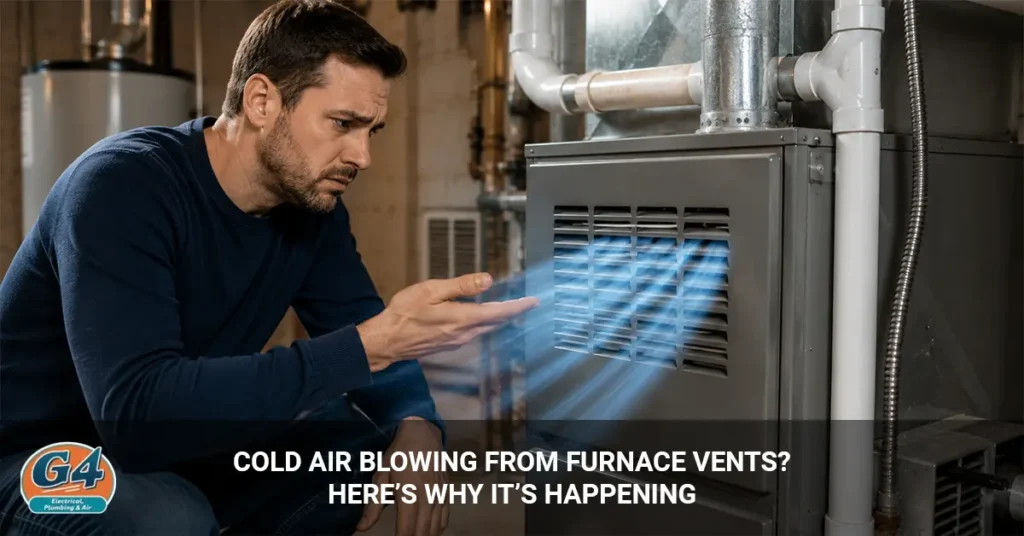
If your furnace is blowing cold air, the most common causes are thermostat settings, airflow problems, ignition issues, or overheating. Most of these are simple and can be checked in a few minutes.
It’s frustrating when your furnace is running, but your home still feels cold. The good news is that many of these issues are easy to fix. Before you assume something is broken, start with a few basic checks. In many cases, you can solve the problem yourself without calling a technician.
What to Check First When Your Furnace Is Blowing Cold Air
Start with these simple checks. They solve many furnace issues right away.
Thermostat settings
Your furnace may blow cold air if the thermostat is set incorrectly. If the fan is set to “ON,” it will keep blowing air even when the furnace is not heating.
Switching it to “AUTO” lets the fan run only when the furnace is actually heating, which usually fixes the problem.
Air filter condition
Your furnace may blow cold air if the air filter is dirty. A clogged filter blocks airflow and can cause the system to overheat.
When that happens, the furnace shuts off the burners but may keep the fan running, so you feel cold air. Replacing the filter and following a regular HVAC maintenance checklist often fixes the problem and helps the system run properly again.
System power or reset
Your furnace may blow cold air if it needs a simple reset. Small glitches can stop the heating cycle even when the system is running.
Turning the furnace off, waiting a few minutes, and turning it back on can clear the issue and restore normal heating.
Gas supply (for gas furnaces)
Your furnace may blow cold air if the gas supply is off. Without gas, the burners can’t produce heat, even though the fan may still run.
Check that the gas valve is open and the supply is on. If you smell gas at any point, leave immediately and contact your gas provider for safety.
8 Common Reasons Your Furnace Is Blowing Cold Air
1. Thermostat Fan Setting Is On
Your furnace can blow cold air if the fan is set to “ON” instead of “AUTO.” This setting keeps the fan running all the time, even when the furnace is not heating.
Switching the fan setting to “AUTO” allows it to run only during heating cycles, which usually fixes the issue.
2. Dirty or Clogged Air Filter
Your furnace may blow cold air if the air filter is clogged. When airflow is restricted, the system can overheat and shut off the burners for safety while the fan keeps running. Replacing the filter restores proper airflow and usually brings the heat back.
3. Pilot Light Is Out, or Ignition Failed
Your furnace won’t heat if the pilot light is out or the ignition system has failed. Without ignition, the burners can’t produce heat even though the fan may still run.
Relighting the pilot can solve the issue if you know how, but if it keeps going out or the ignitor isn’t working, it’s best to have it checked by a technician.
4. Furnace Is Overheating
Your furnace may blow cold air if it overheats and shuts down for safety. When the system gets too hot, it turns off the burners but may keep the fan running, so you feel cool air instead of heat.
This usually happens due to airflow problems like a dirty filter or blocked vents, and fixing those issues often brings the heat back.
5. Duct Leaks or Poor Insulation
Your furnace may be producing heat, but it can feel like cold air if your ducts are leaking or not well-insulated. As the warm air travels through the ducts, heat can escape before it reaches your vents.
Sealing leaks and improving insulation can also help fix weak airflow from AC vents and keep the air warm throughout your home.
6. Gas Supply Problem
Your furnace will blow cold air if there is a gas supply issue. Without gas, the burners can’t heat the air, even though the fan may still run.
Check that the gas valve is open and the supply is on. If the problem continues or you suspect a gas issue, it’s best to call a professional.
7. Faulty Flame Sensor
Your furnace may start heating and then switch to cold air if the flame sensor is dirty or faulty. When the sensor can’t detect a flame, the system shuts down the burners for safety, while the fan may keep running.
Cleaning the sensor can often fix the issue, but if the problem continues, it may need to be replaced by a technician.
8. Furnace Still Warming Up
Your furnace may blow cold air for a short time when it first starts. This is normal as the system needs a few minutes to warm up.
When the furnace turns on, the fan may start before the air is fully heated. This can make it feel like cold air is coming out at first. After a few minutes, warm air should begin flowing, and the temperature should feel normal again.
When Cold Air from the Furnace Is Normal
Cold air from your furnace can be normal in some situations. This usually happens during startup or right after a heating cycle ends.
When the furnace first turns on, it may take a few minutes to heat up before warm air reaches the vents.
You may also feel cool air if the fan keeps running briefly after the heat cycle stops. This is normal and helps push out the remaining warm air from the system.
When to Call a Professional HVAC Technician
You should call a professional if your furnace keeps blowing cold air after basic checks. If simple fixes don’t work, the problem is likely inside the system.
Call for help right away if you notice strange noises, burning smells, frequent cycling, or other electrical emergency warning signs. These issues can be serious and should be handled by a trained HVAC technician.
How to Prevent Furnace Blowing Cold Air
Regular maintenance helps prevent your furnace from blowing cold air. Simple steps can keep your system working the way it should.
Replace your air filter regularly to keep airflow strong and prevent overheating. Schedule regular HVAC tune-ups to catch small problems early and keep your furnace running efficiently.
Make sure your thermostat is set correctly and working properly. Keep vents and registers clear so air can move freely. These small steps can improve performance and reduce the chance of breakdowns.
Final Thoughts
If your furnace is blowing cold air, start with simple checks like the thermostat, air filter, and power supply. Many issues are easy to fix and don’t require professional help.
If the problem continues or feels serious, don’t wait. Call an HVAC technician to restore heat and keep your home comfortable and safe.