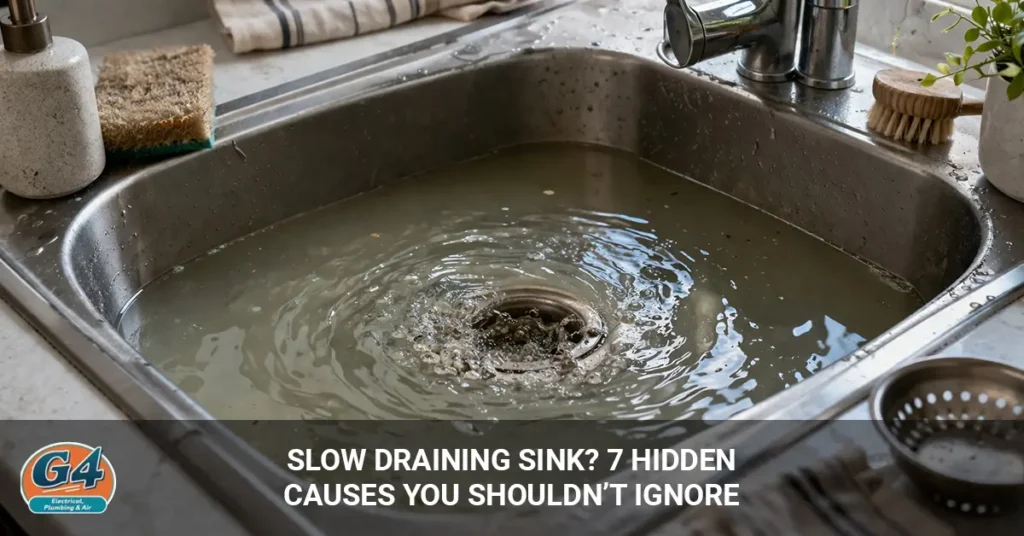
A slow-draining sink usually means there’s a blockage or buildup somewhere in your plumbing system. It may look like a small issue at first, but it often points to a bigger problem that’s developing out of sight.
You might notice water sitting in the sink longer than usual or draining slowly after use. This happens because something is stopping the water from flowing freely through the pipes.
Many people try quick fixes like hot water or store-bought cleaners. These can help for a short time, but they don’t fix the real cause. That’s why the problem often comes back.
If you ignore it, the situation can get worse. A slow drain can turn into a full clog, bad smells, or even pipe damage.
In this guide, you’ll learn the real reasons your sink is draining slowly and what you can do to fix it before it becomes a bigger issue.
What Is Considered a Slow-Draining Sink?
A sink is considered slow-draining when water does not go down quickly and starts to sit in the basin. It should drain almost right away, so if it lingers, something is blocking the flow.
You may first notice the water taking longer than usual to clear after washing your hands or dishes. Over time, the delay becomes more obvious.
Here are some common signs to watch for:
- Water stays in the sink instead of draining fast
- You hear gurgling or bubbling sounds
- There’s a bad smell coming from the drain
- You deal with small clogs again and again
These signs usually mean there’s a buildup or a blockage forming inside the pipes. Catching it early can help you avoid a bigger and more expensive problem later.
Why You Shouldn’t Ignore a Slow Sink
You shouldn’t ignore a slow sink because it usually gets worse and can lead to bigger plumbing problems. What seems like a small delay in drainage is often the start of a blockage forming inside your pipes.
At first, it may only slow down slightly. But over time, that buildup grows and causes more serious issues.
Here’s what can happen if you leave it untreated:
- Complete blockage: A small clog can turn into a fully blocked drain
- Pipe damage: Pressure from trapped water can strain and weaken pipes
- Health concerns: Standing water can lead to bacteria and unpleasant smells
- Higher repair costs: Small fixes are cheaper than major repairs later
Fixing the issue early is always the better choice. It saves money, prevents damage, and keeps your plumbing working the way it should.
7 Hidden Causes of a Slow-Draining Sink
1. Buildup Inside the Pipe
Buildup inside the pipe is one of the most common reasons a sink drains slowly. Grease, soap, and food particles stick to the pipe walls and slowly block the flow of water.
At first, the buildup is thin and easy to ignore. But over time, it gets thicker and reduces the space inside the pipe. This makes it harder for water to pass through.
You may not see the problem from the outside, but it keeps getting worse with daily use. Every time you wash dishes or pour grease down the drain, the layer grows.
This issue is especially common in kitchen sinks, where oils and food waste go down the drain regularly.
Cleaning the buildup early can help restore proper flow and prevent a full blockage later.
2. Hair and Organic Matter
Hair and organic matter are a common cause of slow drains, especially in bathroom sinks. Hair mixes with soap and dirt to form sticky clumps that block the pipe.
At first, a few strands may not seem like a problem, but they slowly build up inside the drain and trap more debris. This creates a thick clog that restricts water flow.
You’ll usually notice this issue when water drains slowly right after washing your face, brushing your teeth, or shaving.
Removing the buildup early and using a drain cover can help prevent this problem from getting worse.
3. Blocked or Dirty P-Trap
A blocked or dirty P-trap can slow down your sink because it collects debris and restricts water flow. The P-trap is the curved pipe under your sink that holds a small amount of water to stop sewer gases from coming back into your home.
Over time, it also catches waste like grease, food particles, and hair. This buildup sits inside the curve and gradually blocks the passage for water.
As the blockage grows, water drains more slowly and may even start to back up. You might also notice unpleasant smells coming from the sink.
Cleaning the P-trap can often fix the issue and restore normal drainage.
4. Vent Pipe Issues
Vent pipe issues can cause a sink to drain slowly because they disrupt the airflow needed for smooth drainage. Plumbing systems use vent pipes to balance air pressure so water can flow freely through the pipes.
When a vent pipe gets blocked, the system struggles to move water properly. This can make the drain slow, uneven, or noisy.
You may notice gurgling sounds or find that more than one sink or drain in your home is slowing down at the same time.
Fixing vent issues helps restore proper pressure and improves how your drains work.
5. Hard Water Mineral Buildup
Hard water mineral buildup can slow down your sink because minerals like calcium stick to the inside of your pipes. Over time, these deposits form a hard layer that reduces the space for water to flow.
This buildup doesn’t happen overnight. It forms slowly with regular use, especially if your home has hard water. As the layer thickens, water starts to drain more slowly.
You may not notice it at first, but it can affect multiple fixtures over time.
In the long run, this buildup reduces the efficiency of your entire plumbing system and can lead to more frequent clogs.
6. Improper Pipe Installation
Improper pipe installation can cause a sink to drain slowly because water isn’t able to flow at the right speed. Pipes need the correct slope so gravity can move water smoothly through the system.
If the angle is too flat or uneven, water can slow down or even sit inside the pipe. This makes it easier for debris to build up and create clogs over time.
This issue is often found in older homes or in plumbing that was installed without proper planning.
Fixing the pipe alignment can improve drainage and prevent ongoing problems.
7. Sewer Line Problems
Sewer line problems can cause a slow-draining sink because the blockage is deeper in the main line connected to your home. When the main sewer line is partially blocked, water from all drains struggles to flow out properly.
This type of issue doesn’t just affect one sink. You may notice several drains slowing down at the same time, along with water backing up or strong, unpleasant odors.
As the blockage gets worse, it can lead to serious drainage problems and even wastewater coming back into your home.
This is a serious issue that usually requires professional equipment and expert repair to fix it safely.
Signs Your Sink Problem Is Getting Worse
Your sink problem is getting worse when you start noticing signs that go beyond slow drainage. These signs usually mean the blockage is growing or spreading deeper into your plumbing system.
Pay attention if you see water backing up into the sink instead of draining away. This often means the pipe is close to being fully blocked.
You may also notice that more than one drain in your home is slowing down at the same time, which can point to a larger issue in the system.
Bad smells that don’t go away are another warning sign. They usually come from trapped waste inside the pipes.
Gurgling or bubbling sounds can also happen when air is trapped due to a blockage.
If you notice any of these signs, it’s best to act quickly before the problem turns into a major repair. These issues are often related to why your drains keep clogging, which points to deeper buildup in your plumbing system.
How to Fix a Slow-Draining Sink
You can fix a slow-draining sink by clearing the blockage and restoring proper water flow. The right method depends on what’s causing the problem, but simple solutions can often help with minor clogs.
Simple DIY Solutions
You can try a few easy methods at home to clear light buildup and improve drainage.
- Boiling water: Pouring hot water down the drain can help break down grease and soap buildup
- Baking soda and vinegar: This natural mix helps loosen organic material inside the pipe
- Plunger: A few firm plunges can remove small blockages and get water moving again
These methods work best for early-stage clogs. If the problem keeps coming back, there may be a deeper issue that needs more than a quick fix.
Clean the P-Trap
Cleaning the P-trap can fix a slow-draining sink by removing the debris blocking the flow. Since this pipe sits under your sink, it often collects grease, food particles, and hair.
You can clean it with a few simple steps. First, place a bucket underneath to catch any water. Then carefully unscrew the pipe and remove any buildup inside. Rinse it well before putting it back in place.
Once you reattach it securely, run water to check if the drain is flowing properly again.
This simple fix can quickly improve drainage if the clog is in the P-trap.
When DIY Isn’t Enough
DIY methods aren’t enough when the problem is deeper in your plumbing system. If basic fixes don’t solve it, there’s likely a more serious blockage that needs professional tools and inspection.
You should consider calling a professional if the clog keeps coming back even after cleaning. This usually means the root cause hasn’t been fully removed.
It’s also a warning sign if multiple drains in your home are slow at the same time, as this can point to a larger issue in the main line.
If water drains extremely slowly or not at all, the blockage may be severe and harder to clear without proper equipment.
Getting expert help early can prevent bigger damage and costly repairs.
How to Prevent Future Drain Problems
You can prevent future drain problems by following simple habits that keep your pipes clean and clear. Regular care helps stop buildup before it turns into a clog.
Start by avoiding pouring grease or oil down the drain, as it hardens inside the pipes and blocks water flow. Use drain strainers to catch food, hair, and other debris before they go down.
Running hot water after using the sink can help wash away small particles and prevent buildup. It’s a quick habit that makes a big difference over time.
It’s also a good idea to schedule regular drain cleaning to keep everything flowing properly.
These small steps can help you avoid clogs, reduce repairs, and keep your plumbing system working smoothly.
When to Call a Professional Plumber
You should call a professional plumber when a slow-draining sink doesn’t improve or shows signs of a deeper problem. Some issues go beyond simple clogs and need proper tools and experience to fix.
If the problem keeps coming back, it usually means the blockage hasn’t been fully cleared. You should also be concerned if you suspect a sewer line issue, especially when multiple drains are affected.
Signs of water damage, like leaks under the sink or damp areas, are another reason to act quickly. Unusual noises, such as banging or loud gurgling, can also point to pressure or blockage problems inside the pipes.
A professional plumber can find the exact cause and fix it the right way, helping you avoid bigger repairs later.
Final Thoughts
A slow-draining sink is a clear sign that something isn’t right in your plumbing system. It may seem minor, but it often points to a problem that can get worse if ignored.
Quick fixes can give temporary relief, but they don’t solve the real issue. The best approach is to find the cause and fix it early before it turns into a bigger and more expensive problem.
With regular care and simple habits, you can prevent most drain issues and keep everything flowing smoothly.
If the problem keeps coming back or gets worse, calling a professional is the safest way to fix it properly and avoid further damage.