
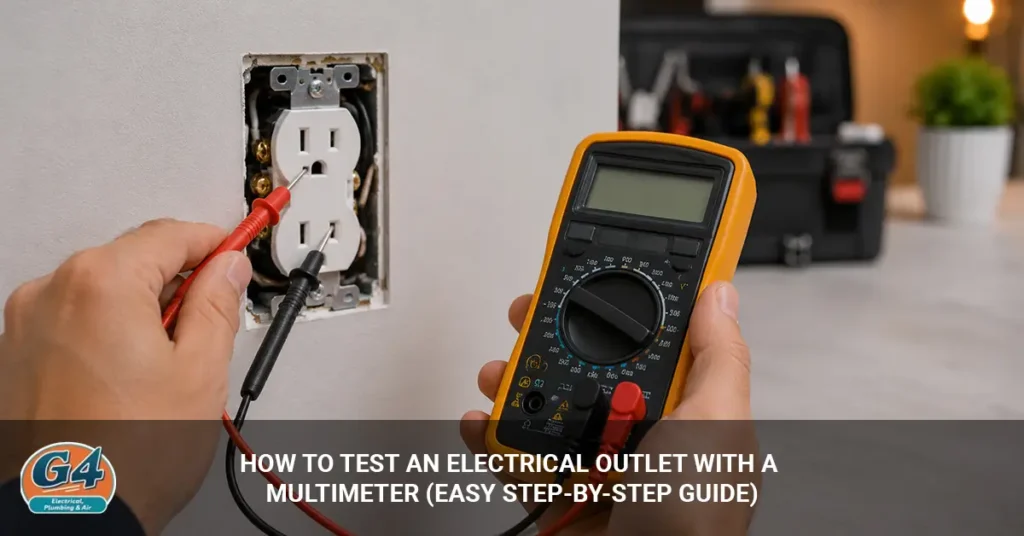
Testing an electrical outlet with a multimeter is one of the quickest ways to check whether an outlet has power and identify common electrical problems. A multimeter can help you measure voltage, check grounding, and determine whether an outlet is working properly.
If an outlet suddenly stops working, delivers inconsistent power, or causes devices to malfunction, a multimeter can help you find the cause before calling an electrician. It provides accurate readings that can reveal issues such as a tripped breaker, loose wiring, a faulty outlet, or a grounding problem.
The process is relatively simple, but it’s important to remember that you’ll be testing a live electrical outlet. Following proper safety procedures is essential to avoid injury and ensure accurate results.
In this guide, you’ll learn how to safely test an electrical outlet with a multimeter, understand what different voltage readings mean, troubleshoot common outlet problems, and know when it’s time to contact a licensed electrician.
Can You Test an Electrical Outlet with a Multimeter?
Yes, you can test an electrical outlet with a multimeter to check whether it has power and whether it’s operating correctly. A multimeter measures voltage and helps identify common electrical issues that may be preventing an outlet from working properly.
Testing an outlet with a multimeter is often useful when:
- An outlet suddenly stops working
- A circuit breaker has recently tripped
- Lights flicker on the same circuit
- You suspect a wiring problem
- You’re troubleshooting a dead outlet
- An outlet seems to have inconsistent power
A multimeter can quickly tell you whether electricity is reaching the outlet and help narrow down the cause of the problem before more extensive troubleshooting begins.
What a Multimeter Can Tell You
A multimeter can provide valuable information about the condition of an electrical outlet. By checking voltage and comparing readings, you can often identify whether the outlet is receiving power and whether there may be a wiring issue.
A multimeter can help determine:
- Whether the outlet has power
- The voltage present at the outlet
- Whether the grounding appears normal
- Whether a wiring problem may exist
- If additional troubleshooting is needed
For example, a normal outlet in most U.S. homes should typically read about 120 volts between the hot and neutral slots. If the reading is much lower or shows no voltage at all, there may be a problem with the outlet, breaker, or circuit wiring.
While a multimeter cannot diagnose every electrical issue, it is one of the most effective tools for basic outlet testing. It provides more detailed information than a simple outlet tester and can help homeowners better understand what is happening within the circuit.
Safety Precautions Before Testing an Outlet
Electrical safety should always be your top priority when testing an outlet with a multimeter. Because you’ll be working around live electricity, taking a few simple precautions can help reduce the risk of electrical shock and ensure accurate test results.
Before testing an outlet, take a moment to familiarize yourself with your multimeter. Reading the manufacturer’s instructions can help you understand the correct settings, probe connections, and safety features.
It’s also important to inspect the multimeter and test leads before use. Do not use a meter if the probes are damaged, cracked, or have exposed wiring. Faulty test equipment can produce inaccurate readings and create safety hazards.
When testing a live outlet:
- Read the multimeter instructions first
- Inspect the meter and probes for damage
- Keep your fingers behind the probe guards
- Wear safety glasses
- Work in a dry, well-lit area
- Avoid touching the metal probe tips
- Use the correct voltage setting on the meter
If the outlet shows signs of damage, stop immediately. Burn marks, melted plastic, discoloration, buzzing sounds, overheating, or moisture exposure can indicate a serious electrical problem.
In these situations, it’s safest to avoid further testing and contact a licensed electrician. A damaged outlet may present a shock hazard or indicate a larger wiring issue that requires professional repair.
Tools You’ll Need
Testing an electrical outlet with a multimeter doesn’t require a large toolbox. In most cases, you only need a few basic items to safely measure voltage and troubleshoot common outlet problems.
Having the right tools ready before you begin can make the testing process faster, safer, and more accurate.
Digital Multimeter
A digital multimeter is the most important tool for testing an electrical outlet. It measures voltage and helps determine whether power is reaching the outlet.
Most homeowners prefer digital multimeters because they are easy to read and provide accurate results. Before testing, make sure the meter is in good condition and set to the correct AC voltage setting.
Safety Glasses
Safety glasses help protect your eyes while working around electrical equipment. Although outlet testing is generally straightforward, eye protection is always a good safety practice when working with electricity.
Even simple electrical tasks should be approached with caution.
Flashlight
A flashlight can improve visibility when testing outlets located in dark areas. It can also be helpful when inspecting electrical panels, crawl spaces, basements, garages, or utility rooms.
Good lighting makes it easier to identify outlet slots, read multimeter settings, and spot signs of damage.
Outlet Wiring Diagram (Optional)
An outlet wiring diagram is not required, but it can be helpful if you’re trying to understand how an outlet is wired or troubleshoot a more complex electrical problem.
A wiring diagram can help you identify:
- Hot wire connections
- Neutral wire connections
- Grounding paths
- Outlet configurations
- Circuit layouts
For basic voltage testing, a multimeter is usually all you need. However, a wiring diagram can provide additional context if you’re investigating a wiring issue or learning more about how the circuit operates.
Understanding Outlet Slots Before Testing
Knowing which outlet slot is hot, neutral, and ground is important for accurate multimeter testing. Identifying these openings correctly helps you take proper voltage readings and reduces the chance of testing errors.
Most standard household outlets have three openings, and each serves a specific purpose within the electrical circuit.
Hot Slot
The hot slot delivers electricity from the electrical panel to the outlet. This is the slot that carries voltage and powers connected devices.
On a standard outlet, the hot slot is usually the smaller vertical opening.
When testing an outlet with a multimeter, one probe is often placed in the hot slot to measure voltage.
Neutral Slot
The neutral slot provides the return path for electrical current after it passes through a connected device.
On most standard outlets, the neutral slot is the larger vertical opening.
The neutral wire works together with the hot wire to complete the electrical circuit and allow devices to operate properly.
Ground Opening
The ground opening provides a safety path for electricity during a fault condition. It helps reduce the risk of electrical shock and protects both people and equipment.
The ground connection is typically the round opening located below the hot and neutral slots.
While the ground wire does not normally carry current during regular operation, it plays a critical role in electrical safety.
Standard Outlet Layout
A standard household outlet typically contains one hot slot, one neutral slot, and one grounding opening. Understanding the location of each opening makes outlet testing easier and helps ensure accurate multimeter readings.
A typical outlet layout includes:
- One hot slot (smaller vertical opening)
- One neutral slot (larger vertical opening)
- One ground opening (round opening)
Before inserting multimeter probes into an outlet, take a moment to identify these locations. Knowing where each connection is located will help you perform voltage tests safely and interpret the results correctly.
Step 1: Set the Multimeter to AC Voltage
Set the multimeter to AC voltage before testing a household outlet. Standard residential outlets use alternating current (AC), so choosing the correct setting is essential for getting an accurate reading.
Most digital multimeters display AC voltage with the symbol V~. If your meter requires manual range selection, choose a voltage range higher than the expected outlet voltage. For a standard U.S. outlet, selecting a range above 120 volts is typically appropriate.
Before testing, make sure the probes are connected to the correct ports on the multimeter. Double-checking the setup helps prevent inaccurate readings and improves safety.
Once the meter is properly configured, you’re ready to test the outlet.
Step 2: Test Voltage Between Hot and Neutral
Testing between the hot and neutral slots is the primary way to determine whether an outlet is receiving power. This measurement provides the most important voltage reading during the testing process.
Insert one probe into the hot slot and the other into the neutral slot. Hold the probes carefully and avoid touching the metal tips.
A properly functioning outlet in most U.S. homes should typically read around 120 volts.
Common results include:
- Around 120 volts: The outlet is receiving power normally.
- Significantly lower voltage: There may be a wiring issue, loose connection, or power supply problem.
- Zero volts: The outlet may have lost power because of a tripped breaker, tripped GFCI outlet, or wiring fault.
Make a note of the reading before moving on to the next test.
Step 3: Test Voltage Between Hot and Ground
Testing between the hot slot and the ground opening helps confirm that power is reaching the outlet and that the grounding path appears to be present.
Place one probe into the hot slot and the other into the round grounding opening.
In most cases, the voltage reading should be very similar to the hot-to-neutral reading. For a properly functioning outlet, both measurements are usually close to 120 volts.
If the hot-to-ground reading differs significantly from the hot-to-neutral reading, it may indicate:
- A grounding problem
- A wiring issue
- A loose connection
- An improperly wired outlet
Abnormal readings should be investigated further before assuming the outlet is functioning correctly.
Step 4: Test Voltage Between Neutral and Ground
Testing between neutral and ground helps identify certain wiring and grounding issues that may not be obvious during the previous tests.
Place one probe into the neutral slot and the other into the grounding opening.
A properly wired outlet will typically show a very low reading, often close to 0 volts.
If the reading is higher than expected, it could indicate:
- Loose wiring connections
- Grounding issues
- Neutral wire problems
- Electrical faults elsewhere on the circuit
While a small amount of voltage may occasionally be present, unusually high readings should not be ignored. They can be a sign that the outlet or circuit requires additional troubleshooting.
After completing all three voltage tests, compare the readings together. Looking at the results as a whole often provides a clearer picture of whether the outlet is working properly or if an electrical problem may be present.
How to Interpret Common Multimeter Readings
Multimeter readings can help you determine whether an outlet is working properly or if a wiring issue may be present. Understanding what the numbers mean makes it easier to identify the source of a problem and decide whether further troubleshooting is needed.
About 120 Volts Between Hot and Neutral
A reading of approximately 120 volts between the hot and neutral slots usually indicates that the outlet is receiving power normally. This is the expected reading for most standard household outlets in the United States.
If your reading is close to 120 volts, the outlet is likely functioning as intended.
About 120 Volts Between Hot and Ground
A reading close to 120 volts between the hot slot and the ground opening generally indicates that power is present and the grounding path appears to be connected.
This reading should typically be similar to the hot-to-neutral voltage reading.
Near 0 Volts Between Hot and Neutral
A reading near zero volts between the hot and neutral slots usually means the outlet is not receiving power.
Common causes include:
- A tripped circuit breaker
- A tripped GFCI outlet
- A loose wiring connection
- A faulty outlet
- An open circuit
Further troubleshooting is often required to identify the exact cause.
Near 0 Volts Between Hot and Ground
A hot-to-ground reading near zero volts can indicate a problem with the power supply to the outlet. In some cases, it may point to a tripped breaker, an open hot conductor, or another wiring issue.
If both hot-to-neutral and hot-to-ground readings are near zero, the outlet has likely lost power entirely.
Elevated Voltage Between Neutral and Ground
A higher-than-expected voltage reading between neutral and ground may indicate a wiring problem somewhere on the circuit.
Possible causes include:
- Loose electrical connections
- Improper grounding
- Neutral wire issues
- Electrical faults within the circuit
Because neutral-to-ground voltage should normally be very low, unusually high readings should be investigated further.
Compare All Readings Together
The most accurate diagnosis comes from comparing all three tests rather than relying on a single reading. Looking at the hot-to-neutral, hot-to-ground, and neutral-to-ground measurements together can provide a clearer picture of how the outlet and circuit are functioning.
If the readings seem unusual or don’t match expected values, it’s often a sign that additional troubleshooting or a professional electrical inspection may be needed.
What If the Outlet Has No Power?
If the outlet shows no voltage on your multimeter, the problem may not be the outlet itself. In many cases, the loss of power originates elsewhere on the circuit and can often be traced to a breaker, GFCI outlet, or wiring issue.
Before replacing the outlet, take a few minutes to check some of the most common causes.
Check for a Tripped Circuit Breaker
A tripped breaker is one of the most common reasons an outlet loses power. Open your electrical panel and look for a breaker that is in the middle position or appears out of alignment with the others.
If you find one, reset it by switching it fully OFF and then back ON. After resetting the breaker, test the outlet again.
Reset Nearby GFCI Outlets
A tripped GFCI outlet can shut off power to multiple outlets on the same circuit. Even if the dead outlet is in a living room or bedroom, the GFCI controlling it may be located in a bathroom, kitchen, garage, basement, or outdoor area.
Look for outlets with TEST and RESET buttons and press the RESET button. Then retest the outlet with your multimeter.
Look for Loose Wiring Connections
Loose electrical connections can interrupt power flow and cause an outlet to stop working. This problem is more common in older homes or outlets that have experienced years of use.
Signs of a loose connection may include:
- Intermittent power
- Flickering devices
- Buzzing sounds
- Warm outlets
Because loose wiring can become a safety hazard, professional inspection may be necessary if this is suspected.
Consider a Faulty Outlet
Outlets wear out over time. Internal contacts can fail, preventing electricity from reaching plugged-in devices even when power is available on the circuit.
If the outlet is old, damaged, or shows signs of wear, replacement may be needed.
Check for a Damaged Breaker
Although less common, circuit breakers can fail as they age. A defective breaker may appear to be ON while failing to deliver power to the circuit.
If other troubleshooting steps do not restore power, the breaker may need to be evaluated by an electrician.
Investigate Circuit Wiring Problems
If the breaker, GFCI outlets, and receptacle all appear normal, the issue may involve the wiring itself. Damaged conductors, loose connections inside junction boxes, or other circuit faults can prevent electricity from reaching the outlet.
Wiring problems can be difficult to diagnose and should generally be handled by a licensed electrician.
Before assuming the outlet has failed, check nearby outlets, inspect the electrical panel, and reset any GFCI outlets on the circuit. These simple steps often reveal the true source of the problem and may save you from replacing a perfectly good outlet.
Common Outlet Problems a Multimeter Can Help Identify
A multimeter can help identify many of the electrical issues that cause outlets to stop working or perform inconsistently. By comparing voltage readings, you can often narrow down the source of the problem before deciding whether additional troubleshooting or professional repairs are needed.
Tripped Circuit Breaker
A tripped circuit breaker often results in little or no voltage at the outlet. When a breaker trips, it cuts power to protect the circuit from overloads, short circuits, or electrical faults.
If your multimeter shows no voltage at the outlet, checking the breaker panel should be one of your first troubleshooting steps.
Open Neutral
An open neutral occurs when the neutral wire becomes disconnected somewhere along the circuit. This can prevent devices from operating properly and may produce unusual voltage readings during testing.
Common symptoms of an open neutral include:
- Outlets that stop working
- Flickering lights
- Inconsistent voltage readings
- Devices that operate intermittently
Because open neutral problems can affect multiple outlets, they often require further investigation.
Open Ground
An open ground means the outlet’s grounding path is missing or disconnected. While the outlet may still provide power, the lack of proper grounding reduces electrical safety and can affect multimeter test results.
A grounding issue may increase the risk of electrical shock and should be corrected whenever possible.
Loose Wiring Connection
Loose wiring connections are a common cause of outlet problems. Over time, electrical connections can loosen due to normal expansion and contraction caused by temperature changes.
A loose connection may lead to:
- Intermittent power
- Flickering devices
- Voltage fluctuations
- Warm outlets
- Complete outlet failure
Because loose wiring can generate heat and electrical arcing, it should be addressed promptly.
Faulty Outlet
A damaged or worn-out outlet may stop working even when power is available elsewhere on the circuit. Internal contacts can wear out over time, reducing the outlet’s ability to deliver electricity to connected devices.
Signs of a faulty outlet may include:
- No power at the receptacle
- Loose plug connections
- Burn marks or discoloration
- Intermittent operation
In many cases, replacing the outlet resolves the issue.
Voltage Drop Problems
A significant voltage drop can indicate a problem within the electrical system. Voltage drops often occur when circuits are overloaded or when wiring connections become loose or damaged.
Common causes include:
- Overloaded circuits
- Loose electrical connections
- Undersized wiring
- Aging electrical components
If voltage readings are consistently lower than expected, further troubleshooting may be necessary to locate the source of the problem.
By identifying these common issues, a multimeter can help homeowners better understand what’s happening inside the circuit and determine whether a simple fix or professional repair is needed.
Mistakes to Avoid When Testing an Outlet
Using a multimeter correctly is just as important as having the right tool. Small mistakes can lead to inaccurate readings, confusion during troubleshooting, and unnecessary safety risks.
Avoiding these common errors will help you get more reliable results and test outlets more safely.
Using the Wrong Meter Setting
Using the wrong multimeter setting is one of the most common testing mistakes. Household outlets use alternating current (AC), so the meter should be set to AC voltage before testing.
Selecting the wrong function or voltage range can produce misleading readings and make troubleshooting more difficult.
Touching the Metal Probe Tips
Never touch the exposed metal portion of the probes while testing a live outlet. Doing so can increase the risk of electrical shock.
Always hold the probes by their insulated handles and keep your fingers behind the protective guards.
Testing a Damaged Outlet
A damaged outlet should not be tested until it has been evaluated for safety. Burn marks, melted plastic, cracks, discoloration, or signs of overheating can indicate a serious electrical problem.
If an outlet appears damaged, stop testing and contact a licensed electrician.
Ignoring Basic Safety Precautions
Skipping safety steps can increase the risk of injury. Before testing an outlet, inspect your multimeter, verify the correct settings, and work in a dry, well-lit area.
Simple precautions can make a significant difference when working around live electricity.
Misinterpreting Voltage Readings
Voltage readings only tell part of the story. Looking at a single reading without comparing hot-to-neutral, hot-to-ground, and neutral-to-ground measurements can lead to incorrect conclusions.
Always evaluate the complete set of readings before deciding what the results mean.
Using Damaged Test Leads
Worn or damaged test leads can affect both safety and accuracy. Cracked insulation, exposed wires, or loose probe connections can produce unreliable readings and create shock hazards.
Inspect the test leads before each use and replace them if any damage is found.
Take Your Time
Rushing through outlet testing often leads to mistakes. Taking a careful, methodical approach helps ensure accurate readings and improves safety throughout the process.
By avoiding these common errors, you’ll be better equipped to diagnose outlet problems accurately while reducing the risks associated with electrical testing.
When to Call a Licensed Electrician
A licensed electrician should be called whenever outlet testing points to a larger electrical problem. While a multimeter can help identify many common issues, some problems require professional diagnosis and repair to ensure the safety of your home and electrical system.
If your testing reveals any of the following conditions, it’s best to stop troubleshooting and contact a qualified electrician.
Repeated Breaker Trips
A breaker that trips repeatedly is often a sign of an underlying electrical issue rather than a temporary problem. The cause may be an overloaded circuit, damaged wiring, a faulty appliance, or an electrical fault somewhere in the system.
Simply resetting the breaker without addressing the root cause can create additional safety risks.
Burn Marks Around Outlets
Burn marks, scorch marks, or discoloration around an outlet can indicate overheating or electrical arcing. These conditions increase the risk of fire and should be inspected as soon as possible.
If you notice visible signs of burning, discontinue use of the outlet immediately.
Hot Outlets
An outlet should never feel hot to the touch. Excessive heat often points to loose connections, overloaded circuits, or failing electrical components.
A warm or hot outlet should always be taken seriously and evaluated by a professional.
Open Neutral Conditions
An open neutral can cause unusual voltage readings and unreliable operation of connected devices. Because neutral wiring problems can affect multiple outlets and circuits, they are often difficult to locate without specialized testing equipment.
Professional troubleshooting is usually required to identify and repair the source of the problem.
Grounding Problems
Proper grounding is an important part of electrical safety. If multimeter testing suggests an open ground or grounding issue, a licensed electrician can determine whether the outlet, wiring, or electrical system requires correction.
Grounding problems may not always be obvious during everyday use, but they can reduce protection against electrical faults.
Multiple Dead Outlets
When several outlets stop working at the same time, the issue often extends beyond a single receptacle. Multiple dead outlets may indicate a wiring fault, failed connection, GFCI problem, or issue within the electrical panel.
A professional inspection can help identify the source of the failure more quickly and safely.
Unexplained Voltage Fluctuations
Voltage readings that change significantly or remain consistently outside the expected range can indicate wiring issues, loose connections, overloaded circuits, or electrical service problems.
Because voltage fluctuations can affect appliances and electronics throughout the home, they should be investigated promptly.
Don’t Ignore Warning Signs
Electrical problems rarely improve on their own. If testing reveals any of these warning signs, professional assistance is often the safest and most cost-effective solution.
A licensed electrician can diagnose the issue accurately, make the necessary repairs, and ensure your electrical system continues to operate safely and reliably.
Frequently Asked Questions
What voltage should a normal outlet read?
A standard household outlet in the United States should typically read about 120 volts between the hot and neutral slots. Small variations are normal, but readings that are significantly higher or lower may indicate a wiring issue, overloaded circuit, or problem with the electrical supply.
Can a multimeter tell if an outlet is bad?
A multimeter can help determine whether an outlet is receiving power and whether certain wiring problems may exist. However, it cannot always confirm that the outlet itself has failed. If voltage readings appear normal but devices still do not work, the outlet may have worn or damaged internal contacts that require replacement.
Is it safe to test an outlet with a multimeter?
Yes, testing an outlet with a multimeter is generally safe when the meter is in good condition and proper safety procedures are followed. Always use the correct AC voltage setting, keep your fingers behind the probe guards, and avoid touching the metal probe tips while testing a live outlet.
Why does my outlet read 0 volts?
An outlet reading 0 volts usually means power is not reaching the receptacle. Common causes include a tripped circuit breaker, a tripped GFCI outlet, a loose wiring connection, a faulty outlet, or a problem elsewhere on the circuit. Additional troubleshooting is often needed to identify the exact cause.
Can I test a GFCI outlet with a multimeter?
Yes, a GFCI outlet can be tested with a multimeter just like a standard outlet. You can measure voltage between the hot and neutral slots, hot and ground, and neutral and ground to verify that the outlet is receiving power and operating properly.
What is the difference between an outlet tester and a multimeter?
An outlet tester is designed for quick checks and can identify common wiring problems using indicator lights. A multimeter provides much more detailed information by measuring voltage directly and helping diagnose a wider range of electrical issues. While an outlet tester is simpler to use, a multimeter offers greater accuracy and troubleshooting capability.
Final Thoughts
Testing an electrical outlet with a multimeter is one of the most reliable ways to determine whether an outlet has power and identify common electrical problems. A few simple voltage tests can help you diagnose issues such as a tripped breaker, faulty outlet, loose connection, or wiring problem before more extensive repairs are needed.
Understanding how to read multimeter results also makes troubleshooting much easier. By comparing hot-to-neutral, hot-to-ground, and neutral-to-ground readings, you can gain valuable insight into how the outlet and circuit are functioning.
While outlet testing is relatively straightforward, safety should always come first. Never ignore warning signs such as unusual voltage readings, repeated breaker trips, burn marks, overheating, buzzing sounds, or damaged wiring. These symptoms may indicate a more serious electrical issue that requires professional attention.
With the proper safety precautions and a quality multimeter, homeowners can confidently perform basic outlet testing and better understand their home’s electrical system. When testing reveals a problem beyond your experience level, contacting a licensed electrician is always the safest solution.