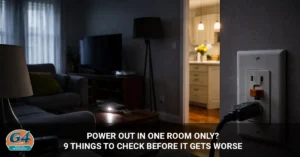

If the power is out in one room only, it usually means that the circuit has been interrupted.
The rest of your house may be working fine. The lights are on. Appliances run. But one room is completely dark.
This is a common electrical issue. Sometimes it’s a simple fix, like a tripped breaker. Other times, it can point to loose wiring or a failing breaker that needs attention.
Ignoring it can allow the problem to get worse over time. In some cases, it can even increase fire risk.
In this guide, you’ll learn why power goes out in one room, what you can safely check yourself, and when it’s time to call a licensed electrician.
Is It Serious If Power Is Out in One Room?
Power out in one room is usually caused by a tripped breaker or GFCI outlet, but it can sometimes mean a wiring problem.
If only one room is affected, the issue is likely limited to a single circuit. That actually makes it easier to trace.
In many cases, the fix is simple.
However, it becomes more serious if you notice burning smells, warm outlets, buzzing sounds, or breakers that keep tripping. Those signs can point to overheating or loose wiring and should not be ignored.
What Does It Mean When One Room Has No Power?
When one room has no power, it usually means the circuit supplying that room has been interrupted.
Every room is connected to a specific electrical circuit. If something stops the flow of electricity on that circuit, everything connected to it will shut off at once. Common reasons include:
- A tripped breaker
- A tripped GFCI outlet
- Loose wiring
- A failed breaker
- An overloaded circuit
In most cases, the issue is isolated to that single circuit. Finding the cause early helps prevent larger electrical problems and reduces the risk of damage.
1. Tripped Circuit Breaker
A tripped circuit breaker is the most common reason power goes out in one room.
When too much electricity flows through a circuit, the breaker shuts it off to prevent wires from overheating. This is a built-in safety feature.
Go to your electrical panel and look for a breaker that is not fully in the ON position. It may sit in the middle or appear slightly off.
Turn it fully to OFF first. Then switch it back to ON firmly.
If power returns, the problem was likely an overload. If the breaker trips again, there may be a device or wiring issue on that circuit that needs attention.
2. Tripped GFCI Outlet
A tripped GFCI outlet can shut off power to several outlets in one room.
GFCI outlets are designed to protect you from electric shock. When they detect a problem, they cut power immediately. One GFCI outlet can control multiple outlets on the same circuit.
You’ll usually find them in bathrooms, kitchens, garages, laundry areas, or even nearby rooms.
Press the RESET button firmly until it clicks.
If power comes back, the issue may have been temporary. If it trips again, there could be moisture, a faulty appliance, or a wiring problem that needs professional inspection.
3. Loose Outlet Connection
Loose wiring behind an outlet can shut off power to the entire room.
Many outlets are connected in a chain. If one outlet fails or the wires come loose, it can interrupt power to everything connected after it.
You usually won’t see this from the outside. The outlet may look normal. But you might notice that outlets worked before and suddenly stopped, or lights flickered before going out.
Loose wiring can overheat and increase fire risk. It should always be inspected and repaired by a licensed electrician.
4. Faulty Wall Switch
A faulty wall switch can cut power to the lights in that room.
If the outlets still work but the lights do not, the switch may be the problem.
Flip the switch on and off a few times. If the lights flicker, turn on slowly, or fail to respond consistently, the switch may be worn out internally.
Replacing a bad switch is usually a simple repair, but it should be handled safely to avoid wiring issues.
5. Overloaded Circuit
An overloaded circuit can cause the power to shut off in one room.
When several high-power devices run at the same time, the circuit can draw more electricity than it was designed to handle. The breaker then trips to prevent overheating.
Space heaters, hair dryers, microwaves, air fryers, and portable AC units are common causes of overload.
If the breaker tripped, reduce the number of devices on that circuit. Spreading appliances across different outlets or circuits can help prevent the problem from happening again.
6. Half-Hot Outlet Controlled by a Switch
Some outlets only have power when a nearby wall switch is turned on.
If outlets suddenly stopped working, check the switches in that room. In many bedrooms and living rooms, one half of the outlet is controlled by a switch for lamps.
It may look like the outlet has no power when the switch is simply off. This is a quick and simple fix that’s easy to miss.
7. Backstabbed Wiring Failure
Backstabbed wiring can cause power to stop working in one room.
Some older outlets were installed using push-in connections on the back instead of screw terminals. Over time, those connections can loosen.
When that happens, the outlet may lose power and cut off electricity to other outlets on the same circuit.
This problem happens behind the wall and cannot be seen from the outside. It should be repaired by a licensed electrician to ensure the wiring is secure and safe.
8. Damaged or Failing Breaker
A breaker can fail even if it doesn’t look tripped.
Sometimes the switch stays in the ON position, but the breaker no longer sends power through the circuit properly.
If you reset the breaker and the room still has no power, and you’ve ruled out other causes, the breaker itself may be faulty.
A failing breaker should be tested and replaced by a licensed electrician to restore safe power.
9. Hidden Wiring Damage
Hidden wiring damage can cause one room to lose power without warning.
Wires inside walls can be damaged by rodents, past renovation work, nails or screws, or insulation that has worn down over time.
When wiring is damaged, the circuit may stop working completely or work on and off.
This type of problem can increase fire risk and should be inspected right away. If you suspect hidden wiring damage, contact a licensed electrician to check it safely.
When Power Loss in One Room Is Dangerous
Power loss in one room becomes dangerous when it’s combined with signs of overheating or electrical failure.
Losing power by itself is not always urgent. But if you notice warning signs, it may point to loose wiring or overheating behind the walls. Watch for:
- Burning odor
- Warm outlets or switches
- Buzzing sounds
- Flickering before the outage
- Scorch marks on outlets
These signs can indicate overheating or unstable connections inside the wiring.
If you notice any of them, stop using that circuit and call a licensed electrician right away. Acting quickly can prevent serious damage or fire.
Step-by-Step Checks You Can Do Safely
You can safely check a few basic things before calling an electrician. Start with the simplest causes first.
- Reset the breaker once: Go to the panel and turn the breaker fully OFF. Then switch it back ON firmly.
- Reset nearby GFCI outlets: Press the RESET button until it clicks. One GFCI can control several outlets.
- Test another device: Plug in a different lamp or charger to make sure the appliance is not the issue.
- Check wall switches: Some outlets only work when a nearby switch is turned on.
Do not open outlets or remove the panel cover. Electrical components carry high voltage and can be dangerous.
When to Call a Licensed Electrician
Call a licensed electrician if power does not return after you’ve done the basic checks.
If resetting the breaker and GFCI outlets doesn’t fix the problem, the issue may be inside the wiring. You should also call if:
- The breaker keeps tripping
- You smell something burning
- Multiple outlets stopped working
- The electrical panel feels warm
- Your home has older wiring
Electrical problems can develop quietly behind walls. Acting early helps prevent larger damage and reduces the risk of fire.
Repair vs Larger Electrical Problem
Sometimes the fix is simple, like replacing a faulty breaker or repairing a loose outlet.
In many cases, a small repair restores power quickly and safely.
But if the issue keeps coming back, the problem may be deeper. It could involve damaged wiring inside the walls or a panel that can’t handle your home’s electrical demand.
If your home is overloaded or older, a panel upgrade or circuit rewiring may be the safer long-term solution.
A professional inspection helps determine whether you need a simple repair or a larger electrical upgrade.
How to Prevent Power Loss in One Room
You can prevent most room power outages by avoiding overload and keeping your wiring in good condition.
Start by not running multiple high-demand appliances on the same circuit. Space heaters, microwaves, and portable AC units should not share outlets when possible.
Replace loose or damaged outlets early. If plugs feel loose or outlets feel warm, have them checked.
Scheduling regular electrical inspections also helps catch small wiring issues before they turn into larger problems.
Small fixes today can prevent bigger, more expensive electrical issues tomorrow.
Final Thoughts
If the power is out in one room only, it’s a sign that something on that circuit needs attention.
Sometimes the fix is simple, like resetting a breaker or a GFCI outlet. Other times, it can point to loose wiring, a failing breaker, or an overloaded circuit.
Ignoring the issue can allow it to get worse over time.
Taking action early helps protect your home, reduce fire risk, and avoid more expensive repairs later. In most cases, fixing the problem sooner makes the solution safer and easier.