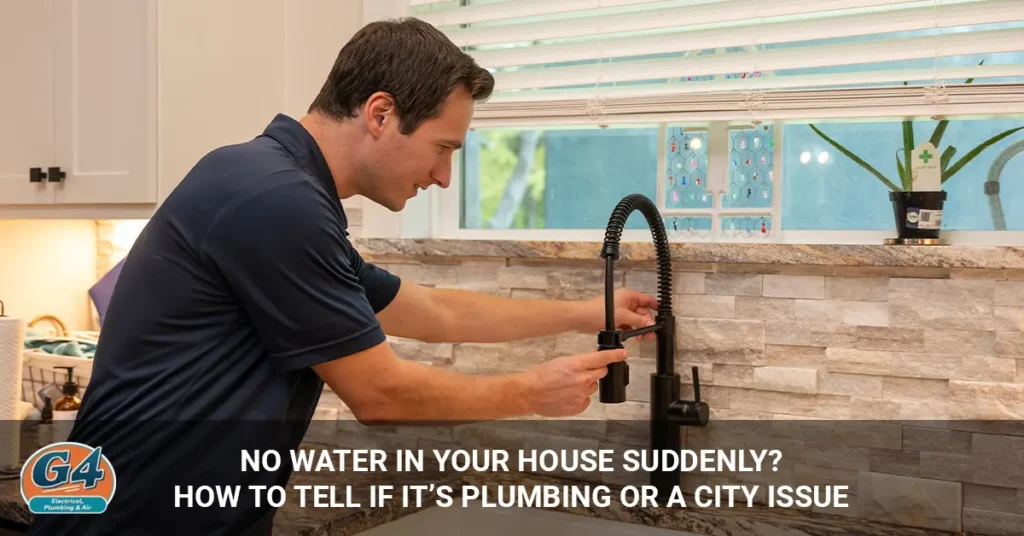
No water in your house usually means there’s either a plumbing problem inside your home or a city water supply issue. You need to check both quickly to find the cause.
Losing water all of a sudden can feel stressful. It affects basic things like cooking, cleaning, and using the bathroom. But in most cases, the cause is easy to figure out with a few simple checks.
The key is to stay calm and act step by step. Once you know where the problem is coming from, you can fix it faster or call the right help.
Why Is There No Water in Your House?
No water in your house usually means either your plumbing system has stopped working or the city supply has been shut off. These are the two main causes.
If the problem is inside your home, it could be something simple like a closed valve or something more serious like a leak or damaged pipe. These issues stop water from reaching your fixtures.
If the problem is outside your home, it’s often due to city maintenance, repair work, or a temporary outage in your area. In these cases, water service is usually restored after the work is completed.
How to Tell If It’s a Plumbing Problem in Your Home
It’s likely a plumbing problem if only your home has no water while nearby homes still do. This usually means the issue is somewhere inside your system.
Start by checking different faucets and fixtures around your home. If no water comes from any of them, the problem may be near your main supply line. If only one sink or shower is affected, it could be a local blockage.
Next, check your main water valve. It may have been turned off by accident or during recent work. Make sure it is fully open so water can flow properly.
Also, look for signs of leaks or pipe damage. Wet spots, strange noises, or a sudden drop in pressure often point to a broken or leaking pipe.
How to Tell If It’s a City Water Supply Issue
It’s likely a city water supply issue if your neighbors also have no water at the same time. This usually means there’s a temporary outage in your area.
Start by asking nearby homes if they have water. If they don’t, the problem is not inside your house. It’s coming from the main supply line or local system.
You can also check for any local notices or updates about maintenance or repairs. Water services are sometimes turned off for planned work.
Construction in your area can also interrupt the water supply. In most cases, the service returns once the work is finished.
Common Causes of No Water in Your House
No water in your house usually happens due to a problem inside your plumbing system or an issue with the city supply. Both can stop water flow suddenly.
Inside your home, common causes include a burst pipe, a blockage, or a closed main valve. These problems prevent water from reaching your taps and fixtures. Learn what to do in this situation in our guide on what to do when a pipe bursts.
Outside your home, the issue is often linked to city maintenance, repair work, or an unexpected outage. In some cases, frozen pipes can also block water completely and stop the flow.
What to Do If You Suddenly Have No Water
You should act quickly and follow a few simple steps to find the cause and restore your water. A quick check can help you avoid delays.
Start by checking your main water valve to make sure it is fully open. Sometimes it gets turned off by mistake, which can stop water flow completely.
Next, check if your neighbors have water. This helps you figure out if the problem is inside your home or coming from the city supply.
Avoid using appliances like washing machines or dishwashers until the issue is fixed. If the problem is inside your home or doesn’t go away, call a plumber to get it checked and repaired.
Is No Water in the House an Emergency?
No water in the house is an emergency when it affects your entire home and doesn’t come back quickly. Since water is essential, a sudden loss should always be taken seriously.
If the cause is inside your home, such as a burst pipe or major leak, it needs immediate attention. These problems can get worse fast and may cause damage. If you’re unsure, read more about what is a plumbing emergency to understand when to act quickly.
If it’s a city outage, it’s usually not as urgent. However, you should still stay informed and be prepared until the water supply is restored.
How to Prevent Sudden Water Loss
You can prevent sudden water loss by keeping your plumbing system in good condition and checking it regularly. Simple steps can help you avoid unexpected problems.
Start by inspecting your pipes and valves for any signs of wear, leaks, or damage. Fixing small issues early can prevent bigger failures later.
Protect your pipes from freezing, especially in colder areas. Frozen pipes can block water flow and even burst.
Keep your water pressure at a safe level. High pressure can strain your pipes and lead to damage over time. Regular maintenance helps keep your system working smoothly.
When to Call a Plumber
You should call a plumber when the problem is inside your home and your neighbors still have water. This usually means there’s an issue with your plumbing system.
If you notice leaks, pipe damage, or signs of a burst pipe, don’t wait. These problems can get worse quickly and may cause more damage.
You should also call a plumber if the water doesn’t come back after basic checks. A professional can find the cause and fix it the right way.
Final Thoughts
No water in your house needs quick attention because it affects your daily life right away. The sooner you check the cause, the faster you can fix it.
Start by finding out if the problem is inside your home or coming from the city. This simple step helps you take the right action without wasting time.
Once you know the source, you can either fix the issue or call the right help. Acting quickly helps restore your water and prevents further problems.