Most homeowners should schedule an electrical inspection every 3 to 5 years to keep their electrical system safe and working properly. Regular inspections help detect hidden problems before they become dangerous or expensive to repair.
Electrical systems operate behind walls and ceilings, so issues can develop without obvious warning signs. Over time, wiring connections can loosen, circuit breakers can wear out, and older components may no longer meet current safety standards.
Many homeowners only think about electrical inspections when something stops working. However, waiting for a problem can increase the risk of electrical fires, damaged appliances, or power failures.
Routine inspections allow electricians to check the entire system and catch small issues early. This helps keep the home safe and ensures the electrical system can handle modern appliances, electronics, and energy use.
Scheduling inspections at regular intervals helps homeowners protect their property, avoid unexpected repairs, and maintain a reliable electrical system.
How Often Should You Get an Electrical Inspection
Most homes should have a professional electrical inspection every 3 to 5 years to keep the electrical system safe and reliable. Regular inspections help make sure wiring, outlets, circuit breakers, and other components are working properly.
Homes that are older or use a lot of electricity may need inspections more often. Older wiring systems can wear out over time, and high electrical usage can put extra stress on circuits and panels.
Electrical systems run constantly in the background, which means small problems can develop without being noticed. Loose wiring, worn breakers, or outdated safety devices can slowly become safety hazards.
Routine inspections allow electricians to find these issues early. Fixing small problems before they grow into serious damage helps keep the electrical system safe and prevents costly repairs later.
What an Electrical Inspection Includes
An electrical inspection includes a detailed check of the home’s electrical system to make sure everything is safe and working properly. A licensed electrician reviews key components that control and distribute electricity throughout the house.
The goal is to identify worn parts, outdated equipment, or safety risks before they cause serious problems.
Checking the Electrical Panel
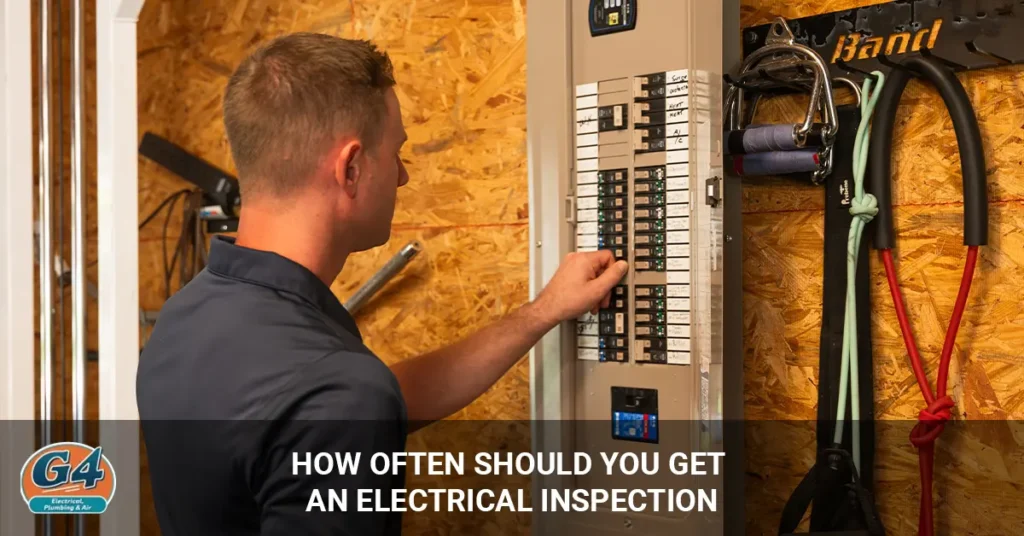
The electrical panel is the main control center for the home’s electricity. During an inspection, electricians check the circuit breakers, wiring connections, and overall panel capacity.
They also look for overcrowded circuits, double-tapped breakers, or outdated panels that may no longer meet safety standards. Recognizing the overloaded electrical panel signs early can help prevent serious system failures and safety risks.
Inspecting Wiring and Connections
Electricians inspect wiring inside outlets, junction boxes, and accessible areas of the home. They look for loose connections, damaged insulation, or wiring that may have been installed incorrectly.
Loose or damaged wiring can increase the risk of overheating and electrical fires.
Testing Outlets and Switches
Outlets and switches are tested to make sure they operate properly. Electricians also check for correct wiring and proper grounding.
This step helps identify outlets that may be unsafe or not functioning correctly.
Evaluating Circuit Breakers
Circuit breakers protect the electrical system from overloads and short circuits. During the inspection, electricians verify that breakers are working properly and are correctly sized for the circuits they protect.
Faulty or mismatched breakers can create safety hazards.
Checking Grounding and Safety Devices
Proper grounding and safety devices help protect the home from electrical shocks and fire risks. Electricians examine grounding systems along with protective outlets such as GFCI and AFCI devices.
These safety features are important for modern electrical protection and are often required by current electrical codes.
When Homeowners Should Schedule an Electrical Inspection
Homeowners should schedule an electrical inspection whenever there is a change in the home’s electrical system or signs of possible problems. In some situations, an inspection is important even if your last check was only a few years ago.
Below are common situations when an electrical inspection is recommended.
Before Buying or Selling a Home
An electrical inspection is often recommended before buying or selling a home. It helps identify hidden electrical issues that may affect safety, repairs, or property value.
For buyers, it provides peace of mind. For sellers, it helps prevent delays during the home inspection process.
After Major Renovations
Home renovations often involve electrical upgrades or modifications. New lighting, appliances, or added rooms can place extra demand on the electrical system.
An inspection ensures the electrical work was completed safely and meets local code requirements.
When Living in an Older Home
Older homes are more likely to have outdated wiring, aging outlets, or older electrical panels. These systems may not meet current safety standards.
An inspection helps identify areas that may need upgrades or repairs.
After Electrical Damage or Storms
Severe weather can damage electrical systems without obvious signs. Lightning strikes, flooding, or strong storms can affect wiring, panels, and safety devices.
An electrical inspection can identify hidden damage before it causes further problems.
If You Notice Electrical Problems
If you notice flickering lights, tripping breakers, buzzing outlets, or other electrical issues, an inspection is recommended.
These warning signs often indicate underlying electrical problems that should be addressed quickly.
Warning Signs You Need an Electrical Inspection Soon
You should schedule an electrical inspection soon if you notice unusual behavior from your electrical system. These warning signs often indicate hidden problems with wiring, circuits, or electrical components.
Ignoring these signs can increase the risk of electrical damage or safety hazards. Common warning signs include:
Frequent Circuit Breaker Trips
Circuit breakers are designed to shut off power when a circuit becomes overloaded or unsafe. If breakers trip often, it may indicate overloaded circuits, faulty wiring, or electrical equipment problems.
Flickering or Dimming Lights
Lights that flicker or dim unexpectedly can signal loose wiring, unstable electrical connections, or overloaded circuits. In many cases, flickering lights in a home can indicate deeper electrical problems that should be inspected.
Burning Smells Near Outlets
A burning smell near an outlet or switch is a serious warning sign. Understanding the causes of a burning smell from an outlet can help prevent electrical fires and major damage.
Warm or Discolored Outlets
Outlets should never feel warm or appear discolored. These signs may indicate overheating, poor connections, or overloaded wiring.
Outdated Two-Prong Outlets
Two-prong outlets without grounding are common in older homes. These outlets do not provide the same level of protection as modern grounded outlets.
If you notice any of these signs, it is important to have your electrical system inspected to identify and fix potential problems.
Benefits of Regular Electrical Inspections
Regular electrical inspections help keep your home safe and your electrical system working efficiently. These inspections allow electricians to detect small issues early before they become serious or expensive problems.
Below are some of the key benefits homeowners gain from routine electrical inspections.
Prevent Electrical Fires
Electrical inspections help prevent fires by identifying damaged wiring, loose connections, or overloaded circuits. These issues can cause overheating if they are not fixed in time.
Finding these problems early reduces the risk of electrical fires.
Improve Home Safety
A well-maintained electrical system lowers the risk of electrical shocks and other safety hazards. Inspections ensure that outlets, wiring, and protective devices are working properly.
This helps keep both the home and its occupants safe.
Identify Hidden Electrical Problems
Many electrical problems develop behind walls where they are difficult to see. Worn wiring or loose connections may not show obvious signs until damage occurs.
Electrical inspections allow professionals to identify these hidden problems before they worsen.
Increase Energy Efficiency
Electrical systems that operate efficiently use less electricity. Inspections can reveal outdated equipment or inefficient wiring that may be wasting power.
Upgrading these components can help reduce energy use.
Avoid Costly Repairs
Fixing small electrical issues early is usually much cheaper than repairing major damage later. Routine inspections help prevent expensive emergency repairs and system failures.
Electrical Inspection Frequency by Home Type
The recommended inspection schedule can vary depending on the type and age of the home. Some homes require more frequent electrical inspections because their systems experience greater wear or heavier electrical use.
Below are common guidelines based on different types of homes.
New Homes
New homes should still receive an electrical inspection within the first few years after construction. This helps confirm that all wiring, outlets, and electrical components continue to operate safely.
Early inspections can also identify installation issues that may not appear immediately.
Homes Over 20 Years Old
Homes that are more than 20 years old should be inspected more often. Electrical systems in older homes may contain aging wiring, older panels, or outdated safety features.
Regular inspections help identify worn components before they create safety risks.
Homes With Heavy Electrical Usage
Homes that use a large number of appliances, electronics, or home office equipment place greater demand on electrical circuits.
More frequent inspections help ensure the system can handle the electrical load safely.
Rental Properties
Rental properties often require regular electrical inspections to protect tenant safety. Landlords may schedule inspections to confirm the electrical system remains safe and compliant with local regulations.
Routine checks also help identify problems before they affect tenants.
What Happens During a Professional Electrical Inspection
During a professional electrical inspection, a licensed electrician carefully checks the entire electrical system to make sure it is safe and working properly. The goal is to find potential problems before they turn into safety hazards or expensive repairs.
Electricians follow a step-by-step process to evaluate the system.
First, they inspect the electrical panel, which is the main control center for the home’s electricity. They check the circuit breakers, wiring connections, and panel capacity to ensure everything is functioning correctly.
Next, they test outlets and switches throughout the home. This helps confirm that they are wired correctly, grounded properly, and operating safely.
Electricians also check wiring connections in accessible areas such as junction boxes, outlets, and electrical fixtures. They look for loose wires, damaged insulation, or signs of overheating.
Safety devices are another important part of the inspection. The electrician verifies that GFCI and AFCI protection is installed where required and functioning correctly.
In some cases, electricians use specialized testing tools to measure voltage levels, detect wiring issues, and evaluate circuit performance.
By the end of the inspection, the electrician can identify potential hazards, recommend repairs if needed, and confirm whether the electrical system is operating safely.
How Much Does an Electrical Inspection Cost?
The cost of an electrical inspection depends on the size of the home and the complexity of the electrical system. In most cases, a standard residential inspection is relatively affordable compared to the cost of repairing major electrical problems.
Smaller homes usually require less time to inspect, while larger homes or older properties may take longer because electricians need to check more circuits, wiring, and safety devices.
Additional factors can also affect the price. Homes with outdated wiring, multiple electrical panels, or past electrical modifications may require a more detailed inspection.
Although the cost can vary, many homeowners consider electrical inspections a valuable investment. A routine inspection can identify small problems early and help prevent expensive repairs, electrical fires, or system failures in the future.
Final Thoughts
Electrical inspections help keep your home safe and your electrical system reliable. Because electricity runs through your home every day, small problems can develop over time without clear warning signs.
Regular inspections allow electricians to catch issues early, such as worn wiring, loose connections, or outdated safety devices. Fixing these problems early helps prevent electrical fires, power failures, and costly repairs.
By scheduling routine electrical inspections, homeowners can improve safety, protect their property, and ensure their electrical system continues to work efficiently for years.