
An electrical emergency is any problem that puts your home at immediate risk of fire, electric shock, or serious damage.
If you smell something burning, see sparks, lose power without warning, or feel a shock when you touch a switch or outlet, do not ignore it. Those are clear warning signs that something is wrong.
Some electrical issues can wait for a scheduled appointment. Others need attention right away. The key is knowing the difference.
Electrical problems often start small. A loose wire. An overloaded circuit. A worn-out breaker. But when ignored, those small issues can turn into fires, damaged appliances, or dangerous shock hazards.
If something feels unusual or unsafe, trust your instincts. Acting quickly can protect your home and the people inside it.
Here’s how to tell if you’re dealing with a true electrical emergency.
What Is Considered an Electrical Emergency?
An electrical emergency is any problem that creates an immediate risk of fire, electric shock, or serious property damage. If you notice any of the following, treat it as urgent:
- A burning smell from an outlet or breaker panel
- Smoke or visible sparks
- A breaker that keeps tripping
- Buzzing or humming from the electrical panel
- Warm, melted, or discolored outlets
- Electrical shocks when plugging something in
- Sudden partial or full power loss
These are not minor issues. They are warning signs that something inside your electrical system is overheating, shorting, or failing.
Do not ignore them or spend hours trying to figure it out yourself. Electrical fires can start behind walls where you cannot see them. If you notice any of these signs, it’s safest to shut off power if you can and call a licensed electrician right away.
Burning Smell From an Outlet or Breaker Panel
A burning smell from an outlet or breaker panel is an electrical emergency.
That smell usually means wires are overheating or the insulation around them is melting. You might not see flames, but heat can build up inside the wall very quickly. That’s how many electrical fires start.
Do not ignore that odor. It will not fix itself. Here’s what to do:
- Turn off the power at the breaker if it is safe
- Stop using the outlet immediately
- Call a licensed electrician
Do not plug anything back in to “check” if it still works. Testing it can make the damage worse and increase the fire risk. When it comes to burning smells, act fast and stay safe.
Sparks or Smoke
Sparks or smoke from outlets, switches, or your electrical panel are signs of an electrical emergency.
A tiny spark when you plug something in can be normal. But large sparks, sparks that happen repeatedly, or any sign of smoke are not normal. They usually mean wires are shorting, overheating, or burning inside the wall. If you see smoke:
- Shut off the power if you can do so safely
- Keep a safe distance from the area
- Call for emergency electrical repair
Smoke is a clear warning that something inside your system is overheating or actively burning. Do not ignore it and do not try to fix it yourself. Acting quickly can prevent a house fire.
Breaker Keeps Tripping
A breaker that keeps tripping can signal a serious electrical problem.
One trip during an overload is normal. For example, if you run too many appliances on one circuit, the breaker shuts off power to protect your home. That’s what it’s designed to do.
But if the breaker trips again after you reset it, something deeper may be wrong. The cause could be:
- A short circuit
- A ground fault
- Damaged or loose wiring
- A failing breaker
Do not keep resetting it over and over. That can overheat the wiring and increase the risk of fire. If the problem continues, it’s time to call a licensed electrician to inspect the circuit safely.
Flickering or Dimming Lights
Flickering or dimming lights can be a warning sign of an electrical problem.
Sometimes the issue is minor. If only one bulb flickers, it may simply be loose. Turn off the switch and tighten the bulb first.
But the situation becomes more serious if:
- Multiple lights flicker at the same time
- The lights dim when large appliances turn on
- Flickering happens often or gets worse
These signs can point to loose wiring, overloaded circuits, or problems inside the electrical panel. Electrical connections should never flicker under normal conditions.
If the problem keeps happening, it’s best to have a licensed electrician inspect your system before it turns into a bigger safety risk.
Warm or Discolored Outlets
Warm, melted, or discolored outlets are clear signs of a serious electrical problem.
An outlet should never feel hot when you touch it. If it does, that usually means the wiring behind it is loose, or the circuit is overloaded. Burn marks, melting plastic, or dark discoloration often point to arcing or overheating inside the wall.
These conditions increase the risk of fire.
Stop using that outlet immediately. Do not plug anything into it. Have a licensed electrician inspect and repair the issue as soon as possible to prevent further damage.
Buzzing Sounds From the Electrical Panel
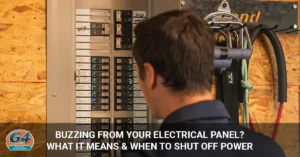
A buzzing or humming sound from your electrical panel can signal a serious problem.
Electricity should flow quietly through your system. If you hear buzzing, humming, or crackling from the breaker panel, something is not working properly. The noise often means there is a loose connection or electrical arcing happening inside the panel. Common causes include:
- Loose breaker connections
- Overloaded circuits
- Failing or damaged breakers
This is not something you should try to fix yourself. Electrical panels carry high voltage and can be dangerous to handle. If you hear unusual sounds coming from your panel, call a licensed electrician right away to inspect it safely.
Electrical Shocks When Plugging In Devices
Feeling a shock when plugging in a device is a sign of an electrical problem.
Even a mild shock is not normal. It can mean there is a grounding issue, damaged wiring, or a fault inside the outlet. Electricity should never travel through you. If this happens:
- Stop using the outlet immediately
- Unplug the device
- Schedule a professional electrical repair
Do not ignore even a small shock. Electrical hazards can become dangerous quickly, especially if the problem gets worse over time. A licensed electrician can find the source and fix it safely.
What Is Not Usually an Electrical Emergency?
Not every electrical issue is an emergency that requires immediate service.
Some problems are minor and can be fixed quickly without urgent repair. These are usually non-emergencies:
- A single breaker trip caused by an overloaded circuit
- A loose light bulb that flickers
- A GFCI outlet that simply needs to be reset
If the issue stops after a simple fix and does not happen again, it is likely not urgent.
However, if the same problem keeps coming back, do not ignore it. Repeated issues often point to a deeper wiring or circuit problem that should be inspected by a licensed electrician.
What To Do Before the Electrician Arrives
If you suspect an electrical emergency, focus on safety first.
You cannot fix the problem yourself, but you can reduce the risk while waiting for a professional. Take these steps:
- Turn off the main breaker if it is safe to do so
- Avoid touching affected outlets, switches, or exposed wires
- Unplug nearby appliances if you can do it safely
- Keep water away from the area
- Do not open the breaker panel
Your safety comes first. Never attempt to repair wiring or open electrical components on your own. Electrical systems carry high voltage and can cause serious injury. Wait for a licensed electrician to handle the repair properly.
Common Causes of Electrical Emergencies
Electrical emergencies usually happen when wiring, circuits, or equipment become damaged or overloaded. Most serious electrical problems start with one of these common causes:
- Old or outdated wiring
- Overloaded circuits
- DIY electrical work done incorrectly
- Storm or lightning damage
- Rodent-chewed wires
- Faulty or damaged appliances
Homes with older electrical panels are especially at risk. Modern households use far more power than homes did years ago. More devices, larger appliances, and constant charging can push older systems beyond their limits.
When your electrical system cannot handle the demand, overheating and short circuits become more likely. Regular inspections and upgrades can help prevent these issues before they turn into emergencies.
How To Prevent Electrical Emergencies
You can prevent many electrical emergencies with regular inspections and timely upgrades.
Most serious electrical problems build up over time. When you maintain your system and replace worn components early, you lower the risk of fire, shocks, and sudden power loss. Simple prevention steps include:
- Scheduling professional electrical inspections
- Upgrading outdated or overloaded panels
- Installing whole-home surge protection
- Avoiding extension cord overuse
- Replacing damaged or loose outlets
These small upgrades protect your wiring and reduce strain on your system. A little attention now can prevent major repairs and costly damage later.
When To Call an Emergency Electrician
Call an emergency electrician right away if you notice smoke, burning smells, repeated breaker trips, electrical shocks, or sudden power loss.
These are not minor issues. They are warning signs that something in your system may be overheating, shorting, or failing. Electrical problems can get worse quickly and may lead to fire or serious damage if ignored.
If you are unsure whether your situation is urgent, it is always safer to call and ask. A licensed electrician can assess the risk and guide you on the next step. A quick inspection today can prevent costly repairs and protect your home from bigger problems.