
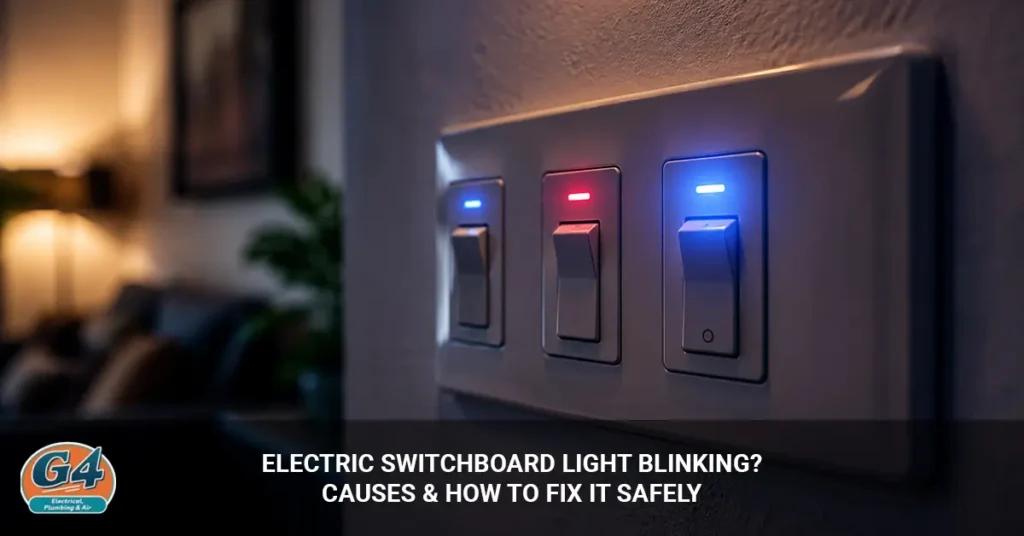
- ow current flow.
- Smart switches that use flashing lights to show connection status.
- Illuminated switches designed to glow or blink for visibility in dark areas.
- Standby indicators that signal the switch or device is receiving power.
If the light has always blinked the same way and the switch operates normally, there is usually no cause for concern. You can often confirm this by checking the manufacturer’s instructions.
When Blinking Signals a Problem
A blinking switchboard light can indicate a problem when the behavior suddenly changes or appears alongside other electrical issues.
Warning signs include:
- The blinking started recently.
- The light flickers more frequently than before.
- Other lights in the home also flicker.
- The switch makes buzzing or crackling sounds.
- The switchboard feels warm to the touch.
- Circuit breakers trip unexpectedly.
These symptoms may indicate loose wiring, a failing switch, voltage instability, or another electrical fault that requires inspection.
The safest approach is to monitor the issue closely and investigate any new or unusual blinking patterns before they develop into larger electrical problems.
Warning Signs You Should Not Ignore
A blinking switchboard light becomes a serious concern when it is accompanied by signs of overheating, electrical arcing, or circuit failure. These symptoms can indicate a safety hazard that requires immediate attention.
Watch for the following warning signs:
- Burning smells: A burning or melting odor may indicate overheating wires, damaged insulation, or failing electrical components.
- Warm or hot switch plates: Switches should not feel excessively warm. Heat often points to loose connections, overloaded circuits, or faulty devices.
- Visible discoloration: Brown, black, or yellow marks around switches or outlets can be a sign of overheating or electrical arcing.
- Crackling or buzzing sounds: Unusual noises coming from the switchboard may indicate loose wiring or damaged electrical contacts.
- Repeated breaker trips: Frequent breaker trips often signal an overloaded circuit, short circuit, or ground fault.
- Sparks when operating switches: Visible sparks can occur when electrical connections are loose, worn, or damaged.
These warning signs should never be ignored. Electrical problems tend to worsen over time and can increase the risk of electrical shock, equipment damage, and fire.
If you notice any of these symptoms, turn off power to the affected circuit if it is safe to do so and contact a licensed electrician. Prompt inspection and repair can help prevent a minor electrical issue from becoming a major safety hazard.
Common Causes of a Blinking Switchboard Light
A blinking switchboard light is usually caused by a wiring problem, a faulty electrical component, voltage instability, or an issue with the indicator light itself. Identifying the exact cause is important because some problems are harmless, while others can create serious electrical hazards if left unaddressed.
Below are the most common reasons a switchboard light may start blinking.
Loose Wire Connections
Loose wiring is one of the most common causes of a blinking switchboard light. When electrical connections become loose, power may flow inconsistently through the circuit, causing indicator lights to flicker or blink.
Electrical connections can loosen over time due to normal heating and cooling cycles, vibration, or improper installation.
Common signs of a loose connection include:
- Flickering indicator lights
- Intermittent power loss
- Buzzing or crackling sounds
- Warm switches or outlets
- Lights that occasionally dim or brighten
Loose connections should be repaired promptly because they can create heat buildup and increase the risk of electrical fires.
Faulty Light Switch
A faulty switch can cause a switchboard light to blink even when the rest of the electrical system is functioning normally. Over time, the internal contacts inside a switch can wear out, reducing their ability to maintain a stable electrical connection.
Signs of a failing switch include:
- Delayed response when turning the switch on or off
- Flickering indicator lights
- Loose or wobbly switch movement
- Inconsistent lighting performance
- Crackling sounds when operating the switch
In many cases, replacing the defective switch resolves the issue.
Voltage Fluctuations
Voltage fluctuations can cause switchboard lights to blink, especially when LED indicators or sensitive electronic devices are connected to the circuit.
Voltage instability may occur because of:
- Utility power supply issues
- Large appliances starting up
- Problems with the home’s electrical service
- Uneven electrical loads across circuits
If multiple lights throughout your home flicker at the same time, voltage fluctuations may be affecting the entire electrical system rather than a single switch.
Overloaded Electrical Circuit
An overloaded circuit occurs when more electricity is being used than the circuit was designed to handle. This extra demand can cause lights to flicker, switches to warm up, and breakers to trip.
Common signs of an overloaded circuit include:
- Blinking switchboard lights
- Dimming lights
- Warm outlets or switches
- Frequent breaker trips
- Appliances losing power unexpectedly
Reducing the number of devices on the circuit or moving high-power appliances to separate circuits can often solve the problem.
Damaged Electrical Components
Worn or damaged electrical components can interfere with the flow of electricity and cause blinking indicator lights. Electrical systems naturally age, and parts eventually wear out after years of use.
Components that may develop problems include:
- Light switches
- Electrical terminals
- Wire connections
- Junction boxes
- Circuit breakers
- Electrical panels
As these components deteriorate, they can create resistance within the circuit, leading to flickering, blinking, or intermittent operation.
If the issue appears to be coming from the panel itself, learn the common signs that indicate your electrical panel may need repair or replacement.
Defective Indicator Light
Sometimes the blinking is caused by the indicator light itself rather than the switchboard wiring. LED indicator lights can weaken or fail over time, producing unusual blinking patterns.
Common symptoms include:
- Random blinking
- Uneven brightness
- Partial illumination
- Light that flashes intermittently
- Complete indicator light failure
If the switch and circuit operate normally, replacing the indicator light or switch assembly may be the only repair needed.
Moisture or Water Exposure
Moisture can disrupt electrical connections and cause switchboard lights to blink unexpectedly. Water exposure can also lead to corrosion, which weakens electrical contacts and increases resistance within the circuit.
This issue is more common in:
- Bathrooms
- Kitchens
- Outdoor electrical installations
- Basements
- Utility rooms
- Laundry rooms
Signs of moisture-related electrical problems include corrosion, discoloration, rust, and intermittent electrical performance.
Because water and electricity create a dangerous combination, any signs of moisture near a switchboard should be addressed immediately. If water exposure is suspected, have the system inspected by a qualified electrician to ensure it is safe to use.