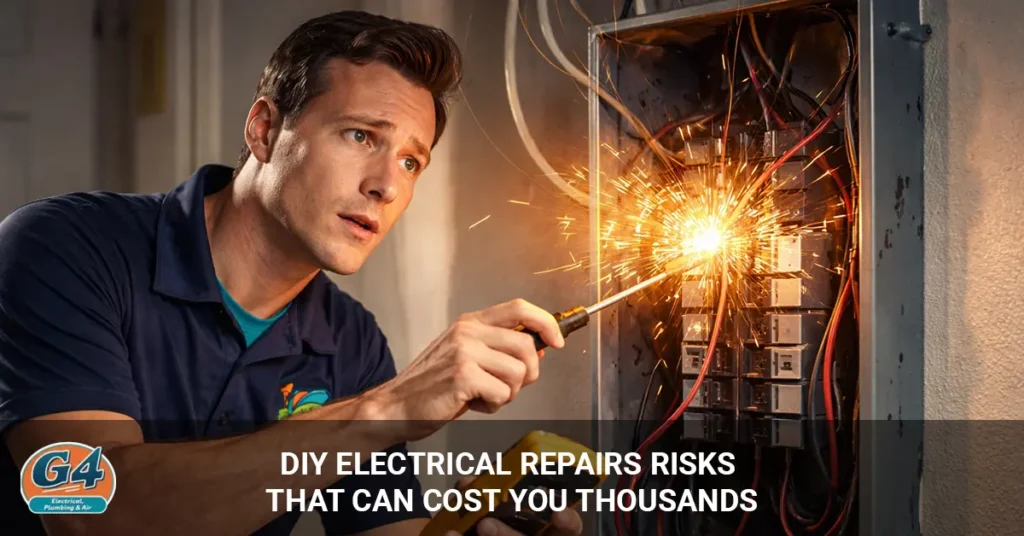
DIY electrical repairs can cost you thousands because small wiring mistakes can lead to expensive damage and serious safety risks. Electrical systems may look simple on the surface, but they require proper knowledge, tools, and safety practices.
Many homeowners try to fix electrical problems after watching online videos or reading quick tutorials. While the instructions may seem easy to follow, electrical work involves hidden dangers that are not always obvious.
A loose wire, incorrect breaker, or overloaded circuit can damage appliances, create fire hazards, or cause electrical failures inside the walls. These problems often become expensive to repair once the damage spreads.
DIY electrical work can also cause problems during home inspections or insurance claims. If electrical repairs are done incorrectly or without proper permits, inspectors may flag the system as unsafe.
Understanding the risks of DIY electrical repairs helps homeowners make safer choices. In many cases, hiring a licensed electrician can prevent costly mistakes and protect your home from electrical hazards.
What DIY Electrical Repairs Mean
DIY electrical repairs are electrical tasks done by homeowners without professional training or a licensed electrician. These projects usually involve fixing or modifying parts of the home’s electrical system.
Common examples include installing outlets, replacing switches, adding light fixtures, running new wires, or changing circuit connections. Many homeowners try these repairs to save money on labor costs.
However, electrical systems must follow strict safety rules and building codes. These standards exist to prevent electrical shocks, fires, and equipment damage.
Without proper training, it is easy to make mistakes when working with wiring and circuits. Even small errors, such as loose connections or incorrect wire sizes, can create serious safety hazards.
Because of these risks, DIY electrical repairs can lead to unsafe installations, code violations, and costly repairs later.
Why DIY Electrical Repairs Are Risky
DIY electrical repairs are risky because electrical systems require precise installation, proper materials, and strict safety standards. Even small wiring mistakes can create serious safety hazards.
Electrical systems carry high voltage and must follow electrical codes designed to prevent shocks, fires, and equipment damage. When electrical work is done incorrectly, the risks increase significantly.
Below are some of the most common dangers of DIY electrical repairs.
Electrical Shock Hazards
Electrical shock is one of the biggest dangers of DIY electrical work. Household wiring carries enough voltage to cause severe injury or even death.
Handling wires or electrical components without proper safety precautions can expose homeowners to dangerous electrical currents.
Increased Fire Risks
Improper wiring connections can cause overheating inside electrical boxes or behind walls. Over time, this heat can damage insulation and start an electrical fire.
Electrical fires are one of the most serious risks linked to poor electrical installations.
Incorrect Wiring Installations
Electrical systems depend on correct wire sizes, proper connections, and protective devices. Using the wrong wiring methods or materials can damage circuits and connected appliances.
These problems are not always visible immediately and may only appear after serious damage has occurred.
Lack of Code Compliance
Electrical codes exist to protect homes and ensure safe installations. DIY repairs often fail to follow these requirements because homeowners may not know the proper standards.
When electrical work does not meet code requirements, it can cause inspection failures or legal complications during a home sale.
Hidden Costs of DIY Electrical Repairs
DIY electrical repairs may look cheaper at first, but they often lead to much higher costs later. Mistakes in wiring or installation can damage the electrical system and require professional repairs.
In many cases, homeowners end up paying more to fix DIY mistakes than they would have paid to hire a licensed electrician in the first place.
Expensive Electrical Damage
Incorrect wiring can damage outlets, switches, appliances, and even the electrical panel. Poor connections or overloaded circuits may cause components to overheat or fail.
When this happens, electricians often need to remove the faulty work and reinstall the wiring correctly, which increases repair costs.
Failed Home Inspections
DIY electrical work can cause problems during home inspections. Inspectors often identify unsafe wiring, missing safety devices, or electrical code violations.
If these issues are found, they usually must be fixed before the home can pass inspection or complete a sale.
Insurance Claim Denials
Some insurance companies may refuse to cover damage caused by unsafe or unpermitted electrical work. If a fire or electrical failure is linked to DIY repairs, the homeowner may be responsible for the repair costs.
This can turn a small repair mistake into a very expensive problem.
Costly Emergency Repairs
DIY electrical mistakes sometimes lead to sudden system failures. When power problems occur unexpectedly, homeowners may need emergency electrical services.
Emergency repairs are usually more expensive than scheduled electrical work, especially if major components must be replaced.
Common DIY Electrical Mistakes Homeowners Make
Many DIY electrical problems happen because of small installation mistakes. Even simple errors can create safety hazards, damage appliances, or cause electrical failures.
Below are some of the most common mistakes homeowners make when attempting electrical repairs.
Overloading Circuits
Overloading a circuit happens when too many devices are connected to the same electrical line. This forces the wiring to carry more electricity than it was designed for.
When circuits become overloaded, breakers may trip frequently, and wires may overheat.
Using the Wrong Wire Size
Each electrical circuit requires a specific wire size to safely carry the electrical load. Using wires that are too small for the circuit can cause overheating and insulation damage.
Proper wire sizing is essential to prevent electrical fires.
Incorrect Breaker Installation
Installing the wrong type or size of circuit breaker can prevent the breaker from protecting the wiring properly.
If the breaker is too large for the wiring, it may not shut off the circuit during an overload, which increases the risk of overheating.
Loose Electrical Connections
Loose wire connections are a common DIY mistake. Poorly connected wires can create electrical arcs, which generate heat and damage wiring.
Over time, this heat buildup can increase the risk of electrical fires.
Improper Grounding
Grounding systems help direct excess electrical current safely into the ground. Without proper grounding, electrical faults can become dangerous.
Improper grounding can increase the risk of electrical shock and damage to electrical equipment.
Electrical Jobs That Should Never Be DIY
Some electrical jobs should never be done as DIY projects because they involve high voltage, complex wiring, and strict safety requirements. These projects require professional training and should always be handled by a licensed electrician.
Attempting these tasks without proper experience can lead to serious safety risks and costly repairs.
Electrical Panel Upgrades
Electrical panel upgrades should always be done by a professional. The electrical panel controls the main power supply of the entire home.
Working inside the panel exposes you to high-voltage electricity and requires specialized knowledge to install breakers and circuits safely.
Home Rewiring Projects
Rewiring a home involves replacing old wiring throughout the property. This is a complex job that requires careful planning and proper installation.
Professional electricians ensure the wiring meets safety codes and can handle modern electrical loads.
Installing New Circuits
Adding a new electrical circuit requires correct breaker installation, proper wire sizing, and accurate load calculations.
Incorrect installation can overload the system and create safety hazards.
Major Appliance Wiring
Large appliances such as ovens, dryers, and air conditioners often require dedicated circuits. These circuits must be installed correctly to handle higher electrical loads.
Improper wiring can damage appliances and increase fire risks.
Outdoor Electrical Installations
Outdoor electrical systems must be protected from moisture and weather conditions. This includes using weatherproof wiring, outlets, and protective coverings.
Incorrect outdoor installations can expose wiring to water and create dangerous electrical hazards.
When DIY Electrical Work May Be Safe
Some very basic electrical tasks can be done safely by homeowners. These tasks do not involve handling wiring, opening electrical panels, or modifying circuits.
Simple maintenance activities are usually safe as long as the power is turned off when necessary and proper precautions are followed.
Examples of safer DIY electrical tasks include:
Replacing Light Bulbs
Replacing a light bulb is one of the simplest electrical tasks. It does not involve wiring and can usually be done safely with the power switched off.
Changing Outlet Covers
Replacing an outlet or switch cover plate is generally safe because it does not involve working with electrical wires.
Resetting Circuit Breakers
If a breaker trips, resetting it at the electrical panel is usually safe. However, if breakers trip repeatedly, a professional electrician should inspect the system.
Installing Plug-In Devices
Plug-in devices such as lamps, power strips, or smart plugs can be safely installed because they do not require electrical wiring changes.
For any task that involves electrical wiring, outlets, switches, or the electrical panel, it is safer to hire a licensed electrician. Professional electricians ensure the work is done safely and follows electrical code requirements.
Benefits of Hiring a Licensed Electrician
Hiring a licensed electrician helps ensure electrical work is done safely, correctly, and according to local building codes. Professional electricians have the training and experience needed to handle electrical systems without creating safety risks.
Working with a qualified electrician can also prevent costly mistakes and long-term electrical problems.
Safe and Code-Compliant Work
Licensed electricians follow electrical codes and safety standards during every installation or repair. These rules are designed to reduce the risk of electrical shocks, fires, and system failures.
Code-compliant work also helps ensure the home passes inspections.
Proper Tools and Experience
Professional electricians use specialized tools and have the training required to diagnose and fix electrical problems accurately.
Their experience allows them to identify hidden issues that homeowners may not notice.
Long-Term Cost Savings
Hiring an electrician may cost more initially, but proper installation helps prevent expensive repairs later.
Correct electrical work reduces the risk of damaged wiring, failed components, and emergency repairs.
Inspection and Permit Compliance
Many electrical projects require permits and inspections. Licensed electricians know when permits are needed and ensure the work meets local regulations.
This helps homeowners avoid legal issues and ensures the electrical system meets safety requirements.
Warning Signs of Dangerous Electrical Work
Dangerous electrical work often shows clear warning signs before serious damage occurs. If you notice these problems in your home, they may indicate faulty wiring, overloaded circuits, or unsafe installations.
Recognizing these signs early can help prevent electrical fires and costly repairs.
Common warning signs include:
Burning Smells from Outlets
A burning smell coming from an outlet or switch often indicates overheated wires or damaged electrical components. This is a serious warning sign, and understanding the causes of a burning smell from an outlet can help prevent dangerous electrical fires.
Frequent Breaker Trips
Circuit breakers are designed to shut off power when a circuit becomes overloaded or unsafe. If breakers trip frequently, it may indicate wiring problems or overloaded circuits, and learning why a circuit breaker keeps tripping can help identify the root cause.
Flickering Lights
Lights that flicker or dim unexpectedly may be caused by loose wiring or overloaded circuits, and flickering lights in a home can often signal deeper electrical issues.
Warm Outlets or Switches
Outlets and switches should never feel hot. Warm electrical components can indicate poor connections or overloaded wiring.
Sparks from Electrical Devices
Seeing sparks when plugging in or using electrical devices can indicate faulty wiring or damaged outlets.
If any of these signs appear, the electrical system should be inspected as soon as possible to prevent further damage or safety risks.
Final Thoughts
DIY electrical repairs may seem like a way to save money, but they can quickly lead to serious safety risks and expensive repairs. Electrical systems require accurate installation, the right materials, and strict compliance with safety codes.
Even small wiring mistakes can create problems such as overheating, electrical fires, or damaged appliances. These issues often cost much more to repair than hiring a professional in the first place.
Hiring a licensed electrician for complex electrical work helps ensure the job is done safely and correctly. Professional installation protects your home, prevents costly mistakes, and keeps your electrical system working reliably for years.