A constantly running toilet wastes water and increases your utility bill fast. It may seem like a small issue, but it can waste hundreds of gallons every day if you ignore it.
Most of the time, the problem comes from a small part inside the tank that isn’t working properly. The good news is you can usually fix it yourself without special tools or experience.
In this guide, you’ll learn the exact causes of a running toilet and simple steps to stop the water waste quickly.
Why Your Toilet Keeps Running
Your toilet keeps running because one of the parts inside the tank is not working properly.
In most cases, the issue comes from a worn flapper, a float set too high, a faulty fill valve, or water leaking into the overflow tube. When any of these parts fail, water keeps flowing instead of stopping after a flush.
The system inside the tank is simple, but it needs every part to work correctly. If one part is off, even slightly, the toilet won’t shut off the water as it should.
The good news is that these problems are easy to spot and fix. Most repairs take only a few minutes and don’t require special tools.
What Causes a Toilet to Keep Running?
A toilet keeps running when one of the parts inside the tank fails or goes out of position.
When you flush, water should leave the tank, refill, and then stop at the right level. If something isn’t working properly, the water doesn’t shut off and keeps flowing into the bowl.
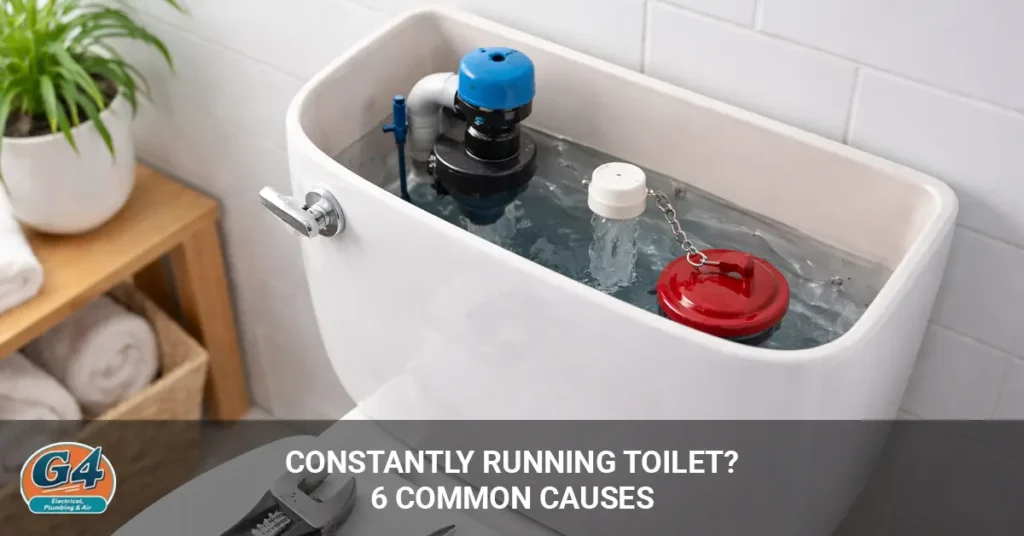
The most common parts involved are the flapper, fill valve, float, overflow tube, and chain. Each one plays a small role, but if even one part has a problem, the whole system won’t work as it should.
Most of these issues are minor and easy to fix once you know what to look for.
1. Worn or Misaligned Flapper
A worn or misaligned flapper is one of the most common reasons your toilet keeps running.
The flapper is a rubber seal at the bottom of the tank. It lifts when you flush and should close tightly to stop the water. If it’s worn out, warped, or not sitting properly, water will keep leaking into the bowl.
You’ll often notice a constant running sound or a weak flush. Sometimes, the toilet may even refill again and again on its own.
Fixing it is quick and inexpensive. Turn off the water supply, remove the old flapper, and install a new one that fits your toilet. Once it seals properly, the running should stop right away.
2. Incorrect Float Height
An incorrect float height can cause your toilet to keep running.
The float controls how much water fills the tank after each flush. If it’s set too high, the tank overfills, and water keeps flowing into the overflow tube.
You might notice the water level sitting too high or hear a constant trickling sound. This is a clear sign the float needs adjustment.
Fixing it is simple. Adjust the float to lower the water level so it stays just below the top of the overflow tube. Once set correctly, the water should stop running.
3. Faulty Fill Valve
A faulty fill valve can cause your toilet to keep running nonstop.
The fill valve controls how the tank refills after each flush. If it’s worn out or damaged, it won’t shut off the water properly, so the tank keeps filling.
You may hear hissing or whistling sounds, or notice that the tank never stops filling. These are clear signs the fill valve isn’t working as it should.
The fix is simple. Replace the fill valve with a new one. It’s an affordable part, and most people can install it in under 30 minutes using basic tools.
4. Overflow Tube Issues
Overflow tube issues can cause your toilet to keep running continuously.
The overflow tube is designed to carry extra water into the bowl if the tank gets too full. But if water is constantly flowing into it, the toilet will never stop running.
This usually happens when the float is set too high or when there’s a leak around the flush valve. In both cases, water keeps entering the tube instead of stopping at the correct level.
Fixing it is straightforward. Lower the float to reduce the water level, and check for leaks around the flush valve. Once the water stays below the top of the overflow tube, the running should stop.
5. Loose or Damaged Chain
A loose or damaged chain can stop the flapper from sealing and cause the toilet to keep running.
The chain connects the flush handle to the flapper. If it’s too tight, it holds the flapper open. If it’s too loose, it can tangle or not lift the flapper properly.
You might notice the handle feels stuck or the flapper doesn’t close all the way after flushing. This keeps water flowing into the bowl.
Fixing it is quick. Adjust the chain so it has a little slack, but not too much. Once the flapper can close fully, the running should stop.
6. Worn or Damaged Tank Components
Worn or damaged tank parts can cause your toilet to keep running even after multiple fixes.
In older toilets, several components can wear out at the same time. You may see cracks, corrosion, or parts that no longer seal properly. When this happens, small leaks turn into constant running.
You might notice frequent problems, repeated repairs, or parts that don’t work even after adjustment. This is a sign the system is wearing out as a whole.
The best solution is often to replace multiple parts at once using a repair kit. If the toilet is very old or keeps causing issues, replacing the entire unit can save time and money in the long run.
How Much Water Does a Running Toilet Waste?
A running toilet can waste 200 to 300 gallons of water every day.
That means you could be wasting thousands of gallons each month without noticing it. Even a small, constant leak adds up quickly and increases your water bill.
You may not see the water, but it’s continuously flowing from the tank into the bowl. Over time, this leads to unnecessary costs and water waste, often showing up as a sudden spike in your water bill if the issue is left unresolved.
Fixing the problem early saves money and helps prevent long-term waste.
Step-by-Step: How to Fix a Running Toilet
You can fix a running toilet by checking and adjusting a few key parts inside the tank.
Start by turning off the water supply. Remove the tank lid and look inside. Check the flapper first to make sure it seals properly and isn’t worn or out of place.
Next, check the float. Make sure the water level sits below the overflow tube. Adjust it if needed to stop excess water from flowing.
Then, inspect the fill valve. If you hear constant noise or see water still running, the valve may need to be replaced.
Once you’ve made the necessary adjustments or replaced any faulty parts, turn the water back on and flush the toilet to test it.
Most of these fixes are simple and take less than 30 minutes to complete.
When to Call a Professional Plumber
You should call a professional plumber when the problem doesn’t stop after basic fixes.
If your toilet keeps running even after adjusting or replacing parts, there may be a deeper issue. Cracks in the tank, hidden leaks, or worn-out internal components can be harder to handle on your own.
You should also call a plumber if you’re not comfortable replacing parts or don’t have the right tools. Trying to fix it without proper knowledge can lead to more damage.
A professional can quickly find the exact problem and fix it the right way, saving you time and preventing bigger issues.
Cost to Repair a Running Toilet
Fixing a running toilet is usually inexpensive, especially if you do it yourself.
Most common parts are affordable. A new flapper typically costs $5 to $15, a fill valve costs around $10 to $25, and a full repair kit can range from $20 to $50.
If you hire a plumber, the cost is higher. Most repairs fall between $75 and $200, depending on the issue and labor involved.
In many cases, a simple DIY fix is the most cost-effective option and can solve the problem quickly.
How to Prevent a Running Toilet
You can prevent a running toilet by checking and maintaining the tank parts regularly.
Look inside the tank every few months. Check the flapper, fill valve, and float for wear or damage. Replace any parts that look worn before they fail.
Keep the water level at the right height. It should sit just below the top of the overflow tube. If it’s too high, adjust the float.
Avoid using harsh chemical cleaners inside the tank. These can damage rubber parts and cause leaks over time.
Simple checks like these help you catch small problems early and keep your toilet working properly.
Final Thoughts
A constantly running toilet wastes water and increases your bills if you ignore it.
What seems like a small issue can quickly turn into a costly problem over time. The good news is that most causes are simple and inexpensive to fix.
Once you understand how the main parts work, it becomes much easier to spot and solve the issue early. Quick action can stop the running water and prevent bigger repairs.
Taking care of small problems now helps you save money and keep your plumbing system working smoothly.