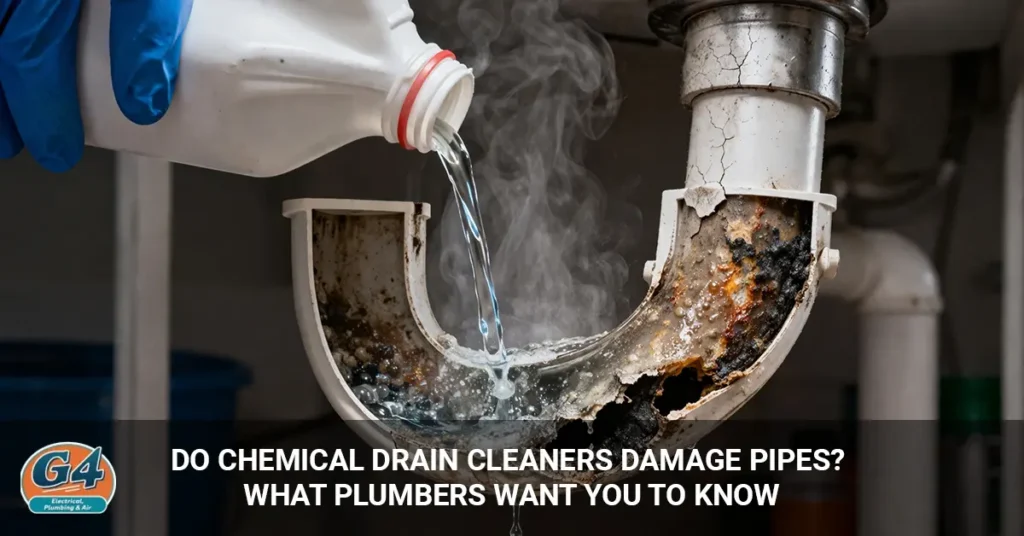
Chemical drain cleaners can damage pipes, especially when they are used often or not used the right way. They may clear a clog quickly, but they can also weaken your plumbing over time.
A lot of homeowners use these products because they seem simple and fast. You just pour them down the drain and wait. But the problem is, these strong chemicals don’t just break down clogs; they can also affect your pipes.
At first, everything may seem fine. But repeated use can lead to hidden damage, leaks, or bigger plumbing issues later.
In this guide, you’ll learn what these cleaners actually do, why they can be risky, and what plumbers recommend as a safer option.
What Are Chemical Drain Cleaners?
Chemical drain cleaners are liquid or gel products that break down clogs inside your pipes. People use them to clear things like hair, grease, and food buildup without using tools.
They are easy to use. You simply pour them into the drain and let the chemicals do the work.
There are a few common types:
- Caustic cleaners: Use strong ingredients like lye to dissolve grease
- Oxidizing cleaners: Break down organic material like hair and food
- Acidic cleaners: Very strong and usually handled by professionals
These products are popular because they act fast and seem convenient. But while they may clear a clog, they don’t always solve the root problem.
How Chemical Drain Cleaners Work
Chemical drain cleaners work by creating a strong reaction that breaks down clogs inside your pipes. This reaction often produces heat, which helps dissolve grease, hair, and other debris.
Once you pour the cleaner into the drain, it starts reacting with the blockage. It softens or breaks it apart so the material can move through the pipe.
The process may seem effective, but the heat and chemicals don’t just affect the clog. They can also impact the inside of your pipes, especially if used often.
That’s why repeated use can lead to damage over time instead of fixing the problem completely.
Do Chemical Drain Cleaners Damage Pipes?
Yes, chemical drain cleaners can damage pipes over time. The strong chemicals and heat they create can weaken both plastic and metal pipes.
The risk becomes higher when you use them often or rely on them as a regular fix. If the clog is severe and doesn’t clear fully, the chemicals can sit in the pipe longer and cause more damage.
Older or worn pipes are even more at risk because they are already weaker and more sensitive to harsh chemicals.
One-time use may not cause immediate problems, but repeated use can lead to long-term damage like corrosion, cracks, or leaks.
How Chemical Cleaners Damage Different Types of Pipes
PVC Pipes
Chemical drain cleaners can damage PVC pipes by softening and weakening the material. The heat created during the reaction can cause the plastic to warp or lose its strength.
At first, the damage may not be visible. But over time, repeated use can make the pipe more fragile and prone to leaks or cracks.
This is why using chemical cleaners too often can shorten the life of PVC plumbing.
Metal Pipes
Chemical drain cleaners can damage metal pipes by causing corrosion and weakening the pipe walls. The strong chemicals react with the metal, which can lead to rust and gradual thinning over time.
At first, the damage may not be noticeable. But with repeated use, the pipe becomes weaker and more likely to leak or crack.
This is why relying on chemical cleaners can increase the risk of long-term damage in metal plumbing systems.
Older Plumbing Systems
Older plumbing systems are more likely to be damaged by chemical drain cleaners because the pipes are already worn out. These pipes may have small cracks, weak spots, or thinning walls from years of use.
When strong chemicals are added, they can speed up the damage. This can lead to cracks, leaks, or even complete pipe failure.
That’s why chemical cleaners are especially risky in older homes, where the plumbing system is more fragile.
Hidden Risks Most Homeowners Don’t Know
Chemical drain cleaners can cause more than just pipe damage. They also come with hidden risks that many homeowners don’t realize at first.
These chemicals are strong and can affect different parts of your plumbing and even your health.
- Pipe joint damage: Pipe joint damage and leaks can turn into serious issues if ignored. In some cases, this can lead to major problems that match common plumbing emergency signs and require immediate attention.
- Toxic fumes: The vapors can be harmful if you breathe them in
- Skin and eye irritation: Direct contact can cause burns or irritation
- Environmental impact: Chemicals can enter and harm water systems
- Septic system damage: They can kill helpful bacteria that keep your system working
These risks make chemical drain cleaners less safe than they seem, especially with frequent use.
Signs Chemical Cleaners May Have Damaged Your Pipes
Chemical drain cleaners may have damaged your pipes if you start noticing new or worsening plumbing problems. These signs often appear after repeated use or when the chemicals sit in the pipes too long.
You might see leaks under the sink, which can happen when pipe walls or joints become weak. Frequent or recurring clogs are another sign, especially if the cleaner didn’t fully remove the blockage.
Strong or unusual odors can also point to damage inside the pipes. In some cases, you may even notice discoloration or visible wear on exposed pipes.
If you notice any of these signs, it’s best to stop using chemical cleaners and have your plumbing checked before the problem gets worse.
Are Chemical Drain Cleaners Ever Safe to Use?
Chemical drain cleaners can be safe if you use them rarely and follow the instructions carefully. They may help with a small clog when you don’t have other tools available.
However, they are not meant to be a regular solution. Using them too often increases the risk of pipe damage and other problems.
If you do use them, make sure to follow the directions closely and avoid overuse.
For long-term results, it’s better to use safer methods or fix the root cause of the clog.
Safer Alternatives to Chemical Drain Cleaners
You can clear clogs safely without damaging your pipes by using simple, non-chemical methods. These options work well for most minor drain problems and help protect your plumbing.
Here are some safer alternatives you can try:
- Boiling water: Hot water helps melt grease and wash away soap buildup
- Baking soda and vinegar: This natural mix loosens organic material and freshens the drain
- Plunger or drain snake: These tools remove clogs physically without harming the pipes
- Professional drain cleaning: A plumber can clear the blockage fully and safely
These methods are safer for your pipes and more effective for long-term results.
What Plumbers Recommend Instead
Plumbers recommend safe, long-term solutions instead of chemical drain cleaners. The goal is to clear clogs without damaging your pipes and prevent the problem from coming back.
Instead of relying on harsh chemicals, professionals focus on simple habits and proper maintenance.
Here’s what they usually suggest:
- Regular drain maintenance: Clean your drains routinely to stop buildup early
- Enzyme-based cleaners: These break down waste gently without harming pipes
- Avoiding grease and debris: Keep oils, food, and hair out of the drain
- Periodic inspections: Check your plumbing before small issues turn into big ones
These steps help your plumbing system last longer and reduce the need for costly repairs.
When to Call a Professional Plumber
You should call a professional plumber when a clog doesn’t clear or keeps coming back. This usually means there’s a deeper issue that basic methods can’t fix.
If more than one drain in your home is slow, it could point to a problem in the main line. Very slow drainage, even after cleaning, is another clear sign something isn’t right.
You should also take it seriously if you notice leaks, unusual smells, or think your pipes may be damaged.
A professional plumber has the right tools and experience to find the cause and fix it safely, helping you avoid bigger problems later.
Final Thoughts
Chemical drain cleaners are not the best long-term solution and can damage your pipes over time. While they may work quickly, they often create bigger problems later.
It’s better to use safer methods and keep up with regular maintenance to avoid clogs in the first place. Small steps can help protect your plumbing and save you money.
If the clog keeps coming back or doesn’t improve, calling a professional is the safest way to fix the issue properly and prevent further damage.